Treasures of London – The ‘Line of Kings’…

PICTURE: HRP/Newsteam

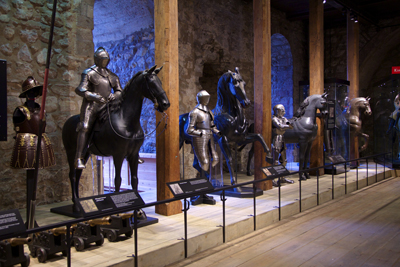
A star sight at the Tower of London for some 350 years, the ‘Line of Kings’ dates back to the mid-17th century and was originally installed in the Royal Armouries at the Tower to promote the restored monarchy of King Charles II and the Stuart dynasty.

Often described as the “world’s longest running tourist attraction” (the first visitor was recorded in 1652), it features the historic armour of monarchs on wooden figures and accompanied by fully decked-out carved horses – the work of Grinling Gibbons and others among Britain’s best woodcarvers.

The line has been added to and redisplayed numerous times over its history, partly to accommodate successive monarchs (17 in all were included with King George II being the last).

Only those monarchs deemed worthy were included – this deemed “bad” kings like King Richard III were omitted while “good” kings like King William the Conqueror, King Edward III and King Henry V were included. Queens were not included – when Queen Mary II and King William III were created joint monarchs, only King William was included.

The display began to be mentioned in guidebooks from the 1750s onwards. In 1825, amid growing scholarship and criticism, the line underwent a major change.

It was dismantled and then redisplayed in a purpose-built gallery adjoining the south side of the White Tower. The new line-up included prominent noblemen as well as kings while the kings themselves were reshuffled with some, like King Edward III, dropped, and King James II added.

It was further enhanced in 1869 but the display closed in 1882. The equestrian figures then appeared on the upper floor of the White Tower.

The Line of Kings, which is now located on the entrance floor of the Tower, last underwent a significant revamp between 2011 and 2013.

Highlights include the earlier surviving armour of King Henry VIII – a silvered and engraved armour which was made in the years following his coronation in 1509 – as well as the gilded armours of King Charles I and King James II.

WHERE: White Tower, Tower of London (nearest Tube station Tower Hill); WHEN: 9am to 5.30pm daily; COST: £29.90 adults; £14.90 children under 15; £24 concession; family tickets from £52.20; WEBSITE: www.hrp.org.uk/toweroflondon/.  
This Week in London – New COVID memorial entrance portico at St Paul’s; observation wheel a centrepiece of new Somerset House festival; and newly acquired 16th century works at The National Gallery…

A new entrance to a memorial dedicated to those who died as a result of the COVID-19 pandemic has opened at St Paul’s Cathedral. The Remember Me memorial entrance portico, which is accessed through the cathedral North Transept door, has been designed by Caroe Architecture with Connolly Wellingham and is an elliptical structure made from British Oak into which the words ‘Remember Me’ have been etched in gold. It leads through to the Middlesex Chapel where a digital book of remembrance can be accessed. The inner portico is the first project of its kind to be built inside St Paul’s for nearly 150 years and this is the first time the North Transept of the cathedral has been used as a permanent entrance since this part of the cathedral was bombed during World War II. For more, see www.stpauls.co.uk/remember-me-memorial.

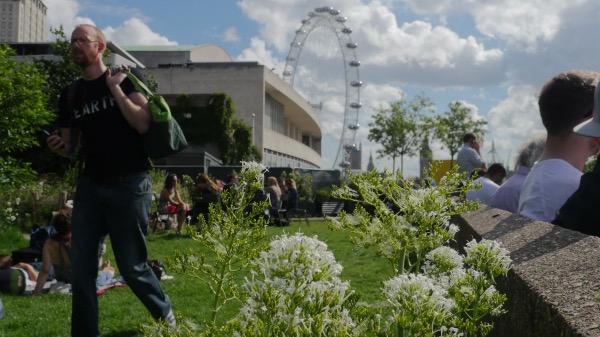
A temporary 35 metre high observation wheel providing new views of London is being placed in Somerset House’s central open-air courtyard as part of a new cultural festival which kicks off Monday. This Bright Land features art installations and a programme of events featuring everything from music and dance performances through to workshops and talks. As well as the wheel, the courtyard will host a ‘Wonder Garden’, a soundscape installation telling Londoners’ stories, a futuristic custom-built ‘Clubhouses’ where complimentary make-up services will be provided, and a pop-up experimental zone which will feature immersive installations and complimentary light treatments. The month-long festival, which runs until 29th August, will also include a series of open air balls and parties at night as well as weekly family-friendly activities. There is free daytime entry on weekdays and pay-what-you-can entry on Monday to Thursday evenings and Saturday daytimes. Charges apply for special events and observation wheel rides. For more, see www.somersethouse.org.uk/whats-on/this-bright-land.

Two 16th century works have gone on display in The National Gallery for the first time following their acquisition.  Paolo Veronese’s ful-length Portrait of a Gentleman of the Soranzo Family (about 1585) can be seen in Room 12 while Lo Spagna’s Christ Carrying the Cross (perhaps 1500–5) can be seen in Room 61. Admission to the gallery is free. For more, see www.nationalgallery.org.uk.

Send items for inclusion to exploringlondon@gmail.com

10 unusual parks or gardens in London…4. Queen Elizabeth Hall Roof Garden…

PICTURE: Courtesy of VisitLondon.com

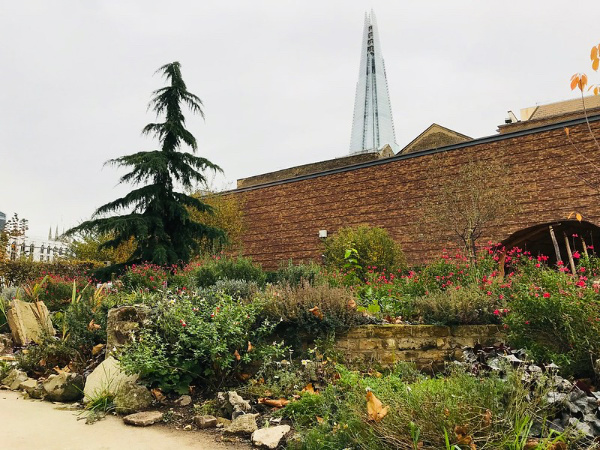
This garden can be found on the roof of the Queen Elizabeth Hall at the Southbank Centre.

The 1,200 square metre garden, which was created in 2011 as part of the 60th anniversary of the 1951 Festival of Britain celebrations, was developed in partnership with the Eden Project.

It is maintained by volunteers from Grounded Ecotherapy, a group which offers people dealing with issues like homelessness and addiction help through horticulture.

The Garden features more than 200 wild native plants as well as a lawn, paths and paving – and stunning views across the river. There’s also a cafe and bar.

WHERE: Queen Elizabeth hall Roof Garden (nearest Tube stations are Waterloo and Embankment); WHEN: Wednesday to Sunday from noon; COST: Free; WEBSITE: www.southbankcentre.co.uk/visit/outdoor/queen-elizabeth-hall-roof-garden-cafe-bar.

LondonLife – Black holes pioneer, Sir Roger Penrose, awarded Freedom of the City of London…

Sir Roger Penrose at a conference in January, 2011. PICTURE: Biswarup Ganguly (licensed under CC BY 3.0)

World-renowned mathematical physicist Professor Sir Roger Penrose has received the Freedom of the City of London. Sir Roger, who won the Nobel Prize in Physics two years ago for his pioneering studies in the 1960s, was the first to prove mathematically that black holes exist. The now 90-year-old, who is currently Emeritus Rouse Ball Professor of Mathematics at the University of Oxford and Emeritus Fellow of Wadham College in Oxford, also jointly won the 1988 Wolf Prize in Physics with the late Stephen Hawking for their work on gravitational singularity theorems. Sir Roger said he was “hugely honoured” to be given the Freedom of the City. “London is a magnificent city in which I have spent many happy and productive years since my school and undergraduate days, and then with four separate academic appointments,” he said. Sir Roger, who is also known for discovering Penrose tiling in which a pair of rhombus-shaped tiles can be used to tile a flat service without the pattern ever repeating itself, was nominated for the Freedom by Lord Mayor of the City of London, Vincent Keaveny, and the City of London Corporation’s policy chairman, Chris Hayward. The tradition of the Freedom of the City of London is believed to have begun in 1237 and enabled recipients, who were also required to join a Livery Company, to carry out their trade.

What’s in a name?…St Swithin’s Lane…

Looking south down St Swithin’s Lane near the intersection with Cannon Street. PICTURE: Courtesy of Google Maps.

This narrow City of London pedestrian laneway, which runs south from King William Street to Cannon Street, bears the name of the Church of St Swithin London Stone.

The medieval church, which was rebuilt after being destroyed in the Great Fire of London only be badly damaged in the Blitz and finally demolished in 1962, was located on the corner of the laneway’s intersection with Cannon Street.

St Swithin (also known as St Swithun) was a ninth century Bishop of Winchester while the other part of the church’s moniker – London Stone – comes from the fact the ancient stone was formerly located opposite the church.

The church was the resting place of Catrin Glyndŵr, wife of the rebel Edmund Mortimer and daughter of Welsh leader Owain Glyndŵr, who, after being held in the Tower of London, died in mysterious circumstances (there’s a memorial to her in a garden on the former site of the church).

Lost London – Greenwich’s Romano-Celtic temple…

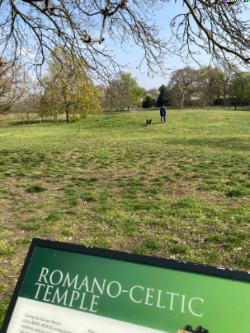
Although little now remains of it (and none to be seen above ground), a mound in Greenwich Park is thought to have once been the location of a Romano-Celtic temple.

Site of the temple remains in Greenwich Park. PICTURE: Matt Brown (licensed under CC BY 2.0)

Given its site close to Watling Street – the main Roman road linking London and the Kent ports, it’s believed that the temple may have served travellers as well as the local community. The Historic England listing for the ruins, which are a scheduled monument, suggests the temple was in use by 100AD and continued to be used until about 400AD.

The remains, which are now located on the eastern side of Greenwich Park on a site known as Queen Elizabeth’s Bower, was excavated in 1902 after they were stumbled across during works on the park. Three different floor surfaces were revealed, one of which was a tessellated pavement, along with the right arm of an almost life-sized statue, fragments of stone inscriptions and more than 300 coins dating between the 1st and 5th centuries.

A further excavation occurred in the early 1970s and another in 1999 – all of which provided further evidence of a temple.

Finds from the 1999 dig – which was undertaken by TV Channel Four’s ‘Time Team’, Birkbeck University of London and the Museum of London in the creation of a programme broadcast the following year – included part of an inscription to Jupiter and the spirits of the emperors and a stamped tile.

It is thought the temple precinct, known as a temenos, would have included a main temple building known as a cella as well as ancillary buildings and been surrounded by a stone wall.

This Week in London – The Queen’s jewellery; ‘The Future of Ageing’; and painting the view from Tower Bridge…

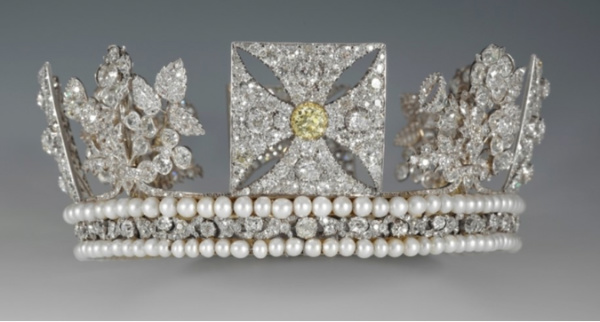
Rundell, Bridge & Rundell, Diamond Diadem, 1820–1. PICTURE: Royal Collection Trust / © All Rights Reserved
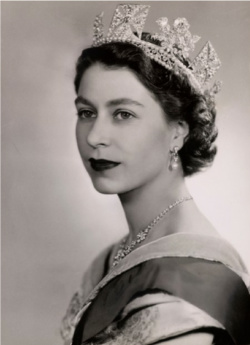
Dorothy Wilding, ‘HM Queen Elizabeth II’, 1952. PICTURE: Royal Collection Trust / © All Rights Reserved

Key items of Queen Elizabeth II’s jewellery including the Diamond Diadem and the Delhi Durbar necklace go on display in Buckingham Palace’s State Rooms from tomorrow as part of the palace’s Summer Opening. Created for the coronation of King George IV in 1821, the Diamond Diadem is set with 1,333 brilliant-cut diamonds, some of which are set in the form of a rose, a thistle and two shamrocks, the national emblems of England, Scotland and Ireland. The diadem, which was inherited by Queen Victoria in 1837 and passed down to the current Queen, will be displayed alongside the official portraits of the Queen taken by photographer Dorothy Wilding just weeks after the Accession (the portraits were later were used as the basis of the Queen’s image on postage stamps from 1953 until 1971, as well as providing the official portrait of Her Majesty sent to every British embassy throughout the world). The Delhi Durbar necklace, meanwhile, incorporates nine emeralds originally owned by Queen Mary’s grandmother, the Duchess of Cambridge, as well as an 8.8 carat diamond pendant cut from the Cullinan diamond – the largest diamond ever found. It was made for Queen Mary as part of a suite of jewellery created for the Delhi Durbar in 1911. The Queen inherited the necklace in 1953 and wore it in a portrait sitting for Dorothy Wilding in 1956 – thought to have been their last sitting together before Wilding’s retirement in 1958. The jewellery, a special display to mark the Platinum Jubilee, can be seen at the Summer Opening of the State Rooms at Buckingham Palace, the first time the palace has been open to the public in three years, until 2nd October. Admission charge applies. For more, see www.rct.uk.

An exhibition exploring how design can enhance our experience of ageing has opened at the Design Museum. The Future of Aging includes a selection of prototypes, sketches and research from projects that are being developed by Design Age Institute and its partners. They include a self-balancing, two-wheeled personal electric vehicle known as ‘The Centaur’, a hands-free cargo-carrying robot called Gita, and a digital ‘audioscape’ app that uses the sound of birdsong to engage visitors with their hearing health. The free display also includes a long-term participatory project that explores opportunities for an intergenerational garden at the museum and two new film commissions which showcase stories and experiences of later life. Runs until 25th September. For more, see https://designmuseum.org/exhibitions/the-future-of-ageing.

On Now: Painting ‘A Bridge with a View’. Until the end of August, English artist Melissa Scott-Miller is painting the views she spies from Tower Bridge’s West Walkway. Visitors are able to observe her at work and take part in related public workshops and family activities. Admission charge applies. For more including the dates for activities, see www.towerbridge.org.uk/see-bridge-view.

Send items to exploringlondon@gmail.com

10 unusual parks or gardens in London…3. Crossbones Graveyard and Garden of Remembrance…

The Crossbones Cemetery in 2017. PICTURE: Matt Brown (licensed under CC BY 2.0)

This small walled garden, located in Southwark, for centuries served as a burial site for the poor of the area nd by the time of its closing in 1853, was the location of some 15,000 burials.

The graveyard is said to have started life as an unconsecrated burial site for ‘Winchester Geese’, sex workers in the medieval period who were licensed to work in the brothels of the Liberty of the Clink by the Bishop of Winchester.

Excavations carried out in the 1990s confirmed a crowded graveyard was on the site.

While the site had been neglected for years following its closure, in 1996 local writer John Constable and a group he co-founded, the Friends of Crossbones, began a campaign to transform Crossbones into a garden of remembrance – something which has happened thanks to their efforts and those of the Bankside Open Spaces Trust and others.

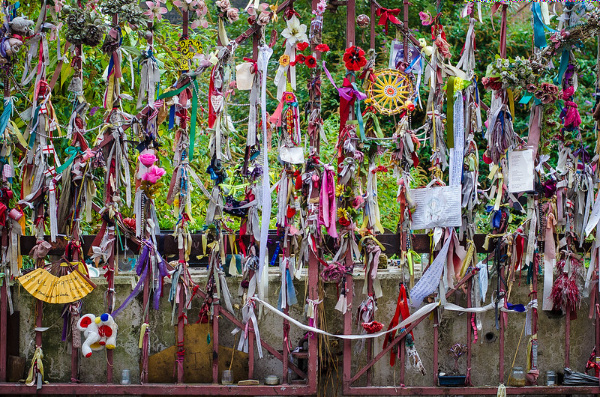
Tributes left on the fence outside the graveyard in Red Cross Way. PICTURE: Garry Knight (licensed under CC BY 2.0)

The garden provides a contemplative space for people to pay their respects to what have become known as the “outcast dead”.

A plaque, funded by Southwark Council, was installed on the gates in 2006 which records the history of the site and the efforts to create a memorial shrine.

WHERE: Crossbones Graveyard, Redcross Way, Southwark (nearest Tube stations are London Bridge and Borough); WHEN: Wednesdays, Thursdays and Fridays 12 to 2pm; COST: Free; WEBSITE: www.bost.org.uk/crossbones-graveyard.

LondonLife – Keeping things cool…

ALL PICTURES: Sgt Donald C Todd RLC Photographer/UK MOD © Crown copyright 2022

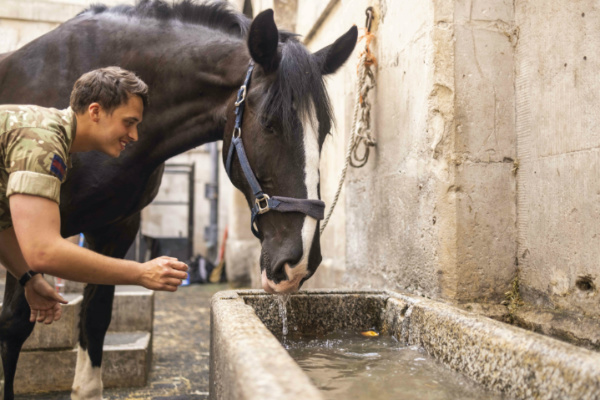
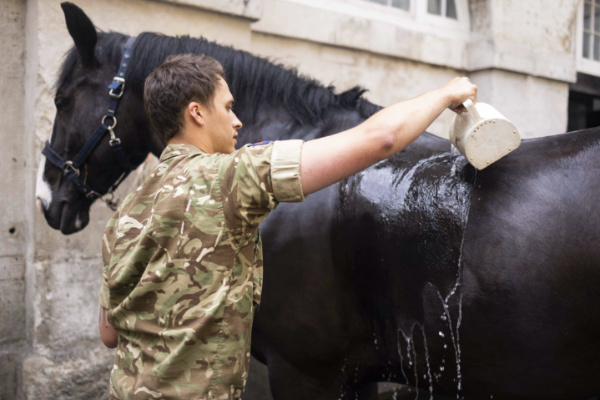
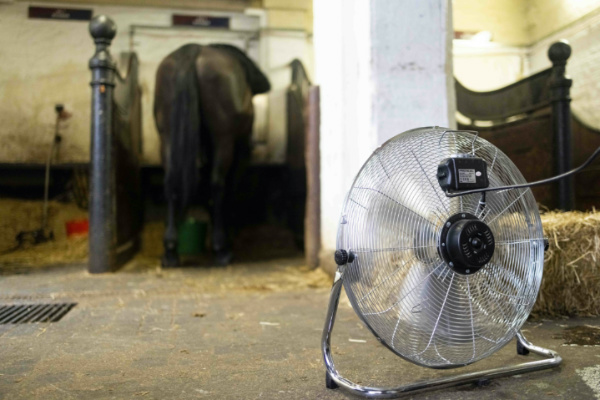
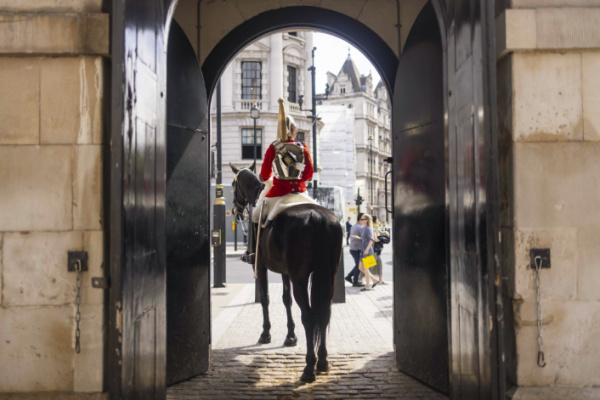
As London swelters, the Troopers of the Household Cavalry Mounted Regiment conducting the Queen’s Life Guard at Horse Guards take care to ensure their loyal horses are well looked after. That includes a hose off in the shade after duty to help them cool down, bobbing for in the water trough to help ensure they’re drinking enough and providing fans in the stables.

Famous Londoners – Great Paul…

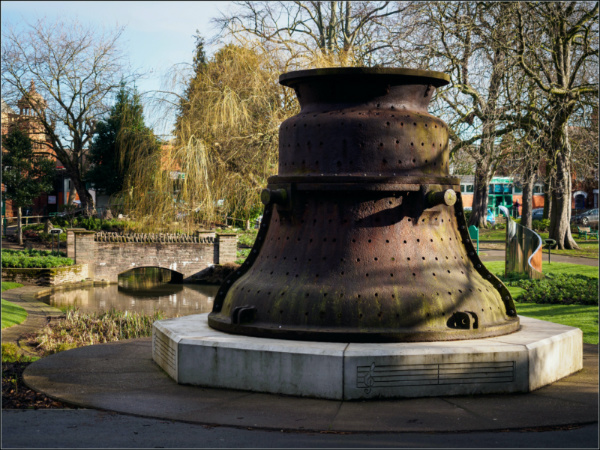
The bell casing used by Taylor’s Bell Foundry to cast Great Paul in Loughborough. PICTURE: Phil McIver (licensed under CC BY-NC 2.0)

Not the name of a person, Great Paul is in fact the name of the largest of four bells in south-west tower of St Paul’s Cathedral.

The south-west tower at St Paul’s Cathedral which contains Great Paul. PICTURE: jan buchholtz (licensed under CC BY-NC-ND 2.0)

The bronze bell was cast in 1881 by JW Taylor of Taylor’s bell foundry in Loughborough. With a diameter of some 11 metres, it weighs an impressive 16.8 tons (in fact, until the casting of the Olympic Bell for the 2012 London Olympics, it was the largest bell in the UK).

Brought to London from Loughborough on a train over a period of 11 days, Great Paul was hung in the tower in May, 1882.

The bell was traditionally sounded at 1pm every day but was silent for more than 40 years after its ringing apparatus broke in the 1970s.

Following a restoration, Great Paul started being rung again last year when it was rung during a festival of church bells to mark the easing of COVID-19 restrictions. Earlier this year, it led a bell ringing tribute marking Queen Elizabeth II’s Platinum Jubilee.

Previous historic occasions on which the bell was rung included Queen Victoria’s Diamond Jubilee in 1897 and the marriage of Prince Charles and Lady Diana Spencer at the cathedral in 1981.

The south-east tower of the cathedral is also home to the storied bell known as Great Tom – but we’ll deal with that in a future post.

Treasures of London – The Cyrus Cylinder…

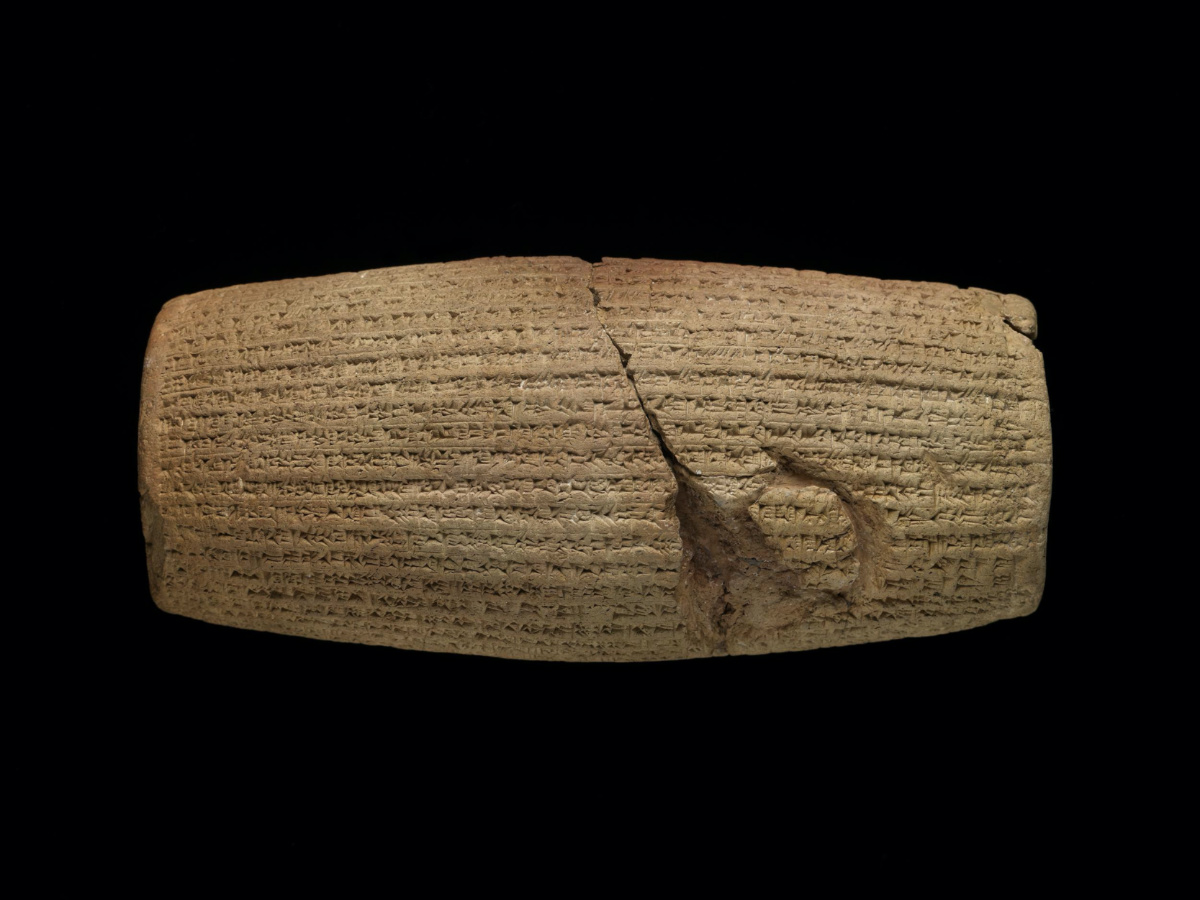
The Cyrus Cylinder in the British Museum. PICTURE: Courtesy of the British Museum (licensed under CC BY-NC-SA 4.0)

This clay cylinder, found beneath the sands of what is now Iraq, records an account of the conquest of Babylon by the Persian Achaemenid leader Cyrus the Great in 539 BC when he took power from Nabonidus and in doing so brought an end to the Babylonian empire.

The cylinder, which is written in Babylonian cuneiform script, was discovered in March, 1879, during excavations carried out for the British Museum. It had been placed in the foundations of Babylon’s main temple, dedicated to the god Marduk. It was formally acquired by the British Museum the following year.

The barrel-shaped cylinder measures 22.5 centimetres long with a maximum diameter of 10 centimetres. It was excavated in several parts which have since been reunited (although some sections are still missing).

The inscription, which consists of 45 lines of script, states that Babylonians welcomed Cyrus as their ruler “amid celebration and rejoicing” and extols him as a great benefactor who improved their lives, restored religious sites and repatriated displaced people.

The cylinder, which is today what we would describe as propaganda, has been seen by some as confirming the Biblical account of the repatriation of captured Jews back to their homeland while the last Shah of Iran, Mohammad Reza Pahlavi, called it “the world’s first charter of human rights”.

It has been loaned twice to Iran – in 1971 when it was displayed to mark the 2,500th anniversary of the Persian Empire and more recently in 2010 when it was exhibited at the National Museum of Iran. It has also been exhibited in Spain, India and the US.

WHERE: Room 52, British Museum, Great Russell Street (nearest Tube stations are Russell Square, Holborn, Tottenham Court Road and Goodge Street); WHEN: Daily, 10am to 7pm (8:30pm Fridays); COST: Free; WEBSITE: www.britishmuseum.org.

Another view of the Cyrus Cylinder in the British Museum. PICTURE: Courtesy of the British Museum (licensed under CC BY-NC-SA 4.0)

This Week in London – Museum of London prepares to move; London’s open spaces celebrated; Kenley Airfield restored; and Milton Avery at the RA…

The Museum of London has launched a six-month programme of events celebrating its 45 year history ahead of its doors closing on 4th December in preparation for its move to West Smithfield. The programme includes a range of family activities – from Roman picnics to large LEGO builds – as well as behind the scenes access at the museum during Open House London and two festivals on the closing weekend celebrating the past 50 years of London’s history. For the full programme of events, head to www.museumoflondon.org.uk. Following its closure at the London Wall site, the new site at West Smithfield, to be named The London Museum, will open in 2026.

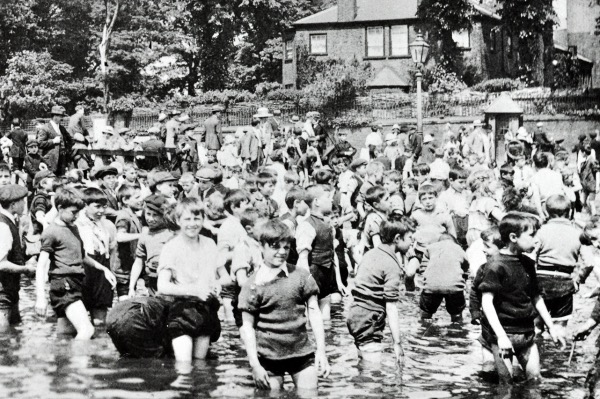
A group of children paddling in Whitestone Pond on the edge of Hampstead Heath in 1920. PICTURE: © London Metropolitan Archives

An outdoor exhibition on the essential role of London’s parks and open spaces – which have served as everything from playgrounds and picnics to concerts and Sunday football kickabouts – opens in Guildhall Yard on Monday. Green City: A Visual History of London’s Parks and Open Spaces, which is curated by the City of London Corporation’s London Metropolitan Archives, celebrates the role open places have played in the capital since the 16th century and brings together 100 photographs and prints from the archives’ collections. The exhibition can be seen in Guildhall Yard until 1st August when it moves to Aldgate Square. On 15th August it will open at Hampstead Heath and then, from 1st September, spend two weeks at The View in Epping Forest’s Visitor Centre.

Kenley Airfield – an integral part of London’s defence during World War II – has reopened following a £1.2 million restoration. The airfield, which sits in the Borough of Croydon, was a station for the Royal Flying Corps during World War I and the Royal Air Force during World War II. The restoration work has brought back to life eight deteriorating fighter blast pens, which protected RAF Spitfires and Hurricanes from attack. The site also includes The Kenley Tribute, a memorial to all who served there between 1917 and 1959, both on the ground and in the air. For more, including information on visiting the airfield and self-guided walks, see www.kenleyrevival.org.

The work of 20th century American artist Milton Avery is the subject of a new exhibition opening at the Royal Academy of Arts on Friday. Milton Avery: American Colourist – which can be seen in The Gabrielle Jungels-Winkler Galleries in Piccadilly – features some 70 works including portraits and landscapes dating from 1910 until the 1960s. The exhibition is divided into four sections – ‘Early Work’, ‘Portraits’, ‘Innovation in Colour and Form’ and ‘Late Work’ – and highlights include Blossoming (1918), a portrait of Avery’s friends known as The Dessert (1939), two portraits of his daughter March – Seated Girl with Dog (1944) and March in Brown (1954), and, Black Sea (1959). Runs until 16th October. Admission charge applies. For more, see www.royalacademy.org.uk.

Send all items to exploringlondon@gmail.com.

10 unusual parks or gardens in London…2. Brown Hart Gardens…

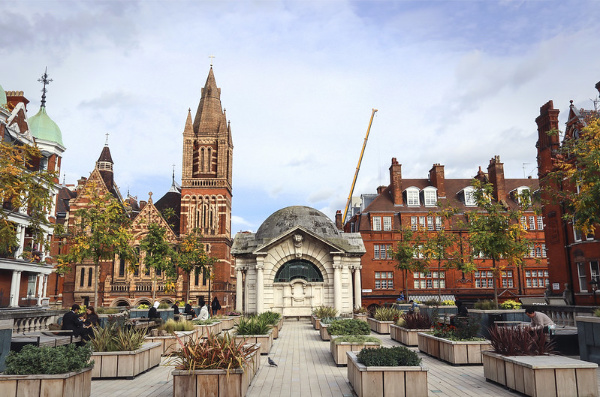
Looking east in the Brown Hart Gardens with the Ukrainian Catholic Cathedral in the background. PICTURE: Kotomi_ (licensed under CC BY-NC 2.0)

This elevated 10,000 square foot garden, located between Duke and Balderton Streets in Mayfair on the Grosvenor Estate, actually sits over the top of an electricity substation.

The now Grade II-listed substation was built in the early 20th century and the garden, which opened in 1906, was designed by Sir Charles Stanley Peach (also the designer of Wimbledon’s Centre Court) to provide some open space in what was then a working class residential area (not to mention its role disguising the substation below).

The garden replaced one which had formerly occupied the substation site and it was apparently at the insistence of the then-Duke of Westminster that the paved Italian-style garden be created following the demolition of the old garden.

It features a Portland stone domed gazebo and steps at either end.

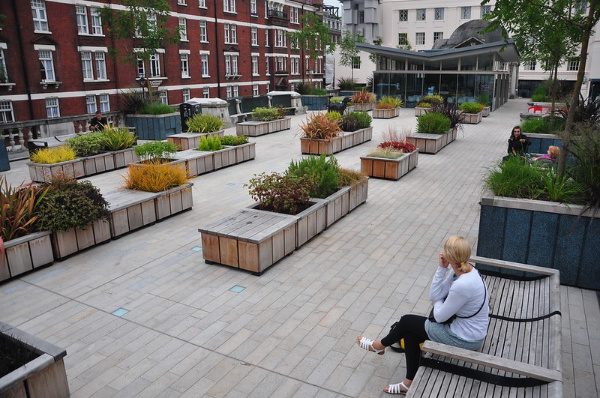
Looking west in the gardens towards the cafe. PICTURE: Andy Thornley (licensed under CC BY 2.0)

The garden deck remained open until 1980 when it was closed by the London Electricity Board. It reopened in October, 2007. A refurbishment project several years later saw the addition of a glass-walled cafe at the western end and other improvements including new planter boxes, seats and a new water feature.

The surrounding housing blocks were built in the late 19th century to replace the poor housing that had previously existed and since 1973 have been under the care of the Peabody Trust.

WHERE: Brown Hart Gardens, Duke Street, Mayfair (nearest Tube stations are Bond Street and Marble Arch); WHEN: Daily, 8am to 8pm; COST: Free; WEBSITE: www.grosvenor.com/property/property-uk/brown-hart-gardens.

LondonLife – All eyes on Whitehall…

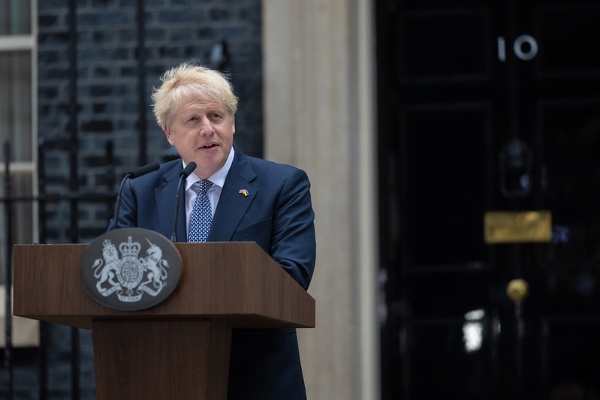
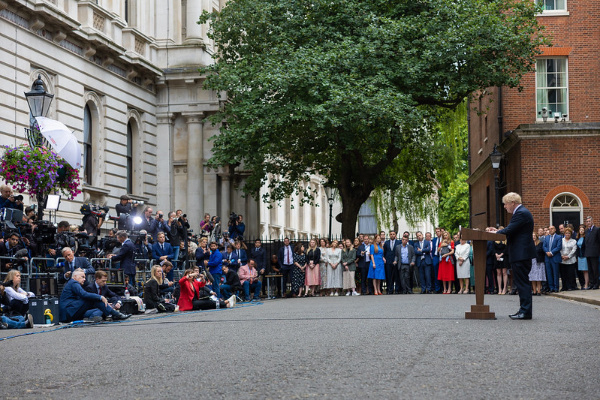
Above and below: Boris Johnson resigns as leader of the Conservative Party. PICTURE: HM Treasury (licensed under CC BY-NC-ND 2.0)

All eyes turned to Whitehall last week with Prime Minister Boris Johnson emerging from 10 Downing Street to announce he would resign. The move has sparking a leadership contest in the Conservative Party which is expected to be complete by 5th September.

London Explained – Mudlarks…

Modern mudlarks at Queenhithe on the River Thames. PICTURE: Geoff Henson (licensed under CC BY-ND 2.0)

Spotted along the Thames foreshore when the tide is low, the term ‘mudlark’ is used to describe someone who scavenges for lost or discarded objects in the mud along the Thames river banks.

In the 18th and 19th century, mudlarks were among London’s poorest who eked out a living by selling items – lumps of coal, pieces of rope, precious metals – found on the river’s banks. They were often the young or the elderly and the working conditions, which included navigating through the raw sewage and other noxious waste which ended up on the foreshore, were horrendous.

Victorian journalist Henry Mayhew, who writes in his seminal and expansive series of reports – London Labour and the London Poor – described how mudlarks were so-named because of their need at times to wade up to their waists in mud to retrieve items.

By the 20th century, the practice appears to have somewhat died out. But in more recent years, the term mudlark has been applied to hobbyists, including those using metal detectors, to search along the Thames foreshore during the hours when the tides allow. Since the mid-1970s, The Society of Thames Mudlarks has provided some organisational structure for those involved but membership in this body is limited.

A permit from the Port of London Authority is required for modern mudlarking. As the authority’s website states: “Anyone searching the tidal Thames foreshore from Teddington to the Thames Barrier – in any way for any reason – must hold a current and relevant foreshore permit from the Port of London Authority. This includes all searching, metal detecting, ‘beachcombing’, scraping and digging”.

Finds of potential archaeological interest must be reported to the Museum of London (and human remains, of course, to police). Mudlarks are also encourage to report finds to the Portable Antiquities Scheme.

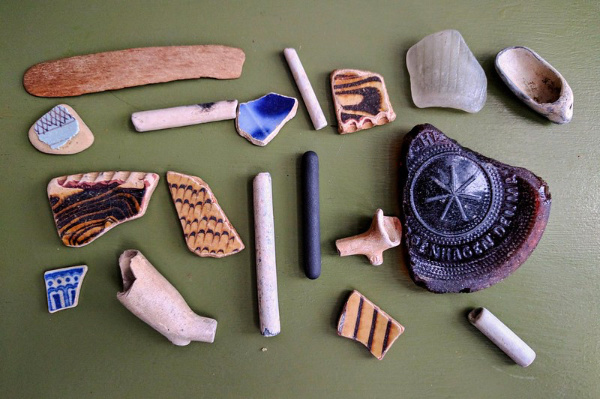
Mudlark finds. PICTURE: Neil Cummings (licensed under CC BY-SA 2.0)

Objects found include everything from clay pipes, bits of pottery, buttons, bones and pins through to more precious items such as coins, rings and even daggers and swords.

Lara Maiklem, author of the 2019 book Mudlarking: Lost and Found on the River Thames, is among the most well-known of the modern mudlarks. As detailed in his book, her finds have included everything from a Roman amphora stopper to medieval roof tiles, a bearded man from a late 16th century Bellarmine jug and an 18th century shoe pattern.

This Week in London – Matchgirls strike commemorated and the Queen’s coronation at Windsor…

The famous matchgirls’ strike at the Bryant and May matchworks in the East End has been commemorated with an English Heritage Blue Plaque. The event, widely recognised as a spur to the New Unionism movement, saw about 1,400 of the predominantly young female workforce walk out in protest at the dismissal of a number of their co-workers in early July, 1888. While some of the details remain unclear, it is thought that the women were probably sacked for giving information to reporters, refusing to sign a statement refuting poor working conditions, or on trumped-up charges of trouble making. The women – whose poor working conditions, including low pay, the imposition of fines and deductions by the company and the dangers of ‘phossy jaw’, were catalogued by journalist Annie Besant – won a famous victory after a three week strike in which almost all their demands were met. Bryant and May also recognised the Union of Women Match Makers which, by the end of 1888, had become the Matchmakers’ Union and admitted both men and women. For more on English Heritage Blue Plaques, see www.english-heritage.org.uk/visit/blue-plaques/.

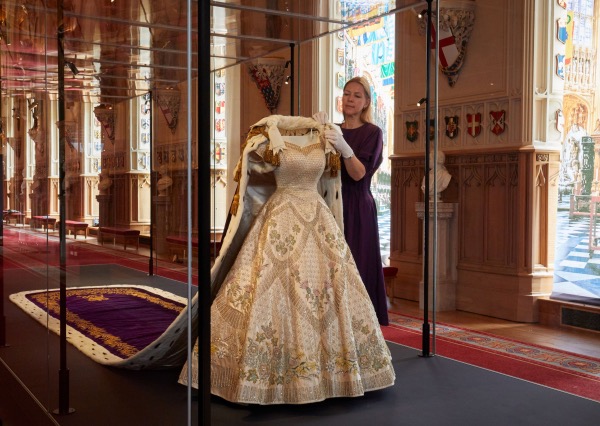
Curator Caroline de Guitaut puts the finishing touches to the display of the Queen’s Coronation Dress and Robe of Estate in St George’s Hall, Windsor Castle. PICTURE: Royal Collection Trust/All Rights Reserved.

Queen Elizabeth II’s coronation is the subject of a new exhibition opening at Windsor Castle today. Platinum Jubilee: The Queen’s Coronation, which focuses on the coronation which took place at Westminster Abbey on 2nd June, 1953, features portraiture, photographs and dress and jewellery worn by the Queen including the Sir Norman Hartnell-designed Coronation Dress, Robe of Estate and the Coronation Necklace and Earrings which were originally made for Queen Victoria in 1858. Also on display are brooches representing the emblems of some Commonwealth countries including a Canadian Maple-leaf Brooch worn by then Princess Elizabeth on her first visit to Canada in 1951, a Flame-Lily Brooch, the emblem of Zimbabwe, which was pinned to the Queen’s mourning clothes when she returned from Kenya after the death of her father in 1952, and the New Zealand Silver Fern Brooch, the Australian Wattle Brooch, and the Sri Lanka Brooch. There’s also a 2.5-metre-tall portrait of the Queen by Sir Herbert James Gunn which was commissioned to commemorate the coronation and a three-quarter length photographic portrait of the Queen taken by Cecil Beaton. Included in general admission. Runs until 26th September. Running in conjunction id a digital event – Royal Jewels: A Platinum Jubilee Celebration – which will be held at 7pm on 28th July in which Caroline de Guitaut, deputy surveyor of The Queen’s Works of Art and curator of the Platinum Jubilee display, with join Carol Woolton, former jewellery editor of Vogue in discussing items of The Queen’s jewellery on display at Windsor Castle and Buckingham Palace this summer. Tickets can be booked at www.rct.uk.

Send all items to exploringlondon@gmail.com

10 unusual parks or gardens in London…1. Kyoto Garden…

The sun’s shining and it’s a good time to get outdoors so for our new special series we’re looking at 10 of London’s more unusual parks or gardens.

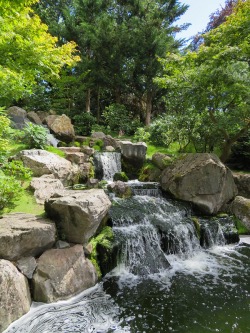
First up, we’re looking at a small slice of Japan in Holland Park – the Kyoto Garden.

PICTURE: Ewan Munro (licensed under CC BY-SA 2.0)

The garden was created in the summer of 1991 as a co-operative project between the Royal Borough of Kensington and Chelsea and the Kyoto Chamber of Commerce in Japan to coincide with the 1991 Japan Festival that marked the centenary of the Anglo-Japanese Society.

PICTURE: Pedro Plassen Lopes (licensed under CC BY-ND 2.0)

It was opened by the Prince Charles and, Naruhito, the Crown Prince of Japan, in September that year.

Designed by a renowned Japanese landscape architect Shoji Nakahara, it features a large pond complete with a tiered waterfall, a small bridge and stone lanterns. Among the plants are Japanese maple trees and Sakura trees while koi swim in the pond and peacocks roam the foliage.

The garden received a makeover in 2011.

Next to the garden is a second Japanese Garden, the Fukushima Memorial Garden, which was created in 2012 in recognition of the support the UK gave to the Prefecture of Fukushima following the 2011 tsunami.

WHERE: The Kyoto Garden, Holland Park (nearest Tube stations are Holland Park and Notting Hill Gate and nearest Overground is Kensington (Olympia)); WHEN: Daily, 7:30am until half an hour before dusk; COST: Free; WEBSITE: www.rbkc.gov.uk/leisure-and-culture/parks/holland-park.

LondonLife – Commemorating the Windrush Generation…

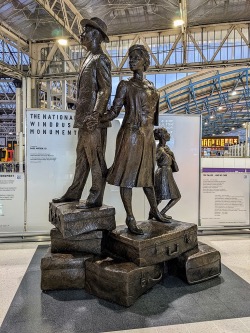
PICTURE: The wub (licensed under CC BY-SA 4.0)

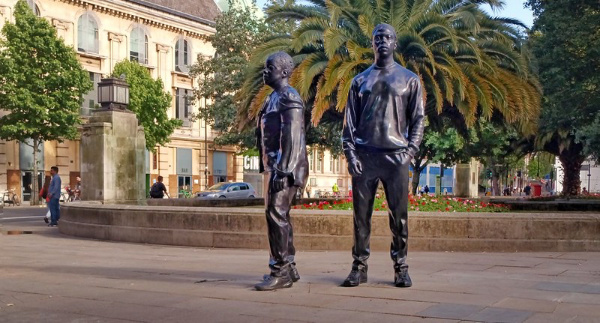
The National Windrush Monument (right) was unveiled at Waterloo Station on Windrush Day (23rd June). The bronze sculpture – the work of US-based Jamaican artist Basil Watson – memorialises the British West Indian immigrants who came to the UK on board HMT Empire Windrush in 1948 and later ships and who subsequently became known as the Windrush generation. Funded by a £1 million government grant, it depicts a man, woman and child who, dressed in their “Sunday best”, are climbing a pile of suitcases which represent all the possessions they brought with them. The memorial, which is located inside the station through which thousands of the Windrush Generation passed on their way to their new lives in the UK, was unveiled by the Duke and Duchess of Cambridge. Floella Benjamin, chair of the Windrush Commemoration Committee, reportedly said the monument will “act as a symbolic link to our past and a permanent reminder of our shared history and heritage for generations to come“. Meanwhile, a public bronze sculpture was unveiled outside Hackney Town Hall on the same day which also commemorates the Windrush generation. Warm Shores, the work of London artist Thomas J Price, depicts larger than life-sized a man and woman and was based on 3D scans of real-life residents.

PICTURE: Dominic Alves (licensed under CC BY 2.0)

Where’s London’s oldest…(still operational) ferry service?

There’s a couple of contenders for this title – the ferry service at Woolwich and that at Hampton.

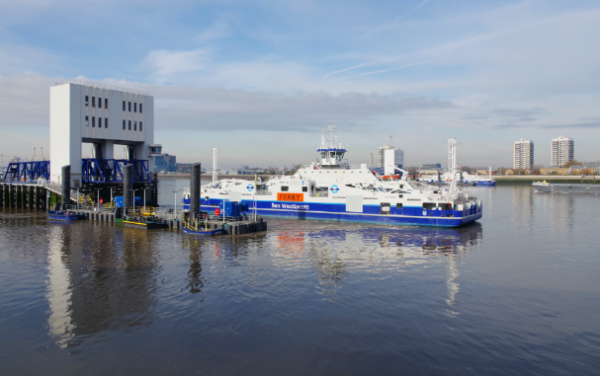
Ferry services linking the north bank of the Thames at Woolwich North to the south bank at Woolwich have operated on the Thames since at least the 14th century.

The Woolwich Ferry’s northern terminal. PICTURE: Matt Buck (licensed under CC BY-SA 2.0)

While they were previously commercial operations, in 1889 a free passenger and vehicle ferry service started operation. By the early 1960s increasing demand saw the paddle steamers retired and the ferry service upgraded to a roll-on/roll-off model. The Woolwich Ferry service, which has been run by numerous authorities over the past century, is currently run by Transport for London.

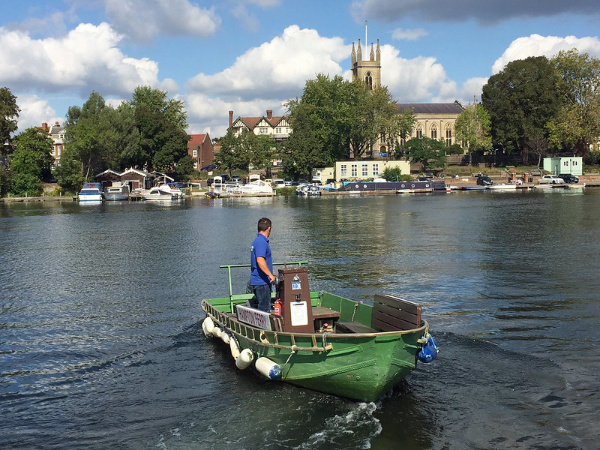
Another contender for the title of London’s oldest (still operational) ferry service is the Hampton Ferry, a pedestrian service, which operates on the Thames about a mile west of Hampton Court Bridge between Hampton on the north bank and Hurst Park, Molesey, the south bank.

The Hampton Ferry. PICTURE: diamond geezer (licensed under CC BY-NC-ND 2.0)

The ferry service, which was first used by fishermen and agricultural workers, dates back to 1514 and was incorporated by statute, making it one of the oldest British companies. The ferry, which costs £2 for a single crossing, operates seasonally from April to October.

This Week in London – African fashion on show; green transport; and, the Upminster Tithe Barn…

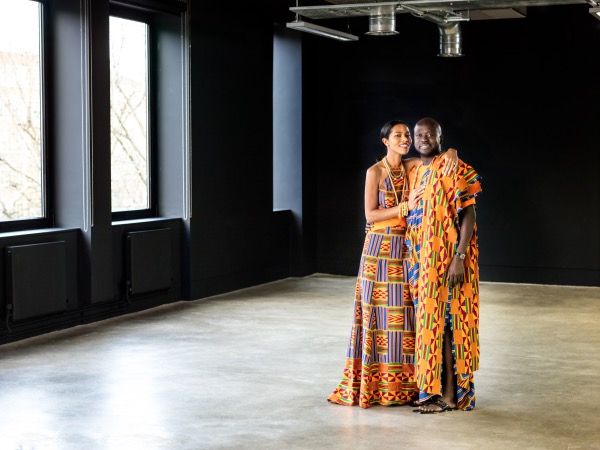
Designed by Kofi Ansah, Ensembles for the wedding of Ashley Shaw-Scott Adjaye and David Adjaye. Ghana, 2014. Photographed in London in 2014 by Robert Fairer

• The work of some 45 designers from more than 20 countries can be seen in a landmark Africa Fashion exhibition opening at the V&A on Saturday. More than 250 objects are on display – half drawn from the museum’s collection and including 70 new acquisitions. Many of the garments come from the personal archives of iconic mid-20th century African designers including Shade Thomas-Fahm, Chris Seydou, Kofi Ansah and Alphadi and the exhibition also features the work of contemporary African fashion creatives such as Imane Ayissi, IAMISIGO, Moshions, Thebe Magugu and Sindiso Khumalo. The display includes personal insights from the designers, together with sketches, editorial spreads, photographs, film and catwalk footage. Runs until 16th April. Admission charge applies. For more, see vam.ac.uk/exhibitions/africa-fashion.

Discover the role public transport is playing in keeping London green at London Transport Museum’s Depot in Acton Town this weekend. The ‘Act-on It!’ Open Days, being held as part of London Climate Action Week, are part of London Transport Museum’s 18-month programme, Climate Crossroads, which shines a light on sustainable cities, travel, transport and greener skills for the future. Along with the artworks, maps and signage housed at depot, visitors will be able to explore the museum’s extensive collection of historic vehicles including Tube trains, buses, trolleybuses and trams including, for the first time, the iconic RM1 Routemaster, built in 1954, displayed alongside the ADL/BYD Enviro 400 Electric, the best-in class bus from route 63. There’s also family activities – including storey-telling sessions, miniature transport displays made entirely of LEGO, and rides on the London Transport Miniature Railway. Tickets must be booked in advance. Admission charge applies. For more, see www.ltmuseum.co.uk/whats-on/depot/summer.

The Upminster Tithe Barn has an open day on Saturday. The more than 500-year-old barn, these days houses the Museum of Nostalgia which holds more than 14,500 artifacts of domestic and agricultural use, ranging from Roman times to the present day. For more, see http://upminstertithebarn.co.uk.

Send all items to exploringlondon@gmail.com.