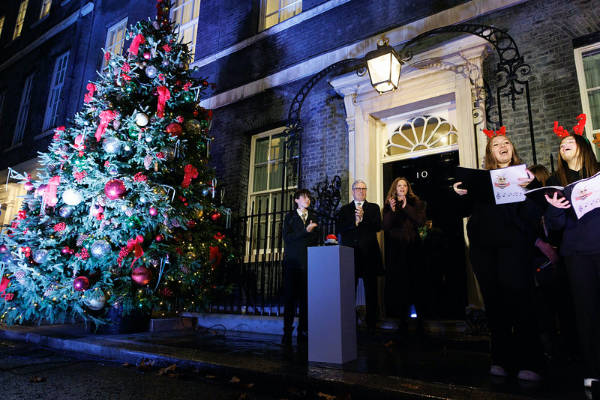
LondonLife – Downing Street’s Christmas lights…
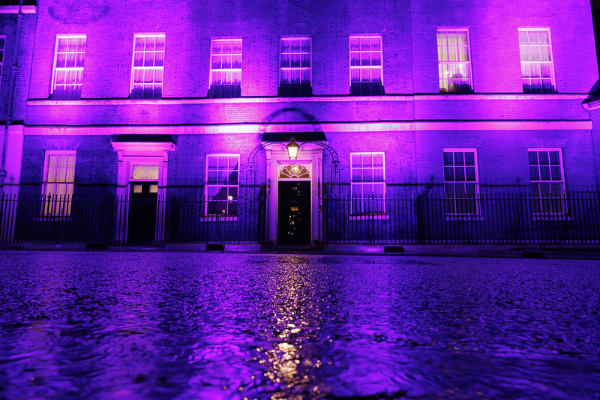
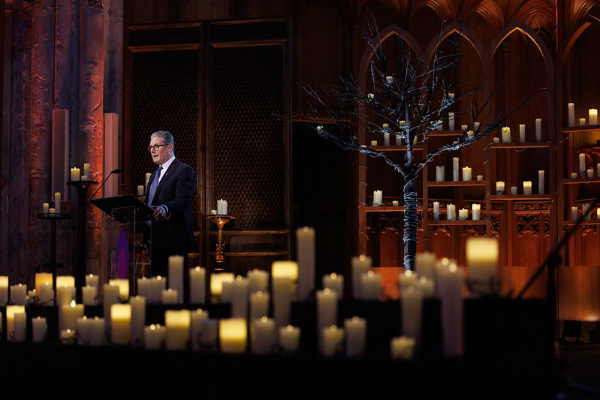
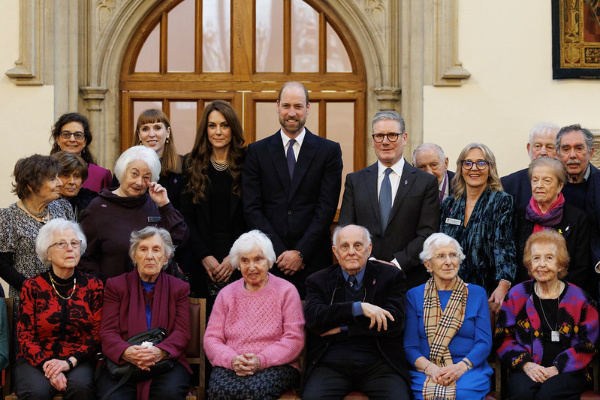
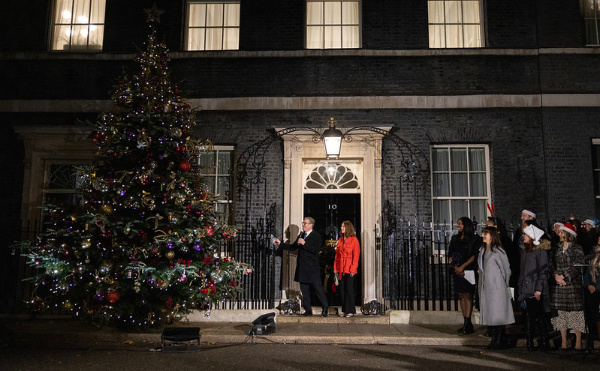
Prime Minister Keir Starmer and his wife Victoria Starmer turned on lights on the Christmas tree outside 10 Downing Street on 2nd December. The couple were joined by NHS workers, military personnel and members of the police. The Christmas tree is the winner of a competition run by the British Christmas Tree Growers Association, chosen for showcasing “the finest dedication, craftsmanship and commitment of British Christmas tree growers”. This year’s Nordmann Fir was grown by Evergreen Christmas Trees – a family run business based on the Welsh border who have been growing Christmas trees since 1992. The runner-up in the Christmas tree competition – Cadeby Tree Trust from Warwickshire – have supplied two Christmas trees for inside Downing Street. The wreath for the famous door at Number 10, meanwhile, was provided by Santa Trees, a Christmas tree farm from Cornwall. Lights on London’s most famous Christmas tree – that in Trafalgar Square – are being turned on this Thursday (5th December).
Now found in the Churchill War Rooms, the original black door from the Prime Minister’s residence at 10 Downing Street dates from the 1770s.
Subscribe for just £3 a month to gain access to all Exploring London’s content.
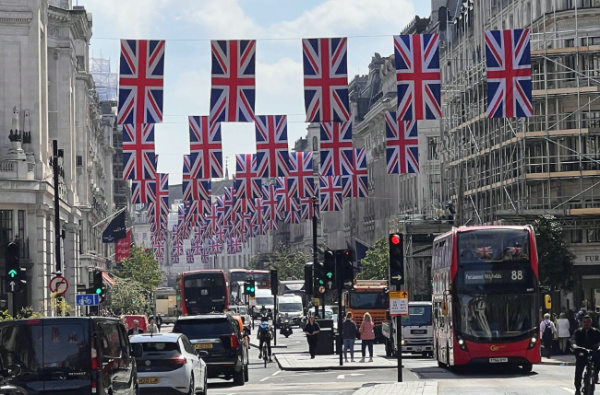
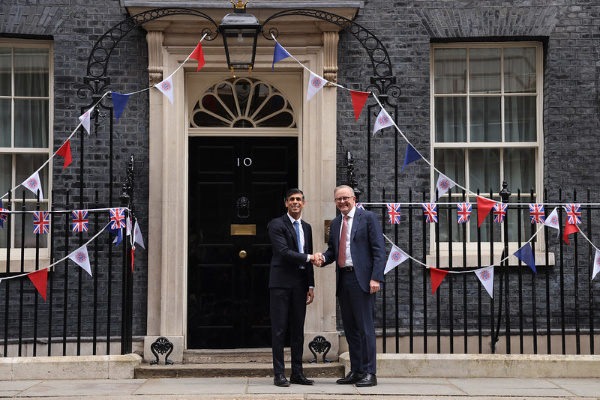
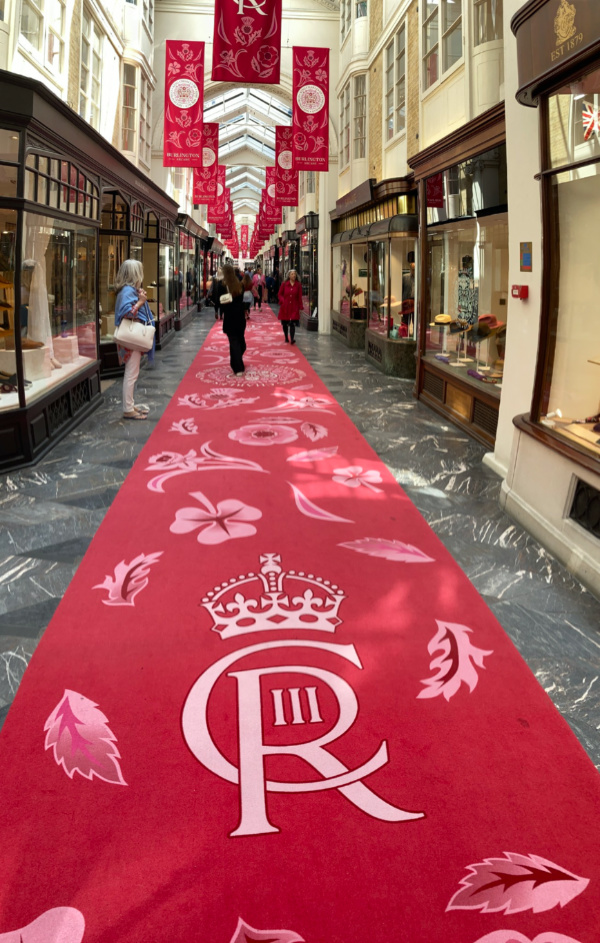
The Burlington Arcade rolls out the red carpet with the new King’s cipher. PICTURE: Matt Brown (licensed under CC BY 2.0)
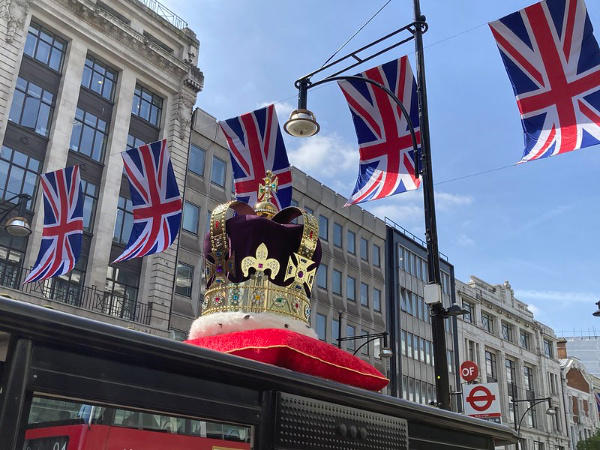
As the nation awaits the announcement of new Prime Minister following the 48 day tenure of Liz Truss – the shortest of any British Prime Minister, we take a quick look at the circumstances surrounding the next three shortest serving PMs…

1. George Canning. Canning, a Tory, had twice served as Foreign Secretary – between 1807-1809 and 1822-1827 (a period during which he also served as Leader of the House of Commons) when, following the resignation of Prime Minister Lord Liverpool in April, 1827, he was chosen to succeed him in the office. But Canning’s health took a turn for the worse soon after and he died in office on 8th August, 1827, having served just 119 days as Prime Minister.
2. The Viscount Goderich. FJ Robinson, 1st Viscount Goderich, succeeded George Canning as Prime Minister in 1827. But he was unable to hold together Canning’s coalition of Tories and Whigs and so resigned himself after just 144 days in office. He nonetheless went on to serve in the cabinets of both Earl Grey and Sir Robert Peel.
3. Andrew Bonar Law. The only Canadian to have served as British Prime Minister, Law was a Conservative Party leader who became Prime Minister after the fall of David Lloyd George’s Coalition Government on 23rd October, 1922. The party then won a clear majority in a general election on 15th November of that year. But ill with throat cancer he resigned on 20th May the following year, having served just 211 days in office. He died soon after on 30th October that year.
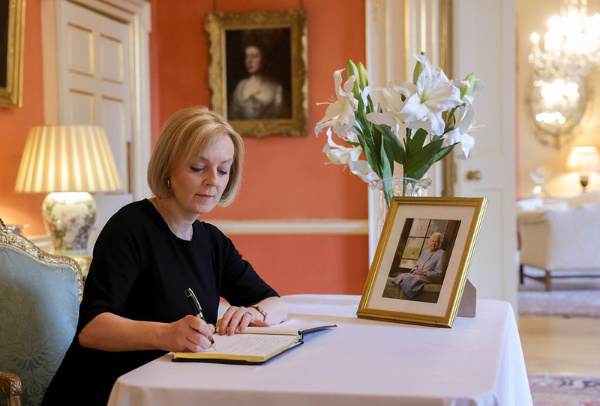
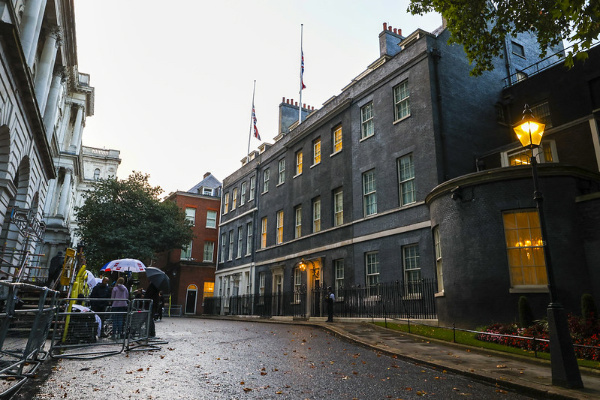
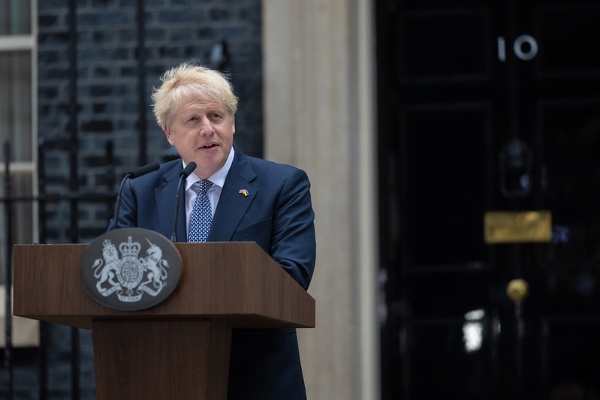
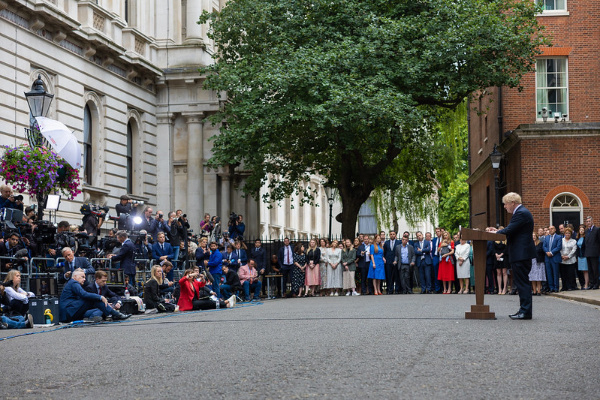
All eyes turned to Whitehall last week with Prime Minister Boris Johnson emerging from 10 Downing Street to announce he would resign. The move has sparking a leadership contest in the Conservative Party which is expected to be complete by 5th September.

As the world reacts to the Russian attack on Ukraine, on 24th February, Number 10 Downing Street, home of the British Prime Minister, and, below, the Foreign, Commonwealth and Development Office, in Whitehall are lit in the colours of the Ukrainian flag as the UK “stands in solidarity with the people of Ukraine“.

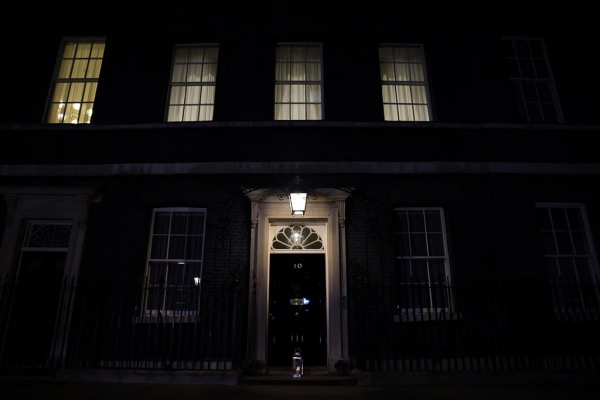
Remembering the more than 126,000 lost. A candle is lit outside 10 Downing Street on Tuesday night to mark the first anniversary of the first national lockdown. PICTURE: Pippa Fowles/No 10 Downing Street.
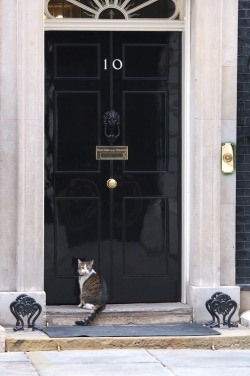
• Larry the cat celebrated his 10th anniversary in Downing Street this week. Officially the “Chief Mouser to the Cabinet Office”, Larry first came to Number 10 on 15th February, 2011, from the Battersea Dogs & Cats Home and has since been spotted many times in and around the property going about his duties (or seeing off rivals like the now retired Palmerston, the Foreign Office cat). Larry has served three Prime Ministers during his time in the seat of power – David Cameron, Theresa May and now Boris Johnson – and met with various world leaders (famously apparently taking a liking to US President Barack Obama and being spotted sleeping under Donald Trump’s car). Larry tweeted on Tuesday – the day of his “Larryversary” – that he has no plans of retiring at this stage.
• A series of auctions involving a collection of 260 London street signs started this week. Westminster City Council is selling the signs – which include Abbey Road NW8 (estimated price tag of £1,000-£2,000), Pimlico Road SW1 (£100-£200), Westbourne Park Road W2 (£100-£200) and Belgrave Place SW1 (£80-£120) – through Catherine Southon Auctioneers until 3rd March. The distinct signs were first created by Sir Misha Black in 1967. Head here for details.
• Looking further afield and English Heritage has put out a call for people with connections to the Cichociemni – the name for a group of Polish Home Army parachutists, many of whom trained at Audley End House, who were dropped behind enemy lines in Poland to begin fighting for the liberation of their homeland – to share their stories. Monday marked the 80th anniversary of the operation involving the elite fighters. Some 527 of them completed their training at the Jacobean stately home in Essex where their presence is today remembered in a memorial and fragmentary remains such as a scrap of graffiti in the coal gallery candle store, remnants of a timetable in a former briefing room and insulators for telephone wires which remain in some trees. “We’d love to hear from the public who have a connection or story to share about the Cichociemni at Audley,” said Andrew Hann, an historian with English Heritage which looks after Audley End House. “We’re particularly interested in hearing from those in the local area at the time, who may remember hearing bangs in the night, or seeing troops crossing fields in the darkness. Perhaps unsurprisingly, given that they were highly trained to be both ‘silent and unseen’ they left little obvious trace.”
Send items for inclusion to exploringlondon@gmail.com
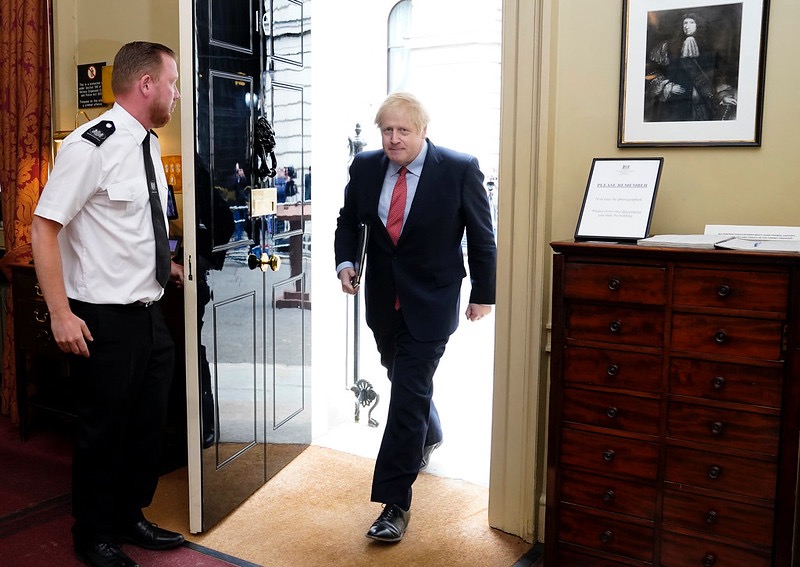
Boris Johnson returns to 10 Downing Street, home of the Prime Minister, on Monday, having recovered from COVID-19. PICTURE: Andrew Parsons/No 10 Downing Street (licensed under CC BY-NC-ND 2.0)

UK Prime Minister Boris Johnson and Chancellor Rishi Sunak were among those taking part in ‘Clap for Carers’ – in their case outside Number 10 Downing Street in Whitehall – on Thursday night. People across London took part in the countrywide initiative thanking healthcare workers for their efforts during the current coronavirus crisis. We join in thanking them! PICTURE: Andrew Parsons / No 10 Downing Street (licensed under CC BY-NC-ND 2.0)

News today that Boris Johnson will be the next Prime Minister of the UK. Johnson, who will take over from Theresa May – only the second woman to hold the office – as PM tomorrow after winning the Conservative Party vote over Foreign Secretary Jeremy Hunt, will be the 14th Prime Minister to serve in the office during the reign of Queen Elizabeth II. PICTURE: US State Department
With the recent change at 10 Downing Street – David Cameron out/Theresa May in – we thought it a good time to look back at when the man considered Britain’s first PM moved in.
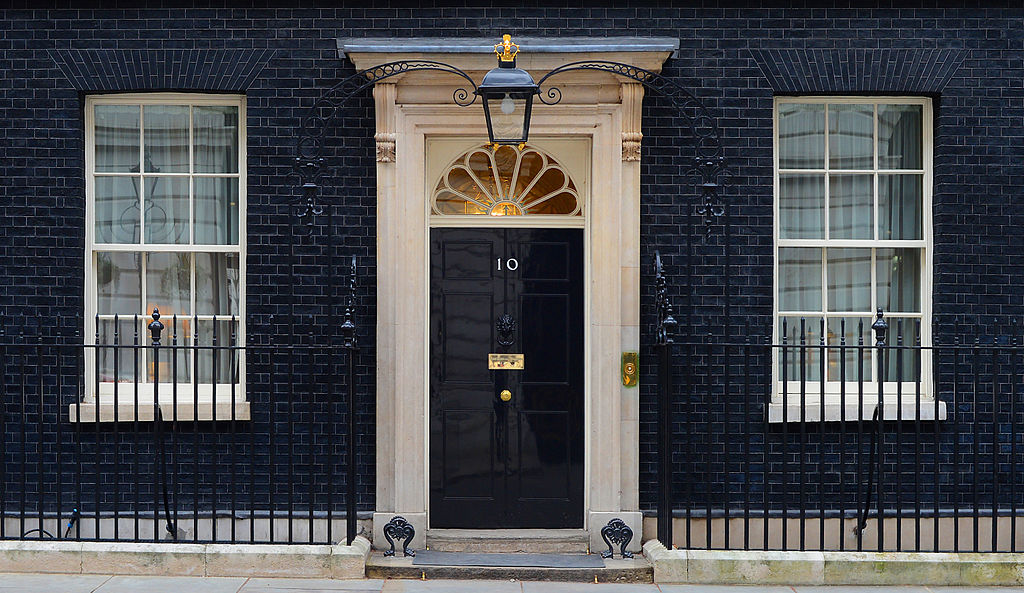 Sir Robert Walpole, commonly considered Britain’s first Prime Minister although he was never formally known by that title, was actually First Lord of the Treasury when in early 1730s King George II presented him with the terrace house at 10 Downing Street, off Whitehall, and the large mansion behind it (in fact the title of ‘First Lord of the Treasury’ can still be seen inscribed on the brass letter-box on the property’s front door).
Sir Robert accepted the king’s gift, but only on condition that it be made available to all future First Lords of the Treasury And he didn’t move in until 22nd September, 1735, having had architect William Kent join the terrace house with the mansion behind it before doing so.
Kent had joined the houses on two levels with the main entrance facing onto Downing Street instead of Horse Guards. The Walpoles would live at the back of the new house where Kent had created a series of grand rooms – suitable for receiving honoured guests – and had built an unusual three sided staircase which remains a star sight of the building today.
Walpole used the ground floor of the new property for business and set-up his study in what is now the Cabinet Room. Lady Walpole used the upstairs room now known as the White Drawing Room as her sitting room and what is now called the Terracotta Room (although the name of this room changes with the colour scheme) as the dining room.
Among those who attended 10 Downing Street during the Walpole’s residency were luminaries such as Queen Caroline (wife of King George II) as well as prominent politicians, writers and military figures.
The Walpoles left in 1742 and it was more than 20 years later before another First Lord of the Treasury moved in.
For more on 10 Downing Street (including its earlier history), check out our previous entries here and here.
PICTURE: Sergeant Tom Robinson RLC/ Contains public sector information licensed under the Open Government Licence v3.0.
It’s not often that we feature living people in ‘Famous Londoners’, but this prominent figure, albeit not a human, deserves special mention.
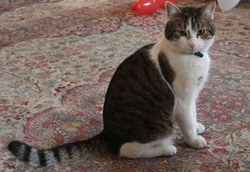 A resident of Number 10 Downing Street in Whitehall, Larry the cat is officially Chief Mouser to the Cabinet Office – a position for which he has won accolades (and, at times, reproaches, for a seeming lack of action in the face of invasion – this includes, most recently the arrival of a heron at the residence, with Larry nowhere to be found).
Larry arrived at Downing Street (then home to Conservative PM David Cameron) in February, 2011, then a four-year-old tabby who came from the Battersea Dogs & Cats Home in south London and was apparently recruited to deal with a rodent problem after they were spotted in news broadcasts behind correspondents. It was June, some four months later, before he apparently made his first kill.
Larry has had an at times prickly relationship with the media – it started soon after his arrival at Downing Street when he scratched ITV reporter Lucy Manning who was trying to get him to pose for a news item (you can see it here).
He’s also apparently had some run-ins with visiting dignitaries – although US President Barack Obama apparently was able to stroke him without incident – and with Freya, Chancellor George Osborne’s cat (who has since been exiled to Kent).
Larry isn’t the first cat to live at Downing Street – his predecessors include Wilberforce who lived there for 18 years during the tenure of PMs including Edward Heath, Harold Wilson, Jim Callaghan, and Margaret Thatcher, and Humphrey, who served Ms Thatcher, John Major and, briefly Tony Blair, before he retired in 1997. But Larry is the first who has officially held the title of Chief Mouser to the Cabinet Office.
PICTURE: HM Government (via Wikipedia).
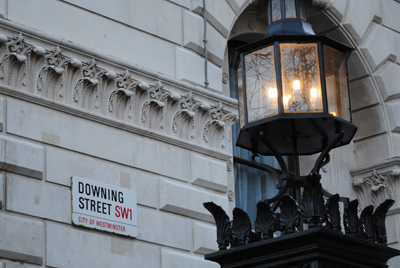
One of the most famous streets (and photographed) in London (though sadly not open to the public), Downing Street in Whitehall is these days most well-known for being the location, at Number 10, of the official residence of the British Prime Minister.
But Downing Street’s history dates back to a time before the first British PM moved in (this was Sir Robert Walpole in the 1735 and even after that, it didn’t become a regular thing for Prime Ministers to live here until the Twentieth century). And its name bears testimony to its creator, Sir George Downing, a soldier and diplomat described as “a miserly and at times brutal” man who served first under both Oliver Cromwell and, following the Restoration, King Charles II (and was, coincidentally, one of the first graduates of Harvard University).
In the 1650s, Sir George took over the Crown’s interest in land here, just east of St James’s Park, and intended to build a row of townhouses upon it. His ambitions were delayed, however, due to an existing lease with the descendants of Elizabethan courtier Sir Thomas Knyvet who had once lived in a large home on the site of what is now Number 10 Downing Street.
By the 1680s, however, the lease had expired and between 1682-84, Downing was able to construct a cul-de-sac, closed at the St James’s Park end, featuring either 15 or 20 two storey terraced townhouses with stables and coach-houses, designed by no less than Sir Christopher Wren.
While the homes were apparently of shoddy craftsmanship and stood upon poor foundations (Churchill famously wrote that Number 10 was “shaky and lightly built by the profiteering contractor whose name they bear”), the street apparently attracted some notable residents from the start.
These included the Countess of Yarmouth, who briefly lived at Number 10 in the late 1680s, Lord Lansdowne and the Earl of Grantham, and even, briefly, apparently the diarist James Boswell in the mid 1700s. Downing himself isn’t thought to have ever lived here – he retired to Cambridge a few months after the houses were completed.
The houses between Number 10 and Whitehall – on the north side of the street – were taken over by the government and eventually demolished in the 1820s to allow for the construction of offices for the Privy Council, Board of Trade and Treasury while the houses on the south side remained until they were demolished in the early 1860s to make way for the Foreign, India, Colonial and Home Offices.
The numbers in the street have changed since Downing’s houses were first built. Of the original homes in the street only Number 10 (home of the PM) and Number 11 (home of the Chancellor of the Exchequer) survive.
Access to the street has been restricted since the 1980s with the current black steel gates put in place in 1989.
An underground tunnel apparently runs under the street connecting number 10 with Buckingham Palace and the underground bunker, Q-Whitehall, built in the 1950s in the event of nuclear war.
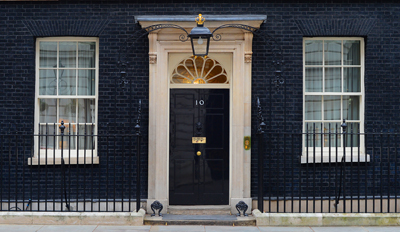
Sir Winston Churchill lived a number of residences in London but, of course, the most famous in its own right is the traditional home of British PMs, 10 Downing Street.
Located in a short street just off Whitehall (now closed to the public), the property has been home to Prime Ministers since Sir Robert Walpole, officially First Lord of the Treasury but effectively the first PM, took up residence in 1735.
Churchill moved in following his election to the office of Prime Minister in 1940 and he and his wife Clementine took up residence in a second floor flat. It was in this property where, cigar in hand, he is famously known to have dictated speeches and letters to his secretary while propped up in bed.
The building suffered some bomb damage during the Blitz – on 14th October, 1940, a bomb fell on nearby Treasury Green and damaged the home’s kitchen and state rooms. Three civil servants doing Home Guard duty were killed but the kitchen staff were saved thanks to Churchill who, dining in the Garden Rooms when the bombing raid began, ordered them to leave their duties and get into a bomb shelter.
The Garden Rooms – which included a bedroom, meeting area and the small dining room – were subsequently reinforced with steel and heavy metal shutters although these apparently would have made little difference had there been a direct hit.
Cabinet moved out of Number 10 into the underground bunker complex now referred to as the Churchill War Rooms (see last week’s post) in October, 1939, and, after several near misses, the Churchills – Sir Winston apparently very begrudgingly – moved into the Number 10 Annex above the war rooms in 1940 (although Churchill continued to visit Number 1o for working and dining).
Much of the furniture and valuables were removed from Number 10 and only the Garden Rooms, Cabinet Room and Private Secretaries’ office remained in use (along with a reinforced bomb shelter built underneath – King George VI is known to have sheltered here when he was dining with Churchill when a raid began).
At the end of the war the Churchills quickly moved back into Number 10 and it was from the Cabinet Room that he made his Victory in Europe (VE) Day broadcast on 8th May, 1945.
He vacated the premises after his election defeat later in 1945 but returned when re-elected PM in 1951 and left after he resigned in 1955 having held a dinner party attended by Queen Elizabeth II and Prince Philip the night before.
A couple of interesting facts about Churchill’s time at number 10: Churchill had many pets who usually had free rein in the house – even at 10 Downing Street his poodle Rufus was known to have wandered into a meeting in the Cabinet Room (before he was ejected) – while in 1958, Georgina Landemare, the cook during his time at number 10, famously published a book, Recipes from No. 10, which featured an introduction by Churchill’s wife, Clementine.
There are apparently two portraits of Churchill among those of other PMs which grace the wall of the Grand Staircase.
For more on the history of 10 Downing Street, see www.gov.uk/government/history/10-downing-street
PICTURE: Sergeant Tom Robinson RLC/Crown Copyright
• London Open Garden Squares Weekend will see more than 200 “hidden and little known” gardens swing their gates open to the public this Saturday and Sunday. Featuring 20 more gardens than last year’s event, the gardens range from classic London square parks to rooftop gardens, community allotments and ecology centres as well as gardens attached to restaurants and historic properties. They include Highbury Square – former home of the Arsenal Football Club, Barnsbury Wood – London’s smallest nature reserve, the Cordwainers community garden in Hackney, Garden Barge Square which will see a floating garden created on the decks of barges, the garden at the PM’s home of number 10 Downing Street, and The Roof Gardens, located above the former Derry & Toms department store in Kensington. One £12 ticket gains access to all gardens (excepting those with special conditions) while National Trust members are half-price and children under 12 go free. For more and a full programme of open gardens, head to www.opensquares.org.
• Comics created during World War I are the focus of a new exhibition which opened at the Cartoon Museum in Bloomsbury this week. Never Again! World War I in Cartoon and Comic Art features works by British cartoonists Alfred Leete, Bruce Bairnsfather, William Heath Robinson and Donald McGill and includes more than 300 images ranging from political and joke cartoons taken from newspapers and periodicals and children’s comics to comic cigarette cards and publications produced in the trenches by serving soldiers. There are also some more recent works such as the 1980s comic strip Charley’s War and drawings from the Horrible Histories series. The exhibition runs until 19th October. Admission charge applies. For more, see www.cartoonmuseum.org.
• Explore the world of garbage in this new exhibition opening at the Science Museum in South Kensington on Monday. The Rubbish Collection aims to use 30 days worth of the Science Museum’s waste to “expose the beauty, value and volume of what we call ‘rubbish'”. Visitors are able to take part by collecting, sorting and documenting the rubbish generated by the museum which will then be photographed by artist Joshua Sofaer before going on to be processed for recycling or to generate electricity. During a second phase of the exhibition, Sofaer will bring the rubbish back into the museum at different stages of processing. The exhibition is part of the museum’s Climate Changing programme. Runs until 14th September. For more, see www.sciencemuseum.org.uk.
 Exploring London