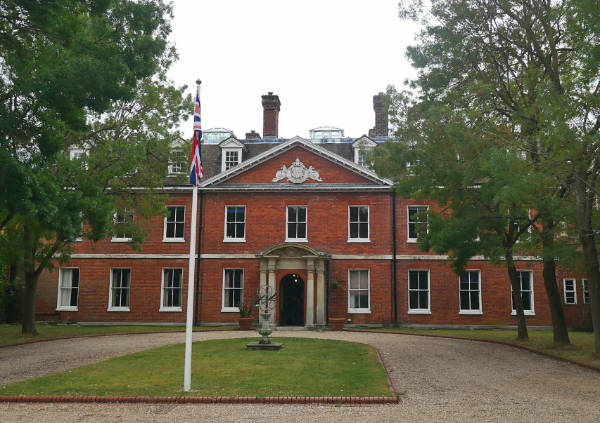
This building, which dates from 1775, is the former palace of the Bishops of Rochester and the latest incarnation of the palace which the bishops used for centuries.
The land, which came to be known as the Manor of Bromley, was initially granted to the bishops of Rochester by Saxon kings of Kent over a couple of centuries. Following the Norman Conquest, an attempt by Odo, the Earl of Kent, to claim it failed thanks to the efforts of Bishop Gundulf (1075-1108) and the Archbishop of Canterbury, Lanfranc.
Subscribe for just £3 a month to access all of Exploring London’s articles…
Located in Bromley Palace Park – once the home of the Bishops of Rochester and now the grounds of the Bromley Civic Centre – is what appears to be the remains of a medieval church or building.
But the “ruins” actually only date from the Victorian era and were created as a folly for the first private owner of the house.
The ruins, which are Grade II-listed, consists of a brick turret which features a rounded arched window in the Norman style with some raised zig-zag decoration above it and an arched arrow squint. The arch rests upon what is believed to actually be early medieval capitals with a late 12th century column on the left.
The folly, located at the south-western corner of the bishop’s palace grounds, was created in about 1865 on the orders of merchant Coles Child, who bought the house in 1845, and may have been created, along with other garden features, by the company of James Pulham.
Tradition says it was constructed from medieval remnants found in the moat of the bishop’s palace.

 Exploring London