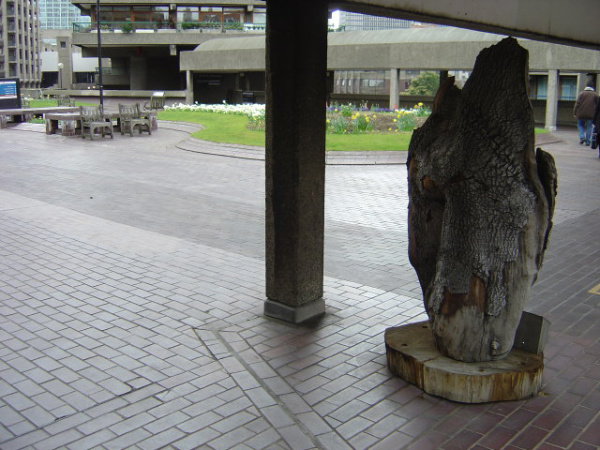
Standing on a Barbican walkway is the remnant of a tree believed to be at least 500-years-old which fell during a storm January, 1990.
The now hollowed-out stub of the beech tree (Fagus Sylvatica) had previously been located in the woodland known as Burnham Beeches, in Buckinghamshire – a woodland which was purchased by the City of London Corporation in 1880.
But what apparently sets this tree out from the others at Burnham Beeches is that it is believed famed German composer Felix Mendelssohn Bartholdy (1808-1847) used to sit under its then leafy branches while staying nearby during his several visits to England.
He is said to have done so to gain inspiration for his compositions and among the works he is said to have composed while here is some “incidental music” for A Midsummer Night’s Dream (although it has been suggested this might not actually be the exact tree under which he sat).
The tree and its plaque were installed in 1993 by the Barbican Horticultural Society and unveiled by conductor and composer Carl Davis.
There is now a replacement “Mendelssohn’s Tree” in Burnham Beeches which was planted in 2005.
WHERE: Barbican, off Aldersgate St (nearest Tube station is Barbican); WHEN: Anytime; COST: Free; WEBSITE: N/A.
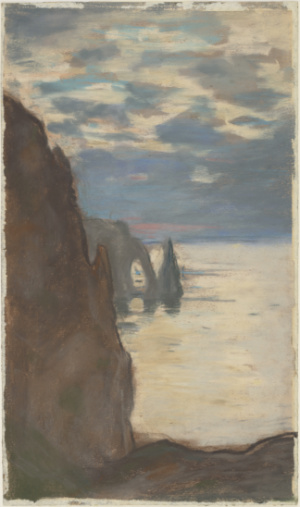
Claude Monet, ‘Cliffs at Etretat: The Needle Rock and Porte d’Aval’, c 1885. National Galleries of Scotland.
• A new exhibition exploring how Impressionist and Post-Impressionist artists in late 19th-century France radically transformed the status of works on paper opens at the Royal Academy on Friday. Impressionists on Paper: Degas to Toulouse-Lautrec features around 80 works on paper by artists including Mary Cassatt, Paul Cézanne, Edgar Degas, Paul Gauguin, Eva Gonzalès, Claude Monet, Berthe Morisot, Odilon Redon, Pierre-Auguste Renoir, Georges Seurat, Henri de Toulouse-Lautrec and Vincent van Gogh. Among the highlights are Degas’ Woman at a Window (1870-71), van Gogh’s The Fortifications of Paris with Houses (1887), Monet’s Cliffs at Etretat: The Needle Rock and Porte d’Aval (c1885) and Toulouse-Lautrec’s images of the urban underworld of Montmartre. The display can be seen in The Gabrielle Jungels-Winkler Galleries until 10th March. Admission charges apply. For more, see royalacademy.org.uk.
• English Heritage have unveiled their final Blue Plaque for 2023 and it celebrates two of the most influential painters of the early-to-mid 20th century, Vanessa Bell and Duncan Grant. The plaque was unveiled at number 46 Gordon Square in Bloomsbury, from where the Bloomsbury Group – of which Bell and Grant were leading members – drew its name. Bell first lived at number 46 with her siblings, including Virginia Stephen (later Woolf), and, in 1914, Grant moved in with Vanessa and her husband, Clive Bell. Paintings the pair made at number 46 include Grant’s Interior at Gordon Square (c1915) and Bell’s Apples: 46 Gordon Square (c1909-10), a still-recognisable view from the drawing-room balcony to the square. For more on the English Heritage Blue Plaques scheme, head to www.english-heritage.org.uk/visit/blue-plaques/.
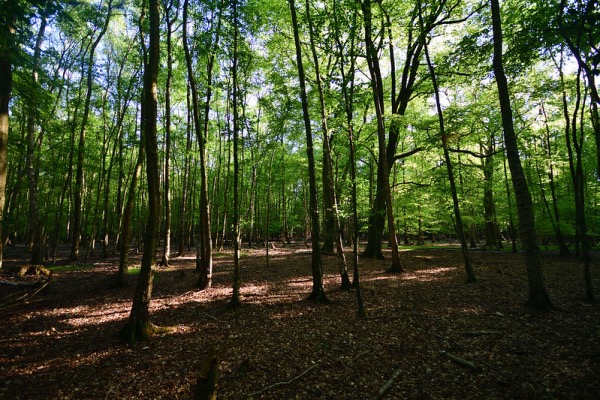
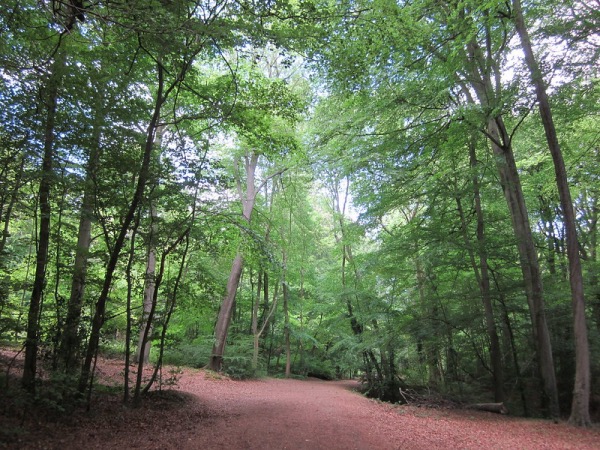
• The history of Burnham Beeches has been brought to life with a new augmented reality app. The app allows users to superimpose periods of Burnham Beeches’ history – from the Iron Age, Middle Ages and World War II – over what they see when visiting the site and incorporates sounds from selected era as well. It can be accessed via a QR code which is being published on signs at Burnham Beeches. Burnham Beeches, located near the village of Burnham in Buckinghamshire, was acquired by the City of London in 1880 when the area was threatened by development and is managed as a free open space. For more, head here.
• The work of 30 young artists celebrating African community and culture is being showcased on billboards across the city in conjunction with Tate Modern’s current exhibition, A World in Common. The photographs have been selected following a call from the Tate Collective for 16-to-25-year-olds to submit images responding to the exhibition. More than 100 entries were submitted by young people based across the UK and beyond and Londoners will be able to view the 30 shortlisted works on billboards in Haringey, Lambeth, Southwark and Tower Hamlets over the next two weeks.
City of London-managed open spacesEpping Forest, Burnham Beeches and Ashtead Common have been selected to be part of a nationwide network of 70 ancient woodlands to be dedicated to The Queen in celebration of the Platinum Jubilee. At almost 6,000 acres, Epping Forest is London and Essex’s largest green space and is known as the “green lungs” of London. Burnham Beeches, located in Buckinghamshire, is only a square mile in size but is described as a “New Forest in miniature” while Ashtead Common in Surrey’s 200 hectares of open public space is home to more 1,000 living ancient oak pollards. For more on The Queen’s Green Canopy initiative, see www.queensgreencanopy.org. For more on the City of London’s green spaces, see www.cityoflondon.gov.uk/things-to-do.
 Exploring London