This Week in London – Black On The Square; poetry celebrated at Westminster Abbey; and, Ellen Terry’s costumes at Smallhythe Place…

A celebration of Black communities and culture returns to Trafalgar Square this weekend. Taking place on Saturday, the Mayor of London’s Black On The Square festival features live music and dance as well as art, fashion, food from Ghana, Guyana, Jamaica, Mauritius and Nigeria, and a range of family-friendly activities. Multi award-winning actor and rapper Bashy is headlining with other acts including Cultur FM, Kofi Stone, Krar Collective, Shingai, Phoebs and Karen Nyame. The free festival runs from noon to 6pm. For more, see www.london.gov.uk/events/black-square-2024.
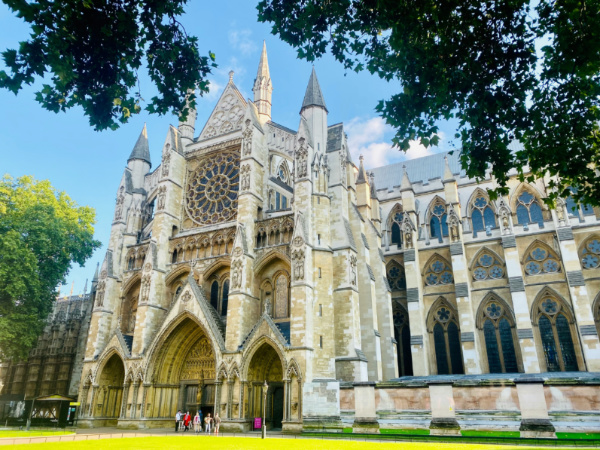
Westminster Abbey. PICTURE: Ian Branch/Unsplash

Westminster Abbey, home of the famed Poet’s Corner, has unveiled a new season of events celebrating poets and poetry this autumn. Voice and Verse, which launches on 3rd October, features poetry readings, talks, tours, musical performances and workshops. Highlights include a lunchtime concert to be held in St Margaret’s Church with music inspired by the poetry of writers memorialised in Poet’s Corner, a talk on the lives and legacy of World War I poets and an eventing of poetry held in Poet’s Corner itself. For more information, including event dates and booking information, head to www.westminster-abbey.org/events/autumn-season.

Further afield: Two of Victorian actor Ellen Terry’s costumes – worn while performing Lady Macbeth in an 1888 production of Macbeth at London’s Lyceum Theatre – have gone on display at her former home of Smallhythe Place in Kent. The costumes, designed by Alice Comyns Carr, include the iridescent green ‘Beetlewing dress’, decorated in over 1,000 beetle wings, and immortalised in a John Singer Sargent painting of Terry. There’s also a gown worn by Terry in the play’s banqueting scene in which Macbeth sees the ghost of Banquo. Made of muslin and shot through with gold thread, it is on display for the first time after extensive conservation work to address the damage caused by its repeated use on stage and the alterations and repairs which have occurred since. The Dressing Lady Macbeth: An Exhibition can be seen until 3rd November. Admission fees apply. For more, see www.nationaltrust.org.uk/visit/kent/smallhythe-place.

Send all items for inclusion to exploringlondon@gmail.com
This Week in London – John Singer Sargent at the Tate; vote for the Fourth Plinth occupants; and the Black figure celebrated in contemporary art at the National Portrait Gallery…

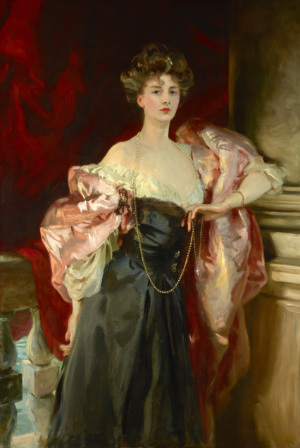
John Singer Sargent, Lady Helen Vincent, Viscountess d’Abernon, 1904 Birrmingham Museum of Art. Photo Sean Pathasema

The work of portrait painter John Singer Sargent (1856-1925) is the subject of a new exhibition opening at Tate Britain today. Sargent and Fashion features some 60 paintings as well as a dozen period dresses and accessories with many of the former worn by his sitters and several reunited for the first time with the portraits in which they are shown. Highlights include Lady Helen Vincent, Viscountess d’ Abernon (1904), Mrs. Charles E. Inches (Louise Pomeroy) (1887), which will be juxtaposed with the red velvet evening dress illustrated, and, Charles Stewart, sixth Marquess of Londonderry at the Coronation of Edward VII (1904) which will be reunited with the regalia worn by the marquess. Also on show is Sargent’s iconic painting of socialite Virginie Amélie Gautreau, Madame X (1883-4), which caused a stir by depicting Mme Gautreau with one diamond strap falling from her shoulder, Mrs Montgomery Sears (1899) which is being shown alongside Mrs Sears’ own dresses and her photographs of Sargent at work, and his dramatic image, Ellen Terry as Lady Macbeth 1889 which is being shown alongside Terry’s dress and cloak. Runs until 7th July. Admission charge applies. For more, see www.tate.org.uk/whats-on/tate-britain/sargent-and-fashion.

The public are being asked to vote on a shortlist of seven sculptural works to determine which of them will occupy Trafalgar Square’s Fourth Plinth in 2026 and 2028. The works include Ruth Ewan’s Believe in Discontent depicting a black cat, Chila Kumari Singh Burman’s The Smile You Send Returns to You featuring a colourful bus with a tiger atop it and Veronica Ryan’s Sweet Potatoes and Yams are Not the Same which features a sweet potato “island” with growing vine leaf sprouting out of it. Models of the short-listed works can be seen at The National Gallery (Room 1, entry is free) until 1st March. To vote, head to https://www.london.gov.uk/programmes-strategies/arts-and-culture/current-culture-projects/fourth-plinth-trafalgar-square/fourth-plinth-commissions

A major exhibition exploring the Black figure opens at the National Portrait Gallery today. The Time is Always Now: Artists Reframe the Black Figure features 55 contemporary works, including sculpture, paintings and drawings, by some 22 African artists working in the US and UK. The works include Amy Sherald’s life-size greyscale portraits of African Americans, American figurative artist Nathaniel Mary Quinn’s fragmented portraits, Thomas J Price’s life-sized fictional female figure, As Sounds Turn to Noise (2023), Noah Davis’ depiction of Greenwood, Oklahoma, known as Black Wall Street (2008), Kimathi Donkor’s history painting Nanny of the Maroons’ Firth Act of Mercy (2012) and Lubaina Himid’s work Le Rodeur: The Exchange (2016) which responds to a case of blindness that affected a French slave ship in 1819. The display is curated by writer Ekow Eshun, former director of the Institute of Contemporary Arts. Runs until 19th May. Admission charge applies. For more. see www.npg.org.uk.

Send all items to exploringlondon@gmail.com

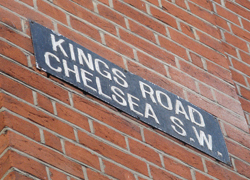
What’s in a name?…Kings Road, Chelsea

Sure, it’s quite obvious that this well-known thoroughfare through Chelsea and Fulham in west London was named for a king but which king and why?

kings-roadIt was the Stuart king Charles II who first starting using the road’s course as part of his route to Hampton Court which meant it was closed to the public.

Access was granted only to those whom the monarch permitted – initially via ticket and from the 1720s via a copper pass stamped with the king’s monogram. Entry was controlled by a series of gates located along its length.

King George III was also known to use the route to travel to his palace at Kew and it was only in 1830 that it was finally opened to the public.

The road, which now runs west from Sloane Square for two miles through Chelsea, transforming into the New King’s Road after entering Fulham, is now known for its shopping (not to mention the site of the UK’s first Starbucks in 1999) although in the 1960s and 1970s it served as something of a hub for London’s counter-culture.

The road has been associated with many famous figures over the years – the king aside. Composer Thomas Arne lived at number 215 and apparently composed Rule Britannia while he did, actress Ellen Terry lived in the same property from 1904-1920 and bon vivant Peter Ustinov after her.

Other famous associations include one with Mary Quant, who opened her ground-breaking boutique Bazaar at number 138a in 1955 and Thomas Crapper, toilet entrepreneur, who had a premises at number 120.

PICTURE: Secret Pilgrim/Flickr/CC BY-SA 2.0

Around London – Lloyd’s gets Grade I; 700,000 historic items online in NT database; and, introducing the Silverdale Hoard…

London’s iconic Lloyd’s Building (also known as the ‘inside out’ building thanks to a design in which utility pipes, lifts and stairways are exposed on the outside) has been listed as a Grade I building, becoming the youngest building to be granted such status. John Penrose, Minister for Tourism and Heritage, made the decision following advice from English Heritage. Roger Bowdler, English Heritage’s designation director, said he was “delighted” at the decision. “Its listing at the highest grade is fitting recognition of the sheer splendour of Richard Rogers’s heroic design. Its dramatic scale and visual dazzle, housing a hyper-efficient commercial complex, is universally recognised as one of the key buildings of the modern epoch.” The futuristic-looking building is one of very few post war buildings to be protected with a Grade I listing. Construction of the tower started in 1981 and was largely completed by May 1984. It was occupied two years later. As well as its futuristic exterior, the building also features a nod to the past with the Adam Room, which dates from the 1760s and was moved here intact from which was moved from Bowood House in Wiltshire. The building is also home to the Lutine Bell, which comes from a French frigate captured by the British in 1793, and was rung to herald important announcements (today these are generally only ceremonial). The history of Lloyd’s goes back to 1688 when it’s believed the first Lloyd’s Coffee House opened in Tower Street.

• More than 700,000 objects in the care of the National Trust can be accessed virtually via a new online database. The database, accessed via www.nationaltrustcollections.org.uk contains details of more than 700,000 objects – everything from artworks by Gainsborough to a laudanum bottle containing remnants of poison and the cotton underwear of a grocer – currently housed at more than 200 properties as well as in storage or on loan to other organisations. Highlights include a costume made from beetle wings for the actress Ellen Terry, an early anti-aging ‘machine’, a furnished Victorian dolls house from Uppark House in West Sussex, and a Bible reputed to have been used at the execution of King Charles I from Chastleton House in Gloucestershire. The database has been in development for 15 years and the work to develop it will continue.

A 1,100-year-old collection of Viking Age objects including silver arm-rings and brooch fragments and coins from the Silverdale Hoard – found in Silverdale, Lancashire, in September – has gone on display in room 2 of the British Museum until early in the New Year. Among the 200 objects in the hoard is a type of coin not seen before and bears the inscription Airdeconut which appears to be an early attempt to represent the name Harthacnut. Lancaster City Museum has reportedly expressed an interest in acquiring the hoard. For more, see www.britishmuseum.org.