(In)famous Londoners – Alice Tankerville…

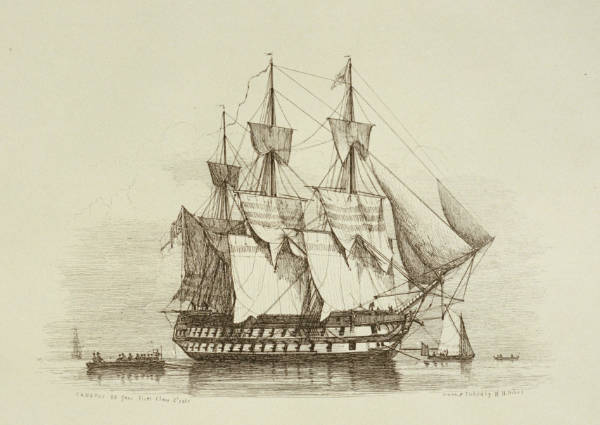
The only woman prisoner recorded as having escaped from the Tower of London, Alice Tankerville was accused, along with her common-law husband John Wolfe, of committing piracy in 1533.

The Tower of London on the bank of the Thames. PICTURE: Juhi Sewchurran/Unsplash

It was alleged that Tankerville had lured two wealthy Italian merchants into a wherry out in the Thames where her accomplices – including Wolfe and two men disguised as watermen – had robbed and murdered them. They were also accused of burgling a home near St Benet Gracechurch where the two men had been staying.

Despite apparently having attempted to seek sanctuary in a special precinct near Westminster Abbey, the couple were arrested, charged with piracy and murder among other things, and, following a trial neither apparently attended, found guilty.

Taken to the Tower of London in 1534 (Wolfe had done a previous stint there for the theft of 366 gold crowns from a ship berthed at the Hanseatic League’s Steelyard but had eventually been released due to a lack of evidence), Alice is said to have been imprisoned in Coldharbour Gate.

Alice wasn’t done yet, however. On 23rd March that year, she managed to escape, apparently with the aid of gaoler John Bawde who provided her with ropes and a key.

It was a short-lived liberation – believed to have been wearing man’s clothes, she and Bawde were arrested trying to reach waiting horses on a road just outside the Tower (it’s worth noting that not only was Alice the only women prisoner to ever escape the Tower of London, she was also the only escapee during the reign of King Henry VIII).

Both she and Wolfe were subsequently executed and due to the nature of their crime, their execution took place on the Thames.

They were hanged in chains in the Thames near the site of their crime and, before a small flotilla of boats filled with sight-seers come to witness the event, were slowly drowned as the tide rose. Their bodies were then left hanging on the spot as a warning to others.

What’s in a name?….Giltspur Street

This City of London street runs north-south from the junction of Newgate Street, Holborn Viaduct and Old Bailey to West Smithfield. Its name comes from those who once travelled along it.

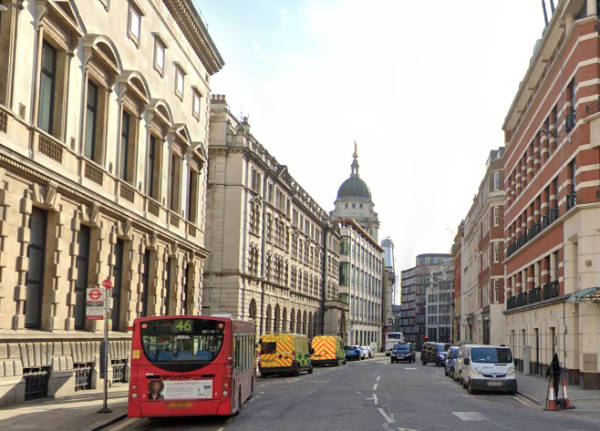
Looking south down Giltspur Street, with the dome of the Old Bailey visible, in 2018. PICTURE: Courtesy of Google Maps

An alternative name for the street during earlier ages was Knightrider Street which kind of gives the game away – yes, the name comes from the armoured knights who would ride along the street in their way to compete in tournaments held at Smithfield. It’s suggested that gilt spurs may have later been made here to capitalise on the passing trade.

The street is said to have been the location where King Richard II met with the leaders of the Peasant’s Revolt who had camped at Smithfield. And where, when the meeting deteriorated, the then-Lord Mayor of London William Walworth, ending up stabbing the peasant leader Wat Tyler who he later captured and had beheaded.

St Bartholomew’s Hospital can be found on the east side of the street. On the west side, at the junction with Cock Lane is located Pye Corner with its famous statue of a golden boy (said to be the place where the Great Fire of London was finally stopped).

There’s also a former watch house on the west side which features a monument to the essayist late 18th century and 19th century Charles Lamb – the monument says he attended a Bluecoat school here for seven years. The church of St Sepulchre-without-Newgate stands at the southern end with the Viaduct Tavern on the opposite side of the road.

The street did formerly give its name to the small prison known as the Giltspur Street Compter which stood here from 1791 to 1853. A prison for debtors, it stood at the street’s south end (the location is now marked with a City of London blue plaque).

What’s in a name?…Pentonville…

This north London district owes its name to the family estate on which it was developed.

The district, one of the first planned residential developments in London, was developed in the early 1770s along what was known as New Road. It can be found to the north of Clerkenwell with King’s Cross to the west and Angel to the east.

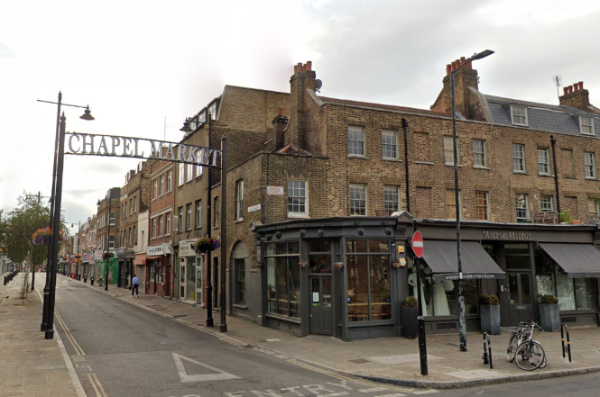
Corner of Chapel Market and Penton Street, Pentonville. PICTURE: Courtesy of Google Maps

Set within rolling fields, it was named for the family who owned the land which it was developed – that of Henry Penton, a Lord of the Admiralty, whose family, who hailed from Winchester, had owned the land for a couple of generations. The suffix “ville” was added to give the land sales appeal (a move which proved less popular after the rise of Napoleon thanks to its associated with French).

The new suburb was laid out mostly in a grid pattern on Islington Hill with the first street, named Penton Street, was completed in 1773. Building of further streets continued sporadically over the ensuing decades until the 1840s.

A church – St James Pentonville – was built halfway up the hill on Pentonville Road; it survived until its demolition in 1984. The burial grounds now form a public park – the Joseph Grimaldi Park (named for the clown who is buried within it). Other notable burials include Henry Penton.

Chapel Market was built as a residential street in 1790 but gradually transformed into a market and shops (it still contains some original properties).

Other landmarks include St Silas Church, Pentonville, which opened in 1863 and still stands in Risinghill Street, and the Church of St Mark the Evangelist, which opened in Myddleton Square in 1855, and was demolished in 1970.

Initially a fashionable place to live, this led to the term ‘Pentonville’ being used to describe an area beyond its original boundaries (Charles Dickens was apparently guilty of doing this). But its reputation began to fade during the mid-19th century as some homes were converted into businesses and others became boarding houses and tenements. By the turn of the century it was one of London’s poorest districts.

The area was partly redeveloped with council housing during the period between the two world wars – this was continued to a greater degree after World War II.

Incorporated into the London Borough of Finsbury in 1899, Pentonville became part of the London Borough of Islington in 1965 (there was Pentonville ward in the borough until 1978).

Famous residents have included philospher and economist John Stuart Mill (born at 13 Rodney Street in 1806) and Vladimir Lenin, who lived with his wife at 30 Holford Square just off Pentonville Road briefly in 1902-03.

Pentonville Road, formerly part of New Road, shares the name and a number of other streets also feature related names including, of course, the aforementioned Penton Street. Interestingly, the (in)famous HM Prison Pentonville, is not located in the area but in Caledonian Road in Barnsbury, some distance to the north.

Of course, Pentonville (in the form of Pentonville Road) can also be found in the pale blue section of properties on the Monopoly board.

This Week in London – London homes at Christmas; Christmas Eve at the Dickens’; and, ‘Women & Freud’…

A Christmas Tree (not part of the Museum of the Home). PICTURE: Tj Holowaychuk/Unsplash

The Museum of the Home in Shoreditch has once again redressed its ‘Rooms through Time’ display for the festive season. Located in the Grade I-listed Almshouses and adjoining Branson Coates Wing, the display spans the some 400 years and explores how seasonal festivals, culture and personal traditions” have shaped our lives at home during the winter months. This year the redressing also includes seven new period homes which reflecting the stories of East London. See everything from a Midwinter Celebration in 1630 to a Midnight Mass in 1956, a Christmas Party in 1978, and a futuristic New Year’s Eve in 2049. Runs until 12th January. Admission is free. For more, see www.museumofthehome.org.uk/whats-on/rooms-through-time/winter-past-2024-2025/.

Join the Dickens family for Christmas. The Charles Dickens Museum in Bloomsbury is holding a special Christmas Eve opening with the house decorated in a traditional Victorian style. Guests, who each receive a free mince pie and mulled wine or soft drink alternative, will be able to watch adaptations of A Christmas Carol, including The Muppet Christmas Carol, throughout the day in ‘The Smallest Theatre in the World.’ Admission charge applies. To book, head to https://dickensmuseum.com/blogs/all-events/christmas-eve-at-the-charles-dickens-museum.

On Now: Women & Freud: Patients, Pioneers, Artists. This display at the Freud Museum in South Hampstead draws on manuscripts, images, objects, visuals, and film footage to bring to life the many women who shaped Freud’s life including everyone from the early “hysterics”, who Freud called “his teachers” to later patients such as Princesse Marie Bonaparte (who went on to become an analyst) through to his daughter Anna Freud and her partner Dorothy Burlingham, to artists such as Marie-Louise von Motesiczky, Louise Bourgeois, Paula Rego, Alice Anderson and Tracey Emin. The exhibition also celebrates the 100th anniversary of the first publication of Sigmund Freud’s work by Hogarth Press, founded and owned by Virginia and Leonard Woolf and a key feature in Bloomsbury life. Admission charge applies. Runs until 5th May. For more, see www.freud.org.uk/exhibitions/freuds-women/

Send all items for inclusion to exploringlondon@gmail.com.
This Week in London – One of the world’s most valuable watches at Science Museum; medieval silk bag (with a story) goes on show at Westminster Abbey; and, new electric bus display at London Transport Museum…

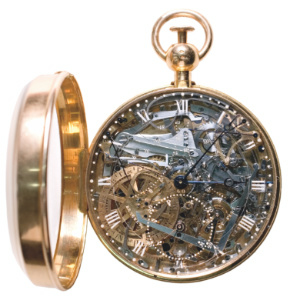
The ‘Marie Antoinette’ perpetuelle, Breguet, No 160, Paris, 1783-1820
© The Museum for Islamic Art, Jerusalem

One of the world’s most valuable watches – the No 160 watch which Abraham-Louis Breguet designed for Marie Antoinette but which wasn’t completed until the 1820s, well after her death – is the star of the show at the Science Museum’s new exhibition Versailles: Science and Splendour. Opening today, the exhibition, created in partnership with the Palace of Versailles, takes visitors on “a 120-year journey through the evolution of science at Versailles” and explores how Louis XIV, Louis XV and Louis XVI encouraged the pursuit of scientific knowledge and harnessed that knowledge as a tool of power. More than 100 objects are on display and, along with Breguet’s watch, they include Louis XV’s rhinoceros, a detailed map of the moon by Jean-Dominique Cassini, and Claude-Siméon Passemant’s Clock of the Creation of the World (1754). The watch, meanwhile, has its own fascinating history, including two decades in which its whereabouts were unknown after it was stolen in 1983 (in fact, its display in this exhibition marks the first time the timepiece has travelled abroad since its safe return to the LA Mayer Museum for Islamic Art in 2008). Runs until 21st April. Admission charge applies. For more, see sciencemuseum.org.uk/see-and-do/versailles.

• A medieval silk seal bag, which dates from the reign of King Henry III, has gone on public display for the first time in the Queen’s Diamond Jubilee Galleries at Westminster Abbey. The display follows the discovery by scholars that the bag’s material is a perfect match to the silk cloth used to wrap the remains of the Emperor Charlemagne when he was buried in Germany’s Aachen Cathedral (Charlemagne, seen as the first Holy Roman Emperor, died in 814 but was re-buried in the karlsschrein (Charles’s shrine) at Aachen in 1215). The bag at the abbey contains a wax seal, the Great Seal of King Henry III, which was attached to an inventory of the jewels and precious items on Edward the Confessor’s shrine located in the heart of the abbey. It was drawn up in 1267 when Henry III was in financial difficulties and forced to pawn items from the shrine to Italian merchants to raise funds (it is believed the items were all returned within 18 months). The silk used for Charlemagne’s shroud is believed to have been spun in the 12th century in Spain or the eastern Mediterranean and, while the small piece at the Abbey originates from a separate silk, it is understood that it would have been produced by the same weavers on the same loom. The bag can been seen until Easter next year. Admission charge applies. For more, see www.westminster-abbey.org/visit-us/plan-your-visit/the-queens-diamond-jubilee-galleries/.

A new interactive electric bus display has opened at the London Transport Museum in Covent Garden. The Wrightbus Electroliner display – which has been provided by Transport UK London Bus – is based on an electric vehicle bus type which has been part of the fleet of buses operating in London since 2023. The new display features the front of the bus and includes an interactive driver cab and passenger space. Admission charge applies. For more, see www.ltmuseum.co.uk.

Send all items for inclusion to exploringlondon@gmail.com.
10 London mysteries – 4. How did King Henry VI die?

The Tower of London is known for many mysteries – the most famous, perhaps, being the fate of the two ‘Princes in the Tower’. But among the other mysterious deaths which took place behind the closed doors of the fortress is the death of the deposed King Henry VI.

Support our work for just £3 a month to gain access to all Exploring London’s content!

10 towers with a history in London – 10. The ‘Lollard’s Tower’, Lambeth Palace…

This 15th century tower can be found at the north-west corner of Lambeth Palace, London residence of the Archbishop of Canterbury.

Subscribe for just £3 a month to gain access to all our stories – that’s less than the price of a cup of coffee!

This week in London – Re-live the ‘Golden Age of Piracy’; getting below the surface of the Thames; a look inside East London houses through time; and, a new public garden in the City…

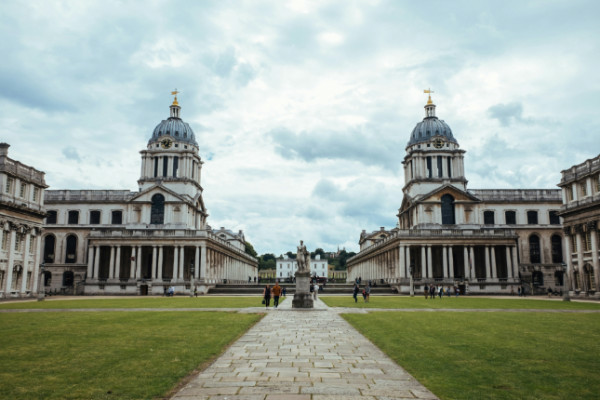
The Old Royal Naval College in Greenwich. PICTURE: Robert Bye/Unsplash

• ‘The Golden Age of Piracy’ will come to life in a living history weekend this Saturday and Sunday at the Old Royal Naval College in Greenwich. With the focus on the period between 1650 and 1720 (when more than 5,000 pirates were said to have been active), visitors will learn how to separate pirate fact from fiction, enjoy songs of the sea, witness sword and cutlass fights, and hear the tale of a real 18th-century mutiny. Each day culminates with a demonstration of the firepower of pirates and marines in the arena on the lawns overlooking the River Thames. There’s also the opportunity to wander through the pirate encampment and learn about the clothes and weapons of the period, listen to some love music and sample food from the Taste of History period kitchen. Runs from 11am to 4pm on Saturday and Sunday. Admission charge applies. For more, see https://ornc.org/whats-on/golden-age-of-piracy/.

The world of sound below the surface of the River Thames is the subject of a new contemporary art installation at the Natural History Museum which opens tomorrow. The River, composed by Norwegian sound artist Jana Winderen in collaboration with spatial audio expert Tony Myatt, uses underwater audio recordings to immerse visitors in a 360 degree audio composition which spans the river from the source by Kemble through central London and on to the sprawling estuary leading into the North Sea. The River is free to visit. Bookings, to ensure entry, can be made at https://www.nhm.ac.uk/visit.html.

One of the new rooms at the Museum of the Home – a Jewish tenement flat from 1913. PICTURE: Courtesy of the Museum of the Home.

Seven new and reimagined period rooms reflecting the stories of our East London community, past, present and future, have been unveiled at the Museum of the Home in Shoreditch. Thanks to the Real Rooms project, the expanded ‘Rooms Through Time: 1878-2049’ now includes a Jewish tenement flat from 1913, an Irish couple’s house in the 1950s, LGBTQ+ renters sharing an ex-council home in the 2005, a British-Vietnamese home in 2024, and the Innovo Room of the Future, which explores real homes amid challenges such as the climate crisis and technological advances. The scope of the existing 1870s Parlour and Front Room in 1976 have also both been expanded. Entry to the permanent display is free. For more, see https://www.museumofthehome.org.uk.

A new public garden has been opened at the intersection of Cheapside and New Change in the City of London. Formerly known as the Sunken Garden, the area has undergone a transformation and now features benches created from 150-year-old-plus granite stones salvaged from the Thames River Wall and recycled timber from fallen London Plane trees. There’s also new permeable paving which lets rain drain freely into the ground and stores it for trees to use later, reducing pressure on the sewer system while new plant species have been selected with local wildlife in mind.

Send all items for inclusion to exploringlondon@gmail.com.

10 towers with a history in London – 1. The Bloody Tower…

The Bloody Tower (centre, with the gateway) at the Tower of London. PICTURE: David Adams

Carrying rather a gruesome name, this rectangular-shaped tower sits over a gate leading from outer ward into the inner ward in the Tower of London.

The tower, which once controlled the watergate before the outer walls were constructed, was originally known as the Garden Tower due to its location adjoining the Tower Lieutenant’s Garden.

To see the rest of this post (and all of our coverage), subscribe for just £3 a month. This small contribution – less than the cost of a cup of coffee – will help us continue and grow our coverage. We appreciate your support!

Treasures of London – The Abraham Tapestries, Hampton Court Palace…

Hanging in the Tudor Great Hall at Hampton Court Palace, this series of 10 huge tapestries are believed to have been commissioned by King Henry VIII and were first hung in the hall in 1546.

To see the rest of this post (and all of our coverage), subscribe for just £3 a month. This small contribution – less than the cost of a cup of coffee – will help us continue and grow our coverage. We appreciate your support!

This Week in London – West Ham Park celebrates its 150th; rare examples of 17th century paper-cutting; King Henry VIII jousts at Hampton Court; the collection of Elizabeth Legh; and, ‘Horrible Science’…

West Ham Park celebrates its 150th anniversary this weekend with a festival of music, food, sport, and other activities. On Saturday there will be a free, family-friendly festival with music – including appearances by Australian-born singer-songwriter Celina Sharma and singer-songwriter, Fiaa Hamilton, as well as a DJ set from Ellis – along with arts and crafts, a children’s fun fair and local food stalls. On Sunday, activities are based around the theme of ‘give it a go’ with visitors able try out various sports and health activities, including football, cricket, tennis, athletics, Tai Chi, and long-boarding. There will also be free taster sessions and opportunities to meet local sporting legends. An outdoor exhibition about the park’s history can be seen in Guildhall Yard in the City leading-up to the event after which it will be moved to Aldgate Square. West Ham Park is the largest green space in the London Borough of Newham and has been managed by the City of London Corporation since 1874. Activities on both days start at 12pm. For more, see www.cityoflondon.gov.uk/westhampark150.

To see the rest of this post (and all of our coverage), subscribe for just £3 a month. This small contribution – less than the cost of a cup of coffee – will help us continue and grow our coverage. We appreciate your support!

Treasures of London – Russell Street gas lamps…

One of the lamp-posts in Russell Street, Covent Garden, in 2012. PICTURE: Google Maps

Recently listed as Grade II, these four gas lamps on Russell Street in Westminster were among a series of lamps installed around Covent Garden to mark the beginning of King George V’s reign.

While the columns of the lamps date from 1910, three of the lanterns – described as an ‘Upright Rochester lantern’ and manufactured by William Sugg and Company Limited – are replacements believed to have been installed around 1930. The fourth was installed following a campaign to save Covent Garden from redevelopment in the 1970s.

The newly listed lamp-posts – the first Westminster lamps to be listed in 40 years – are located outside numbers 4-6, 24, 29, and 34-43.

There are currently about 1,300 working gas lamps in London, around 270 of which are in Westminster (and about half of which are listed).

10 atmospheric ruins in London – 9. Barking Abbey…

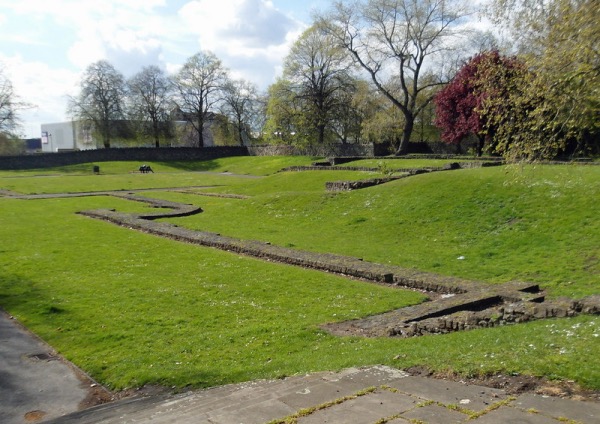
Footings of the abbey (these are modern with the real foundations below ground). PICTURE: diamond geezer (licensed under CC BY-NC-ND 2.0)

Once one of the most important nunneries in the country, Barking Abbey was originally established in the 7th century and existed for almost 900 years before its closure in 1539 during King Henry VIII’s Dissolution.

The abbey was founded by St Erkenwald (the Bishop of London between 675 and 693) for his sister St Ethelburga who was the first abbess.

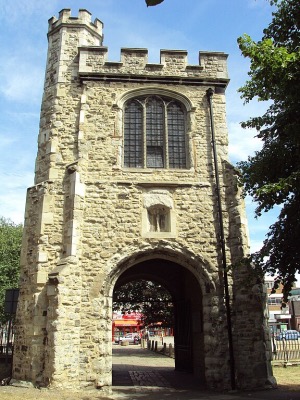
The Curfew Tower. PICTURE: Rept0n1x (licensed under CC BY-SA 3.0)

In the late 900s, St Dunstan, the Archbishop of Canterbury introduced the Rule of St Benedict at the nunnery.

King William the Conqueror stayed here after his coronation while famous abbesses included Mary Becket, the sister of St Thomas Becket, Archbishop of Canterbury, who was given the title in 1173 in reparation for the murder of her brother, as well as several royals including Queen Maud, wife of King Henry I, and Matilda, wife of King Stephen.

The nunnery gained wealth and prestige but this suffered somewhat as a result of floods in 1377 with some 720 acres of land permanently lost. It nonetheless remained one of the wealthiest in England and it’s said the abbess had precedence over all other abbesses in the country.

After the abbey was dissolved, some of the building materials were reused elsewhere and the site was later used as a farm and quarry.

Most of the buildings were demolished – today only the Curfew Tower, which dates from around 1460, remains. The Grade II*-listed tower contains the Chapel of the Holy Rood and now serves at the gateway to the nearby St Margaret’s Church.

Building footings also remain buried under the ground in what is known today as Abbey Green (the layout is marked today by modern additions). There’s a model of how the abbey once appeared inside the gateway.

Barking Abbey ruins, Abbey Road, Barking (nearest Tube Station is Barking); WHEN: Daily: COST: Free; WEBSITE: https://www.lbbd.gov.uk/find-your-nearest/barking-abbey-ruins