This Week in London – Maharaja Ranjit Singh at the Wallace Collection; Anne Desmet’s Kaleidoscope/London and displaced Ukrainians at the Foundling Museum…

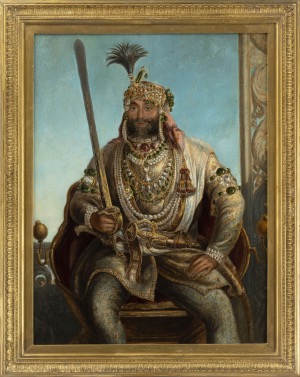
August Schoefft, Maharaja Sher Singh (1807–1843) seated on his father’s golden throne
Lahore, Punjab or Delhi, c 1841–42 © Toor Collection 

The remarkable life and legacy of Maharaja Ranjit Singh (1780-1839), the founder of the Sikh Empire, is the subject of a new exhibition which opened at the Wallace Collection this week. Ranjit Singh: Sikh, Warrior, King features historic objects from Ranjit Singh’s court, courtiers and family members, including those personally owned by the Maharaja and the most famous of his wives, Maharani Jind Kaur, as well as their son, Maharaja Duleep Singh. Highlights include a fine miniature painting of Ranjit Singh and his favourite, a Golden Throne made by Hafez Muhammad Multani, and a sword richly mounted in gold and gemstones which was thought to belong to the Maharajah. Runs until 20th October at the Manchester Square institution. Admission charge applies. For more, see www.wallacecollection.org/whats-on/events/ranjit-singh-sikh-warrior-king/.

A “fresh perspective” on London can be seen in a new exhibition by multi-award-winning wood engraver Anne Desmet at the Guildhall Art Gallery. Inspired by looking at a fragmented view of the world through a toy kaleidoscope, Anne Desmet: Kaleidoscope/London features works created by the artist slicing into prints focused on London from her earlier wood-engravings, linocuts and hand-drawn lithographs to make a new series of digital collages. The display features 150 works including 41 London-themed kaleidoscopic prints created exclusively for this exhibition. Among highlights is a complex collage, Fires of London, created using 18 razor-clam shells to present a theme of the many historic fires of London over the last 1,500 years. Admission is ‘pay what you can’. There are an accompanying series of artist-led tours. Runs until 8th September. For more, see www.cityoflondon.gov.uk/events/anne-desmet-kaleidoscopelondon-exhibition.

• Photographs depicting women and children forced to leave their Ukrainian homes following Russia’s invasion is on at the Foundling Museum in Bloomsbury. Polly Braden: Leaving Ukraine features the work of photographer Polly Braden and includes first-hand photographs, personal films and recorded conversations. It focuses on four central stories – that of three school friends trying to forge new lives and continue their education; that of a young graduate making a fresh start as a lawyer in London; that of a mother whose baby was born shortly after a perilous escape from Kherson to Warsaw; and that of two friends and their children who fled to Moldova with help from a kickboxing club, now struggling to find work in Italy. Admission charges apply. Can be seen until 1st September. For more, see https://foundlingmuseum.org.uk/event/polly-braden-leaving-ukraine/.

Send all items to exploringlondon@gmail.com
This Week in London – Underground shelters in wartime – then and now; new Ravenmaster at the Tower; and, ‘La Ghirlandata’ back at the Guildhall Art Gallery…

A new photographic exhibition exploring how Underground stations and metro systems provide shelter to citizens during periods of war, both now and in the past, opened at the London Transport Museum in Covent Garden last week. Echoes of the Blitz: Underground shelters in Ukraine and London features 70 images, including historical pictures from the museum’s collection as well as 38 contemporary photographs shot by six renowned, mainly Ukrainian, documentary photographers. The latter include photography showing ordinary Ukrainian citizens sleeping, waiting, cooking, washing clothes, caring for their pets and creating temporary make-shift homes in metro stations of Kyiv and and Kharkiv show alongside black and white archive images of Londoners taking refuge in Tube stations during World War II. The exhibition, which is being run in partnership with Berlin-based journalistic network n-ost, can be seen until spring next year. Admission charge applies. For more, see www.ltmuseum.co.uk.

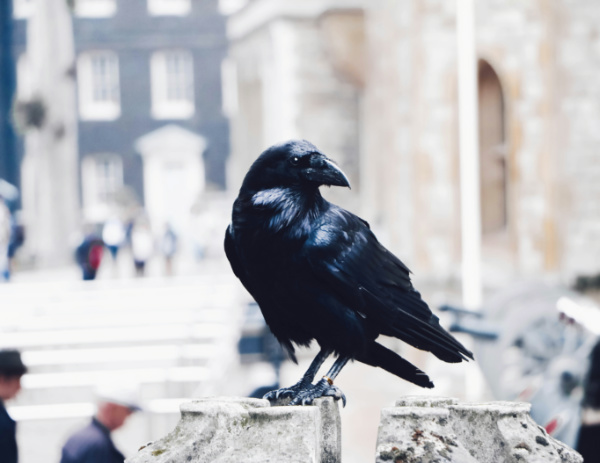
A raven at the Tower of London. PICTURE: Kasturi Roy/Unsplash

A new Ravenmaster has been appointed at the Tower of London. Yeoman Warder Michael ‘Barney’ Chandler took up the role at the start of this month, 15 years after he first became a Yeoman Warder at the Tower. The Ravenmaster oversees a team of four responsible for the care of the Tower’s seven ravens which legend says must remain at the Tower to ensure its protection. The legend apparently goes back to at least the reign of King Charles II – when the King’s astronomer John Flamsteed complained that the resident ravens were impeding his work at the Tower and requested their removal, the King was told that if the ravens left the Tower then the Kingdom would fall (and so they remained). While the Yeoman Warders have longed cared for the ravens, the post of Ravenmaster was only created in the past 50 years and was first held by Yeoman Warder Jack Wilmington. Yeoman Warder Chandler, who became the 387th Yeoman Warder at the Tower when he was appointed in March, 2009, is only the sixth person to hold the office. For more, see www.hrp.org.uk/tower-of-london/.

One of the most popular paintings at the Guildhall Art Gallery is being reinstalled to mark International Women’s Day on Friday. Dante Gabriel Rossetti’s La Ghirlandata has been on loan – first to the Tate Britain and then to the Delaware Art Museum in the US – but is now being returned. The painting dates from 1873 and depicts a ‘garlanded woman’ playing an arpanetta and looking directly at the viewer. The muse for the woman is said to have been the actor and model, Alexa Wilding, while the two ‘angels’ in the top corners were posed by William and Jane Morris’ youngest daughter, May Morris. The City of London Corporation acquired the oil on canvas work in 1927. On Saturday, free family activities will be held at the gallery to mark the work’s return. For more, see www.thecityofldn.com/la-ghirlandata.

Send items to exploringlondon@gmail.com.

This Week in London – Charles Dickens’ court suit and Queen Elizabeth II’s coronation glove; Frans Hals at The National Gallery; Peter Paul Rubens at Dulwich; and, email explored…

• A piece of the only surviving dress worn by Queen Elizabeth I, Charles Dickens’ court suit, an RSC robe worn by David Tennant as Richard II, and the coronation glove of Queen Elizabeth II are among highlights of a new exhibition at the Guildhall Art Gallery. Marking the 400th anniversary of the Worshipful Company of Gold and Silver Wyre Drawers, Treasures of Gold and Silver Wire features more than 200 objects related to royalty, the arts, military, and the church spanning the period stretching from the Middle Ages to today. Other highlights include a uniform of the State Trumpeter, The Jubilee Cope from St Paul’s Cathedral, a robe of Order of the Garter and the burse of the Great Seal of King Charles II. The exhibition, which opens on Friday, runs until 12th November. Admission charge applies. For more, see www.cityoflondon.gov.uk/events/treasures-of-gold-and-silver-wire-exhibition.

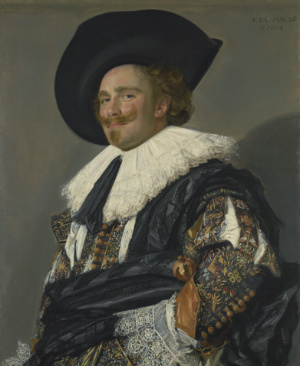
Frans Hals, ‘The Laughing Cavalier’ (1624)/ Oil on canvas, 83 x 67 cm © Trustees of the Wallace Collection, London    

The Laughing Cavalier serves as the centrepiece of a new exhibition of Frans Hals works at the National Gallery – the largest focused the 17th century Dutch painters’ works in more than 30 years. The Credit Suisse Exhibition: Frans Hals, which has been organised with the Rijksmuseum, Amsterdam features some 50 of the artists works gathered from across the globe. Alongside The Laughing Cavalier which is on loan from the Wallace Collection, highlights include Portrait of Isaac Massa (1626), Portrait of Pieter Dircksz. Tjarck (about 1635–38), The Rommel-Pot Player (1618–22) and Portrait of Tieleman Roosterman (1634). Admission charge applies. Runs until 21st January.

A major exhibition on the work of Flemish artist Peter Paul Rubens (1577-1640) has opened at the Dulwich Picture Gallery. Rubens & Women features more than 40 paintings and drawings along with archival material and challenges the perception that the artist only painted one type of women as it explores his relationships with women and how they nourished his career and creativity. Highlights include Portrait of a Woman (c1625), Marchesa Maria Serra Pallavicino or Marchesa Veronica Spinola Doria (1606-07), The Virgin in Adoration of the Child (c1616), Looking Down (Study for head of St Apollonia) (1628), Ceres and Two Nymphs (1615-17), The Birth of the Milky Way (1636-1638), and Clara Serena Rubens, the Artist’s Daughter (c1620-23). The exhibition runs until 28th January. Admission charge applies. For more, see www.dulwichpicturegallery.org.uk.

An interactive exhibition exploring email’s impact in our lives – how it shapes our work, relationships, cultures and economies – opens at The Design Museum today. Email is D̶e̶ad̶ ̶, being held in partnership with Intuit Mailchimp, charts the history of email, from its embryonic beginnings in the 1970s to what the email experience might be like in 2070. Admission is free. Runs until 22nd October. For more, see https://designmuseum.org.

Send all items to exploringlondon@gmail.com for inclusion.
This Week in London – Wren at Work; music moments captured in photographs; and, the RA’s 255th Summer Exhibition…

Wren’s monument – St Paul’s Cathedral. PICTURE:
Aaron Gilmore/Unsplash

A recreation of Sir Christopher Wren’s office while he was working on St Paul’s Cathedral can be seen at the Guildhall Art Gallery from today. The faux 17th century environment, created by Chelsea Construction, will allow visitors to explore the building methods and tools of the age, as well as the daily lives of 17th century diarists including Robert Hooke, John Evelyn and Margaret Cavendish, and a case study of how citizens lost and regained their properties during and after the Great Fire of 1666. A specially commissioned map by artist/cartographer Adam Dant will provide insight’s into Wren’s life and times and will be displayed alongside illustrations by architect George Saumerez-Smith and members of the Worshipful Company of Chartered Architects, a scale model of St Paul’s Dome by students at Kingston University, and stone models from master mason Pierre Bidaud. The Wren at Work exhibition is part of Wren300. Admission is free but booking are recommended. For more, see www.cityoflondon.gov.uk/events/wren-at-work-wren300-exhibition.

Photographs capturing Pete Townshend’s guitar flying through the air at Madison Square Garden and Noel Gallagher during the making of the video for Wonderwall are just two of the images on show in a new exhibition at the Barbican Music Library. Celebrating the 25th anniversary of music photography collection Rockarchive.com, In The Moment: The Art of Music Photography also features images of everyone from David Bowie to Debbie Harry, Queen, Biggie Smalls, led Zeppelin, Lady Gaga and Amy Winehouse, capturing them in recording sessions at live gigs and at photo shoots. The free exhibition, which opens on Friday, can be seen until 25th September. For more, see www.cityoflondon.gov.au/services/libraries/barbican-music-library. Meanwhile, a bust of Sir Simon Rattle is being unveiled today at the library in tribute to his five decades in classical music. Sir Simon, who has made over 100 recordings. became music director of the Barbican’s resident orchestra, the London Symphony Orchestra, in 2017 and will conclude his tenure this year.

The Royal Academy’s 255th annual Summer Exhibition opened this week under the theme of ‘Only Connect’ (inspired by a quote from the novel Howards End by EM Forster). Exhibiting artists include British sculptor Lindsey Mendick, Barbados-born painter Paul Dash, American multi-media artist Ida Applebroog, St Lucia born painter Winston Branch, Colombian sculptor Carlos Zapata and British painters Caragh Thuring and Caroline Walker, and Irish fashion designer Richard Malone, who has created a dramatic mobile installation which hangs in the Central Hall. There are also works by Royal Academicians including Frank Bowling, Michael Craig-Martin, Tracey Emin, Gillian Wearing and the late Paula Rego. Runs until 20th August. Admission charge applies. For more, see royalacademy.org.uk.

Send all items to exploringlondon@gmail.com
LondonLife – London writ large…

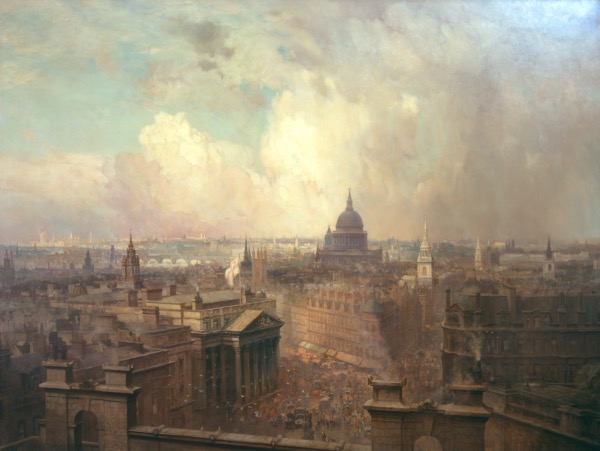
Niels Moller Lund, ‘The Heart of Empire’, 1904, © Guildhall Art Gallery, City of London Corporation

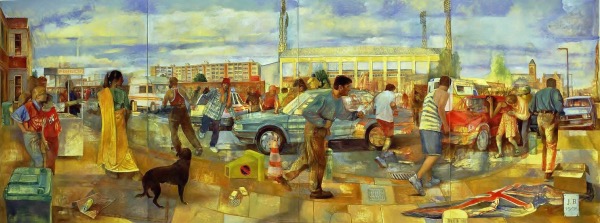
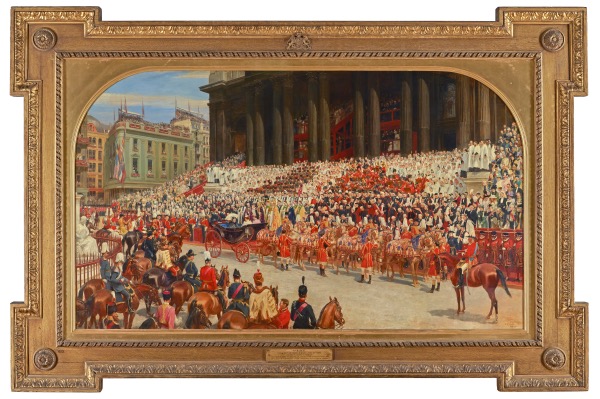
A celebration of the artists who have painted London on a monumental scale, The Big City is currently running at the Guildhall Art Gallery. The exhibition, which runs until 23rd April, can be visited on a ‘pay what you can’ basis. For more, see www.cityoflondon.gov.uk/events/the-big-city.

John Bartlett, ‘Cars and Chaos’, 1995-96, © Guildhall Art Gallery, City of London; Image © John Bartlett
Andrew Carrick Gow, ‘Queen Victoria’s Diamond Jubilee Service’, 22nd June 1897 © Guildhall Art Gallery, City of London Corporation

This Week in London – London’s history of executions; myth-making around Alexander the Great; and, Édouard Manet’s ‘Eva Gonzalès’ examined…

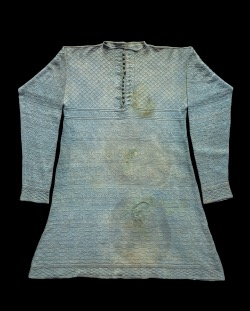
Charles I vest, Executions 2022 © Museum of London

• The history of public executions in London – spanning a period of some 700 years – is the subject of a landmark new exhibition at the Museum of London Docklands in West India Quay. Executions explores how capital punishment became embedded in the city’s landscape – from the first recorded public execution in 1196 to the last in 1868 – and looks at the rarely told and often tragic human stories behind them. Items on display include an intricately woven silk vest said to have been worn by King Charles I at his execution outside the Banqueting House (pictured), a 300-year-old bedsheet embroidered with a love note in human hair and personal items which once belonged to prison reformer Elizabeth Fry. Visitors can also stand in front of the Newgate Prison door, marking the last steps for prisoners heading to the scaffold, and see a dramatic recreation of the Tyburn “Triple Tree” gallows. Visitors will also learn about the 200 offences that became punishable by death and the spectacle and rituals of execution days as well as what led celebrity criminals to the gallows. Admission charge applies. Runs until 16th April next year. For more, see https://www.museumoflondon.org.uk/museum-london/whats-on/exhibitions/executions.

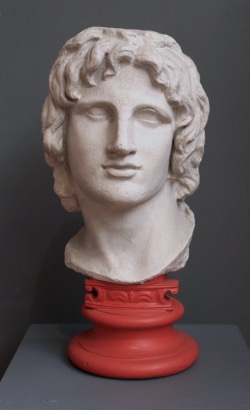
Marble head of Alexander © Museum of Classical Archaelogy

The first exhibition exploring the rich history of story-telling around one of the most famous figures of the ancient world – Alexander the Great – opens at the British Library tomorrow. Alexander the Great: The Making of a Myth features almost 140 exhibits from 25 countries including astrological clay tablets, ancient papyri and medieval manuscripts as well as comics, films and video games. It reveals how Alexander’s character has been adapted and appropriated by different cultures and religions, with conflicting interpretations. Runs until 19th February. Admission charge applies. A season of in-person and online events accompanies the exhibition. For more, see www.bl.uk/events/alexander-the-great-the-making-of-a-myth.

• Portraits of the Euro 2020 England men’s football squad and its manager, Gareth Southgate, will be shown at the City of London Corporation’s Guildhall Art Gallery from today. The free exhibition, This is England, features the most successful men’s national team – finalists in Euro 2020 – since the winners of the World Cup in 1966, from Harry Kane and Jude Bellingham to Bukayo Saka and Raheem Sterling. The paintings are the work of artist Matt Small and were commissioned by the FA and exhibited at the St George training ground during the Euro 2020 finals. The paintings can be seen until 19th February. For more, see www.cityoflondon.gov.uk/events/this-is-england.

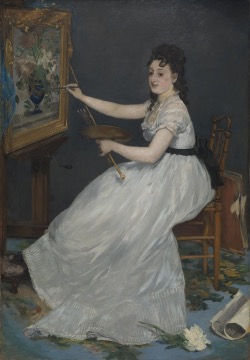
Edouard Manet, ‘Eva Gonzalès’, 1870

Édouard Manet’s 1870 portrait of Eva Gonzalès is the subject of a new exhibition at The National Gallery opening on Friday. The painting was considered by the early 20th century to be the most famous modern French painting in the UK and Ireland. The exhibition, the first in a new series of ‘Discover’ exhibitions to be staged in the Sunley Room with the aim of exploring well-known paintings in the collection through a contemporary lens, examines the lifelong artistic dialogue and the complexities of the friendship and mentorship between Manet and Gonzalès, his only formal pupil. It also looks at the broader context of female self portraits from the 18th to early 20th centuries, alongside portraits of women artists by male friends, husbands, and teachers The free exhibition includes works by Eva Gonzalès, Elisabeth Louise Vigée Le Brun, Edouard Manet, Berthe Morisot, Alfred Stevens and Laura Knight. Runs until 15th January. For more, see www.nationalgallery.org.uk/exhibitions/discover-manet-eva-gonzalès.

Send all items for inclusion to exploringlondon@gmail.com.

This Week in London – The Marble Arch Mound opens; Wampum at the Guildhall Art Gallery; and, Paula Rego at the Tate…

The 25 metre high viewpoint in the grass and tree covered Marble Arch Mound opens to visitors on Monday. Created by Westminster City Council, the mound – which has been designed by Dutch architectural studio MVRDV, provides expansive views of Oxford Street, Hyde Park, Mayfair and Marylebone. Visitors can either climb the 130 stairs to the top or take a lift. The mound will be open to the public until January next year. Ticket holders are also invited to visit W1Curates art installation Lightfield, led by British/American artist, Anthony James, which is located inside the mound. For more information and to book tickets, see www.westminster.gov.uk/news/get-set-summit-marble-arch-mound-summer.

The history, art and culture of the Native Americans who met the passengers of the Mayflower is explored in a new exhibition at the Guildhall Art Gallery. Opening on Friday, Wampum: Stories from the Shells of Native America centres on a newly-crafted wampum belt created by the Wampanoag people of Massachusetts alongside historic material from the British Museum. Wampum belts are the creative expression of the Wampanoag people, with each shell on the belt imbued with memory and meaning. The display is presented by The Box, Plymouth, and supported by Arts Council England as part of commemorations of the 400th anniversary of the sailing of the Mayflower from England to America. Runs until 5th September. Entry is free (booking required). For more, head here.

On Now: Paula Rego. This exhibition at Tate Britain – the largest retrospective of Paula Rego’s work to date – features more than 100 works including collage, paintings, large-scale pastels, drawings and etchings as it showcases the career of the Portuguese-born artist. As well as early work from the 1950s, the display features her large pastels of single figures from the acclaimed Dog Women and Abortion series and richly layered, staged scenes from the 2000s. Runs until 24th October. Admission charge applies. For more, see www.tate.org.uk/whats-on/tate-britain/exhibition/paula-rego.

Send all items for inclusion to exploringlondon@gmail.com.

This Week in London – Noël Coward’s glittering world; figures from the African diaspora; and, reflections on land rights and colonialism in Australia…

The glittering world of playwright and songwriter Noël Coward is on show in a new exhibition opening at the Guildhall Art Gallery this Monday. The much delayed Noël Coward: Art & Style, which marks the 100th anniversary of Coward’s West End debut as a 19-year-old earlier this year, brings together never-before-seen materials from the Coward Archive and demonstrates the impact he and his creative circle had on the culture of his time – and today. Highlights include an original page of Coward’s handwritten lyrics for Mad Dogs and Englishmen, the chocolate brown evening suit he wore in the film Boom!, two of his signature silk dressing gowns, his iconic ‘Hamlet’ chair, and several of his own paintings. There’s also a specially commissioned new reconstruction of the iconic white satin dress that Molyneux designed in 1930 for Gertrude Lawrence in Private Lives and a never-before-exhibited gold lamé theatre cape by Lucile (Titanic survivor Lady Duff Gordon) from 1920. The exhibition, which is free, runs until 23rd December. Tickets must be booked in advance. For more, see www.cityoflondon.gov.uk/noelcoward.

A new portrait depicting Dido Belle (1761-1804) has gone on display at Kenwood House – one of six works depicting historic figures from the African diaspora now on show at English Heritage properties across the nation. Belle, who is depicted by artist Mikéla Henry-Lowe, was the illegitimate daughter of a young black woman named Maria Bell and a Royal Naval officer, Sir John Lindsay. She spent much of her life at Kenwood House with her great-uncle William Murray, 1st Earl of Mansfield, the Lord Chief Justice. Other portraits in the series depict the likes of African-born Roman Emperor Septimius Severus (the work of Elena Onwochei-Garcia, it’s on display at Corbridge Roman Town on Hadrian’s Wall, Northumberland), North African-born 7th century Abbot Hadrian (the work of Clifton Powell, it’s on display at St Augustine’s Abbey in Kent) and Queen Victoria’s god-daughter Sarah Forbes Bonetta (the work of Hannah Uzor, it’s on display at Osborne House on the Isle of Wight). For more, see www.english-heritage.org.uk/learn/histories/black-history/.

More than 25 works by Australian artists exploring debates around land rights and colonialism have gone on show in a new exhibition at the Tate Modern. A Year in Art: Australia 1992 takes as its starting point the High Court of Australia’s landmark 1992 Mabo ruling which overturned the doctrine of terra nullius. Works on show include Emily Kame Kngwarreye’s 1989 Untitled (Alhalkere) – an expression of her cultural life as an Anmatyerre elder, Gordon Bennett’s 1991 work Possession Island (Abstraction) which is presented in dialogue with Algernon Talmage’s 1937 work The Founding of Australia 1788, and Tracey Moffatt’s 1997 photographic series Up in the Sky, which speaks to the ‘Stolen Generations’ – the forced separation of Aboriginal families by government agencies. At the heart of the display is Vernon Ah Kee’s 2010 four-screen video installation tall man which shows footage of the protests and riots following the death in custody of Mulrunji Doomadgee on Palm Island in 2004. The exhibition is free. For more, see www.tate.org.uk.

Send all items for inclusion to exploringlondon@gmail..com

This Week in London – See the’ Enchanted Interior’ online; Jewish Museum launches live streams; and, ‘The Easter Story’ at the National Gallery…

With everyone being asked to stay at home, we’re highlighting online exhibitions and talks. Wishing all our readers, despite the circumstances, a happy Easter!

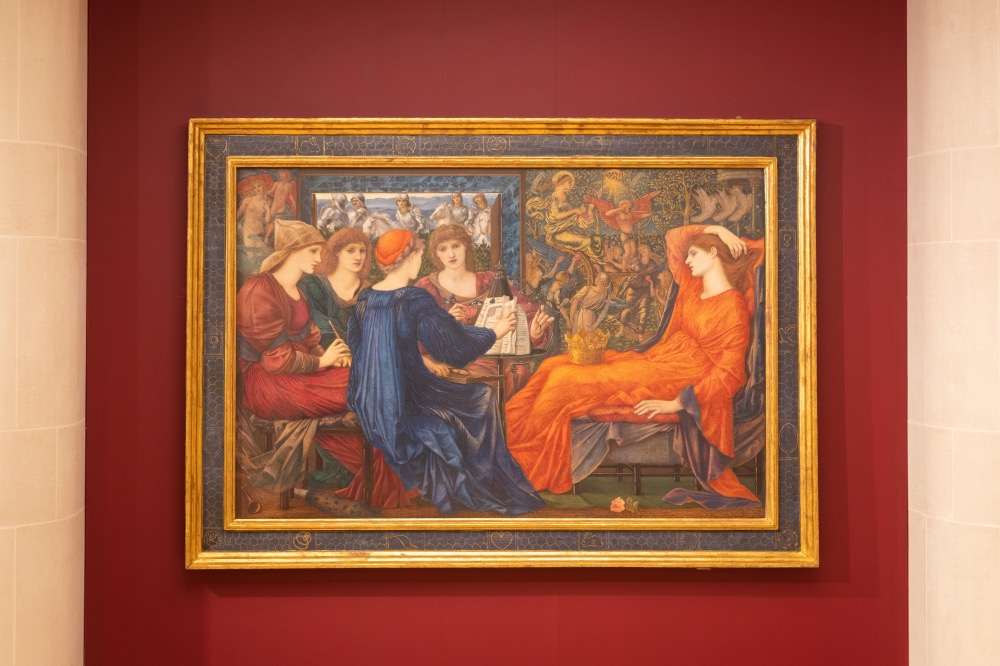
The Enchanted Interior exhibition, recently seen at the City of London’s Guildhall Art Gallery, can now be seen in an exclusive virtual tour led by curator Katherine Pearce. The exhibition, which explores the recurring motif of female subjects depicted in enclosed, ornate interiors, sees artworks by Victorian-era Pre-Raphaelites such as Edward Burne-Jones, Evelyn De Morgan and James Abbot McNeill Whistler placed alongside modern and contemporary works by female artists including Martha Rosler, Maisie Broadhead and Fiona Tan. The virtual tour can be found at cityoflondon.gov.uk/enchanted. PICTURE: One of the Pre-Raphaelite works featured in the exhibition.

With its doors now closed, the Jewish Museum London is holding a series of live streams featuring talks on significant objects in the museum’s collection as well as a ‘Shabbat Shalom Quiz of the Week’ and an arts and crafts session. Under the umbrella of the ‘Jewish Museum London Live’, these upcoming events include a talk on the glass Elijah Cup and another on an object related to baking challah which includes some ways of plaiting challah that you can try at home. For more, see jewishmuseum.org.uk/events/ 

Follow the story of the Passion of Christ through the artworks at the National Gallery in a special online exhibition for Easter. Among the artworks in The Easter Story exhibition – some of which are not on display in the actual gallery – include Rembrandt’s Ecce Homo, Raphael’s The Mond Crucifixion and Michelangelo’s The Entombment (or Christ being carried to his Tomb). To see it, head to www.nationalgallery.org.uk/paintings/the-easter-story. The gallery also has a virtual tour of the Sainsbury Wing which can be accessed at www.nationalgallery.org.uk/visiting/virtual-tours/sainsbury-wing-vr-tour.

Send all items for inclusion to exploringlondon@gmail.com.

This Week in London – Cecil Beaton and the ‘Bright Young Things’; ‘The Enchanted Interior’; and Andy Warhol at the Tate…

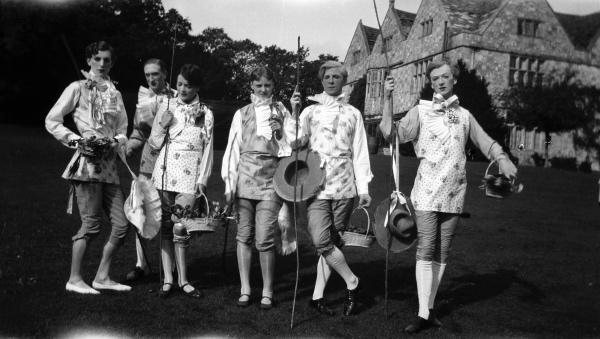
World famous British photographer Cecil Beaton’s portraits from the “golden age” of the 1920s and 1930s are being celebrated in a shiny new exhibition at the National Portrait Gallery. Cecil Beaton’s Bright Young Things features some 150 works, many rarely exhibited, which Beaton took in the 1920s and 1930s depicting the “extravagant world of the glamorous and stylish”. The subjects include the likes of artists Rex Whistler and Stephen Tennant, modernist poets Iris Tree and Nancy Cunard, the glamorous socialites Edwina Mountbatten and Diana Guinness (née Mitford), and actresses Tallulah Bankhead and Anna May Wong as well as less well-known figures like eccentric composer and aesthete Lord Berners, the artist and Irish patriot Hazel, Lady Lavery, and Lady Alexander, whose husband produced Oscar Wilde’s comedies and who became an early patron of Beaton’s. Beaton’s own life story and his relationship with the sitters is woven into the exhibition including through self-portraits and images of him  taken by contemporaries. Runs until 7th June. Admission charges apply. For more, see www.npg.org.uk. PICTURE:  The Bright Young Things at Wilsford by Cecil Beaton, 1927. © The Cecil Beaton Studio Archive.

The theme of female subjects depicted in ornate, enclosed interiors – one prevalent in 19th century British painting – is at the centre of a new exhibition opening at the Guildhall Art Gallery on Friday. The Enchanted Interior, being presented in partnership with Laing Art Gallery in Newcastle, showcases works in styles ranging from the high Victorian through to Art Nouveau, Aestheticism, Surrealism, and pieces by contemporary female artists which ‘speak back’ to the historic tradition. Artists whose work is represented include Edward Burne-Jones, Evelyn De Morgan, James Abbot McNeill Whistler, Emily Sandys, Jessica Woodman, Fiona Tan, John William Waterhouse and Clementina Hawarden. Admission charge applies. Runs until 14th June. For more, follow this link.

The works of iconic 20th century American artist Andy Warhol are being showcased in a new exhibition at Tate Modern. Andy Warhol, the first exhibition on the artist at the gallery in 20 years, features more than 100 works. Among them are key pieces from the pop period – Marilyn Diptych (1962), Elvis I and II (1963/1964) and Race Riot (1964) – as well as Screen Tests (1964–6), the floating Silver Clouds (1966) installation, and a recreation of the psychedelic multimedia environment of Exploding Plastic Inevitable (1966) originally produced for the Velvet Underground rock shows. Also included are later works like his 1975 Ladies and Gentlemen series and Sixty Last Suppers (1986). Runs until 6th September. Admission charge applies. For more, see www.tate.org.uk.

Send all items for inclusion to exploringlondon@gmail.com.

This Week in London – Inside the world of mushrooms; Tower Bridge ‘sings’; and, ‘La Ghirlandata’ restored…

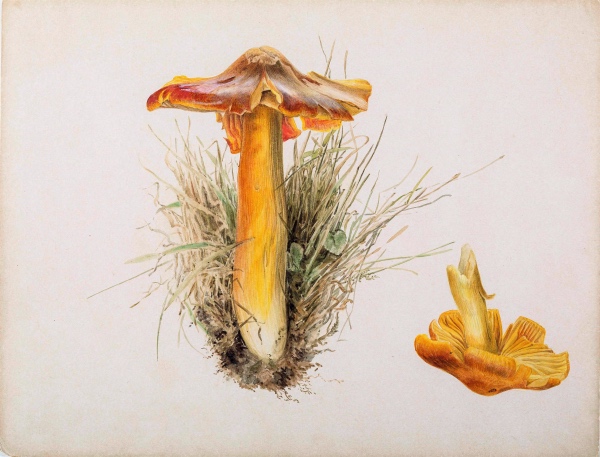
The world of mushrooms is explored in a new exhibition opening tomorrow at Somerset House. Part of the Charles Russell Speechly’s Terrace Rooms Series, Mushrooms: The art, design and future of fungi is curated by writer Francesca Gavin and features works by more than 35 artists, designers and musicians in an exploration of “the rich legacy and incredible potential of the remarkable organism, the ideas it inspires in the poetic, spiritual and psychedelic, and the powerful promise it offers to reimagine society’s relationship with the planet, inspiring new thinking around design and architecture”. Highlights include watercolours by renowned author Beatrix Potter (one of which is pictured), American artist Cy Twombly’s quasi-scientific portfolio Natural History Part I, Mushrooms (1974), and a spectacular floral display, featuring mushrooms grown in Somerset House’s former coalholes, by the London Flower School. The free exhibition, which runs until 26th April, is accompanied by a series of events. For more, see somersethouse.org.uk/mushrooms. PICTURE: Beatrix Potter, Hygrophorus puniceus, pencil and watercolour, 7.10.1894, collected at Smailholm Tower, Kelso, courtesy of the Armitt Trust

A newly commissioned film which reimagines Tower Bridge as a musical instrument is at the heart of a new exhibition which opened in the bridge’s Victorian Engine Rooms this week. Created by internationally acclaimed artist, inventor and filmmaker Di Mainstone to mark the bridge’s 125th anniversary, Time Bascule draws inspiration from Hannah Griggs, one of the first women to work at the bridge (in her case as a cook for the Bridge Master and his family between 1911-1915). The display also includes behind-the-scenes footage, storyboards and early sketches, as well as the opportunity for visitors to play a range of specially created musical instruments. Runs until March. Included in admission to the bridge. For more, see www.towerbridge.org.uk.

Dante Gabriel Rossetti’s Pre-Raphaelite masterpiece, La Ghirlandata, is being unveiled at the Guildhall Art Gallery today following a year-long restoration. William Russell, Lord Mayor of the City of London, is unveiling the portrait which was painted in 1873. Conversation work undertaken included cleaning the painting to reveal a “brighter, fresher scene with a cooler tonality”, repairing and cleaning Rossetti’s original frame, and replaced the deteriorating living canvas. The restoration was made possible thanks to a grant from the Bank of America.

Send all items for inclusion to exploringlondon@gmail.com.

This Week in London – Totally Thames kicks off; ‘The London That Never Was’; and an evolutionary garden at Kew…

London’s annual, month-long celebration of the River Thames, Totally Thames, has kicked off and this year’s program includes everything from concerts in Tower Bridge’s bascule chamber to the largest ever exhibition on mudlarking and a mass boat regatta at the end of the month. The programme includes more than 100 events stretching over 42 miles of the river as it winds through London, covering everything from art installations to heritage-related walks and talks, family-oriented offerings and the chance to get out on the river itself. Other highlights include the Rivers of the World Retrospective art exhibition, a scented heritage exhibition –The Barking Stink, a heritage walk through riverside Rotherhithe, open days at the RNLI Tower Lifeboat Station and this weekend’s Classic Boat Festival at St Katharine Docks. Many events are free. Runs until 30th September For the full programme, head to https://totallythames.org/. PICTURE Courtesy of Totally Thames.

London’s grand building plans that never went ahead are the subject of a new exhibition opening at the Guildhall Art Gallery tomorrow. The London That Never Was imagines a city where the Tower Bridge is clad in glass and where a colossal burial pyramid looms over Primrose Hill. The free exhibition can be seen until 8th December. For more, head here. (To see some of the projects that were never built, see our previous series, 8 structures from the London That Never Was).

A new garden celebrating the evolution of plants has opened at the Royal Botanic Gardens, Kew. The Agius Evolution Garden is divided into eight sections to form “garden rooms” with each room containing closely related plants, revealing fascinating stories such as the connection between strawberries and nettles and why the Asteraceae family have “false flowers”. Admission charge applies. For more, see www.kew.org.

Send all items for inclusion to exploringlondon@gmail.com.

This Week in London – London’s architecture on show; D-Day commemorations at Duxford; and, Frank Bowling at the Tate…

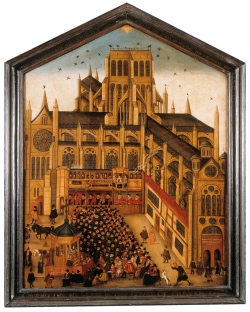
An exhibition charting the changing architecture of London opens at the Guildhall Art Gallery on Friday. Architecture of London features more than 80 works by more than 60 artists and spans the period from the 17th century to the present day. The display is arranged thematically and starts with views of London before exploring the city’s continuous transformation – including its rebuilding after World War II, moving on to portrayals of everyday London and finishing with a focus on architectural details that help form the rich tapestry of the city’s built form. Highlights include a rare Jacobean view of London – Old St Paul’s Diptych (1616), Canaletto’s London Seen Through an Arch of Westminster Bridge (1747), David Ghilchik’s Out of the Ruins at Cripplegate (1962), Richard IB Walker’s London from Cromwell Tower, Barbican (1977), and works by Spencer Gore, Lucian Freud, and Frank Auerbach as well as Brendan Neiland’s Broadgate Reflections (1989) and Simon Ling’s paintings of East London. The exhibition, runs until 1st December, is being accompanied by a series of talks as well as a ‘Late View’ on 27th September. Admission charge applies.

The display forms part of the City of London Corporation’s outdoor public events programme, Fantastic Feats: the building of London, which celebrates London’s long-standing history of architectural and engineering firsts and looks at how these innovations have contributed to improving the lives of Londoners over the centuries. Another of the projects taking place under the Fantastic Feats umbrella is Illuminated River, an unprecedented light artwork by American architect Leo Villarreal and London-based Lifschutz Davidson Sandilands that will be installed on up to 15 of London’s bridges with the first four bridges – London, Cannon, Southwark, and Millennium – to be lit up this summer. Architectural drawings and visualisations of the project will be on show at Guildhall from Friday until 1st September sitting alongside paintings of the Thames from the gallery’s collection which have been selected by Villareal. Admission is free applies. For more on either exhibition and Fantastic Feats, follow this linkPICTURED: One of the panels from the Old St Paul’s Diptych by John Gypkin (1616) –  Society of Antiquaries of London.

A mass flight display will take place over the historic Duxford airfield in Cambridge next week as part of commemorations surrounding the 75th anniversary of the D-Day landings. On 4th and 5th June, IWM Duxford will host the Daks over Duxford event, featuring the greatest number of Douglas C-47 Skytrain aircraft – also known as Dakotas – in one location since World War II as well as mass parachute jumps and flight displays. The event will also feature a mass flight display over Duxford as aircraft head off for Normandy where parachute landings will take place on 6th June in a recreation of the original D-Day landings. Duxford is located less than 50 miles from central London. Admission charges apply. For more see www.iwm.org.uk/daks-over-duxford.

The first major retrospective of the work of British painter Frank Bowling opens at the Tate Britain on Friday. Frank Bowling will span the artist’s entire six decade career and will feature early works like Cover Girl (1966) – seen for the first time in the UK since it was painted, 10 of his celebrated ‘Map Paintings’ including Who’s Afraid of Barney Newman (1968) and Polish Rebecca (1971), examples of his ‘Poured Paintings’, sculptural works like his Great Thames paintings, and Sacha Jason Guyana Dreams (1989), a work inspired by the artist’s first visit to his birth country of Guyana with his son Sacha. Runs until 26th August. Admission charge applies. For more, see www.tate.org.uk.

Send all items for inclusion to exploringlondon@gmail.com.

This Week in London – Cast Court reopens at V&A; ‘Visionaries’ at Guildhall; and ‘Cats on the Page’…

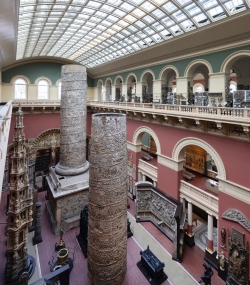
The V&A has reopened the second of its two Cast Courts following a redevelopment which has seen the addition of a new interpretation gallery, new exhibits and the restoration of historic original features. The West Court, now renamed the Ruddock Family Cast Court, has been returned to its historic past with original 19th century floors and wall colours and the Central Gallery, now renamed the Chitra Normal Sethia Gallery, features a new exhibition exploring the history, significance and contemporary relevance of the casts on display. Among the new exhibits are a scaled down digital reproduction of the arch of Palmyra destroyed by the so-called Islamic State in 2015 while one of the key existing exhibits, a 35 metre high cast of Trajan’s Column (displayed in two parts – see picture) has had its base permanently opened so visitors can gain an internal perspective. The reopening follows that of the Weston Cast Court in 2014 and completes a project which was begun in 2011. The Cast Courts were first opened in 1873, then known as the Architecture Courts, and house a collection of casts of some of the world’s most inspiring objects including everything from Michelangelo’s David to 16th-century tombs by Peter Vischer in Nuremberg and the Pórtico de la Gloria from the Cathedral of Santiago de Compostela. They are the only public galleries in the South Kensington institution to display the same collection of objects as when they first opened. Entry to the Cast Courts is free. For more, see www.vam.ac.uk. PICTURE: © Victoria and Albert Museum, London.

Works by Edward Burns-Jones, Dante Gabriel Rossetti, John Everett Millais and Grayson Perry are among those on show as part of a new exhibition at the City of London Corporation’s Guildhall Art Gallery. Visions and Visionaries – a collaboration between the Guildhall Art Gallery, The Sir Denis Mahon Charitable Trust, Flat Time House, and the Bologna-based Association Age of Future, highlights some of the key figures who defined the ‘Visionary’ idea of art and laid the foundations for a later generation of avant-garde artists. Among the works on show are Sir John Gilbert’s depiction of two knights ambushed by fairies in a moon-lit forest, Marcello Pecchioli’s Alien Priest, and John Latham’s experimental screen print, NO IT, 1967 as well as Sir John Gilbert’s The Enchanted Forest, Burne-Jones’ St Agnes and St Dorothy; and a series of 25 drawings by Blake to illustrate two poems by Thomas Gray, The Bard and The Fatal Sisters. Admission is free. Runs until 28th April. For more, follow this link.

On Now: Cats on the Page. Featuring original illustrations of Mog by Judith Kerr, Beatrix Potter’s Kitty-in-Boots as imagined by Quentin Blake and two illustrations by Axel Scheffler for TS Eliot’s Old Possum’s Book of Practical Cats, this exhibition at the British Library is a celebration of literary felines and their creators. Objects on show include Lewis Carroll’s own copy of the exceptionally rare 1893 (third) edition of Through the Looking-Glass and what Alice found there (in which the author expresses frustration with the printing including a comment on an illustration of Alice’s kitten), an 1879 letter by Edward Lear in which he included doodles of himself and his cat Foss, a 16th century pamphlet on witchcraft with a woodcut image accompanying the description of a black cat or familiar belonging to ‘Mother Devell’, and a letter written by TS Eliot to Alison, daughter of his friend Geoffrey Tandy, which contains a draft of his poem Mungojerrie and Rumpelteazer as well as Alison’s reply which includes drawings of the two cats. Coinciding with the 80th anniversary year of the original publication of Old Possum’s Book of Practical Cats, the free exhibition is being accompanied by a programme of events and can be seen until 17th March. For more, see www.bl.uk/events/cats-on-the-page.

Send all items to exploringlondon@gmail.com
This Week in London – Charles I’s ‘Royal Collection’ on show; John Constable; and, 18th century satire…

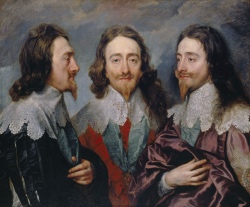
Anthony van Dyck, Charles I, 1635-6, Oil on canvas, 84.4 x 99.4 cm, RCIN 404420 Royal Collection Trust/© Her Majesty Queen Elizabeth II 2017

A landmark exhibition which reunites one of the most extraordinary art collections ever assembled opens in the main galleries of the Royal Academy of Arts in Piccadilly this Saturday. Presented in partnership with the Royal Collection Trust, Charles I: King and Collector features about 150 of the most important of the works collected by King Charles I during his reign, spanning the period from 1600 to 1649. They are among 1,500 paintings and 500 sculptures he collected  prior to his execution in 1649, after which the collection was offered for sale and dispersed across Europe. Many of the works were retrieved by King Charles II during the Restoration but others now form the core of collections at institutions such as the Musée du Louvre and the Museo Nacional del Prado. Among those on show in this exhibition, which includes more than 90 works borrowed from the Royal Collection, are several monumental portraits of the king and his family by Anthony van Dyck as well as the artist’s most celebrated portrait of the king, Charles I (‘Le Roi a la chasse’) (pictured), which returns to England for the first time since the 17th century. Other works include Peter Paul Rubens’ Minerva Protects Pax From Mars (‘Peace and War’) – this was commissioned by Charles and painted between 1629-30, Andrea Mantegna’s series, The Triumph of Caesar (c1484-92), and Titian’s Supper at Emmaus (c1530) while artists including Correggio, Tintoretto, Paolo Veronese, Albrecht Durer, Hans Holbein the Younger and Pieter Bruegel the Elder are also represented. The exhibition also shows off the celebrated Mortlake tapestries depicting Raphael’s Acts of the Apostles (c1631-40) and paintings, statuettes, miniatures and drawings once kept in the Cabinet at Whitehall Palace. Runs until 15th April. Admission charge applies. For more, see www.royalacademy.org.uk.

• John Constable’s oil sketch, Salisbury Cathedral from the Meadows, 1829–31, is one of 10 works which have gone on display at the Guildhall Art Gallery as part of its Victorian Landscapes exhibition. The painting takes centre-stage in the display in the gallery’s Temple Room; other works on show include John Brett’s Echoes of a Far-Off Storm (1890); Edward William Cooke’s Triassic Cliffs, Blue Anchor, North Somerset (1866), and Benjamin Williams Leader’s The Church at Betwys-y-Coed (1863). The paintings can be seen until early May. For more, follow this link.

Eighteenth century satire portrayed on ceramics and prints is the subject of a new free display at the British Museum. Pots with Attitude: British Satire on Ceramics, 1760-1830 features some 80 objects, some of which have not been on show for decades, including mugs and jugs (which make up the bulk of the items on show) as well as items like a cotton handkerchief printed with the “Peterloo Massacre” of 1819 and a rather grisly folding fan showing hidden profiles of executed French sovereigns (1794). Other objects show off copies of prints by satirists such as James Gillray and Charles Williams, with one of the latter’s showing a colossal Napoleon about to cross the Channel into England but prevented from doing so by a pint-sized, sword-carrying John Bull, who has sliced off his toes and is telling him, ‘Paws off, Pompey’ – the comment a reference to a lap-dog known as Pompey the Little who was the hero of a popular novel at the time. The display can be seen in Room 90a, Prints and Drawings Gallery, until 13th March. For more, see www.britishmuseum.org.

Send all items for inclusion to exploringlondon@gmail.com.

This Week in London – China and South Asia gallery reopens at British Museum; Historic US letters on show at Heritage Gallery; and, two new works for Tate’s Tanks…

The renovated Sir Joseph Hotung Gallery of China and South Asia has reopened at the British Museum, bringing the displays for China and South Asia up-to-date. The gallery presents the histories of China from 5000BC to the present with objects on show including Ming dynasty dragon tiles and the earliest scroll to reach Britain (it arrived at the end of the 18th century). The South Asia exhibition, meanwhile, includes a new display covering the Mughal period, the Rajput rulers, India under British rule and the region since independence in 1947. Featured objects include the stone sculptures from the Buddhist shrine at Amaravati and newly acquired works of art including a 6th century sculpture of Lakshmi from Kashmir. Entry to the gallery in Room 33 is free. For more, see www.britishmuseum.org. PICTURE: Courtesy of British Museum.

Historic letters sent between the City of London and the United States of America during the American War of Independence have gone on show at the City of London’s Heritage Gallery within the Guildhall Art Gallery. The letters include some authored by notable Americans John Hancock and Isaac Roosevelt, written at a time when, in defiance of the British Government, the City championed the cause of the colonists. Also on show are documents relating to the life and work of Elizabeth Garrett Anderson – the first women to qualify as a surgeon and physician in Britain and to serve as a magistrate and mayor – and, in a nod to the approaching centenary of the Royal Air Force, a display on the career of World War II pilot Cy Grant. The documents, which are all drawn from the collection of the London Metropolitan Archives, can be seen until 18th April. For more, follow this link.

Two major new works have been opened in the Tanks at the Tate Modern. Emeka Ogboh’s, The Way Earthly Things Are Going 2017 – on display for the first time in the UK after debuting in Athens – fills the subterranean East Tank in the Blavatnik Building while Indian artist Amar Kanwar’s The Lightning Testimonies 2007 can be seen in the South Tank. Both works are on display until 4th February. For more, see www.tate.org.uk.

Send all items for inclusion to exploringlondon@gmail.com.

This Week in London – Totally Thames; RAF Kenley Airfield celebration; win a Quentin Blake poster; and ‘Nature Morte’ at Guildhall…

Totally Thames, the annual month long celebration of London’s river, is once again in swing with a host of events to join in on. The packed programme includes walks and talks such as Friday’s walk exploring the maritime heritage of Deptford, visual arts installations including Maria Arceo’s Future Dust (pictured), and on-river events such as this weekend’s Classic Boat Festival at St Katharine Docks and the marathon Great River Race involving traditional boats as well as a host of musical performances, film screenings, exhibitions and pop-up festivals. Events run over September. For more information on the programme, visit totallythames.org. PICTURE: Courtesy of Thames Festival Trust. © Hydar Dewachi.

The role RAF Kenley Airfield played in the Battle of Britain will be highlighted in a “Sky Heroes” event at the site this Sunday. RAF Kenley Airfield, which is where Winston Churchill learned to fly, is the most intact fighter airfield from World War II and played a unique role in defending Britain from the German Luftwaffe. Celebrating its centenary, it was one of three main fighter stations, along with Croydon and Biggin Hill, charged with the air defence of London. The day, which is free to attend, will feature guided tours, museum and archaeology stands and replica Spitfire and Hurricane planes in which visitors can sit and have their photos taken. A free shuttle bus service will be operating from nearby stations. The day is being held under the auspices of the Heritage Lottery funded Kenley Revival Project, a partnership between the City of London Corporation, Kenley Airfield Friends Group and Historic England. For more, see www.kenleyrevival.org.

Win one of 20 London is Open for Summer posters signed by the artist Quentin Blake. The limited edition posters went on sale this week for £10 with all proceeds going to the Red Cross UK Solidarity Fund and to mark that event, the Mayor of London, Sadiq Khan, has launched a social media competition, giving away 20 of them. For details of how to take part, head to www.london.gov.uk/londonisopen. The winners will be announced next week. To purchase one of the posters, head to www.ltmuseumshop.co.uk/new-in.

The 16th tradition of still life meets modern art at the Guildhall Art Gallery’s latest exhibition, Nature Morte. Featuring 100 words of art covering themes ranging from flora and fauna to domestic objects and food, the display features works by major international contemporary artists like Michael Craig-Martin and Gabriel Orozco as well as works by London-based artists and from the City of London’s own historic collection. The exhibition, which is being put on by MOCA London in partnership with the gallery, runs until 2nd April. Admission charge applies and there’s a series of talks to accompany the display. For more, follow this link.

Send all items for inclusion to exploringlondon@gmail.com.

This Week in London – Exploring The Forum; VC recipients commemorated; and, Samuel Fosso’s self-portraits…

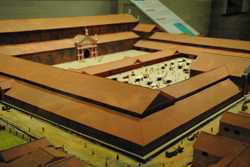
Nineteenth century Scottish painter David Robert’s painting, The Forum, is at the heart of a new display at the Guildhall Art Gallery exploring the concept of the Roman forum. The display looks at why the forum played such an important role in the Roman world, how it would have looked and what happened there. It also examines the painting in the context of the Robert’s Roman series, his wider body of work and depictions of the ‘grand tour’ by other artists. Admission is free. The exhibition, which is part of Londonium, a series of events, talks and displays focusing on London’s Roman past, runs until 1st January. For more, follow this link. PICTURE: A model of Londinium’s Roman forum in the Museum of London.

Two young Londoners who were posthumously awarded Victoria Crosses after they were killed on the first day of the Battle of Passchendaele have been honoured with commemoration stones in Victoria Embankment Gardens. Captain Thomas Riversdale Colyer-Fergusson, accompanied by a sergeant and just five men, managed to capture an enemy trench and a machine gun which he turned on his assailants. The 21-year-old attacked again, this time with just his sergeant, and captured another enemy machine gun but soon afterwards was killed by a sniper. Second Lieutenant Dennis George Wyldbore Hewitt, meanwhile, led his company under heavy machine-gun fire while seriously wounded and in pain. The 19-year-old successfully captured and consolidated his objective but he too was killed by a sniper soon after. The two men died on 31st July, 1917. The memorials were erected as part of World War I centenary commemorations which is seeing all 628 Victoria Cross recipients from the war being honoured in their birthplaces.

On Now: Samuel Fosso: Self-portraits. This exhibition at the National Portrait Gallery features a selection of images from 666 self-portraits taken by Cameroonian-born artist Samuel Fosso in 2015. Each of the shots were taken against the same red backdrop with Fosso adopting an identical head and shoulders pose in each. Photographed every day during October and November, 2015, each work is intended to reflect Fosso’s particular mood at that moment. The photographs, the artist’s first solo display in the UK, are displayed alongside some of the earliest self-portraits that he made while a teenager working in Bangui in the Central African Republic in the 1970s.  In these works, Fosso adopted personas which reflected popular West African culture, from musicians and the latest youth fashions to political advertising.  He employed special cloth backgrounds, in front of which he dressed up in a range of outfits from authentic European costumes and African folk costumes to navy uniforms, karate keikogis and boxer shorts. Runs until 24th September. Admission is free. For more, see www.npg.org.uk.

Send all items for inclusion to exploringlondon@gmail.com.

This Week in London – Londinium’s gladiators unearthed; black artists in the US; and, the future of the world’s cities…

The life of gladiators in Roman Londinium and that of those who watched them are explored in a new exhibition opening in the remains of the city’s 7000 seat amphitheatre under the Guildhall Art Gallery. Featured as part of the display will be a Roman skull uncovered during excavations in the Walbrook Stream which, dated to around 150 AD, shows evidence of substantial head trauma at the time of death and is the closest archaeologists have come to identifying a potential gladiator in Londinium. Trauma, which is free to enter, opens tomorrow and runs until 29th October. For more, see www.cityoflondon.gov.uk/guildhallartgallery.

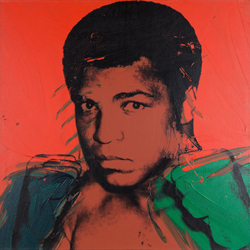
A landmark exhibition examining what it was like to be a black artist in the US during the civil rights movement and the purpose and audience of art during the emergence of ‘black power’ has opened at the Tate Modern. Soul of a Nation: Art in the Age of Black Power spans the era from 1963 to 1983, a time when race and identity become major issues across many spheres of society including music, sports and literature thanks to the likes of Aretha Franklin, Muhammad Ali and Toni Morrison. The display features more than 150 works by more than 60 artists, many of which are on display in the UK for the first time. Running until 22nd October, it is accompanied by a programme of talks and events. Admission charge applies. For more, see www.tate.org.ukPICTURE: Muhammad Ali by Andy Warhol/Tate Modern

The future of the world’s major cities – including London – is the subject of a new major exhibition which has opened at the Museum of London. The City is Ours is split into three sections: ‘Urban Earth’, centred on a 12 minute infographic film with comparative data about megacities such as London, Sydney, Tokyo, New York and Sao Paolo; ‘Cities Under Pressure’, which provides an overview of the risks, challenges and demands facing global cities through digital and physical interactive displays; and, ‘Urban Futures’, which presents solutions to the challenges increasing urbanisation poses. In addition, the exhibition takes a look at 25 innovative projects which are now taking place across London to improve life for its inhabitants. The free exhibition, part of the year-long City Now City Future season, can be viewed until 2nd January. For more, check out www.museumoflondon.org.uk/thecityisours.

Send all items for inclusion to exploringlondon@gmail.com.

This Week in London – The Great Parchment Book; 20th century art at Guildhall Art Gallery; and, iconic music photography…

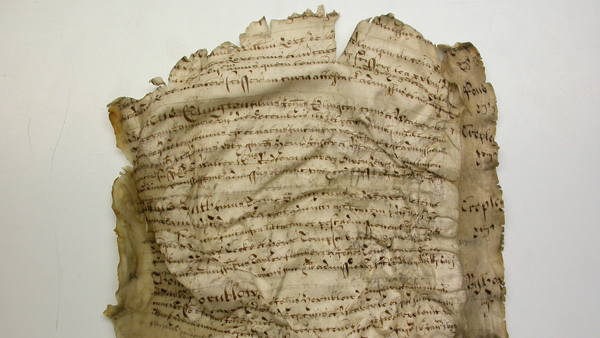
The Great Parchment Book, known as the ‘Domesday Book’ of the Ulster Plantation (now part of Northern Ireland), has gone on display at the City of London’s Heritage Gallery, located in the Guildhall Art Gallery. The book was compiled in 1639 and documents the period following King James I’s settlement of English and Scottish Protestants in Ulster. It came about after King Charles I seized estates around Derry which were managed by the Irish Society on behalf of the City of London and City livery companies and a survey was done to gather information about the lands. Stored at Guildhall, The Great Parchment Book was damaged in a fire in 1786 but following conservation is now on display. Runs until 10th August. Admission is free. For more, see www.greatparchmentbook.org. PICTURE: Courtesy City of London Corporation.

Works by Damien Hirst and David Hockney are among those on show in #LondonTrending which opens at the Guildhall Art Gallery today. A selection of limited edition prints on loan from British Land’s collection charts how collectives of London-based artists created some of the 20th century’s most innovative art. The display will also feature prints by pop artists Peter Blake, who created the sleeve design for The Beatles’ Sgt Pepper’s Lonely Hearts Club Band album, and Eduardo Paolozzi, who designed the mosaic patterned walls at Tottenham Court Road tube station as well as works by Richard Hamilton, Patrick Procktor, Jan Dibbets, Richard Long, Bruce McLean, Michael Lady, Simon Patterson, Gary Hume and Ian Davenport. Runs until 28th August in the Temple Room. Admission is free. A series of curator talks are scheduled. For more, see www.cityoflondon.gov.uk/londontrending.

Sheila Rock’s iconic portraits of musicians ranging from Sir Simon Rattle to Siouxsie Sioux are on show at the City of London’s Barbican Music Library. Picture This includes a wide range of her vintage prints including her work for album and vinyl 12” releases such as the shot of Debbie Harry used in 1978 for Blondie’s Denis’ 12. Other images included in the display feature Irish band U2 and conductor Daniel Barenboim. Rock, who has been based in London since 1970, was introduced to music photography by her ex-husband (and renowned rock photographer) Mick Rock and became known as a highly influential photographer during the punk and post-punk scene, later helping to shape the look of creative magazines such as The Face. Runs until 4th July. Entry is free. For more, follow this link.

Send all items for inclusion to exploringlondon@gmail.com.