• The Imperial War Museum has unveiled plans for a major rebuilding project at its Lambeth headquarters to culminate with the 100th anniversary of the start of World War I in 2014. Under a £71 million proposal, the size of the existing World War I galleries will be doubled and a new atrium will be created with further works – including a new sunken entrance – to be completed by 2019. The museum moved to its Lambeth location, formerly the Bethlem Royal Hospital, in 1936. Prince William is fronting the first £29 million appeal for funds. Meanwhile plans have reportedly been mooted to have the decommissioned aircraft carrier, the HMS Ark Royal, brought to London where it would be permanently moored in the Thames as a tourist attraction akin to the HMS Belfast.
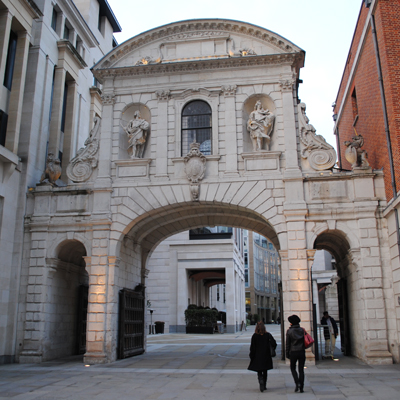
• St Paul’s Cathedral has announced it will provide live outdoor broadcasts of its three most popular Christmas services for the first time to allow those who can fit in the cathedral to participate. A 25 metre screen will be set up in Paternoster Square, next to the cathedral, where ‘A Celebration of Christmas’ will be screen on 16th December at 6.30pm along with Christmas Carol services on the 23rd and 24th December at 4pm. See www.stpauls.co.uk.
• An historic 18th century mill in East London will undergo restoration after the granting of a £248,000 lottery grant. House Mill, which dates from 1776, is believed to be the largest tidal mill still in existence anywhere in the world. Built across the River Lea, the mill was used for flour-making and for a distillery located next door on Three Mills Island in Bow. The project, which is being managed by the River Lea Tidal Mill Trust, involves the restoration of the mill as well as the adjoining Miller’s House and the creation of a visitor’s centre. The trust says it has also been given the “green light” for a further £2.65 million Heritage Lottery Fund grant. See http://housemill.org.uk.
• A three year project has made documents drawn up for King Henry III in the 13th century available on the internet for the first time. Project partners Canterbury Christ Church University, King’s College London, and the National Archives in Kew have translated and digitised the king’s ‘fine rolls’, written to record money and favours owed to the king. The rolls consist of 56 parchments – one for each year of his reign which started in 1216 and ended in 1272 – and contain as many as 40,000 entries amounting to some two million words. Some of the parchments, the originals of which are held at the National Archives, measure up to three metres in length. See www.finerollshenry3.org.uk.
• On now: Winter Wonderland in Hyde Park. Christmas festivity on a vast scale, Winter Wonderland includes the city’s largest open air ice rink, circus acts, a giant observation wheel, rides and eating places including the igloo-style E:Cube and the Spiegel Saloon. For more information see www.hydeparkwinterwonderland.com.
 Exploring London