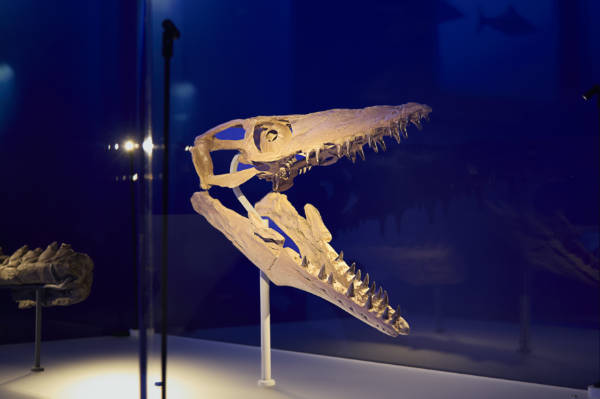
• Come face-to-face with some of the deadliest predators ever to rule the oceans in a new exhibition at the Natural History Museum in South Kensington. Opening tomorrow, Jurassic Oceans: Monsters of the Deep allows visitors to see the tooth of a mosasaur – described as the T Rex of the sea – up close, touch a cast of a Baryonyx claw and see a complete plesiosaur. There’s also the chance to hold Jurassic poo and take part in the Fierce Factor trail in a bid to find out which creature deserves to be crowned the most ferocious predator in the sea. Admission charge applies. For more, see www.nhm.ac.uk/visit/exhibitions/jurassic-oceans.html .
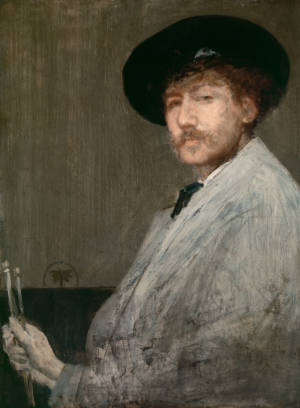
Arrangement in Gray: Portrait of the Painter, c 1872, oil on canvas. Detroit Institute of Arts, Bequest of Henry
Glover Stevens in memory of Ellen P Stevens and Mary M Stevens,
34.27.
• Europe’s largest retrospective of the works of American artist James McNeill Whistler in 30 years opened at Tate Britain in Millbank today. James McNeill Whistler brings together 150 works ranging from the iconic Portrait of the Artist’s Mother, four major self-portraits from across his career and previously unseen sketchbooks. Other highlights include his largest landscapes such as Coast of Brittany (1861) and Wapping (1860-4) and the largest assembly of his Nocturne landscapes seen in three decades, such as Nocturne in Blue and God: Valparaiso (1865-74) and Nocturne: Blue and Gold – St Mark’s, Venice (1880). Runs until 27th September. Admission charge applies. For more, see www.tate.org.uk.
• The story of London’s continuously cultivated gardens – Lambeth Palace Garden – is being told in a new exhibition at Lambeth Palace Library. Over the wall charts the garden from its origins in medieval orchards to today’s landscapes and displays items from the library’s collections connected to that ongoing story. Entry is free. Runs until 22nd July. There’s a special Lambeth Palace Garden open evening being held tonight – prebooking is essential. For more, see www.lambethpalacelibrary.info/exhibitions/over-the-wall/.
Send all items for inclusion to exploringlondon@gmail.com.