London Explained – Red phone boxes…

Red phone boxes in Covent Garden in 2017. PICTURE: Nick Fewings/Unsplash

They’re one of the most iconic and enduring symbols of London – the once ubiquitous red phone boxes. But what are their origins and how did they come to be red?

The phone boxes went through several iterations with the first standardised kiosk to house public telephones – a concrete box appropriately designated K1 – introduced by the General Post Office, manager of the telephone network, in 1921. It was usually painted cream with a red door.

The classically-styled domed kiosk known as K2 followed in 1924 after a design competition which was won by Sir Giles Gilbert Scott (the wooden prototype can still be found under the gateway entrance into the Royal Academy of the Arts in Piccadilly).

These were subsequently produced in cast iron and while Scott had apparently suggested they be painted silver with a green-blue interior, they were painted red. The Post Office’s pillar boxes were already painted this colour which was thought to be good for visibility, so it followed the colour could be used for phone boxes as well.

The K3, made of reinforced concrete and again designed by Scott, was introduced in 1929. Various other iterations were also produced including the K6 which Scott designed to commemorate the Silver Jubilee of King George VI (it was the most in-use across the UK).

New designs continued to be rolled out in the ensuing decades and appeared in a range of colours.

The number of BT-operated telephone boxes in the UK is, according to BT, said to have peaked at about 92,000 in 1992.

While many of the traditional boxes have disappeared, some have been converted for other uses – everything from mini libraries and art galleries to housing defibrillators – and BT continues to sell them, both to communities and private buyers.

While call volumes from public phone boxes have continued to decline in recent years, it was reported that about five million calls were made in the year to May, 2020, illustrating the ongoing need for some to remain.
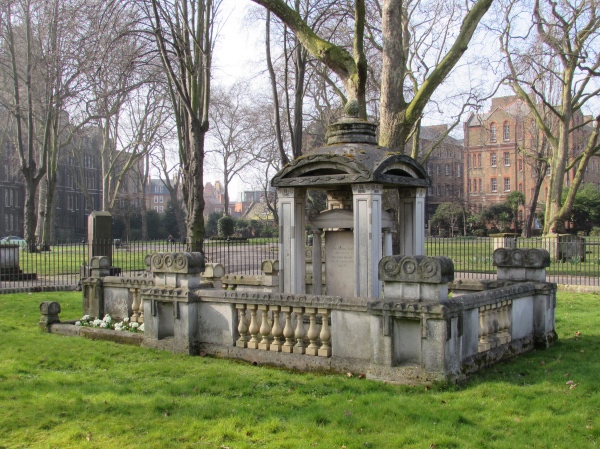
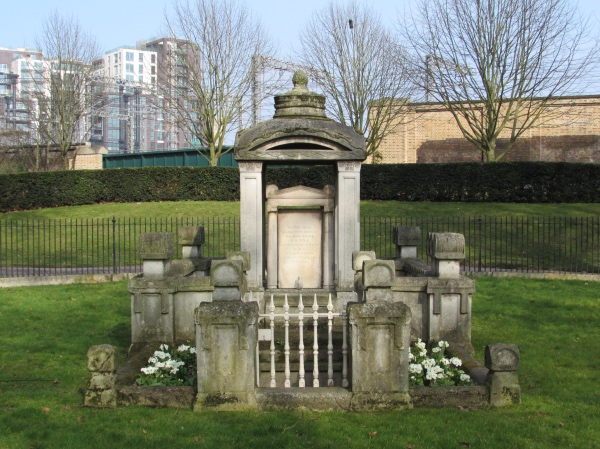
10 of London’s most curious (and historic) graves – 6. Sir John Soane’s family (St Pancras Old Church)…


It should probably come as no surprise that this rather elegant memorial in the former graveyard of St Pancras Old Church is that of architect – and founder of a rather remarkable museum – Sir John Soane (as well as his wife Eliza and their oldest son, John).

The tomb, described by architectural commentator Nikolaus Pevsner as an “outstandingly interesting monument”, was, of course, designed by the heart-broken Soane, the architect of neo-classical buildings like the Bank of England and Dulwich Picture Gallery, following the death of his wife on 22nd November, 1815.

Erected in 1816, it features a central cube of Carrara marble with four faces for inscriptions topped by a domed canopy supported on four ionic columns. A Portland stone balustrade surrounds the whole structure as well as stairs down to the subterranean tomb itself.

Among the symbolic decorative elements on the monument are a pine cone finial – a symbol of regeneration, a serpent swallowing its tail – a symbol of eternity, and reliefs of boys holding extinguished churches – symbols of death.

Sir John’s son, John, was buried in the tomb after his death in 1823 and Sir John himself was interred following his death on 20th January, 1837.

The monument is said to be only one of two Grade I-listed monuments in London – the other being Karl Marx’s gravestone in Highgate Cemetery. It is also famously said to have formed part of the inspiration for Sir Giles Gilbert Scott’s design of famous K2 red telephone box.

The Soane tomb was vandalised in 1869 – and it was suggested at the time that it should be relocated to Lincoln’s Inn Fields for its protection.

It was more recently restored in 1996 by the Soane Monuments Trust and again, after more vandalism, in 2000-01 as part of a restoration of St Pancras Gardens by the London Borough of Camden.

The graveyard of St Pancras Old Church, incidentally, is also the site of The Hardy Tree.

WHERE: St Pancras Gardens, Pancras Road, Camden Town (nearest Tube station is Kings Cross St Pancras); WHEN: Daylight hours; COST: free; WEBSITE: https://posp.co.uk/st-pancras-old-church/; www.camden.gov.uk/parks-in-camden.

PICTURES: Michael Day (licensed under CC BY-NC 2.0).