This Week in London – Marie Duval explored; Christmas in Trafalgar Square and at Dulwich; and, Australian Impressionists at The National Gallery…

The life and work of 19th century London actress, cartoonist and illustrator Marie Duval is the subject of a new exhibition which opens at the Guildhall Library in the City tomorrow. Marie Duval: Laughter in the First Age of Leisure is the first one solely dedicated to Duval’s work (her real name was Isabelle Émilie de Tessier) as a 19th century pioneer of the art of comics. Her work first appeared in a range of cheap British ‘penny papers’ and comics of the 1860s to 1880s aimed at working class people. The exhibition has been produced by the University of Chester in partnership with the library and with the support of the British Library.

Carol singing has kicked off in Trafalgar Square to mark the Christmas season. More than 40 groups are taking part in the sessions – free to watch – which take place between 4pm and 8pm on weekdays and from 2pm on weekends until 23rd December. The square is also home to a traditional Norwegian spruce Christmas Tree which has, as has been the case every year since 1947, been brought from forest near Oslo in thanks for Britain’s support of Norway during World War II. For more, see www.london.gov.uk/events.

The Dulwich Picture Gallery’s Christmas festival – featuring the ‘Winterlights’ lights trail, artisan Christmas market, pop-up carollers and other entertainments – has opened at the south London gallery. This year’s festivities also include two contemporary baroque-inspired Christmas trees by 3D art specialists, Nagual Creations, and visitors also have the chance to create their own festive family photo using a specially commissioned giant gold frame in the grounds as well as listen to Christmas story-telling in the gallery’s Keeper’s Cottage. The Winterlights display runs from 6pm to 10pm until 18th December (excluding Mondays; admission charges apply) with the market, featuring 50 stalls, held over the next two weekends – 10th-11th December and 17th-18th December (entry is free). For more, see www.dulwichpicturegallery.org.uk.

The first UK exhibition to focus on Australian impressionist paintings has opened at The National Gallery. Australia’s Impressionists features 41 paintings including some never shown before in the UK and explores the impact of European Impressionism on Australian painting of the 1880s and 1890s with a particular focus on four artists: Tom Roberts, Arthur Streeton, Charles Conder and John Russell. The exhibition is organised into three sections: the first looking at the landmark 1889 9 by 5 Impression Exhibition held in Melbourne, the second looking at the role of Australian Impressionism in the forging of a national identity, and the third looking at the work and influence of John Russell. The exhibition can be seen in the Sunley Room until 26th March. Entry is free. For more, see www.nationalgallery.org.uk.

This Week in London – The Gilbert Galleries reopen at the V&A and period Christmases at the Geffrye…

gilbert-galleriesA 17th century Peruvian gold bowl recovered from a shipwreck, Tudor fashion accessories and a collection of ‘micromosaics’ including tabletops commissioned by Tsar Nicholas I are among highlights of the newly reopened Rosalinde and Arthur Gilbert Galleries at the V&A. The South Kensington museum reopened the four galleries last month after the objects within the collection were removed in 2014 as part of the V&A’s Exhibition Road building project which will be completed in July next year. Amassed by collectors Rosalinde and Arthur Gilbert over a period of 40 years from the 1960s, the collection features about 1,200 objects, more than 500 of which are now on display. The collection was on display at the Los Angeles County Museum of Art before being transferred to the UK in 1996 and accepted as a gift to the nation by the Queen Mother in 2000. It was displayed at Somerset House until coming to the V&A where it opened to the public in 2009. Other highlights on display include a newly acquired silver christening gift presented by King George II to his god-daughter, Lady Emilia Lennox, in 1731, and a life-sized silver swan made by Asprey, London, in 1985 (pictured). Entry to the galleries is free. For more, see www.vam.ac.uk. PICTURE: © Victoria and Albert Museum, London

The period living rooms at the Geffrye Museum of the Home have been transformed for Christmas in its annual Yuletide display. Now in its 25th year, the exhibition at the Shoreditch establishment recreates the Christmas traditions of times past including everything from kissing under the mistletoe to decorating the tree, parlour games such as blind man’s bluff to hanging up stockings and sending cards. Christmas Past is accompanied by a programme of events including craft fairs, festive evenings, carol sings and decoration workshops with festive food and drinks available in the cafe. Runs until 8th January. Entry is free. For more, see www.geffrye-museum.org.uk.

Send all items for inclusion to exploringlondon@gmail.com.


This Week in London – New museum on policing in the Square Mile; the 801st Lord Mayor’s Show; and maps on show at the BL…

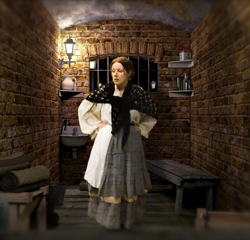
catherineeddowes2Stories including that of Catherine Eddowes, one of the victims of the notorious Jack the Ripper whose tale is brought to life through a virtual hologram (pictured), that of the Houndsditch Murders which claimed the lives of three police officers, and those of the more than 70 horses which have served in the City of London Police are among those told in the new purpose-built City of London Police Museum. A collaboration between the City of London Police and the City of London Corporation’s Guildhall Library, the new facility covers the 177 year history of the men and women charged with policing the Square Mile. Other stories highlighted in the museum include that of the recruitment of women into the force, the impact of the two World Wars on policing in the capital (featuring photographs taken by City of London police officers Arthur Cross and Fred Tibbs), the force’s tackling of terrorism and the progress of its communications, uniforms and kit and the victory of the City of London Police as the winner of the Olympic gold medal for the tug of war in 1920 (which, given the event was dropped, leaves them as the current champions). Entry to the museum, which opened this week at Guildhall, is free. For more, see www.cityoflondon.police.uk/about-us/history/museum/Pages/default.aspx. PICTURE: Courtesy City of London Police Museum.

The Lord Mayor’s Show takes place this Saturday, kicking off with a river pageant followed by the grand procession through City streets and fireworks over the Thames. The 801st Lord Mayor’s Show celebrates the election of Andrew Parmley as the 689th Lord Mayor of the City of London. This year’s procession, which kicks off at 11am and runs from Mansion House down Cheapside to the Royal Courts of Justice – where the Lord Mayor swears allegiance to the Crown – and back again at 1pm via Victoria Embankment, features 6,500 participants, 180 horses and 164 vehicles including steam engines, fire engines and a tank. The Show’s Pageantmaster, Dominic Reid, is celebrating his 25th consecutive show this year (his father organised 20 shows before him). The river pageant, featuring the QRB Gloriana, sets off from Westminster at 8.30am with Tower Bridge opening in salute at 9.25am. The fireworks display, which takes place over the Thames between Blackfriars and Waterloo, starts at 5.15pm. The tradition dates back to 1215. For more, see https://lordmayorsshow.london.

A major new exhibition looking at the history of the 20th century through maps has opened at the British Library in King’s Cross. Maps and the 20th Century: Drawing the Line features maps ranging from the first sketch of the London Underground dating from 1931, to declassified Ministry of Defence maps from the Cold War era, John Betjeman’s personal set of Ordinance Survey maps from the 1920s, a Russian moon globe from 1961 and EH Shepard’s first map of the Hundred Acre Wood (home of Winnie the Pooh). Other highlights include 3D relief models of the Western Front from 1917, a dress made of World War II escape maps printed on silk, an aerial photograph of Liverpool with targets marked used by the Luftwaffe, a map of the Atlantic Ocean floor from 1968. The exhibition, which runs to 1st March, is running in conjunction with a series of events exploring how maps continue to shape and influence our world. Admission charge applies. For more, follow this link.

Send all items for inclusion to exploringlondon@gmail.com

This Week in London – Emma Hamilton’s life explored; artist self-portraits; and, National Trust garnitures…

Emma Hamilton, the mistress of Horatio Nelson – hero of the Battle of Trafalgar, is the subject of a new exhibition at the National Maritime Museum in Greenwich. One of the most famous figures of her time, Hamilton rose from obscure beginnings to the heights of celebrity and is best remembered for the scandalous affair she had with Lord Nelson for the six years prior to his death in 1805. Emma Hamilton: Seduction and Celebrity brings together more than 200 objects, many of which have never been displayed before, including paintings, letters, costumes and jewellery. Highlights include works by artists George Romney, Sir Joshua Reynolds and Sir Thomas Lawrence, letters from Hamilton and her lovers, betrothal rings exchanged between Hamilton and Nelson, her songbooks and decorative objects. The exhibition, which runs until 17th April, is accompanied by a series of events including walking tours and late openings. Admission charges apply. For more, see www.rmg.co.uk/national-maritime-museum.

The first-ever exhibition of portraits of artists in the Royal Collection opens at The Queen’s Gallery, Buckingham Palace, tomorrow. Portrait of the Artist features more than 150 paintings, drawings, prints, photographs and decorative arts including a self-portrait by Sir Peter Paul Rubens (1623) which was hung in Whitehall Palace, a portrait of his former assistant Anthony van Dyck (c1627-28), and Cristofano Allori’s work Head of Holofernes (1613) in which the artist appears as the decapitated Holofernes as well as self-portraits by everyone from Rembrandt to Lucien Freud and David Hockney. The exhibition runs until 17th April. Admission charges apply. For more, see www.royalcollection.org.uk/visit/the-queens-gallery-buckingham-palace.

Sir Joseph Lyons, founder of Lyons tea shops and the ‘Corner Houses’ of London – among the first chain restaurants in England, has been honoured with an English Heritage Blue Plaque at his former home in Hammersmith. Sir Joseph, who lived at the property in the 1890s close to the now-demolished headquarters of his catering empire at Cadby Hall, opened the doors to his first teashop at 213 Piccadilly in 1894. He was knighted by King George V in 1911. For more, see www.english-heritage.org.uk/visit/blue-plaques/.

On Now: Garnitures: Vase sets from National Trust Houses. Being run in conjunction with the National Trust, the display at the Victoria & Albert Museum in South Kensington explores the history of ‘garniture’ – sets of ornamental vases unified by their design and a specific context. A status symbol for a period between the 17th and 19th century, garnitures fell out of fashion and complete sets are now extremely rare. The display features garnitures loaned from 13 different National Trust houses as well as objects from the V&A’s collection. Highlights include a garniture made in miniature for a doll’s house, an extremely rate 17th century silver set of jars, a Rococo set and Wedgwood ceramics. The free exhibition runs until 30th April. For more, see www.vam.ac.uk/exhibitions/garnitures.

Send all items for inclusion to exploringlondon@gmail.com.

This Week in London – Museums at Night; Roman London rediscovered; and, Pablo Picasso on show…

museums-at-night From tonight (and across this weekend), museums all over Greater London will be opening their doors after usual closing time as part of the annual Museums at Night event. Among those institutions taking part in the event, produced by Culture24, are such well-known icons as the British Museum, Tower Bridge and The National Gallery as well as lesser known establishments like Queen Elizabeth’s Hunting Lodge in Chingford, Southside House on Wimbledon Common and the Grant Museum of Zoology in central London. The October event follows an earlier Museums at Night in May. For the full programme of events, see www.museumsatnight.org.uk.

Roman London is the subject of a new exhibition at the City of London Corporation’s Guildhall Library. Londinium AD43 features the work of photographer Eugenio Grosso who takes the visitors on a photographic journey through time from London’s foundations to its present. The display shows how much of London’s Roman settlement has been preserved and features photographs of locations once home to significant London sites. Runs until 31st March. For more, see www.cityoflondon.gov.uk/things-to-do/guildhall-library/Pages/default.aspx

More than 75 portraits in all media by Spanish artist Pablo Picasso can be seen at the recently opened Picasso Portraits exhibition at the National Portrait Gallery. Including well-known masterpieces and some works never seen in Britain before, the works include a group of self-portraits as well as caricatures of Picasso’s friends, lovers, wives and children and images he created inspired by artists of the past. Runs until 5th February. Admission charge applies. For more, see www.npg.org.uk.

Send all items for inclusion to exploringlondon@gmail.com.

This Week in London – The Queen’s House reopens; Caravaggio at The National Gallery; and, Victorian entertainments at the British Library…

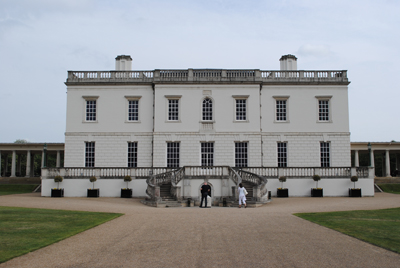
the-queens-houseThe Queen’s House in Greenwich has reopened this week following more than a year long restoration to mark its 400th anniversary. The property was designed by Inigo Jones for King James I’s wife, Queen Anne of Denmark (supposedly it was a gift from the king, given as an apology for swearing in front of her after she accidentally killed one of his dogs while hunting), and, commissioned in 1616 (but not finished until 1636, well after Queen Anne’s death), is regarded as Britain’s first fully classical building. The newly reopened premises houses more than 450 works of art from the National Maritime Museum’s collection and a new gold leaf artwork – inspired by the newly restored Tulip Stairs – on the ceiling of the Great Hall created by Turner Prize-winning artist Richard Wright. Other attractions include Gentileschi’s painting Joseph and Potiphar’s Wife, which has returned to the house, where it is on display in the King’s Presence Chamber, for the first time since 1650, and the iconic Armada Portrait of Queen Elizabeth I, which is now on permanent display. Entry to the property is free. The property’s reopening is being accompanied by a series of talks. For more, see  www.rmg.co.uk/queens-house.

The first major exhibition to explore the work Italian artist Caravaggio has opened at The National Gallery on Trafalgar Square this week. Beyond Caravaggio features 49 paintings traces the life of Michelangelo Merisi da Caravaggio (1571-1610), from his early years in Rome producing highly original works depicting youths, musicians, cardsharps and fortune-tellers through to his sensational first public commission in 1600 and the many commissioned works which followed, his two trips to the Kingdom of Naples (both times while fleeing the law, the first after committing murder), and how his works inspired – and were reflected in the works of – other painters. Works on show include Caravaggio’s Boy Bitten by a Lizard (1594-95) and The Supper at Emmaus (1601), as well as the recently discovered The Taking of Christ (1602) and Saint John the Baptist in the Wilderness (1603-04) along with a host of works from other painters. The exhibition is a collaboration with the National Gallery of Ireland and the Royal Scottish Academy and will head to these institutions after it finishes its run at The National Gallery on 15th January. Admission charge applies. For more, see www.nationalgallery.org.

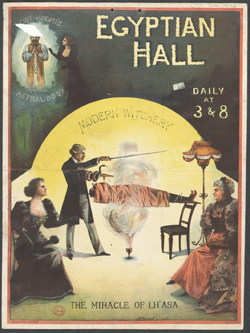
egyptian-hallA free exhibition exploring the popular Victorian entertainments which have shaped today’s theatrical traditions opens at the British Library in King’s Cross tomorrow. Victorian Entertainments: There Will Be Fun focuses on five performers who were instrumental entertainers during the 19th century – from mesmerist Annie De Montfort and ‘Royal Conjurer’ Evasion to Dan Leno – the “funniest man on earth”, circus owner ‘Lord’ George Sanger and magician John Nevil Maskelyne of the Egyptian Hall. The display features decorative posters, handbills, musical scores, advertisements and tickets and  includes items drawn from the 6,000 pieces of printed ephemera contained in the library’s Evasion collection as well as original sound recordings, artefacts on loan from The Magic Circle Museum and memorabilia from the Egyptian Hall in London. Five original performance pieces have been commissioned for the exhibition and every Saturday until 17th December, a company of actors and performers will present archive material from the exhibition in a contemporary performance. There’s also an extensive events programme accompanying the exhibition. Runs until 12th March. For more, see www.bl.uk/events/victorian-entertainments-there-will-be-fun. PICTURE: Modern Witchery Maskelyne at the Egyptian Hall; © British Library Board

Send all items for inclusion to exploringlondon@gmail.com.

This Week in London – Saxons camp out in Hyde Park on the way to battle; “ordinary punks” at Museum of London; and, Bridget Riley meets Seurat…

battle-of-hastings

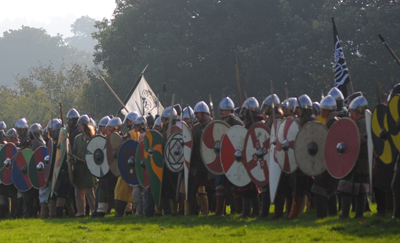
A temporary ‘Saxon’ camp will appear in Hyde Park this Saturday as Battle of Hastings’ re-enactors pause on their journey south to meet the forces of William, the Duke of Normandy, in an event marking the battle’s 950th anniversary. English Heritage is recreating the hurried march south of the Saxon King Harald and his followers following the Battle of Stamford Bridge in Yorkshire to Battle Abbey where they will join in an annual re-enactment of the world famous Battle of Hastings on 15th and 16th October. Having already visiting British landmarks like Lincoln’s Roman arch, Peterborough Cathedral, and Waltham Abbey, they will be found at a free “pop-up living history encampment” near Apsley House in Hyde Park between 11am and 3pm on Saturday. People are invited to visit the encampment and meet the re-enactors, learn how the armies lived and ate while on the march, discover which weapons they used and play some Norman games as well as see the Battle of Hastings recreated using vegetables. Later on Saturday, the re-enactors will head across London to the Jewel Tower in Westminster and then on, Sunday, on to Eltham Palace in the city’s south-east, before setting off for Battle to the south. For more – including a day-by-day calendar of the march – head to www.english-heritage.org.uk/learn/1066-and-the-norman-conquest/the-1066-march/. PICTURE: An earlier re-enactment of the Battle of Hastings/David Adams.

A free exhibition celebrating all things punk has opened at the Museum of London to mark the end of a year long festival commemorating 40 years of the movement’s influence. Punks, which tells the stories of “ordinary punks” living in London in the late 1970s, features artefacts like handmade mixtape sleeves, DIY fanzines and the radical clothes sold on the King’s Road. The exhibition, which runs until 15th January, is accompanied by what is promised to be a “no holds barred” debate centred on the punk phenomena in November. For more information, see www.museumoflondon.org.uk and for more about other events related to the 40th anniversary of punk, see www.punk.london.

On Now – Bridget Riley: Learning from Seurat. This exhibition at The Courtauld Gallery explores Riley’s breakthrough encounter with Georges Seurat’s 1887 work Bridge at Courbevoie. For the first time, it brings together a copy Riley made of the painting in 1959 with the original work as well as presenting a small group of Riley’s seminal works to show how her understanding of Seurat’s art led her to create what are described as “some of the most radical and original abstract works of the past five decades”. Part of the gallery’s ongoing series of displays focusing on major contemporary artists, it runs until 17th January. Admission charge applies. For more, see www.courtauld.ac.uk/gallery.

Send all items for inclusion to exploringlondon@gmail.com.

This Week in London – Marking the transatlantic cable’s 150th; Sir James Thornhill celebrated; and, food at the Foundling Museum…

commerce-and-sea-power_william-lionel-wyllie

• This year marks the 150th anniversary of the transatlantic cable connecting Europe and America and in celebration of the event, the City of London Corporation’s Guildhall Art Gallery is holding an exhibition looking at the impact of cable telegraphy on people’s understanding of time, space and the speed of communication. Victorians Decoded: Art and Telegraphy, a collaboration between the gallery, King’s College London, The Courtauld Institute of Art and the Institute of Making at University College London, features never-before-seen paintings from the gallery’s collection as well as rare artefacts such as code books, communication devices, samples of transatlantic telegraph sales and ‘The Great Grammatizor’, a messaging machine that will enable the public to create a coded message of their own. It took nine years, four attempts and the then largest ship in the world, the Great Eastern, to lay the cable which stretched from Valentia Island in Ireland to Newfoundland in Canada and enabled same-day messaging across the continents for the first time. Displayed over four themed rooms – ‘Distance’, ‘Resistance’, ‘Transmission’ and ‘Coding’, the exhibition features works by artists including Edward John Pointer, Edwin Landseer, James Clarke Hook, William Logsdail, William Lionel Wyllie and James Tissot. The free exhibition, which runs until 22nd January, is accompanied by a series of special curator talks. For more information, see www.cityoflondon.gov.uk/victoriansdecoded. PICTURE: Commerce and Sea Power, William Lionel Wyllie/Courtesy Guildhall Art Gallery.

• The life of artist Sir James Thornhill – the painter behind the remarkable Painted Hall at the Old Royal Naval College in Greenwich, has opened at The Stephen Lawrence Gallery in Greenwich. A Great and Noble Design: Sir James Thornhill’s Painted Hall explores the story behind the commissioning of the Painted Hall, painted between 1708 and 1727, through a series of preparatory sketches made by the artist, including three newly-conserved original sketches by Thornhill. Also on show will be the results of new research undertaken into the paintings in the light of upcoming conservation work on the hall’s ceiling. The free exhibition runs at the centre at Stockwell Street until 28th October. For more, see www.ornc.org.

The food served at the Foundling Hospital comes under scrutiny in a new show at The Foundling Museum in Bloomsbury. Based on new research, Feeding the 400 looks at the impact food and eating regimes had on children at the hospital between 1740 and 1950 through an examination of art, photographs, objects including tableware and the voices of former student captured in the museum’s extensive sound archive. Guest curated by Jane Levi, the exhibition also includes a newly commissioned sound work which evokes the experience of communal eating. A programme of events accompanies the exhibition which runs until the 8th January. Admission charge applies. For more, see www.foundlingmuseum.org.

Send all items for inclusion to exploringlondon@gmail.com.

This Week in London – Totally Thames; Sixties revolution at the V&A; and, French portrait drawings…

totally-thamesIt’s September and that means Totally Thames, an annual month of events celebrating London’s great watery artery. Highlights among this year’s 150 events include this Saturday’s Great River Race in which more than 300 boats from across the UK and around the world compete on a course running from Millwall Slipway to Ham House in Richmond, Life Afloat, an exhibition looking at the evolution of the houseboat living on the Thames across the last 100 years, and the 8th annual Classic Boat Festival at St Katharine Docks this weekend as well as walks, talks, performances, art installations and boat trips including a tour of Brunel’s London. Runs until the end of the month. For more information and the full programme of events, see www.totallythames.org. PICTURE: Totally Thames/Barry Lewis.

The changes that swept across society in the late 1960s are the subject of a new exhibition which opens at the V&A this weekend. You Say You Want a Revolution? Records and Rebels 1966-70 is divided into six distinct sections, and starts with a recreation of Carnaby Street as it was before moving on to subjects like clubs and counterculture, revolution on the street, revolution in consumerism, festivals and alternative communities. Among the objects on display are costumes designed for Mick Jagger, a Cecil Beaton portrait of Twiggy, Roger Corman’s 1967 film about LSD, The Trip, a wall of protest posters, film, sound and still footage from the 1967 Montreal and 1970 Osaka World Expos, a kaftan worn by Grace Slick of Jefferson Airplane at Woodstock, and a rare Apple 1 computer. Runs from 10th September to 26th February at the South Kensington institution. For more, see www.vam.ac.uk/revolution.

A new exhibition showcasing the British Museum’s holdings of French portrait drawings opens at the Bloomsbury establishment today. French portrait drawings from Clouet to Courbet offers the chance to see some well-known French portrait drawings alongside others that have never been exhibited before. Pictures on show include Francois Clouet’s portrait of Catherine de’Medici, Jean-Michel Moreau le Jeune’s chalk drawing of his infant daughter, and a ‘playful’ portrait of artist Artemisia Gentileschi by Pierre Dumonstier. The free display can be seen in Room 90 until 29th January.

Send all items for inclusion to exploringlondon@gmail.com.

This Week in London – The Great Fire of London’s 350th anniversary…

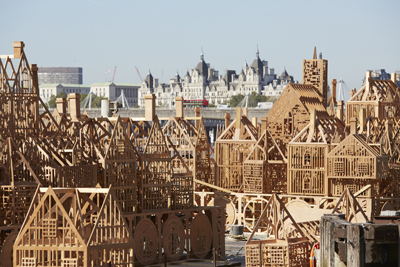
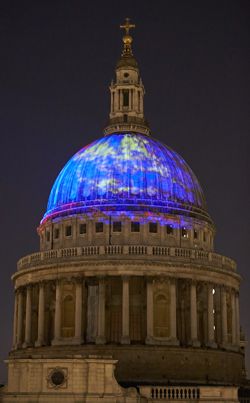
London-1666-by-David-Best-in-collaboration-with-Artichoke-©-Matthew-Andrews-(3)• The 350th anniversary of the Great Fire of London is upon us and to mark the event, the City of London is playing host to London’s Burning, a “festival of arts Fires-of-London--Fires-Ancient-and-Moden-by-Martin-Firrell-©-C.-Totman-(1)and ideas”, over the coming weekend. Produced by Artichoke, the festival includes everything from Fire Garden – an installation by French street art group Compagnie Carabosse at the Tate Modern, and Holoscenes – a six hour underwater performance installation by Los Angeles-based company, Early Morning Opera, in Exchange Square, Broadgate, to Fires of London: Fires Ancient and Fires Modern – two large scale projections by artist Martin Firrell onto St Paul’s Cathedral (pictured right) and The National Theatre, Station House Opera’s Dominoes – a kinetic sculpture of breeze block dominoes which retraces the path of the fire through the streets, and London 1666 – a 120 metre long wooden sculpture of Restoration London by American artist David Best working in collaboration with Artichoke which will be set alight on Sunday at a site on the river between Blackfriars Bridge and Waterloo Bridge (the sculpture is pictured above – you can also watch it live online here). Events run until 4th September. Head here to see the list of events in London’s Burning and to download a copy of the programme complete with map. PICTURES: © Matthew Andrews and C Totman.

Entry to The Monument – built as a permanent reminder of the great conflagration of 1666 – will be free from 2nd to 4th September in celebration of the Great Fire anniversary. Opening hours at the iconic 202 foot tall column have also been extended for the weekend but be warned that due to limited capacity, tickets mist be booked in advance with allotted time slots for entry. To book, head here.

A free exhibition telling the story of London’s bakers and their cakes, bread and puddings over the 350 years since 1666 has opened at the London Metropolitan Archives this week. London’s Baking! Bakers, Cakes, Bread and Puddings from 1666 takes its inspiration from Thomas Farriner and his Pudding Lane bakery, ground zero for the fire. And along with the displays, it features recipes for you to take away and bake including almond cakes from 1700, suet puddings from 1850 and “questionable” school dinner chocolate sponge traybake from the 1970s. Runs at the Clerkenwell-based organisation until 1st February. For more, see www.cityoflondon.gov.uk/events/Pages/event-detail.aspx?eventid=2749.

• Of course, these are just some of the events taking place as part of Great Fire 350. Others include the Fire Food Market in Guildhall Yard, running from 6.30pm to 10pm Saturday night and from 5pm to 10pm Sunday night, as well as events we’ve previously mentioned including the programme of events running at St Paul’s Cathedral and the Fire! Fire! exhibition at the Museum of London. For more of the walks, talks, performances, installations and other events taking place, head to www.visitlondon.com/greatfire350.

Send all items for inclusion to exploringlondon@gmail.com.

This Week in London – The Notting Hill Carnival turns 50; St Paul’s marks the Great Fire’s 350th; and, London’s subcultures captured on film…

The Notting Hill Carnival, the largest street festival in Europe, is celebrating its 50th birthday this Bank Holiday weekend. Events at the west London-based celebration of Caribbean culture, music, food and drink include a Children’s Day on Sunday with a parade for children, performances on the World Music Stage at Powis Square as well as food and drink (runs from 10am to 8.30pm); and, the main event, the 3.5 mile long Monday Parade and Grand Finale featuring 60 bands, performances at the World Music Stage as well as food and other activities (runs from 10am to 8.30pm). For more, see www.thenottinghillcarnival.com.

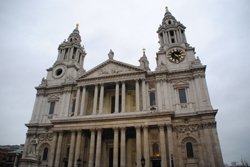
St-Paul's St Paul’s Cathedral, created after Old St Paul’s was destroyed in the Great Fire of London, has been marking the 350th anniversary of that event with a special programme of walks, talks, tours, special sermons and debates. Running until next April, they include special ‘fire tours’ of the cathedral, a special ‘family trail’ through the cathedral (which you can download for free), and Triforium tours in which you can see carved stones from Old St Paul’s and Sir Christopher Wren’s ‘great model’ of the new cathedral. In addition, an exhibition featuring a collection of pre-Great Fire artefacts, Out of the Fire, opens on 1st September (admission included in cathedral admission charge) and the cathedral will be kept open for two nights next week until 9pm, on 2nd and 3rd September. For the full programme of events, bookings and more information, head to www.stpauls.co.uk/fire.

On Now – Stomping Grounds: Photographs by Dick Scott-Stewart. This free exhibition at the Museum of London features images taken by the relatively unknown London-based photographer in the late 1970s and early 1980s, depicting everyone from the New Romantics of Covent Garden and Rockabillies of Elephant and Castle to wrestling matches at the Battersea Arts Centre and punks congregating on the Kings Road. The exhibition features 38 photographs and other “ephemera”. Entry is free. Closes on 18th September. For more, see www.museumoflondon.org.uk.

Send all events for inclusion to exploringlondon@gmail.com

This Week in London – Festival of Archaeology; exploring colour and vision at the NHM; and the City’s Summer Community Fair…

The 25th annual Festival of Archaeology has kicked off across the UK this week and, of course, there’s events taking place across London. They include a walk exploring the moat at Fulham Palace this Sunday, the opportunity to join Inspector of Ancient Monuments Jane Siddell on a walk along the route of the former London wall in the City of London next Thursday, a tour of the remains of London’s Roman amphitheatre beneath Guildhall Yard on 28th July, and the chance to investigate ancient poo at the Museum of London Docklands over the week from 25th to 29th July. Some of the events are free to attend and require no booking; others charge an admission price and require advance booking. For all details, head to www.archaeologyfestival.org.uk.

Giant-Jewel-Beetle Explore how colour and vision have shaped the natural world in a new exhibition which opens at the Natural History Museum in South Kensington tomorrow. Colour and Vision features more than 350 rarely seen specimens and uses immersive arts and digital imaging to highlight how colour and vision influence life on the planet, providing insights into how humans and animals perceive the world and how colour-shifters, stealth experts and mimics use colour to survive. They include specimens from the rarely-displayed national eye collection, some of nature’s finest examples of structural colour – including Jewel beetles and hummingbirds, cochineal insects which show how nature can be used to create pigments for dyes and paints, and some rose-ringed parrots, whose different colours reveal the visible impact of a mutation in their pigment genes. The exhibition also features a newly commissioned light installation – Our Spectral Vision – by artist Liz West which has been inspired by Sir Isaac Newton’s investigation of the colour spectrum and blue morphs butterflies. Runs to 6th November. Admission charges apply. For more, see www.nhm.ac.uk. PICTURE: Giant jewel beetles/© Trustees of NHM.
The City of London Corporation’s Community Fair will be held on Sunday in Guildhall Yard, featuring entertainment, food stalls and activities for all ages. The free event will see the yard lined with market stalls run by local clubs, faith groups, learning providers and cultural partners who will be offering games and activities as well as information and handmade items for sale. Special guest broadcaster and author Charlie Dimmick will be giving planting workshops throughout the afternoon and will take part in a special Q&A session. Runs from noon to 4pm. For more details, see www.cityoflondon.gov.uk/communityfair.
Send all items for inclusion to exploringlondon@gmail.com.

This Week in London – I am London; Gerrit Dou’s women reunited; and, Georgia O’Keeffe…

A new free exhibition featuring 60 Londoners photographed in front of an historic building or special place to them opens in Kings Cross on Monday. The Historic England exhibition I am London features well-known Londoners, such as reproductive health expert Professor Lord Robert Winston, philosopher AC Grayling, feminist activist and journalist Caroline Criado Perez, artist Bob and Roberta Smith, designer Morag Myerscough and performer Amy Lamé as well as “unsung Londoners” – everyone from a Yeoman Warder at the Tower of London and the park manager at Kensington Gardens to a 7/7 paramedic, an apprentice at a Savile Row tailors and a student at the Royal School of Needlework – in telling stories which illustrate how the city’s heritage can be “inspirational, provocative, frustrating, fun, familiar, humbling and home”. Taken by Historic England photographer Chris Redgrave, the photographs will be displayed in the UAL Window Galleries at Central Saint Martins along with a selection of objects the sitters chose to be photographed with, including the Pearly King of Finsbury’s jacket, Bob and Roberta Smith’s ‘Vote Bob Smith’ badge and a submarine once owned by Morag Myerscough’s father. Can be seen until 4th September. For more, see https://historicengland.org.uk/get-involved/visit/exhibitions/i-am-london/.

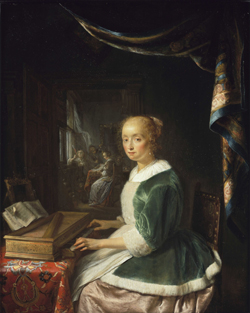
Gerrit-Dou Two of 17th century Dutch painter Gerrit Dou’s finest works – Woman playing a Clavichord and Lady Playing a Virginal (pictured), both dating from about 1665 – have been reunited for the first time in 350 years at the Dulwich Picture Gallery in south London. Opening this week, Dou in Harmony examines how Dou created two distinctly different takes on a similar subject and will be accompanied by a contemporary sound installation in the Mausoleum. Composed and played on the viola da gamba by Liam Byrne, the modern piece takes its cue from 17th century music and aims to evoke the mood of Dou’s paintings. The display is the latest in the Making Discoveries: Dutch and Flemish Masterpieces series which showcases four artists from the gallery’s collection: Van Dyck, Rubens, Dou and Rembrandt (whose work will be featured in an upcoming display in November). Runs until 6th November. Admission charge applies. For more, see www.dulwichpicturegallery.org.uk.

Georgia O’Keeffe’s celebrated work, Jimsyn Weed, White Flower No 1 (1932), is among highlights at the major retrospective of the US artist’s work which opened at the Tate Modern this week. The display marks a century since O’Keeffe’s debut in New York in 1916 and, with none of her works in public collections in the UK, provides a “once-in-a-generation opportunity” for audiences outside the US to view her portfolio of works in such depth. The display features more than 100 major works and charts the progression of O’Keeffe as an artist over a span of six decades. Runs until 30th October. For more, see www.tate.org.uk.

Send all items for inclusion to exploringlondon@gmail.com.

This Week in London – Commemorating the Battle of the Somme; Transported by Design; and, Winifred Knights at Dulwich…

Battle-of-the-SommeThe Imperial War Museum in Lambeth is holding a free late night opening tonight featuring live music, film screenings, immersive theatre and poetry to mark the 100th anniversary of the Battle of the Somme. Highlights of Night Before the Somme, which runs from 8pm to midnight tonight, include slam poet Kat Francois’ critically acclaimed play Raising Lazarus, poet and broadcaster Ian McMillan’s show Magic Lantern Tales, and extracts from the immersive production Dr Blighty – which tells the story of the million Indians who travelled to fight in the war. Visitors will also have the chance to watch the film, The Battle of the Somme (filmed and screened in 1916, it was the first feature-length documentary about war), listen in to a series of Q&A’s with experts on the battle, and preview the major exhibition, Real to Reel: A Century of War Movies. Real to Reel, which officially opens on Friday, explores how film-makers have found inspiration in compelling personal stories and the real events of wars from the past century. As well as audio-visual installations, the display features film clips, costumes, props, scripts, sketches and designs from films such as The Dam Busters, Where Eagles Dare, Apocalypse Now, Battle of Britain, Das Boot, Casablanca, Jarhead, Atonement and War Horse along with original archival material and artefacts from the IWM collections. The exhibition, which is divided into five sections, runs until 8th January. Admission charges apply. See www.iwm.org.uk for more. PICTURE: © IWM (Q 70164. Staged scene from The Battle of the Somme film, 1916 British troops go ‘over the top’ into ‘No Man’s Land’. This scene was staged for the camera at a training school behind the lines.

• Don’t forget tonight’s vigil at Westminster Abbey to mark the 100th anniversary (as mentioned in last week’s entry here).

Still on the centenary of the Battle of the Somme and a new exhibition opened at the Science Museum in South Kensington this week focusing on the innovations in medical practice and technologies developed as a result of the new kind of industrialised warfare seen in the battle. Wounded: Conflict, Casualties and Care has at its centre a collection of historic objects from the museum’s World War I medical collections including stretchers adapted for use in narrow trenches and made-to-measure artificial arms fitted to the wounded in British hospitals as well as lucky charms and personal protective items carried by frontline soldiers. There are also artworks from the period including Henry Tonk’s famous pastel drawings of facial injuries and a 1914 painting by John Lavery that depicts the arrival of the first British wounded soldiers at the London hospital. Admission is free and the exhibition can be seen until early 2018. For more, see www.sciencemuseum.org.uk.

Regent Street will be transformed on Sunday, 3rd July, with the Transported by Design Festival featuring transport designs which have shaped and will shape London. The festival, which will stretch from Piccadilly Circus to Oxford Circus Tube stations, will see the street divided into three zones – past, present and future. Among the objects on show in ‘past’ section will be a horse-drawn bus and other heritage buses, a 1927 train carriage and an exhibition of classic advertising posters and signage while the ‘present’ section will feature ‘Cycle Spin Fun’ by Santander Cycles, Moquette Land – a showcase of fabric used across the transport network, and, a ‘design a bus’ competition, and the ‘future’ section will feature a range of technologies, including virtual reality headsets, exploring what transport could look like in 2040. The free festival, part of the ‘Summer Streets’ program which sees Regent Street closed to traffic on Sundays over summer, runs from noon to 6pm. For more, see www.tfl.gov.uk/campaign/transported-by-design/event-calendar?intcmp=40582.

• The work of artist Winifred Knights, the first British woman to win the Prix de Rome scholarship, is the subject of a recently-opened exhibition at the Dulwich Picture Gallery. The display, the first major retrospective of the work of Knights (1899-1947), brings together more than 70 preparatory studies and her most ambitious works including The Deluge (1920), The Potato Harvest (1918) and Leaving the Munitions Works (1919). Winifred Knights (1899-1947) runs until 18th September. Admission charge applies. For more, see www.dulwichpicturegallery.org.

Send all items for inclusion to exploringlondon@gmail.com.

This Week in London – Westminster Abbey open overnight for Somme vigil; ‘Painters’ Paintings’; and, the East End Canal Festival…

Westminster Abbey is to remain open all night next Thursday (30th June) for a vigil in commemoration of the 100th anniversary of the Battle of the Somme. It’s the first time the abbey has been open for an all-night vigil since the Cuban missile crisis more than 50 years ago. The vigil around the Grave of the Unknown Warrior will be mounted from 8.45pm next Thursday, 30th June, through to 7.30am on Friday, 1st July (last entry to the abbey is at 7.15am). The public are invited to attend the vigil following an evening service at 8pm on Thursday which will be attended by Queen Elizabeth II and broadcast live on BBC Two. The vigil, which will end with the firing of World War I guns in Parliament Square by The King’s Troop Royal Horse Artillery, will see a series of 15 minute watches kept by service personnel and community groups representing those involved in the battle and there will also be readings from contemporary accounts. No tickets are required and entry, which is free, is via the abbey’s visitor entrance at the North Door. For more, see www.westminster-abbey.org.

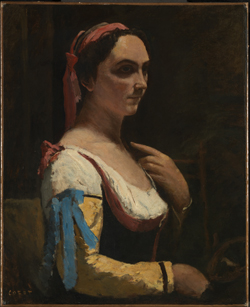
CorotEver wondered what attracts artists to collect particular paintings? Answers abound at a new summer exhibition opening at The National Gallery today. Painters’ Paintings’: From Freud to Van Dyck features a series of ‘case studies’, each of which is devoted to works gathered by a particular ‘painter-collector’ including Lucien Freud, Henri Matisse, Hillaire-Germain-Edgar Degas, Frederic, Lord Leighton, Sir Thomas Lawrence, Sir Joshua Reynolds and Sir Anthony van Dyck. The display was inspired by Jean-Baptiste-Camille Corot’s work Italian Woman which was left to the nation by Lucien Freud following his death in 2011. “It made us start considering questions such as which paintings do artists choose to hang on their own walls,” explains Anne Robbins, curator of the exhibition. “How do the works of art they have in their homes and studios influence their personal creative journeys? What can we learn about painters from their collection of paintings? Painters’ Paintings’: From Freud to Van Dyck is the result.” The exhibition features works from the gallery’s own collection as well as loans from public and private collections. Admission charges apply. Runs until 4th September. For more, see www.nationalgallery.org.uk. PICTURE: Jean-Baptiste-Camille Corot’s Italian Woman, or Woman with Yellow Sleeve (L’Italienne) about 1870/© The National Gallery, London.

The East End Canal Festival takes place at the Art Pavilion, Mile End Park this Sunday. The programme, being run by the Friends of Regent’s Canal, includes boat trips as well as guided canal history walks and a range of performances, films, stalls, exhibitions featuring historic photos and locally made artworks, children’s activities and food. The festivities at the Clinton Road site are free. For more, see http://friendsofregentscanal.org/events/eecf.html.

Send all items for inclusion to exploringlondon@gmail.com.

This Week in London – Exploring flight and space; ‘Horrible’ Tudors at Hampton Court; BioBlitz at Brompton Cemetery; and sleeping with the lions…

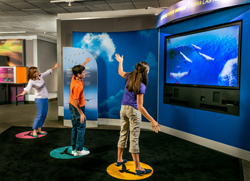
Spread-your-wings• A “ground-breaking” hands-on exhibition exploring the concept and future of flight and space travel opens at the National Maritime Museum in Greenwich this week. Above and Beyond, produced by Evergreen Exhibitions in association with Boeing (and created in collaboration with NASA), features more than 10 interactive displays, allowing visitors to learn to fly like a bird, take an elevator to space, enjoy a view of Earth from above or go on a marathon mission to Mars and see how your body would cope. Runs until 29th August. Admission charge applies. For more, see www.rmg.co.uk/see-do/exhibitions-events/above-and-beyond-exhibition.

Horrible Histories is bringing the world of the ‘Terrible Tudors’ to life at Hampton Court Palace this half-term break. The Birmingham Stage Company is offering the chance for visitors to dip into 100 years of Tudor history, spanning the reigns of the “horrible” Henries to that of the crowning of King James I in 1603. Get behind the dry facts and discover what the role of the Groom of the Stool was, which queen lost her wig as she was executed and decide whether to join in punishing the ‘whipping boy’ or the monarch and which side you’ll be on as the Spanish Armada set sail. The hour long performances will take place on the palace’s historic East Front Gardens (unreserved seating on the grass). Admission charge applies. Runs from today until 2nd June. For more see, www.hrp.org.uk/hampton-court-palace/.

The Royal Parks is hosting its first ever BioBlitz at Brompton Cemetery this Bank Holiday weekend. For 24 for hours from 5pm on Friday, people are invited to join in the hunt to track down as many species of plants, animals and fungi as possible with events including tree and nature walks, earthworm hunts, bee and wasp counts and lichen recording. There will also be a range of stalls for people to visit with representatives from a range of nature and wildlife organisations present. The BioBlitz is one of several projects linked to the £6.2 million National Lottery-funded facelift of the cemetery. For more, head to www.royalparks.org.uk/events/whats-on/bioblitz.

Sleep with the lions at ZSL London Zoo next to Regent’s Park from this week. The zoo new overnight experience at the Gir Lion Lodge, in which guests can stay in one of nine cabins at the heart of the new Land of the Lions exhibit, opened on Wednesday. Guests will also be taken on exclusive evening and morning tours in which they’ll find out more about how ZSL is working with local communities and rangers in India’s Gir Forest to protect these endangered cats. The private lodges will be available six nights a week until December with designated adults-only and family nights available. For more, see www.zsl.org/zsl-london-zoo/gir-lion-lodge. 

Send all items for inclusion to exploringlondon@gmail.com.

This Week in London – Commemorating the Battle of Jutland; ‘lost’ Egyptian cities; and, new Blue Plaques…

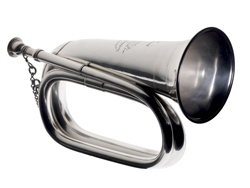
The largest naval conflict of World War I – the Battle of Jutland – is the subject of a new exhibition opening at the National Maritime Museum in Greenwich tomorrow. BugleMarking the centenary of the battle, Jutland 1916: WWI’s Greatest Sea Battle explores the battle itself (which claimed the lives of more than 8,500 as the British Grand Fleet met the German High Seas Fleet in what neither side could claim as a decisive victory) as well as its lead-up, aftermath and the experience of those serving on British and German warships through paintings and newspaper clippings, photographs, ship models and plans, sailor-made craft work and medals. Among the objects on display is a 14 foot long shipbuilder’s model of the HMS Queen Mary, which, one of the largest battle cruisers involved,was destroyed with only 18 survivors of the 1,266 crew. Among the personal stories told in the exhibition, meanwhile, is that of boy bugler William Robert Walker, of Kennington, who served on the HMS Calliope and, severely wounded during the battle, was later visited by King George V
and presented with a silver bugle by Admiral Sir John Jellicoe (the bugle, pictured, is on display). A series of events will accompany the exhibition which runs until November. Admission is free. For more, see www.rmg.co.uk/national-maritime-museum. PICTURE: © National Maritime Museum, London 

• Two ‘lost’ Egyptian cities and their watery fate are the subject of a new exhibition which opens at the British Museum today. Sunken cities: Egypt’s lost worlds is the museum’s first exhibition of underwater discoveries and focuses on the recent discoveries of Thonis-Heracleion and Canopus – submerged at the mouth of the Nile for more than 1,000 years. Among the 300 objects on display are more than than 200 artefacts excavated between 1996 and 2012. Highlights include a 5.4 metre statue of Hapy, a sculpture excavated from Canopus representing Arsine II (the eldest daughter of the Ptolemaic dynasty founder Ptolemy I) who became a goddess after her death, and a stela from Thonis-Heracleion which advertises a royal decree of Pharaoh Nectanebo I concerning taxes.  The exhibition runs until 27th November. Admission charge applies. For more, see www.britishmuseum.org.

New English Heritage Blue Plaques marking the homes of comedian Tommy Cooper and food writer Elizabeth David have been unveiled this month as part of the 150th anniversary of the scheme. Tommy Cooper lived at his former home at 51 Barrowgate Road in Chiswick between 1955 to 1984 and while there entertained fellow comedians such as Roy Hudd, Eric Sykes and Jimmy Tarbuck. Elizabeth David, meanwhile, is the first food writer to ever be commemorated with a Blue Plaque. She lived at the property at 24 Halsey Street in Chelsea for some 45 years until her death in 1992. For more, see www.english-heritage.org.uk/visit/blue-plaques/.

Send all items for inclusion to exploringlondon@gmail.com.

This Week in London – Talking Shakespeare; Dickens’ letter in support of ‘fallen women’; and, wallpaper at the Geffrye…

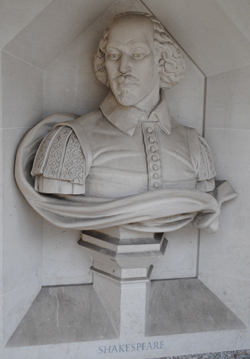
William-Shakespeare6• Guildhall is hosting an “open mic” Shakespeare day this Tuesday as part of commemorations marking the 400th anniversary of his death. Speeches, Soliloquies and Songs from Shakespeare will be opened with recitals from actors Simon Russell Beale and John Heffernan before members of the public will have their chance to recite their favourite piece from Shakespeare. Participants are invited to sign up by emailing ghlevents@cityoflondon.gov.uk or calling 020 7332 1868. The event will run between 10am to 12pm and 1.30pm to 3.30pm at the Basinghall Suite in the Guildhall Art Gallery. For more, see www.cityoflondon.gov.uk/things-to-do/visit-the-city/attractions/guildhall-galleries/Pages/guildhall-art-gallery.aspx.

A letter written by author Charles Dickens to the governors of the Foundling Hospital has gone on display at the Foundling Museum in Bloomsbury. The letter was written to the governors in support of an application for a new matron and touches on Dickens’ belief that the downward path of a ‘fallen woman’ wasn’t irreversible and inevitable but that reform was possible. Tempted to Virtue: Dickens and the Fallen Woman can be seen until 22nd May. In a related event, Lynda Nead, curator of the recent exhibition, The Fallen Woman, will join Jenny Earle, programme director at the Prison Reform Trust, in discussing the hidden stories of vulnerable women in the 19th century and today on 21st May. This event is free but booking is essential. For more, see www.foundlingmuseum.org.uk.

An exhibition celebrating how wallpaper is made is running at the Geffrye Museum in Shoreditch as part of London Craft Week. The Craft of Wallpaper demonstrates the variety of processes being used to make wallpaper in today’s world and features papers by some of the UK’s most innovative makers including Claire Coles, Elise Menghini, Helen Morley, Identity Paper, Juliet Chadwick, Linda Florence, Erica Wakerly, Fromental, CUSTHOM, Tracey Kendall and Graham & Brown who are showcasing six of their most successful wallpaper designs: from its first design in 1946, Original, to the 2016 Wallpaper of the Year, Marble. You’ll have to be quick – only runs until Sunday. For more, see www.londoncraftweek.com.

Send all items for inclusion to exploringlondon@gmail.com.

This Week in London – On the education of Georgian princesses; servant’s lives on show; and, 100 years of Vogue…

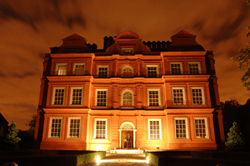
Kew-Palace-2 The education of the daughters of King George III and Queen Charlotte is the subject of a new display which has opened at Kew Palace in Kew Gardens. The queen’s progressive approach to learning meant the princesses received a “thoroughly modern” schooling covering everything from geography to art, upholstery to tackling brain-teasers as well as botany and music. The latter, in particular the harpsichord, was a particular passion of Princess Augusta, and to instruct her and the other girls, JC Bach, son of world-renowned composer JS Bach, was employed as music master (the display features a hand-written copy of his father’s Well-Tempered Clavier – designed to train and test the skills of harpsichord players). Other items on show include a copy of Queen Charlotte’s own tortoiseshell notebook embellished with gold and diamonds, a letter the queen wrote to the princesses’ governess – reputedly the first letter she wrote in English, and a series of newly acquired satirical prints from the Baker Collection depicting Queen Charlotte and her daughters. The new display can be seen from today. Admission charges apply. For more, see www.hrp.org.uk/kew-palace/. PICTURE: Newsteam/Historic Royal Palaces.

The lives of servants working in middle-class houses in London over the last 400 years are the subject of an exhibition which opened at the Geffrye Museum in Shoreditch earlier this month. Swept Under The Carpet? Servants in London Households, 1600-2000 illustrates the dynamic nature of the relationship between servants and their employers – from the intimacy of a maid checking her master’s hair for nits in the late 17th century to an ayah caring for an Anglo-Indian family’s children in the late 19th century and an au-pair picking up after the children in the middle of the 20th century. It explores their story through an examination of the places in which they worked – the middle class parlour, drawing room and living room. Entry to the exhibition, which runs until 4th September, is free. For more, www.geffrye-museum.org.uk.

On Now – Vogue 100: A Century of Style. This exhibition currently running at the National Portrait Gallery off Trafalgar Square features iconic images of some of the 20th century’s most famous faces. Included are rarely seen images of the Beatles and Jude Law as well as portraits of everyone from artists Henri Matisse and Francis Bacon, actors Marlene Dietrich and Gwyneth Paltrow, Lady Diana Spencer and soccer player David Beckham. There’s also complete set of prints from Corinne Day’s controversial Kate Moss 1993 underwear shoot, Peter Lindbergh’s famous 1990 cover shot – said to define the ‘supermodel era’, a series of World War II photographs by Vogue‘s official war correspondent Lee Miller and vintage prints from the first professional fashion photographer, Baron de Meyer. The display can be seen until 22nd May. Admission charge applies. For more, see www.npg.org.uk.

Send all items for inclusion to exploringlondon@gmail.com.

This Week In London – Artists and gardens at the RA; London tattoos; and, out of this world photos at the Natural History Museum…

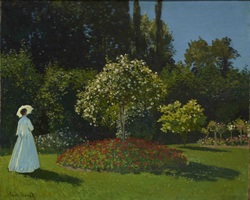
Monet A major exhibition looking at the role of gardens in the paintings of Claude Monet and his contemporaries opens at the Royal Academy of Arts in Piccadilly on Saturday. Painting the Modern Garden: Monet to Matisse spans the period from the 1860s to the 1920s and includes more than 120 Impressionist, Post-Impressionist and Avant-Garde works including 35 by Monet as well as “rarely seen” masterpieces by Paul Klee, Emil Nolde, Gustav Klimt and Wassily Kandinsky. Highlights include Monet’s Agapanthus Triptych (1916-1919) as well as his Water Lilies (1904) and Lady in the Garden (1867), Auguste Renoir’s Monet Painting in His Garden at Argenteuil (1873) , Kandinsky’s Murnau The Garden II (1910) and Pierre Bonnard’s Resting in the Garden (1914). The exhibition, which has previously been at The Cleveland Museum of Art in Ohio, runs until 20th April. Admission charge applies. For more, see www.royalacademy.org.uk. PICTURE: Claude Monet, Lady in the Garden, 1867;  © The State Hermitage Museum/Vladimir Terebenin.

The world of professional tattooing is the subject of a new display at the Museum of London. Tattoo London, which opens at the City-based museum tomorrow, looks at the history of tattooing in the capital – which dates back to a time before Captain Cook – as well as life inside four contemporary tattoo studios. Also on display will be newly commissioned artworks by tattooists from the studios – Lal Hardy at New Wave, Alex Binnie at Into You, Claudia de Sabe at Seven Doors, and Mo Coppoletta at The Family Business. A series of events are being held in conjunction with the display which runs until 8th May. Entry is free. For more, see www.museumoflondon.org.uk.

A new photographic exhibition exploring the solar system has opened at the Natural History Museum. Otherworlds: Visions of our Solar System features 77 composite images pieced together from date collected on NASA and ESA missions by artist, curator and writer Michael Benson. Highlights include A Plutonian haze – a colourised image of Pluto created from data captured during New Horizon’s flyby of the dwarf planet in July last year, Enceladus vents waters into space – captured in 2009 by NASA’s Cassini mission it shows Saturn’s sixth largest moon Enceladus spraying water into space, and, A Warming Comet – a picture of the twin-lobed comet 67P/Churyumov-Gerasimenko venting gas and dust captured by ESA’s Rosetta probe in July last year. The exhibition can be seen until 15th May at the South Kensington museum. Admission charge applies. For more, see www.nhm.ac.uk/otherworlds.

Send all items for inclusion to exploringlondon@gmail.com.