PICTURE: Francais a Londres/Unsplash
A parakeet admires the cherry blossom in St James’s Park.

A parakeet admires the cherry blossom in St James’s Park.


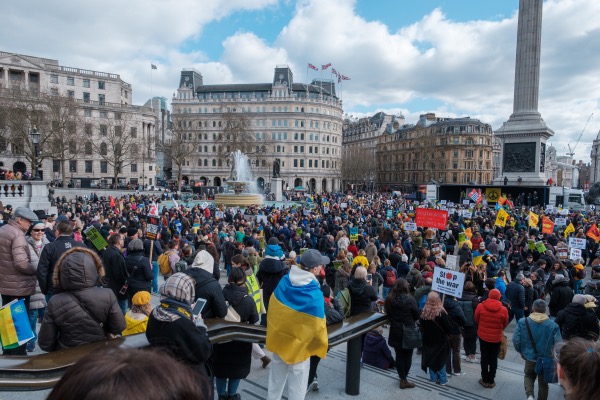
Demonstrations in support of Ukraine have taken place in numerous places in London since Russia launched its invasion on 24th February, including in Trafalgar Square.


One of two fountains in Trafalgar Square, this one commemorates Admiral of the Fleet, Earl Beatty, and unveiled by the Duke of Gloucester along with its counterpart commemorating Admoral Earl Jellicoe in 1948. Busts of both admirals can be see in the north wall. The fountain’s bronze sculpture and its counterpart were designed by Sir Charles Wheeler.

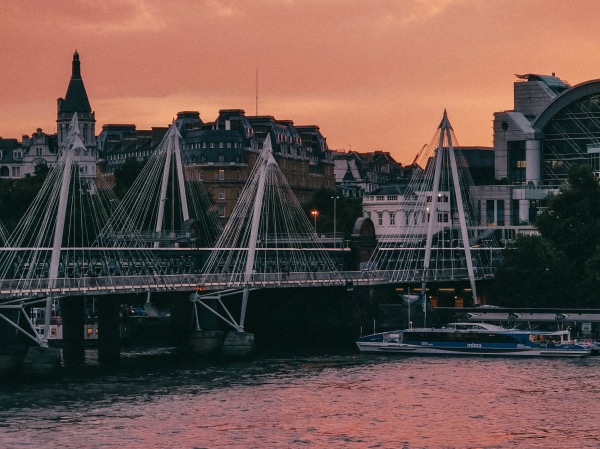
The Hungerford Bridge, flanked by the two Golden Jubilee Bridges, and the north-west bank of the Thames.


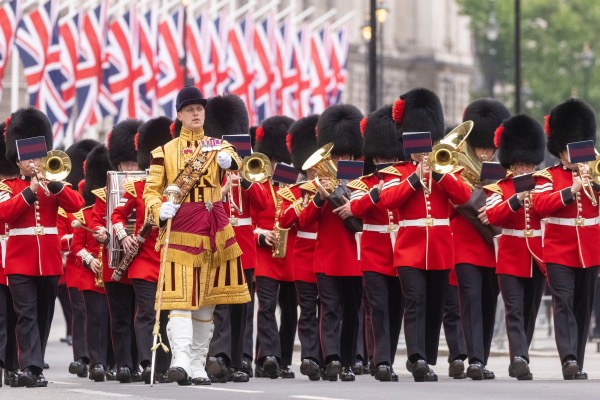
Buckingham Palace is among the sites across London which will be hosting events to mark Queen Elizabeth II’s Platinum Jubilee this June. The Queen’s 70th year on the throne will be marked with four days of celebrations across the June bank holiday weekend which will include the Queen’s Birthday Parade (known as Trooping the Colour), the lighting of Platinum Jubilee Beacons – including the principal beacon at Buckingham Palace, a Service of Thanksgiving at St Paul’s Cathedral, the ‘Platinum Party at the Palace’ – a celebration concert in the gardens of Buckingham Palace, The Big Jubilee Lunch in communities across the city, and a special Platinum Jubilee Pageant, part of which will see a moving river of flags rippling down The Mall. For more information, head to www.royal.uk/platinum-jubilee-central-weekend.

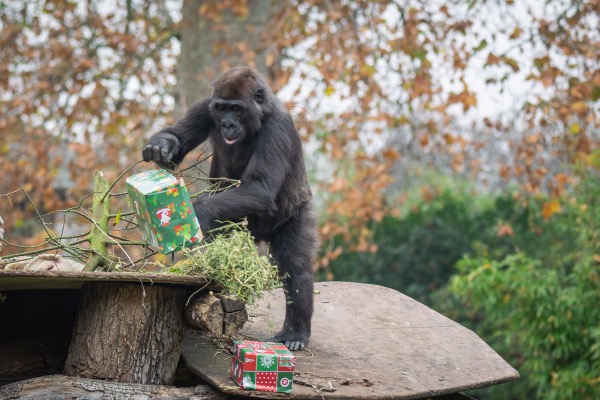
Christmas came early for some of the residents at ZSL London Zoo this week. Asiatic lions Bhanu and Arya discovered brightly wrapped boxes scented with seasonal spices in the Land of the Lions while in the Gorilla Kingdom, the zoo’s troop of Western lowland gorillas found gifts of their favourite festive vegetables. “Gorillas Alika, Gernot, Mjukuu and Effie are always keen to clean their plates of all the festive veg at Christmas – they loved digging into their presents to find juicy carrots and tasty Brussels sprouts,” said head zookeeper Dan Simmonds. “And while lioness Arya carefully picked up her gifts and carried them off to play with later, Bhanu opened his all at once, rolling around in the boxes to release his favourite seasonal scents – nutmeg and cinnamon.” The zoo is open every day apart from Christmas Day. For more, see www.zsl.org/london-zoo. PICTURES: ZSL London Zoo.


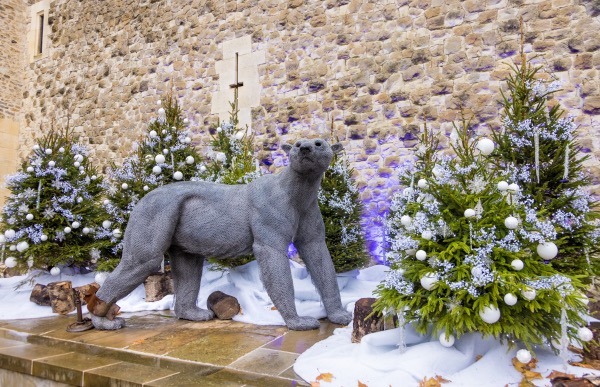
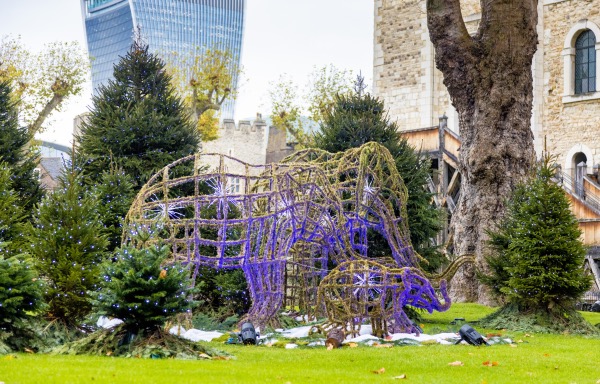
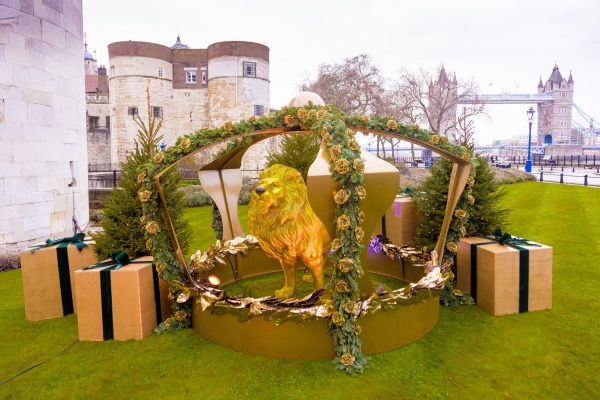
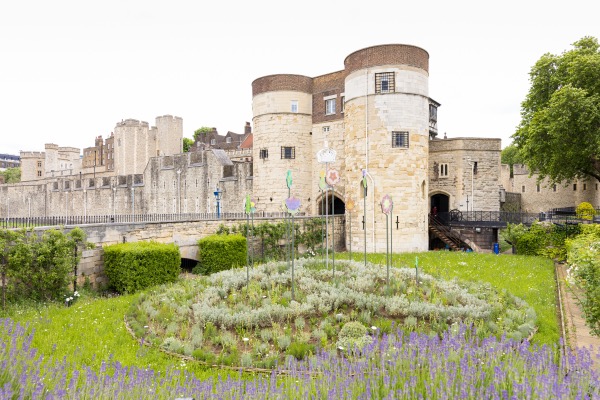
The Royal Menagerie at the Tower of London has been decked out for Christmas with an array of glittering decorations. Animals including a polar bear, elephants and lions were kept at various times in the Tower’s menagerie which started thanks to a royal penchant to giving exotic animals as gifts to fellow monarchs. King Edward I created the first permanent home for the menagerie which, after hundreds of years, closed for good in 1835. The Christmas display the Tower, which centres on the Tower Green Christmas tree, can be seen until 3rd January. Admission charges apply. For more, see www.hrp.org.uk.


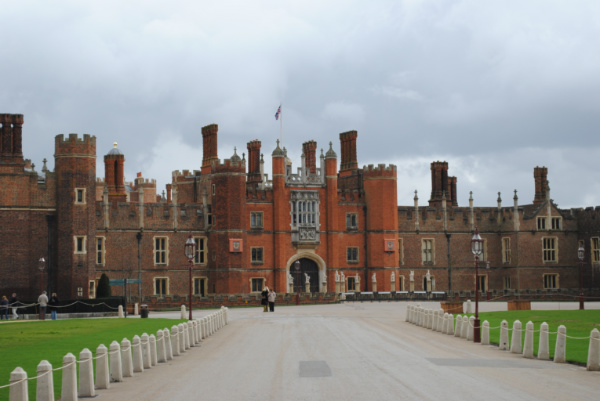
Standing with Giants, a thought-provoking art installation at Hampton Court Palace, commemorates the lives lost in World War I and II and, in particular, the Indian soldiers who resided on the palace’s estate prior to the coronation of King Edward VII in 1902, and again for the World War I Victory Parade in London. The work of Oxfordshire artist Dan Barton and a dedicated group of volunteers, the work – located in the East Front gardens – features 100 almost life-sized silhouettes of soldiers and 75 screen-printed poppy wreaths along with an additional 25 specially commissioned silhouettes which represent the Indian soldiers. Almost 1,800 Indian Army officers, soldiers, and civilian workers sailed from India for the World War I Victory Parade and a camp was specially created to house them in the palace grounds in what was at the time one of the largest gatherings of people from India and South-East Asia ever assembled the UK. During their stay in London, the soldiers were treated to excursions in London and across the country which included trips to the Tower of London and a Chelsea football match. Alongside the display, a special trail map has been created to allow visitors to explore other aspects of the palace’s World War I history and former residents who took on roles ranging from frontline nurses to campaigners for improved care for injured veterans. One of the most poignant contributions the palace made to the war effort was the use of wood, supplied from an oak tree felled in Hampton Court’s Home Park, for the making of the coffin for the Unknown Soldier. Can be seen until 28th November. Admission charge applies. For more, see www.hrp.org.uk.

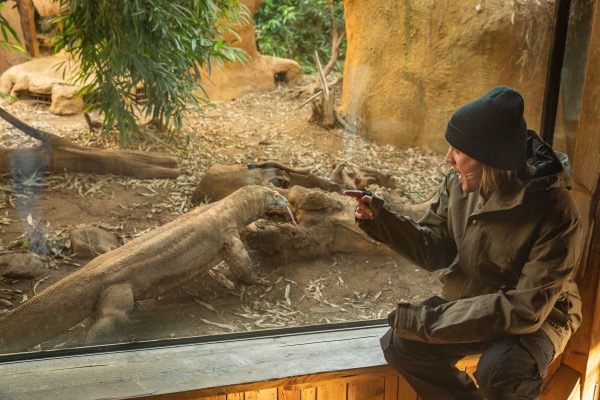
ZSL London Zoo launched its ‘Komodo Dragon Experience’ this month with McFly bassist, Dougie Poynter, getting hands-on in caring for the 13-year-old dragon Ganas. Poynter joined zookeeper Joe Capon behind the scenes at the Attenborough Komodo Dragon House and watched Capon demonstrate the 54 kilogram creature’s training routine. He then helped prepare its food before hiding the meat in holes and inside logs to allow Ganas, one of just 1,400 Komodo dragons left in the world, to use its remarkable sense of smell in obtaining its next meal. The Komodo Dragon Experience is only available twice a month. Admission charge applies. For books, head to zsl.org/the-komodo-dragon-experience.


Kew Gardens was last month recognised as holding the world’s “largest collection of living plants at a single-site botanic garden” by Guinness World Records. The 320 acre site in west London, which is home to 16,900 species of plants from all over the world, is actually no stranger to Guinness World Records. Its plants include the world’s largest waterlily species – Victoria amazonica (found in the Princess of Wales Conservatory), the world’s smallest water lily species – Nymphaea thermarum (also found in the conservatory) and the plant with the world’s tallest bloom – the titan arum (Amorphophallus titanum) which also holds the record as the world’s smelliest plant. In 2020, Kew was also home to the world’s longest Nepenthes plant trap which measured 43 centimetres from the base to the lid. For more on Kew, head to www.kew.org.


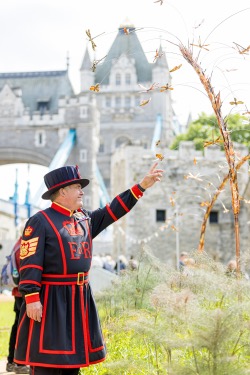
One Thousand Springs, an artwork by internationally renowned artist Chiharu Shiota, is the centrepiece of the Japan festival taking place at Kew Gardens in west London. The work features 5,000 haikus submitted by members of the public which have been suspended on red threads in the Victorian-era Temperate House. Says Shiota: “The Japanese language was formed by a culture that cherishes the natural world. Many cultural practices like ikebana, bonsai and hanami are based on the contemplation and enjoyment of nature. For One Thousand Springs I chose to focus on the haiku. The traditional haiku mentions one of the seasons and many haikus are based on observations in nature.” The installation can be seen throughout the month-long festival along with horticultural displays including a specially commissioned Chalk Garden, a contemporary response to a Japanese garden showcasing native plants including grasses, shrubs and trees. For more on the festival, including after hours events, see www.kew.org/kew-gardens/whats-on/festival-japan.

A selection of entries into this year’s Wildlife Photographer of the Year have been released ahead of the opening of the annual exhibition at the Natural History Museum in October. Among the images selected from the more than 50,000 entries in the 57th competition is that of Sergio Marijuán’s Lynx on the threshold depicting a young Iberian lynx pausing in the doorway of the abandoned hayloft where it was raised in Sierra Morena in Spain (pictured above), Gil Wizen’s Beautiful bloodsucker depicting a female ornamented mosquito in the process of biting (below), and Laurent Ballesta’s Deep feelers showing a vibrant community of narwhal shrimps in deep waters off the French Mediterranean coast (far below). The winners will be announced at a ceremony on 12th October. The exhibition at the South Kensington museum opens on 15th October at the Natural History Museum. To book tickets for the exhibition, head to www.nhm.ac.uk/visit/exhibitions/wildlife-photographer-of-the-year.html. The 2021 competition opens on 18th October.


Last week saw the annual weigh-in of animals at ZSL London Zoo and all creatures great and small took part – from the Bolivian black-capped squirrel monkeys (pictured above) to the giant Galapagos tortoises and the tiny midwife toads (both pictured below). With more than 20,000 animals in the care of the zoo, the keepers spend hours through the year recording the heights and weights of all the animals. It’s an important task – the information aids them in monitoring the health and wellbeing of all those in the zoo. “It helps to ensure that every animal we look after is healthy, eating well, and growing at the rate they should – weight is a particularly important indicator of health and wellbeing,” says the zoo’s animal manager Angela Ryan. “A growing waistline can also help us to detect and monitor pregnancies, which is so important as many of the species at ZSL London Zoo are threatened and part of international breeding programmes, including today’s Asiatic lions and big-headed turtles. By sharing information with other zoos and conservationists worldwide, we can all use this knowledge to better care for the species we’re striving to protect.” For more, see www.zsl.org.