This Week in London – Underground shelters in wartime – then and now; new Ravenmaster at the Tower; and, ‘La Ghirlandata’ back at the Guildhall Art Gallery…

A new photographic exhibition exploring how Underground stations and metro systems provide shelter to citizens during periods of war, both now and in the past, opened at the London Transport Museum in Covent Garden last week. Echoes of the Blitz: Underground shelters in Ukraine and London features 70 images, including historical pictures from the museum’s collection as well as 38 contemporary photographs shot by six renowned, mainly Ukrainian, documentary photographers. The latter include photography showing ordinary Ukrainian citizens sleeping, waiting, cooking, washing clothes, caring for their pets and creating temporary make-shift homes in metro stations of Kyiv and and Kharkiv show alongside black and white archive images of Londoners taking refuge in Tube stations during World War II. The exhibition, which is being run in partnership with Berlin-based journalistic network n-ost, can be seen until spring next year. Admission charge applies. For more, see www.ltmuseum.co.uk.
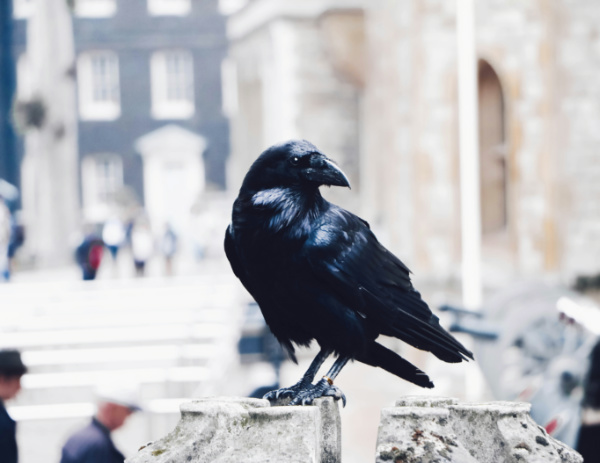
A raven at the Tower of London. PICTURE: Kasturi Roy/Unsplash

A new Ravenmaster has been appointed at the Tower of London. Yeoman Warder Michael ‘Barney’ Chandler took up the role at the start of this month, 15 years after he first became a Yeoman Warder at the Tower. The Ravenmaster oversees a team of four responsible for the care of the Tower’s seven ravens which legend says must remain at the Tower to ensure its protection. The legend apparently goes back to at least the reign of King Charles II – when the King’s astronomer John Flamsteed complained that the resident ravens were impeding his work at the Tower and requested their removal, the King was told that if the ravens left the Tower then the Kingdom would fall (and so they remained). While the Yeoman Warders have longed cared for the ravens, the post of Ravenmaster was only created in the past 50 years and was first held by Yeoman Warder Jack Wilmington. Yeoman Warder Chandler, who became the 387th Yeoman Warder at the Tower when he was appointed in March, 2009, is only the sixth person to hold the office. For more, see www.hrp.org.uk/tower-of-london/.

One of the most popular paintings at the Guildhall Art Gallery is being reinstalled to mark International Women’s Day on Friday. Dante Gabriel Rossetti’s La Ghirlandata has been on loan – first to the Tate Britain and then to the Delaware Art Museum in the US – but is now being returned. The painting dates from 1873 and depicts a ‘garlanded woman’ playing an arpanetta and looking directly at the viewer. The muse for the woman is said to have been the actor and model, Alexa Wilding, while the two ‘angels’ in the top corners were posed by William and Jane Morris’ youngest daughter, May Morris. The City of London Corporation acquired the oil on canvas work in 1927. On Saturday, free family activities will be held at the gallery to mark the work’s return. For more, see www.thecityofldn.com/la-ghirlandata.

Send items to exploringlondon@gmail.com.

Treasures of London – The Yeomen Warders…

Commonly known as Beefeaters (more on that in a moment), the Yeoman Warders have long been a presence at the Tower of London.

The Yeomen Warders, more properly known as the ‘Yeomen Warders of Her Majesty’s Royal Palace and Fortress the Tower of London, and Members of the Queen’s Body Guard of the Yeoman Guard Extraordinary’, are a distinct detachment of the Yeomen of the Guard.

With a history stretching back to at least the reign of King Edward IV (1461-83), they have formed the Royal Bodyguard since at least 1509.

The Warders are nicknamed ‘Beefeaters’, it is thought, due to the fact their privileged position meant they could eat as much beef as they liked from the King’s table.

These days, Yeoman Warders, most of whom live in the Tower with their families (part of their job has always been to guard the Tower at night), must have served in the armed forces for at least 22 years, have reached the rank of warrant officer, and been awarded the Long Service and Good Conduct Medal (the current warders have served in Northern Ireland, during the Falklands War, in Bosnia, in the first and second Gulf conflicts and in Afghanistan).

There are usually around 40 Yeoman Warders at any one time under the command of four Yeoman Serjeants and a Chief Yeoman Warder (currently Alan Kingshott). They wear age dark blue and red undress uniform for everyday duties but also have a state dress uniform featuring the familiar heavy red coat (pictured above).

The first female to be appointed to the role of Yeoman Warder was Moira Cameron in 2007. The most recent person to join the Yeoman Warders is Gary Burridge who did so in August following 32 years in the Royal Navy.

One of the Yeoman Warders – currently Chris Skaife – serves in the role of Ravenmaster of the Tower of London and has the responsibility of caring for the tower’s famous ravens (important because, so they story goes, should the ravens ever leave the tower, the White Tower will fall and disaster will befall the kingdom). Other specialist roles include that of Yeoman Clerk.

Upon joining the Yeoman Warders, the new warders take an oath of allegiance (believed to date back to 1337) after which they drink a toast of port served in an 18th century pewter bowl.

Tradition holds that the Chief Yeoman Warder toasts all new recruits with the words “May you never die a Yeoman Warder”. The origins of this apparently lie in the fact that the positions of Yeoman Warder were in the past purchased from the Constable of the Tower for 250 guineas with most of the money returned to the warder when they retired and the Constable keeping the rest. But if the Yeoman Warder died in office, the Constable would keep all the money – hence the toast. The practice was apparently abolished by the Duke of Wellington in 1826.

Yeoman Warders, as well as participating in ceremonial duties like the daily Ceremony of the Keys and the annual Ceremony of the Constable’s Dues, they also take tours of the Tower of London.

WHERE: Tower of London (nearest Tube is Tower Hill); WHEN: 9am to 4.30pm Tuesday to Saturday/10am to 4.30pm Sunday to Monday; COST: £21.50 adult/£9.70 child (Historic Royal Palaces members free); WEBSITE: www.hrp.org.uk/tower-of-london/

PICTURE: Yeoman Warders at the Ceremony of the Constable’s Dues, 2014 (Peter Rowley/Flickr/CC BY 2.0)