London Explained – Lord Mayor or Mayor?

Lord Mayor of London or Mayor of London? They have similar titles but their roles and responsibilities (not to mention their history) are quite different.
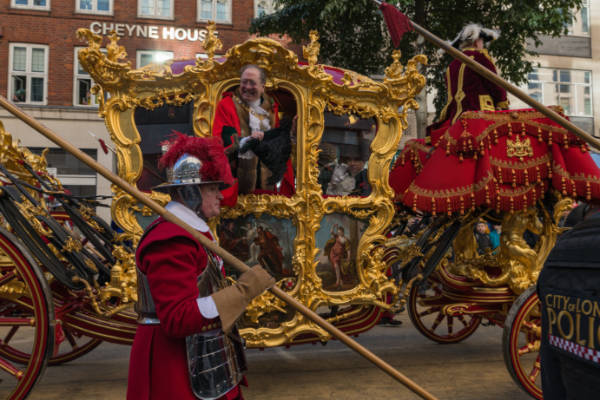
The Lord Mayor’s Show in November, 2023, with then newly elected Lord Mayor of London Michael Mainelli. PICTURE: j Thomas Salas/Shutterstock

The older of the two posts is the Lord Mayor of London, a title which refers to the governance of the City of London, known to many as the “Square Mile” in the heart of the capital.

The Lord Mayor of London (officially, since 2006, known as the Lord Mayor of the City of London) heads the City of London Corporation and is an elected position; in fact it’s one of the world’s oldest continuously elected offices dating back to the late 12th century.

The Lord Mayor, who holds office for one year, is elected by the City liverymen at the Common Hall held on Michaelmas (29th September) each year. They must be serving in the office of Alderman at the time.

The Lord Mayor of London takes office on the Friday before the second Saturday of November in what is known as The Silent Ceremony (the Lord Mayor’s Show, a celebration of the newly elected Lord Mayor, takes place the following day).

The role of the Lord Mayor of London – who takes precedence over all individuals in the City of London with the exception of the monarch – has historically been to represent the residents and businesses within the City although in modern times the role is effectively an “international ambassador” for the UK’s financial and professional services sector.

The current Lord Mayor of London is Alastair King who is the 696th Lord Mayor of London. The Lord Mayor of London works out of offices at their official residence near the Royal Exchange and Bank of England known as Mansion House.

Onto the Mayor of London. A much more modern position (it was created in the year 2000), the Mayor of London is directly elected by the registered voters of Greater London. They serve as the chief executive of the Greater London Authority and work with the 25 members of the London Assembly.
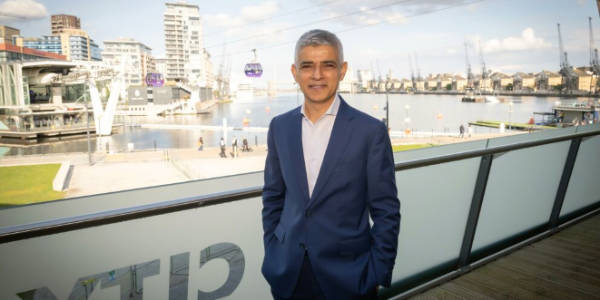
The Mayor of London, Sadiq Khan. PICTURE: Courtesy of the Mayor of London

The Mayor of London is charged with overseeing the strategic governance of Greater London which includes the City of London and all 32 London boroughs (each of which also has a ceremonial or elected mayor).

Responsible for setting an overall vision for the city, the Mayor is tasked with creating policies on everything from arts and culture, the environment and the economy to policing and crime, transport, sport and housing.

The Mayor of London is based at City Hall at Royal Docks in Newham.

The current Mayor of London is Sadiq Khan, the third to serve in the role, has been mayor since 2016. The previous two mayors include Ken Livingstone and Boris Johnson, who, of course, went on to be PM.
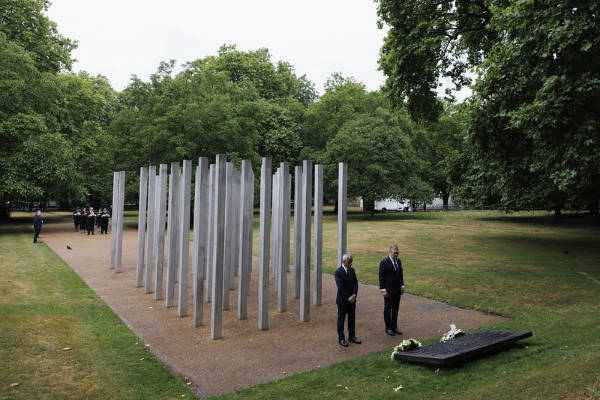
LondonLife – Remembering 7/7…

London paused on. Monday to mark the 20th anniversary of the terror attacks which took place on the 7th July, 2005.

Fifty-two people died in the attacks and hundreds were injured when three suicide bombers struck at 8.50am in the vicinity of Aldgate, Edgware Road and Russell Square Tube stations. A fourth device exploded at 9.47am on a bus that had been diverted via Tavistock Square.

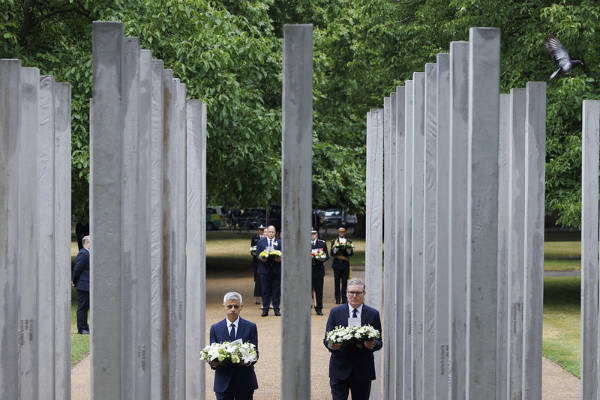
On Monday, the names of all those killed in London’s 7/7 bombings were read out at the National Memorial Service at St Paul’s Cathedral. In Hyde Park, Prime Minister Sir Keir Starmer and Mayor of London Sir Sadiq Khan laid wreaths at the 7/7 Memorial, marking the time when the first bomb exploded.

Prime Minister Keir Starmer and Mayor of London Sadiq Khan lay wreaths at the 7/7 memorial in Hyde Park. PICTURE: Simon Dawson/No 10 Downing Street (licensed under CC BY-NC-ND 4.0)

Commemorative events were also held at the sites where the bombings occurred.

In a message to mark the anniversary, King Charles III said his “heartfelt thoughts and special prayers remain with all those whose lives were forever changed on that terrible Summer’s day”.

“We remember with profound sadness the 52 innocent people who were killed in senseless acts of evil – and the enduring grief of their loved ones. We recall, too, the hundreds more who carry physical and psychological scars, and pray that their suffering may ease as the years pass.”

The King also called on people to “remember the countless stories of extraordinary courage and compassion that emerged from the darkness of that day”.

“The selfless bravery of our emergency services, transport workers, and fellow citizens who rushed towards danger to help strangers reminds us of the very best of humanity in the face of the very worst.”

Prime Minister Keir Starmer and Mayor of London Sadiq Khan lay wreaths at the 7/7 memorial in Hyde Park. PICTURE: Simon Dawson/No 10 Downing Street (licensed under CC BY-NC-ND 4.0)

London Explained – London governance…

Greater London, which includes the former county of Middlesex and parts of what were Surrey, Kent, Essex and Hertfordshire, is governed by 32 local authorities – boroughs – as well as the City of London itself.

The Crystal Building in Newham, seat of the Greater London Authority. PICTURE: Matt Buck (licensed under CC BY-SA 2.0)

Overarching these is the Greater London Authority, which consists of two branches – the Mayor of London (currently Sadiq Khan), who has executive powers, and the 25 member London Assembly who, as well as the mayor, are elected.

The Greater London Authority is now headquartered at City Hall in Newham, having moved there from City Hall in Southwark at the end of 2021.

The London boroughs, which were all created on 1st April, 1965, include three “Royal boroughs” – that of Greenwich, Kensington and Chelsea, and, Kingston upon Thames (more on them in a future post).

The boroughs are administered by councils who are elected every four years.

LondonLife – New Overground lines named to reflect London’s history…

Each of London’s six Overground lines are for the first time being given a new name and colour by which they can be identified.

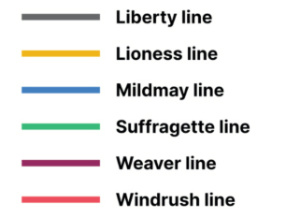
The Overground lines. GRAPHIC: Wiesenpinguin/Wikipedia (detail only)/Public Domain

The new names and colours – which include the Lioness line (yellow), Mildmay line (blue), Windrush line (red), Weaver line (maroon), Suffragette line (green) and Liberty line (Grey) – were chosen through engagement with customers, stakeholders, historians, industry experts and local communities, according to Transport for London.

Mayor of London, Sadiq Khan, described the move as a “hugely exciting moment, transforming how we think about London’s transport network”. 

“Giving each of the Overground lines distinct colours and identities will make it simpler and easier for passengers to get around. In re-imagining London’s tube map, we are also honouring and celebrating different parts of London’s unique local history and culture. 

Each of the new lines’ names reflects an aspect of the city’s culture and history. The Lioness line, which runs from Euston to Watford Junction through Wembly, honours the achievements and legacy of England women’s football team while the the Mildmay line, which runs from Stratford to Richmond/Clapham Junction through Dalston, honours a small charitable hospital in Shoreditch that played a pivotal role in the HIV/AIDS crisis in the 1980s and Windrush Line, which runs from Highbury & Islington to Clapham Junction/New Cross/Crystal Palace/West Croydon, honours the Windrush generation and runs through areas with strong ties to Caribbean communities today, such as Dalston Junction, Peckham Rye and West Croydon.

Meanwhile the The Weaver line, which runs from Liverpool Street to Cheshunt/Enfield Town/Chingford, runs through areasknown for their textile trade such as Liverpool Street, Spitalfields, Bethnal Green and Hackney, the Suffragette line, which runs from Gospel Oak to Barking Riverside, celebrates how the working-class movement in the East End fought for votes for woman and paved the way for women’s rights and ends at Barking, home of the longest surviving Suffragette Annie Huggett, who died at 103. The Liberty Line, which runs from Romford to Upminster, celebrates the freedom described as a “defining feature of London” and references the historical independence of the people of Havering, through which it runs.

For more on the new names and colours, see https://tfl.gov.uk/modes/london-overground/overground-line-naming?cid=naming-overground.

LondonLife – Icons turn purple to celebrate Elizabeth Line opening…

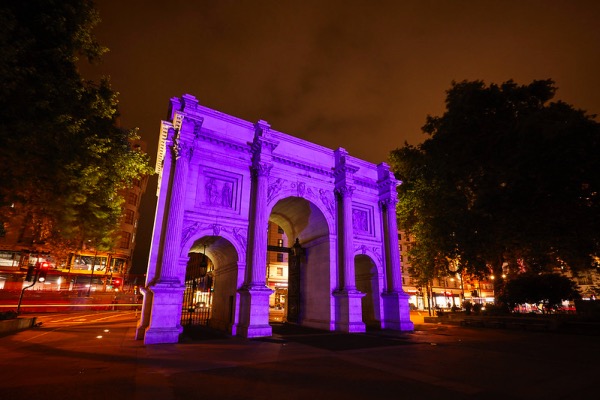
Marble Arch lights up for the launch of the Elizabeth Line.. PICTURE: © TfL

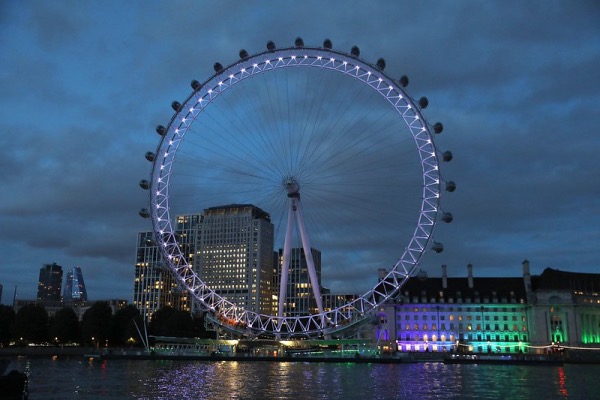
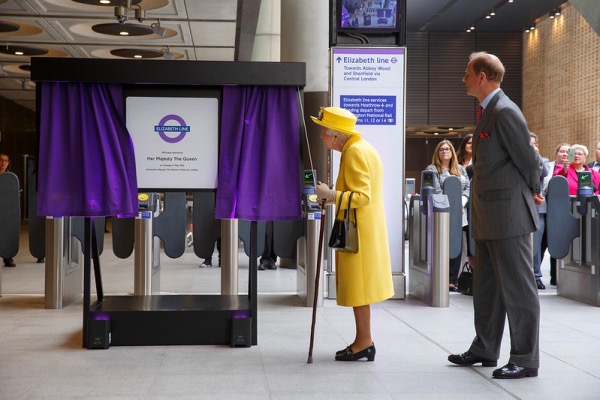
Iconic London locations including Tower Bridge, The London Eye, and Marble Arch turned purple last night to mark the opening of the new Elizabeth Line today. Thousands of people are today expected to use the new Tube line which provides faster journeys between Paddington and Abbey Wood via 10 new stations using Class 345 trains that are more and than one-and-a-half times longer than a standard Tube train and able to carry 1,500 passengers. The line’s opening is the latest step in the £18.8 billion Crossrail project which is linking Reading, to the west of London, with Heathrow before travelling through central London to connect with Shenfield and Abbey Wood in the east. Sadiq Khan, the Mayor of London, said it was an “historic day”. “This is a huge moment, not just for London but the entire country – particularly in this special Jubilee year…This brand new line is the most significant addition to our transport network in decades.” Last week, the Queen and Prince Edward attended Paddington Station to mark the completion of the new line.

The London Eye illuminated. PICTURE: © TfL
Woolwich Town Hall lit up in purple. PICTURE: © TfL
A very excited first customer on the Elizabeth Line at its opening on 24th May. PICTURE: © TfL
HM Queen Elizabeth II, HRH Prince Edward Earl of Wessex, at unveiling of commemorative plaque at Paddington Station on 17th May. PICTURE: © TfL

LondonLife – In the aftermath of tragedy…

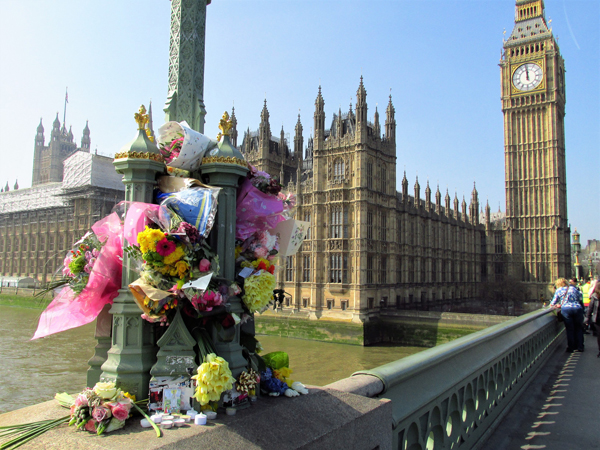
Flowers on Westminster Bridge, placed there in the wake of last week’s terror attack in which an assailant, named as 52-year-old Khalid Masood, killed three people and injured at least 50 as he drove a vehicle at high speed across the bridge along a pedestrian walkway. Crashing outside the Houses of Parliament he then stabbed to death PC Keith Palmer before he was shot dead by another officer. Addressing a vigil in Trafalgar Square in the aftermath of the attack, London Mayor Sadiq Khan said the city “will never be cowed” by terrorism. “Those evil and twisted individuals who try to destroy our shared way of life will never succeed and we condemn them,” he said. PICTURE: David Holt/Flickr/CC BY 2.0