Known to many as the eastern end of the District Line, Upminster is located some 16.5 miles to the north-east of Charing Cross and is part of the London Borough of Havering.
Historically a rural village in the county of Essex, its name comes from Old English and means a large church or “minster” located on high ground.
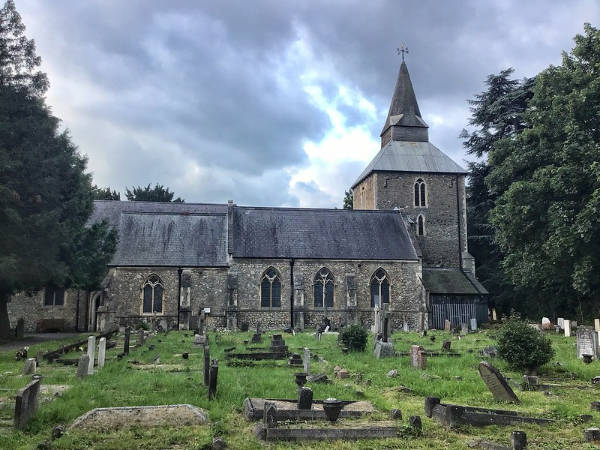
The church is said to have dated at least as far back as the 7th century and to have been one of a number founded by St Cedd, a missionary monk of Lindisfarne, in the area. It was located on the site occupied by the current church of St Laurence (parts of which date back to the 1200).
The nearby bridge over the River Ingrebourne shares the name Upminister and is known to have been in existence since the early 14th century.
Once wooded, the area was taken over for farming (cultivation dates as far back as Roman times) and by the 19th century it came to be known for market gardens as well as for some industry including windmills and a brickworks.
Development was initially centred around the minister and nearby villages of Hacton and Corbets Tey. It received a boost in the 17th century when wealthy London merchants purchased estates in the area.
Improved transportation links also helped in later centuries including the arrival of the London, Tilbury and Southend Railway in 1885 – it was extended from Barking – and the underground in 1902 via the Whitechapel and Bow Railway.
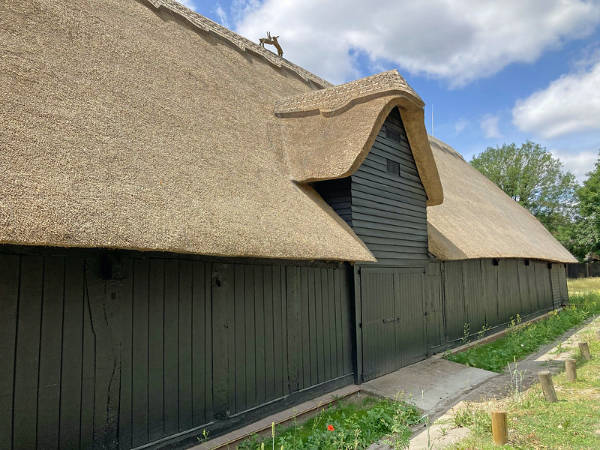
Landmarks include the Church of St Laurence, the redbrick Clock House (dating from about 1775), the 16th century house Great Tomkyns, the Grade II*-listed Upminster Windmill, built in 1803 and considered one of England’s best surviving smock mills, and the 15th century tithe barn (once owned by the monks of Waltham Abbey and now a museum).
Upminster Hall, which dates back to the 15th and 16th century (and, once the hunting seat of the abbots of Waltham Abbey, was gifted by King Henry VIII to Thomas Cromwell after the Dissolution), is now the clubhouse of the Upminister Golf Club.
Hornchurch Stadium, the home ground of AFC Hornchurch, is located in the west of the area.
It was in Upminster that local rector Rev William Derham first accurately calculated the speed of sound, employing a telescope from the tower of the Church of St Laurence to observe the flash of a distant shotgun as it was fired and then measuring the time before he heard the gunshot using a half second pendulum.
 Exploring London