• Some of the most significant letters, papers, maps and documents of the period of the American Revolution have gone on display at the National Archives in Kew. Revolution 250: America’s Independence Story (1763-1783) features a rare Dunlap print of the declaration itself as well as the Tea Act, which ultimately led to the Boston Tea Party, a British officer’s account of the tea party event and the ‘Olive Branch petition’ sent to King George III from representatives of the 13 colonies in what represented a last attempt to avoid war. Also on show are King George III’s Proclamation of Rebellion declaring that the 13 colonies were in revolt and the Treaty of Paris in which Britain accepted American independence. Admission charge applies. For more, see www.nationalarchives.gov.uk.
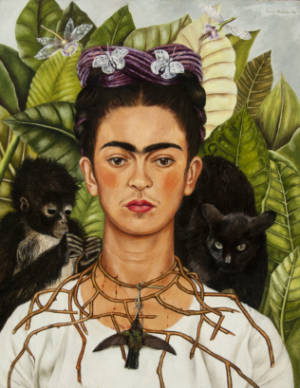
• The first major exhibition exploring how artist Frida Kahlo (1907-1954) became a global icon and a key influence on later artists has opened at Tate Modern. Frida: The Making of an Icon, developed in collaboration with the Museum of Fine Arts in Houston, features more than 30 works by Kahlo including rarely seen self-portraits such as Self-Portrait (With Velvet Dress) (1926) as well as photographs and personal artefacts. Other highlights include Diego and Frida (1929), Survivor (1938), Memory (The Heart) (1937), Girl With A Death Mask (1938) and My Dress Hangs There (1933-38). Runs until 3rd January. Admission charge applies. For more, see https://www.tate.org.uk/whats-on/tate-modern/frida-kahlo-the-making-of-an-icon.
• Luke Jerram’s Mirror Moon is on display at the Royal Observatory in Greenwich in a celebration of 350 years of studying the Moon from the site. The scale model, two metres in diameter, is made from mirrored stainless steel and draws on highly accurate topographical NASA data of the lunar surface. For more, see www.rmg.co.uk/royal-observatory/attractions/mirror-moon
Send all items from inclusion to exploringlondon@gmail.com.

