This Week in London – Documents from the American Revolution; Frida Kahlo’s impact; and, ‘Mirror Moon’ at the Royal Observatory…

Some of the most significant letters, papers, maps and documents of the period of the American Revolution have gone on display at the National Archives in Kew. Revolution 250: America’s Independence Story (1763-1783) features a rare Dunlap print of the declaration itself as well as the Tea Act, which ultimately led to the Boston Tea Party, a British officer’s account of the tea party event and the ‘Olive Branch petition’ sent to King George III from representatives of the 13 colonies in what represented a last attempt to avoid war. Also on show are King George III’s Proclamation of Rebellion declaring that the 13 colonies were in revolt and the Treaty of Paris in which Britain accepted American independence. Admission charge applies. For more, see www.nationalarchives.gov.uk.
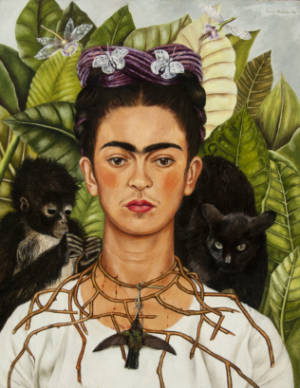
‘Untitled [Self-portrait with thorn necklace and hummingbird]’ (1940). Nickolas Muray. Collection of Mexican Art.

The first major exhibition exploring how artist Frida Kahlo (1907-1954) became a global icon and a key influence on later artists has opened at Tate Modern. Frida: The Making of an Icon, developed in collaboration with the Museum of Fine Arts in Houston, features more than 30 works by Kahlo including rarely seen self-portraits such as Self-Portrait (With Velvet Dress) (1926) as well as photographs and personal artefacts. Other highlights include Diego and Frida (1929), Survivor (1938), Memory (The Heart) (1937), Girl With A Death Mask (1938) and My Dress Hangs There (1933-38). Runs until 3rd January. Admission charge applies. For more, see https://www.tate.org.uk/whats-on/tate-modern/frida-kahlo-the-making-of-an-icon.

Luke Jerram’s Mirror Moon is on display at the Royal Observatory in Greenwich in a celebration of 350 years of studying the Moon from the site. The scale model, two metres in diameter, is made from mirrored stainless steel and draws on highly accurate topographical NASA data of the lunar surface. For more, see www.rmg.co.uk/royal-observatory/attractions/mirror-moon

Send all items from inclusion to exploringlondon@gmail.com.
This Week in London – Luke Jerram’s Mirror Moon; the Asante Ewer explored; and, Tracey Emin at th Tate Modern…

British artist Luke Jerram’s monumental sculpture Mirror Moon has gone on display at the Royal Observatory Greenwich. Made of stainless steel and measuring two metres in diameter, the sculpture uses topographic data from NASA to map the textures of the Moon onto its mirrored surface. Visitors are able to run their fingers over the Earth’s surface – the craters, valleys, mountains and smooth lava field as well as the heavily cratered surface of the far side of the Moon. Mirror Moon can be found in the Meridian Courtyard, beside the Prime Meridian. Admission charge applies. For more, see rmg.co.uk/mirrormoon.

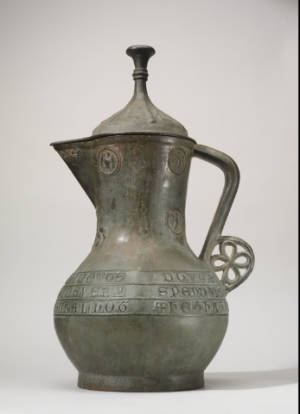
The Asante Ewer. PICTURE: Courtesy of the British Museum.

A medieval jug known as the ‘Asante Ewer’ is at the heart of a new display which has opened at the British Museum. One of the finest examples of a bronze casting from the Middle Ages, it dates from between 1340 and 1405 and it just one of three ewers from medieval Europe to have travelled to Ghana where it eventually ended up in the royal palace of the king of the Asante people in Kumasi before being taken by British troops as military during during the Anglo-Asante War in 1896 (and subsequently being purchased by the museum). The ewer is displaced alongside another medieval ewer which also travelled to Ghana and comes with a replacement brass lid which was produced in West Africa as well as the Aya Kese brass basin which dates from 1500-1700 and was looted from its position outside the royal mausoleum at Bantama in Kumasi before it too was looted – this time by Robert Baden-Powell – during the 1896 Anglo-Asante War. The free exhibition, which follows on from a three year research project examining the connections between Western Europe and West Africa during the Middle and Early Modern ages, can be seen in Room 3 until the 7th June. For more, see www.britishmuseum.org/exhibitions/asante-ewer.

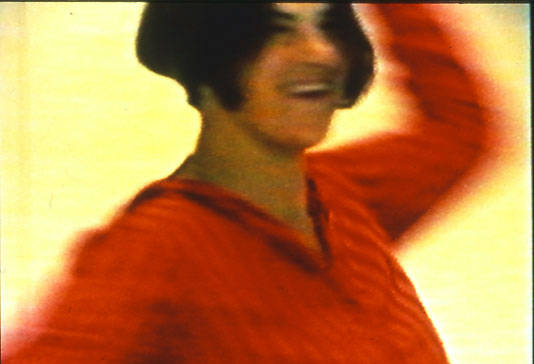
On Now: Tracey Emin: A Second Life. The largest ever survey of the work of Dame Tracey Emin has opened at the Tate Modern. Spanning her 40 years of practice, the display brings together more than 100 works including paintings, videos, textiles, neon, sculptures and installations. It opens with works from her first solo exhibition at White Cube, such as My Major Retrospective (1982-93), reflects on her years in her hometown of Margate through works such as Mad Tracey From Margate: Everybody’s Been There (1997), includes deeply personal works such as the neon I could have Loved my Innocence (2007) and more recent works such as the bronze sculpture Ascension (2024) which explores Emin’s new relationship with her body following major surgery for bladder cancer. At the centre of the exhibition are two seminal installations – Exorcism of the Last Painting I Ever Made (1996) and My Bed (1998) – while outside can be found the monumental bronze I Followed You Until The End (2023). Runs until 31st August. Admission charge applies. For more, see www.tate.org.uk.

Tracey Emin, ‘Why I Never Became a Dancer’ 1995 © Tracey Emin. All rights reserved, DACS
2026

Send all items for inclusion to exploringlondon@gmail.com.