Perhaps most closely associated with the Great Ormond Street Hospital for Children, originally, known as the Hospital for Sick Children, this street was originally laid out in the early 18th century through what was then a rural area.
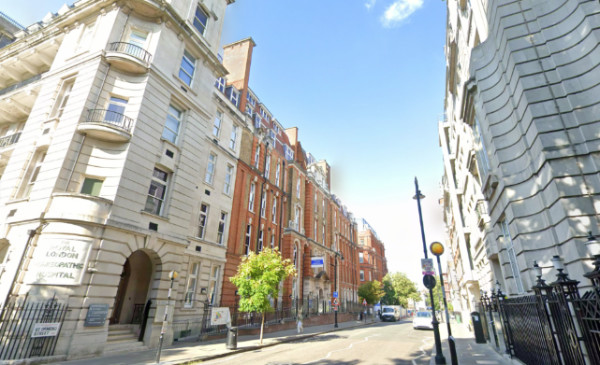
Located in Bloomsbury in the London Borough of Camden, the street runs north-east from Queen Square to Millman Street and was in the early 18th century known for its fine houses, a number of which still remain (Barbon Close, which runs south off the street is named for 17th century property developer Nicholas Barbon believed to have built a number in the street).
It is believed to have been named for James Butler, Duke of Ormonde (1610 and 1688), the Royalist commander in Ireland during the Civil War who was elevated to the dukedom following the restoration of King Charles II (there is an Ormond Yard in St James’s near where his residence was located.)
The hospital, meanwhile, stands on the north side of the street and was founded in 1852 (it’s famous for, among other things, the fact that Peter Pan author JM Barrie donated the copyright to the works to the hospital in 1929; it’s also famous, on a more medically-related note, for being one of the largest transplant centres in the world). The street is also home to The Royal London Homeopathic Hospital and was for about 50 years until 1906 the location of the Working Men’s College.
The street was also home to Powis House, built for William Herbert, 2nd Marquess of Powis, but later serving as the French Embassy. This burned down in 1713, was rebuilt by the French monarchy in an ornate style and went on to serve, between 1764 and 1783, as the Spanish Embassy before being demolished around the turn of the century. The site of the mansion is reflected in the location of Powis Place, which runs to the north off Great Ormond Street today.
Famous residents included prison reformer John Howard who lived at number 23 from 1777 until his death in 1790. Lord Thurlow, Lord Chancellor, was living at number 45 in 1784 when the Great Seal was stolen from his property (forcing the hurried creation of a new one).

