Lost London – South Sea House…

This former Threadneedle Street institution in the City of London was the headquarters of the South Sea Company.

Incorporated in 1711, the company was assigned a monopoly on British trade with Spanish America but when that failed to result in riches, it embarked upon a speculative scheme which ended in the economic collapse known as the ‘South Sea Bubble’ and saw many investors ruined.

Among those employed at the company as a clerk was essayist Charles Lamb who adopted his nom-de-plume, Elia, based on one of his fellow clerks.

The building, located on the corner with Bishopsgate was designed around a quadrangle. The back of it apparently burned down in 1826 and was subsequently rebuilt.

The building was partly remodelled in the 1850s and was eventually demolished at the end of the 19th century.

PICTURE: A 1750s engraving of Old South Sea House

This Week in London – ‘Beasts of London’; the Cold War remembered; Prince Albert and the V&A; and, ‘Power UP’ returns..

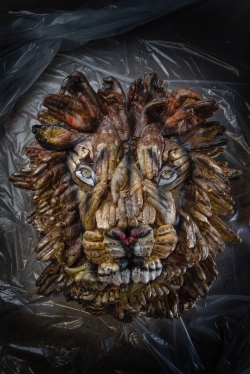
A state-of-the-art, multi-sensory experience focusing on the beasts, large and small, that have helped shaped London opens at the Museum of London tomorrow. Beasts of London, being run in conjunction with the Guildhall School and Music & Drama, tells the story of the capital from before London existed through to the city today, all through the perspective of animals. Inspired by objects in the museum’s collection, the nine “episodes” of the experience encompass subjects including the arrival of the Romans, the creation of the first menageries during the medieval period, the plague years of the 1600s, the first circuses in the late 1700s, the end of the animal-baiting period in the Victorian era and the role of animals in today’s contemporary city. There’s also a special episode on the contribution horses have made to the city. Well-known identities including Kate Moss, Brian Blessed, Pam Ferris, Nish Kumar, Stephen Mangan, Angellica Bell and Joe Pasquale provide voices for the animals alongside actors from the Guildhall School. The family-friendly experience can be enjoyed until 5th January, 2020. Admission charge applies. For more, see www.museumoflondon.org.uk/beastsoflondon. PICTURE: Lion sculpture; courtesy Museum of London.

A new exhibition about Britain’s role in the Cold War opens at the National Archives in Kew today – exactly 70 years since the formation of NATO. Protect and Survive: Britain’s Cold War Revealed features original documents including political memos, spy confessions, civil defence posters and even a letter from Winston Churchill to the Queen as it explores the complexities of government operations during a time of paranoia, secrets and infiltration. Other highlights include George Orwell’s infamous list of suspected communist sympathisers, Winston Churchill and Joseph Stalin’s ‘percentages agreement’, a plan of Lionel ‘Buster’ Crabb’s fateful spy mission, ‘Atom spy’ Klaus Fuchs’ confession and Civil Defence posters. There’s also a recreated government bunker and a 1980s living room showing the impact of the Cold War on both government and ordinary lives as well as digital screens on which Dame Stella Rimington, the first female Director General of MI5, shares her experiences along with insights from historian Dominic Sandbrook and curator Mark Dunton. The display is being accompanied by a series of events including night openings, film screening and talks. Runs until 9th November (30th anniversary of the fall of the Berlin Wall). Admission charge applies. For more, see nationalarchives.gov.uk/coldwar.

Prince Albert’s personal contributions to the V&A’s Library collection are the subject of a new exhibition which opened this week as part of the South Kensington Institute’s celebration of the 200th anniversaries of the births of both the Prince and Queen Victoria. Prince Albert: Science & the Arts on the Page features books and photographs include one volume containing a letter written by the Prince’s librarian Ernst Becker highlighting Albert’s wish to promote knowledge and learning in science and the arts. There’s also a volume of songs written and set to music by Albert and his brother, featuring amendments in Albert’s own hand, as well as his signed season ticket to the Great Exhibition of 1851. Runs until 1st September on the Library Landing. Admission is free. Head here for more.

Forty years of computer game history is once again on show at the Science Museum from Saturday. Returning for its fourth year, Power UP features 160 consoles and hundreds of games, from retro classics like Space Invaders to the latest in VR technology. Special events include two adults-only evening sessions on 10th and 17th April. Runs until 22nd April. For more, see sciencemuseum.org.uk/power-up.

Send all items for inclusion to exploringlondon@gmail.com.

10 of London’s most curious (and historic) graves – 2. Hannah Courtoy…


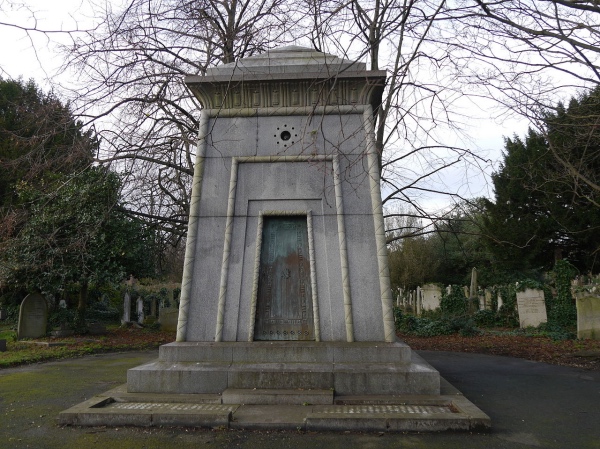
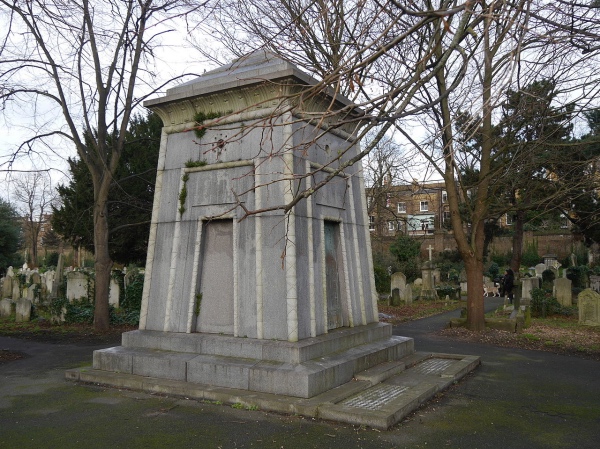
The mausoleum of wealthy London socialite Hannah Courtoy, located in the grounds of Brompton Cemetery in West London, resembles something akin to an Egyptian-style tomb monument – making it a rather unusual addition to the graveyard. But more bizarre still is that some believe it may contain a time machine.

Courtoy, who had controversially inherited a fortune from merchant John Courtoy with whom she had three daughters but never married, died in 1849. She was buried in this rather odd-looking mausoleum (along with two of her three daughters).

It has been claimed that the tomb was designed by Joseph Bonomi, a sculptor and Egyptologist who is actually buried only a short distance away, with those who believe so pointing to Egyptian imagery – including scarab beetles, a symbol of eternal life – decorating the tomb’s imposing bronze portal as evidence of his involvement.

And that’s where the time machine idea also comes in – some Victorians were known to believe that the ancient pharoahs of Egypt had discovered the secret of time travel and it has been floated that Bonomi might have discovered this secret when on expedition in Egypt, brought it back with him to London and employed what he learnt in the construction of this mausoleum (hence why it took four years to build).

The claims around this tomb are that the mausoleum, located close to the centre of the cemetery, is not in fact a time machine but some kind of teleportation device. And that the builder, working in collaboration with Bonomi, was Samuel Warner, the inventor of the torpedo, who is also buried nearby, this time in an unmarked grave.

WHERE: Brompton Cemetery (South Gate off Fulham Rd. North Gate off Old Brompton Rd) (nearest Tube stations are West Brompton and Earl’s Court); WHEN: 7am to various closing times daily; COST: free; WEBSITE: www.royalparks.org.uk/parks/brompton-cemetery.

PICTURES: Edwardx (licensed under CC BY-SA 4.0).


LondonLife – Ham House gets flowery…

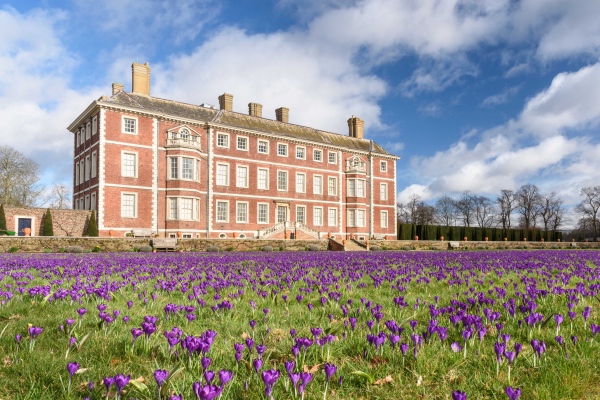
Part of the garden at the historic Thames-side mansion Ham House has been redesigned with the aim of bringing some new life to the manicured lawns. Rosie Fyles, head gardener at the 17th century property in Richmond – now in the care of the National Trust, has overseen the planting of a series of “plats” – each the size of a tennis court – with some 500,000 bulbs and wildflowers to create a “pageant of colour” from early spring and throughout summer. The plats have also been created with wildlife and diversity in mind, using naturalising bulbs to attract bees, butterflies and other pollinating insects. Fyles hopes the project will prove inspirational for home gardeners. “You can easily use pots, planters or a small area of border to create a pollinator-friendly bulb display over a few early spring months; in fact you can curate your own sequence of flowering from February to May at least,” she said. “We have used Crocus ‘Ruby Giant’, four types of species tulips (including bright red Tulipa linifolia) and Muscari latifolium to create a bright, deep blue carpet of colour.” For more, head to www.nationaltrust.org.uk/ham-house-and-garden. ALL PICTURES: National Trust/Chris Davies.

What’s in a name?…Belgravia

This well-to-do district of west London owes its name to the family of Hugh Grosvenor, the 7th Duke of Westminster and owner of the Grosvenor Estate, the land upon which Belgravia is located.

The country estate of the duke’s family – the Grosvenors – is known as Eaton Hall and it lies just to the south of Chester. Various names related to the estate appear on the London map. Among them is Belgravia.

Belgravia take its name from the tiny village of Belgrave which lies within the estate’s boundary (the word Belgrave, incidentally, comes from the Old French for “beautiful wood”).
The London residential area now known as Belgravia, meanwhile, was formerly known as Five Fields and used for grazing. The Westbourne River meandered through it, crossed by “Bloody Bridge”, so-called because it was a known haunt of robbers.

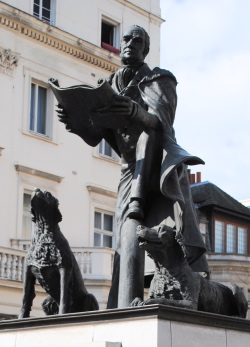
It later became the site of market gardens and houses began to appear in the area following King George III’s move to what was then Buckingham House but development of the area didn’t begin in earnest until the 1820s when Robert Grosvenor, later the first Marquess of Westminster (pictured here in a statue in Belgrave Square), began developing the estate with the aid of builder Thomas Cubitt.

Designed with Belgrave Square at its centre, the new development immediately became associated with the more affluent end of society, a connection which continues to this day.

As well as Belgrave Square, the district, which straddles both the City of Westminster and the Royal Borough of Kensington and Chelsea, includes Eaton, Chester and Lowndes Squares (the first two names associated with the duke’s country estate; the third named after William Lowndes, a politician and Secretary to the Treasury under King William III and Queen Anne.

Palatial terraced houses aside, landmarks include the Grade II-listed St Peter’s Church, located at the east end of Eaton Square, which was first built in the 1820s and rebuilt in the 1830s. The area is also home to numerous embassies and consulates including those of Norway, Spain, Malaysia and Egypt, and, in keeping with the international feel, also boasts several statues of notable foreigners including Simon Bolivar and Christopher Columbus.

Famous residents have included former Prime Ministers Stanley Baldwin, Neville Chamberlain and Margaret Thatcher (the first two lived in Eaton Square; Thatcher in Chester Square), Louis Mountbatten, who lived in Wilton Crescent, and Alfred, Lord Tennyson, who lived in Upper Belgrave Street, as did Lord Lucan who mysteriously disappeared in 1974 after his children’s nanny was found murdered.

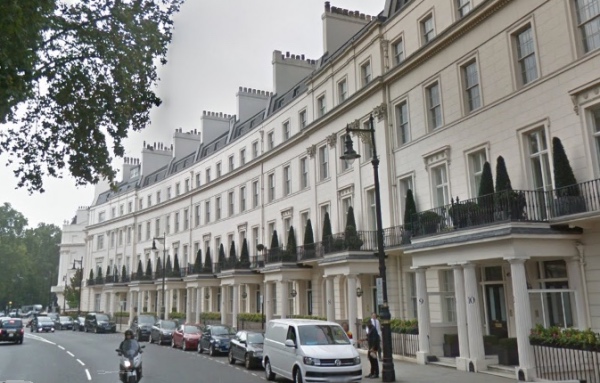
PICTURES: Top – Terraced homes in Grosvenor Crescent, which runs off Belgrave Square (Google Maps); Right – Statue of Lord Robert Grosvenor, first Marquess of Westminster (David Adams).

Treasures of London – Festival Gardens…

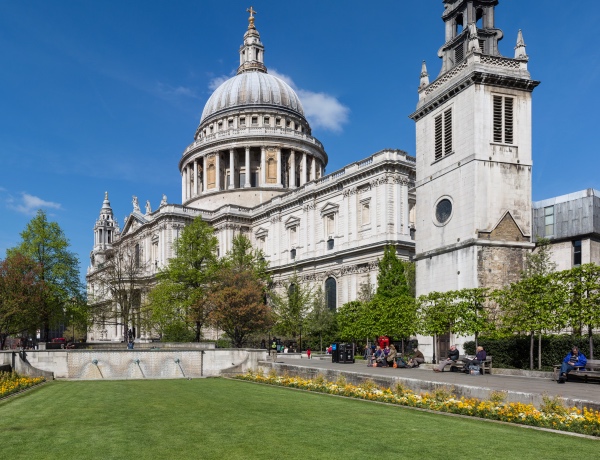
Created as part of the City of London’s contribution to 1951’s Festival of Britain, these gardens are found just to the south-east of St Paul’s Cathedral.

One of a series of gardens located around the cathedral, they were created on the former site of the street known as Old Change in an area which had suffered considerable bomb damage in World War II.

Laid out by Sir Albert Richardson, the gardens feature a sunken lawn with a wall fountain at the west end which was a gift of the Worshipful Company of Gardeners.

The gardens, which are permanently open to the public, also contain Georg Erlich’s sculpture, The Young Lovers, which was erected on the garden’s upper terrace – above the water fountain at the west end – in 1973.

Some relandscaping took part in 2012 including the creation of a new garden to the west, called the Queen’s Diamond Jubilee Gardens.

PICTURES: Top – Diliff (licensed under CC-BY-SA 3.0/image cropped); Right – David Adams

This Week in London – Van Gogh and Britain; miniature Elizabethan portraits; and, ‘Jews, Money, Myth’…

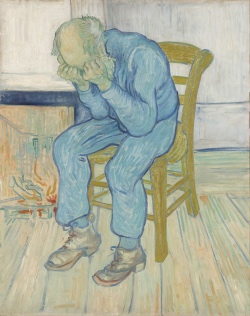
At Eternity's GateThe first exhibition to examine the work of Dutch artist Vincent van Gogh through his relationship with Britain has opened at Tate Britain this week. Van Gogh and Britain includes more than 40 works by the artist including L’Arlésienne (1890), Starry Night on the Rhone (1888), and Sunflowers (1888). The exhibition will also feature later works by Van Gogh including two he painted while in the Saint-Paul asylum – At Eternity’s Gate (1890 – pictured) and Prisoners Exercising (1890). The exhibition shows how Van Gogh, who lived in London between 1873 and 1876 working as a trainee art dealer, responded to works by artists like John Constable and John Everett Millais and his love of British writers like William Shakespeare, Christina Rossetti and, particularly, Charles Dickens (L’Arlésienne features one of Dickens’ favourite books in the foreground). The show runs until 11th August and is being accompanied by a series of talks and other events. Admission charge applies. For more, see www.tate.org.ukPICTURE: Vincent van Gogh (1853 –1890), ‘Sorrowing old man (‘At Eternity’s Gate’)’ (1890), Collection Kröller-Müller Museum, Otterlo
On Now – Elizabethan Treasures: Miniatures by Hilliard and Oliver. This exhibition at the National Portrait Gallery – which is focused on the work of Nicholas Hilliard (1547-1619) and Isaac Oliver (c1565-1617) – is the first major display of Tudor and Jacobean portrait miniatures to be held in the UK for more than 35 years and includes new discoveries as well as portraits on public display for the first time. A large section of the exhibition is devoted to portraits of Queen Elizabeth I as well as King James I, his wife Anne of Denmark and his three children – Henry, Elizabeth and Charles (later King Charles II). There are also miniatures of famous figures like Sir Walter Ralegh, Sir Francis Drake and a little known portrait of Shakespeare’s patron, the Earl of Southampton. Other highlights include a previously unknown portrait by Hilliard of King Henri III of France. Runs until 19th May. Admission charge applies. For more, see www.npg.org.uk.

A major exhibition exploring the role of money in Jewish life has opened at the Jewish Museum London in Camden Town. Jews, Money, Myth looks at the “ideas, myths and stereotypes” that link money and Jews over two millennia. It features art works such as Rembrandt’s Judas Returning the Thirty Pieces of Silver as well as new commissions by Jeremy Deller and Doug Fishbone along with film, literature and cultural emphemera ranging from board games and cartoons to costumes and figurines. There are a series of related events. For more, see www.jewishmuseum.org.uk.

Send all items for inclusion to exploringlondon@gmail.com.

10 of London’s most curious (and historic) graves – 1. Frank C Bostock…

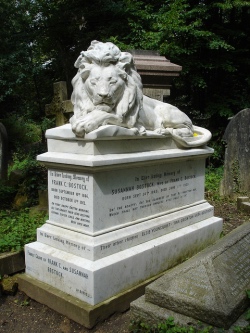
Frank C Bostock is not a name you’d probably immediately recognise but his grave monument gives a big clue to his profession.

Born in 1866 into a family that ran a travelling menagerie (his grandfather was the famous George Wombwell who is buried at Highgate Cemetery), Frank, who became a lion tamer while still a teenager, initially worked as part of the family operation.

In his late 20s, however, he travelled to the US where he established his own menagerie in New York initially in Brooklyn and later at Coney Island. He later returned to the UK and there set up a massive touring exhibition, known as the Jungle, that travelled from city to city.

Bostock died, ostensibly from the flu, on 8th October, 1912. He was buried at Abney Park Cemetery in Stoke Newington in what was by all accounts a grand affair.

The Grade II-listed rectangular white marble grave cover, made by Millward and Co, is topped with a carved figure of a sleeping lion.

There’s said to be a couple of traditions associated with the grave – one says people stroke the lion’s left paw for luck, the other says people place flowers under the lion’s paws for the same.

WHERE: Highgate East Cemetery, Swain’s Lane (nearest Tube station is Archway); WHEN: 10am to 5pm daily; COST: £4 adults/children under 18 and members free; WEBSITE: highgatecemetery.org/visit/cemetery/east.

PICTURE: Taken in July, 2011. Julian Walker (licensed under CC BY-NC-ND 2.0).

LondonLife – Brexit turmoil…

Scenes from the ‘Put It To The People March’ attracted thousands to central London on Saturday. More than a million people hit the streets calling for a second Brexit vote. Here’s some images from the mass gathering. PICTURES: Top and first below – John Briody (licensed under CC BY 2.0); second, third and fourth below (Garry Knight (public domain).


A Moment in London’s History…The World Cup is stolen…

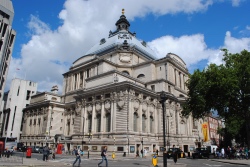
It’s 53 years ago this month that the World Cup trophy – offiicially known as the Jules Rimet Trophy – was stolen from Methodist Central Hall in Westminster (OK, it’s not a very round figure, but it’s a fascinating story).

The trophy had arrived in the UK in January for the tournament to be held later that year and was mostly kept at FA headquarters at Wembley. But in March, it went on show at a stamp exhibition being held at the hall (pictured).

Despite being kept under (relatively) constant guard in a glass cabinet, the trophy was discovered missing just after 12pm on 20th March (the crime had apparently occurred while the guards were on a break). Scotland Yard immediately set about investigating the theft but to no avail (the FA, meanwhile, secretly commissioned a replica to be made, just in case the trophy couldn’t be recovered).

A couple of days later Joe Mears, chairman of the FA, received an anonymous package. It contained the removable top lining of the trophy and a demand for £15,000 in return for the trophy. An exchange was to be set up involving codes placed in newspaper personal ads.

The FA chairman then worked with Scotland Yard to set up a false exchange. On 24th March, Flying Squad Detective Inspector Leonard Buggy, posing as Mears, met a former soldier who turned out to be Edward Betchley in Battersea Park, showing him a briefcase filled with newspapers covered with a layer of £5 notes. Betchley then accompanied Buggy in a car, ostensibly driving to pick up the trophy, but he got spooked along the way and jumped out.

Betchley was arrested minutes later but refused to reveal the trophy’s whereabouts, claiming he was just the middleman come to collect the ransom (he was later convicted of demanding money with menaces with the intent to steal).

The trophy was actually discovered a week after it was stolen by a collie-cross named Pickles who found it lying near a neighbour’s car outside the Norwood home of his owner, Thames lighterman David Corbett. Pickles – who went on to become something of a celebrity in his own right appearing in TV shows and even a film, The Spy with a Cold Nose – has, of course, since died (his collar is on display in the National Football Museum in Manchester).

The crime has never been officially solved although there were claims last year that late London gangster Sidney Cugullere and his brother Reg were behind it.

England, meanwhile, did go on to beat West Germany 4-2 in the World Cup final that year. Life, meanwhile, didn’t turn out so well for the trophy. It was stolen again in 1983 in Brazil and this time was not recovered.

PICTURE: David Adams

Lost London – St Chad’s Well…

Located in Gray’s Inn Road at the corner with St Chad’s Place near King’s Cross this was a medicinal well dedicated to St Chad (he was the first Bishop of Lichfield and was said to have been cured of disease by drinking healing waters in the area).

The well – which was one of a number of such healing wells previously in London and which had waters said to resemble those at Lichfield – become popular in the 18th century and at one point was said to have some 1,000 visitors coming every week to sample the healing waters.

Its popularity had declined by the 19th century and it subsequently became a pleasure garden but part of them were built over by St Chad’s Place the following year. A new pump room – where the waters could be sampled – was apparently built in 1830 but just a decade later it was reported as having already fallen into decline.

The last part of the gardens was removed in 1860 thanks to the construction of the Metropolitan Railway Line.

PICTURE: Where St Chad’s Place meets with Gray’s Inn Roadl; St Chad’s Place is said to be the site of St Chad’s Well (courtesy Google Maps).

This Week in London – Greenwich’s Painted Hall reopens; ‘Christian Dior’ extended; and, merchant shipping explored…

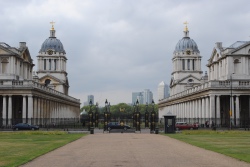
The Painted Hall in Greenwich’s Old Royal Naval College reopens on Saturday following a two-year, £8.5 million restoration project. The hall, known as the UK’s “Sistine Chapel”, was designed by Sir Christopher Wren as a ceremonial dining room for what was then the Royal Hospital for Seamen. Completed in 1705, its 4,000 square metre interior features a decorative scheme painted by Sir James Thornhill, the first British artist to be knighted, which took 19 years to complete. The paintings celebrate English naval power as well as the then newly installed Protestant monarchy with joint monarchs King William III and Queen Mary II as well as Queen Anne and King George I all represented in the artworks along with hundreds of other mythological, allegorical, historical and contemporary figures. The restoration project has also seen the King William Undercroft, located underneath the hall, converted into a new cafe, shop and interpretation gallery. Two cellar rooms from King Henry VIII’s palace – which once stood on the site – were discovered during the restoration works and are also now on public display. Other new touches include the return of a series of carved oak benches to the hall (having been introduced when it was used as an art gallery in the 19th century they were removed 100 years ago), two ‘treasure chests’ containing objects related to the ceiling artworks which can be handled, and new tour options – not just of the hall and undercroft but of the entire Old Royal Naval College site. There’s a host of special activities over the opening weekend, including a parade and official opening ceremony from 9.30am, the chance to meet historical characters, music, food stalls, kids activities and more. Admission charge applies. For more, see www.ornc.org. PICTURED: The Old Royal Naval College, home of the Painted Hall.

The V&A has announced it is extending its sell-out Christian Dior: Designer of Dreams exhibition due to unprecedented demand. The exhibition at the South Kensington museum, which had originally been scheduled to close on 14th July, will now run until 1st September with new tickets made available on 15th of each month (there’s also a limited number of tickets available to purchase daily at 10am from the V&A’s Grand Entrance on a first-come, first-served basis; V&A members, of course, attend free-of-charge with no need to book). The exhibition, which initially sold out of its five month run with 19 days of opening, is the most comprehensive exhibition ever staged in the UK on the House of Dior and the museum’s biggest fashion exhibition since Alexander McQueen: Savage Beauty in 2015. For more, see vam.ac.uk.

On Now: Merchant Navy Treasures: An Introduction to the Newall Dunn Collection. This display at the City of London’s Guildhall Library delves into the Newall Dunn Collection, one of the world’s most comprehensive photographic and reference collections on merchant shipping, and showcases the achievements of shipping historian Peter Newall and artist and writer Laurence Dunn. Alongside images, press releases and newspaper cuttings, on show are company brochures, menus and other items from the ocean liners and cargo vessels of three famous lines from the golden age of shipping: the Cunard, Orient and Union-Castle. Admission is free. Runs until 24th May. For more, follow this link.

Send all items for inclusion to exploringlondon@gmail.com.

10 historic London hotels – A recap…

Before we start our next Wednesday series, here’s a recap of our coverage of 10 historic London hotels…

1. The Ritz Hotel…

2. The Savoy…

3. Claridge’s…

4. The Langham Hotel…

5. The Great Western Hotel (Hilton London Paddington)…

6. The Midland Grand Hotel (The St Pancras Renaissance London)

7. The Grosvenor House Hotel (JW Marriott Grosvenor House London)…

8. The Dorchester…

9. The Connaught…

10. The Hotel Russell (the Kimpton Fitzroy London Hotel)…

Our next series kicks off next week (apologies for any confusion)…

LondonLife – Van Gogh-era papers found in his former London home…


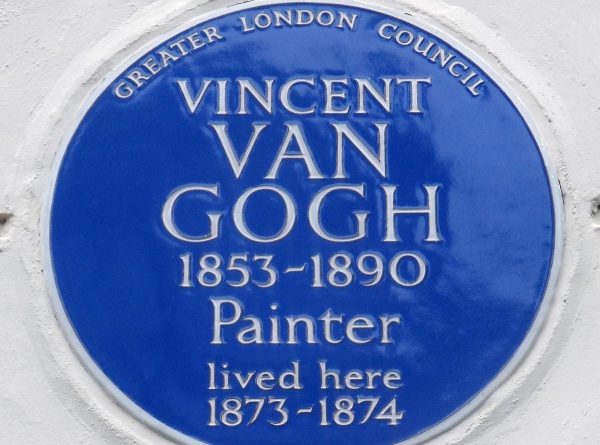
A cache of papers and items found in Vincent Van Gogh’s former south London home – and dating from 1873-74, the period he lodged there – have shed new light on his time in the city.
The papers, which include insurance documents, a small pamphlet of prayers and hymns, and scraps of paper painted with watercolour flowers (probably not the work of Van Gogh), were found under the floorboards and between the attic timbers of the house at 87 Hackford Road in Stockwell. They were discovered during a renovation of the early Victorian terraced house in which Van Gogh lived in while working as an assistant for an art dealer in Covent Garden. During the period he stayed at the house, it has been suggested that the Dutch artist fell in love with Eugénie Loyer, the 19-year-old daughter of his landlord (although his love was apparently not reciprocated). He also apparently became devoutly Christian during his time there (perhaps explaining the prayer pamphlet). The home’s current owners Jian Wang, a former professional violinist who originally hails from China, and his wife Alice Childs have reportedly been renovating the property in order to use it as a base for visiting Chinese artists in collaboration with the nearby San Mei Gallery. For more on the house, see www.vangoghhouse.co.uk. A near life-size photograph of the facade of the Hackford Road house forms part of Tate Britain’s upcoming display The EY Exhibition: Van Gogh in Britain which opens later this month (more on that shortly). PICTURE: An English Heritage Blue Plaque adorning the house (Spudgun67 – licensed under CC BY 2.0).

London Pub Signs – The Alma, Wandsworth…

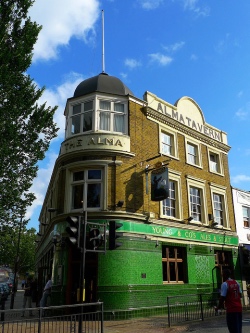
This mid-Victorian pub takes its name, like the nearby thoroughfare Alma Road, from the Battle of Alma, fought during the Crimean War.

Fought between allied – British, French and Turkish – forces and the Russians on 20th September, 1854, the battle was a victory, albeit a costly one, for the allies and took its name from the River Alma which lay near where it was fought.

The pub, at 499 Old York Road directly opposite the Wandsworth Town train station, opened in 1866, just 12 years later.

It still has numerous original features including its distinct green tiled exterior, three mosaic roundels bearing the pub’s name on the wall in the main bar, and a decorative frieze in the main dining room which was only rediscovered during a 1987 renovation.

The pub, one of a number which bear the name ‘Alma’ in London, is now part of the Young’s group and also serves as a bespoke 23 bedroom hotel.

For more, see www.almawandsworth.com.

PICTURE: The Alma in 2009 (Ewan Munro (licensed under CC BY-SA 2.0))


This Week in London – “Spain’s Impressionist” at the National Gallery; and, London stories, told on a poster…

The first major UK exhibition of the work of “Spain’s Impressionist”, Joaquín Sorolla y Bastida (1863-1923), opens at the National Gallery on Monday. Sorolla: Spanish Master of Light – the first UK retrospective of the artist’s work since 1908 when he mounted an exhibition in London’s Grafton Galleries, spans seven rooms in the Sainsbury Wing and features more than 60 works including portraits and scenes of Spanish life as well as the landscapes, garden views and beach scenes for which he is most renowned. Highlights include his first great success, Another Marguerite! (1892 – pictured), The Return from Fishing (1894), Sewing the Sail (1896), Sad Inheritance! (1899), a portrait of the American painter Ralph Clarkson (1911) and Female Nude (1902) – both of which were responses to the work of Velázquez, large scale preparatory studies from 1912 for Vision of Spain, and sizeable canvases painted out of doors such as Strolling along the Seashore (1909) and The Siesta (1911). The exhibition, which runs until 7th July, is organised in partnership with the National Gallery of Ireland and the Museo Sorolla, Madrid. Admission charge applies. For more, see www.nationalgallery.org.uk. PICTURE: Joaquín Sorolla y Bastida, ¡Otra Margarita! (Another Marguerite!), 1892. Oil on canvas, Mildred Lane Kemper Art Museum, Washington University in St Louis. Gift of Charles Nagel, Sr, 1894.

On Now – The Poster Prize for Illustration 2019 – London Stories. One hundred illustrations depicting an aspect of London – in a current or historical, real or fictional state – and capturing a familiar or lesser-known narrative in a single image are on show at the London Transport Museum. The images were selected by a panel of judges and visitors have the chance to vote for their favourite poster with the winning illustration to be announced in June (it will then become a permanent part of the museum’s collection). Runs until 14th July. There’s a series of talks accompanying the display including ‘Bus Fare: Stories of the London Bus’ open 21st March. Admission charges apply. For more, see www.ltmuseum.co.uk/whats-on/exhibitions.

Send all items for inclusion to exploringlondon@gmail.com.

10 historic London hotels…10. The Hotel Russell (the Kimpton Fitzroy London Hotel)…

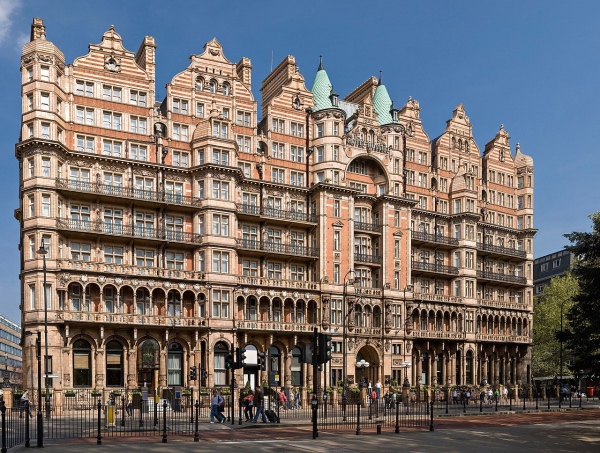
Designed by the architect Charles Fitzroy Doll in distinctive French Renaissance-style for the Frederick Hotels Company, the Hotel Russell opened on the east side of Russell Square in 1898.

The now Grade II*-listed building, which is said to have been based on the 16th century Château de Madrid in Paris, is clad in decorative Doulton’s thé-au-lait (“tea with milk”) terracotta.

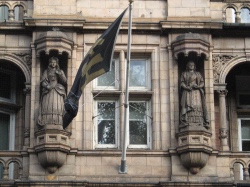
Its facade incorporates the coats-of-arms of the world’s nations as they were in 1898 and above the entrance are life-sized statues of four queens – Elizabeth I, Mary II, Anne and Victoria – which were designed by sculptor Henry Charles Fehr (pictured). The Guilford Street frontage features busts of four Prime Ministers: Lord Derby, Lord Salisbury, William Gladstone, and Benjamin Disraeli.

The hotel’s interior features ornate fixtures and fitting including a Pyrenean marble staircase which runs off the opulent marble foyer and an interior courtyard housing a Palm Court. Each bedroom was fitted with an en-suite bathroom.

Its restaurant, now named the Neptune but originally named after Doll, was designed almost identically to the RMS Titanic‘s dining room (Doll designed both). That’s not the only Titanic connection – the hotel also features a bronze statue of a dragon on the stairs named ‘Lucky George’ and the Titanic carried an identical statue.

The hotel survived World War II largely intact – with the exception of a roof-top dome which was damaged in an air raid in 1941 and not replaced.

Fast forward to April, 2018, and the hotel reopened as the The Principal Hotel (on the 106th anniversary of the sinking of the Titanic) following an extensive £85 million, two year renovation by designer Tara Bernerd.

But the Principal Hotel Company sold its portfolio of hotels to Covivio a few months later and they, in turn, leased the management of the hotels to the InterContinental Hotels Group. The Principal was renamed the Kimpton Fitzroy London in October that year.

Alongside 330 or so rooms, amenities at the five star hotel include the glass-roofed Palm Court, cocktail bar Fitz’s (named for Charles Fitzroy Doll), and the coffee shop Burr & Co. There’s also a grand ballroom, meeting rooms and a fitness centre.

Interestingly, Doll designed another hotel, the Imperial, also on Russell Square, which opened in 1911. It was demolished in 1966.

For more, see www.kimptonfitzroylondon.co.uk/us/en/.

PICTURES: Top – David Iliff (licensed under CC BY 3.0); Right and below – Jack1956.

This is the final in our series on historic London hotels. We’ll be launching a new special series next Wednesday.

LondonLife – Queen posts her first Instagram image from the Science Museum..

Queen Elizabeth II posted her first Instagram photo while visiting the Science Museum in South Kensington last Thursday in a promotion for its exhibition on computers. Under the account @theroyalfamily, the Queen posted two images of a letter at the museum which comes from the Royal Archives. It was written to Prince Albert and Queen Victoria by Charles Babbage and in it, the 19th century inventor and mathematician spoke of his invention of an “Analytical Machine” upon which the first computer programs were written by Ada Lovelace, daughter of Lord Byron. Having explained the origins of the letter, the Queen added: “Today, I had the pleasure of learning about children’s computer coding initiatives and it seems fitting to me that I publish this Instagram post, at the Science Museum which has long championed technology, innovation and inspired the next generation of inventors. Elizabeth R.” The Royal Family’s Instagram account has some 4.9 million followers. For more on the Science Museum, see www.sciencemuseum.org.uk.


Famous Londoners – Ralph Baynard…

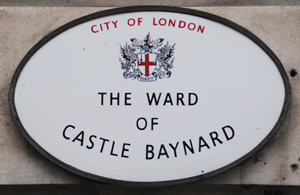
His name was once given to a prominent London fortification, Baynard’s Castle, and now lives on in a City of London ward – Castle Baynard. But who was Ralph Baynard?

A Norman nobleman, Baynard was among those who accompanied William the Conqueror when he invaded England in 1066.

He was rewarded with a barony centred on Little Dunmow in Essex; the parish church was founded by his wife, Lady Juga, in 1104, and their son Geoffrey founded an Augustinian priory dedicated to St Mary there in 1106.

Ralph Baynard was also granted permission to build Baynard’s Castle in the City of London – it sat where the Fleet River entered the Thames. He is said to have died in the reign of William Rufus, aka William II, who ruled from 1087 to 1100.

Baynard’s Castle in London was eventually razed by King John in 1213.

Baynard’s name, meanwhile, may also live on in the district of Bayswater.

This Week in London – Princess Eugenie’s wedding dress on show; Dorothea Manning; and, the impact of photographic reproductions explored…

The wedding dress and tiara worn by Princess Eugenie at her wedding in October last year has gone on display in a new exhibition at Windsor Castle, just to the west of London. A Royal Wedding: HRH Princess Eugenie and Mr Jack Brooksbank also features groom Jack Brooksbank’s morning suit and the maid-of-honour outfit worn by Princess Beatrice of York. But the star is the wedding dress, designed by Peter Pilotto and Christopher De Vos, which features fabric interwoven with symbols including the White Rose of York. The exhibition also includes the Greville Emerald Kokoshnik Tiara, lent by Queen Elizabeth II and on public display for the first time, Princess Eugenie’s diamond and emerald drop earrings – a wedding gift from the groom, a replica of the bridal bouquet, and the Zac Posen-designed evening gown worn by the princess for the reception. The display can be seen as part of visits to Windsor Castle until 22nd April. Admission charge applies. For more see www.rct.uk. PICTURE: Royal Collection Trust / © All Rights Reserved.

The work of pioneering artist Dorothea Manning is the subject of a new exhibition at the Tate Modern on South Bank. Opened last week, Dorothea Tanning is organised in collaboration with the Museo Nacional Centro de Arte Reina Sofía in Madrid and is the first large scale exhibition of her work for 25 years. It brings together some 100 works, a third of which are being shown in the UK for the first time, including ballet designs, stuffed textile sculptures, installations and large scale pieces. Highlights include the self-portrait Birthday (1942), Children’s Games (1942), Insomnias (1953), Etreinte (1969),Tango Lives (1970) and the room-sized installation Chambre 202, Hôtel du Pavot (1970-73). Runs until 9th June. Admission charge applies. For more see www.tate.org.uk.

A new exhibition on the impact photographic reproduction had on illustrative art at the end of the 19th century has opened at the Heath Robinson Museum in Pinner. The Beardsley Generation looks at how a new generation of artists versed in process engraving replaced the craft wood engravers of the past and how the new technology led to an expansion in the production of illustrated books and periodicals. The work of Aubrey Beardsley, Charles Ricketts, Laurence Housman and the Robinson brothers will be on display in the form of original drawings, books and periodicals drawn from public and private collections. Runs until 19th May. Admission charge applies. For more, see www.heathrobinsonmuseum.org.

Send all items for inclusion to exploringlondon@gmail.com.