This unique memorial commemorates the worst civilian tragedy of World War II in the UK – the disaster at Bethnal Tube station in east London.
Bethnal Green
This Week in London – ‘Making Egypt’ at the Young V&A; new memorial to humanitarian aid workers; and, Science Museum’s ‘Exploring Space’ gallery to close soon…

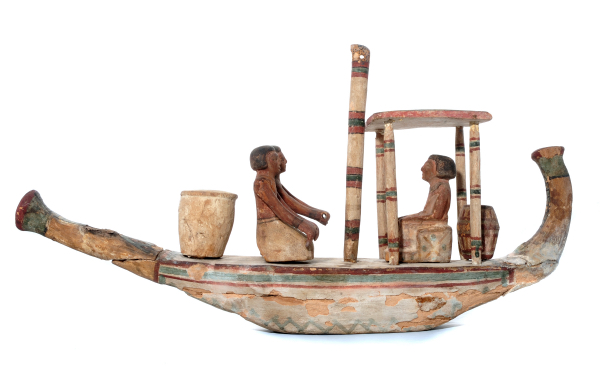
• A new exhibition exploring how stories and images from ancient Egypt continue to influence art, design and popular culture today opens at the Young V&A in Bethnal Green on Saturday. Making Egypt is divided into three sections – Storytelling, Communicating and Making – and features more than 200 objects which, as well as ancient artifacts, include contemporary responses from jewellery and fashion designers, graphic novelists and ceramic artists throughout. Highlights include everything from a 4000-year-old small wooden painted model funerary boat and an amulet of Taweret, goddess of childbirth and fertility, dating from between 664 BC to 332 BC to a rare carved wooden scribe’s palette which was used to hold ink and brushes, and Egyptian faience shabtis dating from between 380 BC to 343 BC which represent just a handful of more than 300 small funerary figures discovered in the tomb of Djedhor. Runs until 2nd November. Admission charge applies. For more, see vam.ac.uk/young.
• A new plaque commemorating humanitarian aid workers has been unveiled in the crypt of St Paul’s Cathedral. Located near the memorial to Florence Nightingale, the plaque “celebrates the bravery of those who dedicate their lives to helping others and remembers those who have been murdered or injured while delivering humanitarian assistance”. Hand-carved by stonemason Martin Gwilliams, the plaque reads: “In celebration of Humanitarian Aid Workers. Helping those in need whoever and wherever they are. And in remembrance of those who have died in the pursuit of their calling.” The plaque is the first in the UK in a public space to honour humanitarian aid workers and their work in conflict zones and disaster-stricken areas around the world. For more, see www.stpauls.co.uk.
• After almost 40 years, the Science Museum’s ‘Exploring Space’ gallery at the South Kensington institution will partially close on 22nd April and fully close in early June as part of preparations for the museum’s new ‘Space’ gallery. Key objects on display include the Soyuz spacecraft that carried astronaut Tim Peake back to Earth, the spacesuit worn by Helen Sharman, the first Briton in space, during a 1991 spaceflight and a three-billion-year-old piece of the Moon. Other items include a British Black Arrow rocket and a United States Scout rocket suspended from the gallery’s ceiling, a RL10 rocket engine and a J-2 rocket engine which powered the Apollo astronauts to the Moon. For more, see www.sciencemuseum.org.uk
Send all items to exploringlondon@gmail.com
LondonLife – Bethnal Green alleyway…

This Week in London – Young V&A opens its doors; contemporary African photography; and, Yehudi Menuhin honoured…

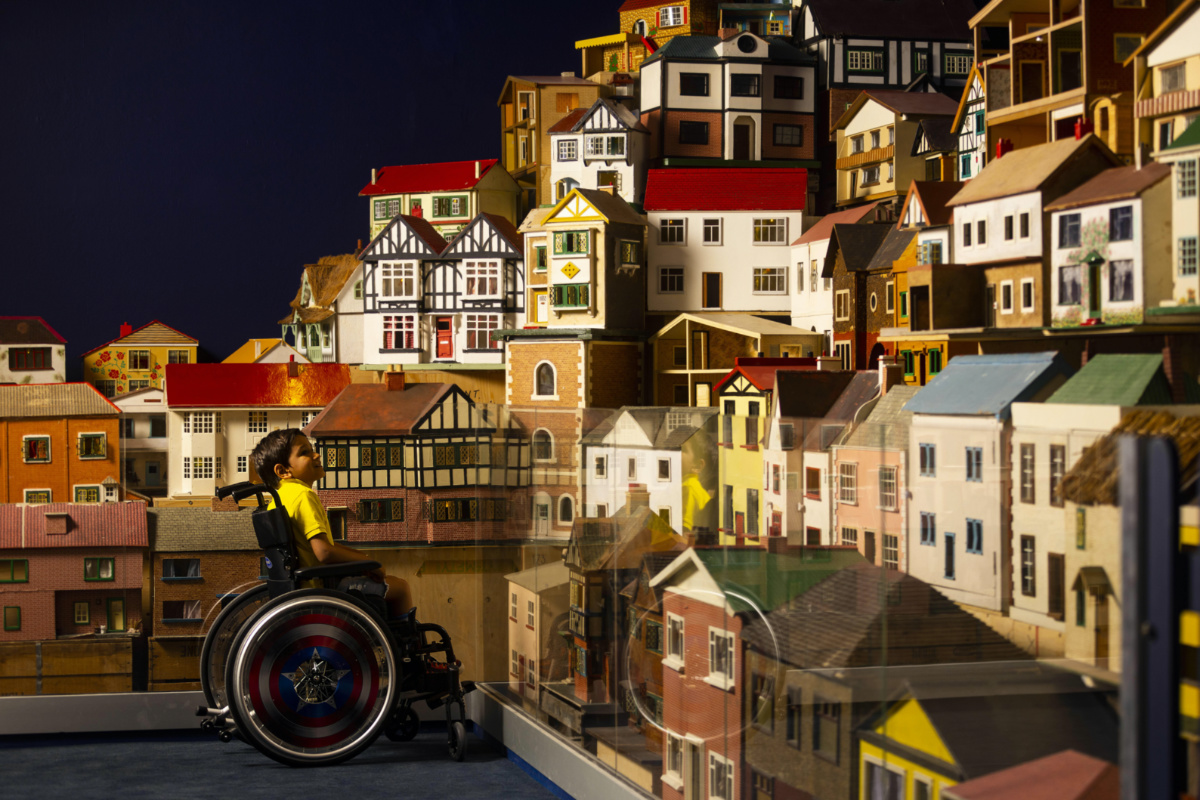
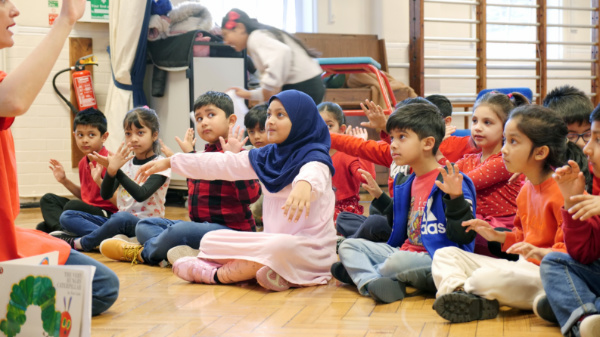
• The new Young V&A in Bethnal Green has opened its doors and a free summer festival takes place this weekend. Designed with and for children aged up to 14-year-olds, the Young V&A features more than 2,000 objects, dating from 2,300 BC to today, found across three galleries – ‘Play’, ‘Imagine’ and ‘Design’. The ‘Play’ gallery includes a ‘Mini Museum’ as well as a construction zone called Imagination Playground in which children can build dens, The Arcade in which they can explore Minecraft worlds and Adventure in which they can create stories inspired by objects on show. The ‘Imagine’ gallery features a new performance space, portraits of local children and luminaries such as Quentin Blake, Kenneth Branagh and Linda McCartney, while ‘Design’ showcases innovative objects and case studies that explore how things are designed, made and used, and the ways in which design can change the world. Among the objects on show at the museum is everything from a life-size Joey the War Horse puppet to a Microline car suspended from the ceiling, Harry Potter’s Nimbus 2000 broomstick, Christopher Reeve’s original Superman costume and a large-scale installation of doll’s houses – Place (Village) – by Rachel Whiteread. Meanwhile, the free Summer Festival, which takes place on Saturday and Sunday, invites visitors to explore the museum as well as join in free and creative activities and see performances from young talent including Britain’s Got Talent finalists IMD Legion, the east London-based Grand Union Orchestra, and hula-hoop performance group Marawa’s Majorettes. There’s also the chance help create a large-scale art installation with Leap then Look. For more see vam.ac.uk/young.


• A major new exhibition celebrating contemporary African photography has opened at the Tate Modern. Featuring works by 36 artists, A World in Common: Contemporary African Photography is spread across seven thematic sections and highlights contemporary perspectives on cultural heritage, spirituality, urbanisation and climate change. As well as illuminating alternative visions of Africa’s many histories, cultures and identities, the display also explores the rise of studio photography across the continent during the 1950s and 1960s – a time when many African nations gained independence – before moving on to document the expansion and transformation of cities today as well as exploring themes of migration and climate activism. Runs until 14th January, 2024. Admission charge applies. For more, see tate.org.uk.
• Celebrated 20th century violinist and conductor Yehudi Menuhin has been honoured with an English Heritage Blue Plaque at his former home in Belgravia. The six-storey house at 65 Chester Square, built by Thomas Cubitt in 1838, was where Menuhin lived and worked for the last 16 years of his life. The lower-ground floor vaults provided space for his collection of violins while an open space on the fourth floor served as his studio, a place which hosted much of his teaching and mentoring and where he also practiced yoga – including his famous headstand.
Send all items to exploringlondon@gmail.com.
A Moment in London’s History – The opening of the Bethnal Green Museum…
This month marks 150 years since the opening of the Bethnal Green Museum, the first public museum located in London’s east.
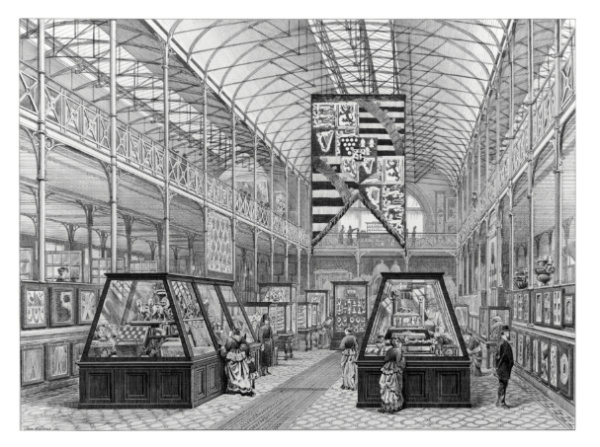
The museum had at its core a pre-fabricated building which had earlier been erected as part of the first phase of the South Kensington Museum. It was brought to the Bethnal Green site and encased in a red brick exterior designed by James Wild.

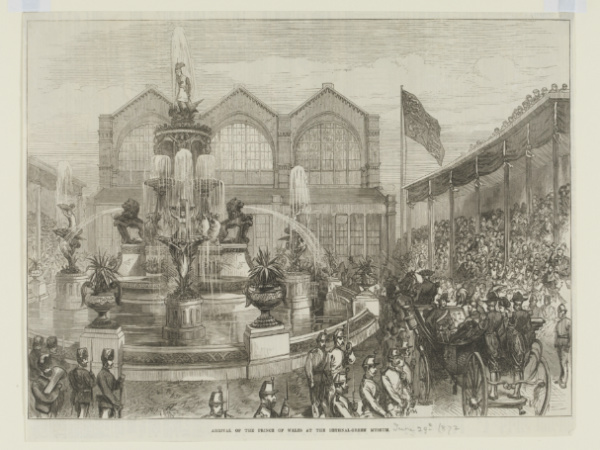
Formally known as the East London Museum of Science and Art, it was opened on 24th June, 1872, by the Prince of Wales, later King Edward VII, amid considerable pomp and great crowds.
The museum, a branch of what became the Victoria & Albert Museum in South Kensington, was built to house and display many of the collections which had been exhibited at the Great Exhibition of 1851. Among the art collections on show was that of Sir Richard Wallace (now housed in the Wallace Museum).

After World War II, the museum was remodelled as an art museum and included a children’s section. Then, in 1974, the museum became the Museum of Childhood with displays focusing on everything from toys and dolls houses to children’s dress and books.
It underwent an extensive renovation in the mid 2000s and reopened in December, 2006, as the Victoria & Albert Museum of Childhood.
The now Grade II*-listed museum, located on Cambridge Heath Road, is currently undergoing a £13 million redevelopment and will reopen in mid-2023 as Young V&A, a new museum dedicated to 0 to 14-year-olds, their families and carers.
The V&A marked a year to the opening of the new museum with the launch of a year-long Reinvent Festival, “celebrating 150 years with 150 waysto be creative”. For more, see www.vam.ac.uk/blog/museum-life/young-va-reinvent-festival-reinventing-a-museum-for-the-young.
This Week in London – Young V&A marks 150 years; West End LIVE; and, Hackney’s Ayah’s Home commemorated…

• The V&A is celebrating 150 years since the opening of the Bethnal Green Museum (now known as the Young V&A) with the launch of a year long celebration on Friday. The museum, which opened in 1872 as the first ever museum in east London, is currently undergoing a major redevelopment and is scheduled to reopen in summer, 2023, as a new national museum dedicated to children to the age of 14. To mark the 150th – and a year until Young V&A’s opening – the museum has launched a year-long ‘Reinvent Festival’ with the first event – an online summit called Sparking Creative Futures headlined by children’s author, Ed Vere, and live-illustrated by Beano’s youngest ever artist, Zoom Rockman – on Friday. On Sunday, Young V&A will celebrate its birthday with families at Rich Mix’s ‘Everyone a Maker’ event with free, fun activities. Further events will be held over the year including pop ups at Queen Elizabeth Olympic Park’s Great Get Together on 23rd July featuring large-scale, creative construction and making sessions for children and families using playful building materials by Hackney-based architect Emilie Quene. For more (including the full programme of events), see www.vam.ac.uk/blog/museum-life/reinvent-festival-young-va-summer-family-events.
• Europe’s biggest free musical theatre festival – West End LIVE – will transform Trafalgar Square into an open-air theatre this weekend. A joint production by Westminster City Council and the Society of London Theatre, the event will feature hundreds of performers, creatives and production staff, showcasing the best the West End has to offer. No tickets are required for the free event. For more, head to www.westendlive.co.uk.
• An English Heritage Blue Plaque has been unveiled on a house in Hackney, commemorating the hundreds of stranded and sometimes abandoned South and East Asian nannies, known as ayahs, who sheltered there in the early 20th century. The Ayah’s Home at 26 King Edward’s Road housed around 100 women a year between 1900 and 1921 after which the home moved to another address nearby. The ayahs were women who served the British in India and other colonies as children’s nannies, nursemaids and ladies’ maids and who were sometimes required to care for babies, children and their sea-sick mothers on the long sea voyage from the colonies to England but who were generally not expected to serve the families once they arrived, instead either contracted to wait until needed for the return journey or take a passage home. The Hackney shelter, which also welcomed ‘amahs’ – nursemaids of East Asian origin, appears to have been the only one of its kind in Britain for almost the whole of its existence. For more, see www.english-heritage.org.uk/visit/blue-plaques/.
Send all items for inclusion to exploringlondon@gmail.com.
Lost London – Columbia Market…

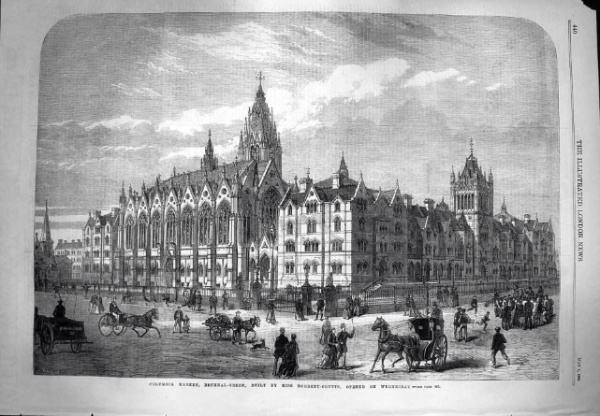
No, this is not the Columbia Road flower market we know today. This was a short-lived vast gothic market place built in the Bethnal Green in the mid-19th century to serve the East End.
The project was financed by philanthropist (and for a time Britain’s richest woman) Angela Burdett-Coutts and represented an attempt to get the costermongers off the streets.
The building, designed by Henry Darbyshire, was built in 1869, constructed of yellow brick with Portland stone cornices and a green slate roof.
It consisted of four blocks of buildings with arcades built around a central quadrangle which was open to the sky and featured some 400 stalls located under cover. There were also a series of shops with residences located above and a clock-tower which sounded every quarter hour.
The market, which sold fresh produce, was run by Burdett-Coutts’ secretary and future husband (they married in 1881) William Burdett-Coutts who built connections with a fishing fleet to supply its vendors.
He had planned a rail link with Bishopsgate to serve the market but that never happed and competition from Billingsgate and other markets – and the fact the costermongers preferred the streets – eventually saw it go out of business. It closed only a relatively few years later in 1886.
Taken over for a short time by the City of London Corporation, it was returned to the Baroness in 1874, briefly reopened 10 years later, then, according to The London Encyclopaedia, let out as workshops before finally being demolished in 1958.
A few remnants, including some rather grand iron railings and lion statues, remain.
This Week in London – Japan at Kew; Young V&A; a Blue Plaque for Diana’s flat; and, a new Lord Mayor of London…
• Visitors to Kew Gardens are being invited to immerse themselves in the art, plants and culture of Japan in a month long celebration of the Asian nation. The Japan Festival kicks off this Saturday in Kew’s Temperate House and features at its heart a large-scale artistic installation by Japanese artist Chiharu Shiota entitled One Thousand Springs which is constructed of 5,000 haikus submitted by members of the public. There will also be a specially commissioned Chalk Garden – a contemporary response to a Japanese garden showcasing native plants including grasses, shrubs and trees – as well as a display showcasing six different chrysanthemums, Japan’s national flower, and an immersive soundscape by sound artist Yosi Horikawa featuring the natural sounds of the rivers and waterfalls of Kagoshima, atmospheric soundscapes from the Cedar mountains of Gifu and bird calls set across the waves of the Philippine Sea. The Temperate House will also be illuminated for Japan: After hours featuring a varied programme of dance, theatre, and live music performances as well as traditional flower arranging and sake sipping. The festival, supported by Daikin UK, runs to 31st October. Admission charge applies. For more, see www.kew.org.

• Thirteen-year-old Olympian Sky Brown’s skateboard, children’s garments created by sustainable fashion designer, humanitarian and artist Bethany Williams, and Open Bionics’ 3D printed prosthetic, The Hero Arm, are among new acquisitions to be displayed at what was the former V&A Museum of Childhood. Now renamed the Young V&A, the Grade II* Bethnal Green institution is undergoing a £13m transformation ahead of reopening in 2023. The new interior fit-out, by firm AOC Architecture, will include three new galleries – Play, Imagine and Design – as well as interactive collection displays, a suite of dedicated learning workshops, an in-gallery design studio for visitors, and a new café and shop.
• The late Princess Diana has been honoured with an English Heritage Blue Plaque at her former flat in Kensington. Flat 60, Coleherne Court, Old Brompton Road, was her home between 1979 and 1981 during her courtship with Prince Charles. She shared it with three friends including Virginia Clarke who was at the unveiling ceremony this week. Diana, who died aged 36 in a Paris car crash in 1997, described her years at the property as “the happiest time of her life”, according to biographer Andrew Morton’s book Diana, In Her Own Words.
• Vincent Keaveny was this week elected as the 693rd Lord Mayor of the City of London. Alderman Keaveny succeeds Lord Mayor William Russell, who served a second year in office after his term was extended to ensure continuity of leadership during the current COVID-19 pandemic (the last time a Lord Mayor served a second year in office was in 1861 when William Cubitt was re-elected). The annual Lord Mayor’s Show is scheduled for Saturday, 13th November, and will be followed by Lord Mayor’s Banquet at Guildhall on 15th November.
Send all items to exploringlondon@gmail.com.
This Week in London – Edward Burne-Jones at Tate Britain; Fictional pirates at V&A Museum of Childhood; and, British Museum’s new Islamic gallery…
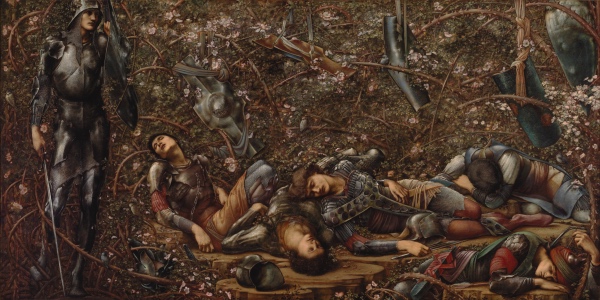
• Two celebrated series of paintings by Pre-Raphaelite artist Edward Burne-Jones have been brought together for the first time in their entirety in a new exhibition at Tate Britain. The large scale works known as The Briar Rose (c1890) and the unfinished Perseus series (started in 1875) – the artist’s most famous narrative cycles – are at the centre of a new exhibition, Edward Burne-Jones: Pre-Raphaelite Visionary, which opened at the gallery yesterday. The Briar Rose features four canvasses – shown in a museum setting together for the first time – which illustrate the fairy tale of Sleeping Beauty while the Perseus cycle, commissioned by then-MP and future PM Arthur Balfour, was intended to be 10 large scale oil paintings retelling the ancient myth of Perseus but was only partly realised (the display includes four finished paintings and six full scale preparatory drawings). The other 150 works on show in this display – the first major Burne-Jones retrospective to be held in London in more than 40 years – include paintings, tapestries and stained glass panels. Among other highlights are the large scale paintings Love among the Ruins (1870-73) and The Wheel of Fortune (1883), the stained glass work, The Good Shepherd (1857-61), and altar piece The Adoration of the Magi (1861), drawings including Desiderium (1873), portraits such as those of Amy Gaskell (1893) and Lady Windsor (1893-95) and embroideries, illustrated books and large scale tapestries including The Arming and Departure of the Knights of the Round Table on the Quest for the Holy Grail (1890-1894) and the Adoration of the Magi (1894). Runs until 24th February. Admission charge applies. The exhibition is accompanied by a programme of talks and events. For more, see www.tate.org.uk. PICTURE: The Briar Wood 1874-84, oil paint on canvas, The Faringdon Collection Trust.
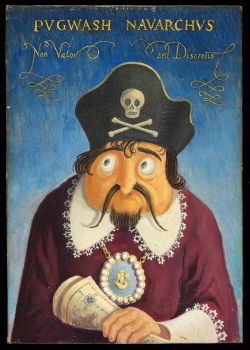
• Fictional pirates in popular culture are the subject of a new exhibition at the V&A Museum of Childhood in Bethnal Green. A Pirate’s Life For Me explores the origins and characters of fictional pirates through more than 80 objects including David Munrow’s unpublished play Barnacle Bill, toys designed by Playmobil (exhibition sponsor) and Lego, the first ever painting of Captain Pugwash (pictured), six 18th century Spanish doubloons and the original illustration of the costume design for Captain Hook for the first ever theatrical production of Peter Pan in 1904. Young visitors to the exhibition are invited to take a journey starting at a seaside tavern where they will find a mysterious map which leads on to a pirate boutique, large scale pirate ship and tropical “treasure island”. The exhibition runs until 22nd April. Admission is free. For more, see www.vam.ac.uk/moc/whats-on. PICTURE: Framed painting of Captain Pugwash, painted by John Ryan, 1950, oil on board, © John Ryan Estate.
10 Historic London Markets – 8. Columbia Road Flower Market…
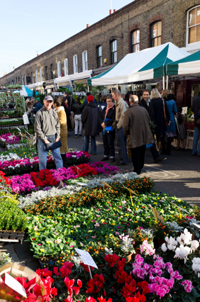
Originally founded in the early 1800s, the Columbia Road market in East London has since evolved into a specialist flower market on Sundays.
First emerging as a general street market in the early 1800s, the market was formalised in the mid 1800s when banking heiress Angela Burdett-Coutts financed the construction of the now demolished – and somewhat architecturally fanciful – Columbia Market. This opened in 1869 at the northern end of the road but didn’t prove a great success. Despite efforts to save it – including apparently relaunching it as a fish market – it closed in 1885.
The market building – which is said to have resembled the sort of market hall that might be found in rural areas – was later used as a warehouse but after suffering bomb damage in World War II were demolished.
The market, meanwhile, reappeared on the street and as the area’s Jewish population grew, moved to a Sunday, a decision which allowed traders from Covent Garden and Spitalfields to trade their leftover goods from the previous day.
The introduction of new regulations – including those introduced in the 1960s requiring traders to attend regularly – saw the market gradually transform itself into the colorful market selling cut flowers, plants and bulbs you can find there today. Popular with film makers and photographers thanks to the colourful backdrop it provides, the surrounding streets also feature a range of interesting independent shops and cafes.
WHERE: Columbia Road, Bethnal Green (nearest Tube stations are Shoreditch, Liverpool Street, Aldgate East and Bethnal Green); WHEN: 8am to 2pm Sunday; COST: Free; WEBSITE(S): www.columbiaroad.info/www.columbia-flower-market.freewebspace.com/index.html.
PICTURE: Dynasoar/www.istockphoto.com