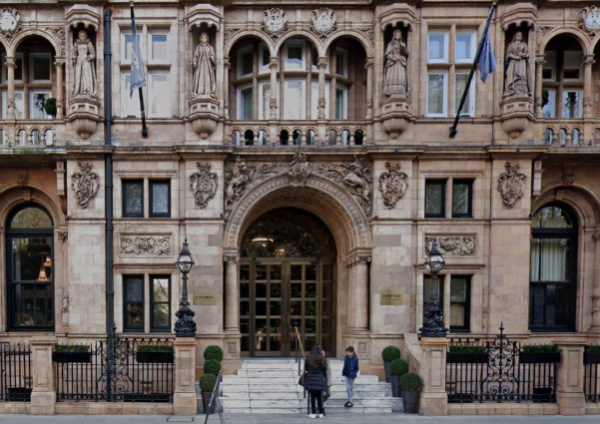
The facade of the former Hotel Russell featuring the statues of the four Queens. PICTURE: Courtesy of Google maps.
We finish our series of lesser known statues of English monarchs with a Bloomsbury building featuring four English queens.
Tucked away in niches over the main entrance of the Hotel Russell – which opened in 1898, the four queens – Elizabeth I, Mary II, Anne, and Victoria – were the work of Henry Charles Fehr.
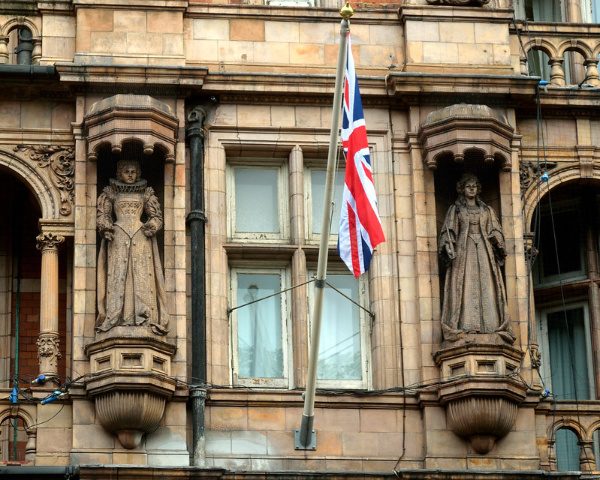
Queen Elizabeth and Queen Mary II. PICTURE: Tom Hilton (licensed under CC BY 2.0)
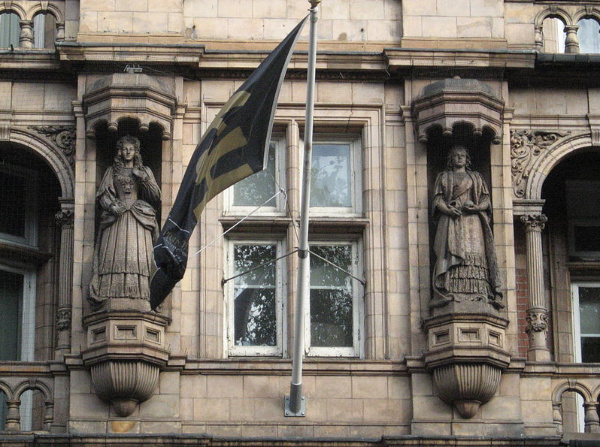
The larger than lifesize terracotta statues – which face out to Russell Square – don’t include Queen Mary I and are rather unusual and represent idealised versions of the queens. Elizabeth is readily identifiable due to the ruff she wears but there is some confusion over who’s who when it comes to Mary II and Anne. Victoria, meanwhile, is depicted as a very young woman.
Queen Anne and Queen Victoria. PICTURE: Jack1956 (Public domain)
Among other ornamentation, the building – which was designed by C Fitzroy Doll, also features the busts of four Prime Ministers – Lord Derby, Lord Salisbury, William Gladstone and Benjamin Disraeli – on the Guilford Street facade.
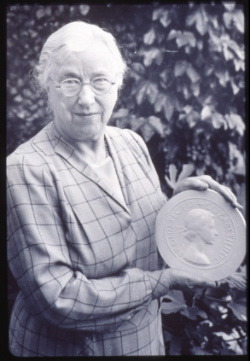
• A free display featuring the first coin bearing a portrait of Queen Elizabeth II has opened at the British Museum. Part of the celebrations marking the Queen’s Platinum Jubilee, The Asahi Shimbun Display Mary Gillick: modelling The Queen’s portrait showcases the production and reception of the coin which was designed in 1952 and released the following year. Gillick’s portrait – which remained in circulation on coins in the UK until the 1990s and was also adapted for use on commemorative stamps – combined modern design with Italian Renaissance influences. Can be seen until 31st July. For more, see www.britishmuseum.org.
• The UK’s first Stolperstein or “stumbling stone” has been installed in Soho as part of an initiative to remember the victims of the Nazis. The small brass plaque commemorates former resident Ada van Dantzig, a Dutch-Jewish paintings conservator for the National Gallery who came to London in the 1930s and worked and resided in Golden Square in Soho (where the plaque has been installed). She later re-joined her family in the Netherlands and was arrested in France in early 1943 along with her mother, father, sister and brother. Deported to Auschwitz, Ada, along with her parents, was murdered there on 14th February, 1943. Artist Gunter Demnig created the project almost 25 years ago to commemorate victims of Nazi Persecution during the Holocaust. More than 100,000 of stones have now been laid in 26 countries throughout Europe with the location of the stones the last address of those being remembered.
• A pioneering female landscape gardener has been honoured with an English Heritage Blue Plaque at her former flat in Shaftesbury Avenue. Fanny Wilkinson, who is believed to be Britain’s first professional female landscape gardener, was also a campaigner for the protection of open space in London. She lived and worked at the flat, which overlooks an open space she laid out herself, between 1885 and 1896. Wilkinson began her career as an honorary landscape gardener to the Metropolitan Public Boulevards, Gardens and Playgrounds Association – an organisation whose mission was the formation of gardens and public parks that would create playgrounds and green ‘lungs’, especially in poor districts of the capital. In June, 1885, it was agreed that she could charge five per cent on all her MPGA payments, leading her to drop the ‘honorary’ title and become Britain’s first professional female landscape gardener. For more, see www.english-heritage.org.uk/visit/blue-plaques/.
• A painting by Pablo Picasso – Woman with a Book (1932) from the Norton Simon Museum in Pasadena, California – and a painting by Jean-Auguste-Dominique Ingres – Madame Moitessier (1856) – are being shown together for the first time at The National Gallery. Picasso admired Ingres and referred to him throughout his career and this connection can be seen not only in his paintings but in drawings and studies he made during his ‘neoclassical’ phase in the 1920s. He encountered Madame Moitessie at an exhibition in Paris in 1921 and 11 years later painted Woman with a Book. The paintings, which are being show under a collaborative initiative between the two institutions, can be seen in Room 1 until 9th October. Admission is free. For more, see www.nationalgallery.org.uk.
Send all items for inclusion to exploringlondon@gmail.com
• Charles Jennens, who is best-known as the librettist of Handel’s Messiah but was also a patron of the arts, scholar and educator, is the subject of a new exhibition opening at the Foundling Museum in Bloomsbury on Friday.Charles Jennens: Patron & Polymath features portraits, correspondence and printed documents reflecting the varied interests and achievements of this Georgian character. Jennens was a non-juror – meaning he supported the legitimacy of the deposed Catholic Stuarts – but was also a Protestant. His art collection was one of the best in Britain and his Palladian mansion, Gopsall Hall in Leicestershire, featured a music room with an organ built to Handel’s specifications. Admission charge applies. Runs until 16th October. For more, see https://foundlingmuseum.org.uk/event/charles-jennens-polymath/.
• Dr John Conolly, an early advocate of human treatments for people living with mental illness and the former Hanwell Asylum have been commemorated with an English Heritage Blue Plaque to mark Mental Health Awareness Week. The plaque has been placed on what was the left wing of the asylum and is now part of St Bernard’s Hospital. It was here that Conolly, who was appointed Resident Physician at the Middlesex County Pauper Lunatic Asylum in 1839 – then one of the biggest asylums in London, advocated a system of ‘non-restraint’ which, though initially seen as controversial, drew support from reformers and which by 1846 had been embraced as ruling orthodoxy by the then-new national Lunacy Commission. For more, see www.english-heritage.org.uk/visit/blue-plaques/.
• On Now: The works of Kawanabe Kyōsai, the most popular Japanese painter of the late 19th century, are on show in the Royal Academy’s Gabrielle Jungels-Winkler Galleries.Kyōsai: The Israel Goldman Collection focuses largely on the art of sekiga or ‘spontaneous paintings’ which were produced at ‘calligraphy and painting parties’ (shogakai), often fuelled by prodigious amounts of saké. The display – the first monographic exhibition of Kyōsai’s work in the UK since 1993 – includes around 80 words, many of which have never been exhibited. Admission charge applies. Runs until 19th June. For more, see www.royalacademy.org.uk.
Send all items for inclusion to exploringlondon@gmail.com
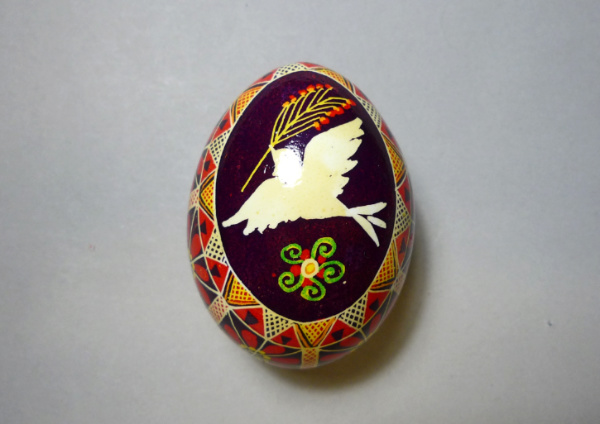
• A free display on the cultural heritage of Ukraine has opened at the British Museum. Located in the museum’s ‘Collecting the world’ gallery, Ukraine: Culture in crisis features objects drawn from the museum’s collection including a 5,500-year-old painted storage jar, hand-coloured lithographs of a man and a woman in Ukrainian dress dating from about 1813, and, an Easter egg decorated with the dove of peace (pictured) dating from between 1970 and 1980. There are also objects from the Greek colony of Olbia established on the Black Sea between 600 and 300 BC including a black glazed, fluted amphora from southern Italy dating from between 300 and 250BC. For more, head to www.britishmuseum.org. To learn more about the protection of cultural heritage in Ukraine visit icom-poland.mini.icom.museum/icom-poland-appeal-help-us-help-ukraine.
• The earliest surviving printed news report in Britain of the 1513 Battle of Flodden and an original BBC radio script of the D-Day landings are among exhibits at the British Library’s first major exhibition putting a spotlight on the role news plays in our society. Other exhibits on show at Breaking the News, which opens on Friday, include smashed hard drives used by The Guardian to store Edward Snowden’s hard files. The display explores what makes an event news and the meaning of a free press as well as the ethics involved in making the news, news objectivity and how the way we encounter news has evolved over five centuries of news publication in Britain. Runs until 21st August. Admission charge applies. For more, head to www.bl.uk/events/breaking-the-news.
• St George’s Day celebrations return to Trafalgar Square this Saturday. The free family event, which runs from noon until 6pm, will feature live music by the likes of string quartet Bowjangles, hoedown collective Cut A Shine, brass band Das Brass and folk headliner James Riley & the Rooftop Assembly. There will also be appearances from St George with his Dragon, Divine stilt walkers and the Pearly Kings and Queens as well as a range of food stalls. Other family-oriented activities including The Knights Training School, the Storytorium, a dragon Selfie station, face painting, upcycled arts and crafts, and a games area.
• The art and poster stores at the London Transport Museum’s Depot in Acton Town will be open to the public this weekend. The Art of the Poster Open Days, which run from today until Sunday, will give the public the chance to view some of the more than 30,000 posters in the depot’s collection and hear from expert guides about how posters have characterised London and its transport over the past century. There will also be talks from artists, curators and historians and visitors have the chance to design their own posters in creative workshops as well as, on Saturday and Sunday, riding the London Transport Miniature Railway. Timed tickets must be booked in advance. Admission charges apply. For bookings, head to www.ltmuseum.co.uk/whats-on/depot/art-poster.
Send all items for inclusion to exploringlondon@gmail.com.
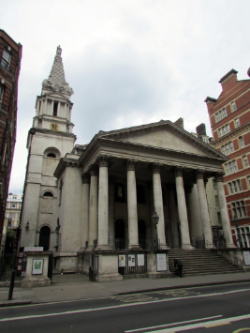
St George’s Bloomsbury with its stepped pyramid spire. PICTURE: Reading Tom (licensed under CC BY 2.0)
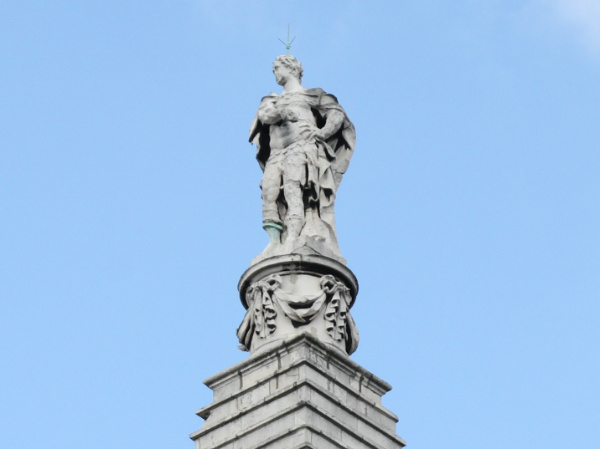
The larger-than-life-sized Portland stone statue is the work of Edward Strong who was master mason on the building of the church. It depicts the king in Roman costume standing atop a Roman altar.
The steeple, described as the “most eccentric” in London, also features statues of two unicorns and two lions at its base – both symbols of the Royal Coat of Arms of the UK – the lions representing England and the unicorns Scotland – and included apparently as a comment on Hanoverian succession. These were also originally the work of Strong but the originals disappeared in the 1870s and those now present are replicas which themselves recently underwent a restoration.
The stepped pyramid spire is said to have been influenced by Pliny the Elder’s description of Mausoleum at Halicarnassus.
Horace Walpole famously referred to the statue of King George in verse:
When Henry VIII left the Pope in the lurch, The Protestants made him the head of the church, But George’s good subjects, the Bloomsbury people Instead of the church, made him head of the steeple.
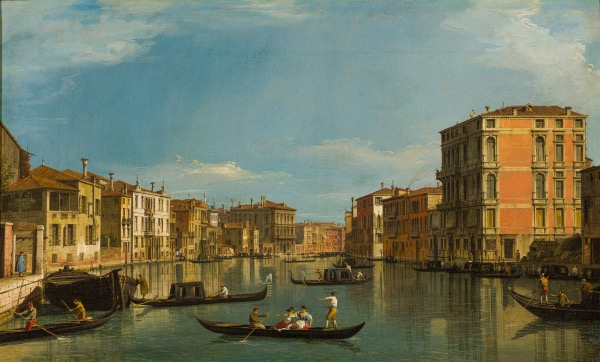
• Twenty-four of Canaletto’s Venetian views which are normally found at Woburn Abbey form the heart of a new exhibition opening at the National Maritime Museum in Greenwich on Friday.Canaletto’s Venice Revisited explores some of the most iconic view paintings of Venice and how tourism, which helped establish Canaletto’s career, today threatens Venice’s future. The views from Woburn Abbey were painted by Canaletto for Lord John Russell, the 4th Duke of Bedford, in the 1730s and this is the first time the paintings, which are thought to be Canaletto’s largest single commission, will be on display in their entirety outside of the abbey. As well as 22 smaller views of Venice depicting iconic landmarks such as Piazza San Marco and the Grand Canal, as well as campi, palazzi and churches, the works include two monumental views, A Regatta on the Grand Canal and The Grand Canal, Ascension Day: The embarkation of the Doge of Venice for the Ceremony of the Marriage of the Adriatic. Runs until 25th September. Admission charge applies. For more, see www.rmg.co.uk/canaletto.
• The story of the postcode is the subject of a new exhibition at The Postal Museum.Sorting Britain: The Power of Postcodes charts the journey of postcodes in the UK, from the post postal districts in London, Liverpool and Manchester and the first trial of postcodes in Norwich in 1959 to how postcodes are used today as an indicator of social standing. Highlights in the display include ELSIE, one of the only original 1950s Electronic Letter Sorting Indicating Equipment left in existence, images of ‘Poco the Postcode Elephant’ – one of the biggest advertising campaigns of the 1980s and unseen maps of London from the 19th century. Runs until 1st January. Included in admission ticket. For more, see www.postalmuseum.org.
• The Lindt GOLD BUNNY Hunt is returning to both Hampton Court Palace and Kensington Palace this Easter for the first time since 2019. Children aged four to 12 are invited to use a trail map to explore each palace and gardens and find the Lindt GOLD BUNNY statues while learning about people from the palaces’ past and, on successfully completing their mission, claim their chocolatey reward. Check the website for details of dates. The hunt is included in palace admission. For more, see www.hrp.org.uk.
• The representation of foundlings, orphans, adoptees, and foster children in comics and graphic novels comes under scrutiny in a new exhibition at the Foundling Museum in Bloomsbury. Opening Friday, Superheroes, Orphans & Origins: 125 years in comics looks at traditional orphan superheroes ranging from Superman and Batman to Spider Man and Black Panther along with characters from early newspaper comic strips, Japanese Manga and contemporary graphic novel protagonists. The display includes historical newspapers, original artwork and contemporary digital work as well as examples of international comics rarely exhibited in the UK. There are also three new artistic commissions specifically made for the exhibition. Can be seen until 28th August. Admission charge applies. For more, see https://foundlingmuseum.org.uk/event/superheroes-orphans-origins/.
Send items for inclusion to exploringlondon@gmail.com.
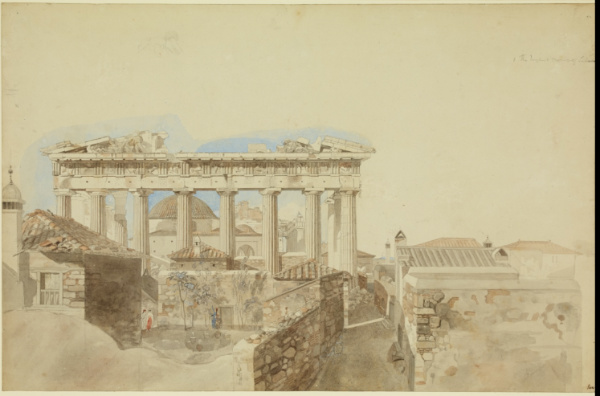
• A new display celebrating the influence of the ancient Greek architectural influence on the British Museum building is open at the museum. The Asahi Shimbun Displays Greek Revival: simplicity and splendour centres on a 200-year-old drawing of the west side of the Parthenon in Athens by British architect Robert Smirke. Smirke drew the Parthenon – still surrounded by medieval and later structures – when he was just 23-years-old and would go on, in the 1820s, to design the British Museum, one of the largest and most famous Greek Revival buildings in the world. Alongside the display is a online visitor trail which features 11 stops around the museum including the south facade and its colonnade and portico of 44 Ionic columns and the opulent Enlightenment Gallery. The free exhibition can be seen until 8th May in Room 3. For more, see britishmuseum.org/exhibitions/greek-revival-simplicity-and-splendour; for more on the trail head to britishmuseum.org/visit/object-trails/greek-revival-architecture-simplicity-and- splendour.
• The first major exhibition to celebrate “the power, artistry and diversity” of masculine attire and appearance opens at the V&A’s Sainsbury Gallery on Saturday.Fashioning Masculinities: The Art of Menswear features around 100 looks and 100 artworks displayed across three galleries – Undressed, Overdressed, and Redressed – and includes both contemporary looks and historic treasures. Fashion designers Harris Reed, Gucci, Grace Wales Bonner and Raf Simons will be represented along with paintings by Sofonisba Anguissola and Joshua Reynolds, contemporary artworks by Robert Longo and Omar Victor Diop, and an extract from an all-male dance performance by Matthew Bourne’s New Adventures. Interspersed will be outfits worn by such famous faces as Harry Styles, Billy Porter, Sam Smith, David Bowie and Marlene Dietrich. Runs until 6th November. Admission charge applies. For more, see vam.ac.uk/masculinities.
Send all items for inclusion to exploringlondon@gmail.com.
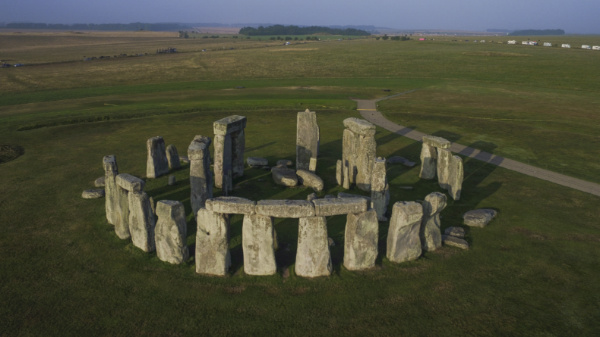
• A 5,000-year-old chalk sculpture – described as “the most important piece of prehistoric art to be found in Britain in the last 100 years” – has gone on show at The British Museum as part of its The world of Stonehenge exhibition. The sculpture was unearthed by members of Allen Archaeology during a routine excavation on a country estate near the village of Burton Agnes in East Yorkshire in 2015. Uncovered alongside the burial of three children (it had been placed near the head of the eldest child and included three hastily added holes possibly to represent the children), the sculpture is decorated with elaborate motifs that the museum said “reaffirms a British and Irish artistic style that flourished at exactly the same time as Stonehenge was built”. The sculpture is similar to three barrel-shaped cylinders made of solid chalk – dubbed the ‘Folkton drums’ due to their shape – which have been in the museum’s collection since they were unearthed in the excavation of a child burial in North Yorkshire in 1889. It is thought the items are works of sculptural art rather than intended to serve a practical purpose and were perhaps intended as talismans to protect the children they accompanied. Radiocarbon dating of the Burton Agnes child’s bones identifies the burial as from 3005–2890 BC. The world of Stonehenge can be seen until 17th July. Admission charge applies. For more, see www.britishmuseum.org/stonehenge.
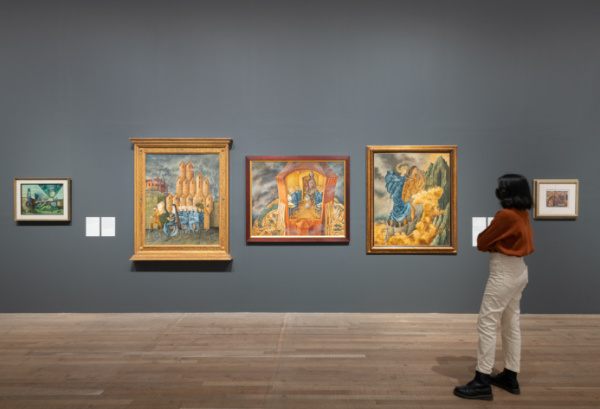
• Spanning 80 years and 50 countries, a new exhibition opening at the Tate Modern today takes an in-depth look at how Surrealism has inspired and united artists around the globe. Surrealism Beyond Borders, running at the Tate in partnership with New York’s Metropolitan Museum of Art, features more than 150 works ranging from painting and photography to sculpture and film, many of which have never been seen in the UK before. Among the highlights Cecilia Porras and Enrique Grau’s photographs, which defied the conservative social conventions of 1950s Colombia, and paintings by exiled Spanish artist Eugenio Granell, whose radical political commitments made him a target for censorship and persecution. There’s also iconic works such as Max Ernst’s Two Children are Threatened by a Nightingale (1924) and lesser known, but significant, pieces such as Antonio Berni’s Landru in the Hotel, Paris (1932), and Toshiko Okanoue’s Yobi-goe (The Call) (1954). Runs until 29th August in the Eyal Ofer Galleries. Admission charge applies. For more, see www.tate.org.uk/whats-on/tate-modern/exhibition/surrealism-beyond-borders.
• A “bold” new artwork by Nigerian-born artist, Victor Ehikhamenor, has gone on display in the crypt of St Paul’s Cathedral. The specially-commissioned mixed-media work is part of 50 Monuments in 50 Voices, a partnership between St Paul’s Cathedral and the Department of History of Art at the University of York which involves inviting contemporary artists, poets, musicians, theologians, performers and academics to respond to 50 historic monuments across the cathedral. Still Standing combines rosary beads and Benin bronze hip ornament masks to depict an Oba (King) of Benin and was made in response to a 1913 brass memorial panel commemorating Admiral Sir Harry Holdsworth Rawson (1843-1910) which is in the Nelson Chamber of the Cathedral’s Crypt. Rawson had a long career in the Royal Navy which culminated in his commanding the Benin Expedition of 1897. The work is on show until 14th May. Admission charge applies. For more, head to https://pantheons-st-pauls.york.ac.uk/50-monuments-in-50-voices/.
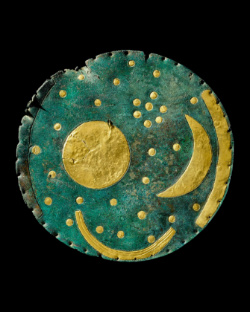
Nebra Sky Disc, Germany, about 1600 BC. PICTURE: Courtesy of the State Office for Heritage Management and Archaeology Saxony – Anhalt, Juraj Lipták.
• The UK’s first major exhibition on the story of Stonehenge opens at the British Museum today. The World of Stonehenge features more than 430 objects gathered from across Europe including Bronze Age grave goods unearthed near Stonehenge in the grave of a man known as the Amesbury Archer, the Nebra Sky Disc – the oldest surviving representation of the cosmos anywhere in the world, and the 4,000-year-old wooden monument, called Seahenge, that was discovered in 1998 on a Norfolk beach (and is being loaned for the exhibition for the first time). Admission charge applies. The exhibition can be seen in the Sainsbury Exhibitions Gallery until 17th July. For more, see www.britishmuseum.org/exhibitions/world-stonehenge
• The contribution people of Caribbean heritage have made to London’s transport history is the subject of a new exhibition at the London Transport Museum in Covent Garden.Legacies: London Transport’s Caribbean Workforce features personal oral histories from past and present generations of people of Caribbean descent along with newly commissioned and re-edited films, archive photography, historic advertising posters, and objects such as a Syllabus of Training for Cooks manual from staff canteens. The exhibition is expected to run until summer 2024. Included in general admission. For more, see www.ltmuseum.co.uk/legacies.
Send all items for inclusion to exploringlondon@gmail.com
• The extraordinary story of 18th century foundling and sailor George King, who fought in the Battle of Trafalgar, is the subject of a new exhibition opening at the Foundling Museum in Bloomsbury tomorrow.Fighting Talk: One Boy’s Journey from Abandonment to Trafalgar features King’s hand-written account of his life, a fragment of the flag from Nelson’s coffin, letters between the Foundling Hospital’s matron and Lady Emma Hamilton (annotated by Nelson himself) and two rare Naval General Service Medals, of which only 221 were awarded retrospectively when the medal was first issued in 1849, belonging to King and the foundling William South, who served aboard HMS Victory. There is also a display of works by contemporary artist and photographer Ingrid Pollard – Ship’s Tack – which reflects on the Foundling Hospital’s connections with Empire, trade and the Navy and which includes newly commissioned work responding directly to George’s autobiography. Runs until 27th February. Admission charge applies. For more, see www.foundlingmuseum.org.uk.
• Two Guildhall statues portraying figures with links to the slave trade will be retained but have information added detailing those links. The City of London Corporation’s Court of Common Council voted last week to keep the statues of William Beckford and Sir John Cass which will have plaques or notices placed alongside them containing contextual information about the two men’s links to slavery. William Beckford was an 18th century slave owner and two-time Lord Mayor of London, while Cass – an MP and philanthropist – was a key figure in the Royal African Company, which traded in slaves in the 17th and 18th centuries. Sir John Cass’s Foundation Primary School in the City and the nearby Cass Business School have already changed their names to remove the association with their founder and his links to slavery.
• French underwater photographer and biologist Laurent Ballesta has won the Natural History Museum’s Wildlife Photographer of the Year for an image showing camouflage groupers exiting their milky cloud of eggs and sperm in Fakarava, French Polynesia. The image was selected out of 50,000 entries from 95 countries and is being displayed with 100 images in an exhibition opening at the museum on Friday. Meanwhile 10-year old Vidyun R Hebbar, who lives in Bengaluru, India, was awarded the Young Wildlife Photographer of the Year 2021 for his colourful image, Dome home, showing a tent spider as a tuk-tuk passes by. The exhibition can be seen until 5th June next year. Admission charge applies. For more, see www.nhm.ac.uk/visit/exhibitions/wildlife-photographer-of-the-year.
Send all items for inclusion to exploringlondon@gmail.com.
Piccadilly Circus lies at the heart of London’s West End. PICTURE: Sheep purple (licensed under CC BY 2.0)
This term is used to describe what was traditionally the western end of London as it developed beyond the City of London boundaries and has since became a word synonymous with the city’s theatre district.
The term’s origins are lost to history although it’s said it first started being used in earnest to describe fashionable areas to the west of Charing Cross in the late 17th or early 18th centuries. The term as it’s used today covers an area which contains the commercial and entertainment heart of London.
While the eastern boundary of the West End can be easily defined as where the City of London ends (Temple Bar on the Strand marks the City of London’s boundaries), thanks to its not being a formally designated geographic area, exactly where the West End finishes is a matter of considerable debate.
While the some see the West End only including Theatreland itself – an area stretching from Aldwych across to Piccadilly Circus and north from Trafalgar Square to Oxford Circus, others have adapted a broader definition which sees include not only Aldwych, Soho and Covent Garden but also Mayfair, Fitzrovia and Marylebone with Oxford Circus at the centre (some even go further and include districts such as Bloomsbury and Knightsbridge in their definition of the West End).
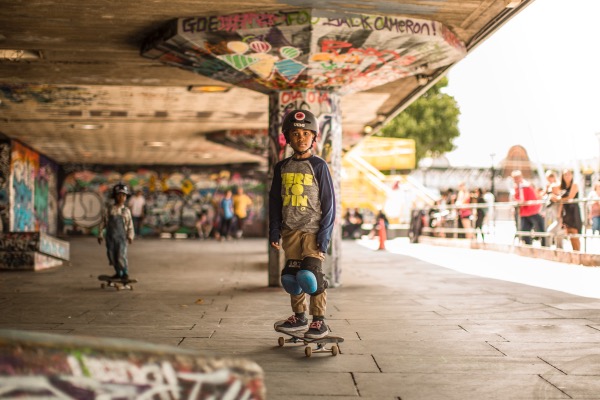
• A celebration of skateboarding and its impact on communities and culture of the past 45 years is underway at Somerset House.No Comply: Skate Culture and Community is a free exhibition featuring imagery from some of the world’s foremost photographers capturing skateboarding scenes from across the UK as well as early editions of skateboarding titles like Alpine Sports, Read and Destroy (R.A.D) and Skateboard!, and original film commissions including a new short film from London-based director Dan Emmerson and a new short by skate videographer Sirus f Gahan. The display also explores the influence of skateboarding on mainstream culture – everything from fashion brands to video games – and uses archival objects, photographs and personal anecdotes to share stories from skate communities in the UK and beyond as well as those of skateboarding-related non-profit initiatives including Free Movement Skateboarding and SkatePal. Runs until 19th September; pre-booking required. For more, see www.somersethouse.org.uk.
• On Now: More! Oliver Twist, Dickens and Stories of the City. This exhibition at the Charles Dickens Museum in Doughty Street, Bloomsbury, showcases a selection of letters, illustrations, postcards and photos – including a provocative artwork by artist Cold War Steve – as it explores the story of Oliver Twist and the inspiration behind it. Can be seen until 17th October; admission charge applies. For more, see https://dickensmuseum.com.
Send all items for inclusion to exploringlondon@gmail.com.
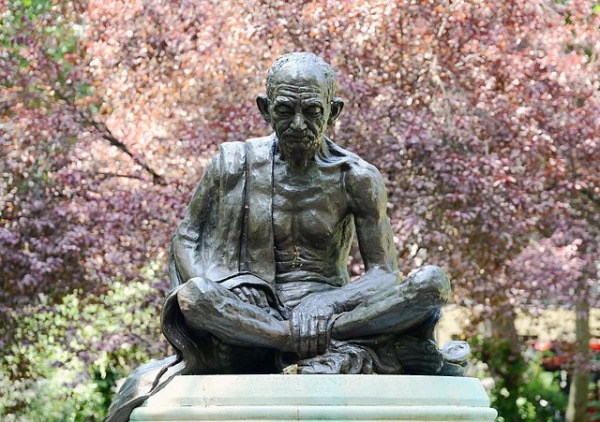
There’s a couple of statues commemorating Mahatma Gandhi in London with the most recent one was unveiled in Parliament Square in 2015.
But this week we head Bloomsbury where we find an older one in the centre of the gardens in Tavistock Square.
The work of Fredda Brilliant, it was unveiled by then Prime Minister Harold Wilson in May, 1968. Also present was the first High Commissioner of India to the UK after independence, VK Krishna Menon, and the then-current High Commissioner of India to the United Kingdom, Shanti Swaroop Dhavan.
Menon apparently chose the location for the statue – Gandhi had studied at the nearby University College London between 1888 and 1891.
Gandhi, who was assassinated in 1948 after having playing an instrumental role in the push for India’s independence, is depicted sitting in a cross-legged in the lotus position wearing a loincloth with a shawl over his right shoulder. The statue sits atop a rounded Portland stone plinth.
The memorial was erected by the Mahatma Gandhi Memorial Committee, with the support of the India League. It was Grade II-listed in 1974.
A further plaque was added beneath the statue in 1996 commemorating the 125th anniversary of the birth of Gandhi.
• A new family friendly exhibition celebrating Paddington Bear opens at the British Library tomorrow. The Story of a Bear features more than 50 books, documents, film clips and original artworks as it explores Michael Bond’s creation of the much loved children’s book character. Highlights include a first edition of Bond’s A Bear Called Paddington published in 1958, Barbara Ker Wilson’s original review of the book, photographs and memorabilia of Michael Bond on loan from his family as well as original illustrations of Paddington stories by artists including Peggy Fortnum, David McKee and RW Alley. There are also clips from the Paddington movies and sound recordings featuring Bond speaking about his creation. The exhibition is ticketed (booking in advance recommended). Admission charge applies. For more, see www.bl.uk/events/paddington-the-story-of-a-bear.
• Pioneering neurologist James Samuel Risien Russell has been honoured with an English Heritage Blue Plaque at his former home and practice in Marylebone. Russell, born in 1863 in what was then British Guiana (now Guyana), was one of the UK’s first Black consultants and played a critical role in establishing the British school of neurology in the 1890s. His contribution in furthering our understanding of many conditions of the nervous system and mental health issues has only recently come to light thanks to new research by the Windrush Foundation. Dr Risien Russell lived and worked at 44 Wimpole Street from 1902 until his death in March, 1939. For more, see www.english-heritage.org.uk/visit/blue-plaques.
• A display of images from Sir Quentin Blake have gone on show at the Foundling Museum in Bloomsbury to mark his gift of 24 drawings to the museum. Curated by children’s author and illustrator Lauren Child, Quentin Blake: Gifted features pictures form two series – Children and Dogs and Children with Birds & Dogs – as well as a range of responses from writers including poetry collective 4 BROWN GIRLS WHO WRITE, children’s author and poet Michael Rosen and Scottish playwright, poet and novelist Jackie Kay. Admission charge applies. Runs until 26 September. For more, see https://foundlingmuseum.org.uk/events/quentin-blake-gifted/.
Send all items for inclusion to exploringlondon@gmail.com.
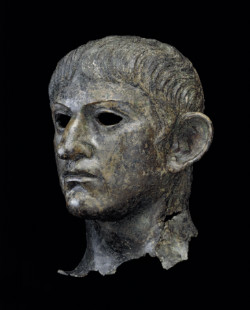
• A bronze head of the Roman Emperor Nero found in the River Alde in Suffolk – long wrongly identified as being that of the Emperor Claudius – and the Fenwick Hoard – which includes Roman coins, military armlets and jewellery – are among the star sights at a new exhibition on Nero at the British Museum.Nero: the man behind the myth is the first major exhibition in the UK which takes Rome’s fifth emperor as its subject. The display features more than 200 objects charting Nero’s rise to power and his actions during a period of profound social change and range from graffiti and sculptures to manuscripts and slave chains. Other highlights include gladiatorial weapons from Pompeii, a warped iron window grating burnt during the Great Fire of Rome of 64 AD, and frescoes and wall decorations which give some insight into the opulent palace he built after the fire. The exhibition, which opens today, runs until 24th October in the Sainsbury Exhibitions Gallery. Admission charge applies. For more, see www.britishmuseum.org/whats_on/exhibitions/nero/events.aspx.
• The office of late theoretical physicist Professor Stephen Hawking will be recreated at the Science Museum, it was announced this week. The contents of the office, which Hawking, the author of the best-selling A Brief History of Time, occupied at Cambridge’s department of applied mathematics and theoretical physics from 2002 until shortly before his death in 2018, includes reference books, blackboards, medals, a coffee maker and Star Trek mementoes as well as six of his wheelchairs and the innovative equipment he used to communicate. The museum, which reportedly initially plans to put the objects on display in 2022 and later recreate the office itself, has acquired the contents through the Acceptance in Lieu scheme, which allows families to offset tax (his archive will go to the Cambridge University Library under the same scheme).
• Nineteenth century civil engineer Ardaseer Cursetjee Wadia – the first Indian Fellow of the Royal Society – has been honoured with an English Heritage Blue Plaque at his former Richmond home. The plaque, which can be found on 55 Sheen Road – the villa Cursetjee and his British family moved to upon his retirement in 1868, was installed to mark the 180th anniversary of his election as a Fellow of the Royal Society. Cursetjee is considered the first modern engineer of India and was the first Indian at the East India Company to be placed in charge of Europeans. He was at the forefront of introducing technological innovations to Mumbai including gaslight, photography, electro-plating and the sewing machine. Cursetjee first visited London in 1839 and travelled regularly been Mumbai (formerly Bombay) and London until his retirement. For more, see www.english-heritage.org.uk/visit/blue-plaques.
Send all items for inclusion to exploringlondon@gmail.com.
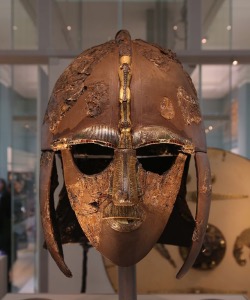
This spectacular Anglo-Saxon helmet – perhaps the most famous Anglo-Saxon object in a museum today – was among the finds made at the Sutton Hoo burial site in Suffolk in the late 1930s, the story of which is told in the current Netflix film, The Dig.
The Sutton Hoo helmet in the British Museum in 2016. PICTURE: Geni (licensed under CC BY-SA 2.0)
The ornately decorated helmet, the manufacture of which is dated to the late 6th or early 7th century, was found buried in the grave mound of an important figure whom some believe was an East Anglian king named Rædwald. The grave mound had been constructed over a ship containing the body and artefacts including the helmet. The ship itself had disintegrated but its imprint was uncovered during the excavation.
Excavated in hundreds of corroded fragments, the iron and bronze helmet, which is believed to have weighed about 2.5 kilograms, was painstakingly reassembled in the mid-1940s to reveal a helmet featuring cheek and neck guards and a mask with sculpted facial features including a nose, eyebrows and moustache as well as holes for the eyes. It features a number of other decorative elements including representations of dragons and warriors as well as geometric patterns. Gold and silver were used in the decorations.
The helmet underwent a second reconstruction in the early 1970s after issues were identified with the first.
The helmet, along with other artefacts found at the site, were deemed to be the property of Suffolk landowner Edith Pretty who subsequently donated it to the British Museum. It is on permanent display in Room 41 of the museum.
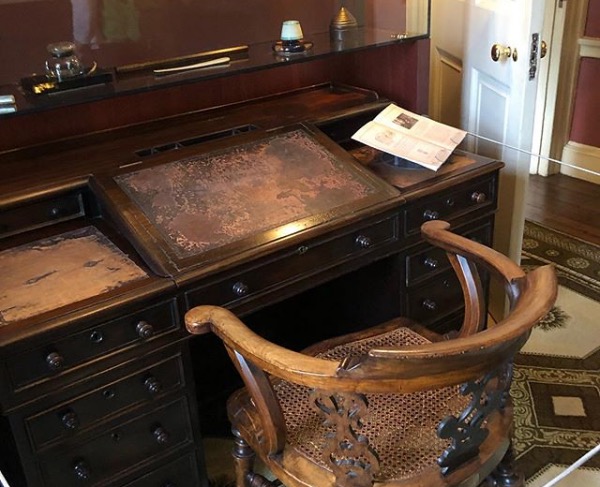
Charles Dickens’ desk and chair at the Charles Dickens Museum. PICTURE: Alyx Dellamonica (Licensed under CC BY-NC 2.0)
Among the treasures to be found at Dickens’ former house (and now the Charles Dickens Museum) in Doughty Street, Bloomsbury, is the desk and accompanying chair where Dickens’ wrote several of his later novels including Great Expectations, Our Mutual Friend and the unfinished The Mystery of Edwin Drood.
Dickens purchased the mahogany pedestal writing desk as well as the walnut and fruitwood smoker’s armchair in 1859. He used them in the study of his final home at Gad’s Hill Place in Kent (Dickens also had an identical chair in his London office which is now in the New York State Library).
After the author’s death in 1870, the desk and chair – which feature in Luke Fildes’ 1870 work The Empty Chair and the RW Buss’ 1875 work Dickens’ Dream – were passed down through the Dickens family until they was auctioned in the 2000s with the funds raised used to benefit the Great Ormond Street Hospital.
While the desk and chair had previously been loaned to the museum for display, in 2015 the establishment was able to purchase the desk and chair and make it part of its permanent collection thanks to a £780,000 grant from the National Heritage Memorial Fund.
While the museum is currently closed due to the coronavirus pandemic, we include these details for when it reopens.
WHERE: 48-49 Doughty Street, Bloomsbury (nearest Tube stations are Russell Square, Chancery Lane or Holborn). WHEN: Currently closed; COST: £9.50 adults/£7.50 concessions/£4.50 children (under six free); WEBSITE: www.dickensmuseum.com.
• Statues of two prominent men with links to the trans-Atlantic slave trade will be removed from Guildhall, the City of London has said. The City of London Corporation’s policy and resources committee voted to remove statues of William Beckford and Sir John Cass following a recommendation from the corporation’s Tackling Racism Taskforce. The statue of Beckford, a two-time Lord Mayor of London in the late 1700s who accrued wealth from plantations in Jamaica and held African slaves, will be replaced with a new artwork while the likeness of Sir John Cass, a merchant, MP and philanthropist in the 17th and 18th centuries who also profited from the slave trade, will be returned to its owner, the Sir John Cass Foundation. The corporation will now set up a working group to oversee the removal of the statues and replacement works and will also consider commissioning a new memorial to the slave trade in the City.
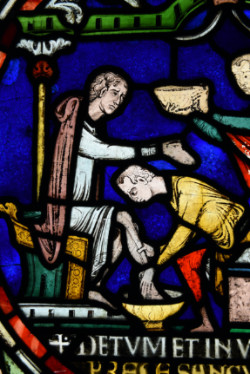
• An 800-year-old stained glass window from Canterbury Cathedral will form the centrepiece of an upcoming exhibition on Thomas Becket. Now scheduled for April after delays due to the coronavirus pandemic, Thomas Becket: murder and the making of a saint will feature more than 100 objects as it tells the story of Becket’s life, death and enduring legacy. The ‘Miracle Window’ – one of seven surviving from an original series of 12 – will be shown in its original arrangement of the first time in more than 350 years. The fifth in the series, it depicts miracles which took place in the three year after Becket’s death including the healing of eyesight and the replacement of lost genitals. The exhibition will represent the first time a complete stained glass window has been lent by the cathedral. Details of tickets will be announced soon. For more, see www.britishmuseum.org/becket.
• The Worshipful Company of Weavers this week announced the donation of £100,000 towards the creation of the new Museum of London in former market buildings at West Smithfield. The donation is one of the largest ever awarded by the livery company which, having a Royal charter dating from 1155, is the oldest surviving. The masterplan for the new museum received planning permission in June last year.
Banners loaned from Southall Black Sisters, Bishopsgate Institute, People’s History Museum, Sisters Uncut, Feminist Archive South (Courtesy of the British Library)
• The history of the women’s rights movement and the work of contemporary feminist activists is the subject of a new exhibition opening at the British Library tomorrow. Unfinished Business: The Fight for Women’s Rights, the opening of which was delayed due to the coronavirus pandemic, features everything from personal diaries and banners to subversive literature, film, music and art. Highlights include protest poems written by Sylvia Pankhurst on toilet paper in Holloway Prison following her imprisonment for seditious activity in January 1921, a first edition of Jane Austen’s debut novel, Sense and Sensibility, published anonymously ‘By a Lady’ in 1811, and, football boots belonging to Hope Powell, a veteran player who became the first woman to manage England Women in 1998. There’s also records of surveillance carried out on Sophia Duleep Singh, one of Queen Victoria’s god-daughters and a supporter of campaigns for women’s suffrage, and a piece of fence wire cut by writer Angela Carter’s friends and sent to her as a present from RAF Greenham Common in Berkshire where they were protesting against nuclear missiles. Runs until 21st February next year. Admission charge applies. For more, see www.bl.uk.
• Like a good ghost story? Hampton Court Palace is launched a new self-guided ‘Creepy Stories and Ghostly Encounters’ trail on Saturday. The trail takes in sites including those where the ‘Grey Lady’ – said to be the ghost of Tudor nursemaid – has appeared since Victorian times, the locations said to be haunted by two of King Henry VIII’s queens – Jane Seymour and Catherine Howard, and the site where a spectral figure was captured on film slamming shut a door in 2003. The palace is also unveiling a new display of carved pumpkins in the Royal Kitchen Garden. Entry charge applies. For more, see www.hrp.org.uk/hampton-court-palace/.
• The first major exhibition on the history of the Arctic and its Indigenous people, through the lens of climate change and weather, has opened at the British Museum. The Citi exhibition, Arctic: culture and climate, reveals how Arctic people have adapted to climate variability in the past and are facing today’s weather challenges. It features everything from rare archaeological finds, unique tools and clothing as well as artworks and contemporary photography with highlights including an eight-piece Igloolik winter costume made of caribou fur and an Inughuit (Greenlandic) sled made from narwhal and caribou bone and pieces of driftwood which was traded to Sir John Ross on his 1818 expedition as well as artworks commissioned specifically for the exhibition. These include an Arctic monument of stacked stones, known as an Inuksuk – used to mark productive harvesting locations or to assist in navigation – which was built by Piita Irniq, from the Kivalliq Region of Nunavut, Canada. Can be seen in the Sainsbury Exhibitions Gallery until 21st February. Admission charge applies. For more, see www.britishmuseum.org.
Send all items for inclusion to exploringlondon@gmail.com.
• The life and work of Richard Leveridge, a leading singer of the London stage during the 18th century, is the subject of a new display opening at the Foundling Museum in Bloomsbury tomorrow. The display, which can be seen in the Handel Gallery, charts the life of this popular theatre singer who became the lead bass singer at Drury Lane Theatre in 1695 and sang for Purcell in many of his stage works as well as, later, singing in the first performances of Handel’s early London operas. It also includes a look at Leveridge’s work as a composer and coffee shop owner and among items on show are manuscripts, early printed music, artworks, copies of drinking songs and stage works, contemporary accounts and formal portraits. Runs until 28th March. Admission charge applies. For more, see https://foundlingmuseum.org.uk
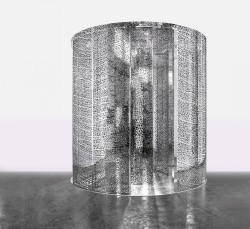
• The first solo exhibition by Dutch-born, Mexico-based visual artist Jan Hendrix to be held in the UK opens in Kew Gardens’ Shirley Sherwood Gallery of Botanical Art next week.Paradise Lost features new works in a number of mediums created as a responser to the transformation of the landscape known as Kamay Botany Bay, in Sydney, Australia (which gained its English name – Botany Bay – from plants collected and recorded there in 1770 by European botanists Sir Joseph Banks – Kew Gardens’ first director – and Daniel Solander abroad the HMS Endeavour). Reflecting on how the visit of the Endeavour sparked a transformation of the region – from a pristine environment to what is now a suburban and industrial landscape, the exhibition explores themes including the destruction of the natural world in the wake of colonial industrialisation, contemporary urbanisation and climate change. New works include a vast monochrome tapestry evoking the dynamic texture and beauty of an Australian landscape threatened by wildfire – which ravaged the region in 2019 – as well as the display’s centrepiece – a huge walk-through mirrored pavilion inspired by two plant species that grow in Kamay Botany Bay – Banksia serrata or Wiriyagan (Cadigal) and Banksia solandri, and a moving image work created by Hendrix in collaboration with filmmaker Michael Leggett. A visual tour narrated by the artist will be made available online for those not able to visit in person. Runs from 3rd October until 13th March. Admission charge applies. For more, head to www.kew.org. PICTURE: Mirror Pavilion III, 2020, Stainless Steel by Jan Hendrix/Kew Gardens
• FURTHER AFIELD:Princess Beatrice of York’s wedding dress, first worn by Queen Elizabeth II in the 1960s, goes on display at Windsor Castle from today. Designed by Sir Norman Hartnell, the dress was first worn by the Queen during a State Visit to Rome in 1961 and was altered for Princess Beatrice for her marriage to Edoardo Mapelli Mozzi on 17th July this year. The display, which can be seen in the State Dining Room, also features Princess Beatrice’s wedding shoes, made by Valentino, and a replica of her bouquet. Can be seen until 22nd November. Admission charge applies. For more, see www.rct.uk.
Send all items for inclusion to exploringlondon@gmail.com





 Exploring London