Four sites related to royal coronations in London – 1. The Jewel House…

In the lead-up to the coronation of King Charles III and Queen Consort Camilla on 6th May, we’re taking a look at sites in London which have played an important role in coronations past (and, mostly, in this coronation as well).

First up, it’s the Tower of London’s Jewel House which is linked to the coronation through the role it plays in housing the Crown Jewels and, more specifically, the Coronation Regalia.

The entrance to the Jewel House in the Waterloo Block. PICTURE: Dave Campbell (licensed under CC BY-NC-ND 2.0)

The centrepiece of the Crown Jewels is St Edward’s Crown, with which King Charles will be crowned in Westminster Abbey.

The crown, which has already been removed from the Tower of London so it could be resized for the occasion, is made from 22 carat gold and adorned with some 444 precious and semi-precious gems. Named for St Edward the Confessor, it dates from 1661 when it was made for the coronation of King Charles II and replaces an earlier version melted down after Parliament abolished the monarchy in 1649.

The crown was subsequently used in 1689 in the coronation of joint monarchs King William III and Queen Mary II and then not used again until 1911 when as used to crown King George V. It was also used to crown King George VI and Queen Elizabeth II in 1953.

St Edward’s Crown is not the only crown that will be used in the coronation ceremony – the King will also wear the Imperial State Crown at the end of the service.

Made by Garrard and Company for the coronation of King George VI in 1937 (replacing a crown made for Queen Victoria in 1838), it features the Black Prince’s Ruby in the front – said to have been a gift to Edward, the Black Prince, in 1357 from the King of Castile.

Further gems in the crown include the Stuart Sapphire, the Cullinan II Diamond and St Edward’s Sapphire, said to have been worn in a ring by St Edward the Confessor and found in his tomb in 1163.

Among other items which will be used in the coronation are the Sovereign’s Sceptre with Cross, the Sovereign’s Orb, and the Coronation Spoon.

The sceptre was made for King Charles II and now features the world’s largest diamond, the Cullinan Diamond, which was added to it in 1911. The orb was also made for King Charles II’s coronation and is topped with a cross.

The spoon, meanwhile, is one of the oldest items in the Crown Jewels, dating from the 12th century. It is used for anointing the new sovereign with holy oil – which comes from the Church of the Holy Sepulchre in Jerusalem – during the ceremony. It survived the abolition of the monarchy after it was purchased by a member of King Charles I’s wardrobe and later returned to King Charles II after the monarchy. The oil is held in a golden vessel known as an ampulla which is shaped like an eagle.

Other items to be used in the coronation are a series of swords – among them the Sword of State, the Sword of Temporal Justice, the Sword of Spiritual Justice, and the Sword of Mercy (this has its tip blunted to represent the Sovereign’s mercy).

The regalia was housed at Westminster Abbey until 1649. They have been kept at the Tower of London since the Restoration (even surviving a theft attempt by Colonel Thomas Blood and accomplices in 1671).

The Crown Jewels, which are now held under armed guard, have been housed in several different locations during their time at the Tower of London including in the Martin Tower and the Wakefield Tower. They were moved into a subterranean vault in the western end of the Waterloo Block (formerly the Waterloo Barracks), now known as the Jewel House (and not to be confused with The Jewel Tower in Westminster), in 1967.

A new Jewel House was opened by Queen Elizabeth II on the ground floor of the former barracks in 1994. The exhibit was revamped in 2012 and following King Charles III’s coronation, the display is again being transformed with a new exhibition exploring the origins of some of the objects for the first time.

WHERE: The Jewel House, Tower of London (nearest Tube station Tower Hill); WHEN: 9am to 4.30pm (last admission), Tuesday to Saturday, 10am to 4.30pm (last admission) Sunday to Monday; COST: £29.90 adults; £14.90 children 5 to 15; £24 concessions (family tickets available; discounts for online purchases/memberships); WEBSITE: https://www.hrp.org.uk/tower-of-london/whats-on/the-crown-jewels/.

LondonLife – Taking flight…

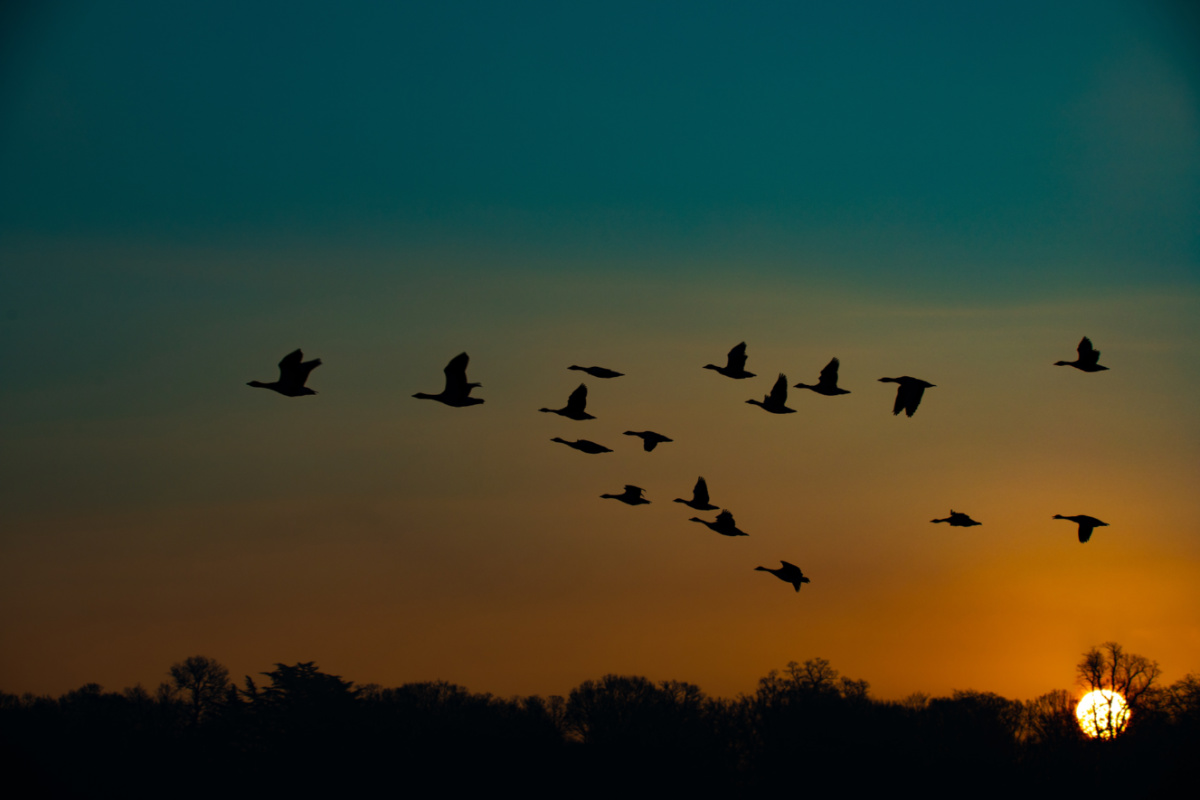
Geese in Richmond Park. PICTURE: John Cox/Unsplash

This Week in London – The Georgian court meets contemporary fashion; the Rossettis at Tate Britain; and, the Lindt Gold Bunny Hunt returns…

We’re taking a short break for Easter and will be back on Tuesday!

The glittering world of the Georgian court and the glamour of the modern red carpet come together in a new exhibition at Kensington Palace. Crown to Couture sees contemporary fashion worn by the likes of celebrities like Lizzo and Lady Gaga displayed alongside historical costumes, drawing some fascinating parallels between the two worlds. More than 200 objects are included in the display in the State Apartments with highlights including the  Thom Browne dress worn by musician Lizzo to the 2022 Met Gala, Christopher John Roger’ luminous green gown worn by Lady Gaga to the 2020 MTV Awards, the Rockingham Mantua – brocaded in silver thread and silver lace trim and believed to have been worn by the wife of British Prime Minister, 2nd Marquess of Rockingham, in the 1760s, and the world-famous Silver Tissue Gown. On loan from the Fashion Museum Bath, the latter is a rare example of fashion worn at the court of Charles II and is believed to have been worn to court by a young Lady Theophila Harris, who later went on to become the wife of MP Sir Arthur Harris of Hayne. Runs until 29th October. Admission charge applies. For more, see www.hrp.org.uk/kensington-palace/whats-on/crown-to-couture.

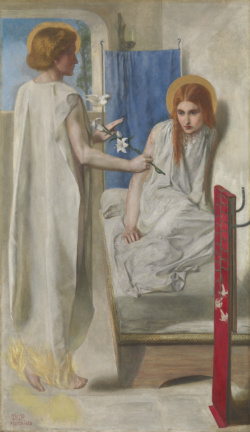
Dante Gabriel Rossetti
Ecce Ancilla Domini (The Annunciation) 1849-50
© Tate, Purchased 1886

A major exhibition charting the romance and radicalism of the Rossetti generation opens at Tate Britain today. The Rossettis – he first retrospective of Dante Gabriel Rossetti at Tate and the largest exhibition of his iconic pictures in two decades as well as the first full retrospective of Elizabeth Siddal for 30 years – features more than 150 paintings and drawings as well as photography, design, and poetry. Highlights include Dante Gabriel’s Ecce Ancilla Domine (The Annunciation) (1850), Elizabeth Siddal’s Lady Clare (1857) and Christina Rosetti’s famous poem The Goblin Market (1859). There’s also Aesthetic portraits from the later part of Dante Gabriel’s career, such as Bocca Baciata (1859), Beata Beatrix (c1864-70) and The Beloved (1865-73), as well as Lady Lilith (1866-8) and Mona Vanna (1866). Runs until 24th September. Admission charge applies. For more, see www.tate.org.uk/whats-on/tate-britain/the-rossettis.

The Lindt Gold Bunny Hunt is on again at Hampton Court Palace. Youngsters are invited to explore the palace’s 60 acres in a search for a series of hidden Lindt Gold Bunny statues, matching the name of an important character from the palace’s history with each bunny to unwrap a fascinating story. At the end of the experience, they’ll be rewarded with their own delicious Lindt Gold Bunny. Visitors to the palace will also encounter historic characters as the royal court compete with chocolatier Grace Tosier to help Prince George, the son of King George I, achieve his mission of sleeping-in, drinking chocolate and dancing all day. Runs until 16th April. Admission charge applies. For more, see www.hrp.org.uk/hampton-court-palace/whats-on/easter-lindt-gold-bunny-hunt/.

Send items to exploringlondon@gmail.com

LondonLife – Shad Thames walkways…


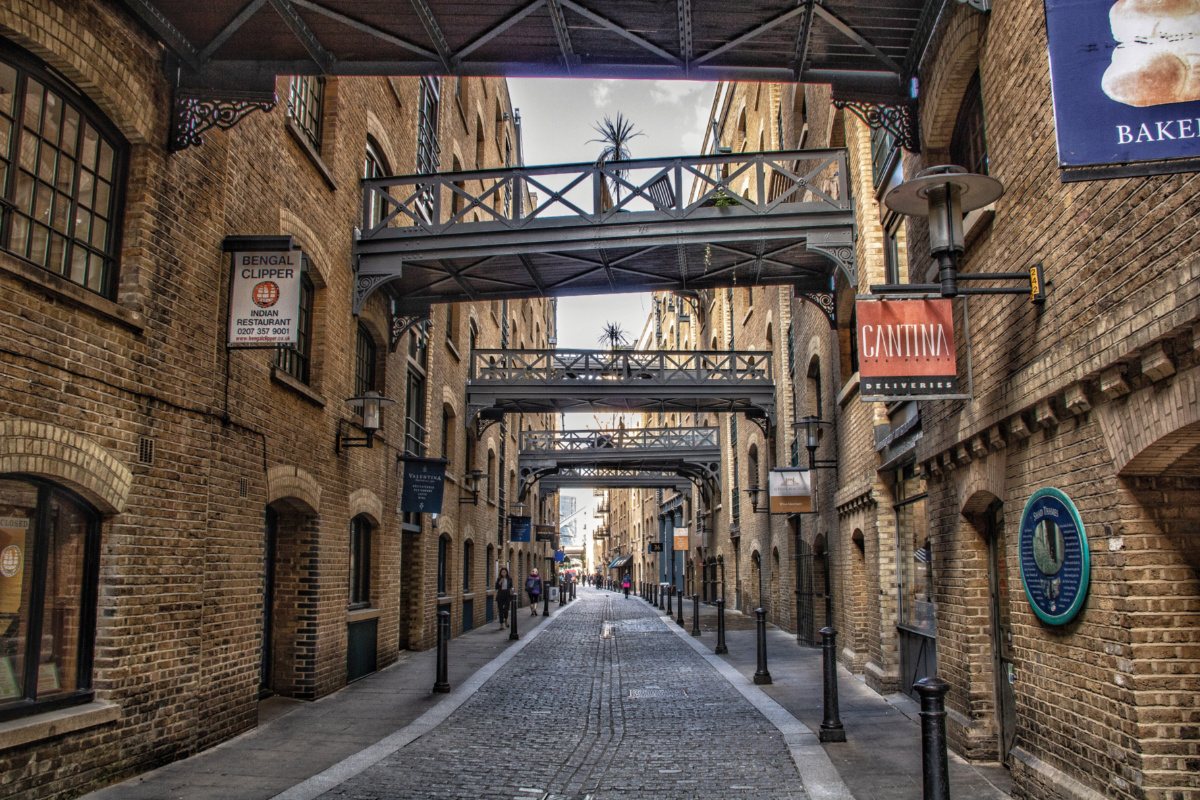
In Bermondsey. PICTURE: Nicolas Lysandrou/Unsplash

What’s in a name?…Amen Corner…

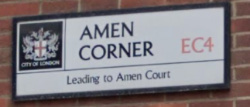
Located off Ave Maria Lane in the City of London is a tiny thoroughfare named Amen Corner.

This location of this short laneway – which leads to the U-shaped (and gated) Amen Court – makes the name no great surprise. It lies just to the north-west of St Paul’s Cathedral and is one of a number of religiously named streets in the area (others include Paternoster Lane, Paternoster Square, Paternoster Row and Canon Alley).

The corner apparently became so-named in relation to a prayer chanted by monks. It’s said that on the day of the Feast of Corpus Christi, the monks would process through the streets, chanting prayers as they did so.

The first prayer, the Lord’s Prayer, was started in Paternoster Row – itself named after the first couple of words in the prayer when recited in Latin (“Pater Noster” which translates as “Our Father”). The monks would then process westward and by the time they reached the corner of Paternoster Lane and Ave Maria Lane, they would be at the end of the prayer – “Amen”. Hence Amen Corner.

Amen Corner was, from 1614 until the Great Fire of London in 1666 when it was destroyed, the location of a three storey house which served as the headquarters of the the Royal College of Physicians.

Ave Maria Lane, meanwhile, is named after the next prayer the monks would recite after turning the corner – “Ave Maria” (Hail Mary”).

Amen Court, which isn’t accessible to the public, is home to a short terrace of 17th-century houses where the cathedral’s canons have traditionally lived.

At its western end is a wall which once marked the boundary of Newgate Prison and which itself has an interesting history. The spectral ‘Black Dog of Newgate’ was said to have been sighted crawling along its top just prior to an execution taking place in the prison.

This Week in London – Shakespeare’s First Folio; Charles Dickens and fog; and, Berthe Morisot at Dulwich…

The Dulwich College Folio. PICTURE: © Dulwich College

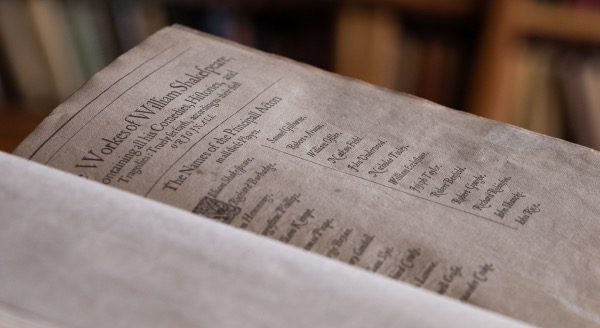
Shakespeare’s First Folio goes on display at the National Maritime Museum in Greenwich from tomorrow. The display is part of a national celebration of the 400th anniversary of the folio’s publication. Shakespeare’s First Folio was published in 1623, seven years after the playwright’s death. Some 235 copies are known to survive with 50 remaining in the UK. The version on display – the Dulwich College Folio, which includes the Comedies and Histories (but lack the Tragedies), is believed to have been acquired by the college in 1686 from the estate of William Cartwright, a bookseller and actor who performed with the King’s Company and is known to have played Brabantio in Othello and Falstaff in Henry IV Part I and Part II. The two volumes feature handwritten notes, ink and water stains, and burn holes, suggesting they were well-used before the college acquired them. The Tempest and the Thames can be seen until 24th September. Admission is free. For more, see www.rmg.co.uk/folio-400.

London’s fog and its reflection in Charles Dickens’ writings are the subject of a new exhibition opening at the Charles Dickens Museum in Bloomsbury. A Great and Dirty City: Dickens and the London Fog explores how the fog affected Dickens’ work, his health and that of his family, and how London has endeavoured to mitigate the problem of air pollution over the past couple of centuries. Among the items on display are the hearthstone Dickens laid in front of the fireplace in the Drawing Room, the fire poker from Dickens’ dining room at Gad’s Hill Place (his home from 1856 until his death in 1870), original first edition parts of Dickens’ ‘foggiest’ novel Bleak House, an original pen and wash illustration by Frederick Barnard depicting Martin Chuzzlewit, Mary Graham, and Mark Tapley, and, a letter from Dickens to his sister-in-law Helen Dickens in which he writes about his brother Alfred’s “inflammation in the region of the lungs” which is dated on 16th July, 1860 – just 11 days before Alfred’s death. Runs until 22nd October. Admission charge applies. For more, see https://dickensmuseum.com.

Forty of Impressionist painter Berthe Morisot’s works have been brought together for a new exhibition at the Dulwich Picture Gallery. Berthe Morisot: Shaping Impressionism, which opens tomorrow, is the first major UK exhibition of the renowned Impressionist since 1950 and features many works never seen before. Highlights include Eugène Manet on the Isle of Wight (1875) – painted while Morisot was on honeymoon in England, Self-Portrait (1885) – which will appear alongside Jean-Honoré Fragonard’s Young Woman (c.1769) from Dulwich Picture Gallery’s collection, Apollo revealing his divinity to the shepherdess Issé, after François Boucher (1892), In the Apple Tree (1890) and Julie Manet with her Greyhound Laerte (1893). Runs until 10th September. Admission charge applies. For more, see www.dulwichpicturegallery.org.uk.

Send all items to exploringlondon@gmail.com.

10 historic London homes that are now museums…10. Flamsteed House…

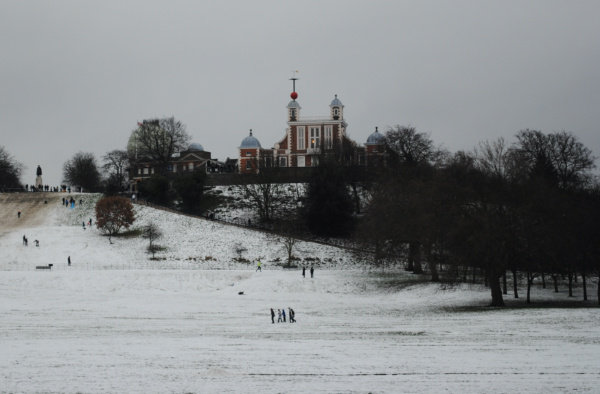
Flamsteed House from Greenwich Park. PICTURE: David Adams

Located at the heart of what is now known as the Old Royal Observatory in Greenwich is a residence, built for the first Astronomer Royal John Flamsteed and subsequently used by his successors to the post.

The property was built at the behest of King Charles II after he appointed Flamsteed to the post in March, 1675. Flamsteed, who initially worked out of the Queen’s House below, laid the foundation stone for the new property on 16th August that year.

Designed by Sir Christopher Wren and built under the supervision of Robert Hooke, the building was constructed on the foundations of the previous building on the site – known variously as Duke Humphrey’s Tower or Greenwich Castle) – and used bricks from spare stock at Tilbury Fort, and wood, iron and lead from a demolished gatehouse at the Tower of London.

Costing some £520, the three story property featured a large hall and parlour on the ground floor, a bedroom and study for the then-single Flamsteed, a basement kitchen and “astronomer rooms” while on the floor above was a single large, octagonal room, known initially as the “Great Room” and later as the “Octagon. Room”, featuring a series of tall windows through which Flamstead could conduct his observations of the heavens.

A telescope was mounted on the roof and two summerhouses, one of which contained Flamsteed’s camera obscura, were built on either side. Other buildings on the site during Flamsteed’s time included the adjoining Quadrant House and Sextant House (so-named for the equipment they housed).

The original property was extended several times and a series of additional buildings were also added to the site including what is now known as the Meridian Building (which incorporates not only Flamsteed’s Sextant House and Quadrant House but subsequent additions including apartments for an assistant, fireproof record rooms and domes to house equipment including the Telescope Dome.

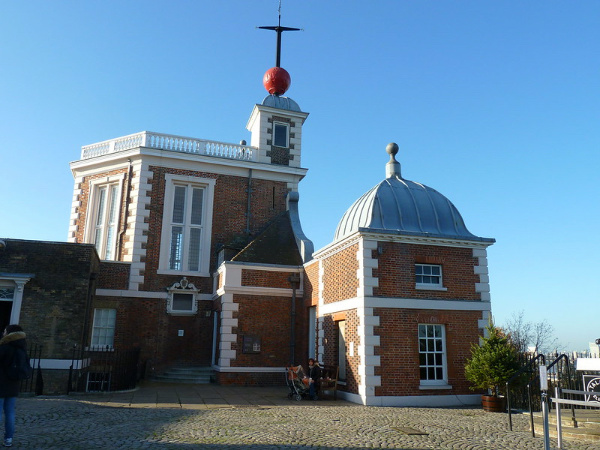
Flamsteed House. PICTURE: givingnot@rocketmail.com (licensed under CC BY-NC 2.0)

In 1946, the scientific work of the observatory was relocated to Herstmonceux in Sussex and the complex came under the management of the National Maritime Museum. In 1960, Flamsteed House was reopened as part of the museum; other buildings later followed suit.

The site was renovated in the early 1990s and reopened to the public as a museum in 1993.

These days Flamsteed House hosts displays about its construction as well as what life was like for those who lived there. Wren’s Octagon Room, which houses a collection of timepieces and astronomical instruments, remains a highlight.

Flamsteed House is now topped by a time-ball which was installed in 1919 (replacing an earlier one which was installed in 1833) and drops each day at 1pm.

WHERE: Flamsteed House, Royal Observatory Greenwich (nearest stations are Cutty Sark DLR and Greenwich and Maze Hill Stations); WHEN: 10am to 5pm daily; COST: £16 adults/£10 under 25s/students/£8 children; WEBSITE: www.rmg.co.uk/royal-observatory/attractions/flamsteed-house.

LondonLife – Empty platform…

St James’s Park Underground Station. PICTURE: William Rudolph/Unsplash

A Moment in London’s History – The coronation of King Henry V…

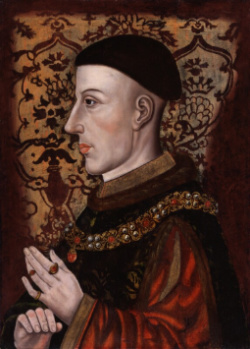
King Henry V by unknown artist
oil on panel, late 16th or early 17th century (NPG 545) © National Portrait Gallery, London

This year marks the 610th anniversary of the coronation of King Henry V and since we’re gearing up for another coronation, we thought it a good time to take a look back.

King Henry V, then 26-years-old, became king following the death of his father – King Henry IV – on 20th March, 1413. The coronation took place early the next month on 9th April at Westminster Abbey.

It just so happened there was a snowstorm that day, which some took to mean there were hard times ahead but which his supporters apparently saw as a good omen, the white-out a symbol of Henry’s holiness.

The ceremony in Westminster Abbey was followed by a feast in Westminster Hall.

It is said to have featured sugar sculptures of antelopes and eagles with illuminated texts extolling the virtues of the new king hanging from their mouths.

Guests were served by servants on horseback and, as was tradition, the King’s Champion rode into the hall and issued a challenge (which nobody took up).

There are two carvings depicting his coronation on his elaborate chantry chapel in the abbey.

The coronation hailed the start of Henry V’s short, nine-year reign, the most recalled aspect of which is his famous victory at the Battle of Agincourt in October, 1415.

This Week in London – ‘After Impressionism’; a new woodland for Richmond Park; and, a new exhibition at the Heath Robinson…

Paintings and sculptures by artists including Cézanne, Van Gogh, Rodin, Picasso, Matisse, Klimt, Kandinsky and Mondrian opens at The National Gallery on Saturday. After Impressionism: Inventing Modern Art features more than 100 paintings and sculptures from museums and private collections around the world spanning the period between 1886 and 1914. Highlights include André Derain’s La Danse, Edgar Degas’s Dancers in the Foyer, Paul Cézanne’s Grandes Baigneuses, Edvard Munch’s The Death Bed, Paul Gauguin’s Vision of the Sermon, Camille Claudel’s Imploration / l’Implorante, and Lovis Corinth’s Nana, Female Nude. Admission charge applies. Runs until 13th August. For more, see www.nationalgallery.org.uk/exhibitions/after-impressionism-inventing-modern-art.

Sir David Attenborough has planted an English oak tree to officially open the Platinum Jubilee Woodland, a new woodland in Richmond Park. The woodland has been created as part of The Queen’s Green Canopy initiative to celebrate and honour the late Queen Elizabeth II’s lifetime of service. Some 70 young trees have been planted in the woodland, including oak, Dutch elm-disease-resistant elm, small-leaved lime, and sweet chestnut trees, planted around a focal point which will later incorporate a seating area. Sir David’s tree is one of the last to be planted as part of The Queen’s Green Canopy initiative which concludes on 31st March. The project invited people from across the nation to plant trees in honour of Queen Elizabeth II to mark the Platinum Jubilee and benefit future generations. For more on the park, see www.royalparks.org.uk/parks/richmond-park.

Illustrative works by William Heath Robinson, Charles Robinson and Thomas Health Robinson, many of which have not be exhibited before, are on show in a new exhibition at the Heath Robinson Museum in Pinner. The works, which come from the collection of Martin and Joanne Verden, include original drawings for Railway Ribaldry and William Heath Robinson’s How to… series of books. Admission charge applies. Runs until 21st May. For more, see www.heathrobinsonmuseum.org.

Send all items for inclusion to exploringlondon@gmail.com.

10 historic London homes that are now museums…9. Turner’s House…

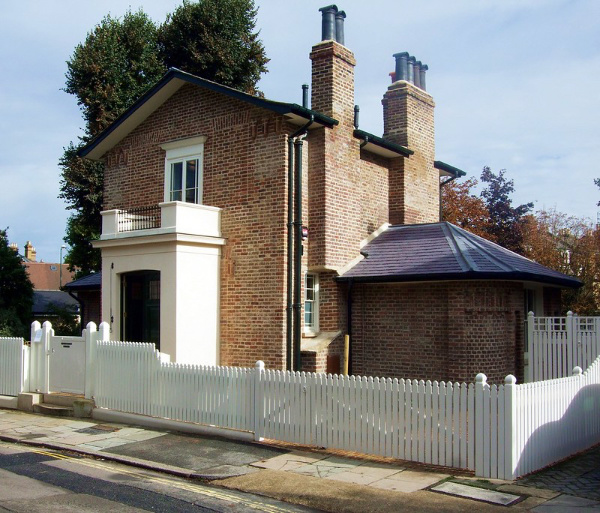
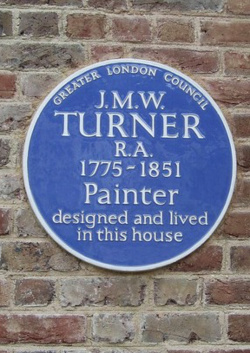
PICTURES: Jim Linwood (licensed under CC BY 2.0)

Located close to the River Thames in south-west London, Sandycombe Lodge was designed and built by the artist JMW Turner as a country retreat.

The Twickenham property, which was constructed in 1812-13 on land the famed “painter of light” had bought six years earlier, also provided a home for Turner’s father, ‘Old William’, who was a retired Covent Garden barber and wigmaker. Old William would tend the garden and keep the house when Joseph Mallord William Turner, who is best known for his expressive landscapes and marine paintings, wasn’t present.

The finished property featured a large sitting room overlooking the expansive garden. It was initially known as Solus Lodge and the name later changed to Sandycombe.

Turner would use the home as a base for sketching and fishing trips. He painted many scenes of local landscapes including, notably, England: Richmond Hill on the Prince Regent’s Birthday in 1819.

Among those who visited Turner at the property was his friend and fishing companion, Sir John Soane (his influence can be seen on the home’s design in features such as the use of arches inside and the skylight above the stairs).

Turner, who also had a property in Cheyne Walk, Chelsea, where he died in 1851, only had the house for 13 years – with his father’s health declining and his own touring schedule which meant he wasn’t able to spend as much time at the property as he would have liked, Turner sold Sandycombe in 1826 to his neighbour Joseph Todd. Todd, the owner of Twickenham Park, enlarged the villa and rented it out.

It subsequently passed through numerous hands (the large grounds around gradually diminishing).

Used as a factory for making goggles in World War II, it was in a poor state when purchased by Professor Harold Livermore and his wife Ann in 1947. In the 1950s, they secured a Grade II*-listing for the property and later set up the The Sandycombe Lodge Trust, now Turner’s House Trust, in 2005.

On Livermore’s death in 2010 at the age of 95, the trust became the owner of Sandycombe. Following a significant restoration which aimed to take the house back to Turner’s original designs and which was completed in 2017, it opened to the public as a museum.

Displayed in the house are some of Turner’s sketches as well as model ships he used in creating his art. A ‘speaking clock’ captures recollections of friends and Old William is brought to life digitally in the basement. What remains of the gardens have also been restored.

The house features an English Heritage Blue Plaque.

WHERE: Sandycombe Lodge, 40 Sandycoombe Road, St Margarets, Twickenham (nearest rail is St Margarets; nearest Tube station is Richmond); WHEN: 12pm to 4pm Wednesday to Sunday (until 2nd July); COST: £8 adults/£3 child (3 to 15 years)/£17 family; WEBSITE: https://turnershouse.org.

LondonLife – Ending looms for ‘Executions’ at Museum of London Docklands…

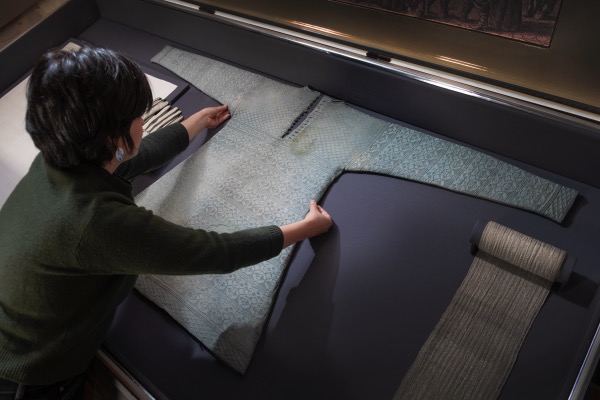
An executioner’s axe is among items on show at the Executions exhibition, Museum of London Docklands. ALL IMAGES: Courtesy of Museum of London Docklands.

Museum of London Docklands’ major exhibition, Executions, has less than a month to run, closing on 16th April. This week sees a special late opening on Friday night (24th March) with a candlelit evening featuring screenings, pop-up talks and tours. There will be execution ballads sung live and a selection of exhibition-inspired drinks available as visitors have the chance to explore some of London’s grisly past before the doors clang shut for good. For more, see www.museumoflondon.org.uk/museum-london-docklands/whats-on/exhibitions/executions.

Laying out the vest King Charles I was executed in.
‘Final clothes’ and the Newgate prison door on display in the exhibition.

London Pub Signs – The Spanish Galleon…

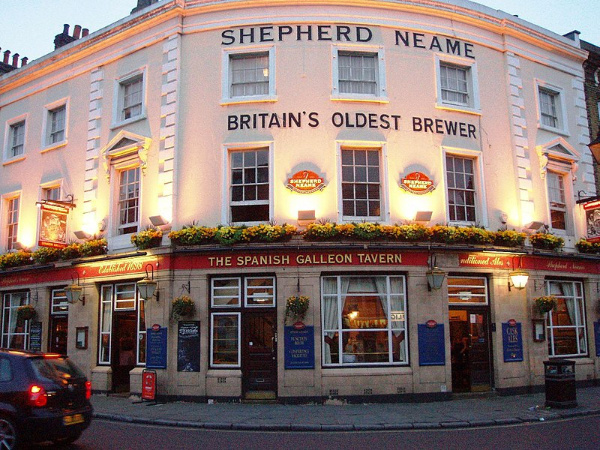
PICTURE: Ewan Munro (licensed under CC BY-SA 2.0)

This early 19th century pub was built in the Regency style as part of a redevelopment of central Greenwich.

The redevelopment was undertaken by architect Joseph Kay in the 1830s while he served as clerk of works to what was then Greenwich Hospital (now known as the Old Royal Naval College).

Its name, one of a number of nautical names for pubs in the area, purportedly comes from the pictures of British naval victories at the hospital.

The pub received minor damage during the Blitz.

Located at 1 College Approach, the pub has been Grade II-listed since 1973. In 2012, the pub underwent a refurbishment.

Part of the Shepherd Neame chain. For more, see www.spanishgalleon.co.uk.

Treasures of London – Coalbrookdale Gates…

Christine Matthews (licensed under CC BY-SA 2.0)

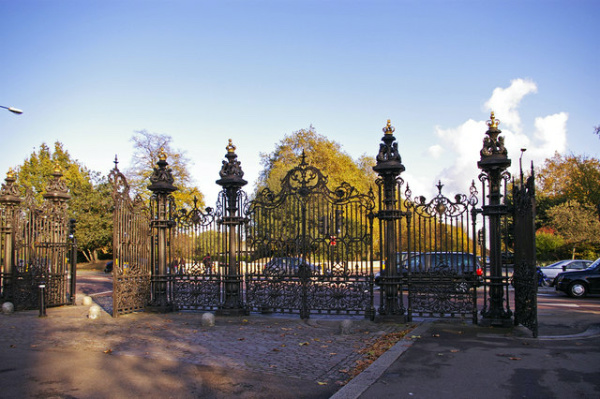
Located at the southern end of West Carriage Drive – the road which divides Kensington Gardens and Hyde Park – are bronze-painted cast iron gates which were made for the Great Exhibition of 1851.

The gates are named for their manufacturer, the Coalbrookdale Company in Shropshire, and were designed by Charles Crookes.

Each of the gates were cast in one piece and feature cherubs or mer-children below gold crowns atop the finials. There are stags head urns sitting atop Portland stone pillars bearing Queen Victoria’s monograms at either end.

The gates were originally positioned as an entrance to the Great Exhibition and were known as the Queen’s Gate (due to their being through which Queen Victoria entered).

The gates were moved here from their original position during the construction of the Albert Memorial in 1871.

The now Grade II-listed gates were damaged by a bomb during World War II. They were restored in 2000.

This Week in London – Wren letter in the Painted Hall; art from America’s South; and, ‘Finding Family’ at the Foundling Museum…

Sir Christopher Wren, by Sir Godfrey Kneller, Bt, oil on canvas, 1711 NPG 113

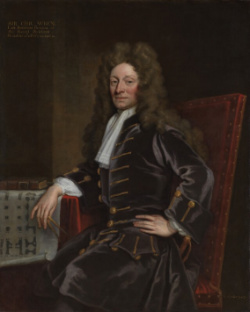
A letter written by Sir Christopher Wren requesting stone for the construction of the Royal Hospital for Seamen in Greenwich is on display in the Painted Hall vestibule. Wren wrote the letter requesting 2,000 tonnes of Portland stone to Thomas Gilbert, overseer of the King’s Quarries of the Isle of Portland, on 11th October, 1700. It is being displayed along with information explaining how the stone was brought from Dorset to London. The display is one of a series of events taking place at the Old Royal Naval College marking the 300th anniversary of Wren’s death on 25th February, 1723. Can be seen until January, 2024. An admission charge applies. For more, see https://ornc.org/whats-on/painted-hall-display-letter-written-by-sir-christopher-wren/. For more on events surrounding the 300th anniversary of Wren’s death, head to https://ornc.org/celebrating-wren300/.

Slavery, the cruel segregationist policies of the Jim Crow era, and the civil rights movement in the southern United States are all explored in a new exhibition at the Royal Academy. Souls Grown Deep like the Rivers: Black Artists from the American South, features around 64 works – including assemblages, sculpture, paintings, reliefs, and drawings – by 34 artists spanning the period from the mid-20th century to the present. Drawn mostly from the collection of the Souls Grown Deep Foundation in Atlanta, Georgia, many of the works are being seen in Europe for the first time. The display in the Gabrielle Jungels-Winkler Galleries also features quilts by the celebrated quiltmakers of Gee’s Bend, Alabama, and the neighbouring communities of Rehoboth and Alberta. Opening on Friday, the exhibition can be seen until 18th June. Admission charge applies. For more, see royalacademy.org.uk.

Three masterpieces from The National Gallery’s collection – by Hogarth, Gainsborough and the Le Nain Brothers – have gone on show at The Foundling Museum in Bloomsbury as part of a new exhibition exploring what family is and can be. Finding Family examines the ways in which artists have represented and responded to ideas of family with reference to the historic paintings as well as contemporary works of art. The art is accompanied by creative writing created by participants in ‘Tracing Our Tales’ – the museum’s award-winning programme for young care leavers – who have responded to the exhibition’s themes. Opens on Friday and runs until 27th August. Admission charge applies. For more, see https://foundlingmuseum.org.uk/event/finding-family/.

Send items for inclusion to exploringlondon@gmail.com.

10 historic London homes that are now museums…8. Queen Charlotte’s Cottage…

PICTURE: Maureen Barlin (licensed under CC BY-NC-ND 2.0)

A confession to begin – this property, located in Kew Gardens, was never actually a residence but instead was built as a country day retreat for the family of King George III at the behest of his wife Queen Charlotte.

The cottage, which features a thatched roof and half-timbered walls and dates from around 1772, is known as a cottage orné (decorated cottage).

Located in what’s described as “one of London’s finest bluebell woods” with parts of it more than 300-years-old, it was designed to be a place where the Queen and her growing family (the King and Queen would have 15 children) could enjoy picnics or take tea while on walks through the gardens during their summers at Kew.

Inside, the ground floor of the premises features two halls – one for the royal family on the left and another for servants on the right, each of which features a staircase leading to the first floor. In the centre of the ground floor is the Print Room, a small room hung with more than 150 satirical engravings including works by the famed James Gillray. There’s also a small kitchen.

On the upper floor is the Picnic Room which features two expansive recycled 17th century windows looking out to the garden and wall and roof paintings featuring trailing nasturtiums and convolvulus to give the appearance of a bower. The latter are thought to have been the work of Princess Elizabeth, generally viewed as the most artistic of King George III’s children.

Behind the cottage was a large paddock which was used to contain a growing menagerie of animals, no doubt to the delight of the royal children. Initially the occupants were Tartarian pheasants and oriental cattle but later it also housed a now extinct quagga (an animal similar to a zebra) and some of the first kangaroos to arrive in Britain (these were bred by the early 19th century, there were up to 18 of them). In 1806, the gardener was instructed to turn the paddock into a flower garden.

King George III was apparently fond of the cottage but he was last at Kew in 1806. It was used in 1818 following the double wedding of his sons, the Duke of Clarence (who became King William IV) and Edward, the Duke of Kent (father of Queen Victoria).

Queen Victoria rarely visited the cottage but had it maintained by a housekeeper. In 1889, the Queen gave the cottage to the public to commemorate her Diamond Jubilee.

The Grade II* cottage is these days managed by Historic Royal Palaces.

WHERE: Queen Charlotte’s Cottage, the south-west corner of, Kew Gardens (nearest Tube station is Kew Gardens); WHEN: Cottage is open from 4th April from 11.30am to 3.30pm on weekends and bank holidays; COST: (entry to Kew Gardens) £21.50 adults/£10 students/children £5 (discounts apply for advance bookings); WEBSITE: www.kew.org.

LondonLife – Buses on Piccadilly…

PICTURE: Lachlan Gowen/Unsplash

This Week in London – St Patrick’s Day returns; London’s first female mayor and Welsh thinker honoured with Blue Plaques; and, ‘Seeing the Light’ at the Foundling Museum…

PICTURE: Svetlanais/iStockphoto.

London’s annual St Patrick’s Day Parade will be held on Sunday with more than 50,000 people expected to take part. The festivities will kick off at noon with a spectacular parade featuring Irish marching bands, dancers and pageantry which will wind its way from Green Park through Piccadilly Circus to Trafalgar Square. From noon until 6pm, Trafalgar Square will feature performances from the likes of Sharon Shannon & Band, Celaviedmai, The Craicheads, Celtic Youth Orchestra, Biblecode Sunday’s, and AIS as well as the Maguire O’Shea School of Dance and spoken word artist Leon Dunne. There will also be family-friendly workshops run by Irish youth creative programme Junk Kouture, a selection of food and drinks stalls including demonstrations by celebrity chef Anna Haugh and stalls where you can learn about Irish culture and community staffed by representatives of the Irish Cultural Centre, London Irish Centre, Irish in Britain, Irish Film London and London Gaelic Athletic Association. For more, check out www.london.gov.uk/events/st-patricks-festival-2023.

London’s first female mayor, Ada Salter, and Welsh philosopher and preacher Dr Richard Price have both been honoured with English Heritage Blue Plaques. A social reformer and activist, Salter became mayor of Bermondsey in 1922 and so became the first female mayor of a London borough as well as the first Labour woman to be elected as a mayor in Britain. The plaque has been placed on 149 Lower Road in Rotherhithe, the Women’s House of the Bermondsey Settlement where Salter lived in the late 1890s. Price, meanwhile, is considered to be one of the greatest Welsh thinkers of all time and, as well as a preacher and philosopher, was also a pioneer of actuarial science. A plaque has been placed on a red brick house at 54 Newington Green which dates from 1658 and is believed to be the oldest surviving terrace in London. Price, who was born 300 years ago this year, lived in the house from 1758 to 1787 and while there wrote letters to the likes of Benjamin Franklin and Thomas Jefferson with whom he enjoyed close friendships. For more, see www.english-heritage.org.uk/visit/blue-plaques/.

Joseph Wright’s painting A Philosopher Giving That Lecture on the Orrery in Which a Lamp is Put in Place of the Sun has gone on show at the Foundling Museum. The painting is at the heart of Seeing the Light, an exhibition which explores the connections between Wright, who hailed from Derby, his large network of friends and acquaintances, and key people in the Foundling Hospital’s history as well as objects in the museum’s collection. This includes the story of the founding of the Lunar Society. Admission charge applies. Runs until 4th June. For more, see https://foundlingmuseum.org.uk/event/seeing-the-light/.

Send all items to exploringlondon@gmail.com

10 historic London homes that are now museums…7. Sambourne House…

The former home of famed Victorian illustrator and photographer Edward Linley Sambourne, this property at 18 Stafford Terrace in Kensington has been preserved as a museum.

Sambourne, famed for, among other things, the cartoons he produced for Punch magazine, moved into the property in 1875, shortly after his marriage to Marion Herapath in 1874, and the couple, who would have two children – Roy and Maud – lived there for the rest of their lives.

PICTURE: Jhsteel (licensed under CC BY-SA 3.0)

After moving in, Linley, inspired by the grand houses of his artistic friends in the so-called Holland Park circle such as Nick Fildes, Marcus Stone and Colin Hunter, set about redecorating the property in what was then the popular Aesthetic style. He installed stained glass windows, Morris & Co wallpapers and Chinese ceramic vases and over the next 35 years purchased ceramics and furnishings specifically for the property.

While Sambourne adopted many of Aesthetic elements in his decorative scheme such as the stylised motifs inspired by nature and the muted colour palette, he didn’t particularly follow the style’s call for restraint and the house quickly became home to a growing collection of furnishings and objects (in fact an inventory take in 1877, just two years after the couple moved in, shows the home already contained more than 50 vases, 70 chairs and around 700 framed pictures). 

Sambourne, who was said to have been “skilled at making a great show on a limited budget”, couldn’t afford to create a purpose-built studio and worked in various parts of the house, initially in the morning room, which he had extended to meet his needs, and later in the upstairs drawing room. After their daughter Maud married and left the property, he converted the former nursery on the top floor into a studio.

After the deaths of Linley in 1910 and Marion in 1914, their bachelor son Roy moved in and lived there until his own death in 1946. The house then passed to Maud (now Maud Messel), although she didn’t live there, and on her death passed to her daughter Anne Messel.

Anne had married Ronald Armstrong Jones in 1925 and then, following a divorce, Michael Parsons, sixth Earl of Rosse in 1935, giving her the title of Countess of Rosse. She inherited the house in 1960 – the same year her son Antony married Princess Margaret and received the title of Earl of Snowdon.

Lady Rosse, who had proposed the house be preserved as it had been in Linley’s day, subsequently negotiated the sale of the property to the Greater London Council in 1980 and in turn it was leased to the Victorian Society, which she had co-founded in 1957. It was subsequently opened as a museum.

In 1989, after the Greater London Council was abolished, ownership of the house transferred to the Royal Borough of Kensington and Chelsea (the lease to the Victorian Society meanwhile, ended in 2000). In 2022, the house, now Grade II*-listed, was re-opened to the public after a significant renovation and refurbishment project.

Alongside the decor, furnishings and ceramics, the house displays a number of the cartoons Sambourne drew for Punch as well as drawings he did for other projects, such as Charles Kingsley’s The Water Babies, and some of his collection of more than 30,000 photographs used to aid his production of cartoons (not all of which apparently are suitable for public consumption). Sambourne’s “detective camera” which allowed him to photograph subjects surreptitiously is also there.

WHERE: Sambourne House, 18 Stafford Terrace (nearest Tube stations are Kensington (Olympia) and High Street Kensington); WHEN: 10am to 5:30pm, Wednesday to Sunday; COST: £11 adult/£9 concession/£5 child (six to 18-years-old/five and under free); WEBSITE: www.rbkc.gov.uk/museums/sambourne-house

LondonLife – Van de Veldes inspiration at Greenwich…

Finn Campbell-Notman and Fail We May, Sail We Must. PICTURE: © SKY UK Ltd

British artist Finn Campbell-Notman has been named as the winner of the Sky Arts’ Landscape Artist of the Year for his creation of a contemporary seascape inspired by the work of 17th century marine painters, Willem van de Velde the Elder and his son, Willem van de Velde the Younger. Campbell-Notman’s work, Fail We May, Sail We Must, has gone on display at the Queen’s House in Greenwich which is currently hosting the new exhibition, The Van de Veldes: Greenwich, Art and the Sea. The new painting was inspired by Campbell-Notman’s personal experience as he found out more about the Van de Veldes while travelling in The Netherlands. “My approach to landscape painting is that a painting is rarely, if ever, a direct transcription from a single view, even those painted en plein air,” Campbell-Notman said in a statement. “One composes and constructs, simplifies, rearranges and perhaps adds certain elements to create a picture. The finished painting is thus a record of a dialogue with what is seen and what is reflected within and want I to transmit; between what is seen and what is felt.” For more, see www.rmg.co.uk/queens-house.