LondonLife – In the aftermath of tragedy…

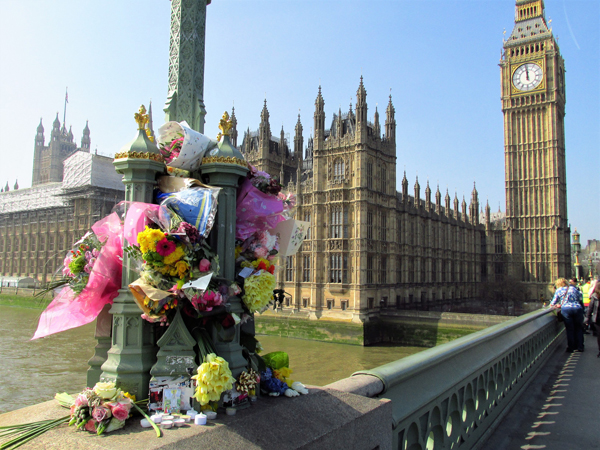
Flowers on Westminster Bridge, placed there in the wake of last week’s terror attack in which an assailant, named as 52-year-old Khalid Masood, killed three people and injured at least 50 as he drove a vehicle at high speed across the bridge along a pedestrian walkway. Crashing outside the Houses of Parliament he then stabbed to death PC Keith Palmer before he was shot dead by another officer. Addressing a vigil in Trafalgar Square in the aftermath of the attack, London Mayor Sadiq Khan said the city “will never be cowed” by terrorism. “Those evil and twisted individuals who try to destroy our shared way of life will never succeed and we condemn them,” he said. PICTURE: David Holt/Flickr/CC BY 2.0

Famous Londoners – Sir Henry Wellcome…

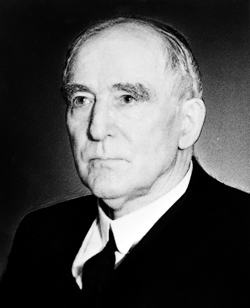
Pharmacist, entrepreneur, philanthropist, and collector, American-born Sir Henry Solomon Wellcome’s name lives on in London’s Wellcome Collection and Wellcome Library as well as the world-renowned biomedical research charity known as the Wellcome Trust.

The son of a farmer turned itinerant preacher, Wellcome was born on 21st August, 1853 in a log cabin on the American frontier in northern Wisconsin and, working in his uncle’s drugstore in Garden City, Minnesota, developed an interest in medicine, particularly the marketing of medicine (his first marketing success was his own invisible ink).

Taking various positions at other pharmacies over the ensuing years, he studied at the Philadelphia College of Pharmacy and there meet Silas Burroughs. Graduating in 1874, he spent a few years as a pharmaceutical salesman (and an explorer, travelling to South America to search for rare native cinchona trees, a source of quinine) before, with the encourage of Burroughs, he moved to London in 1880.
There they founded a pharmaceutical company, Burroughs, Wellcome & Co. They introduced the selling of medicine in the form of compressed tablets – it had hitherto been sold largely in liquid or powder form – to England with their patented ‘tabloid’. They also pioneered direct marketing to doctors.

When Burroughs died in 1895 (they had already fallen out), Wellcome took over the flourishing company in its entirety and set up two research laboratories connected to his pharmaceutical company. In 1924, he consolidated all his commercial and non-commercial entities in one holding company, The Wellcome Foundation Ltd.

In 1901, Wellcome married Gwendoline Maud Syrie Barnardo, daughter of Dr Thomas John Barnardo, founder of children’s charity Barnardo’s (they had met in Khartoum).

They had one child, Henry Mounteney Wellcome, who was born in 1903 and sent to foster parents at about the age of three due to the travelling lifestyle of his parents. The couple, however, were not happy and Gwendoline, known as ‘Syrie’, reportedly had several affairs including one with department store identity Harry Gordon Selfridge and another with author William Somerset Maugham, whom she later married. Wellcome and Gwendoline divorced in 1916.

Wellcome, meanwhile, became a British subject in 1910 and was knighted in 1932, the same year he was made an honorary fellow of the Royal College of Surgeons of England. Something of a recluse in his later years, he died in pneumonia at The London Clinic on 26th July, 1936, following an operation.

Under the terms of his will, the Wellcome Trust was established for “the advancement of medical and scientific research to improve mankind’s wellbeing” which, initially funded by the income from the Wellcome Foundation and now a separate charity, continues to fund biomedical research and training.

Wellcome, meanwhile, had amassed an enormous collection of artefacts with the aim of creating a ‘Museum of Man’, which by the time of his death amounted to more than a million objects including at least 125,000 medically related ones and such oddities as Napoleon’s toothbrush and King George III’s hair. The first exhibition of selected objects from his collection opened at a temporary exhibition in Wigmore Street in 1913 next door to the Wellcome Burroughs showroom and since 1976 some of his collection have been on show at the Science Museum.

The Wellcome Collection, based in Euston Road, was established in 2007 to display some of Wellcome’s medical collection as well as artworks. The Wellcome Library, now part of the Wellcome Collection, is based on the book collection of Sir Henry which he started collecting seriously late in the 1890s. The books were housed in a series of locations around London before, in 1949, opening as the Wellcome Historical Medical Library in Euston Road.

An English Heritage Blue Plaque can be found at Sir Henry’s former home at 6 Gloucester Gate, Regent’s Park, which he leased from about 1920 until his death.

PICTURE: Henry Solomon Wellcome in 1930/Wikimedia/CC BY 4.0
This Week in London – Anti-war movement history at IWM; National Gallery’s new space; and a VR spaceflight at the Science Museum…

We pause briefly at the start of this week’s coverage to remember those killed and injured in yesterday’s terror attack outside the Houses of Parliament in Westminster as well as pay tribute to the emergency services and passersby who responded to aid the wounded.

The UK’s first major exhibition dedicated to the evolution of the anti-war movement has opened at the Imperial War Museum this week. People Power: Fighting for Peace features such rare items as a hand-written poem by Siegfried Sassoon, artist Gerald Holtom’s original sketches for the iconic ‘peace symbol’, artworks depicting the destructive nature of World War I like Paul Nash’s Wire (1918) and CRW Nevinson’s Paths of Glory (1917), a handwritten letter by Winnie the Pooh author AA Milne outlining his struggle to reconcile pacifism with the rise of Hitler, and Peter Kennard and Cat Philip’s iconic photomontage Photo Op (2007) which depicts former PM Tony Blair taking a selfie against the backdrop of an explosion. More than 300 items are displayed in the exhibition including paintings, literature, posters, banners, badges and music, dating from World War I to the present. Admission charge applies. Runs until 28th August. For more, see www.iwm.org.uk/exhibitions/iwm-london/fighting-for-peace. PICTURE: David Gentleman, Stop the War – No More Lies/© David Gentleman, reproduced with the kind permission of the Stop the War Coalition.

• The first new gallery space to open at The National Gallery in 26 years was launched this week. Gallery B, designed by architects Purcell, features some 200 square metres of display space and features nine works by Rubens and 11 by Rembrandt. There are also drawings by contemporary painter Frank Auerbach, inspired by Rembrandt and Rubens works, in the Gallery B lobby and espresso bar. The launch also marks the daily opening of Gallery A which has hitherto only be opened on selected days. Entry is free. For more, see www.nationalgallery.org.uk.

A virtual reality experience which enables people to experience what it feels like to sit inside the Russian Soyuz TMA-19M spacecraft used by Tim Peake – the UK’s first European Space Agency astronaut – in a mission to and from the International Space Station opens at the Science Museum tomorrow. The South Kensington museum acquired the spacecraft in December last year and, from Friday, visitors will be able to take part in Space Descent VR with Tim Peake – a 360 degree state-of-the-art virtual reality experience which allows visitors to experience what it is like in the Soyuz’s 1.5 tonne descent module during its dangerous 400 kilometre high speed journey back to Earth during which it has to slow from a speed in orbit of 25,000 kph. The experience was created by Alchemy VR and made possible with the support of Samsung, Tim Peake and the ESA. For more information and tickets, see sciencemuseum.org.uk/VR.

Send all items for inclusion to exploringlondon@gmail.com.

10 (more) fictional character addresses in London – 8. A square in Soho?…

In Robert Louis Stevenson’s famous 1886 story, The Strange Case of Dr Jekyll and Mr Hyde,the address of the home of Dr Henry Jekyll (and his alter-ego Mr Edward Hyde) is simply given as a square in Soho – then a rather seedy district.

Dr Jekyll is said to have bought the property from the heirs of a “celebrated surgeon”. Like the man himself, the house has two characters and features a “blistered and distained” rear entrance used by the dastardly Mr Hyde.

In a BBC Scotland documentary broadcast several years ago, author Ian Rankin identified the house in which Jekyll and Hyde lived as being based on that which pioneering Scottish surgeon and anatomist John Hunter (1728-1793) lived in on the east side of Leicester Square.

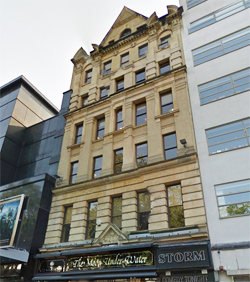
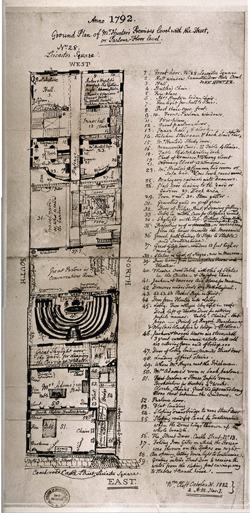
Hunter leased both the property at 28 Leicester Square (the present number 28 – the ground floor of which is a pub – is pictured) and another behind it (it fronted onto what was then Castle Street) in the 1780s. He then spent a good deal of money joining the two properties together, creating a complex of rooms which included space for his thousands of specimens (now in the Hunterian Museum) as well as an anatomy theatre. It was at the rear Castle Street entrance that he apparently received human cadavers, brought by so-called “resurrection men” for dissection.

The dualistic nature of the property fits with that of Jekyll and Hyde and while Leicester Square isn’t usually considered part of Soho, it’s at the least very close by.

“In the book, Stevenson gives a detailed description of the layout of Dr Jekyll’s home,” Rankin said in the documentary. “It is identical to John Hunter’s.”

He added that, despite Hunter’s “fame and respectability” – he was appointed Surgeon Extraordinary to King George III and was one of London’s most sought-after doctors, “Hunter still demanded a constant supply of cadavers for his growing anatomy collection and teaching”.

“Naturally Hunter’s new home, in Leicester Square, was purpose-built for a surgeon’s double life.” Or for the respectable Dr Jekyll and brutish Mr Hyde.

Interestingly, the previous owner of Dr Jekyll’s home us said to have been a Dr Denman – there was a Dr Thomas Denman who was a contemporary of John Hunter who was a pioneering obstetrician.

The Leicester Square property later became the site of the Royal Panopticon of Science and Art (more of that in an upcoming Lost London post).

PICTURE: Top – Number 28 Leicester Square as it is today/Google Maps; Below – A ground floor plan of John Hunter’s residence made in 1792 (drawn in 1832) © Wellcome Images/CC BY 4.0


LondonLife – Irish elk roaming Crystal Palace Park…

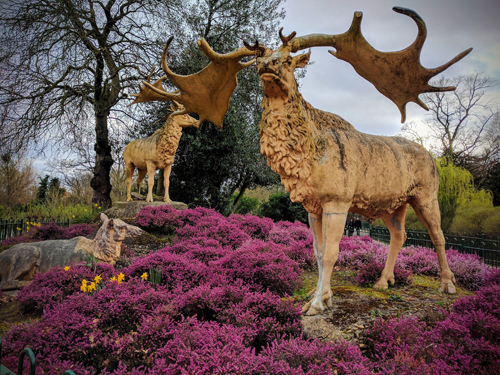
A group of extinct Irish elk from the Ice Age – part of a series of models of extinct animals created by sculptor and fossil expert Benjamin Waterhouse Hawkins and Professor Richard Owen, founder of the Natural History Museum, in the 1850s for the park surrounding the reconstructed Crystal Palace, known as Crystal Palace Park. Built for the Great Exhibition of 1851 by Joseph Paxton, the palace had been relocated from Hyde Park to Sydenham, in what was Kent (and is now south London), following the exhibition’s closure. The series of life-sized extinct animals, initially just mammals but later expanded to include dinosaurs, underwent extensive restoration in 2002 and were given Grade I listed status in 2007. There’s a free audio guide you can download while visiting the dinosaurs. PICTURE: Neil Cummings/Flickr/CC BY-SA 2.0.

Where’s London’s oldest…public toilets?


The oldest extant public toilets in London can be found Wesley’s Chapel in City Road.

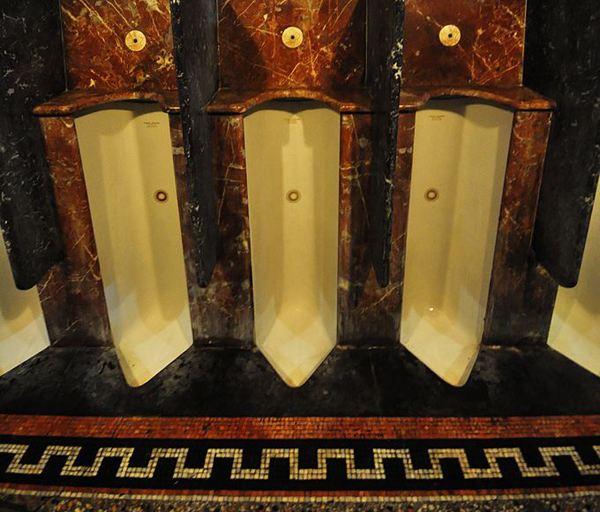
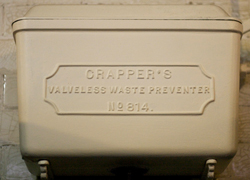
The gentlemen’s facilities, located off to the side of the chapel, were designed by the famous Thomas Crapper & Co and consist of enclosed wooden-walled cubicles, a series of urinals and wash basins.
The well-appointed toilets were installed in 1899 – more than 100 years after John Wesley’s death and long after many other parts of the Georgian and Victorian complex of buildings (including Wesley’s house) were built – but remain in working order even today.

Crapper, who had founded his company in the 1860s, championed the concept of the flushing toilet (although the idea had already been invented) and was responsible for the invention of the ballcock system. And contrary to common belief, Crapper – who received several royal warrants for his work – did not lend his name to a slang word for excrement – its origins go back much further.

WHERE: Wesley’s Chapel (with The Museum of Methodism and John Wesley’s House), 49 City Road (nearest Tube stations are Old Street and Moorgate; WHEN: 10am to 4pm Monday to Saturday/ 12:30pm to 1:45pm Sunday; COST: free (donations appreciated); WEBSITE: www.wesleyschapel.org.uk

PICTURES: Top – Ra Boe/Wikipedia/CC-BY-SA-3.0; Right – James O’Gorman/Flickr/CC BY-SA 2.0 (images cropped)


This Week in London – Michelangelo & Sebastiano; St Patrick’s Day festivities; the first woman in space; and, Moscow’s unrealised past…

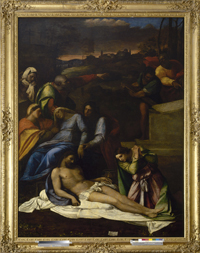
The collaborative partnership between Renaissance Italian artists Michelangelo and Sebastiano del Piombo is the subject of a new exhibition which opened at The National Gallery this week. The Credit Suisse Exhibition: Michelangelo & Sebastiano features about 70 works – paintings, drawings, sculptures and letters – produced by the pair before, during, and after their collaboration. The two met when Michelangelo was working on the ceiling of the Sistine Chapel and spent 25 years in a friendship partly defined by their opposition prodigious artist Raphael. Key works on show include their first collaborative work, Lamentation over the Dead Christ (also known as Viterbo ‘Pietà’ it was painted in about 1512-16), The Raising of Lazarus (completed by Sebastiano in 1517-19 with Michelangelo’s input and one of the foundational paintings of the National Gallery’s collection – it bears the first inventory number, NG1 ), The Risen Christ (a larger-than-life-size marble statue carved by Michelangelo in 1514–15 which is shown juxtaposed, for the first time, with a 19th-century plaster cast after Michelangelo’s second version of the same subject (1519–21)), and, Michelangelo’s The Virgin and Child with the Infant Saint John the Baptist (also known as the ‘Taddei Tondo’, it was commissioned in 1504-05 and is on loan from the Royal Academy of Arts). The display features a 3D reproduction of the Borgherini Chapel in Rome to evoke the sense of seeing the works in situ. Runs until 25th June. Admission charge applies. For more, see www.nationalgallery.org.uk. PICTURE: Sebastiano del Piombo, Lamentation over the Dead Christ (1516), The State Hermitage Museum, St Petersburg/© The State Hermitage Museum /Vladimir Terebenin

St Patrick’s Day is tomorrow and to celebrate London is hosting three days of events showcasing Irish culture, food and music. Cinemas in the West End will be showing short Irish films, there will be comedy, drama and family workshops, an Irish Cultural Trail in the Camden Market and a world-renowned parade on Sunday ahead of a closing concert in Trafalgar Square. For the full programme, see www.london.gov.uk/stpatricks.

An exhibition dedicated to the life and career of Valentina Tereshkova, the first woman in space, has opened at the Science Museum. Attended by the woman herself in honour of her 80th birthday this week, Valentina Tereshkova: First Woman in Space tells how Tereshkova came to be the first woman in space when, on 16th June, 1963, at the age of just 26 she climbed aboard the USSR spacecraft Vostok 6. She orbited the Earth 48 times over the three days, logging more flight time than all the US astronauts combined as of that date. She never flew again but remains the only female cosmonaut to have flown a solo mission. Tereshkova, who had been a factory worker, went on to become a prominent politician and international women’s rights advocate. The exhibition, which is free, is part of the 2017 UK-Russia Year of Science and Education. Runs until 16th September. For more, see www.sciencemuseum.org.uk/valentina-tereshkova.

Six unbuilt architectural landmarks – proposed for Moscow during the 1920s and 1930s but never realised – are at the heart of a new exhibition which has opened at the new Design Museum in Kensington. Imagine Moscow: Architecture, Propaganda, Revolution looks at how the proposed schemes – including the Palace of the Soviets, planned to be the world’s tallest building, and Cloud Iron, a network of horizontal ‘skyscrapers’ – reflected the changes taking place in the USSR after the Russian Revolution. As well as the six case studies, the exhibition features a dedicated room to the “geographical and ideological centre” of this new Moscow – the Lenin Mausoleum. Runs until 4th June. Admission charge applies. For more, see www.designmuseum.org.

Send all items for consideration to exploringlondon@gmail.com

10 (more) fictional character addresses in London – 7. Outer Circle, The Regent’s Park…

There’s no number for this property in the book so the actual house remains something of an unknown but it was on The Regent Park’s Outer Circle that a “young married couple of humans”, Mr and Mrs Dearly, lived along with their “owners”, a married couple of dogs named Pongo and Missis Pongo.

Yes, they’re all characters in Dodie Smith’s 1956 book, The Hundred and One Dalmatians. And the house? Well, Mr Dearly worked in the City where he was something of a “wizard of finance” and having done the government a “great service”  – described in the book as “something to do with getting rid of the National Debt” – he had, as part of his reward, been lent a “small house” on the Outer Circle where he and his wife lived with their dogs and two nannies.

While living there Missis gives birth to a litter of 15 puppies, the kidnapping of which by the dastardly Cruella de Vil, sets Pongo and his wife off on a journey to rescue them. They do so and manage to save more than 80 other puppies from de Vil (the 101 figure comes when the whole lot return to the Dearly’s home and, along with a few others including Pongo and Missus, take the total family to that number).

The Regent’s Park, of course, plays a key role in the book and subsequent films (see below) – it was in the park, for example, that Pongo engaged in the communication system of “twilight barking” to find out where his puppies were.

The book has, of course, been made into a film several times including a Disney animated version in 1961 and a Disney live action film starring Glenn Close in 1996 (although the plot has been altered somewhat) as well as a musical.

Meanwhile Smith (who based Pongo on her own Dalmatian of the same name), did go on to write a sequel to her book. Titled The Starlight Brigade, it tells a story of intergalactic proportions with the dogs of the world  – led by Pongo – being offered the chance to leave the Earth and escape the threat of nuclear war. They decide to stay.

PICTURE: Looking across the  Boating Lake in The Regent’s Park to the Outer Circle. Phil Russell/The Royal Parks

LondonLife – Unveiling the Iraq and Afghanistan Memorial…


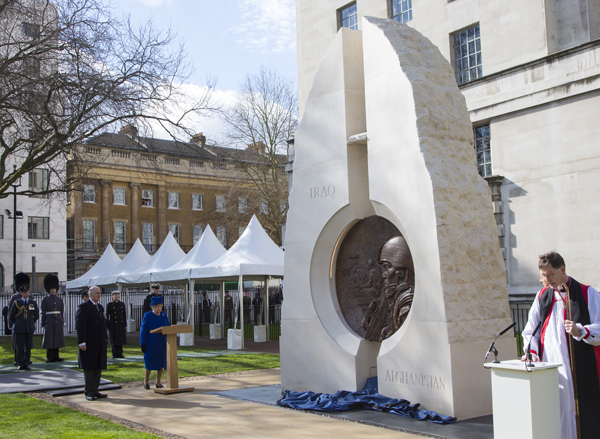
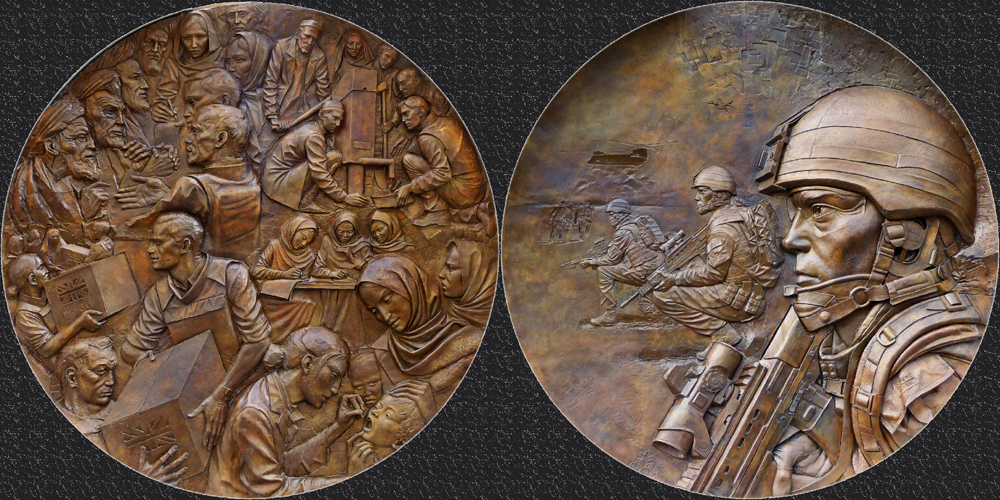
Unveiled by Queen Elizabeth II in Victoria Embankment Gardens last Thursday, the Iraq and Afghanistan Memorial recognises the contributions of the many hundreds of thousands of UK armed forces and citizens deployed in the Gulf region, Iraq and Afghanistan between 1990 and 2015 – including the 682 service personnel who died – and those who supported them at home.
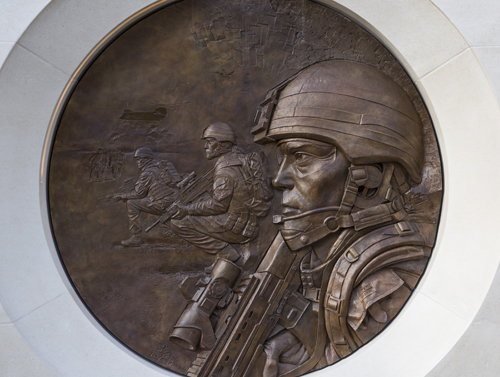
The memorial was designed by sculptor Paul Day and features two large stones – one representing Afghanistan and the other Iraq – which are linked by a giant two-sided bronze ‘tondo’ depicting the concepts of ‘duty’ and ‘service’. Inclusive of all who contributed, both military and civilian, the monument bears no names. The Queen was accompanied by the Duke of Edinburgh and among others who attended the ceremony near the Ministry of Defence was PM Theresa May and Secretary of State for Defence Sir Michael Fallon. PICTURES: Top – © Crown copyright 2017.


What’s in a name?….Threadneedle Street…

Famous for being the site of the Bank of England – “the Old Lady of Threadneedle Street” – since 1734, there’s a couple of explanations for the origins of Threadneedle Street’s name – and both relate to livery companies associated with textile industries.

The first is that of the Worshipful Company of Needlemakers, initially granted livery by the Lord Protector Oliver Cromwell in 1656 and then again by King Charles II in 1664. The company has a coat-of-arms featuring Adam and Eve holding up a shield on which can be seen three needles, hence Three Needles Street, the corruption of which is Threadneedle Street.

The second is that of the Merchant-Taylors’ Company, one of the 12 great livery companies, which was founded by Royal Charter in 1327. Its livery hall has been based in Threadneedle Street since the 14th century.

Either or both could be the reason for the unusual name of this City of London street, which runs from Mansion House north-east to Bishopsgate.

Other famous properties located in the street have included the headquarters of the infamous South Sea Company and the first site of the Baltic Exchange (formerly in the Virginia and Baltick Coffee House) which is now in St Mary Axe.

NOTE: The article initially said it was playwright Richard Brinsley Sheridan who first coined the phrase Old Lady of Threadneedle Street. To clarify – it was actually a speech by Sheridan, an MP, in the House of Commons in which he described the bank as “an old woman” which is thought to have prompted satirist James Gillray to produce a cartoon ‘Political Ravishment of the Old Lady of Threadneedle Street in Danger’ which in turn is believed to have coined the phrase.

Treasures of London – ‘Out of Order’…

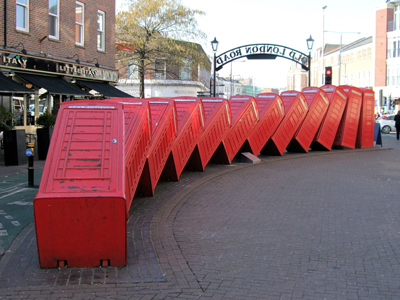
This sculpture by London-based Scottish artist David Mach can be found in Kingston upon Thames in south-west London. It depicts 12 K6 red phone boxes falling onto one another like a row of dominoes and was commissioned from the Royal Academician by the Royal Borough of Kingston upon Thames in 1988. Unveiled the following year, it was renovated in 2001. There’s been talk in the past of it being removed (and of the end phone being connected, so it works) but the iconic sculpture remains in situ near the Old London Road gateway (and unconnected). PICTURE: Jim Linwood/CC BY-SA 2.0 (image cropped)

This Week in London – Rosalind Franklin’s grave; American printmaking; and Disabled Access Day at royal residences….

Acclaimed biologist Rosalind Franklin’s grave in Willesden United Synagogue Cemetery has been given listed status, Historic England announced in marking International Women’s Day this week. Franklin’s tomb commemorates her life and achievements – they include X-ray observations she made of DNA which contributed to the discovery of its helical structure by Crick and Watson in 1953. Meanwhile, Historic England has teamed with The Royal Society to highlight the achievements of 28 remarkable women noted for their achievements in the fields of chemistry, biology, physics and astronomy. The women’s stories have been explored and key historic locations mapped. They include the Marianne North Gallery in Kew Gardens (named for 19th century botanist Marianne North), the Elizabeth Garrett Anderson Hospital – founded in 1872 as the New Hospital for Women in London by Anderson, a suffragette and the first English woman to qualify as a doctor, and the Royal Academy of Arts where natural history illustrator and painter Sarah Stone was an honorary exhibitor in the 1780s.

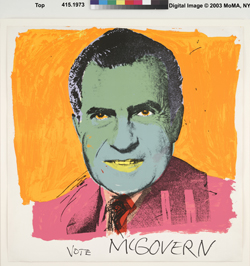
The first major exhibition focusing on contemporary American printmaking has opened in the Sainsbury Exhibitions Gallery of The British Museum. The American Dream: pop to the present features more than 200 works from 70 artists including Andy Warhol, Jasper Johns, Robert Rauschenberg, Ed Ruscha, Chuck Close, Louise Bourgeois and Kara Walker. Including loans from institutions such as The National Gallery of Art in Washington, DC, as well the museum’s own collection, the works span six decades – from the moment when pop art arrived in the New York and West Coast scene of the early 1960s, to the rise of minimalism, conceptual art and photorealism in the 1970s, and through to the practices of today’s artists. Among the works on show are Warhol’s Marilyn, Willie Cole’s Stowage and Claes Oldenburg’s sculpture of the Three-Way Plug. Admission charges apply. Runs until 18th June. For more, see www.americandreamexhibition.org. PICTURE: Andy Warhol (1928–1987), ‘Vote McGovern’, Colour screenprint/© 2016 The Andy Warhol Foundation for the Visual Arts, Inc./Artists Rights Society (ARS), New York and DACS, London.

Visitors with disabilities will be offered free admission to royal residences – including the Royal Mews and The Queen’s Gallery at Buckingham Palace – this weekend to mark Disabled Access Day. Visitors to the Queen’s Gallery can join verbal descriptive tours of the Portrait of the Artist exhibition on 12th March while the Royal Mews will offer free admission to disabled visitors on 10th and 11th March.  Standard access resources, including plain English tour scripts, induction loops, large-print and list access will be available across all venues. For more, see www.royalcollection.org.uk.

Send all items for inclusion to exploringlondon@gmail.com.

10 (more) fictional character addresses in London – 6. 9 Bywater Street, Chelsea…

Fictional British spy George Smiley featured in some eight books written by acclaimed author John Le Carré (sometimes as the main protagonist, sometimes as a side character) and is about to appear in a ninth, A Legacy of Spies, which comes out in September.

And that’s not to mention his appearance on small screens and large where he’s been portrayed by everyone from James Mason and Sir Alec Guinness to Denholm Elliott and Gary Oldman.

In the books, Smiley and his wife, Lady Ann, lived at a number 9 Bywater Street in Chelsea – which is an actual address, just off King’s Road (pictured with the red door). The Georgian townhouse was appropriately used to depict his home in the 1979 BBC series of Tinker Tailor Soldier Spy although, interestingly, while number nine’s exterior was used, it was apparently number 10, next door – pictured here with the blue door – which provided the interiors.

Le Carré, who was living just over the Thames in Battersea at the time of Smiley’s creation, has reportedly said he chose the location because his literary agent lived nearby (although there is apparently a little fuzziness on whether this is the case) and the mother of one his pupils from Eton (Le Carré – actually David John Moore Cornwell – taught at Eton for two years before he joined MI5 in 1958) lived in the street.

But perhaps the best literary reason is the fact that Bywater Street, despite the name, is actually a cul-de-sac which adds to the difficulty of anyone trying to spy on Smiley. A wise choice for a spy’s residence, in other words.

Other locations associated with George Smiley in London include The Circus, the secret London intelligence HQ where Smiley and his fellow intelligence operatives worked, which was located in an office block in Cambridge Circus, on the corner of Charing Cross Road and Shaftesbury Avenue.

PICTURE: Google Maps

LondonLife – Lovat Lane…

Originally known as Love Lane (the origins of which are somewhat obvious – a place where you could find ‘love’ although  whether this meant illicit love or has a more innocent explanation remains a matter of discussion),  the name of this charming alleyway – which runs south from Eastcheap to Lower Thames Street, was changed in the mid-20th century to avoid confusion with another Love Lane to the north. The new name apparently related to Lord Lovat, whose fisheries supplied the nearby former Billingsgate Market. PICTURE: Simon Mumenthaler/Unsplash.

Lost London – The Mermaid Tavern…

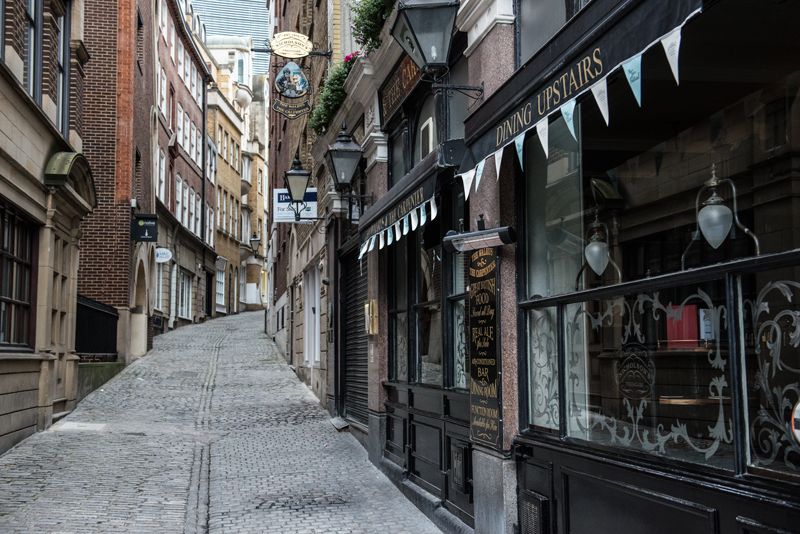
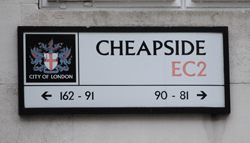
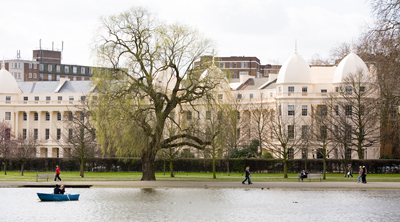
Located on Cheapside (with entrances on Friday and Bread Streets), the Mermaid Tavern is best known for being the home of Elizabethan-era drinking club known as the Mermaid Club (and also as the Friday Street Club or even the ‘Fraternity of Sireniacal Gentlemen’). 

cheapsideFounded in the early 17th century (and meeting on the first Friday of each month), its members included such literary luminaries as Ben Jonson, John Donne and Francis Beaumont.
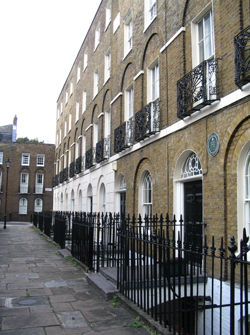
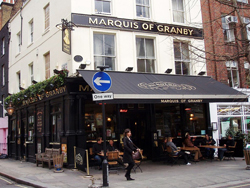
There are also suggestions it was founded by Sir Walter Raleigh and that William Shakespeare was also a member but modern scholars have cast doubt upon both claims.

The earliest reference to the tavern, meanwhile, dates from the early 15th century.

The tavern, the location of which today corresponds to the corner of Bread and Cannon Streets, burned down in the Great Fire of London but lives on in John Keats’ poem Lines on the Mermaid Tavern.

10 (more) fictional character addresses in London – 5. 27b Canonbury Square…

canonbury_squareOK, I know the plaque on the front says this was the actual home of author George Orwell – who moved here in 1944 with his family. But the property was also apparently partly the inspiration for Victory Mansions, the home of  Winston Smith, the protagonist of his novel, Nineteen Eighty-Four.

Orwell (real name Eric Arthur Blair) moved to the property at 27b Canonbury Square with his wife Eileen and their young adopted son Richard in 1944 after their flat in Mortimer Crescent, Kilburn, was hit by a V-1 flying bomb.

But Eileen sadly died unexpectedly during surgery only a few months later in early 1945 while Orwell was off working as a war correspondent.

Despite this, Orwell retained the property until 1947 – the same year his allegorical story Animal Farm was published – but had left the property when Nineteen Eighty Four, which he had largely written while on the Scottish island of Jura in 1947 and 1948, was published in June, 1949 – only a few months before he died in January, 1950.

His was apparently the basement flat – rather unlike Smith’s home which Orwell wrote was located “seven flights up” in a rather large block. The architectural differences aside, however, Orwell’s flat apparently served as something of a model for Smith’s “bleak tenement in a down-at-heel area” which was, like the rest of the flats Victory Mansions, was “falling to pieces” and filled with the smell of boiled cabbage.

A plaque erected by the London Borough of Islington has long adorned the building although last year Orwell’s son Richard attended the unveiling of a new plaque which amended the dates Orwell lived here, changing  it from 1945 to 1944-47.

Of course, London is replete with other locations mentioned in Orwell’s book – Trafalgar Square becomes Victory Square (Big Brother stands atop the column in place of Admiral Lord Nelson), the Ministry of Truth where Smith works is modelled on the University of London’s Senate House in Bloomsbury, and the cells in the Ministry of Love are apparently based on those at Bethnel Green Police Station where Orwell has been incarcerated (although only for a few hours) after being arrest for drunk and disorderly behaviour in 1931.

Orwell, meanwhile, is commemorated with numerous plaques located around London, including an English Heritage Blue Plaque at a property in Lawford Road, Kentish Town.

Canonbury Square – Orwell’s former residence is in the foreground (with the old plaque). PICTURE: 14wesley/Wikipedia/CC BY-SA 3.0

LondonLife – Construction site…

building-site

PICTURE: Jamie Street/Unsplash


London Pub Signs – The Marquis of Granby…

This Fitzrovia pub, famous for its literary connections (more about those in a moment), takes its name from a popular 18th century military hero.

marquis-of-granbyJohn Manners, the Marquis of Granby, played a key role for Britain during the Seven Years War – between Britain and her allies and France and hers – and, thanks to his popularity among the soldiers who served under his command, had numerous pubs named for him (he apparently also had a hand in setting up many old soldiers as publicans).

In his most famous battlefield exploit, while leading a series of cavalry charges at the Battle of Warburg in 1760 (in actions which saved the day), he apparently lost his hat and wig and was forced to salute his commander, Prince Ferdinand of Brunswick, without them.

All of which explains why the pub sign doesn’t show him wearing a hat and why soldiers from his former regiment, the Blues and Royals, have the unique privilege in being able to salute while not wearing headwear. The fact Manners was bald also apparently led to the coining of the phrase, “going at it bald-headed” – a reference to his fearlessness.

The pub, located at 2 Rathbone Street (on the corner with Percy Street – the address was formerly known as 38 Percy Street), is famous for its literary clientele during the years between the two World Wars – among those who drank here were writers Dylan Thomas and TS Eliot. They apparently shared the space with some low-level gangland figures.

For more, see www.nicholsonspubs.co.uk/restaurants/london/themarquisofgranbyrathbonestreetlondon.

PICTURE: Ewan Munro/Flickr/CC BY-SA 2.0/

This Week in London – Diana’s fashion-sense explored; America after the crash; and, British landscapes…

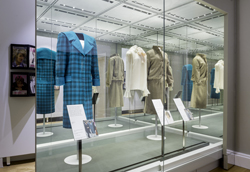
diana-her-fashion-storyThe fashions of Diana, Princess of Wales, go on show at Kensington Palace tomorrow in a new exhibition, 20 years after her death. Diana: Her Fashion Story traces the evolution of her sense of style from the demure outfits of her first public appearances to the “glamour, elegance and confidence” of her later life and explores how she used her image to engage and inspire people as well as champion the causes she cared out. The display features everything from glamorous 1980s evening gowns to her “working wardrobe” of the 1990s and original fashion sketches created for her by her favourite designers. Highlights include a pale pink Emanuel blouse worn for Lord Snowdon’s 1981 engagement portrait, a ink blue velvet gown designed by Victor Edelstein and famously worn during a visit to the White House when the princess danced with John Travolta, and a blue tartan Emanuel suit worn for an official visit to Venice in the 1980s. The latter goes on public display for the first time, having recently been acquired at auction by Historic Royal Palaces. Complementing the exhibition, gardeners have created a temporary ‘White Garden’ in the palace’s Sunken Garden with flowers and foliage inspired by the princess’s life, style and image. Admission charge applies. For more, see www.hrp.org.uk/kensington-palace/. PICTURE: Courtesy Historic Royal Palaces.

Works chronicling life in the United States of America during the decade after the Wall Street crash of 1929 go on show at the Royal Academy of Arts on Saturday. America after the Fall: Painting in the 1930s features 45 works by some of the foremost artists of the era which have been sourced from collections across the US. They include Grant Wood’s American Gothic (1930) – the first time it’s being exhibited outside of the US, Georgia O’Keeffe’s Cow’s Skull with Calico Roses (1931), Edward Hopper’s Gas (1940) and works by Jackson Pollock, Philip Guston, Alice Nee and Thomas Hart Benton. Organised by the Art Institute of Chicago, in collaboration with the Royal Academy and Etablissement public du musée d’Orsay et du musée de l’Orangerie in Paris, the exhibition in The Sackler Wing of Galleries can be seen until 4th June. Admission charge applies. For more, see www.royalacademy.org.uk.

Landscape drawings created over the century spanning 1850 to 1950 are the subject of a new free exhibition which opens at the British Museum today. Places of the Mind: British watercolour landscapes 1850-1950 features more than 125 works from the museum’s department of prints and drawings, over half of which have never been published or exhibited before. Artists represented include George Price Boyce, Alfred William Hunt, John Ruskin, James McNeill Whistler, Philip Wilson Steer. Graham Sutherland and Henry Moore. The display can be seen in Room 90 until 27th August. For more, see www.britishmuseum.org.

Send all items for inclusion to exploringlondon@gmail.com.

10 (more) fictional character addresses in London – 4. 138 Piccadilly…

eon-house2This address would have been one to avoid. In Bram Stoker’s 1897 gothic novel, Dracula, the evil Count Dracula owns a mansion on Piccadilly, one of numerous homes he purchases in London.

The address believed to be that of the mansion, based on information and architectural details given in the book, has apparently been identified – by people reportedly including Bernard Davies, co-founder of The Dracula Society, no less – as a property at number 138.

After arriving in England – landing at Whitby, Dracula had first moved into a property called Carfax House located at Purfleet on the River Thames, just to the east of London.

But after he was spotted in London, it is discovered that he has a property in Piccadilly (identified, though never named in the book, as 138). Those hunting him – including the unfortunate Jonathan Harker and vampire hunter Abraham Van Helsing – break in to the property with the intent of destroying some of the many boxes filled with earth Dracula brought to England with him from Transylvania (he needs them to keep alive). They do so and there find keys to numerous other properties in the city as well, dispatching two of their number to go and destroy any boxes they find there.

They then wait in ambush for the Count at the “vile smelling” Piccadilly property but he manages to elude their attack and escape. Their chase then leads them to leave London and to pursue Dracula across Europe before he is finally defeated back at his home in Transylvania.

The Grade II-listed, three storey property at 138 Piccadilly, located opposite Green Park, is now known as Eon House and is located next door to the Hard Rock Cafe. It originally dates from the late 18th century and was remodelled in the early 1890s – just before the book was written.

The book, Dracula, is, of course, also associated with other London locations – including the London Zoo and Hampstead Heath.  And Stoker himself lived in London for much of his life, spending 27 years as an acting manager and business manager at the Lyceum Theatre in the West End. An urn containing his ashes is at the Golders Green Crematorium.

PICTURE: Google Maps