This Week in London – Trafalgar Square Christmas tree to light up; new location for returning Sir John Tenniel plaque; and, Chinese crafts at the V&A…

The lights will be turned on the Trafalgar Square Christmas tree tonight. This year marks the 78th anniversary of the gift of the first Christmas tree to the people of London from the Norwegian city of Oslo in acknowledgement of the support Britain gave to Norway during World War II. The festivities will include the choir of St-Martin-in-the-Fields singing some well known Christmas carols to music led by the Regent Hall Band of the Salvation Army, the reading of a poem written by children who live in Westminster, a display by The Corps of Drums from the Band of His Majesty’s Royal Marines Collingwood and a performance by Det Norske Jentekor, The Norwegian Girls’ Choir, conducted by Anne Karin Sundal-Ask. Festivities start at 5pm and the lights switch on at 6pm. The tree will be in the square until 5th January after which it will be recycled. You can follow the tree on Instagram at  @TrafalgarTree, on TikTok at @TrafalgarTree, and on X at @TrafalgarTree.

A Blue Plaque commemorating Alice in Wonderland illustrator and political cartoonist Sir John Tenniel has been returned to London’s streets – but to a different location than that where it was first positioned. The plaque, which is actually jade-green and white, was originally unveiled by the London County Council in 1930 at Tenniel’s longtime Maida Vale home (the colour was due to the request of the house-holder). But following its removal when the house was demolished in 1959, the plaque was so damaged that its destruction was authorised. But this wasn’t carried out and the plaque, which features an early “wreathed” design, has been in storage since. Following restoration, however, it has now been relocated to a new home – a property at 52 Fitz-George Avenue in West Kensington where Tenniel spent the final years of his life.

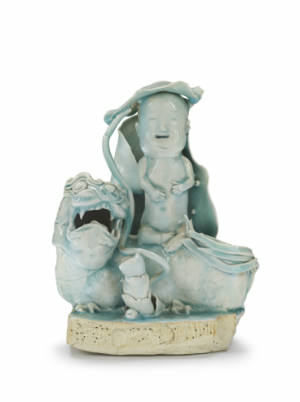
Figure from the ‘Century Doll’ series, glazed porcelain, by Yao Yongkang, 2004, Jingdezhen, China

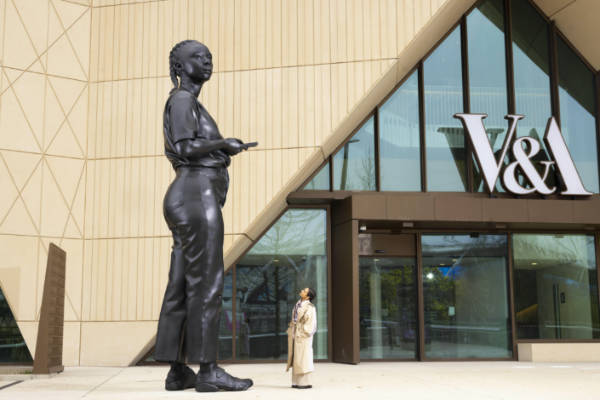
The first major UK exhibition exploring contemporary studio crafts in China is on now at the V&A South Kensington. Dimensions: Contemporary Chinese Studio Crafts features more than 80 objects including almost 50 new acquisitions and puts a spotlight on “contemporary and modern makers who build upon longstanding tradition to reinvent ancient practices, pioneer alternative techniques, and develop new channels for self-expression”. Many of the objects – displayed in the China and Ceramics galleries – sit in dialogue alongside permanent displays of historic Chinese craftsmanship. Highlights include large scale works such as Lin Fanglu’s She’s Bestowed Love (2025), that transforms intricate tie-dye practices into a monumental textile sculpture, more delicate pieces such as Zhang Huimin’s Golden Mammary 4 (2025), a brooch produced by pushing the boundary of filigree in a reinvention of traditional practice, a wall hanging by pioneering artist of studio pottery Tan Chang, as well as works by the three potters who were the first to be exhibited in China under the mantle of ‘modern ceramics’: Mei Wending, Zeng Li and Zeng Peng. Runs until 27th September next year. Free admission. For more, see www.vam.ac.uk/exhibitions/dimensions-contemporary-chinese-studio-crafts.

Send all items to exploringlondon@gmail.com

This Week in London – Wes Anderson’s archive explored; Edwin Austin Abbey at The National Gallery; and, Christmas at the Tower…

• The first retrospective of the work of film-maker Wes Anderson has opened at the Design Museum in South Kensington. Wes Anderson: The Archives draws on the director’s own archives to chart the evolution of his films from early experiments in the 1990s and collaborations to an exploration of the design stories behind films such as The Royal Tenenbaums, The Grand Budapest Hotel, Fantastic Mr Fox and Isle of Dogs. The display features more than 700 objects including original storyboards, polaroids, sketches, paintings, handwritten notebooks, puppets, miniature models and costumes. Highlights include a candy-pink model of the Grand Budapest Hotel, vending machines from Asteroid City, a FENDI fur coat worn by Gwyneth Paltrow as Margot Tenenbaum in The Royal Tenenbaums, stop motion puppets used to depict the fantastical sea creatures in The Life Aquatic with Steve Zissou and Mr Fox wearing his signature corduroy suit and show dog Nutmeg alongside miniature sets. There’s also a screening of Bottle Rocket, Anderson’s first short film, created in 1993. Runs until 26th July. Admission charge applies. For more, see https://designmuseum.org/exhibitions/wes-anderson-the-archives.

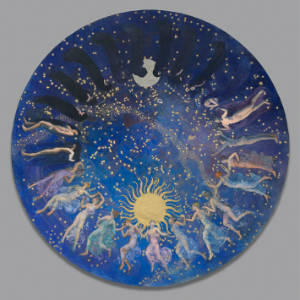
Edwin Austin Abbey, ‘Study for The Hours in the Pennsylvania State Capitol’ (about 1909–11), oil on canvas, 381 × 381 cm Yale University Art Gallery, Edwin Austin Abbey Memorial Collection. PICTURE: Courtesy of Yale University Art Gallery

A design for the ceiling of the House of Representatives in the Pennsylvania State Capitol in the US has gone on show at The National Gallery as part of a new exhibition dedicated to its creator Edwin Austin Abbey (1852-1911). The 12-feet diameter half-scale design for The Hours, newly conserved by the Yale University Art Gallery, depicts 24 female figures representing the 24 hours of the day. The display, Edwin Austin Abbey: By the Dawn’s Early Light, also features six preparatory drawings for his work, The Apotheosis of Pennsylvania, a vast wall mural featuring representations of 16th and 17th century English explorer Sir Walter Raleigh and American frontiersman Daniel Boone behind the Speaker’s dais. Abbey, who lived and worked in the UK, displayed the first of his Harrisburg murals at the University of London in 1908 prior to shipping them to the US – guests included King Edward VII and Queen Alexandria. The free display can be seen in the HJ Hyams Room (Room 1) until 15th February. For more, see www.nationalgallery.org.uk/exhibitions/edwin-austin-abbey-by-the-dawn-s-early-light

The Tower of London is being transformed into a “magical storybook world” to mark Christmas this year. A Storybook Christmas at the Tower of London features royal romances, legendary figures and treasured traditions which include animals who once lived in the Tower’s royal menagerie, the famous tower ravens, the chance to step onto a regal throne for a family portrait and find storybook backdrops among Christmas trees and wreaths, and an opportunity to explore the story of the Tower’s Royal Observatory where the first Royal Astronomer was appointed in 1675. The “storybook Christmas” opens on Sunday and runs until 4th January. Included in general admission. For more, see www.hrp.org.uk/tower-of-london/.

Send all items to exploringlondon@gmail.com

LondonLife I – Marking 80 years since the end of World War II…

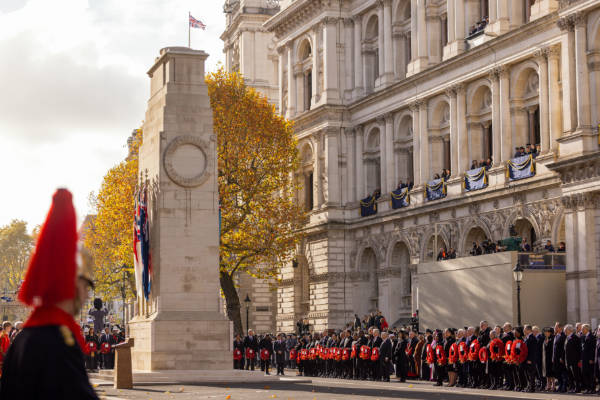
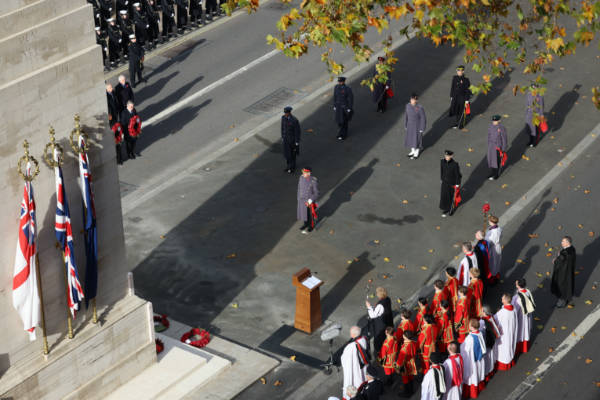
Poppies being laid at remembrance at the Cenotaph on Sunday, 9th November 2025. PICTURE: Cpl Danielle Dawson/© MoD Crown Copyright 2025
The Royal Party in front of the Cenotaph. King Charles II led the nation in a two-minute silence to remember those who gave their lives serving in the armed forces at the National Service of Remembrance at the Cenotaph on Sunday. PICTURE: Cpl Tim Hammond/UK MOD © Crown copyright 2025.
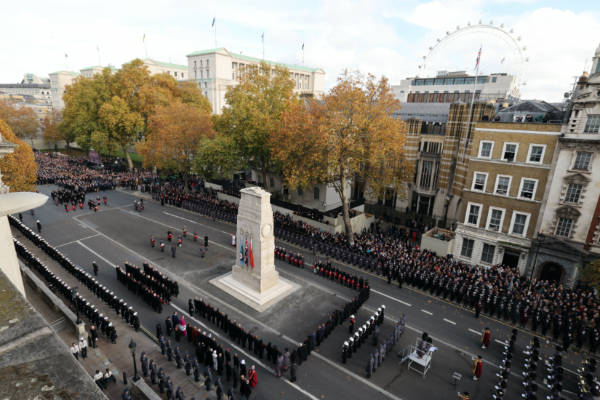
The Hollow Square formed around Cenotaph on Remembrance Sunday. PICTURE: LPhot Ollie Leach/UK MOD © Crown copyright 2025

Earlier…

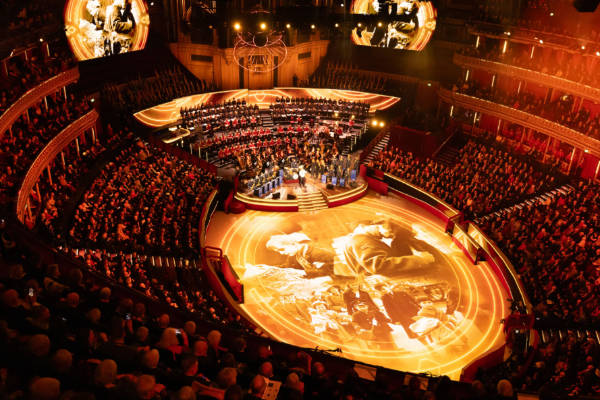
Rod Stewart plays with the RAF band at the Festival of Remembrance in the Royal Albert Hall, London on Saturday. The audience included the King, Queen and other members of the Royal Family. PICTURE: Cpl Danielle Dawson/UK MOD © Crown copyright 2025
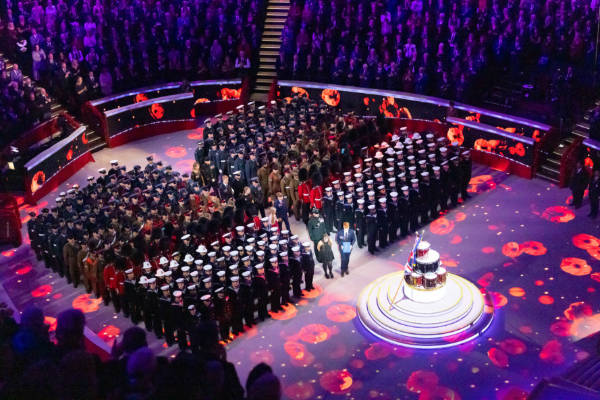
Members of the British Army, Royal Navy and Royal Air Force muster and the book of remembrance is presented at the Festival of Remembrance in the Royal Albert Hall, London on Saturday. PICTURE: Cpl Danielle Dawson/UK MOD © Crown copyright 2025
A Chelsea Pensioner at the Field of Remembrance outside Westminster Abbey on Friday. The field has been an annual feature since November, 1928, to commemorate those who have lost their lives serving in the armed forces. PICTURE: Sergeant Anil Gurung/©MOD Crown Copyright 2025
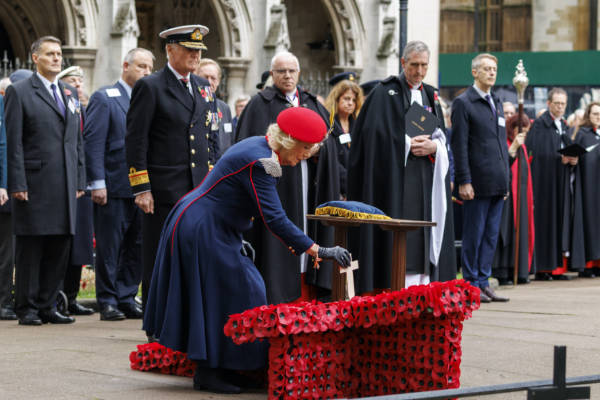
Queen Camilla places a wooden cross of remembrance at the Field of Remembrance outside Westminster Abbey on Friday. PICTURE: Sergeant Anil Gurung/©MOD Crown Copyright 2025

This Week in London – Wildlife Photographer of the Year exhibition; 20th century conflicts; Jennie Baptiste at Somerset House; and Nigerian Modernism…

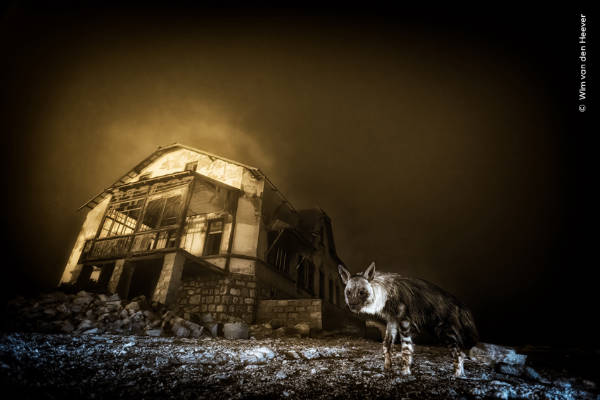
Wim van den Heever’s winning entry, Ghost Town Visitor.

An exhibition of entries into the annual Wildlife Photographer of the Year competition opens tomorrow at the National History Museum in South Kensington. The exhibition features 100 images selected from a record-breaking 60,636 entries and follows from this week’s announcement of the winners at a ceremony held at the museum earlier this week. The display includes the winning image – ‘Ghost Town Visitor’ which, captured by South African wildlife photographer Wim van den Heever depicts a brown hyena near the ruins of a long-abandoned diamond mining town in Kolmanskop, Namibia – as well as the winner of the Young Wildlife Photographer of the Year 2025 – 17-year-old Italian Andrea Dominizi’s After the Destruction which spotlights a longhorn beetle in the Lepini Mountains of central Italy, an area once logged for old beech trees, with a background of abandoned machinery. Other images on show include the winner of the Impact Award – Brazilian photographer, Fernando Faciole’s Orphan of the Road depicting an orphaned giant anteater pup following its caregiver after an evening feed at a rehabilitation centre – as well as category winners. The exhibition can be seen until 12th July next year. Admission charge applies. For more, head here.

Three 20th century conflicts which broke out in Malaya, Kenya and Cyprus after World War II are the subject of a new exhibition at the Imperial War Museum in Lambeth. Emergency Exits: The Fight for Independence in Malaya, Kenya and Cyprus looks at how these three conflicts, known as “emergencies” to the British Government, shaped and continues to shape Britain, its former territories and the wider world today. The display includes more than 70 objects such as propaganda posters, flags and artworks as well as oral histories and personal belongings which belonged to those impacted by them. As well as telling the stories of the three conflicts, Emergency Exits also explores Operation Legacy, the British Government’s attempt to prevent publication of sensitive documents related to the conflicts which included evidence of human rights abuses. The free exhibition, which opens on Friday, runs until 26th March. For more, see iwm.org.uk/events/emergency-exits-the-fight-for-independence-in-malaya-kenya-and-cyprus.

The first major solo exhibition focusing on the work of pioneering Black British photographer Jennie Baptiste opens in the Terrace Rooms at Somerset House on Friday. Jennie Baptiste: Rhythm & Roots, which is a highlights of Somerset House’s 25th birthday programme, charts how Baptiste used her lens to capture youth culture, music, fashion, and urban life within the Black British diaspora in London in the past few decades. The exhibition can be entered under a “pay what you can” model. Runs until 4th January. For more, see www.somersethouse.org.uk/whats-on/jennie-baptiste-rhythm-and-roots.

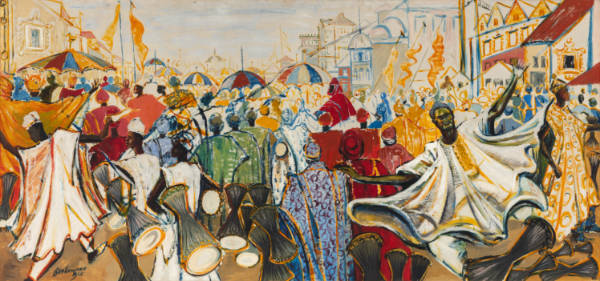
Ben Enwonwu, ‘The Durbar of Eid-ul-Fitr, Kano’, Nigeria 1955. © Ben Enwonwu Foundation. Private Collection

On Now: Nigerian Modernism. The Tate Modern is hosting the first UK exhibition to trace the development of modern art in Nigeria with more than 250 works by more than 50 artists on display. The exhibition, which spans the period from the 1940s to today, features works by globally celebrated artists of the 1940s, Ben Enwonwu and Ladi Kwali, as well as works by The Zaria Arts Society members Uche Okeke, Demas Nwoko, Yusuf Grillo, Bruce Onobrakpeya, and Jimo Akolo, Nsukka Art School members including Obiora Udechukwu, Tayo Adenaike and Ndidi Dike, and concludes with a spotlight on the work of Uzo Egonu. The display can be seen until 10th May. Admission charge applies. For more, see www.tate.org.uk/whats-on/tate-modern/nigerian-modernism.

Send all items for inclusion to exploringlondon@gmail.com.

This Week in London – Marie Antoinette; ‘Theatre Picasso’, ‘Exploring Space’ at the Science Museum; and Talk Like A Pirate Day…

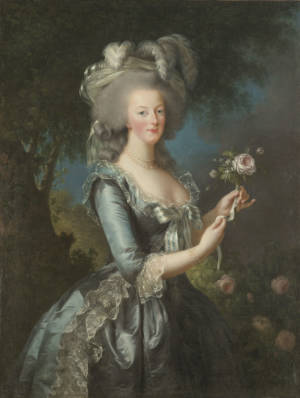
Portrait de Marie-Antoinette à la rose, Élisabeth-Louise Vigée Le Brun © Château de Versailles, Dist. Grand Palais RMN / Christophe Fouin.

The UK’s first exhibition to focus on the French Queen, Marie Antionette, opens at the V&A on Saturday. Marie Antoinette Style explores the dress and interiors adopted by the Queen, an early modern “celebrity”, during the final decades of the 18th century. It features some 250 objects including loans from Versailles which have never before been seen outside of France. There are personal items worn by the Queen including fragments of court dress, her silk slippers and jewels from her private collection as well as items from the Queen’s dinner service at the Petit Trianon, accessories and intimate items from her toilette case and even recreated scents from the court and a perfume which was favoured by the Queen. There also contemporary couture pieces by designers such as Moschino, Dior, Chanel, Erdem, Vivienne Westwood and Valentino and costumes, including shoes, made for screen, such as for Sofia Coppola’s Oscar winning film Marie Antoinette. The exhibition can be seen in Galleries 38 and 39 until 22nd March. Admission charge applies. For more, see vam.ac.uk/exhibitions/marie-antoinette.

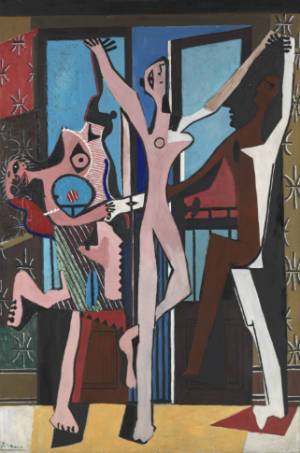
Pablo Picasso, The Three Dancers (1925) Tate. © Succession Picasso/DACS, London 2025.

Around 50 works by famed artist Pablo Picasso have been brought together for a new exhibition at the Tate Modern to mark the centenary of the artist’s work The Three Dancers (1925). Staged by contemporary artist Wu Tsang and write and curator Enrique Fuenteblanca, Theatre Picasso explores aspects of performance in his works and features the Tate’s entire collection of Picassos which, alongside The Three Dancers, also includes Weeping Woman (1937) and Nude Woman in a Red Armchair (1932). There are also loans from key museums in France as well as prints, drawings, sculptures, textile works and collages. These include the wool and silk tapestry Minotaur (1935) which is being displayed in the UK for the first time. Accompanying the works is Henri-George Clouzot’s 1959 film The Mystery of􏰱Picasso. Admission charge applies. Runs until 12th April. For more, see

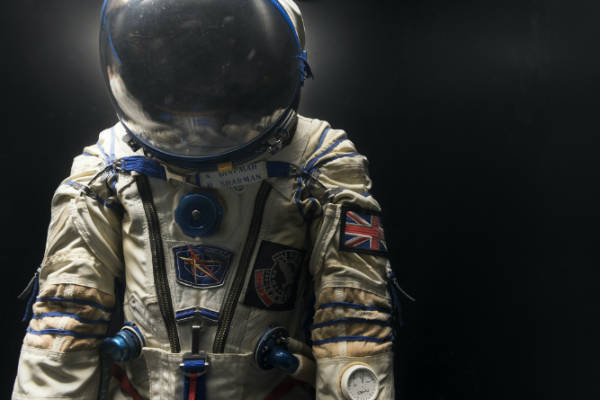
A new free gallery revealing the stories behind space exploration opens at the Science Museum in South Kensington on Saturday. The gallery – Exploring Space – showcases iconic items from the history of space exploration including a chunk of Moon rock nicknamed ‘Great Scott’ which was collected in 1971, the Soyuz TMA-19M descent module that carried astronaut Tim Peake, and the Sokol KV-2 rescue suit worn by Helen Sharman in 1991. There are also new technologies from the space sector including prototype electric propulsion technology from Magdrive and the ‘rolly-polly’ LEV-2 Moon rover, the result of the first collaboration between a space agency (JAXA) and a toy company (Takara Tomy). For more, see www.sciencemuseum.org.uk/see-and-do/space.

British astronaut, Helen Sharman’s Sokol spacesuit made by Zvezda. Sharman wore this rescue suit during the space flight on board the SOYUZ-TM-12 and MIR spacecraft in May 1991. Space suit model number KV-2 No. 167.

“Ahoy me hearties!” It’s International Talk Like A Pirate Day on Friday and the National Maritime Museum in Greenwich is celebrating from Friday across the weekend with talks about everything from Barbary corsairs to sea shanties, character actors and two-for-one discounts on tickets to the Pirates exhibition. Visitors over the weekend who dress like a pirate will be in the chance to win prizes including Cutty Sark rig climb tickets, annual passes to the Old Royal Naval College, and a family tour of The Golden Hinde. And to brush-up on your pirate lingo, “Abbey-Lubber” means a lazy sailor avoiding work, and ‘Jack Ketch’ a hangman or executioner. For more, see rmg.co.uk/whats-on/national-maritime-museum/international-talk-pirate-day.

Send all items to exploringlondon@gmail.com.

This Week in London – Wildlife Photographer of the Year is coming; ‘Vanishing Africa’; and, ‘Black Chiswick Though History’…

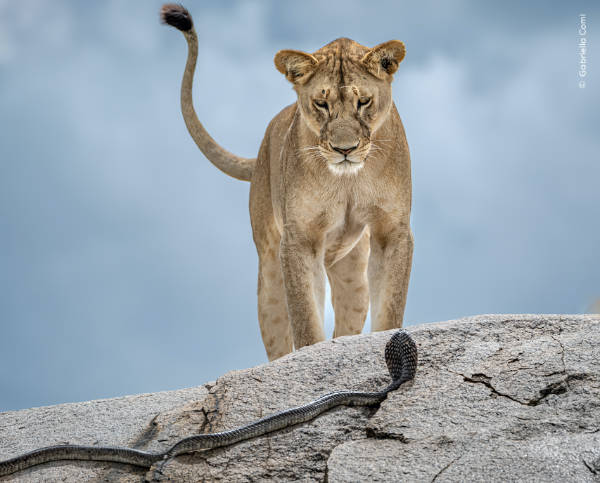
‘Wake-up Call’ by Gabriella Comi, Italy, (Highly Commended, Behaviour: Mammals). PICTURE: Courtesy of the Wildlife Photographer of the Year, Natural History Museum

Depicting a dramatic stand-off between a lion and a cobra in the Serengeti National Park in Tanzania, Gabriella Comi’s impressive image is among the 60,636 entries, from across 113 countries and territories, received in the Natural History Museum’s 61st annual Wildlife Photographer of the Year competition. The competition’s category winners and the prestigious ‘Grand Title’ and ‘Young Grand Title’ awards will be announced on 14th October, 2025, after which, from 17th October, 100 of the images will go on show at the museum in South Kensington. Other images revealed this week include Amit Eshel’s portrait of an inquisitive pack of Arctic wolves and photographs of flamingoes, coyotes and red deer by emerging young photographers as young as nine-years-old. For more, see https://bit.ly/WPY61Exhibition.

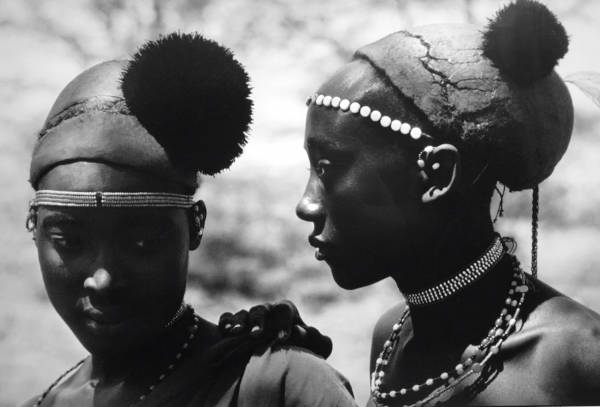
One of the images in ‘Vanishing Africa’. PICTURE: © Mirella Ricciardi

The Science Museum has launched a new online exhibition, Vanishing Africa, which features images by Kenyan-born photographer Mirella Ricciardi and reveal how much climate change is changing the continent. Taken in East Africa over two years in the 1960s, the photographs are a visual record of the Indigenous peoples of the region, including the Maasai, Samburu, Turkana, Orma, Pokot and Rendille people, and “capture a land of untamed wilderness, diverse wildlife, and Indigenous communities attuned to nature”, an East Africa which many no longer recognise. The exhibition has been published to celebrate the ‘UK/Africa Season of Culture’ and launches ahead of the international climate summit, COP30. To view it, head to www.sciencemuseum.org.uk/objects-and-stories/vanishing-africa-through-mirella-ricciardis-lens.

On Now: Black Chiswick Through History. This project, launched in 2011, looks at how the history of Chiswick House is connected to Black history and people of colour. This year’s installation explores the life of 18th-century Chiswick House resident James Cumberlidge – one of the few people of African heritage in Britain whose likeness was captured and preserved for posterity – and traces his journey from  page boy at Chiswick House to trumpeter in the Royal Court of King George III. There’s also a painting dating from the 1870s which depicts Queen Victoria attending a fashionable garden party right here at Chiswick House in July, 1875. Runs until 28th September. Admission charge applies. For more, see https://chiswickhouseandgardens.org.uk/event/visit-chiswick-house/.

Send all items for inclusion to exploringlondon@gmail.com.

This Week in London – Showtime! at the Charles Dickens Museum; the ‘Future of Food’; and, Peter Rabbit hops to Hampton Court…

PICTURE: VV Shots/iStockphoto

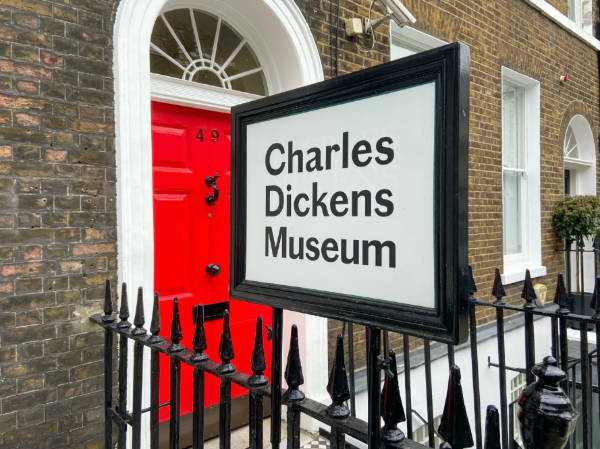
The enduring appeal of Charles Dickens’ works and how they have been adapted for the stage, screen and radio is the focus of a new exhibition at the Charles Dickens Museum in Bloomsbury. Showtime! looks at productions starting from as far back as 1837 and including such classics as The Muppets Christmas Carol and Oliver! the musical with objects on show including original playbills, posters, programmes, photographs and props. There’s also the opportunity to hear from actors and writers about what makes Dickens so adaptable and see Dickens’ own works which he annotated with stage directions. The display can be seen until 26th January. Admission charge applies. For more, see www.dickensmuseum.com.

A major new exhibition on the future of food – how science is creating more sustainable ways of producing and consuming food – opens at the Science Museum today. Future of Food reveals how the way we grow food and eat impacts the climate, nature, and society. Among the more than 100 objects on show are cricket burgers and cell-grown salmon as well as 3,500-year-old fermented sourdough bread, the first Quorn burger dating from 1981 and the first beef steak grown outside a cow. There is also the chance to join a multiplayer interactive game and create your own “future for food”. Runs until 4th January. Admission is free. For more, see https://www.sciencemuseum.org.uk/see-and-do/future-of-food.

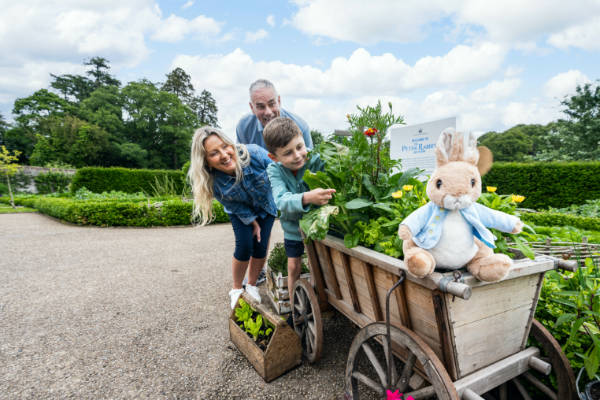
The Peter Rabbit Adventure at Hampton Court Palace. PICTURE: Courtesy of Historic Royal Palaces.

Peter Rabbit is hopping over to Hampton Court Palace to take part in a new family trail that brings Beatrix Potter’s beloved characters to life in the palace gardens from tomorrow. The Peter Rabbit Adventure, included as part of the palace admission, is spread over the Kitchen Garden, Tiltyard, and Wilderness and the activities on the trail will introduce little ones to the plants, vegetables and wildlife that inhabit the gardens. These include the chance to use Mrs Tiggy-winkle’s washing equipment to make music among the trees, to join in a search for Peter Rabbit under wheelbarrows and flowerpots in the Tiltyard, and to try to hop, skip and jump as high as Peter and his friends. A larger-than-life Peter Rabbit will be greeting families in the Kitchen Gardens. Runs until 7th September. For more, see https://www.hrp.org.uk/hampton-court-palace/whats-on/the-peter-rabbit-adventure/.

Send all inclusions to exploringlondon@gmail.com

This Week in London – “Our Story with Sir David Attenborough”; the Royal Academy’s 257th Summer Exhibition; and, an appeal for restoring three Underground carriages…

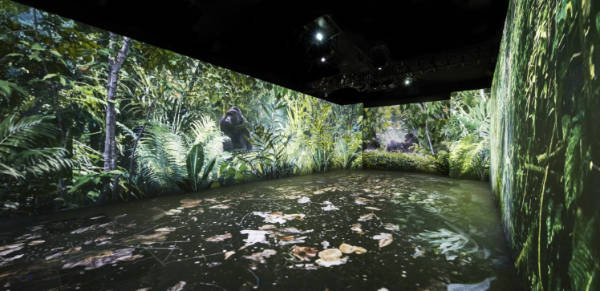
Our Story with David Attenborough. PICTURE: © Trustees of the Natural History Museum

Our Story with David Attenborough – the first ever immersive experience at the Natural History Museum – opens its doors today. Created by Open Planet Studios, the 50 minute experience in the Jerwood Gallery features animations, projections, real-world footage and full 360 degree immersion as Sir David draws on his life of exploration to tell the story of humanity and the planet on which we live. The experience is taking bookings until 18th January, 2026. Admission charge applies. For more, see www.nhm.ac.uk/visit/exhibitions/our-story-with-david-attenborough.

The Royal Academy’s 257th Summer Exhibition opened this week. Co-ordinated by internationally acclaimed architect and Royal Academician Farshid Moussavi in conjunction with the Summer Exhibition Committee, this year’s display of art and architecture explores the theme of ‘Dialogues’. Among the works on show is a six metre high installation of ostrich feathers and steel chain by British artist Alice Channer, a 4.5 metre high and seven metre wide wall made from deconstructed matchboxes by Brazilian artist Antonio Tarsis, and installation of textile carcasses by Argentine-American artist Tamara Kostianovsky. Meanwhile, the Annenberg Courtyard hosts a large scale installation by Royal Academician Ryan Gander which features five three metre diameter inflatable balls inscribed with absurd questions developed with children in a representation of the “inquisitiveness of children who ask what grown-up minds often dismiss as nonsensical or illogical”. Runs until 17th August. Admission charge applies. For more, see royalacademy.org.uk.

The London Transport Museum has launched an appeal for £30,000 to help complete the restoration of three 1930s Q stock Underground carriages. The funds will be used to re-upholster the seats of two of the Underground cars in moquette – the durable, woollen seating material used in upholstery on public transport all over the world. Q stock trains first entered service on the District line in November, 1938, and were retired from service in 1971. The restoration of the three carriages – which aims to restore them to operational condition – has mainly been carried out at the London Transport Museum Depot in Acton, west London. Donations can be made on London Transport Museum’s website: www.ltmuseum.co.uk/make-donation?campaign=qstock

Send all items for inclusion to exploringlondon@gmail.com.

This Week in London – ‘Design and Disability’ at the V&A; Eid on the Square; and, James Brimble’s pictures of Epping Forest…

Xbox Adaptive Controller, developed by Microsoft. PICTURE © Victoria and Albert Museum, London 

The intersection between design and disability is at the focus of a new exhibition at the V&A which opens on Saturday. Design and Disability showcases the contributions of disabled, deaf and neurodivergent people to contemporary culture from the 1940s until now and spans the disciplines of design, art, architecture, fashion and photography. Highlights include: the world’s first commercially made adaptive Xbox controller by Microsoft; photographs by Simon Way which capture the work of Jaipur Foot as it makes free prosthetic legs, feet and arms for millions of people across India; the
McGonagle Reader – an audio-assisted voting device to help Blind and low vision people to vote independently; and, the Squeeze Chaise Longue, a red recliner developed by artist Wendy Jacobs, which embraces the sitter between two red mohair arms and provides comforting sensory feedback for those who appreciate deep pressure stimulation. The exhibition in The Porter Gallery at the South Kensington institution runs until 15th February. Admission charges apply. For more, see
vam.ac.uk/exhibitions/design-and-disability.

Eid on the Square returns to Trafalgar Square this Sunday. The free, family-friendly festival, hosted by Deana Soni and Haroon Rashid, will feature traditional and contemporary performances by Nasheed artist Mesut Kurtis, Chand Ali Khan Qawwal & Group, the Indonesian Angklung Ensemble feat HE Dr Desra Percaya, and children’s entertainers Omar & Hana. Halal Tourism Britain are running guided walking tours and presenting a pop-up Muslim Museum of Britain, and there will be workshops including drumming, coconut leaf weaving, calligraphy and poetry at the WAW Creative Arts Family Zone, while Rumi’s Cave – Spearhead Creatives will hosts an interactive tent which blends comedy, music and creative writing. Market stalls will offer books, crafts and jewellery, and the chance to indulge in delicious dishes ranging from Uzbek and Afghan cuisine to Korean fried chicken, churros and much more. Runs from noon to 6pm. For more, see www.london.gov.uk/events/eid-square-2025.

On Now – James Brimble’s Picture Archive. This free exhibition at the Epping Forest Visitor Centre in Chingford celebrates James Brimble’s 1950 book London’s Epping Forest and includes a range of restored images by James, most of which are previously unpublished, including framed prints and a digital display of around 100 images of Epping Forest and the surrounding areas from the 1950s, 60s and 70s. The display also contains some of the original copper printing plates from his book and supporting material depicting Brimble’s photographic legacy. Can be seen until 28th September. For more, see www.cityoflondon.gov.uk/things-to-do/green-spaces/epping-forest/where-to-go-in-epping-forest/chingford-visitor-centre.

Send all items for inclusion to exploringlondon@gmail.com
This Week in London – The glamour of the Edwardian Royals; tulips at Hampton Court; and, Cartier jewels at the V&A…

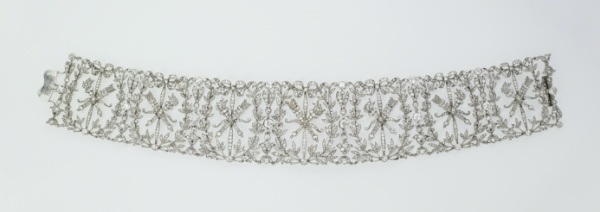
Attributed to R. & S. Garrard, ‘Love Trophy’ Collar, 1901
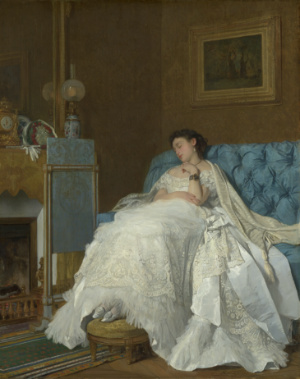
Charles Baugniet, ‘After the Ball’: a Lady in a Ballgown Asleep on a Sofa, c1860–67

The glamour and opulence of the Edwardian era – and the two royal couples that exemplified it – is the subject of a new exhibition opening at The King’s Gallery at Buckingham Palace tomorrow. The Edwardians: Age of Elegance takes an in-depth look at the lives of King Edward VII and Queen Alexandra, and King George V and Queen Mary, exploring not only their family interactions but their glittering social circles, travel adventures and, of course, the royal events they attended. More than 300 items are on display in the exhibition – almost half on show for the first time – with highlights including Queen Mary’s ‘Love Trophy’ Collar necklace which is on display for the first time, a Cartier crystal pencil case set with diamonds and rubies, and, a blue enamel Fabergé cigarette case featuring a diamond-encrusted snake biting its own tail which was given to King Edward VII in 1908 by his favourite mistress as a symbol of eternal love. There’s also a never-before-seen photograph of Edward wearing fancy-dress as a knight of the Order of Malta as he attended a ball celebrating Queen Victoria’s 1897 Diamond Jubilee, a previously unseen study of Sleeping Beauty by the Pre-Raphaelite artist Sir Edward Burne-Jones, and, Charles Baugniet’s After the Ball which is on show for the first time in more than a century. Runs until 23rd November. Admission charge applies. For more, see www.rct.uk.

More than 100,000 tulip bulbs are springing to life at Hampton Court Palace for its annual Tulip Festival. The display includes an installation of 10,000 tulips in the palace’s Fountain Court, floating tulip bowls in the Great Fountain, a vintage horse cart spilling tulips in the Clock Court, free-style planting, inspired by the tulip fields of the Netherlands, in the Kitchen Garden and rare, historic and specialist varieties of tulips in the Lower Orangery. There will be daily “tulip talks” in the palace’s wine cellar exploring the history of the flower and how Queen Mary II introduced them to the palace. Runs from Friday until 5th May. Included in general admission. For more, see www.hrp.org.uk.

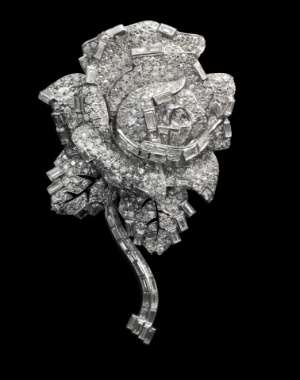
Rose clip brooch, Cartier London, 1938. Diamonds and platinum. Vincent Wulveryck, Collection Cartier © Cartier

The first major exhibition in 30 years dedicated to Cartier jewels and watches opens at the V&A this Saturday. Cartier, which is being held in The Sainsbury Gallery, charts the rise of the globally recognised jewellery house and how it became known as “the jeweller of kings and the king of jewellers”. The display features more than 350 objects with highlights including the Williamson Diamond brooch which was commissioned by Queen Elizabeth II in 1953 and which features the rare 23.6 carat pink Williamson diamond; the Scroll Tiara commissioned in 1902 and worn to the coronation of Elizabeth II and later by Rihanna on the cover of W magazine in 2016; Grace Kelly’s engagement ring (1956) that she wore in her final film High Society; Mexican film star María Félix’s snake necklace (1968); and, a selection of Cartier timepieces that embody its pioneering approach to watchmaking, including the Crash wristwatch, designed by Cartier London (1967). The exhibition runs until 16th November. Admission charge applies. For more, see vam.ac.uk/exhibitions/cartier.

Send all items to exploringlondon@gmail.com.

This Week in London – Mudlarking finds celebrated; MI5 reveals its secrets; and, fixing the broken planet at the Natural History Museum…

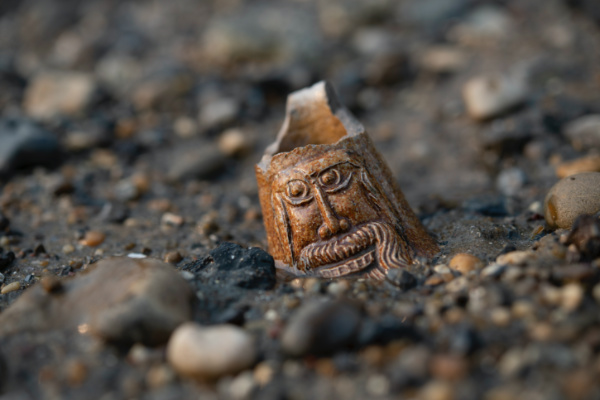
The neck from a stoneware bottle with a bearded face known as a Bartmann bottle 1500s – 1600s. The bearded face decorating the neck lies half-buried on the foreshore. PICTURE:
© Alessio Checconi /London Museum.
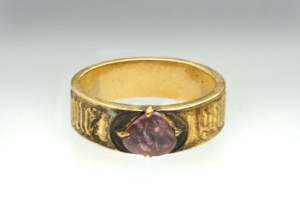
Gold finger ring, late medieval, mid 15th century, with pink ‘spinel’ stone. The engraved band includes an inscription ‘pour amor say donne’- For Love I am Given. © London Museum

The first major exhibition on mudlarking opens at the Museum of London Docklands tomorrow. Secrets of the Thames: Mudlarking London’s lost treasures features some of the fascinating finds made along the Thames foreshore – from a Tudor head-dress and a medieval gold ring to an an elaborately decorated Viking era dagger and a pair of 18th century false teeth. While mudlarking was historically an activity of the poor, often children, during the 19th century, it has evolved into a popular hobby for some (albeir permits are required) and in recent years led to some spectacular finds. Others among the more than 350 objects on show include a 16th century ivory sundial, the nationally significant Iron Age Battersea Shield, a pair of medieval spectacles, 16th century wig curlers, and a Roman badge decorated with a phallus. The exhibition also features the installation, The Moon by artist Luke Jerram, which highlights the role the moon and tides play in creating the unique conditions for mudlarks to explore the river’s banks. Admission charge applies. Runs until 1st March next year. For more, see www.londonmuseum.org.uk/whats-on/secrets-thames/.

The hidden world of MI5 is being revealed in a new exhibition opening at the National Archives in Kew on Saturday. MI5: Official Secrets features original case files, photographs and papers alongside equipment used by spies and spy-catchers during the organisation’s 115 year history. Among the items on show are first-hand account of Kim Philby’s confession in 1963, papers related to the past activities of Cambridge spy Anthony Blunt, M15’s first camera – a pocket-sized ‘Ensignette’ made by Houghton Ltd from 1910, evidence that led to German spy Josef Jakobs being the last person executed at the Tower of London, and, advanced radio equipment found buried in the garden of Soviet spies Helen and Peter Kroger in the 1960s. The exhibition also features video insights from former MI5 directors general, intelligence experts including Professor Christopher Andrew – author of MI5’s official history, and Baroness May, former Prime Minister and one of Britain’s longest serving Home Secretaries. The exhibition is free to visit and runs until 28th September. For more, see https://www.nationalarchives.gov.uk/mi5-official-secrets/.

The first new permanent gallery at the Natural History Museum – Fixing Our Broken Planet – opens today. The new gallery brings together pioneering research from the museum’s scientists with advice from environmentalists and young changemakers on how to better care for the planet and its future and aims to be a “definitive destination for those looking to explore the threats to our natural world whilst discovering where solutions can be found”. Visitors will come face-to-face with more than 250 specimens including a Sumatran rhinoceros, parasitic worms and whale’s earwax; each telling an important story about our fragile relationship with the natural world and will also see research showing how fungi is used to fertilise crops, how bacteria can be harnessed to extract copper from mine waste, how bison are helping to engineer forests in the UK to store more carbon and how vital DNA analysis on mosquitos is being used to fight mosquito-borne diseases, such as malaria. The new display is located in the restored original 1881 Waterhouse building. The gallery is free to visit. For more, see www.nhm.ac.uk.

• Send all items to exploringlondon@gmail.com
This Week in London – ‘Making Egypt’ at the Young V&A; new memorial to humanitarian aid workers; and, Science Museum’s ‘Exploring Space’ gallery to close soon…

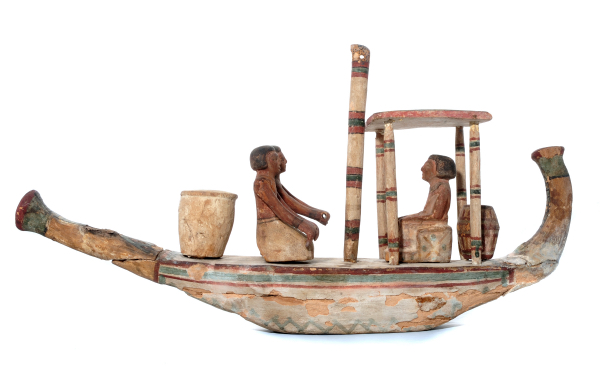
Wooden Funerary Boat approx. 3000 years old. PICTURE: Courtesy of Chiddingstone Castle

A new exhibition exploring how stories and images from ancient Egypt continue to influence art, design and popular culture today opens at the Young V&A in Bethnal Green on Saturday. Making Egypt is divided into three sections – Storytelling, Communicating and Making – and features more than 200 objects which, as well as ancient artifacts, include contemporary responses from jewellery and fashion designers, graphic novelists and ceramic artists throughout. Highlights include everything from a 4000-year-old small wooden painted model funerary boat and an amulet of Taweret, goddess of childbirth and fertility, dating from between 664 BC to 332 BC to a rare carved wooden scribe’s palette which was used to hold ink and brushes, and Egyptian faience shabtis dating from between 380 BC to 343 BC which represent just a handful of more than 300 small funerary figures discovered in the tomb of Djedhor. Runs until 2nd November. Admission charge applies. For more, see vam.ac.uk/young.

A new plaque commemorating humanitarian aid workers has been unveiled in the crypt of St Paul’s Cathedral. Located near the memorial to Florence Nightingale, the plaque “celebrates the bravery of those who dedicate their lives to helping others and remembers those who have been murdered or injured while delivering humanitarian assistance”. Hand-carved by stonemason Martin Gwilliams, the plaque reads: “In celebration of Humanitarian Aid Workers. Helping those in need whoever and wherever they are. And in remembrance of those who have died in the pursuit of their calling.” The plaque is the first in the UK in a public space to honour humanitarian aid workers and their work in conflict zones and disaster-stricken areas around the world. For more, see www.stpauls.co.uk.

After almost 40 years, the Science Museum’s ‘Exploring Space’ gallery at the South Kensington institution will partially close on 22nd April and fully close in early June as part of preparations for the museum’s new ‘Space’ gallery. Key objects on display include the Soyuz spacecraft that carried astronaut Tim Peake back to Earth, the spacesuit worn by Helen Sharman, the first Briton in space, during a 1991 spaceflight and a three-billion-year-old piece of the Moon. Other items include a British Black Arrow rocket and a United States Scout rocket suspended from the gallery’s ceiling, a RL10 rocket engine and a J-2 rocket engine which powered the Apollo astronauts to the Moon. For more, see www.sciencemuseum.org.uk

Send all items to exploringlondon@gmail.com
This Week in London – Natural History Museum scientists name new species; Ketna Patel at the Heath Robinson Museum; and, David Hoffman’s images of the East End…

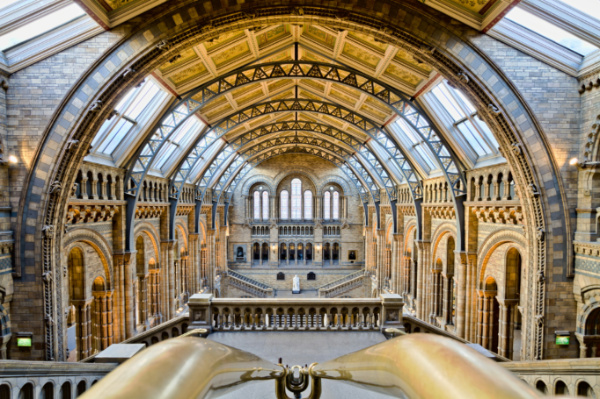
Interior of the Natural History Museum in South Kensington. PICTURE: Michael D Beckwith/Unsplash

A snake named after actor Leonardo DiCaprio, fossilised dung named after the author of Winnie the Pooh and a piranha named after Sauron, the evil Lord of the Rings figure, are among 190 new species named by London’s Natural History Museum scientists in 2024. The Anguiculus dicaprioi, or DiCaprio’s Himalayan snake, was named after DiCaprio while Alococopros milnei is a fossilised dung named after AA Milne in recognition of Winnie the Pooh (get it?) and a vegetarian piranha, or pacu, was named Myloplus sauron due to its resemblance to JRR Tolkien’s Eye of Sauron. Other newly named species included a new dinosaur from the Isle of Wight, now known as Comptonatus chasei, which was named for fossil hunter, Nick Chase, and a new species of pterosaur which was named Ceoptera evansae. For more on the museum, see www.nhm.ac.uk.

The work of British-Indian artist Ketna Patel is the subject of a new exhibition at the Heath Robinson Museum. REMIXOLOGY: The Art of Cultural Storytelling by Ketna Patel invites audiences to
“reflect on how identity is shaped – by ourselves and by society” and celebrates what is described as her “signature approach” to her work which involves remixing diverse cultural influences into something new. The display can be seen at the Pinner museum until 8th February. Museum admission charge applies. For more, see www.heathrobinsonmuseum.org.

Now on: Endurance & Joy in the East End: The photography of David Hoffman. This exhibition, hosted by the Museum of the Home, features the work of one of the leading “photographers of protest” in the UK and spans a 10 year period starting in 1973 when Hoffman lived in a squat in Fieldgate Mansions and documented issues seen in Whitechapel including homelessness, racism and the rise of protest. Running until 30th March, it can be seen in the Undercroft at 136 Kingsland Road. For more, see www.museumofthehome.org.uk/whats-on/exhibitions-and-installations/endurance-and-joy-david-hoffman/

Send all items for inclusion to exploringlondon@gmail.com.

Where’s London’s oldest…greeting card shop?

It’s that time of year and while it seems less people are these days sending Christmas cards, there are many who still do.

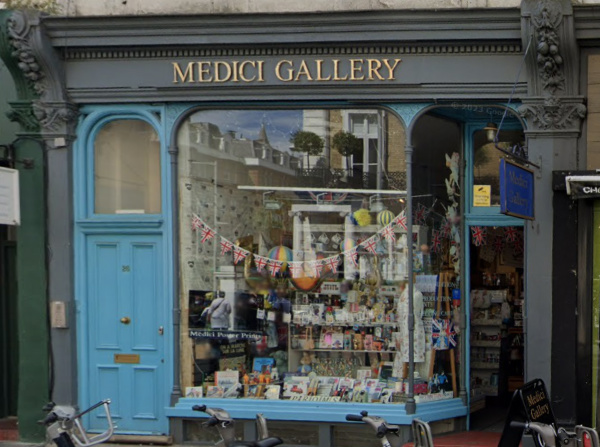
While we’ve previously written about the origins of greeting cards at Christmas (and who first sent them), today we’re taking a look at the oldest shop in which they’re still sold in London – often said to be the Medici Gallery in South Kensington.

The Medici Gallery in South Kensington: PICTURE: Google Maps

The gallery was opened by the Medici Society in 1908. This organisation had been founded by Philip Lee Warner and Eustace Gurney with the intention of promoting the work of artists to a wider audience. It initially operated on a subscription basis under which subscribers pay a set rate and then obtain copies of prints but later became a limited company.

The name Medici was said to have been chosen as a homage to the Medici family known for, among other things, the promotion of the arts in Florence during the Renaissance.

The gallery first started selling greeting cards in the 1930s and continues to do so today.

For more on the shop at 26 Thurloe Street, see www.medici.co.uk/.

This Week in London – One of the world’s most valuable watches at Science Museum; medieval silk bag (with a story) goes on show at Westminster Abbey; and, new electric bus display at London Transport Museum…

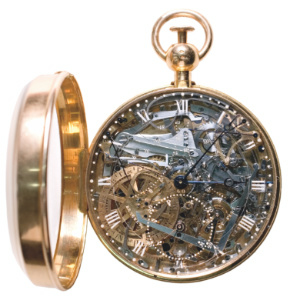
The ‘Marie Antoinette’ perpetuelle, Breguet, No 160, Paris, 1783-1820
© The Museum for Islamic Art, Jerusalem

One of the world’s most valuable watches – the No 160 watch which Abraham-Louis Breguet designed for Marie Antoinette but which wasn’t completed until the 1820s, well after her death – is the star of the show at the Science Museum’s new exhibition Versailles: Science and Splendour. Opening today, the exhibition, created in partnership with the Palace of Versailles, takes visitors on “a 120-year journey through the evolution of science at Versailles” and explores how Louis XIV, Louis XV and Louis XVI encouraged the pursuit of scientific knowledge and harnessed that knowledge as a tool of power. More than 100 objects are on display and, along with Breguet’s watch, they include Louis XV’s rhinoceros, a detailed map of the moon by Jean-Dominique Cassini, and Claude-Siméon Passemant’s Clock of the Creation of the World (1754). The watch, meanwhile, has its own fascinating history, including two decades in which its whereabouts were unknown after it was stolen in 1983 (in fact, its display in this exhibition marks the first time the timepiece has travelled abroad since its safe return to the LA Mayer Museum for Islamic Art in 2008). Runs until 21st April. Admission charge applies. For more, see sciencemuseum.org.uk/see-and-do/versailles.

• A medieval silk seal bag, which dates from the reign of King Henry III, has gone on public display for the first time in the Queen’s Diamond Jubilee Galleries at Westminster Abbey. The display follows the discovery by scholars that the bag’s material is a perfect match to the silk cloth used to wrap the remains of the Emperor Charlemagne when he was buried in Germany’s Aachen Cathedral (Charlemagne, seen as the first Holy Roman Emperor, died in 814 but was re-buried in the karlsschrein (Charles’s shrine) at Aachen in 1215). The bag at the abbey contains a wax seal, the Great Seal of King Henry III, which was attached to an inventory of the jewels and precious items on Edward the Confessor’s shrine located in the heart of the abbey. It was drawn up in 1267 when Henry III was in financial difficulties and forced to pawn items from the shrine to Italian merchants to raise funds (it is believed the items were all returned within 18 months). The silk used for Charlemagne’s shroud is believed to have been spun in the 12th century in Spain or the eastern Mediterranean and, while the small piece at the Abbey originates from a separate silk, it is understood that it would have been produced by the same weavers on the same loom. The bag can been seen until Easter next year. Admission charge applies. For more, see www.westminster-abbey.org/visit-us/plan-your-visit/the-queens-diamond-jubilee-galleries/.

A new interactive electric bus display has opened at the London Transport Museum in Covent Garden. The Wrightbus Electroliner display – which has been provided by Transport UK London Bus – is based on an electric vehicle bus type which has been part of the fleet of buses operating in London since 2023. The new display features the front of the bus and includes an interactive driver cab and passenger space. Admission charge applies. For more, see www.ltmuseum.co.uk.

Send all items for inclusion to exploringlondon@gmail.com.

This Week in London – Christmas at Kew; Picasso’s prints; and, the T rex dons its Christmas jumper…

World premiere installations Ombre by TILT – which takes the “form of a series of giant plants in bloom springing up from the landscape in a spectrum of vibrant shades” – and Threshold by Studio Vertigo – an “illuminated helix-like shape, bathed in golden yellow light to evoke the warmth and joy of the festive season” are at the centre of this year’s Christmas light trail at Kew Gardens. Other highlights at this year’s festive showing include Camellia Walk, which has been transformed into a snowy lane which showcases the spectacular tree canopy and evoking a wintery wonderland, Fish are Jumping by Dutch artists TOER and Mist Arches by Culture Creative which create “an atmospheric ambience across Kew’s Lake Crossing”. Annual favourites such as the light show on the Temperate House, the Fire Garden and Christmas Cathedral have also returned along with the Palm House finale. The trail can be visited on selected dates until 5th January. Admission charge applies. For more, see
www.kew.org/christmas.

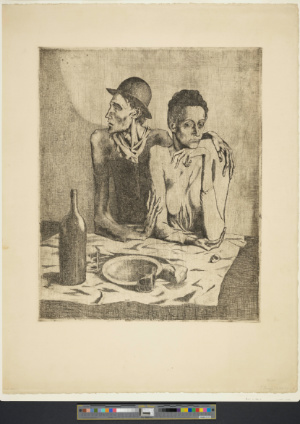
The frugal meal, 1904 © Succession Picasso/DACS, London 2024

Around 100 prints by Pablo Picasso – including some from his 347 Suite which have never been displayed before – are on show in a new exhibition at the British Museum. Picasso: Printmaker charts the artist’s engagement with printmaking (he produced around 2,400 in total) and centres on some of the more than 500 now in the British Museum’s collection (the largest in the UK). Highlights include his first professional print – The Frugal Meal (1904 – pictured) – as well as prints from the Vollard Suite (1930-1937) such as the aquatint Faun Uncovering a Woman (1936), and, the 347 Suite‘s Tree in the Storm, with Flight Towards a Church (1968). The exhibition can be seen in Room 90 until 30th March. Admission charges apply. For more, see www.britishmuseum.org/picasso.

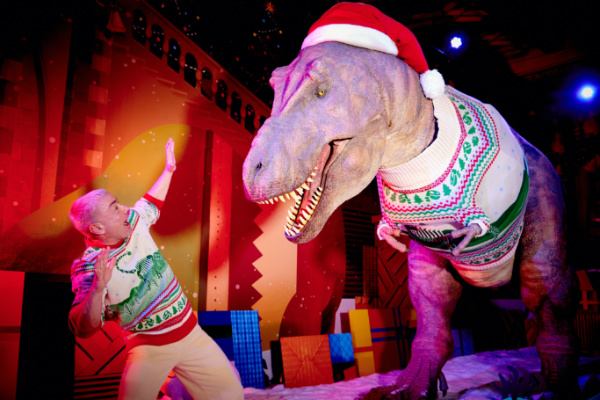
The T rex’s new Christmas jumper has been unveiled at the Natural History Museum. This year’s design – which can be seen modelled by the T rex – features festive colours of red, blue, green and white and an image of the museum’s latest prehistoric resident, Fern the Diplodocus, who took up residence in the redesigned gardens earlier this year. The jumper can be seen in the Dinosaur’s Gallery until January. Human-sizxed versions can be bought in the museum shop (www.nhmshop.co.uk). For more, see nhm.ac.uk.

The Natural History Museum unveils its 2024 Christmas jumper on its famous animatronic T rex in annual festive display. PICTURE: © Trustees of the Natural History Museu

Send all items to exploringlondon@gmail.com.

This Week in London – Lord Mayor’s Show; ‘Poppy Fields at the Tower’; and, ‘The Great Mughals’ at the V&A…

The Lord Mayor’s Show – featuring the 696th Lord Mayor of London, Alastair King – will be held this Saturday. The three-mile long procession – in which the Lord Mayor will ride in the Gold State Coach – features some 7,000 people, 250 horses, and 150 floats. It will set off from Mansion House at 11am and travel down Poultry and Cheapside to St Paul’s Cathedral before moving on down Ludgate Hill and Fleet Street to the Royal Courts of Justice. The return journey will set off again at 1:10pm from Temple Place and travel via Queen Victoria Street back to Mansion House where he will take the salute from the Pikemen and Musketeers at 2:40pm. For more information, including where to watch the show, head to https://lordmayorsshow.london.

 Poppy Field at the Tower. PICTURE: © Luxmuralis / Historic Royal Palaces.

An immersive sound and light show commemorating World War I and II opens at the Tower of London tomorrow ahead of Armistice Day and Remembrance Sunday. Historic Royal Palaces has partnered with Luxmuralis to present Poppy Fields at the Tower with visitors invited to go inside the Tower where – recalling the 2014 display Bloodswept Lands and Seas of Red in the Tower of London moat to mark the centenary of World War I – the walls will not only be illuminated with tumbling poppies but also historic photographs, documents and plans. The display is being accompanied by music composed by David Harper, and poetry recordings. Visitors will also be granted special access to see the Crown Jewels after-hours to learn more about their removal from the Tower during both World Wars. Runs until 16th November and should be pre-booked. Admission charges apply. For more, see https://www.hrp.org.uk/tower-of-london/whats-on/poppy-fields-at-the-tower/.

Akbar handing the imperial crown to Shah Jahan in the presence of Jahangir, Bichitr. Dated regnal year 3 (18th January 1630–7 January 1631), the borders c1630–1640. Opaque watercolour and gold on paper. Folio
from the Minto Album. © CC BY – 4.0. Chester Beatty, Dublin

An exhibition celebrating the golden age of the Mughal Court opens at the V&A in South Kensington on Saturday. The Great Mughals: Art, Architecture and Opulence examines the “creative output and internationalist culture” of Mughal Hindustan during the age of its greatest emperors, a period spanning c1560 to 1660. More than 200 objects are on display arranged in three sections corresponding to the reigns of the Emperor Akbar (1556-1605), Jahangir (1605 to 1627) and Shah Jahan (1628 to 1658). The objects include paintings, illustrated manuscripts, vessels made from mother of pearl, rock crystal, jade and precious metals. Highlights include four folios from the Book of Hamza, commissioned by Akbar in 1570, and the Ames carpet which was made in the imperial workshops between c1590 and 1600 and is on display for the first time in the UK. There’s also a unique wine cup made from white nephrite jade in the shape of a ram’s head for Shah Jahan in 1657, two paintings depicting a North American Turkey Cock and an African zebra created by Jahangir’s artists, and a gold dagger and scabbard set with over 2,000 rubies, emeralds and diamonds. Runs in Galleries 38 and 39 until 5th May. Admission charge applies. For more, see www.vam.ac.uk.

• Send all items for inclusion to exploringlondon@gmail.com.

This Week in London – ‘The World of Tim Burton’; Halloween at Hampton Court, the Tower, and Kew Gardens; and, Diwali celebrations…

Tim Burton and curator Maria McLintock visit ‘The World of Tim Burton’ , on 23rd October. PICTURE: Matt Crossick/PA Media A (courtesy of the Design Museum)
Tim Burton, Untitled (Edward Scissorhands), 1990. EDWARD SCISSORHANDS ©1990. 20th Century Studios, Inc. All Rights Reserved.

The fantastical world of celebrated film-maker Tim Burton is on display in a touring exhibition opening at the Design Museum on Friday. The World of Tim Burton, making its final stop after a decade-long world tour, showcases his 50 years of creative output and looks at not only his role as film-maker but as illustrator, painter, photographer and author. Drawn from Tim Burton’s personal archive as well as film studio collections and other private holdings, the more than 600 objects include film props, drawings, paintings, photographs, sketchbooks, moving-image works, sculptural installations, set and costume design. Highlights include the Catwoman suit from 1992’s Batman Returns, Wednesday Addams’ viral Rave’N dance dress from the recent Netflix series and the Edward Scissorhands costume worn by actor Johnny Depp in the 1990 film. There’s also early drawings of the Martians from Mars Attacks! (1996), the Mad Hatter from Alice in Wonderland (2010), and Emily in Tim Burton’s Corpse Bride (2005) and a specially created cinema experience which gives voice to some of Burton’s key collaborators and is being shown in a bespoke art-deco space reminiscent of the theatres Burton frequented as a child growing up in Hollywood. Runs until 21st April. Admission charge applies. For more, see https://designmuseum.org/exhibitions/the-world-of-tim-burton.

Hampton Court Palace and the Tower of London are marking Halloween with a series of spine-tingling events which delve into the mysterious past of the royal residences. From Saturday, visitors to Hampton Court Palace can, among other things, discover the ‘Alchemist’s Apothecary’ and meet the ghost of a long-departed alchemist, venture into the ‘Spider’s Lair’ in the depths of the palace’s wine cellar, catch a glimpse the frantic ghost of Catherine Howard in the Haunted Gallery, and encounter the spirit of Sybil Penn, a former nurse to Henry VIII’s son Edward, who has haunted the palace hallways ever since her tomb was disturbed. At the the Tower of London, meanwhile, the grounds have been transformed, hosting everything from a haunted chess game on the South Lawn to a glimpse into the tower’s astronomical past, complete with celestial maps and scientific instruments. Events take place until 3rd November. Admission charge applies. For more, see www.hrp.org.uk/hampton-court-palace/ or www.hrp.org.uk/tower-of-london/.

The first Halloween-themed light trail has opened at Kew Gardens with eerie illuminated trees, ghoulish installations and fire performers. Visitors can wander through an illuminated spiders web or discover a neon Carnivorous Tree feeding on unsuspecting skeletons by choosing one of three sessions to attend (daylight, twilight and moonlight) with things getting scarier as the evening progresses. Runs until 3rd November. Admission charge applies. For more, see www.kew.org/kew-gardens/whats-on/halloween-at-kew.

Diwali is being celebrated on Trafalgar Square this Sunday in a free, family-friendly festival. Delivered in partnership with the volunteer-led Diwali in London committee, the event – which showcases the culture of London’s Hindu, Sikh and Jain communities – features a programme of dance, music, activities and food. Highlights include dance workshops, sari and turban tying and the new Bhajan singing space where groups will perform throughout the day. The day runs from 1pm to 7pm. For more, see www.london.gov.uk/events/diwali-square-2024.

Send all items to exploringlondon@gmail.com
10 towers with a history in London – 9. The Queen’s Tower, Imperial College London…

This free-standing, 287 foot-high tower is a survivor – it’s all that remains of the Imperial Institute.

Subscribe for just £3 a month to get access to all Exploring London’s stories – that’s less than the cost of a cup of coffee!

London Explained – Albertopolis…

An aerial view of the area known as Albertopolis. PICTURE: Andreas Praefcke/Public Domain

A nickname, connected to Prince Albert (beloved husband of Queen Victoria), which was given to an area of South Kensington centred on Exhibition Road which is packed with various cultural and educational institutions.

The land, which had been the Kensington Gore Estate, was purchased by the Royal Commission for the Exhibition of 1851 on the suggestion of Prince Albert using the profits made from the Great Exhibition which had been held just to the north in Hyde Park. His vision was for arts and science quarter which included schools, colleges and libraries as well as museums, exhibition rooms and spaces for events.

Among the buildings subsequently constructed upon it were those bearing Prince Albert’s name including Royal Albert Hall and the Victoria and Albert Museum along with the huge Albert Memorial.

Other institutions on the land include the Natural History Museum, Imperial College London, the Royal College of Music, the Royal College of Art, the Science Museum, the Royal Geographical Society and the since removed Royal Horticultural Society Gardens.

The area gained its nickname in the 1850s due to the Prince’s role in the Great Exhibition and its subsequent purchase and was seen to both celebrate, but also by some, to satirise him. It fell out of use after the Prince’s death in 1861 but was subsequently revived in the 1960s and since to bring attention to buildings in the area threatened with demolition.

A pedestrian subway under Exhibition Road runs north from South Kensington Station and gives access to the museums (when it was built in 1885, a toll of one penny was charged to use it).