This Week in London – ‘Making Egypt’ at the Young V&A; new memorial to humanitarian aid workers; and, Science Museum’s ‘Exploring Space’ gallery to close soon…

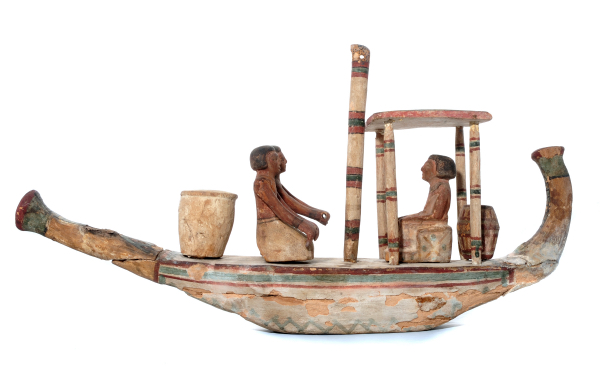
Wooden Funerary Boat approx. 3000 years old. PICTURE: Courtesy of Chiddingstone Castle

A new exhibition exploring how stories and images from ancient Egypt continue to influence art, design and popular culture today opens at the Young V&A in Bethnal Green on Saturday. Making Egypt is divided into three sections – Storytelling, Communicating and Making – and features more than 200 objects which, as well as ancient artifacts, include contemporary responses from jewellery and fashion designers, graphic novelists and ceramic artists throughout. Highlights include everything from a 4000-year-old small wooden painted model funerary boat and an amulet of Taweret, goddess of childbirth and fertility, dating from between 664 BC to 332 BC to a rare carved wooden scribe’s palette which was used to hold ink and brushes, and Egyptian faience shabtis dating from between 380 BC to 343 BC which represent just a handful of more than 300 small funerary figures discovered in the tomb of Djedhor. Runs until 2nd November. Admission charge applies. For more, see vam.ac.uk/young.

A new plaque commemorating humanitarian aid workers has been unveiled in the crypt of St Paul’s Cathedral. Located near the memorial to Florence Nightingale, the plaque “celebrates the bravery of those who dedicate their lives to helping others and remembers those who have been murdered or injured while delivering humanitarian assistance”. Hand-carved by stonemason Martin Gwilliams, the plaque reads: “In celebration of Humanitarian Aid Workers. Helping those in need whoever and wherever they are. And in remembrance of those who have died in the pursuit of their calling.” The plaque is the first in the UK in a public space to honour humanitarian aid workers and their work in conflict zones and disaster-stricken areas around the world. For more, see www.stpauls.co.uk.

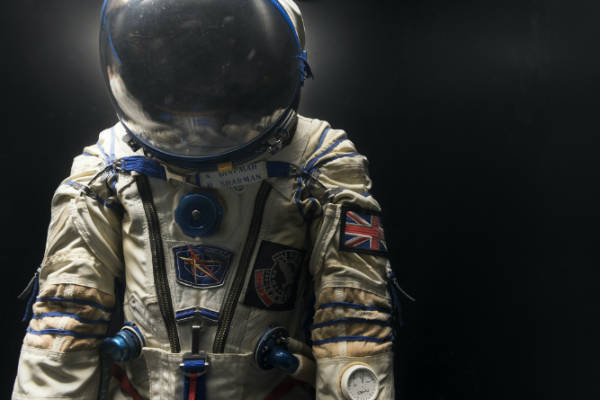
After almost 40 years, the Science Museum’s ‘Exploring Space’ gallery at the South Kensington institution will partially close on 22nd April and fully close in early June as part of preparations for the museum’s new ‘Space’ gallery. Key objects on display include the Soyuz spacecraft that carried astronaut Tim Peake back to Earth, the spacesuit worn by Helen Sharman, the first Briton in space, during a 1991 spaceflight and a three-billion-year-old piece of the Moon. Other items include a British Black Arrow rocket and a United States Scout rocket suspended from the gallery’s ceiling, a RL10 rocket engine and a J-2 rocket engine which powered the Apollo astronauts to the Moon. For more, see www.sciencemuseum.org.uk

Send all items to exploringlondon@gmail.com

This Week in London – Natural History Museum scientists name new species; Ketna Patel at the Heath Robinson Museum; and, David Hoffman’s images of the East End…

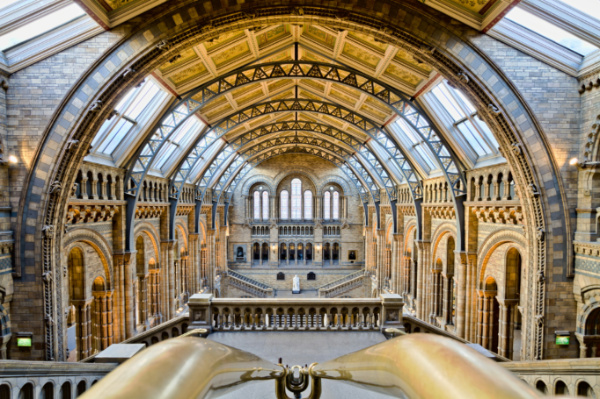
Interior of the Natural History Museum in South Kensington. PICTURE: Michael D Beckwith/Unsplash

A snake named after actor Leonardo DiCaprio, fossilised dung named after the author of Winnie the Pooh and a piranha named after Sauron, the evil Lord of the Rings figure, are among 190 new species named by London’s Natural History Museum scientists in 2024. The Anguiculus dicaprioi, or DiCaprio’s Himalayan snake, was named after DiCaprio while Alococopros milnei is a fossilised dung named after AA Milne in recognition of Winnie the Pooh (get it?) and a vegetarian piranha, or pacu, was named Myloplus sauron due to its resemblance to JRR Tolkien’s Eye of Sauron. Other newly named species included a new dinosaur from the Isle of Wight, now known as Comptonatus chasei, which was named for fossil hunter, Nick Chase, and a new species of pterosaur which was named Ceoptera evansae. For more on the museum, see www.nhm.ac.uk.

The work of British-Indian artist Ketna Patel is the subject of a new exhibition at the Heath Robinson Museum. REMIXOLOGY: The Art of Cultural Storytelling by Ketna Patel invites audiences to
“reflect on how identity is shaped – by ourselves and by society” and celebrates what is described as her “signature approach” to her work which involves remixing diverse cultural influences into something new. The display can be seen at the Pinner museum until 8th February. Museum admission charge applies. For more, see www.heathrobinsonmuseum.org.

Now on: Endurance & Joy in the East End: The photography of David Hoffman. This exhibition, hosted by the Museum of the Home, features the work of one of the leading “photographers of protest” in the UK and spans a 10 year period starting in 1973 when Hoffman lived in a squat in Fieldgate Mansions and documented issues seen in Whitechapel including homelessness, racism and the rise of protest. Running until 30th March, it can be seen in the Undercroft at 136 Kingsland Road. For more, see www.museumofthehome.org.uk/whats-on/exhibitions-and-installations/endurance-and-joy-david-hoffman/

Send all items for inclusion to exploringlondon@gmail.com.

Where’s London’s oldest…greeting card shop?

It’s that time of year and while it seems less people are these days sending Christmas cards, there are many who still do.

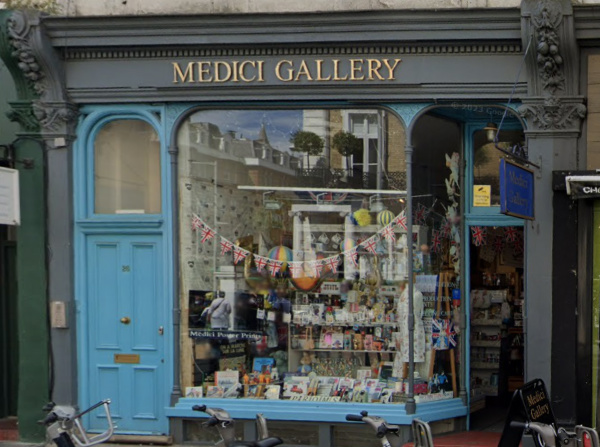
While we’ve previously written about the origins of greeting cards at Christmas (and who first sent them), today we’re taking a look at the oldest shop in which they’re still sold in London – often said to be the Medici Gallery in South Kensington.

The Medici Gallery in South Kensington: PICTURE: Google Maps

The gallery was opened by the Medici Society in 1908. This organisation had been founded by Philip Lee Warner and Eustace Gurney with the intention of promoting the work of artists to a wider audience. It initially operated on a subscription basis under which subscribers pay a set rate and then obtain copies of prints but later became a limited company.

The name Medici was said to have been chosen as a homage to the Medici family known for, among other things, the promotion of the arts in Florence during the Renaissance.

The gallery first started selling greeting cards in the 1930s and continues to do so today.

For more on the shop at 26 Thurloe Street, see www.medici.co.uk/.

This Week in London – One of the world’s most valuable watches at Science Museum; medieval silk bag (with a story) goes on show at Westminster Abbey; and, new electric bus display at London Transport Museum…

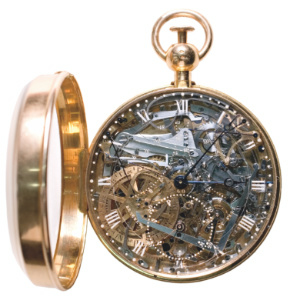
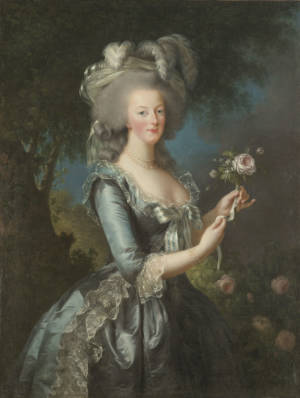
The ‘Marie Antoinette’ perpetuelle, Breguet, No 160, Paris, 1783-1820
© The Museum for Islamic Art, Jerusalem

One of the world’s most valuable watches – the No 160 watch which Abraham-Louis Breguet designed for Marie Antoinette but which wasn’t completed until the 1820s, well after her death – is the star of the show at the Science Museum’s new exhibition Versailles: Science and Splendour. Opening today, the exhibition, created in partnership with the Palace of Versailles, takes visitors on “a 120-year journey through the evolution of science at Versailles” and explores how Louis XIV, Louis XV and Louis XVI encouraged the pursuit of scientific knowledge and harnessed that knowledge as a tool of power. More than 100 objects are on display and, along with Breguet’s watch, they include Louis XV’s rhinoceros, a detailed map of the moon by Jean-Dominique Cassini, and Claude-Siméon Passemant’s Clock of the Creation of the World (1754). The watch, meanwhile, has its own fascinating history, including two decades in which its whereabouts were unknown after it was stolen in 1983 (in fact, its display in this exhibition marks the first time the timepiece has travelled abroad since its safe return to the LA Mayer Museum for Islamic Art in 2008). Runs until 21st April. Admission charge applies. For more, see sciencemuseum.org.uk/see-and-do/versailles.

• A medieval silk seal bag, which dates from the reign of King Henry III, has gone on public display for the first time in the Queen’s Diamond Jubilee Galleries at Westminster Abbey. The display follows the discovery by scholars that the bag’s material is a perfect match to the silk cloth used to wrap the remains of the Emperor Charlemagne when he was buried in Germany’s Aachen Cathedral (Charlemagne, seen as the first Holy Roman Emperor, died in 814 but was re-buried in the karlsschrein (Charles’s shrine) at Aachen in 1215). The bag at the abbey contains a wax seal, the Great Seal of King Henry III, which was attached to an inventory of the jewels and precious items on Edward the Confessor’s shrine located in the heart of the abbey. It was drawn up in 1267 when Henry III was in financial difficulties and forced to pawn items from the shrine to Italian merchants to raise funds (it is believed the items were all returned within 18 months). The silk used for Charlemagne’s shroud is believed to have been spun in the 12th century in Spain or the eastern Mediterranean and, while the small piece at the Abbey originates from a separate silk, it is understood that it would have been produced by the same weavers on the same loom. The bag can been seen until Easter next year. Admission charge applies. For more, see www.westminster-abbey.org/visit-us/plan-your-visit/the-queens-diamond-jubilee-galleries/.

A new interactive electric bus display has opened at the London Transport Museum in Covent Garden. The Wrightbus Electroliner display – which has been provided by Transport UK London Bus – is based on an electric vehicle bus type which has been part of the fleet of buses operating in London since 2023. The new display features the front of the bus and includes an interactive driver cab and passenger space. Admission charge applies. For more, see www.ltmuseum.co.uk.

Send all items for inclusion to exploringlondon@gmail.com.

This Week in London – Christmas at Kew; Picasso’s prints; and, the T rex dons its Christmas jumper…

World premiere installations Ombre by TILT – which takes the “form of a series of giant plants in bloom springing up from the landscape in a spectrum of vibrant shades” – and Threshold by Studio Vertigo – an “illuminated helix-like shape, bathed in golden yellow light to evoke the warmth and joy of the festive season” are at the centre of this year’s Christmas light trail at Kew Gardens. Other highlights at this year’s festive showing include Camellia Walk, which has been transformed into a snowy lane which showcases the spectacular tree canopy and evoking a wintery wonderland, Fish are Jumping by Dutch artists TOER and Mist Arches by Culture Creative which create “an atmospheric ambience across Kew’s Lake Crossing”. Annual favourites such as the light show on the Temperate House, the Fire Garden and Christmas Cathedral have also returned along with the Palm House finale. The trail can be visited on selected dates until 5th January. Admission charge applies. For more, see
www.kew.org/christmas.

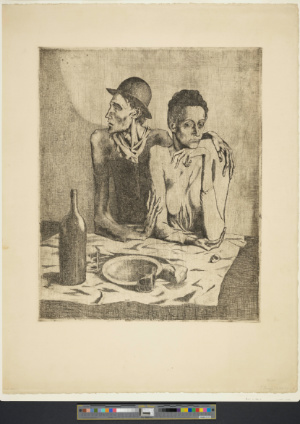
The frugal meal, 1904 © Succession Picasso/DACS, London 2024

Around 100 prints by Pablo Picasso – including some from his 347 Suite which have never been displayed before – are on show in a new exhibition at the British Museum. Picasso: Printmaker charts the artist’s engagement with printmaking (he produced around 2,400 in total) and centres on some of the more than 500 now in the British Museum’s collection (the largest in the UK). Highlights include his first professional print – The Frugal Meal (1904 – pictured) – as well as prints from the Vollard Suite (1930-1937) such as the aquatint Faun Uncovering a Woman (1936), and, the 347 Suite‘s Tree in the Storm, with Flight Towards a Church (1968). The exhibition can be seen in Room 90 until 30th March. Admission charges apply. For more, see www.britishmuseum.org/picasso.

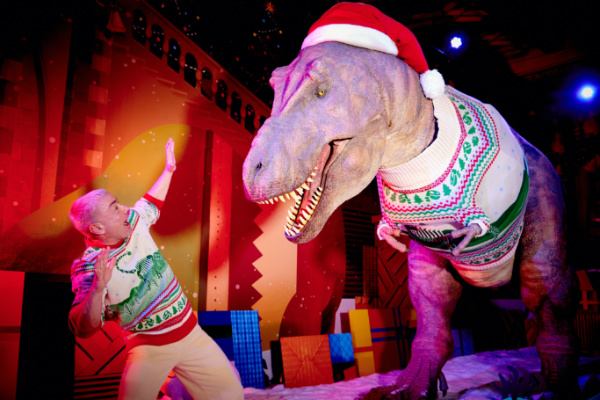
The T rex’s new Christmas jumper has been unveiled at the Natural History Museum. This year’s design – which can be seen modelled by the T rex – features festive colours of red, blue, green and white and an image of the museum’s latest prehistoric resident, Fern the Diplodocus, who took up residence in the redesigned gardens earlier this year. The jumper can be seen in the Dinosaur’s Gallery until January. Human-sizxed versions can be bought in the museum shop (www.nhmshop.co.uk). For more, see nhm.ac.uk.

The Natural History Museum unveils its 2024 Christmas jumper on its famous animatronic T rex in annual festive display. PICTURE: © Trustees of the Natural History Museu

Send all items to exploringlondon@gmail.com.
This Week in London – Lord Mayor’s Show; ‘Poppy Fields at the Tower’; and, ‘The Great Mughals’ at the V&A…

The Lord Mayor’s Show – featuring the 696th Lord Mayor of London, Alastair King – will be held this Saturday. The three-mile long procession – in which the Lord Mayor will ride in the Gold State Coach – features some 7,000 people, 250 horses, and 150 floats. It will set off from Mansion House at 11am and travel down Poultry and Cheapside to St Paul’s Cathedral before moving on down Ludgate Hill and Fleet Street to the Royal Courts of Justice. The return journey will set off again at 1:10pm from Temple Place and travel via Queen Victoria Street back to Mansion House where he will take the salute from the Pikemen and Musketeers at 2:40pm. For more information, including where to watch the show, head to https://lordmayorsshow.london.

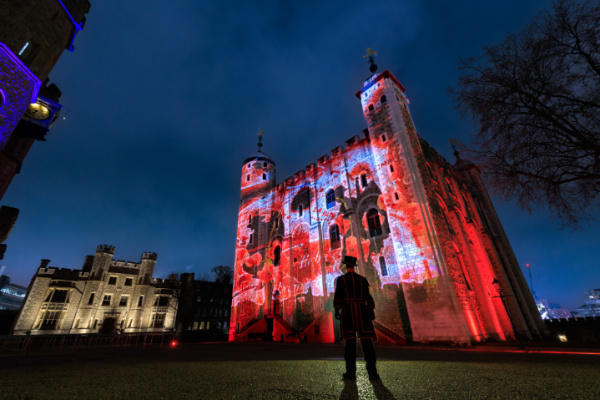
 Poppy Field at the Tower. PICTURE: © Luxmuralis / Historic Royal Palaces.

An immersive sound and light show commemorating World War I and II opens at the Tower of London tomorrow ahead of Armistice Day and Remembrance Sunday. Historic Royal Palaces has partnered with Luxmuralis to present Poppy Fields at the Tower with visitors invited to go inside the Tower where – recalling the 2014 display Bloodswept Lands and Seas of Red in the Tower of London moat to mark the centenary of World War I – the walls will not only be illuminated with tumbling poppies but also historic photographs, documents and plans. The display is being accompanied by music composed by David Harper, and poetry recordings. Visitors will also be granted special access to see the Crown Jewels after-hours to learn more about their removal from the Tower during both World Wars. Runs until 16th November and should be pre-booked. Admission charges apply. For more, see https://www.hrp.org.uk/tower-of-london/whats-on/poppy-fields-at-the-tower/.

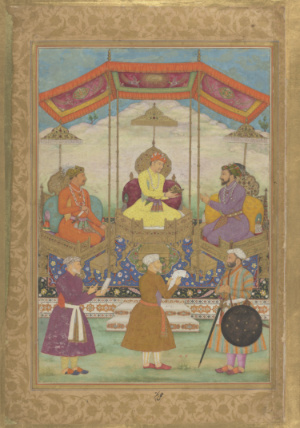
Akbar handing the imperial crown to Shah Jahan in the presence of Jahangir, Bichitr. Dated regnal year 3 (18th January 1630–7 January 1631), the borders c1630–1640. Opaque watercolour and gold on paper. Folio
from the Minto Album. © CC BY – 4.0. Chester Beatty, Dublin

An exhibition celebrating the golden age of the Mughal Court opens at the V&A in South Kensington on Saturday. The Great Mughals: Art, Architecture and Opulence examines the “creative output and internationalist culture” of Mughal Hindustan during the age of its greatest emperors, a period spanning c1560 to 1660. More than 200 objects are on display arranged in three sections corresponding to the reigns of the Emperor Akbar (1556-1605), Jahangir (1605 to 1627) and Shah Jahan (1628 to 1658). The objects include paintings, illustrated manuscripts, vessels made from mother of pearl, rock crystal, jade and precious metals. Highlights include four folios from the Book of Hamza, commissioned by Akbar in 1570, and the Ames carpet which was made in the imperial workshops between c1590 and 1600 and is on display for the first time in the UK. There’s also a unique wine cup made from white nephrite jade in the shape of a ram’s head for Shah Jahan in 1657, two paintings depicting a North American Turkey Cock and an African zebra created by Jahangir’s artists, and a gold dagger and scabbard set with over 2,000 rubies, emeralds and diamonds. Runs in Galleries 38 and 39 until 5th May. Admission charge applies. For more, see www.vam.ac.uk.

• Send all items for inclusion to exploringlondon@gmail.com.

This Week in London – ‘The World of Tim Burton’; Halloween at Hampton Court, the Tower, and Kew Gardens; and, Diwali celebrations…

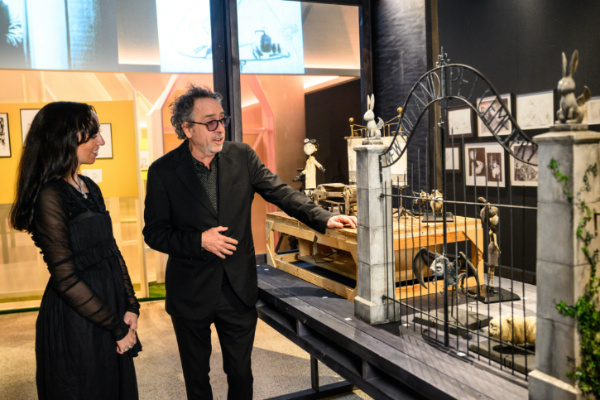
Tim Burton and curator Maria McLintock visit ‘The World of Tim Burton’ , on 23rd October. PICTURE: Matt Crossick/PA Media A (courtesy of the Design Museum)
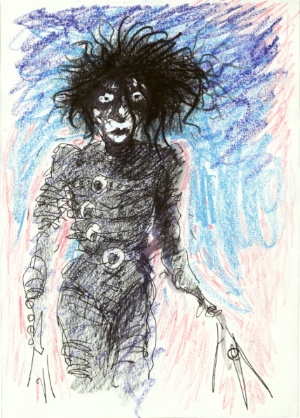
Tim Burton, Untitled (Edward Scissorhands), 1990. EDWARD SCISSORHANDS ©1990. 20th Century Studios, Inc. All Rights Reserved.

The fantastical world of celebrated film-maker Tim Burton is on display in a touring exhibition opening at the Design Museum on Friday. The World of Tim Burton, making its final stop after a decade-long world tour, showcases his 50 years of creative output and looks at not only his role as film-maker but as illustrator, painter, photographer and author. Drawn from Tim Burton’s personal archive as well as film studio collections and other private holdings, the more than 600 objects include film props, drawings, paintings, photographs, sketchbooks, moving-image works, sculptural installations, set and costume design. Highlights include the Catwoman suit from 1992’s Batman Returns, Wednesday Addams’ viral Rave’N dance dress from the recent Netflix series and the Edward Scissorhands costume worn by actor Johnny Depp in the 1990 film. There’s also early drawings of the Martians from Mars Attacks! (1996), the Mad Hatter from Alice in Wonderland (2010), and Emily in Tim Burton’s Corpse Bride (2005) and a specially created cinema experience which gives voice to some of Burton’s key collaborators and is being shown in a bespoke art-deco space reminiscent of the theatres Burton frequented as a child growing up in Hollywood. Runs until 21st April. Admission charge applies. For more, see https://designmuseum.org/exhibitions/the-world-of-tim-burton.

Hampton Court Palace and the Tower of London are marking Halloween with a series of spine-tingling events which delve into the mysterious past of the royal residences. From Saturday, visitors to Hampton Court Palace can, among other things, discover the ‘Alchemist’s Apothecary’ and meet the ghost of a long-departed alchemist, venture into the ‘Spider’s Lair’ in the depths of the palace’s wine cellar, catch a glimpse the frantic ghost of Catherine Howard in the Haunted Gallery, and encounter the spirit of Sybil Penn, a former nurse to Henry VIII’s son Edward, who has haunted the palace hallways ever since her tomb was disturbed. At the the Tower of London, meanwhile, the grounds have been transformed, hosting everything from a haunted chess game on the South Lawn to a glimpse into the tower’s astronomical past, complete with celestial maps and scientific instruments. Events take place until 3rd November. Admission charge applies. For more, see www.hrp.org.uk/hampton-court-palace/ or www.hrp.org.uk/tower-of-london/.

The first Halloween-themed light trail has opened at Kew Gardens with eerie illuminated trees, ghoulish installations and fire performers. Visitors can wander through an illuminated spiders web or discover a neon Carnivorous Tree feeding on unsuspecting skeletons by choosing one of three sessions to attend (daylight, twilight and moonlight) with things getting scarier as the evening progresses. Runs until 3rd November. Admission charge applies. For more, see www.kew.org/kew-gardens/whats-on/halloween-at-kew.

Diwali is being celebrated on Trafalgar Square this Sunday in a free, family-friendly festival. Delivered in partnership with the volunteer-led Diwali in London committee, the event – which showcases the culture of London’s Hindu, Sikh and Jain communities – features a programme of dance, music, activities and food. Highlights include dance workshops, sari and turban tying and the new Bhajan singing space where groups will perform throughout the day. The day runs from 1pm to 7pm. For more, see www.london.gov.uk/events/diwali-square-2024.

Send all items to exploringlondon@gmail.com

10 towers with a history in London – 9. The Queen’s Tower, Imperial College London…

This free-standing, 287 foot-high tower is a survivor – it’s all that remains of the Imperial Institute.

Subscribe for just £3 a month to get access to all Exploring London’s stories – that’s less than the cost of a cup of coffee!

London Explained – Albertopolis…

An aerial view of the area known as Albertopolis. PICTURE: Andreas Praefcke/Public Domain

A nickname, connected to Prince Albert (beloved husband of Queen Victoria), which was given to an area of South Kensington centred on Exhibition Road which is packed with various cultural and educational institutions.

The land, which had been the Kensington Gore Estate, was purchased by the Royal Commission for the Exhibition of 1851 on the suggestion of Prince Albert using the profits made from the Great Exhibition which had been held just to the north in Hyde Park. His vision was for arts and science quarter which included schools, colleges and libraries as well as museums, exhibition rooms and spaces for events.

Among the buildings subsequently constructed upon it were those bearing Prince Albert’s name including Royal Albert Hall and the Victoria and Albert Museum along with the huge Albert Memorial.

Other institutions on the land include the Natural History Museum, Imperial College London, the Royal College of Music, the Royal College of Art, the Science Museum, the Royal Geographical Society and the since removed Royal Horticultural Society Gardens.

The area gained its nickname in the 1850s due to the Prince’s role in the Great Exhibition and its subsequent purchase and was seen to both celebrate, but also by some, to satirise him. It fell out of use after the Prince’s death in 1861 but was subsequently revived in the 1960s and since to bring attention to buildings in the area threatened with demolition.

A pedestrian subway under Exhibition Road runs north from South Kensington Station and gives access to the museums (when it was built in 1885, a toll of one penny was charged to use it).

This Week in London – Dick Whittington explored at the Guildhall Library; Francis Bacon’s portraits; and, the 60th Photographer of the Year competition…

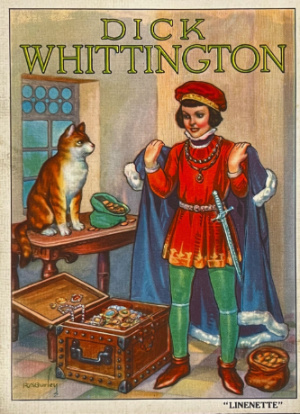
PICTURE: Courtesy of the City of London Corporation

A new exhibition exploring the life of one of the City of London’s most famous Lord Mayors has opened at the City of London’s Guildhall Library. Marking the library’s 600th anniversary, Whittington, the Man, the Myth and the Cat uses chapbooks (small printed booklets used for street literature in early modern Europe), children’s books, and works relating to pantomimes, to investigate Whittington’s story (including the question of whether or not he owned a cat). The exhibition details Whittington’s “rags to riches” tale and the many myths that later grew up around him, revealing information about his many loans to to kings (Richard II, Henry IV and Henry V), how he was three times Lord Mayor of London (1397, 1406 and 1419) and how he paid for the building of public lavatories at St Martin Vintry and a refuge for unmarried mothers at St Thomas’ Hospital as well as the rebuilding of Newgate Prison, and the establishment of the first library at Guildhall. Addressing the myth of the Whittington’s cat, it explains how it may have come about as a result of a play on words – ‘cat’ (or cattes) being a word used to describe a fleet of boats used for importing and exporting which was a mistranslation of the French word, ‘achat’, for trade. The exhibition, which runs until April next year, is free to visit. For more, see www.cityoflondon.gov.uk/services/libraries/guildhall-library.

The first exhibition in almost 20 years to focus on Francis Bacon’s portraits opened at the National Portrait Gallery, off Trafalgar Square, this week. Francis Bacon: Human Presence charts the artist’s career through 50 of his works arranged in five sections – ‘Portraits Emerge’, ‘Beyond Appearance’, ‘Painting from the Masters’, ‘Self Portraits’, and ‘Friends and Lovers’. Works on show include self-portraits as well as Head VI (1949), Study for a Pope I (1961), Three Studies for a Portrait of Isabel Rawsthorne (1965) and Portrait of a Man Walking Down Steps (1972). The exhibition also includes photographic portraits and film of Bacon by some of the century’s leading photographers, including Cecil Beaton, Arnold Newman, and Bill Brandt. Can be seen until 19th January. Admission charge applies. For more, see www.npg.org.uk.

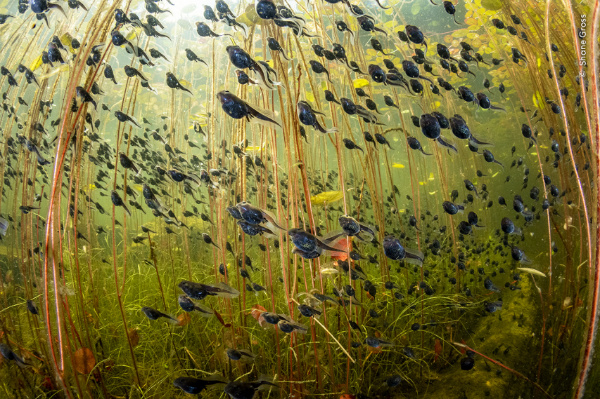
‘The Swarm of Life’ by Shane Gross, Canada, winner of the 60th Wildlife Photographer of the Year competition.

A Canadian marine conservation photojournalist, Shane Gross, has won this year’s Wildlife Photographer of the Year competition for an image capturing the magical underwater world of western toad tadpoles. The Swarm of Life is among 100 prize-winning images which are going on show at the Natural History Museum in South Kensington from tomorrow as it celebrates the 60th year of its Photographer of the Year competition. This year’s contest attracted a record-breaking 59,228 entries from 117 countries and territories. Among the other images on display are German Alexis Tinker-Tsavalas’ Life Under Dead Wood  depicting the fruiting bodies of slime mould with a tiny springtail (Tinker-Tsavalas won Young Wildlife Photographer of the Year). Wildlife Photographer of the Year is developed and produced by the Natural History Museum, London. The exhibition runs until 29th June. Admission charge applies. For more, see www.nhm.ac.uk/wpy.

Send all items for inclusion to exploringlondon@gmail.com

This Week in London – Theatre and Performance at the V&A; blue plaque for Diana Beck; and, the Royal Academy celebrates Michael Craig-Martin…

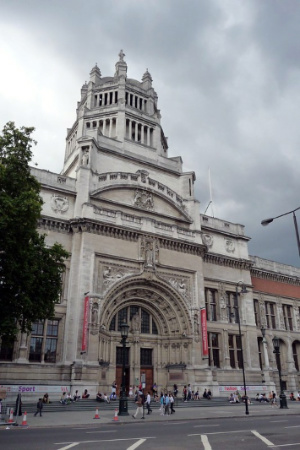
The V&A in South Kensington. PICTURE: graham chandler (licensed under CC BY-NC-ND 2.0)

The V&A in South Kensington is celebrating the 100th anniversary of its Theatre and Performance collections with Enthoven Unboxed: 100 Years of Collecting Performance, which opened last weekend. The exhibition commemorates the 1924 donation of more than 80,000 playbills, programmes, and ephemera from collector, humanitarian, and campaigner Gabrielle Enthoven. Highlights among the objects on display include John Pasch’s artwork featuring the original Rolling Stones tongue and lips, a pair of semi-quaver spectacles worn by Elton John during his 1981-2 British and world tours, a self-portrait bust by 18th century actress Sarah Siddons, a set model designed by Misty Buckley for Stormzy’s headline set at Glastonbury Festival in 2019, and, a prompt script used by Phoebe Waller-Bridge for Fleabag in the West End. The free display can be seen in the Theatre and Performance Galleries (Rooms 103-106) until 4th January. For more., see www.vam.ac.uk,

Diana Beck, the first female neurosurgeon in Britain, has been honoured with an English Heritage Blue Plaque. Unveiled earlier this month, the plaque marks the site of her former home and consulting rooms at 53 Wimpole Street in Marylebone. Beck lived at the property from 1948 to 1954, a period during which she created and ran a neurosurgical department at Middlesex Hospital. It was also during this period that Beck operated on her most famous patient – Winnie the Pooh author AA Milne, who had suffered a stroke in 1952. For more, see www.english-heritage.org.uk/visit/blue-plaques/

Michael Craig-Martin, ‘Common History: Conference, 1999’. Acrylic on aluminium, 274.3 x 508 cm. Gagosian, London © Michael Craig-Martin. Image courtesy of Gagosian

The largest retrospective of the work of artist (and Royal Academician) Michael Craig-Martin has opens at the Royal Academy on Saturday. The exhibition in Royal Academy’s Main Galleries features more than 120 works spanning the period from the 1960s through to today and includes sculpture, installation, painting and drawing, as well as works newly created for the display. Among the highlights are the installations On the Table (1970) and An Oak Tree (1973), the large scale wall drawing in tape, Interlocked (MoMA project 1990) and the large scale painting Eye of the Storm (2003) as well as his depictions of single objects and word paintings. The exhibition runs until 10tH December. Admission charge applies. For more, see www.royalacademy.org.uk.

Send all items to exploringlondon@gmail.com.
This Week in London – ‘Lucky Jim’ reunited with historic plane; Banksy work related to Guildhall Yard; and, a new Kew audio tour…

‘Lucky Jim’, a toy cat mascot belong to Jim Alcock – pilot of the first trans-Atlantic flight, has been reunited with the Vickers Vimy biplane aircraft that made the flight for the first time since 1919. The cat accompanied the famous aviator and his navigator Arthur Whitten Brown on their historic 17 hour, 1,880 mile journey. Following preservation efforts is now displayed alongside the aircraft in the Flight gallery at the Science Museum in South Kensington. Lucky Jim was previously displayed at the Science and Industry Museum in Manchester until 2019. A cartoon version of the cat is also the star of a new family trail around the gallery. For more, see https://www.sciencemuseum.org.uk/see-and-do/flight.

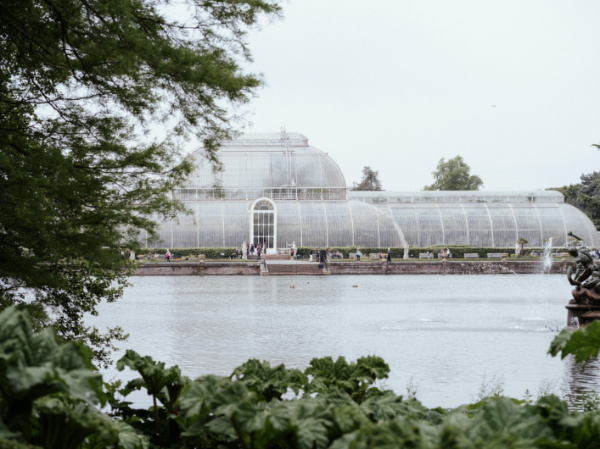
The Palm House at Kew Gardens. PICTURE: Annie Spratt/Unsplash

Explore the plants of Kew Gardens’ historic Palm House with a new audio tour. Created by Kew’s Community Horticulture Programme in collaboration with outreach participants, Pollinators of the Palm House puts a spotlight on some of the remarkable stories and pollination tricks of incredible plants inside the 175-year-old structure. These include the giant cycad (Encephalartos altensteinii) – officially the oldest pot plant in the world, and the traveller’s palm (Ravenala madagascariensis), which is pollinated by lemurs in the wild on Madagascar. For more, see www.kew.org.

An artwork by Banksy has been relocated to Guildhall Yard for its protection. The work, which depicts swimming piranhas, appeared on a sentry box near Ludgate Hill earlier this month. A City of London Corporation spokesperson saying a permanent home would be found “in due course”.

Send all items for inclusion to exploringlondon@gmail.com.

This week in London – Re-live the ‘Golden Age of Piracy’; getting below the surface of the Thames; a look inside East London houses through time; and, a new public garden in the City…

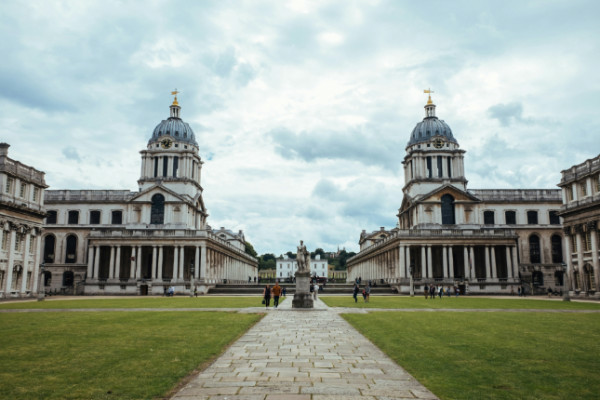
The Old Royal Naval College in Greenwich. PICTURE: Robert Bye/Unsplash

• ‘The Golden Age of Piracy’ will come to life in a living history weekend this Saturday and Sunday at the Old Royal Naval College in Greenwich. With the focus on the period between 1650 and 1720 (when more than 5,000 pirates were said to have been active), visitors will learn how to separate pirate fact from fiction, enjoy songs of the sea, witness sword and cutlass fights, and hear the tale of a real 18th-century mutiny. Each day culminates with a demonstration of the firepower of pirates and marines in the arena on the lawns overlooking the River Thames. There’s also the opportunity to wander through the pirate encampment and learn about the clothes and weapons of the period, listen to some love music and sample food from the Taste of History period kitchen. Runs from 11am to 4pm on Saturday and Sunday. Admission charge applies. For more, see https://ornc.org/whats-on/golden-age-of-piracy/.

The world of sound below the surface of the River Thames is the subject of a new contemporary art installation at the Natural History Museum which opens tomorrow. The River, composed by Norwegian sound artist Jana Winderen in collaboration with spatial audio expert Tony Myatt, uses underwater audio recordings to immerse visitors in a 360 degree audio composition which spans the river from the source by Kemble through central London and on to the sprawling estuary leading into the North Sea. The River is free to visit. Bookings, to ensure entry, can be made at https://www.nhm.ac.uk/visit.html.

One of the new rooms at the Museum of the Home – a Jewish tenement flat from 1913. PICTURE: Courtesy of the Museum of the Home.

Seven new and reimagined period rooms reflecting the stories of our East London community, past, present and future, have been unveiled at the Museum of the Home in Shoreditch. Thanks to the Real Rooms project, the expanded ‘Rooms Through Time: 1878-2049’ now includes a Jewish tenement flat from 1913, an Irish couple’s house in the 1950s, LGBTQ+ renters sharing an ex-council home in the 2005, a British-Vietnamese home in 2024, and the Innovo Room of the Future, which explores real homes amid challenges such as the climate crisis and technological advances. The scope of the existing 1870s Parlour and Front Room in 1976 have also both been expanded. Entry to the permanent display is free. For more, see https://www.museumofthehome.org.uk.

A new public garden has been opened at the intersection of Cheapside and New Change in the City of London. Formerly known as the Sunken Garden, the area has undergone a transformation and now features benches created from 150-year-old-plus granite stones salvaged from the Thames River Wall and recycled timber from fallen London Plane trees. There’s also new permeable paving which lets rain drain freely into the ground and stores it for trees to use later, reducing pressure on the sewer system while new plant species have been selected with local wildlife in mind.

Send all items for inclusion to exploringlondon@gmail.com.

LondonLife – ‘Fern the Diplodicus’ takes up new post at the Natural History Museum…

‘Fern the Diplodicus’ has been unveiled at the Natural History Museum this morning, the latest addition to its transformed gardens which open to public on Thursday.

The cast of Fern the Diplodocus arrives at the Natural History Museum. PICTURE: © The Trustees of the Natural History Museum, London

The bronze cast of the museum’s moved loved figure takes pride of place in the new Evolution Garden, which, along with the Nature Discovery Garden, sit within five acres of green space surrounding the South Kensington museum.

The Evolution Garden provides the opportunity to explore the 2.7 billion history of the planet and, as well as Fern, features a canyon clad in ancient Scottish stone, and a second dinosaur, Hypsiophodon.

The cast of Hypsiophodon in the garden. PICTURE: © The Trustees of the Natural History Museum, London

The Nature Discovery Garden showcases different wildlife habitats in the UK’s urban spaces – complete with the frogs, newts, dragonflies and mandarin ducks that are already living there – and features a nw Nature Activity Centre which combines scientific facilities with a hub for school workshops and family activities.

For more, see www.nhm.ac.uk/visit/galleries-and-museum-map/our-gardens.html

This Week in London – Trail-blazing women celebrated at the Tower; ‘The Judgement of Paris’ back on show; and, Barbie at the Design Museum…

PICTURE: Joseph Gilbey/Unsplash

• The lives of five little-known trail-blazing women are being celebrated at the Tower of London. The five women – who will take part in a guided procession through the grounds and features in staged performances and face-to-face interactions at the Tower this summer – include Winifred Maxwell, a fearless Jacobite who smuggled her husband out of the Tower the night before his execution and Katherine le Fevre, who served as the Master Smith of the Tower during the Hundred Year War with France. Also represented are Phillis Wheatley, an intellectual prodigy and enslaved woman hailing from West Africa who became the first African-American author of a published book of poetry; Catalina of Motril, a Granadan bedchamber attendant of Katherine of Aragon who was privy to her former mistress’ secrets; and, Leonora Cohen, Yorkshire-born Suffragette who smashed the case holding the Crown Jewels at the Tower with an iron bar – and kept campaigning until she was 105. The chance to meet the women is included in general admission until 1st September. For more, see www.hrp.org.uk/tower-of-london/.

Peter Paul Rubens’ The Judgement of Paris has returned to public display after a 14 month restoration project. The project found that the painting, believed to date from 1632‒5 during the last decade of Ruben’s life, has been restored several times including a significant re-working of the composition sometime between 1676 and 1721. The new analysis reveals what changes were made by Rubens himself to the work – which arrived in Britain in 1792 and was acquired by the National Gallery in 1844 – and which were done after his death. For more, see www.nationalgallery.org.uk.

A major exhibition on the creation and evolution of Barbie opens at the Design Museum on Friday. Barbie: The Exhibition, which coincides with the 65th anniversary of the Barbie brand, showcases the diversity of the Barbie range, as well as her friends (and, of course Ken) and looks at how Barbie’s homes, vehicles and other products have reflected the tastes and trends of day. Highlights include a rare first edition of the first doll released by Mattel in 1959 (‘Number 1 Barbie’), the ground-breaking ‘Day to Night Barbie’ from 1985 and the best-selling Barbie of all time, 1992’s ‘Totally Hair Barbie’, which sold more than 10 million across the globe. There are also examples of the first Black, Hispanic and Asian dolls to bear the Barbie name as well as the first Barbie with Down syndrome, the first to use a wheelchair, and the first to be designed with a curvy body shape. Runs until 23rd February. Admission change applies. For more, see https://designmuseum.org/exhibitions/barbie-the-exhibition.

Send all items to exploringlondon@gmail.com.
This Week in London – RNLI’s first HQ commemorated; “weird and wonderful” birds; and, Princess Diana in photographs…

The City of London has unveiled a new blue plaque commemorating the Royal National Lifeboat Institution which is this year marking its 200th anniversary. The plaque is on the Furniture Makers’ Hall in Austin Friars which is where the organisation has its first headquarters from 1824 to 1826. The plaque was unveiled by the Lord Mayor of London, Professor Michael Mainelli. The RNLI, which today operates 238 lifeboat stations in the UK and Ireland including four on the River Thames, was founded by Sir William Hillary in the City of London Tavern in Bishopsgate on 4th March, 1824, and early meetings were held at various addresses until it moved into 12 Austin Friars. Meanwhile, ‘Ian Visits’ reports that a new plaque has also been installed at Limehouse Basin to commemorate Lifbåt 416 which was built there by Forrestt & Son’s boatyard in 1868 and sent as a gift to the King of Sweden, Karl XV. The Lifbåt 416, which has been restored, returned to Limehouse Basin this week after attending RNLI commemorations in Poole, Dorset (where it was the oldest lifeboat to take part in a mile-long flotilla).

Hargila army papier-mache headdress close up. PICTURE: Courtesy of Natural History Museum

The “weird and wonderful” ways birds have adapted to survive are celebrated in a new exhibition at the Natural History Museum. Birds: Brilliant and Bizarre, which opens at the South Kensington institution on Friday, has been created in partnership with the Royal Society for the Protection of Birds and features installations and hands-on exhibits which allow visitors to feel how fast a hummingbird’s heart beats when in flight, smell the strange oil one bird uses to protect its eggs and listen to the sound of a dawn chorus of birds in the year 2050. Objects on show include the ‘Wonderchicken’ – the oldest known fossil of a modern bird, a replica of a stork that flew across the world from the African continent with a spear lodged in its neck, and a headdress of the ‘Hargila army’ (pictured), a group of women in the Indian state of Assam who work to protect one of the world’s rarest storks. Admission charge applies. Runs until 5th January. For more, see www.nhm.ac.uk/visit/exhibitions/birds-brilliant-bizarre.html.

A walk-through photographic exhibition featuring some of the most iconic photos of Princess Diana opens on Saturday. Princess Diana: Accredited Access features 75 life-sized photographs by her official royal photographer, Anwar Hussein, and his two sons – Samir and Zak – which include behind the scenes access. The exhibition at the Dockside Vaults, St Katharine Docks, runs until 2nd September. Admission charge applies. For more, see www.princessdianaexhibit.com.

Send all items to exploringlondon@gmail.com.
This Week in London – A Greenwich chocolate house recreated; Bridgerton wig debuts at Kew; and, climate tech at the Science Museum…

• Happy Easter to all our readers! We’ll be taking a break over the next few days with our usual coverage returning next Tuesday.

A caricature of Lloyd’s Coffee House from the 17th century.

Experience a recreation of Grace and Thomas Tosier’s famous ‘royal’ Chocolate House in Greenwich this Easter. Located in the Old Royal Naval College, Chocolate House Greenwich recreates the Tosier Chocolate House which was located in what became known as Chocolate Row, on the edge of Blackheath. A social space for the leading figures of the day, the chocolate house was run by Grace while her husband Thomas served as chocolate maker for King George I, running the chocolate kitchen at Hampton Court Palace. Visitors will be able to immerse themselves in the chocolate house via an audio and visual experience created by Unusual Expo and actor-writer Jonathan Coote. As well as meeting Grace, there is also the chance to listen in to luminaries such as architect and astronomer Sir Christopher Wren, writer and diarist John Evelyn, the first Astronomer Royal, John Flamsteed, and playwright and architect John Vanbrugh. A series of events will accompany the exhibition – which opens tomorrow – including an Easter Trail for families, a gin and chocolate tasting experience and a ‘Choc-o-Late’ event. Admission charge applies. Runs until 3rd November. For more, see https://ornc.org/whats-on/chocolate-house-greenwich/.

A wig worn by Golda Rosheuvel in Netflix’s hit series Queen Charlotte: A Bridgerton Story goes on display at Kew Palace from the end of this month. The grey wig with accompanying tiara will be showcased in Queen Charlotte’s dressing room, alongside a lock of the real Queen Charlotte’s hair. Visitors will also be able to join daily 30 minute Queen Charlotte: A Kew Palace story tours, walking in the footsteps of famous royals like King George III and Queen Charlotte. Admission charge applies. For more, see https://www.hrp.org.uk/kew-palace/.

A visitor looks at a tidal turbine blade in Energy Revolution The Adani Green Energy Gallery at the Science Museum © Science Museum Group

A major new gallery examining the rapid energy transition and decarbonisation needed globally to limit climate change has opened at the Science Museum. The Energy Revolution: The Adani Green Energy Gallery is divided into three sections – Future Planet, Future Energy and Our Future – and highlights technologies and projects being used to address the climate crisis. Objects on show include a seven metre long tidal turbine blade made by Orbital Marine Power which was used in the Orkneys, rare surviving Edison tube mains cables used to power world’s first public electricity network in London in 1882, and a three metre high CoolAnt passive air-cooling facade from India that reduces dependence on powered air conditioning. At the centre of the gallery sits Only Breath, a kinetic sculpture created by artists Alexandra Carr and Colin Rennie from Torus Torus Studios that moves and blooms, stretching to around five metres in diameter when unfurled. The gallery can be found on Level 2 of the South Kensington museum. Admission is free. For more, see sciencemuseum.org.uk/energy-revolution.

Send all items to exploringlondon@gmail.

This Week in London – Women of the RNLI; ‘Tropical Modernism’ at the V&A; and, a new memorial to Sir Ernest Shackleton unveiled at Westminster Abbey…

National Maritime Museum in Greenwich. PICTURE: Keith Murray (licensed under CC BY-NC-ND 2.0)

The role of women in the Royal National Lifeboat Institution is being celebrated in a new exhibition at the National Maritime Museum in Greenwich. Women of the RNLI, which marks the bicentenary of the organisation, features a series of 42 photographs depicting women volunteers and the lifeboat stations’ slipways where they work. The images by photographer Jack Lowe are part of his ongoing ‘Lifeboat Station Project’an attempt to photograph all 238 operational RNLI lifeboat stations and their crews.. Lowe uses a 12×10 inch (30×25cm) Thornton-Pickard field camera from about 1905 and develops the photos using a process called ‘wet collodion’, a technique invented in the mid-19th century. The display also features oral histories from some of the sitters. The display can be seen from Saturday until 1st December. For more, see www.rmg.co.uk.

• A new exhibition exploring the architectural style of Tropical Modernism in West Africa and India opens at the V&A on Saturday. Tropical Modernism: Architecture and Independence centres on the work of British architects Jane Drew and Maxwell Fry who developed Tropical Modernism in the 1940s, working primarily in Ghana and India. The style, which valued function over ornamentation, became a symbol of a post-colonial future. The exhibition includes models, drawings, letters, photographs, and archival ephemera as it documents the key figures and moments of the Tropical Modernist movement. There is also a half hour film installation displayed on three screens. Runs until 22nd September. Admission charge applies. For more, see vam.ac.uk.

A new memorial stone dedicated to Antarctic explorer Sir Ernest Shackleton has been unveiled at Westminster Abbey. The triangular-shaped memorial, which can be found on a wall in the south cloister, was unveiled at a service earlier this month attended by Princess Anne and members of Shackleton’s family. Located close to tributes to pioneering sailors Captain James Cook, Sir Francis Chichester and Sir Francis Drake, it was designed and made by sculptor Will Davies and its shape reflects Shackleton’s preference to be at the apex of a triangle in group photographs. The memorial incorporates stones including Connemara marble and Kilkenny limestone in reflection of Shackleton’s Irish heritage, and the names of his expedition ships, Nimrod and Endurance, are inscribed upon it, along with the lifeboat The James Caird, and his family motto, ‘FORTITUDINE VINCIMUS’ (‘By Endurance We Conquer’). For more, see www.westminster-abbey.org.

Send all items to exploringlondon@gmail.com.
This Week in London – Notre Dame de Paris celebrated at the Abbey; remembering “great escapes” of World War II; and, ‘Wildlife Photographer of the Year’…

Notre Dame de Paris on fire in 2019. PICTURE: Nivenn Lanos/Unsplash

An immersive exhibition on the cathedral of Notre Dame de Paris, currently being restored following a devastating 2019 fire, opened at Westminster Abbey this week. Notre Dame de Paris, The Augmented Exhibition tells the story of the Gothic masterpiece from the 12th century to today and features a digital recreation of the cathedral by digital heritage specialists, Histovery, in collaboration with Rebuilding Notre-Dame de Paris. The exhibition is being held in the 13th century chapter house of the abbey with visitors, thanks to digital technology, able to witness firsthand the lavish wedding of King Henri IV, the coronation of Napoleon Bonaparte, and the 19th century construction of Notre-Dame’s iconic spire of Viollet-le-Duc. Runs until 1st June. Admission charge applies. For more, head here. The exhibition is part of a season of events at the abbey celebrating the bonds between the UK and France.

An new exhibition focused on the hundreds of thousands of people held captive during World War II has opened at the National Archives in Kew. Great Escapes: Remarkable Second World War Captives, tells the story of famous escape attempts such as the escape from Stalag Luft III known as “the Great Escape” (made famous in the film of the same name) and British officer Airey Neave’s escape from Colditz Castle dressed as a German soldiers well as stories of individuals seeking escape through art, music and finding love while being held. The exhibition is divided into three parts. The first explores the legal framework for the 1929 Geneva Convention governing prisoners and tells the story of MI9, a highly secret British Government agency established in 1939 to help military personnel evade and escape capture. Part two explores the stories from individual prisoners and internees under British, German, and Japanese authority during World War II while part three examines how prisoners were dealt with at the end of the war as well as how the experience of the conflict led to the Geneva Convention being rewritten in 1949. Runs until 21st July. Admission is free. For more, see www.nationalarchives.gov.uk/great-escapes/.

‘Ice Bed’ ©Nima Sarikhani, Wildlife Photographer of the Year People’s Choice Award winner.

An image of a young polar bear drifting to sleep on a bed carved into an iceberg has won the Wildlife Photographer of the Year People’s Choice Award. Nima Sarikhani’s Ice Bed, and the four finalist ‘Highly Commended’ images were selected from a shortlist of 25 images chosen by the Natural History Museum and an international judging panel from almost 50,000 images entered in the 59th Wildlife Photographer of the Year competition. The other finalists include Tzahi Finkelstein’s The Happy Turtle – a meeting between Balkan pond turtle and a northern banded groundling dragonfly, Daniel Dencescu’s Starling Murmuration - which captured the moment a starling murmuration formed the shape of a bird, Mark Boyd’s Shared Parenting in which two lionesses groom a cub in Kenya’s Maasai Mara, and, Audun Rikardsen’s Aurora Jellies which shows two moon jellyfish illuminated by the aurora borealis in a fjord in Norway. The five images can be seen both online and in the accompanying exhibition at the Natural History Museum until 30th June. Admission charge applies. For more, see www.nhm.ac.uk/wpy/peoples-choice.

Send all items to exploringlondon@gmail.com.

This Week in London – Life in the Roman army explored; clockwork treasures from China; and, Kew Gardens’ Orchid Festival…

A major new exhibition on life as a Roman legionary opens at the British Museum today. Legion: Life in the Roman army shares stories of real legionaries and shows how the army was as much an “engine of social change” as it was a war machine. More than 200 objects, many of which are on display in the UK for the first time, are on show including the world’s only intact legionary shield, on loan from Yale (pictured), and the oldest and most complete classic Roman segmental body armour, found in Kalkriese, Germany, in 2018. There are also the remains of a soldier found at Herculaneum, reunited with his belt and equipment for the first time outside of Italy, as well as the Crosby Garrett mask helmet – found in Cumbria in 2010, and a unique dragon standard found in Germany. The exhibition, which can be seen in the Sainsbury Exhibitions Gallery until 23rd June, also features a specially designed Horrible Histories themed trail of the exhibition with interactive family stations. Admission charge applies. For more, see www.britishmuseum.org.

More than 20 mechanical clocks collected by Chinese emperors are being displayed together for the first time in the UK in a new exhibition opening today at the Science Museum. Among those on display in Zimingzhong 凝时聚珍Clockwork Treasures from China’s Forbidden City is the ‘Pagoda Zimingzhong’ which, was made in London in the 1700s during the Qing Dynasty in China, ‘Zimingzhong with Turbaned Figure’ which mixes imagery associated with China, Japan and India to present a generalised European view of an imagined East, and the Zimingzhong with mechanical lotus flowers’, which, when wound, reveals a flock of miniature birds swimming on a glistening pond as potted lotus flowers open. Runs until 2nd June. Visitors are invited to pay what they can to visit the exhibition, with a minimum ticket cost of £1 per person. For more, see www.sciencemuseum.org.uk/see-and-do/zimingzhong.

Kew Gardens’ Orchid Festival returns from this Saturday, this year drawing inspiration from the unique flora and fauna of Madagascar. The display features a specially commissioned film showcasing the beauty of Madagascar – the world’s fourth largest island – as well as themed floral displays and living installations in the Princess of Wales Conservatory. The latter include ‘Lovers Baobab’ on the waterlily pond, floral sculptures recreating some of Madagascar’s most iconic wildlife, including ring-tailed lemurs, chameleons and the aye-aye, the world’s largest nocturnal primate, and a small selection of Madagascan orchids including Angraecum sesquipedale (also known as Darwin’s orchid). Visitors will also hear Malagasy music composed by the Boriza Borothers and be able to purchase food made according to a range of authentic Malagasy recipes, thanks to a menu curated by Malagasy chef Lilia Andrianovy of Lilia’s Kitchen. Orchids After Hours will also return for this year’s festival. Runs until 3rd March. Admission charge applies. For more, see www.kew.org.

Send all items for inclusion to exploringlondon@gmail.com