Christmas is looming so here’s our first look at some of London’s Christmas light displays…
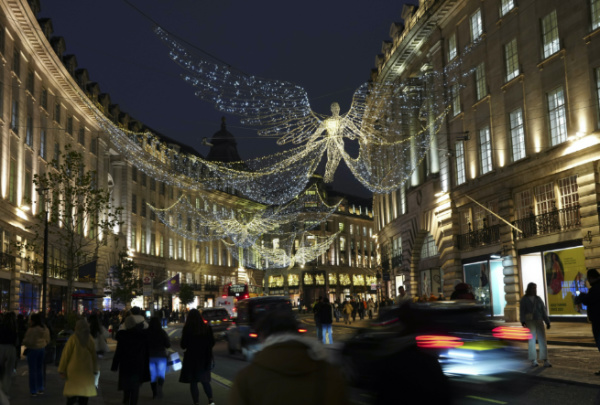
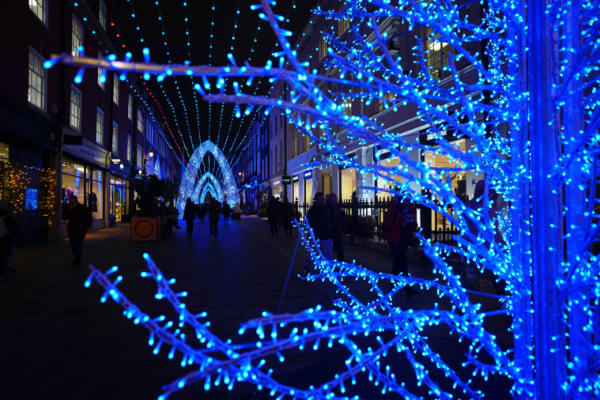
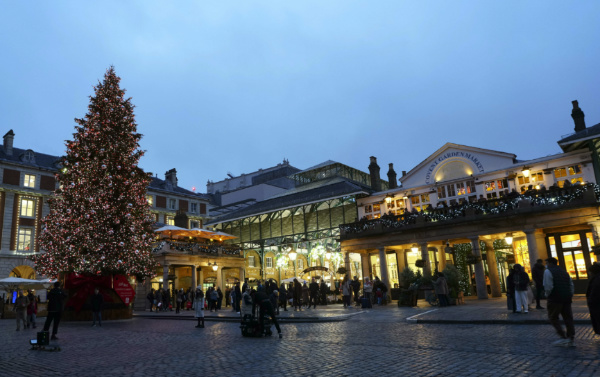
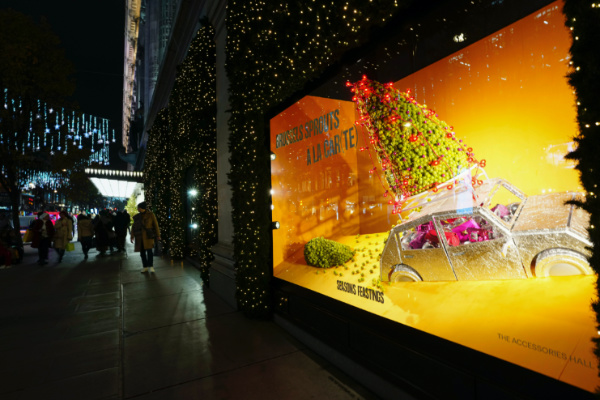
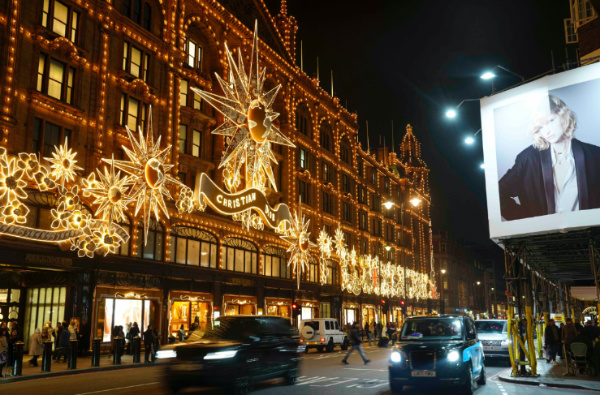
Christmas is looming so here’s our first look at some of London’s Christmas light displays…
• Festive Fayre returns to Hampton Court Palace this weekend with visitors having the chance to do some Christmas shopping, sample some festive treats and enjoy live music. The festival, which runs from Friday to Sunday, takes place ahead of the launch of the palace’s Christmas light trail – Palace of Light – next Wednesday (7th December). Inspired by Henry VIII’s heraldic beasts, it features an array of installations, ranging from a sea-monster lurking in the Great Fountain Garden to polka-dot panther lanterns in the Wilderness. Created by the award-winning outdoor event producers Wild Rumpus, the light trail can be visited until 2nd January. For more, see www.hrp.org.uk/hampton-court-palace/.

Christmas tree installation, designed by Miss Sohee PICTURE: © Victoria and Albert Museum, London
• The V&A has unveiled its couture Christmas Tree installation for this year – a work by London-based Korean fashion designer Miss Sohee. On display in the Cromwell Road Grand Entrance, the installation reimagines the traditional Christmas tree as a three metre long couture gown, which combines Sohee’s signature style of vibrant silhouettes and intricate embroidery with religious statuary found around the museum. The installation can be seen until 5th January. For more, see www.vam.ac.uk.
• On Now – Tiny Traces: African & Asian Children at London’s Foundling Hospital. This exhibition at The Foundling Museum in Bloomsbury explores the newly discovered stories of African and Asian children in the care of the hospital in the 18th century, following the stories of more than a dozen children through personal items, physical artefacts, works of art and archival documents. In a parallel thread, works of art by artists including Zarina Bhimji, Hew Locke, Kehinde Wiley, Alexis Peskine, Deborah Roberts and Shanti Panchal form a dialogue with the historic narratives. Admission charge applies. Runs until 19th February. For more, see https://foundlingmuseum.org.uk.
Send all items to exploringlondon@gmail.com
• The Tower of London is getting into the festive spirit with a celebration of the Twelve Days of Christmas. Twelve installations have been installed at the Tower, each representing as different aspect of the fortress’s unique history – from nine wreaths representing “nine rowdy ravens” to five gold coins representing the Mint once housed there. There’s also the six Queens of King Henry VIII and three “lordly lions” – a reference to a gift presented to King Henry III and housed in a Lion Pit at the tower. Visitors will have the chance to collect a map at the start of their visit and follow a trail to find the installations at they explore the Tower. Christmas at the Tower of London runs daily until 3rd January. Admission charge applies. For more, see www.hrp.org.uk/tower-of-london/.
• The Museum of London is preparing to close its doors at its London Wall site as it moves to its new location in Smithfield and to celebrate it’s holding two free weekend festivals. The first, to be held this weekend, will feature family-friendly activities including arts and crafts, dance, face painting and theatrical performances while the second, to be held on the weekend of 3rd and 4th December (after which the museum will close), will feature a celebration of London’s music scene from the 70s to the present day with a DJ sets, a late night film festival and museum’s first ever 24 hour opening. Visitors on both weekends can also take part in London Biggest Table Football competition for a chance to win an England shirt signed by Harry Kane and to see the museum’s collection in a new light thanks to an illuminated display. For more on the festivals, see www.museumoflondon.org.uk/museum-london.
• Now On: Blood and Battle: Dissecting the life of William Beatty. The life and work of renowned 19th-century naval surgeon and physician, Sir William Beatty, is explored in this exhibition at the Old Royal Naval College in Greenwich. The display – which marks 200 years since Beatty, who had served as ship’s surgeon on HMS Victory during the Battle of Trafalgar (and who wore the musket ball that killed Nelson in a locket on his watch chain for the rest of his life afterwards) – took up the post of Physician to the Royal Hospital for Seamen – explores Beatty’s work as a ship’s surgeon, his time at Greenwich Hospital and how he was honoured by being knighted and appointed Physician Extraordinary to George IV and the Duke of Clarence (later William IV) as well as his outside interests including his involvement in developing the London – Greenwich Railway. Admission charge applies. For more, see https://ornc.org.
Send all items for inclusion to exploringlondon@gmail.com.
• Christmas returned to Kew this week with the launch of its 10th festive light trail. This year’s display features some past favourites as well as new light installations including Feathers by Pyrite Creative which features 16 floating UV feathers which sway in the breeze, LuminARTi’s Willow Hives which illuminate natural forms, and Illusion Hole by UxU Studio, a geometrically arranged pattern situated on the lake which presents visitors with an optical illusion in which water formed by light appears to flow into an unknown abyss. The popular Fire Garden has returned along with the Christmas Cathedral and a series of breath-taking projections dance across the surface of the Palm House and adjacent lake, set to a memorable soundtrack of much-loved Christmas classics. The display can be seen until 8th January. Admission charge applies. For more, see www.kew.org/christmas.
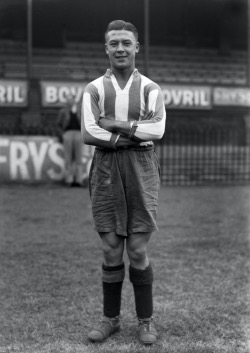
• A free exhibition exploring British Chinese communities and culture opens at the British Library tomorrow. Chinese and British celebrates the lasting impact of Chinese communities in the UK and presents personal stories and artefacts. Highlights include a hand-drawn map of China by Shen Fuzong – the first recorded Chinese person to visit the UK in 1687, a detailed doll’s house model of a Chinese takeaway, Ling Shuhua’s 1953 autobiography, Ancient Melodies, which was dedicated to Virginia Woolf who offered advice on drafts of her memoir, a fan made of bamboo slats and paper from mulberry bark in Hangzhou and pair of hand-embroidered shoes belonging to Kathy Hall, a London-based practitioner of traditional Chinese opera. There’s also trench art produced by Chinese Labour Corps workers during World War I, cigarette cards featuring Frank Soo, the first player of Chinese origin to play in the English Football League, and Rosanna Lee’s 2022 film Parallel which follows a family during their weekly ritual of going out for dim sum at the Pearl Dragon restaurant in Southend-on-Sea. The exhibition can be seen until 23rd April. For more, see www.bl.uk.
• On Now: The Horror Show!: A Twisted Tale of Modern Britain. This display at Somersert House, divided into three acts – ‘Monster’, ‘Ghost’ and ‘Witch’, explores how exploring how ideas rooted in horror have informed the last 50 years of creative rebellion, looking beyond horror as a genre and instead “taking it as a reaction and provocation to our most troubling times”. The display features more than 200 artworks and culturally significant objects including Chila Burman’s If There is No Struggle, There is no Progress – Uprising (1981), Derek Jarman’s last feature and magnum opus, Blue (1993), and a striking presentation of Turner Prize winning-artist Tai Shani’s The Neon Hieroglyph (2021). Admission charges apply. Runs until 19th February. For more, see somersethouse.org.uk.
Send all items to exploringlondon@gmail.com
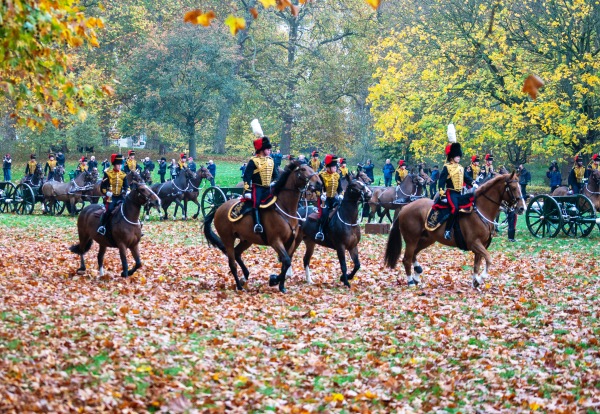
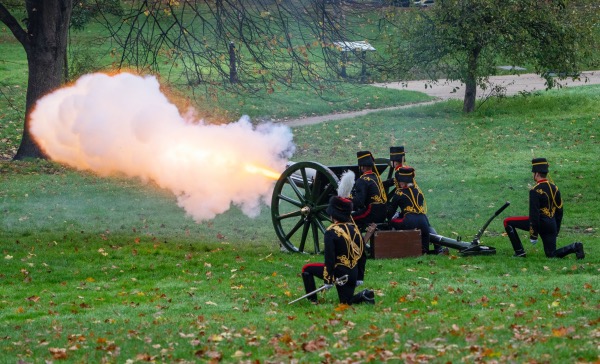
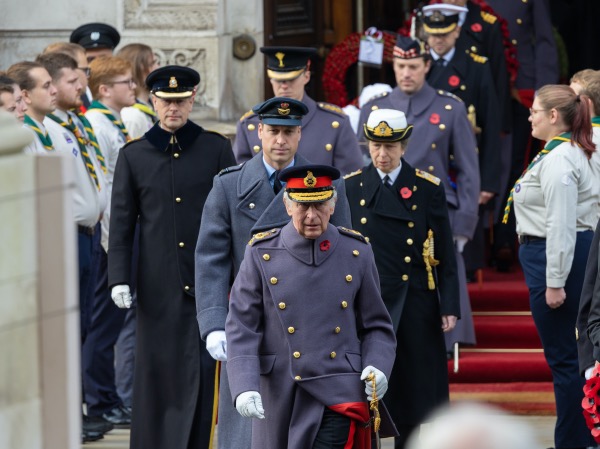
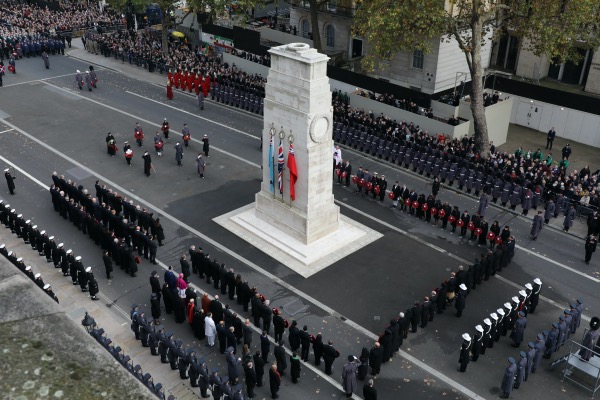
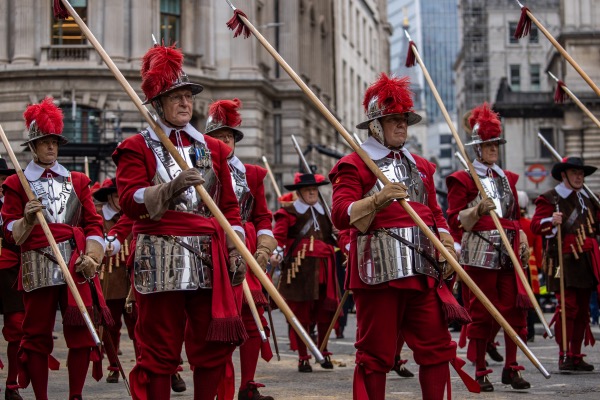
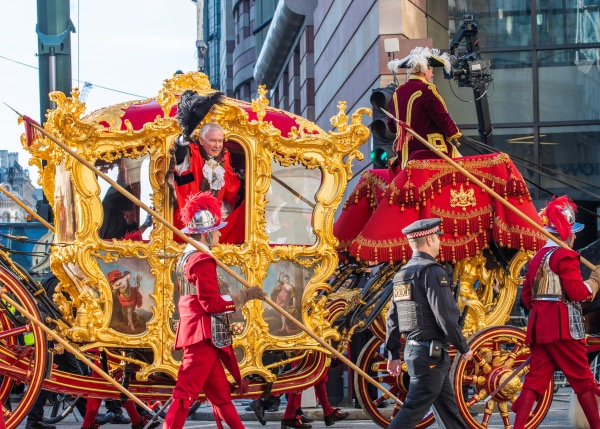
• The Lord Mayor’s Show will be held this Saturday, 12th November, welcoming the 694th Lord Mayor of London, Alderman Nicholas Lyons, into office. The Show, which dates back to the early 13th century, features more than 6,500 people, 250 horses and more than 130 floats as well as the golden State Coach which has been used to carry the Lord Mayors since as far back as 1757 and is said to be the oldest ceremonial vehicle still in regular use anywhere in the world. The three mile long procession will start passing by Mansion House at 11am and make its way to St Paul’s Cathedral and then head on to the Royal Courts of Justice where the Mayor will swear an oath of allegiance to the monarch, before returning along the Embankment and Victoria Street to Mansion House. For more on the history of the Show and details about the best places to stand, head to https://lordmayorsshow.london.
• The original headquarters of Mass-Observation, a pioneering social research organisation, has been marked with an English Heritage Blue Plaque. The organisation started its worked at the property 6 Grotes Buildings in Blackheath from 1937 until 1939 – by the end of its first year there were around 600 ‘mass observers’ involved in the work, one of the key aims of which was to gauge public opinion on a range of issues to help enable the writing of “a democratic people’s history from below”. During World War II, Mass-Observation worked on behalf of the government and morphed into a market research company in 1949, Mass Observation Ltd, before being incorporated into the British Market Research Bureau. The project was restarted in 1981 at the University of Sussex and continues to this day. For more on English Heritage Blue Plaques, see www.english-heritage.org.uk/visit/blue-plaques/.
• A collection of about 100 modern and contemporary artworks on paper have gone on show at the British Museum, part of a larger gift of works donated by London-based art collector Hamish Parker. Art on paper since 1960: the Hamish Parker collection features works by works by the likes of British artist Lucian Freud, French-Israeli artist Avigdor Arikha, American artist Richard Serra and Pakistani artist Imran Qureshi. There are also two “artist in focus” sections which take a more in-depth look at the work of American artists Carroll Dunham and Al Taylor. Runs until 5th March in Gallery 90. For more, see www.britishmuseum.org.
Send all items for inclusion to exploringlondon@gmail.com
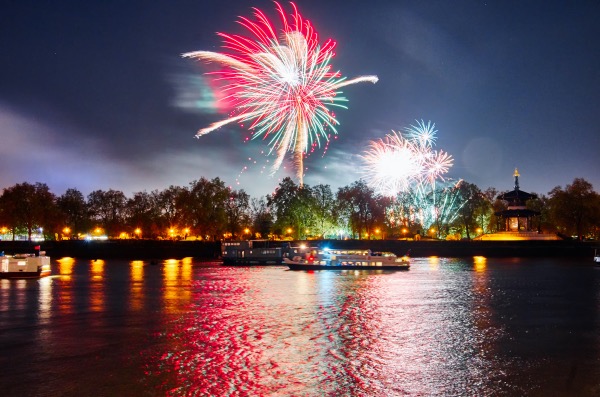
• “Remember, remember, the 5th of November…” It’s Bonfire Night this Saturday night and fireworks displays will be held across London with key displays at Alexandra Palace, Battersea Park and Wimbledon Park. Rather than list them all here, Visit London has put together a handy guide which you’ll find here.
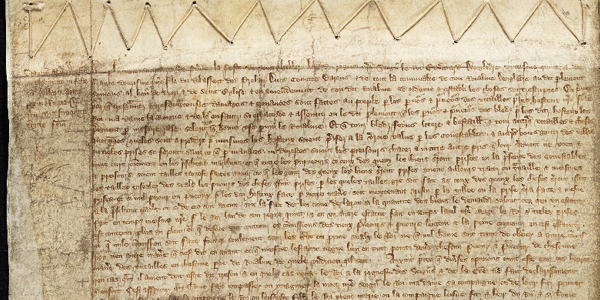
• What did the abolition of the transatlantic slave trade, the establishment of the Church of England, the creation of the United States of America and the extension of UK voting rights have to do with acts of treason? Treason: People, Power & Plot, a new exhibition at The National Archives in Kew, examines the role treason has played across the span of 700 years of history. On display will be the original Treason Act, passed in 1352 during the reign of King Edward III (pictured), and the Monteagle Letter – which suggested the recipient should not attend parliament on 5th November, 1605 (effectively tipping them off about the Gunpowder Plot) as well as Guy Fawkes’ confession, a document containing the charges levelled against King Henry VIII’s ill fated wife, Anne Boleyn, and the United States’ Declaration of Independence. Accompanying the display will be a range of online and on-site events. The free exhibition opens on Saturday and runs until 6th April. For more, see www.nationalarchives.gov.uk/treason/.
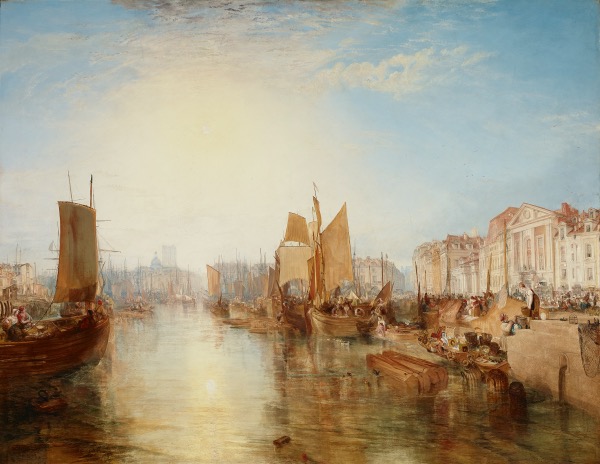
• Two ground-breaking JMW Turner paintings – Harbour of Dieppe: Changement de Domicile and Cologne, the Arrival of a Packet-Boat: Evening – have returned to the UK for the first time in more than 100 years as part of a new exhibition at The National Gallery. The Turner on Tour exhibition looks at the artist’s life-long fascination with ports and harbours and highlights the regular sketching tours he took within Europe that were central to his fame as an artist-traveller, as well as his “radical approach to colour, light and brushwork”. The two paintings, which have not been since in the UK since 1911, were exhibited in New York in 1914 at the Knoedler Gallery. They were subsequently acquired by the American industrialist Henry Clay Frick and have remained in the United States ever since but are now being generously lent by The Frick Collection. Can be seen until 19th February in Room 46. Admission is free. For more, see nationalgallery.org.uk.
• On Now: Science Fiction: Voyage to the Edge of Imagination. This exhibition at the Science Museum in South Kensington features more than 70 objects and uncovers connections between significant scientific innovations and celebrated science fiction works. On display is classic literature that has inspired new understandings of the world as well as set-pieces and props from iconic films and TV – everything from a Lieutenant Uhura costume from Star Trek: The Motion Picture, to the Dalek from Doctor Who and a Darth Vader helmet created for Star Wars: Episode V – The Empire Strikes Back. There are also contemporary artworks from across the globe that explore alternative futures for humanity. The exhibition is accompanied by an events programme. Runs until 4th May. Admission charges apply. For more, see sciencemuseum.org.uk/science-fiction.
Send all items for inclusion to exploringlondon@gmail.com
This “island church”, located in the middle of the Strand just outside the Royal Courts of Justice, is believed to have been the eventual burial site of King Harold I “Harefoot” who died in 1040.

The son of King Cnut, Harold’s rule was brief. Following the death of his father, he initially ruled as regent on behalf of his father’s heir and younger half-brother Harthacnut (Harthacnut was in Denmark and threats to the kingdom meant he couldn’t leave).
While Harold had apparently sought to be crowned king from the start of his rule (without success thanks to the opposition of Aethelnoth, the Archbishop of Canterbury), it was only in 1037 that, with the support of Leofric, the Earl of Mercia, and other nobles, he was crowned king.
But Harold (who was known by the name Harefoot apparently due to his speed and skill at hunting) died in 1040 and his brother subsequently returned from Denmark to claim the throne peacefully.
The story goes that King Harold had originally been buried in Westminster but that Harthacnut (clearly not a fan) had his body exhumed and flung into marshlands by the River Thames. The body was said to have been found by a fisherman who then had him buried at the church.
It had been established in the ninth century to serve the Danish community which was established after King Alfred the Great had granted them land.
Of course, the current church was not one King Harold would have recognised, having last been completely rebuilt in the 1680s to the designs of Sir Christopher Wren (and then having had its interior completely restored after it was gutted when bombed during World War II).
St Clement Danes, also known as one of the contenders for the church mentioned in the song Oranges and Lemons, is now the central church of the Royal Air Force. It’s one of two “island churches” in the Strand, the other being St Mary le Strand.
WHERE: St Clement Danes, Strand (nearest Tube stations are Temple, Covent Garden and Holborn); WHEN: 10am to 3:30pm weekdays; 10am to 3pm weekends; COST: Free (donations appreciated); WEBSITE: https://stclementdanesraf.org
Following the laying to rest of Queen Elizabeth II in St George’s Chapel, Windsor, we’re taking a look at where some royal burials have taken place within London.
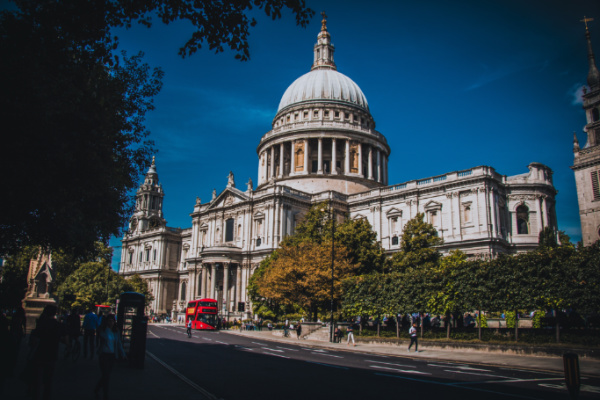
We start our new series with Old St Paul’s Cathedral which believed to have been the burial site of two Anglo-Saxon kings before it was destroyed in the Great Fire of 1666.
Aethelred (Ethelred) the Unready, who ruled from 978 until 1013 (and then again from 1014 until his death on 23rd April, 1016) was known to have been buried in the quire of the old cathedral (it’s marked on Wenceslaus Hollar’s 1658 plan of the cathedral as being on the northern side of the quire, just past the north transept) but his tomb was lost in the fire.
His memorial is among those which were lost in the Great Fire mentioned on a modern plaque in the crypt of the St Paul’s of today.
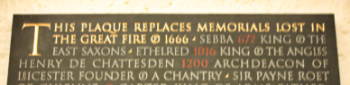
While his was the last royal burial to take place in St Paul’s, Aethelred wasn’t the only Anglo-Saxon king who was interred there.
Sæbbi, a king of the East Saxons who ruled from 664 to 694 (and is also known as Sebba or Sebbi), is also listed as being buried there (Aethelred was apparently buried close to him) and his grave also lost in the great fire.
There’s a story that when Sæbbi was about to be buried in a stone coffin, it was found it was too short for his body to lie at full length. Various solutions were proposed – including burying him with bent legs, but when they put the body back in the stone coffin this time, miraculously, it did fit.
Following an earlier fire in St Paul’s – in 1087 – Sæbbi body was transferred to a black marble sarcophagus in the mid-1100s and it’s that which was lost in the Great Fire.
• A new entrance to a memorial dedicated to those who died as a result of the COVID-19 pandemic has opened at St Paul’s Cathedral. The Remember Me memorial entrance portico, which is accessed through the cathedral North Transept door, has been designed by Caroe Architecture with Connolly Wellingham and is an elliptical structure made from British Oak into which the words ‘Remember Me’ have been etched in gold. It leads through to the Middlesex Chapel where a digital book of remembrance can be accessed. The inner portico is the first project of its kind to be built inside St Paul’s for nearly 150 years and this is the first time the North Transept of the cathedral has been used as a permanent entrance since this part of the cathedral was bombed during World War II. For more, see www.stpauls.co.uk/remember-me-memorial.
• A temporary 35 metre high observation wheel providing new views of London is being placed in Somerset House’s central open-air courtyard as part of a new cultural festival which kicks off Monday. This Bright Land features art installations and a programme of events featuring everything from music and dance performances through to workshops and talks. As well as the wheel, the courtyard will host a ‘Wonder Garden’, a soundscape installation telling Londoners’ stories, a futuristic custom-built ‘Clubhouses’ where complimentary make-up services will be provided, and a pop-up experimental zone which will feature immersive installations and complimentary light treatments. The month-long festival, which runs until 29th August, will also include a series of open air balls and parties at night as well as weekly family-friendly activities. There is free daytime entry on weekdays and pay-what-you-can entry on Monday to Thursday evenings and Saturday daytimes. Charges apply for special events and observation wheel rides. For more, see www.somersethouse.org.uk/whats-on/this-bright-land.
• Two 16th century works have gone on display in The National Gallery for the first time following their acquisition. Paolo Veronese’s ful-length Portrait of a Gentleman of the Soranzo Family (about 1585) can be seen in Room 12 while Lo Spagna’s Christ Carrying the Cross (perhaps 1500–5) can be seen in Room 61. Admission to the gallery is free. For more, see www.nationalgallery.org.uk.
Send items for inclusion to exploringlondon@gmail.com
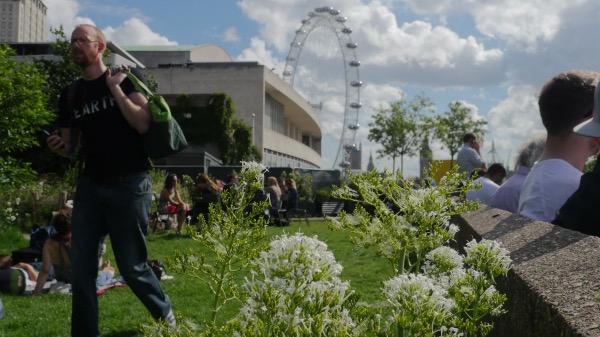
This garden can be found on the roof of the Queen Elizabeth Hall at the Southbank Centre.
The 1,200 square metre garden, which was created in 2011 as part of the 60th anniversary of the 1951 Festival of Britain celebrations, was developed in partnership with the Eden Project.
It is maintained by volunteers from Grounded Ecotherapy, a group which offers people dealing with issues like homelessness and addiction help through horticulture.
The Garden features more than 200 wild native plants as well as a lawn, paths and paving – and stunning views across the river. There’s also a cafe and bar.
WHERE: Queen Elizabeth hall Roof Garden (nearest Tube stations are Waterloo and Embankment); WHEN: Wednesday to Sunday from noon; COST: Free; WEBSITE: www.southbankcentre.co.uk/visit/outdoor/queen-elizabeth-hall-roof-garden-cafe-bar.
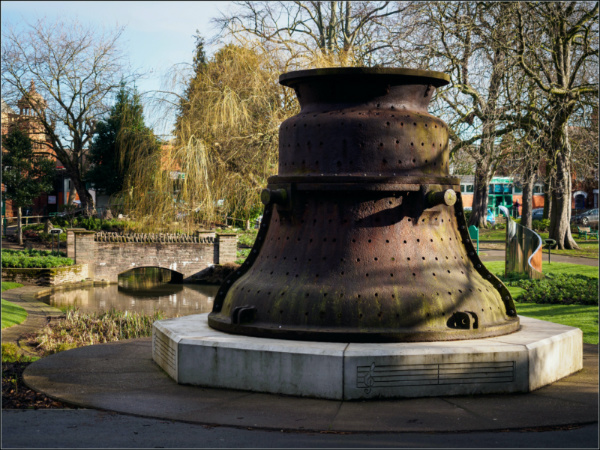
Not the name of a person, Great Paul is in fact the name of the largest of four bells in south-west tower of St Paul’s Cathedral.

The bronze bell was cast in 1881 by JW Taylor of Taylor’s bell foundry in Loughborough. With a diameter of some 11 metres, it weighs an impressive 16.8 tons (in fact, until the casting of the Olympic Bell for the 2012 London Olympics, it was the largest bell in the UK).
Brought to London from Loughborough on a train over a period of 11 days, Great Paul was hung in the tower in May, 1882.
The bell was traditionally sounded at 1pm every day but was silent for more than 40 years after its ringing apparatus broke in the 1970s.
Following a restoration, Great Paul started being rung again last year when it was rung during a festival of church bells to mark the easing of COVID-19 restrictions. Earlier this year, it led a bell ringing tribute marking Queen Elizabeth II’s Platinum Jubilee.
Previous historic occasions on which the bell was rung included Queen Victoria’s Diamond Jubilee in 1897 and the marriage of Prince Charles and Lady Diana Spencer at the cathedral in 1981.
The south-east tower of the cathedral is also home to the storied bell known as Great Tom – but we’ll deal with that in a future post.
• The Museum of London has launched a six-month programme of events celebrating its 45 year history ahead of its doors closing on 4th December in preparation for its move to West Smithfield. The programme includes a range of family activities – from Roman picnics to large LEGO builds – as well as behind the scenes access at the museum during Open House London and two festivals on the closing weekend celebrating the past 50 years of London’s history. For the full programme of events, head to www.museumoflondon.org.uk. Following its closure at the London Wall site, the new site at West Smithfield, to be named The London Museum, will open in 2026.
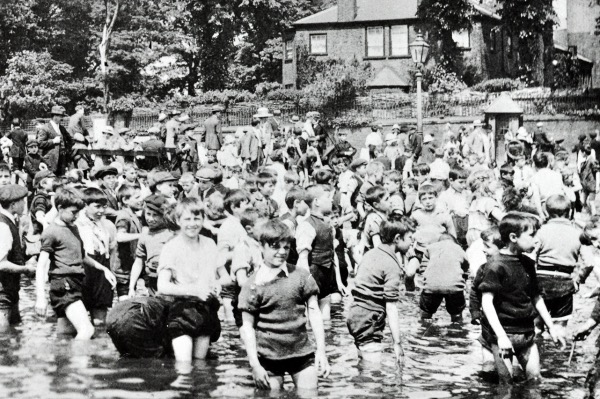
• An outdoor exhibition on the essential role of London’s parks and open spaces – which have served as everything from playgrounds and picnics to concerts and Sunday football kickabouts – opens in Guildhall Yard on Monday. Green City: A Visual History of London’s Parks and Open Spaces, which is curated by the City of London Corporation’s London Metropolitan Archives, celebrates the role open places have played in the capital since the 16th century and brings together 100 photographs and prints from the archives’ collections. The exhibition can be seen in Guildhall Yard until 1st August when it moves to Aldgate Square. On 15th August it will open at Hampstead Heath and then, from 1st September, spend two weeks at The View in Epping Forest’s Visitor Centre.
• Kenley Airfield – an integral part of London’s defence during World War II – has reopened following a £1.2 million restoration. The airfield, which sits in the Borough of Croydon, was a station for the Royal Flying Corps during World War I and the Royal Air Force during World War II. The restoration work has brought back to life eight deteriorating fighter blast pens, which protected RAF Spitfires and Hurricanes from attack. The site also includes The Kenley Tribute, a memorial to all who served there between 1917 and 1959, both on the ground and in the air. For more, including information on visiting the airfield and self-guided walks, see www.kenleyrevival.org.
• The work of 20th century American artist Milton Avery is the subject of a new exhibition opening at the Royal Academy of Arts on Friday. Milton Avery: American Colourist – which can be seen in The Gabrielle Jungels-Winkler Galleries in Piccadilly – features some 70 works including portraits and landscapes dating from 1910 until the 1960s. The exhibition is divided into four sections – ‘Early Work’, ‘Portraits’, ‘Innovation in Colour and Form’ and ‘Late Work’ – and highlights include Blossoming (1918), a portrait of Avery’s friends known as The Dessert (1939), two portraits of his daughter March – Seated Girl with Dog (1944) and March in Brown (1954), and, Black Sea (1959). Runs until 16th October. Admission charge applies. For more, see www.royalacademy.org.uk.
Send all items to exploringlondon@gmail.com.
• The famous matchgirls’ strike at the Bryant and May matchworks in the East End has been commemorated with an English Heritage Blue Plaque. The event, widely recognised as a spur to the New Unionism movement, saw about 1,400 of the predominantly young female workforce walk out in protest at the dismissal of a number of their co-workers in early July, 1888. While some of the details remain unclear, it is thought that the women were probably sacked for giving information to reporters, refusing to sign a statement refuting poor working conditions, or on trumped-up charges of trouble making. The women – whose poor working conditions, including low pay, the imposition of fines and deductions by the company and the dangers of ‘phossy jaw’, were catalogued by journalist Annie Besant – won a famous victory after a three week strike in which almost all their demands were met. Bryant and May also recognised the Union of Women Match Makers which, by the end of 1888, had become the Matchmakers’ Union and admitted both men and women. For more on English Heritage Blue Plaques, see www.english-heritage.org.uk/visit/blue-plaques/.
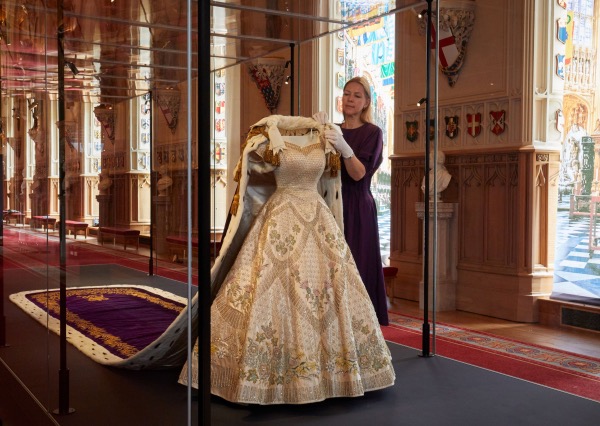
• Queen Elizabeth II’s coronation is the subject of a new exhibition opening at Windsor Castle today. Platinum Jubilee: The Queen’s Coronation, which focuses on the coronation which took place at Westminster Abbey on 2nd June, 1953, features portraiture, photographs and dress and jewellery worn by the Queen including the Sir Norman Hartnell-designed Coronation Dress, Robe of Estate and the Coronation Necklace and Earrings which were originally made for Queen Victoria in 1858. Also on display are brooches representing the emblems of some Commonwealth countries including a Canadian Maple-leaf Brooch worn by then Princess Elizabeth on her first visit to Canada in 1951, a Flame-Lily Brooch, the emblem of Zimbabwe, which was pinned to the Queen’s mourning clothes when she returned from Kenya after the death of her father in 1952, and the New Zealand Silver Fern Brooch, the Australian Wattle Brooch, and the Sri Lanka Brooch. There’s also a 2.5-metre-tall portrait of the Queen by Sir Herbert James Gunn which was commissioned to commemorate the coronation and a three-quarter length photographic portrait of the Queen taken by Cecil Beaton. Included in general admission. Runs until 26th September. Running in conjunction id a digital event – Royal Jewels: A Platinum Jubilee Celebration – which will be held at 7pm on 28th July in which Caroline de Guitaut, deputy surveyor of The Queen’s Works of Art and curator of the Platinum Jubilee display, with join Carol Woolton, former jewellery editor of Vogue in discussing items of The Queen’s jewellery on display at Windsor Castle and Buckingham Palace this summer. Tickets can be booked at www.rct.uk.
Send all items to exploringlondon@gmail.com
This month marks 150 years since the opening of the Bethnal Green Museum, the first public museum located in London’s east.
The museum had at its core a pre-fabricated building which had earlier been erected as part of the first phase of the South Kensington Museum. It was brought to the Bethnal Green site and encased in a red brick exterior designed by James Wild.
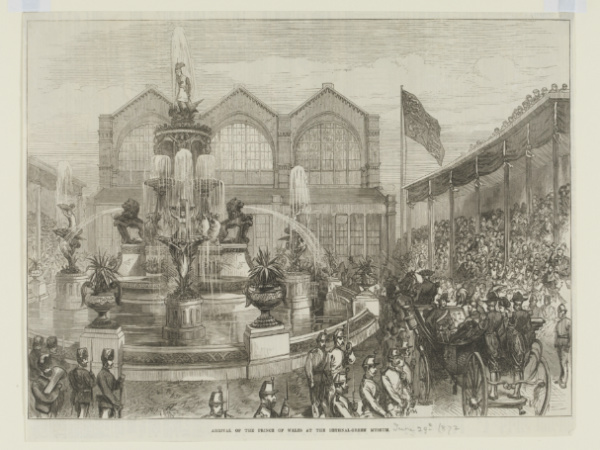
Formally known as the East London Museum of Science and Art, it was opened on 24th June, 1872, by the Prince of Wales, later King Edward VII, amid considerable pomp and great crowds.
The museum, a branch of what became the Victoria & Albert Museum in South Kensington, was built to house and display many of the collections which had been exhibited at the Great Exhibition of 1851. Among the art collections on show was that of Sir Richard Wallace (now housed in the Wallace Museum).
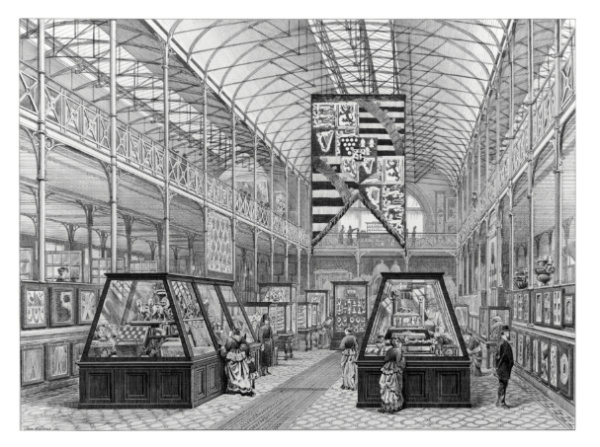
After World War II, the museum was remodelled as an art museum and included a children’s section. Then, in 1974, the museum became the Museum of Childhood with displays focusing on everything from toys and dolls houses to children’s dress and books.
It underwent an extensive renovation in the mid 2000s and reopened in December, 2006, as the Victoria & Albert Museum of Childhood.
The now Grade II*-listed museum, located on Cambridge Heath Road, is currently undergoing a £13 million redevelopment and will reopen in mid-2023 as Young V&A, a new museum dedicated to 0 to 14-year-olds, their families and carers.
The V&A marked a year to the opening of the new museum with the launch of a year-long Reinvent Festival, “celebrating 150 years with 150 waysto be creative”. For more, see www.vam.ac.uk/blog/museum-life/young-va-reinvent-festival-reinventing-a-museum-for-the-young.
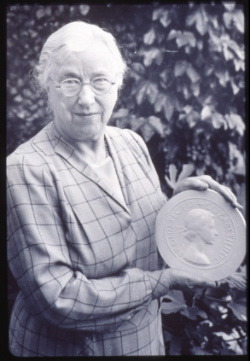
• A free display featuring the first coin bearing a portrait of Queen Elizabeth II has opened at the British Museum. Part of the celebrations marking the Queen’s Platinum Jubilee, The Asahi Shimbun Display Mary Gillick: modelling The Queen’s portrait showcases the production and reception of the coin which was designed in 1952 and released the following year. Gillick’s portrait – which remained in circulation on coins in the UK until the 1990s and was also adapted for use on commemorative stamps – combined modern design with Italian Renaissance influences. Can be seen until 31st July. For more, see www.britishmuseum.org.
• The UK’s first Stolperstein or “stumbling stone” has been installed in Soho as part of an initiative to remember the victims of the Nazis. The small brass plaque commemorates former resident Ada van Dantzig, a Dutch-Jewish paintings conservator for the National Gallery who came to London in the 1930s and worked and resided in Golden Square in Soho (where the plaque has been installed). She later re-joined her family in the Netherlands and was arrested in France in early 1943 along with her mother, father, sister and brother. Deported to Auschwitz, Ada, along with her parents, was murdered there on 14th February, 1943. Artist Gunter Demnig created the project almost 25 years ago to commemorate victims of Nazi Persecution during the Holocaust. More than 100,000 of stones have now been laid in 26 countries throughout Europe with the location of the stones the last address of those being remembered.
• A pioneering female landscape gardener has been honoured with an English Heritage Blue Plaque at her former flat in Shaftesbury Avenue. Fanny Wilkinson, who is believed to be Britain’s first professional female landscape gardener, was also a campaigner for the protection of open space in London. She lived and worked at the flat, which overlooks an open space she laid out herself, between 1885 and 1896. Wilkinson began her career as an honorary landscape gardener to the Metropolitan Public Boulevards, Gardens and Playgrounds Association – an organisation whose mission was the formation of gardens and public parks that would create playgrounds and green ‘lungs’, especially in poor districts of the capital. In June, 1885, it was agreed that she could charge five per cent on all her MPGA payments, leading her to drop the ‘honorary’ title and become Britain’s first professional female landscape gardener. For more, see www.english-heritage.org.uk/visit/blue-plaques/.
• A painting by Pablo Picasso – Woman with a Book (1932) from the Norton Simon Museum in Pasadena, California – and a painting by Jean-Auguste-Dominique Ingres – Madame Moitessier (1856) – are being shown together for the first time at The National Gallery. Picasso admired Ingres and referred to him throughout his career and this connection can be seen not only in his paintings but in drawings and studies he made during his ‘neoclassical’ phase in the 1920s. He encountered Madame Moitessie at an exhibition in Paris in 1921 and 11 years later painted Woman with a Book. The paintings, which are being show under a collaborative initiative between the two institutions, can be seen in Room 1 until 9th October. Admission is free. For more, see www.nationalgallery.org.uk.
Send all items for inclusion to exploringlondon@gmail.com
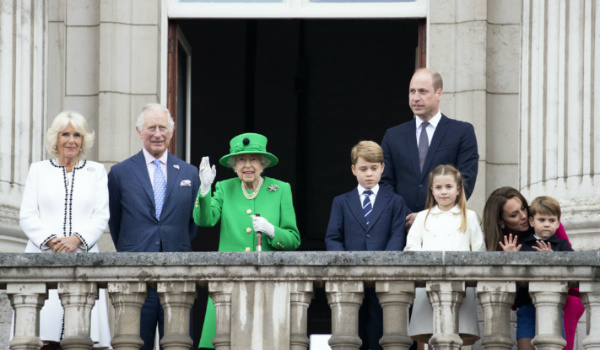
Four days of celebration were held from Thursday to Sunday to mark Queen Elizabeth II’s Platinum Jubilee. Here’s a short selection of images from the events…
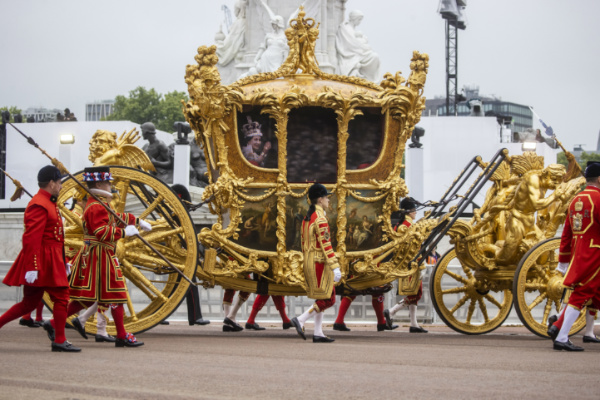
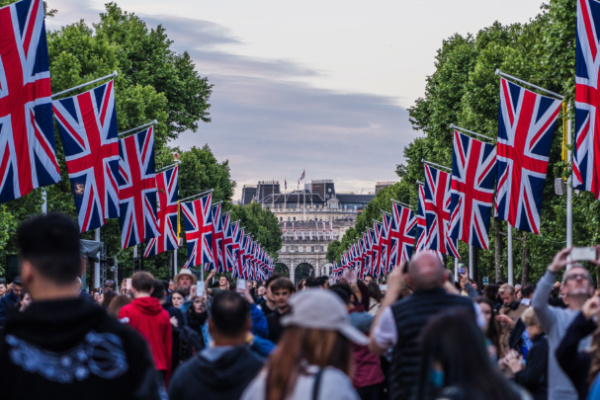
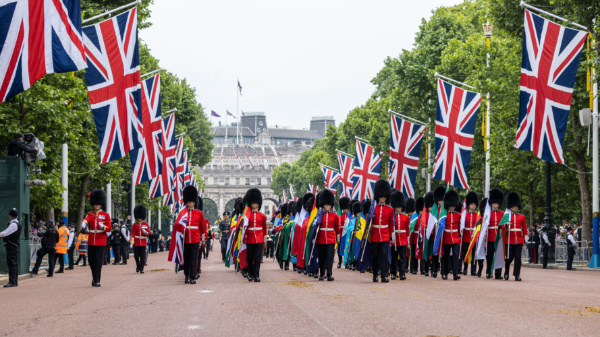
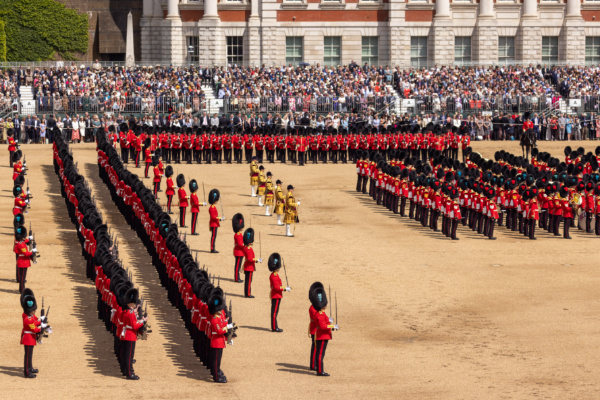
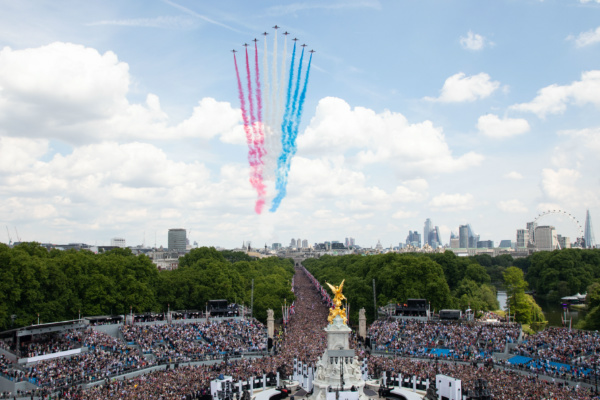
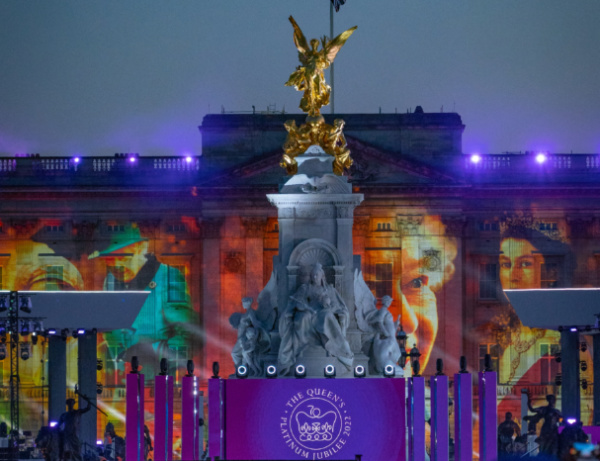
The Platinum Jubilee weekend is finally upon us. Here’s some highlights of what’s happening over the next four days…
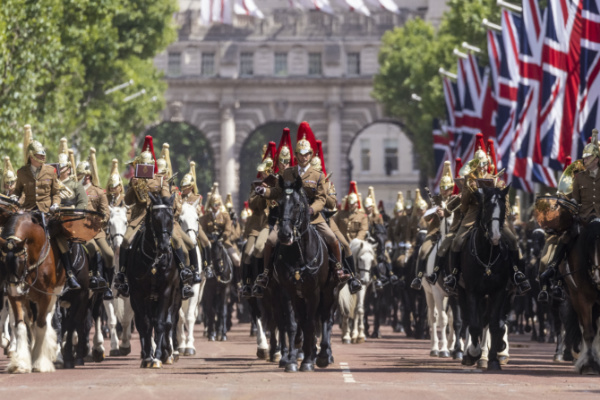
• The Queen’s Birthday Parade – Trooping the Colour – takes place today (Thursday) at Horse Guards Parade. It’s the largest parade in three years due to the coronavirus pandemic and will involve more than 1,400 soldiers, 200 horses and 400 musicians. The day will feature an appearance by the Queen on the Buckingham Palace balcony and an RAF flypast.
• More than 3,000 beacons will be lit all around the world tonight (Thursday) to mark the Jubilee. The event will culminate in a 21 metre high giant tree sculpture constructed of 350 smaller trees – the ‘Tree of Trees’ beacon – being set alight out the front of Buckingham Palace at 9pm. For more, see www.queensjubileebeacons.com.
• A service of thanksgiving will be held at St Paul’s Cathedral on Friday (sadly without the Archbishop of Canterbury who has COVID-19 and mild pneumonia). The event is private. The cathedral is also hosting Jubilee: St Paul’s, the Monarch and the Changing World, an exhibition which explores the history of Jubilee celebrations at St Paul’s Cathedral across three centuries and features objects from the cathedral’s collections including the Jubilee Cope which depicts the spires of 73 churches in the Diocese of London, three Royal Peculiars and St Paul’s Cathedral and was created to commemorate the Silver Jubilee of 1977. Entry to the exhibition is included in general admission. For more, see www.stpauls.co.uk/platinum-jubilee.
• The BBC’s Platinum Party at the Palace will take place on Saturday featuring a line-up of performers from the worlds of music and dance. Those attending include Duran Duran, Andrea Bocelli, Mimi Webb, Sam Ryder, Jax Jones, Celeste, Nile Rodgers, Sigala and Diversity as well as stars from stage, screen and the sporting world such as Sir David Attenborough, Emma Raducanu, David Beckham, Stephen Fry, Dame Julie Andrews, The Royal Ballet, and Ellie Simmonds who will also pay tribute in person and on film. Queen + Adam Lambert will open the concert, sure to evoke memories of Brian May’s historic appearance on the Palace roof at the Golden Jubilee Concert in 2002 – and Diana Ross will close it in her first UK live performance in 15 years. Advance booking and tickets are required but the event will be shown live on the BBC.
• On Sunday, Jubilee Big Lunches will be taking place in communities across the city. For where these are taking place, check out www.edenprojectcommunities.com/the-big-lunch-map.
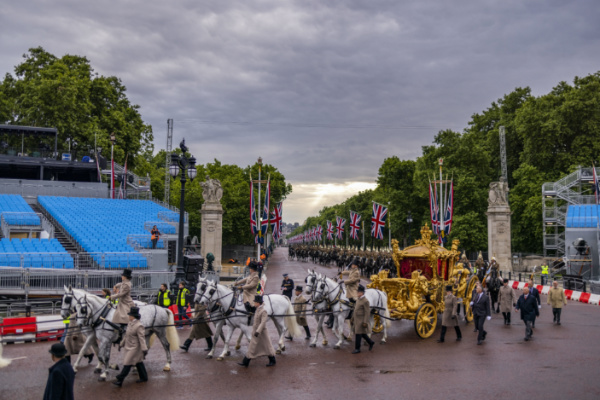
• The finale of the weekend will be the Platinum Jubilee Pageant which will take place in “four acts” through central London on Sunday. The pageant, which will begin with the ringing of the bells of Westminster Abbey, will start with a military spectacle – ‘For Queen and Country’ – celebrating all three services in the UK Armed Forces and involving some 1,750 people including from Commonwealth nations. Act two – ‘The Time of Our Lives’ – will feature a cast of some 2,500 people showing how British culture has changed over the past 70 years. In act three, ‘Let’s Celebrate’, performers will “mash street theatre, music-on-the-move, urban dance, and the very best of Carnival, May Day, Mela, Fiesta and Mardi Gras to celebrate The Queen’s extraordinary life experience”; this will also include a ‘River of Hope’ procession featuring children from across the UK carrying some 200 silk flags featuring pictures depicting their hopes and aspirations for the next 70 years, particularly with regard to climate change. The musical finale – ‘Happy and Glorious’ – will focus around the Queen Victoria Memorial in front of Buckingham Palace and will see attendees singing the National Anthem with appearances by Jeremy Irons, Bill Bailey and Gok Wan and Ed Sheeran and the public invited to become part of the performance. The pageant will start at Westminster Abbey and head down Whitehall, turn through Admiralty Arch into The Mall, travel to Buckingham Palace and then turn down Birdcage Walk. For more, see www.platinumpageant.com.
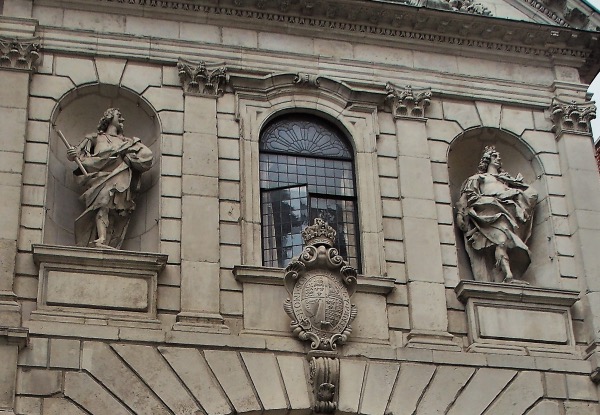
The equestrian statue of King Charles I at the top of Whitehall is one of London’s most well-known. But less well-known is the statue of the ill-fated King which can be found standing in a niche on the Temple Bar gateway, located at the entrance to Paternoster Square just outside of St Paul’s Cathedral.
Charles is not alone. Part of the gateway’s purpose was as a dynastic statement in support of the Stuarts so the grand portal also features statues of Charles’ father King James I, his mother Queen Anne of Denmark, and his son King Charles II. King James and Queen Anne can be found on the north side of the gateway (originally the east side) and the two Charles’ on the south side (originally the west side).
The design of the gateway, which originally stood at the intersection of Fleet Street and the Strand as a ceremonial entrance into the City of London, is believed to be the work of Sir Christopher Wren who was acting on the orders of King Charles II after the Great Fire of London.
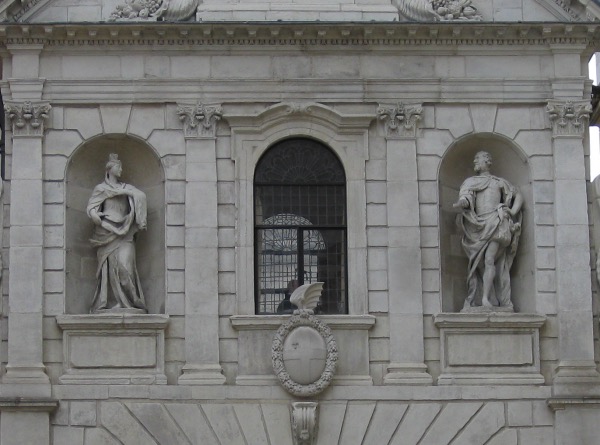
The statues, which cost a third of the total £1,500 spent on the gateway, are said to have been sculpted by one John Bushnell. They are depicted in Roman attire rather than the dress they would have worn during the period.
They were removed when the gateway was dismantled in 1878 and stored in a yard of Farringdon Road and when the gateway was re-erected at Lady Meux’s Hertfordshire estate at Theobold’s Park, they were placed back in their original locations. And they also accompanied the gateway back to the city when it was positioned its current location in 2004.
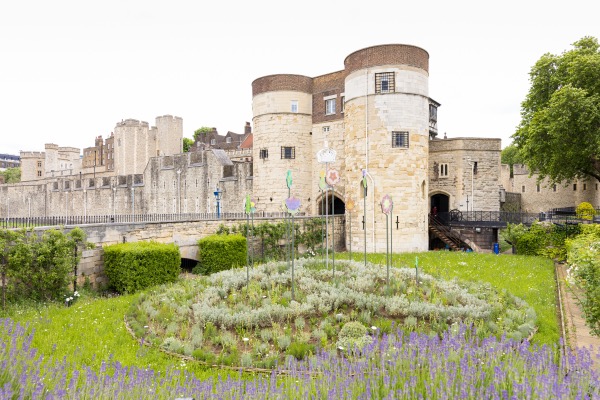
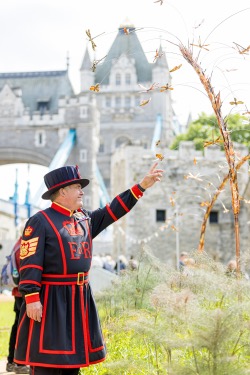
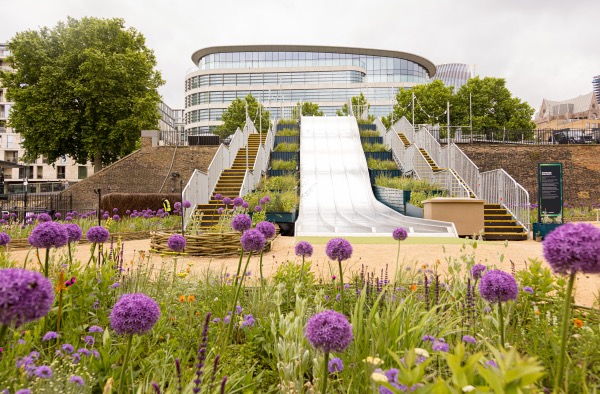
Twenty million seeds have been sown into the Tower of London’s moat to create a floral display known as ‘Superbloom’ as part of the celebrations surrounding Queen Elizabeth II’s Platinum Jubilee.
Paths, walkways and viewing points have been installed throughout and in a first at the Tower, a four lane slide has been installed to provide an unusual entrance to the display.
Those visiting the display – which features wildflowers such as red poppies, yellow corn marigolds and blue cornflowers as well as garden plants including sunflowers, cosmos and rudbeckias – will hear a score by Scottish composer Erland Cooper – Music for Growing Flowers – while other attractions include a willow sculpture by artist Spencer Jenkins and a swarm of intricate copper insects by sculptor Mehrdad Tafreshi.
The centrepiece of the display is the “Queen’s Garden” which has been installed by Grant Associates – the lead designers for the Superbloom project – in the Tower’s historic Bowling Green.
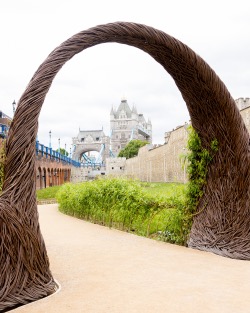
Inspired by the Queen’s Coronation gown, this garden features a combination of meadow flowers, topiary and summer-flowering perennials, bulbs and ornamental grasses and draws on the colours, shapes and motifs used by designer Norman Hartnell in the 1953 gown.
Rising above the garden are 12 cast glass forms by glass artist Max Jacquard which represent the national emblems featured in Hartnell’s design and in their centre sits a glass crown, a reminder of the Tower’s role as home of the Crown Jewels.
Tower Wharf, meanwhile, has been transformed into a food and drinks venue, with street food and bars from KERB and fine dining available riverside in ‘The Glass Rooms’. The flowers are expected to gradually bloom in June and will continue to evolve until September. For more, including how to purchase tickets, head here.

 Exploring London