This Week in London – Costa Rican orchids at Kew; Holocaust survivor portraits; and, Bob Marley at Saatchi…

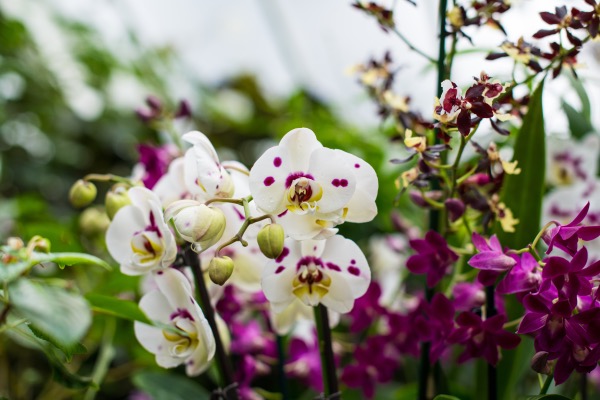
A scene from Kew Gardens’ Orchid Festival in 2020.

Biodiversity hotspot Costa Rica is the focus of this year’s Orchid Festival which opens at Kew Gardens on Saturday. The festival, which returns for the first time in two years, sees a recreation of the verdant landscape of the Caribbean island nation in the Princess of Wales Conservatory – including the creation of monkeys, sea turtles, toads and hummingbirds in plant form – with a central display in the glasshouse pond of vibrant orchids and bromeliads. Meanwhile, the International Garden Photographer of the Year exhibition is also opening in Kew’s Arboretum and features a selection of images from across categories including ‘Beautiful Gardens’, ‘The Beauty of Plants’ and ‘The World of Fungi’ as well as winner of the ‘Captured at Kew’ special award. Both can be seen until 6th March. Admission charge applies. For more, see www.kew.org.

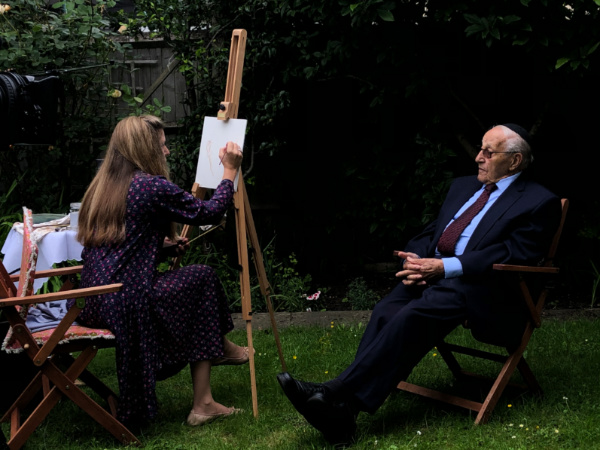
Artist Clara Drummond and Holocaust survivor Manfred Goldberg BEM, PICTURE: Angel Li and BBC Studios

• A series of portraits depicting Holocaust survivors has gone on show at The Queen’s Gallery in Buckingham Palace. The seven works in Seven Portraits: Surviving the Holocaust were commissioned by Prince Charles in his role as patron of Holocaust Memorial Day which was marked last week. The exhibition can be seen at The Queen’s Gallery until 13th February. Admission charge applies. For more on Holocaust Memorial Day, see www.hmd.org.uk. For more on The Queen’s Gallery, head to www.rct.uk/visit/the-queens-gallery-buckingham-palace.

Music Room by © Adrian Boot

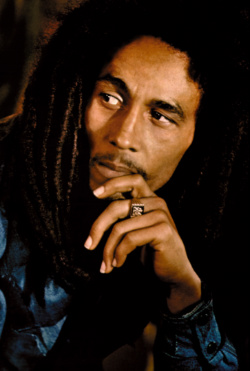
Music icon Bob Marley is the subject of an exhibition which opened at the Saatchi Gallery this week. Bob Marley: One Love Experience features hitherto unseen photographs of Marley as well as memorabilia, giant art installations and multi-sensory experiences as visitors are led through a series of rooms including the ‘One Love Music Room’, the ‘One Love Forest’ and the ‘Soul Shakedown Studio’. The exhibition runs until 17th April. Admission charges apply. For more, see www.bobmarleyexp.com.

Send items for inclusion to exploringlondon@gmail.com.
This Week in London – ‘The Blue Boy’ returns; Heath Robinson’s children’s stories; and, architectural wonders…

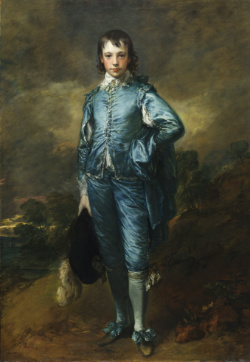
‘The Blue Boy’, Thomas Gainsborough PICTURE: © Courtesy of the Huntington Library, Art Museum, and Botanical Gardens, San Marino, California

A century after it last appeared in the UK, Thomas Gainsborough’s The Blue Boy returns to the National Gallery off Trafalgar Square from next Wednesday. The showing of the painting, which left for the United States in 1921 after it was purchased by rail and property businessman Henry E Huntington, marks the first (and possibly the last) time it has ever been lent out since that date. The full-length portrait, which was created in 1770 by Gainsborough during a period he spent in Bath, can usually be found at the Huntington Library, Art Museum, and Botanical Gardens in San Marino, California. The painting is being shown alongside four other works that, among other things, demonstrate Gainsborough’s interest in Flemish artist Sir Anthony van Dyck’s work from 100 years earlier. They include Van Dyck’s George Villiers, 2nd Duke of Buckingham and Lord Francis Villiers (1635) and Lord John Stuart and his Brother, Lord Bernard Stuart (about 1638) as Gainsborough’s works Elizabeth and Mary Linley (about 1772) and Mrs Siddons (1785). The display can be seen for free in Room 46 from 25th January until 15th May. For more, see nationalgallery.org.uk.

An exhibition showcasing artwork from Heath Robinson’s children’s stories opened at the Heath Robinson Museum in Pinner last Saturday. Heath Robinson’s Children’s Stories features works from books including The Adventures of Uncle Lubin (1902), The Child’s Arabian Nights (1903), Bill the Minder (1912) and Peter Quip in Search of a Friend (1922). Entry is included in general admission charge. Runs until 15th May. For more, see www.heathrobinsonmuseum.org.

Shortlisted and winning entries from The Architecture Drawing Prize 2020 and 2021 have gone on show at Sir John Soane’s Museum in Lincoln’s Inn Fields. The competition, run in partnership with Make Architects and the World Architecture Festival, is now in its fifth year with awards made across three categories – digital, hand-drawn and hybrid. Entry is free (pre booking required). Runs until 20th February. For more, see www.soane.org/exhibitions/architecture-drawing-prize-2021.

Send all items for inclusion to exploringlondon@gmail.com.
This Week in London – ‘Westminster Elves’; a song for Nelson; and, Caribbean-British art…

Christmas is fast approaching and, to add to the festivities, Westminster City Council has created an augmented reality experience for families to enjoy at four landmark locations. Under the ‘Westminister Elves’ initiative, families are invited to scan a QR code at Piccadilly Circus, Marble Arch Mound, Soho Square and Hanover Square which will lead them to a microsite which, in turn, will transport them into the elves’ world. There, they can throw snowballs, share a moment with Santa’s reminder and glimpse inside Santa’s workshop as well as, of course, seeing the man himself. Those taking part are also invited to take a selfie or picture of a family member or friend alongside the elves at one of the four locations and post it on Twitter, Instagram or Facebook using the #WestminsterElves and tagging @CityWestminster. They’ll then be entered into a competition to win a £50 Love to Shop voucher. The competition closes at midnight next Wednesday with the winner announced on Christmas Eve. For more, see www.westminster-elves.co.uk.

A recording of old sea song paying tribute to Horatio Nelson was released by the Museum of London this week. The song, which was  thought to have been sung after the battle of Cape St Vincent in 1797 and subsequently transcribed by Nelson, was brought to life by musicians from the Guildhall School of Music & Drama. The recording marked the first performance of the piece in more than 200 years. While th song’s existence had previously been known about – it was referred to in a letter from Nelson to William Douglas, 4th Duke of Queensberry, which was was sold at auction in 2013 – it was one of four rediscovered last year among songbooks belonging to Nelson’s lover, actress and model Emma Hamilton. “The song was written by Nelson’s crew in one of his early victories,” said Lluis Tembleque Teres, the Museum of London librarian who found the songs. “It is fascinating how, some four years later and already a national hero, he recovers the lyrics and sends them to the Duke of Queensberry, almost as if showing off his early successes. The Duke then adds music and a chorus, and gifts the manuscript to Emma Hamilton, thus allowing us exactly 220 years later to relive Nelson’s fame while performing it.” The song’s release follows a special one-off live performance of all four songs at the Museum of London Docklands on 11th December, which will be available to watch in full as an online event – DIGITAL Emma’s Songbooks: rediscovered music for Nelson – next Tuesday, 21st December. Admission charge applies. For more, see museumoflondon.org.uk 

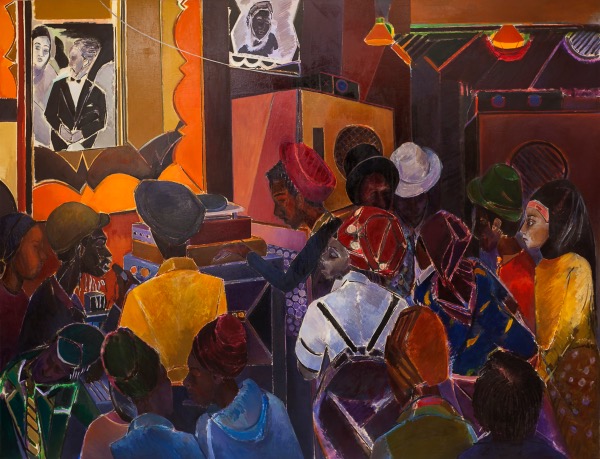
Denzil Forrester Jah Shaka, 1983. Collection Shane Akeroyd, London © Denzil Forrester

A landmark exhibition exploring the extraordinary breadth of Caribbean-British art over four generations can be seen at Tate Britain. Life Between Islands  spans 70 years of culture, experiences and ideas expressed through art and features more than 40 artists, including those of Caribbean heritage as well as those inspired by the Caribbean, such as Ronald Moody, Frank Bowling, Sonia Boyce, Claudette Johnson, Peter Doig, Hew Locke, Steve McQueen, Grace Wales Bonner and Alberta Whittle. Highlights include Neil Kenlock’s Black Panther school bags (1970), Denzil Forrester’s Death Walk (1983) – a tribute to Winston Rose who died in police custody, Lisa Brice’s After Ophelia (2018) – a work inspired by her time on Trinidad and new works including designs by Grace Wales Bonner evoking the brass bands and parades of the Commonwealth Caribbean. Runs until 3rd April. Admission charge applies. For more, see www.tate.org.uk.

Send all items for inclusion to exploringlondon@gmail.com.
This Week in London – Hampton Court’s astronomical clock after hours; Beethoven explored at the British Library; and, the Sherman Rangers Yeomanry at the National Army Museum…

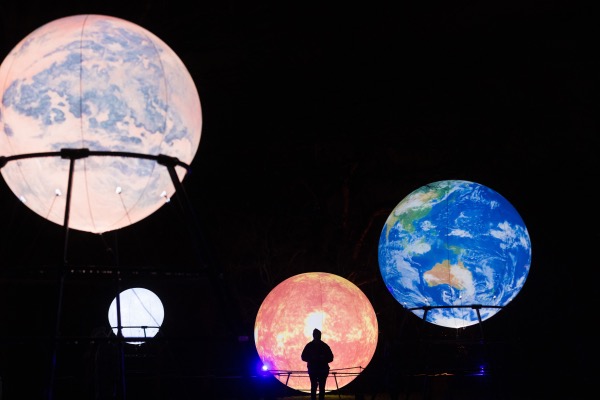
Palace of Stardust at Hampton Court Palace. PICTURE: © Historic Royal Palaces

• An after-hours light trail featuring clocks, moons, planets and sundials has opened at Hampton Court Palace this week. Palace of Stardust takes people through the palace’s historic cobbled courtyards and gardens which have been filled with magical illuminations inspired by the palace’s famous astronomical clock installed at the command of King Henry VIII. Visitors to the display, designed and created by award-winning outdoor event producers Wild Rumpus, will uncover the mysterious meanings on the clock’s dial, attend a flickering moonlit ball in the East Front Gardens, hear the ancient royal trees as they whisper their secrets and peek into mysterious miniature shadow worlds before being transported to another planet in the deepest depths of the Wilderness, once home to King Charles II’s formal pleasure garden. Seasonal food and drink will also be available. Runs until 3rd January. Admission charge applies. For more, see www.hrp.org.uk/hampton-court-palace/whats- on/palace-of-stardust-at-hampton-court-palace.

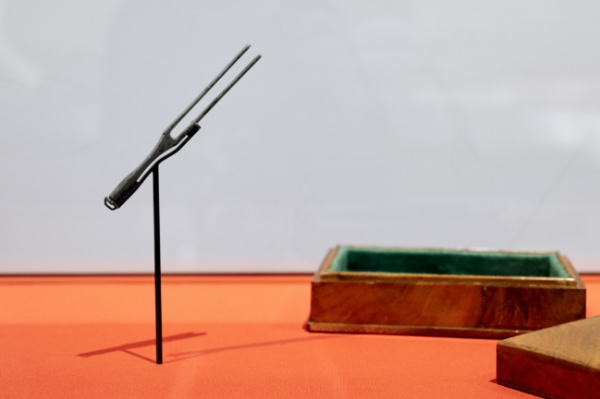
Beethoven’s tuning fork. PICTURE: © British Library Board, Add. MS 71148 A. Photography by Justine Trickett

One of the greatest composers of all time, Ludwig van Beethoven (1770-1827), is the subject of a new exhibition opening at the British Library. The display, which draws on the library’s world-famous collection, features manuscripts, archival documents, personal belongings and sound recordings with highlights including Beethoven’s own copy of his earliest published works which he composed at age 12 and 13, sketches for his Pastoral Symphony and late string quartets, a tuning fork which is thought to have belonged to him until 1803, and a pocket sketchbook the composer used to note down musical ideas when out walking, which dates from 1825. There is also a specially commissioned audio-visual incorporating bone conduction to present extracts from the composer’s music in an engaging and immersive way, in particular to those with hearing impairments. The exhibition runs until 24th April. Admission charge applies. For more, see www.bl.uk/events/beethoven. To coincide with the 250th anniversary of Beethoven’s birth, the library last year launched ‘Discovering Music: 19th century‘, a free online resource which explores key works of 19th-century classical music and the social, political and cultural contexts in which they were written.

The World War II story of the elite tank regiment, the Sherwood Rangers Yeomanry, is being told in a new exhibition which opens today at the National Army Museum in Chelsea. Based on broadcaster and historian James Holland’s book, Brothers in Arms, the exhibition spans the period from the D-Day landings on 6th June, 1944, to VE Day almost a year later and focuses on the stories of eight soldiers who served in the regiment as it explores the dangers and pressures they faced and the camaraderie and bonds that bound them together. The exhibition is being accompanied by a programme of events. This Saturday, the Museum is putting a spotlight on tanks with free talks, tours and tank challenges for the family – plus the chance to see a Sherman tank parked up at the Museum. Online booking is recommended. For more, see www.nam.ac.uk/whats-on/brothers-arms.

Send all items for inclusion to exploringlondon@gmail.com.

This Week in London – Faberge eggs; Royal jeweller Garrard; and, Christmas at Kew…

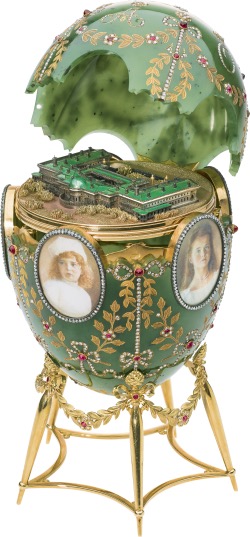
The Alexander Palace Egg, Fabergé. Chief Workmaster Henrik Wigström (1862-1923), gold, silver, enamel, diamonds, rubies, nephrite, rock crystal, glass, wood, velvet, bone, 1908 © The Moscow Kremlin Museums

• The largest collection of Faberge’s Imperial Easter eggs to be displayed together in a generation go on show at the V&A from Saturday. Fabergé in London: Romance to Revolution is the first major exhibition devoted to the international prominence of Russian goldsmith, Carl Fabergé, and his little-known London branch. Divided into three sections which cover everything from the techniques and detailing synonymous with the Faberge name to his time in London, the royal patronage he received, and the impact of the Great War and Russian Revolution on the business. The display features more than 200 objects with highlights including a prayer book gifted by Emperor Nicholas II to Empress Alexandra Feodorovna on his Coronation Day, the only known example of solid gold tea service crafted by Fabergé, a rare figurine of a veteran English soldier commissioned by King Edward VII, and a “kaleidoscopic display” of 15 of the Imperial Easter Eggs. The latter include several that have never before been shown in the UK including the largest Imperial Egg – the Moscow Kremlin Egg – which was inspired by the architecture of the Dormition Cathedral, the Alexander Palace Egg – which features watercolour portraits of the children of Nicholas II and Empress Alexandra and contains a model of the palace inside (pictured), the recently rediscovered Third Imperial Egg of 1887 (found by a scrap dealer in 2011) and Empress Alexandra Feodorovna’s Basket of Flowers Egg. Runs until 8th May. Admission charge applies. For more, see www.vam.ac.uk.

The Royal Family’s relationship with the jeweller Garrard is the subject of a new exhibition which has opened in Kensington Palace’s ‘Jewel Room’. Going on display for the first time are examples of the firm’s ledgers which document royal commissions dating back to 1735 while other highlights include Queen Mary’s fringe tiara which was made in 1919 using diamonds taken from Queen Victoria’s wedding gift to Queen Mary and which was subsequently worn by Queen Elizabeth II on her wedding day. Admission charge applies. For more, see www.hrp.org.uk/kensington-palace.

Botanical illustrations from the archives at Kew Gardens are brought to life on a canvas consisting of a selection of spectacular trees from the arboretum as part of this year’s Christmas display. Christmas at Kew also includes Spheric – a 15-metre-wide dome of light covered in more than 2,000 individually controlled LED pixels which sits on a reflective water pool and allows visitors to fully immerse themselves in a unique mirrored illusion as they cross the lake, a new installation for Holly Walk which will illuminate the night sky for over 200 metres overhead as it replicates the enchanting visual phenomenon of the Aurora Borealis, a vibrant rainbow tree illumination which brings to life the 12 Days of Christmas, and the ever-popular Fire Garden. The display can be seen until 9th January. Admission charge applies. For more, see www.kew.org.

Send all items for inclusion to exploringlondon@gmail.com.
This Week in London – The Lord Mayor’s Show returns; Peru at the British Museum for the first time; and, Heritage at Risk in London…

The Lord Mayor’s Show returns to London this weekend after being cancelled last year due to the coronavirus pandemic. More than 6,500 people, 120 horses and more than 50 decorated floats are expected to take part in the event – which dates back to the 13th century – on Saturday. It comes a day after Alderman Vincent Keaveny, who has been elected as the 693rd Lord Mayor of the City of London, officially takes office tomorrow. Highlights in this year’s three mile-long procession include colourful full-size model elephants, Japanese taiko drummers, and a horse-drawn bus as well as a fire engine with a 210-foot extendable turntable ladder – the tallest in Europe. The procession, which will be watched by millions live on the BBC and through online streaming, will leave The Mansion House, the Lord Mayor’s official residence, at 11am. In honour of this year’s show, three of London’s Thames bridges – London, Cannon St and Southwark – are being lit specially for the occasion. For more, including details on where to watch the show, see www.lordmayorsshow.london.

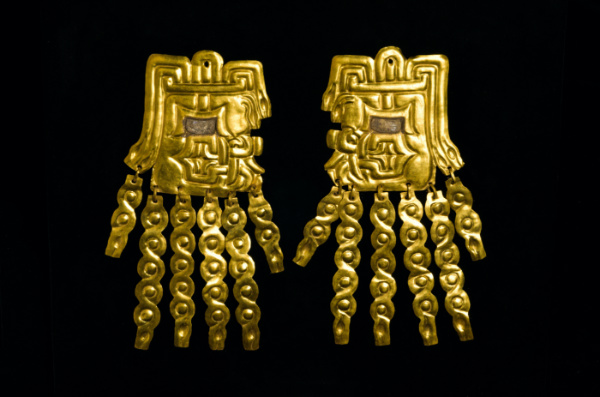
Gold alloy and shell ear plates with feline features, Peru, 800–550 BC. Museo Kuntur Wasi.

More than 40 ancient objects from Peru are the centrepiece of a new exhibition which opened at the British Museum this week. Peru: a journey in time is the first major exhibition the museum has ever staged focused on Peru and coincides with the 200th anniversary of the country’s independence. The exhibition charts the rise and fall of six societies, from the early culture of Chavin in 1200 BC to the fall of the Incas in AD 1532. Highlights include a 2,500-year-old gold headdress and pair of ear plates which were part of an elite burial found at the site of Kuntur Wasi, Cajamarca, a ceremonial drum from around 100 BC-AD 650 featuring a depiction of the capture of defeated enemies in ritual combat, and, the oldest object on loan – a ceremonial vessel from the Cupisnique culture in the shape of a contorted human body, which dates from up to 1200 BC. The display can be seen until 20th February, 2022, in the Joseph Hotung Great Court Gallery. Admission charge applies. For more, see www.britishmuseum.org.

• Streatham Hill Theatre in London’s south is among buildings added to Historic England’s ‘Heritage at Risk’ register for this year. Opened in 1929, the Grade II-listed building was designed by William George Robert Sprague and is described as an “unusually lavish example of a theatre built outside of the West End”. Other London buildings on the list include everything from a Toll Gate House in Spaniards Road, Highgate, to Alexandra Palace in Wood Green, and churches such as St Mary Woolnoth in the City of London. Meanwhile, among the sites removed from the list this year after being “saved” are the Battersea Power Station, first added to the list in 1991 and in recent years the subject of a major redevelopment, and former public conveniences at Guilford Place, Lamb’s Conduit Street, in Bloomsbury, which have been “sensitively transformed into a cosy wine and charcuterie bar”. For more, see https://historicengland.org.uk/whats-new/news/heritage-at-risk-2021/.

Send all items to exploringlondon@gmail.com.

This Week in London – William Hogarth and the Europeans; Christmas in the post; and, Paul McCartney’s lyrics…

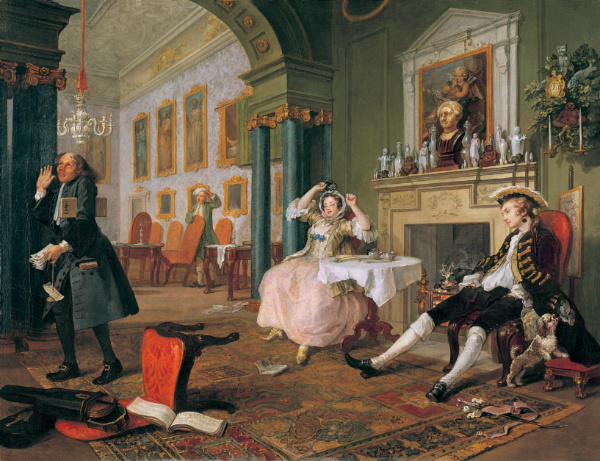
William Hogarth, ‘Marriage A-la-Mode: 2, The Tête à Tête’ (1743) 45 © The National Gallery, London.

• See the works of 18th century English artist William Hogarth alongside those of his European contemporaries in a new exhibition which opened at Tate Britain this week. Hogarth and Europe features more than 60 of Hogarth’s works and has some of his best-known paintings and prints – such as Marriage A-la-Mode (1743), The Gate of Calais (1748), Gin Lane (1751) and his celebrated series, A Rake’s Progress (1734) – shown alongside works by famed European artists including Jean-Siméon Chardin, Pietro Longhi, and Cornelis Troost. The display also includes Hogarth’s work, Miss Mary Edwards (1742) – it depicts the eccentric, wealthy patron who commissioned many of Hogarth’s best-known works and has not been seen in the UK for more than century. Admission charge applies. See www.tate.org.uk.

The first commercial Christmas card, created after civil servant Henry Cole commissioned artist​ John​ Callcott​ Horsley to design one for him in 1843, can once again been seen at The Postal Museum’s permanent display. That’s just one of the drawcards (pardon the pun), at the Postal Museum in the lead-up to Christmas with others including a new display, Letters to Santa, featuring Royal Mail cards sent by Father Christmas to children between 1963 and 2010 (from a recently donated collection), and the chance to ride on the Mail Rail which has undergone a Christmas makeover. The museum is also holding a series of ‘Festive Family Fun Days’ on selected dates in December. Admission charges apply. For more, head to www.postalmuseum.org.

Handwritten lyrics and photographs spanning the career of Paul McCartney feature in a new free Entrance Hall display at the British Library from tomorrow. Paul McCartney: The Lyrics features previously unseen materials from his personal archives as it reveals the process and people behind some of the most famous songs of all time, from some of his earliest compositions to his time with The Beatles, Wings and through to today. The display accompanies his new book, The Lyrics: 1956 to the Present. Can be seen until 13th March next year. For more, see www.bl.uk/events/paul-mccartney-the-lyrics.

Send all items for inclusion to exploringlondon@gmail.com.

This Week in London – The ‘RRS Sir David Attenborough’ at Greenwich; the Amazon explored at the Science Museum; and, Christmas at The National Gallery…

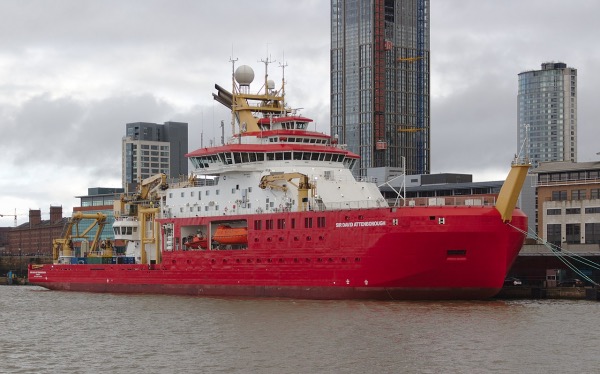
The RRS Sir David Attenborough in Liverpool. PICTURE: By Phil Nash from Wikimedia Commons CC BY-SA 4.0 & GFDL.

Find out what it’s like to live and work in the Earth’s polar extremes at Greenwich from today. The three day ‘Ice World Festival’ centres on the British Antarctic Survey’s vessel, the RRS Sir David Attenborough, which is visiting Greenwich before beginning its first mission to the Antarctic. Visitors will also be able to meet real polar scientists and explorers and see the Boaty McBoatface submersible as well as treasures from the National Maritime Museum’s polar collection including relics from HMS Erebus and Terror and items belonging to Captain Scott and Ernest Shackleton. While the ship can be seen from the dockside, a limited number of tickets are available for walk-up visitors to the festival (advanced booking tickets have sold out). Runs from today until 30th October. Admission is free. For more information, head here.

More than 200 images – captured by Brazilian photographer Sebastião Salgado over seven years – explore the rich diversity of the Amazon in an exhibition at the Science Museum. Amazônia provides a close-up look at one of the most unique environments on the planet through Salgado’s eyes, including panoramic scenery and the Indigenous peoples of the region (Salgado spent time with 12 different Indigenous groups over his period in the Amazon). Runs until March next year. Admission charge applies. For more, see www.sciencemuseum.org.uk/see-and-do/amazonia.

Father Christmas with return to The National Gallery for selected dates in November and December. The gallery’s Christmas experience will provide children with the chance to have their photo taken with Santa in his grotto, listen to an elven story in the winter forest set and receive a special token which they can exchange for a gift at the Elven Sorting Office. Meanwhile, Hendrick Avercamp’s painting A Winter Scene with Skaters near a Castle (about 1608–9) will be enlarged and reproduced on a canvas to provide a scenic backdrop for the activities. Admission charge applies. Bookings are now open. For more, head to www.nationalgallery.org.uk/whats-on/meet-father-christmas.

Send all items for inclusion to exploringlondon@gmail.com.
This Week in London – Free family festival kicks off this weekend; Beano the subject of Somerset House exhibition; and, lawyer Helena Normanton honoured…

Pop-Up London, a free festival for families, kicks off in central London on Saturday and runs throughout the half-term break until 31st October. The festival features more than 300 artists – including musicians, dancers, comedy acts and circus performers – who can be seen in more than 100 performances at locations including Trafalgar Square, King’s Cross, Spitalfields, and Canary Wharf. The diverse range of acts will include Brazilian drumming, Cantonese story-telling and Caribbean steelpans. For the full list of events. head to www.visitlondon.com/things-to-do/lets-do-london/pop-up-london.

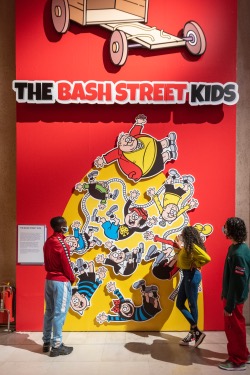
The Bash Street Kids cut outs in ‘Beano: The Art of Breaking the Rules’ PICTURE: Stephen Chung for Somerset House

The world’s longest-running weekly comic, Beano, is celebrated in a new exhibition opening at Somerset House today. Beano: The Art of Breaking the Rules features 100 comic artworks from the Beano archive exhibited, including original drawings never previously seen in public, and, works by contemporary artists including artist duo Gilbert & George, sculptor Phyllida Barlow and Oscar-winning animator Nick Park as well as larger-than-life recreations of Beano’s most iconic settings and interactive installations including Peter Liversidge’s patchwork of protest signs and a jukebox filled with music influenced by Beano’s rebellious streak. Beano was first released in 1938 and is still created weekly at its home in Dundee. This year marks the 70th since Dennis, Beano‘s top mischief-maker, made his debut. Runs until 6th March. Admission charge applies. For more, see www.somersethouse.org.uk/beano.

Barrister and women’s rights advocate Helena Normanton (1882-1957) has been honoured with an English Heritage Blue Plaque at her former home. The plaque at 22 Mecklenburgh Square – where Normanton lived from 1919 to 1931 – was unveiled almost 100 years since she passed her Bar finals on 26th October, 1921. Normanton played an instrumental tole in paving the way for women to practice law, being the first female students one of London’s Inns of Court, one of the first women to be called to the Bar, the first female counsel to lead a case in the High Court, the first woman to run a trial at the Old Bailey and the first women to lead murder trials in England as well as one of the first two women to take silk as King’s Counsel. For more, see www.english-heritage.org.uk/visit/blue-plaques.

Send all items for inclusion to exploringlondon@gmail.com.
Lost London – The Holbein portrait of King Henry VIII’s family…

King Henry VIII; King Henry VII
by Hans Holbein the Younger
(ink and watercolour, circa 1536-1537
NPG 4027)
© National Portrait Gallery, London

Thankfully much copied (at least in part), this full length portrait of King Henry VIII, his third wife and parents was the work of Hans Holbein the Younger.

Holbein, appointed the king’s painter in 1536, was commissioned to create the work following the King’s marriage to Jane Seymour on 30th May, 1536, and completed it in 1537 (there’s some speculation it may have been commissioned in celebration of the birth of King Henry’s son, King Edward VI).

The mural featured the King standing in full splendour, although without typical symbols of royalty such as a crown or sceptre, as well as his wife Jane Seymour, and his parents, King Henry VII and Queen Elizabeth of York. They were all standing around a central pillar upon which are inscribed verses in Latin extolling the Tudor dynasty.

The work is understood to have been commissioned for one of the King’s more private chambers in the Palace of Whitehall which Henry had seized after the downfall of Cardinal Thomas Wolsey.

The portrait survived the reign of King Henry VIII but was destroyed in the fire which devastated the palace in 1698.

A full-sized cartoon of the left-hand side of the work which was completed by Holbein in preparation for its creation is held in the collection of the National Portrait Gallery (pictured right).

While there are numerous copies of the figure of King Henry VIII, the only complete copy of the mural is attributed to Remigius van Leemput who created it in 1667 – it can be seen at Hampton Court Palace.

This Week in London – Elizabeth I and Mary, Queen of Scots; Ellen and William Craft honoured; and, Kehinde Wiley’s ‘Portrait of Melissa Thompson’…

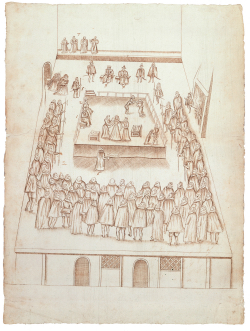
Ink and pencil drawing of the execution of Mary, Queen of Scots at Fotheringhay Castle, 8th February, 1587 © British Library (Additional MS 48027, f. 650r)

• The complex relationship between Queen Elizabeth I and Mary, Queen of Scots, is the subject of a new exhibition opening at the British Library in King’s Cross tomorrow. Highlights of Elizabeth and Mary: Royal Cousins, Rival Queens, the first major exhibition to consider both women together, include Queen Elizabeth I’s 1545 handwritten translation of her stepmother Katherine Parr’s Prayers and Meditations – a gift for her father King Henry VIII, a sonnet by Mary, Queen of Scots, which was handwritten the night before she was executed in 1587 (possibly the last thing she ever wrote), the ‘Penicuik Jewels’ which she is thought to have given away on the day of her death and Robert Beale’s eye-witness drawing depicting her entering the hall, disrobing, and placing her head on the block (pictured right). Other items on show include King Henry VIII’s Great Bible (dating from 1540, it was later inherited by Elizabeth I), Elizabeth I’s mother-of-pearl locket ring (c1575) containing miniature portraits of herself and her mother Anne Boleyn, and the warrant confining Mary, Queen of Scots, in Lochleven Castle in 1567. The exhibition is accompanied by a programme of events. Runs until 20th February. Admission charge applies. For more, see www.bl.uk/events/elizabeth-and-mary.

Nineteenth century African-American abolitionists Ellen and William Craft have been honoured with an English Heritage Blue Plaque at their former Hammersmith home. The Crafts escaped from enslavement in Georgia in the US in December, 1848, and fled to Britain, settling in a mid-Victorian house at 26 Cambridge Grove where they raised a family and campaigned for an end to slavery. The Crafts returned to the US following the end of the American Civil War and the emancipation of enslaved people and settled in Boston with three of their children. In 1873, they established the Woodville Cooperative Farm School in Bryan County, Georgia, for the children of those who had been emancipated. Ellen died in Georgia in 1891 and William in Charleston in 1900.

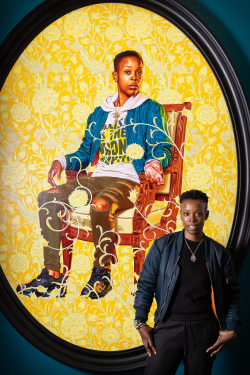
Melissa Thompson standing beside Kehinde Wiley’s Portrait of Melissa Thompson, 2020, now on display at the V&A © Victoria and Albert Museum

American artist Kehinde Wiley’s monumental Portrait of Melissa Thompson has gone on display in the V&A’s British Galleries, alongside William Morris’s Wild Tulip designs that inspired it. The massive oil painting, which was created as part of Wiley’s series The Yellow Wallpaper and was first exhibited at the William Morris Gallery in Walthamstow in 2020, was acquired earlier this year and is being displayed as part of a series of initiatives marking the 125th anniversary of William Morris’s death this October. The painting will be displayed in the William Morris Room (room 125) until 2024, after which it will move to its permanent home at V&A East Museum in 2025. Admission is free. For more, head to vam.ac.uk.

Send all items to exploringlondon@gmail.com.

This Week in London – Japan at Kew; Young V&A; a Blue Plaque for Diana’s flat; and, a new Lord Mayor of London…

Visitors to Kew Gardens are being invited to immerse themselves in the art, plants and culture of Japan in a month long celebration of the Asian nation. The Japan Festival kicks off this Saturday in Kew’s Temperate House and features at its heart a large-scale artistic installation by Japanese artist Chiharu Shiota entitled One Thousand Springs which is constructed of 5,000 haikus submitted by members of the public. There will also be a specially commissioned Chalk Garden – a contemporary response to a Japanese garden showcasing native plants including grasses, shrubs and trees – as well as a display showcasing six different chrysanthemums, Japan’s national flower, and an immersive soundscape by sound artist Yosi Horikawa featuring the natural sounds of the rivers and waterfalls of Kagoshima, atmospheric soundscapes from the Cedar mountains of Gifu and bird calls set across the waves of the Philippine Sea. The Temperate House will also be illuminated for Japan: After hours featuring a varied programme of dance, theatre, and live music performances as well as traditional flower arranging and sake sipping. The festival, supported by Daikin UK, runs to 31st October. Admission charge applies. For more, see www.kew.org.

Sky Brown from Great Britain during women’s park skateboard at the Olympics at Ariake Urban Park, Tokyo, Japan on August 4, 2021. PICTURE: Ulrik Pedersen/NurPhoto via Getty Images.

Thirteen-year-old Olympian Sky Brown’s skateboard, children’s garments created by sustainable fashion designer, humanitarian and artist Bethany Williams, and Open Bionics’ 3D printed prosthetic, The Hero Arm, are among new acquisitions to be displayed at what was the former V&A Museum of Childhood. Now renamed the Young V&A, the Grade II* Bethnal Green institution is undergoing a £13m transformation ahead of reopening in 2023. The new interior fit-out, by firm AOC Architecture, will include three new galleries –  Play, Imagine and Design – as well as interactive collection displays, a suite of dedicated learning workshops, an in-gallery design studio for visitors, and a new café and shop.

• The late Princess Diana has been honoured with an English Heritage Blue Plaque at her former flat in Kensington. Flat 60, Coleherne Court, Old Brompton Road, was her home between 1979 and 1981 during her courtship with Prince Charles. She shared it with three friends including Virginia Clarke who was at the unveiling ceremony this week. Diana, who died aged 36 in a Paris car crash in 1997, described her years at the property as “the happiest time of her life”, according to biographer Andrew Morton’s book Diana, In Her Own Words.

Vincent Keaveny was this week elected as the 693rd Lord Mayor of the City of London. Alderman Keaveny succeeds Lord Mayor William Russell, who served a second year in office after his term was extended to ensure continuity of leadership during the current COVID-19 pandemic (the last time a Lord Mayor served a second year in office was in 1861 when William Cubitt was re-elected). The annual Lord Mayor’s Show is scheduled for Saturday, 13th November, and will be followed by Lord Mayor’s Banquet at Guildhall on 15th November.

Send all items to exploringlondon@gmail.com.

This Week in London – Prince Albert’s papers online; behind the scenes at the London Transport Museum; and, the Marble Arch Mound’s light installation…

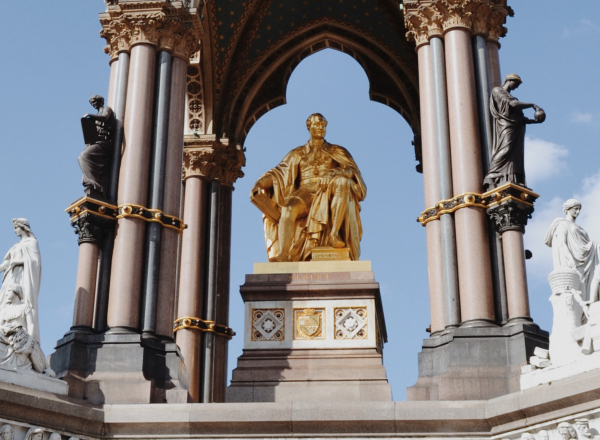
Statue of Prince Albert on the Albert Memorial, South Kensington. PICTURE: Amy-Leigh Barnard/Unsplash

• Some 5,000 papers and photographs relating to the life and legacy of Prince Albert, consort of Queen Victoria, have been published online. The move, which marks the completion of the Prince Albert Digitisation Project, means some 22,000 archival documents, prints and photographs from the Royal Archives, the Royal Collection and the Royal Commission for the Exhibition of 1851 are now publicly available, many for the first time, through the website Prince Albert: His Life and Legacy which was launched in mid-2019 to mark the 200th anniversary of the Prince’s death. The new items predominantly consist of the Prince’s private and official papers and correspondence as well as excerpts from Albert’s now lost diaries, spanning the years from 1841 to 1852. Highlights include a note he wrote to Victoria on October, 1858, which reads: “I declare that I have every confidence in you. A”; a letter from 10-year-old Princess Louise to her father from Swiss Cottage, the life-sized playhouse he had installed for his children at Osborne House on the Isle of Wight, in which she reports cooking and making “some wafers and schneemilch” (a type of Austrian pudding); and, an annotated list of candidates for the role of Master of the Household in which Albert lists why they are unsuitable with reasons including ‘too old’ and ‘too useful to the Navy’ and ‘bad temper’ and ‘French mistress’.

London Transport Museum are offering people the chance to go behind the scenes at its depot in Acton, West London, this weekend. The depot, which houses more than 320,000 objects from London’s transport history, will play host to a programme of events – ‘Underground Uncovered’ – which includes talks, vintage vehicle displays and family activities. Highlights include a talk by Siddy Holloway, a disused station history expert and co-presenter of the new Secrets of the London Underground TV series, the chance to try your hand at being a train operator in the Victoria Line driving cab, and the opportunity to watch a demonstration of restored London Underground signalling frames. The open days are being held from today until Sunday, 11am to 5pm. Admission charge applies. To book and see the full programme of events, see www.ltmuseum.co.uk/visit/depot/events.

W1 Curates and artist Anthony James’ light exhibition inside the Marble Arch Mound has opened to the public with free entry to what has been a somewhat controversial attraction to continue. James’ Lightfield installation involves a series of 12 cubed light sculptures in three rooms inside the mound through which visitors will make their way after first visiting the viewing platform on top. James, who has described the cubes as alluding to the “mycorrhizal nature of birch tree forests”, says it’s the first time his works have been displayed and viewed in such a “fully immersive way”. Visitors are asked to book an entry time at www.themarblearchmound.com.

Send all items for inclusion to exploringlondon@gmail.com.
This Week in London – NHM’s Our Broken Planet’s finale; West End LIVE at Trafalgar Square; and, Helen Frankenthaler at Dulwich…

Juvenile European bison © The Trustees of The Natural History Museum, London

The third and final part of the free exhibition, Our Broken Planet: How We Got Here and Ways to Fix It, has opened at the Natural History Museum. Following on from sections exploring the food we eat and the products we use, the third phase of the display explores the energy humans consume and how we can we create a greener, cleaner future. Specimens in the display include a juvenile European bison, illustrating an experimental rewilding project in Kent which is investigating if bison feeding habits will improve the forest’s biodiversity and store more carbon in the soil, blue-green algae collected during Captain Scott’s famed RRS Discovery expedition which is being used in the study of climate change, and the recently extinct Chinese paddlefish, a casualty of the global boom in hydroelectric dams. Entry to the South Kensington museum is free but visitors are encouraged to book a time ticket in advance to ensure entry. For more, see www.nhm.ac.uk/visit/our-broken-planet.html.

The West End comes to Trafalgar Square this weekend with a line-up of free performances from top shows taking to the stage. Forming part of Westminster City Council’s Inside Out Festival and the Society of London Theatre’s #BackOnStage campaign, the West End LIVE event will feature the first ever West End LIVE appearances from award-winning musicals Hamilton and The Book Of Mormon, as well as an exciting roster of new shows including The Prince Of Egypt, Dear Evan Hansen, Cinderella, Back To The Future: The Musical and Pretty Woman. More than 30 acts will be involved in the free and unticketed event. For the full programme, see www.westendlive.co.uk.

The first major UK exhibition of woodcuts by the leading abstract expressionist, Helen Frankenthaler, opened at the Dulwich Picture Gallery this week. Helen Frankenthaler: Radical Beauty brings together more than 30 works on loan from the Helen Frankenthaler Foundation which span the artist’s career from her first ever woodcut in 1973 to her last work published in 2009. Works include including Madame Butterfly (2000), East and Beyond (1973), Cameo (1980) and Freefall (1993). The display can be seen until 18th April. Admission charge applies. For more, see www.dulwichpicturegallery.org.uk.

Send all items to exploringlondon@gmail.com.
This Week in London – Open House London; ‘After Dark’ at the London Transport Museum; and, Korky Paul at the Heath Robinson…

St Leonards Court Air Raid Shelter in Sheen. PICTURE: Courtesy of Open House London

Open House London kicks off this weekend and this year is being billed as a nine day ‘festival’ of the city’s architecture and urban landscapes. This year’s programme features “hidden gems” such as a World War II air raid shelter designed to appear like an old dovecote or garden storeroom in East Sheen (pictured right) and the UK’s only Brutalist Quaker Meeting House in Blackheath as well as buildings deemed at risk from demolition such as the soon to be vacated City Hall and Notting Hill’s landmark Trellick Tower. The programme also features five of London’s outstanding housing estates in a bid to celebrate those estates which helped support positive wellbeing during the COVID-19 pandemic. There’s also a number of important projects from some of the black, Asian and ethnic minority designers as well as annual programme favourites like 10 Downing Street, the HM Treasury building, and various churches across the metropolis. For the full programme of events (most of which are free but some of which have to be rebooked), check out https://open-city.org.uk/open-house.

• The first in a new series of ‘After Dark’ events kicks off at the London Transport Museum on Friday night. The nights, which run from 6,30pm to 9pm, come with a variety of themes starting with a night themed around the museum’s ‘Hidden London’ tours of ‘ghost’ stations and other secret sites across the Capital’s transport network. As well as the chance to explore the museum’s galleries free from crowds and enjoy the thematic fun, guests can also visit a pop-up bar featuring the museum’s signature red Routemaster cocktail. For full details of the events, head to www.ltmuseum.co.uk/news/new-season-after-dark-evening-events-kick-september.

The work of award-winning illustrator Korky Paul will be on display at the Heath Robinson Museum on Saturday. Korky Paul’s Magic of Illustration (with a Flying Visit from Winnie and Wilbur) is the first solo exhibition of his original work which includes such characters as Winnie the Witch, The Fish Who Could Wish, Professor Puffendorf and Sir Scallywag. The exhibition will provide an insight into Korky Paul’s process of illustrating and preparing illustrations by drawing on his archive of drawings and other material relating to the development of the illustrations of each book and its publication. Korky Paul, whose work “often clearly shows the influence of Heath Robinson’s humorous drawings” according to the museum, has sold over 10 million of books worldwide in more than 35 languages. Runs until 9th January. Admission charge applies. For more, see www.heathrobinsonmuseum.org.

Send items for inclusion to exploringlondon@gmail.com.
This Week in London – The Northern Lights come to Greenwich; Sir Kenneth Clark honoured; and, Phyllida Barlow at the Tate…

Borealis, Dan Acher. PICTURE: Courtesy GDIF

The Northern Lights come to Greenwich this Bank Holiday weekend. The Greenwich + Docklands International Festival, promoted as London’s “leading festival of free outdoor theatre and performing arts”, features two major installations in the Old Royal Naval College grounds – the Borealis and We are Watching – from artist Dan Acher as well as the Greenwich Fair on Sunday. There’s also dance and theatrical performances – including Family Tree, a performance inspired by the life of Henrietta Lacks, an African American woman whose cells were harvested and cultivated without her consent after her death from cervical cancer in 1951, and Future Cargo, Requardt & Rosenberg, a contemporary sci-fi dance show – and pop-up events in neighbourhoods across the Royal Borough of Greenwich. The festival opens tomorrow and runs until 11th September. For the full programme of events and for more information, see https://festival.org/gdif/whatson/. For bookings for Borealis, head here.

Art historian and broadcaster, Sir Kenneth Clark, has been honoured with an English Heritage Blue Plaque at his former Marylebone home. Clark (1903-1983), who is probably best known for the landmark 1969 BBC TV series Civilisation, lived in the property at 30 Portland Place between 1934 and 1939 – the period when he became director of The National Gallery and when he was knighted. Sir Kenneth and his wife Jane hosted parties at the property where guests included Winston Churchill and Vanessa Bell. Sir Kenneth, who also headed organisations including the Arts Council of Great Britain and the Independent Television Authority, is noted for having saved some of the nation’s most valuable artworks during World War II by having more than 800 paintings evacuated to rural Wales. He was also responsible for many of the Ministry of Information’s wartime films and sponsored emerging artists including Henry Moore and Graham Sutherland. For more, see www.english-heritage.org.uk/visit/blue-plaques/.

A celebration of Phyllida Barlow’s art has opened at the Tate Modern on South Bank. ARTIST ROOMS: Phyllida Barlow spans the British artist’s 60 year career and features some of her large-scale sculptures as well as more than 30 works on paper. Highlights include Object for the television (1994), the only surviving work from Barlow’s 1990s series Objects for… and major installations such as untitled: brokenstage/hangingcontainer, 2012/2013 and untitled: upturnedhouse2, 2012. The exhibition is free to enter. For more, see www.tate.org.uk.

Send all items for inclusion to exploringlondon@gmail.com.
This Week in London – Skateboarding explored at Somerset House; and, looking behind ‘Oliver Twist’…

One of the images in No Comply – ‘Here to win’ © Katie Edwards.jpg

A celebration of skateboarding and its impact on communities and culture of the past 45 years is underway at Somerset House. No Comply: Skate Culture and Community is a free exhibition featuring imagery from some of the world’s foremost photographers capturing skateboarding scenes from across the UK as well as early editions of skateboarding titles like Alpine Sports, Read and Destroy (R.A.D) and Skateboard!, and original film commissions including a new short film from London-based director Dan Emmerson and a new short by skate videographer Sirus f Gahan. The display also explores the influence of skateboarding on mainstream culture – everything from fashion brands to video games – and uses archival objects, photographs and personal anecdotes to share stories from skate communities in the UK and beyond as well as those of skateboarding-related non-profit initiatives including Free Movement Skateboarding and SkatePal. Runs until 19th September; pre-booking required. For more, see www.somersethouse.org.uk.

• On Now: More! Oliver Twist, Dickens and Stories of the City. This exhibition at the Charles Dickens Museum in Doughty Street, Bloomsbury, showcases a selection of letters, illustrations, postcards and photos – including a provocative artwork by artist Cold War Steve – as it explores the story of Oliver Twist and the inspiration behind it. Can be seen until 17th October; admission charge applies. For more, see https://dickensmuseum.com.

Send all items for inclusion to exploringlondon@gmail.com.
This Week in London – Art hits Westminster streets; Open House London now a nine day celebration; and, historic sites recognised for Festival of Britain anniversary…

Inside Out Festival launch at The National Gallery. PICTURE: Nyla Sammons

Reproductions of some of The National Gallery’s most famous works have appeared on Trafalgar Square’s North Terrace as part of the City of Westminster’s ‘Inside Out’ festival. The life-sized replicas include Van Gogh’s Sunflowers (1888), Turner’s The Fighting Temeraire (1839), Botticelli’s Venus and Mars (1485), Titian’s Bacchus and Ariadne (1520-3) and John Constable’s The Hay Wain (1821). The display is being accompanied by ‘Sketch in the Square’, a programme of free, daily alfresco art activities with a strong emphasis on mindfulness and wellbeing. Other events in the Inside Out festival include the ‘Tusk Lion Trail’ in which 22 life-sized lion sculptures take visitors on a journey to trail some of the West End’s most iconic landmarks, a immersive light installation by artist Chila Burman at Covent Garden’s historic Market Building, and ‘Art of London’, in which five Royal Academy artists have brought their art to Piccadilly Circus and its surrounding streets. The ‘Inside Out’ festival is part of the ‘Westminster Reveals’ campaign which aims to encourage visitors to return to the city’s streets and enjoy the city’s cultural scene. For more on ‘Inside Out’ – which runs until 31st October, see www.westminster.gov.uk/insideout.

Trellick Tower (courtesy of Open House London).

Usually held over a weekend, Open House London is this year a nine day celebration of London’s architecture and urban landscapes. Highlights this year include the chance to see inside 10 Downing Street, Ernő Goldfinger’s brutalist landmark Trellick Tower (pictured), a street of self-build timber houses in Lewisham and a former Victorian workhouse which has been transformed into a homeless shelter in Camden. There’s also the first chance to see a new design district in Greenwich, a yet to be opened community centre in Holborn and a special focus on the capital’s pubs and breweries. The full programme for the festival – which runs from 4th to 12th September and features hundreds of events – is now available online. For full listings, see www.openhouselondon.org.uk/2021.

Historic sites and objects related to the landmark 1951 Festival of Britain have been officially recognised to mark the event’s 70th anniversary. The London sites include Calvary Charismatic Baptist Church in Tower Hamlets, built as part of the ‘live’ architectural exhibition of the Festival of Britain, which has seen its heritage listing upgraded from Grade II to Grade II*. Among the sites which have had their listings updated are: Royal Festival Hall which was designed by the London County Council Architect’s Department as part of their contribution to the Festival of Britain; the Church of St John located just off the Waterloo roundabout which, struck by a bomb during World War II, remained damaged until 1950 when the interior was remodelled in a neo-Georgian style for the festival; and, the Newbury Park Bus Station Canopy, which was designed with a high arched, open structure in what has been described as the modernist ‘Festival style’. The Festival of Britain, which ran from May to September, 1951, was a national exhibition and fair aimed at promoting British design, science, technology, architecture, industry, and the arts. Held in the aftermath of World War II, one of its key aims was to help foster a national sense of recovery.

Send all items for inclusion to exploringlondon@gmail.com.
This Week in London – Emblem for The Queen’s Platinum Jubilee unveiled; Marble Arch Mound free after apology; and, ‘Pet Life’…

A 19-year-old graphic design student from Nottinghamshire has won a competition to find an emblem for the Queen’s Platinum Jubilee. Edward Roberts, who is studying at Leeds, said that for his design, “I wanted to give a modern twist to the iconic elements of St Edward’s Crown, and so I created a continuous line, which I felt was a fitting representation of The Queen’s reign”. Paul Thompson, vice-chancellor of the Royal College of Art and a member of the judging panel which selected the winning design said it takes people “on a simple line journey to create the crown and the number 70, beautifully capturing the continuous thread of Her Majesty The Queen’s 70-year reign”. “Drawn on a computer, the ingenious emblem works across all scales and the flow of the line gives us a sense of a human touch behind the digital design process.” The competition, which was was open to young people aged between 13 and 25 from all over the United Kingdom, was judged by a panel of graphic designers, visual artists and design professionals, experts from the V&A, the Royal College of Art, the Design Museum, and a representative from the Royal Household. It was chaired by V&A Director Tristram Hunt. As the winner, Edward will be invited to next year’s Jubilee celebrations including the ‘Platinum Party at the Palace’, and his winning design, along with the other nine shortlisted emblem design entries which will be revealed next year, will be displayed at the V&A in June. Edward will also receive a prize of £1,500 and a year’s free membership of the V&A.

The £8 entrance fee to the Marble Arch Mound has been dropped for visitors during August after it closed only two days after opening following sustained criticism from visitors. In a statement Stuart Love, chief executive of the City of Westminster, apologised that the Marble Arch Mound wasn’t ready for visitors when it opened. “London’s businesses and residents have suffered through the pandemic and we built the Mound as part of our bigger plan to get people back into the City and into the shops, restaurants, theatres and to see the amazing sights the West End has to offer,” he said. “We wanted to open the Mound in time for the summer holidays and we did not want to disappoint people who had already booked tickets. We made a mistake and we apologise to everyone who hasn’t had a great experience on their visit.” The 25 metre high temporary attraction will reopen on Monday. For more, head here.

Explore the stories of real-life pets and their owners in a new feature at the Museum of The Home in Shoreditch. Pet Life – which features animations, projections, hands on activities and stories written by author and storyteller Bernadette Russell – aims to show “the joy, companionship and challenges our pets bring to the home”. Runs until 31st October. Admission charge applies. For more, see www.museumofthehome.org.uk/whats-on/exhibitions-and-installations/pet-life/.

Send items for inclusion to exploringlondon@gmail.com.
This Week in London – Royal portraits in Greenwich; Sir Roger Bannister to be honoured; and, drawing on the Tate’s Turbine Hall floor…

King Henry VII by unknown Netherlandish artist, 1505 (oil on panel) © National Portrait Gallery, London

More than 150 of the finest portraits of royal families over five dynasties are on show at the National Maritime Museum in Greenwich. Tudors to Windsors: British Royal Portraits, which is being run in conjunction with the National Portrait Gallery, features famous paintings, miniatures, sculpture, photographs, medals and stamps from the Tudor, Stuart, Georgian, Victorian and Windsor dynasties. Highlights include the earliest known portrait of Henry VII (also the oldest artwork in the exhibition) which was painted in 1505 by an unknown artist, Flemish artist Marcus Gheeraerts the Younger’s famous ‘Ditchley Portrait’ of Elizabeth I, portraits of Charles II and his mistresses, early 19th century domestic photographs of Queen Victoria and her family, and a selection of paintings and photographs of Queen Elizabeth II by Cecil Beaton and Annie Leibovitz. Runs until 31st October. Admission charge applies. For more, see www.rmg.co.uk/TudorsWindsors.

Westminster Abbey has announced a new memorial to Sir Roger Bannister, the first man to run under a mile in four minutes. The abbey said the memorial ledger stone to Bannister, who later became a neurologist, will be placed in what is known as ‘Scientists’ Corner’ in the building’s nave, close to the graves of scientists Sir Isaac Newton and Charles Darwin as well as the ashes of Stephen Hawking. “Throughout his life Sir Roger Bannister reached out for that which lay beyond,” said the Dean of Westminster, the Very Reverend Dr David Hoyle, in a statement. “As a sportsman, pushing himself towards a prize some considered beyond human reach, as a scientist ever eager for deeper understanding of neurology. We are delighted that his memory and his achievement will be set in stone in the Abbey. He ran the race set before us all.” Bannister is famous for having run a mile in three minutes, 59.4 second at Oxford on 6th May, 1954 – a record which stood for almost nine years.

Be among those transforming the Tate Modern’s Turbine Hall into an “ever changing work of art”. Visitors are invited to join in covering the hall’s floor with their own jottings using coloured drawing materials as part of artist Ei Arakawa’s interactive installation, Mega Please Draw Freely. The installation, which can be contributed to until 29th August, kicks off UNIQLO Tate Play – a new free programme of playful art-inspired activities for families, being in partnership with UNIQLO, at the Tate Modern. The project, which has seen the Turbine Hall floor covered with a temporary surface allowing it to be drawn upon, is inspired by the Gutai group, radical Japanese artists who wanted to change the world through painting, performance and children’s play and, in particular, the group’s ‘Outdoor Gutai Art Exhibition of 1956’ in which Yoshihara Jirō created the groundbreaking work Please Draw Freely, a large board on which people were free to draw and paint. Visitors can access Mega Please Draw Freely by booking a free collection display ticket online at www.tate.org.uk.

Send all items for inclusion to exploringlondon@gmail.com.