10 significant (and historic) London trees…1. Queen Elizabeth’s Oak, Greenwich…

Spring is upon us, so we thought it an appropriate time to consider some of London’s greatest natural assets – its trees. But, as well as being significant for their environmental impact, each of these trees (or, in some cases, the remains of them), are significant for historic reasons (we’ve previously mentioned a couple including what’s believed to be the oldest tree and the unusual – and sadly now deceased – Hardy Tree).

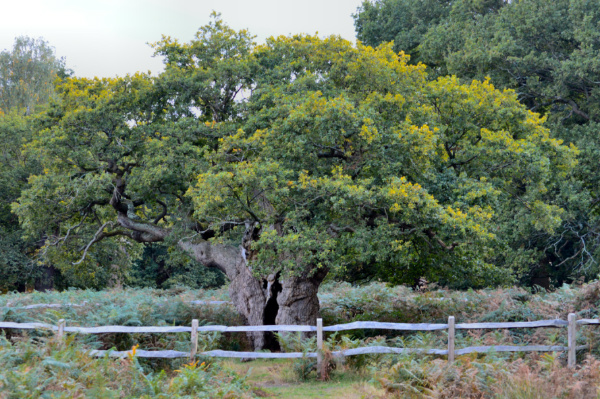
PICTURE: Steve Daniels (licensed under CC BY-SA 2.0)

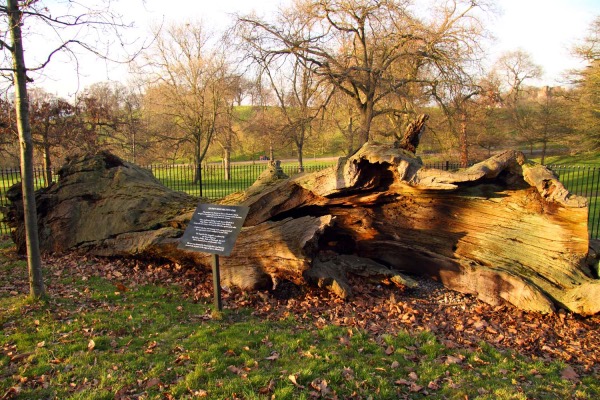
First up, it’s the tree known as Queen Elizabeth’s Oak in Greenwich. Thought to date from possibly as far back as the late 13th century, this tree survived until the 19th century before its carcass finally fell to the ground during a storm in 1991. It has lain in Greenwich Park ever since.

The tree, which is located at the end of what is now Lover’s Walk close to the Maze Hill Gate, was located in the grounds of Greenwich Palace (also known as the Palace of Placentia) and was there when King Henry VIII resided at the palace.

In fact, it’s said that he and Anne Boleyn danced around the oak while courting, and (and here’s where the name comes from) that Elizabeth, their daughter (and later Queen Elizabeth I), picnicked under its canopy (some accounts suggest she actually picnicked in the tree’s hollow – but still then upright – trunk).

Following the creation of what is now Greenwich Park, the hollow tree was apparently used as a prison for those caught illicitly on the grounds. They were secured behind a heavy wooden door fitted to the trunk (a park keeper’s lodge was built nearby in the 17th century; it was demolished in the 1850s).

The tree, one of 3,000 in the park, had died in the 19th century and was reduced to an eight metre high stump, partly supported by ivy, when it was blown over by the storm in June, 1991.

A replacement oak, which was donated by the Greenwich Historical Society was planted nearby by the Duke of Edinburgh on 3rd December, 1992, to mark Queen Elizabeth II’s 40 years on the throne.

A ring analysis carried out on the tree found in 2014 it dated back to at least 1569 but with the core missing a precise date of germination couldn’t be found. Estimates, however, place the date of germination to the last 13th or early 14th century. The analysis placed the tree’s death to between 1827 and 1842.

The tree is marked with a plaque and both it and the new tree are surrounded by an iron railing.

WHERE: Queen Elizabeth Oak, Greenwich Park (nearest DLR station is Greenwich); WHEN: 6am to 8pm daily; COST: Free; WEBSITE: https://www.royalparks.org.uk/visit/parks/greenwich-park.

This is an expanded version of a post first made in 2017.

Treasures of London – Russell Street gas lamps…

One of the lamp-posts in Russell Street, Covent Garden, in 2012. PICTURE: Google Maps

Recently listed as Grade II, these four gas lamps on Russell Street in Westminster were among a series of lamps installed around Covent Garden to mark the beginning of King George V’s reign.

While the columns of the lamps date from 1910, three of the lanterns – described as an ‘Upright Rochester lantern’ and manufactured by William Sugg and Company Limited – are replacements believed to have been installed around 1930. The fourth was installed following a campaign to save Covent Garden from redevelopment in the 1970s.

The newly listed lamp-posts – the first Westminster lamps to be listed in 40 years – are located outside numbers 4-6, 24, 29, and 34-43.

There are currently about 1,300 working gas lamps in London, around 270 of which are in Westminster (and about half of which are listed).

This Week in London – A Greenwich chocolate house recreated; Bridgerton wig debuts at Kew; and, climate tech at the Science Museum…

• Happy Easter to all our readers! We’ll be taking a break over the next few days with our usual coverage returning next Tuesday.

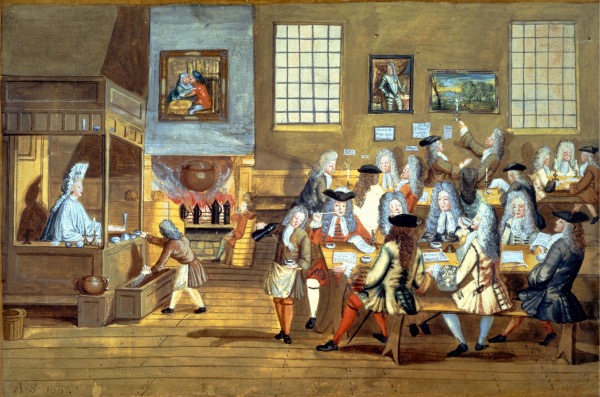
A caricature of Lloyd’s Coffee House from the 17th century.

Experience a recreation of Grace and Thomas Tosier’s famous ‘royal’ Chocolate House in Greenwich this Easter. Located in the Old Royal Naval College, Chocolate House Greenwich recreates the Tosier Chocolate House which was located in what became known as Chocolate Row, on the edge of Blackheath. A social space for the leading figures of the day, the chocolate house was run by Grace while her husband Thomas served as chocolate maker for King George I, running the chocolate kitchen at Hampton Court Palace. Visitors will be able to immerse themselves in the chocolate house via an audio and visual experience created by Unusual Expo and actor-writer Jonathan Coote. As well as meeting Grace, there is also the chance to listen in to luminaries such as architect and astronomer Sir Christopher Wren, writer and diarist John Evelyn, the first Astronomer Royal, John Flamsteed, and playwright and architect John Vanbrugh. A series of events will accompany the exhibition – which opens tomorrow – including an Easter Trail for families, a gin and chocolate tasting experience and a ‘Choc-o-Late’ event. Admission charge applies. Runs until 3rd November. For more, see https://ornc.org/whats-on/chocolate-house-greenwich/.

A wig worn by Golda Rosheuvel in Netflix’s hit series Queen Charlotte: A Bridgerton Story goes on display at Kew Palace from the end of this month. The grey wig with accompanying tiara will be showcased in Queen Charlotte’s dressing room, alongside a lock of the real Queen Charlotte’s hair. Visitors will also be able to join daily 30 minute Queen Charlotte: A Kew Palace story tours, walking in the footsteps of famous royals like King George III and Queen Charlotte. Admission charge applies. For more, see https://www.hrp.org.uk/kew-palace/.

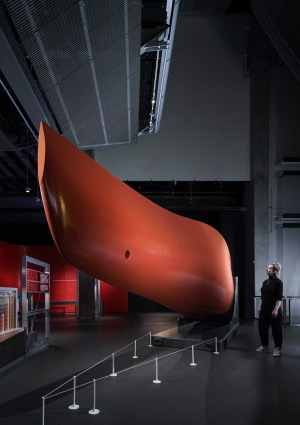
A visitor looks at a tidal turbine blade in Energy Revolution The Adani Green Energy Gallery at the Science Museum © Science Museum Group

A major new gallery examining the rapid energy transition and decarbonisation needed globally to limit climate change has opened at the Science Museum. The Energy Revolution: The Adani Green Energy Gallery is divided into three sections – Future Planet, Future Energy and Our Future – and highlights technologies and projects being used to address the climate crisis. Objects on show include a seven metre long tidal turbine blade made by Orbital Marine Power which was used in the Orkneys, rare surviving Edison tube mains cables used to power world’s first public electricity network in London in 1882, and a three metre high CoolAnt passive air-cooling facade from India that reduces dependence on powered air conditioning. At the centre of the gallery sits Only Breath, a kinetic sculpture created by artists Alexandra Carr and Colin Rennie from Torus Torus Studios that moves and blooms, stretching to around five metres in diameter when unfurled. The gallery can be found on Level 2 of the South Kensington museum. Admission is free. For more, see sciencemuseum.org.uk/energy-revolution.

Send all items to exploringlondon@gmail.

10 atmospheric ruins in London – 9. Barking Abbey…

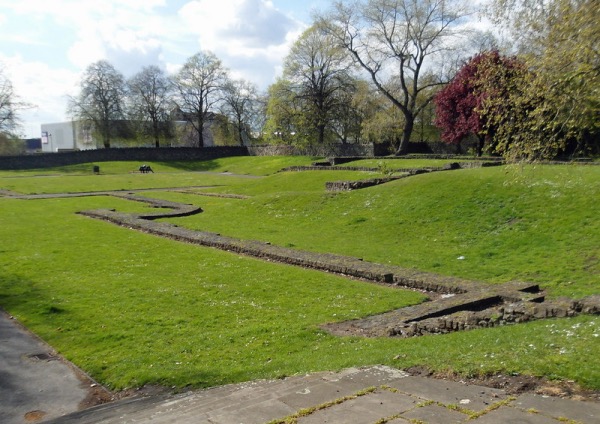
Footings of the abbey (these are modern with the real foundations below ground). PICTURE: diamond geezer (licensed under CC BY-NC-ND 2.0)

Once one of the most important nunneries in the country, Barking Abbey was originally established in the 7th century and existed for almost 900 years before its closure in 1539 during King Henry VIII’s Dissolution.

The abbey was founded by St Erkenwald (the Bishop of London between 675 and 693) for his sister St Ethelburga who was the first abbess.

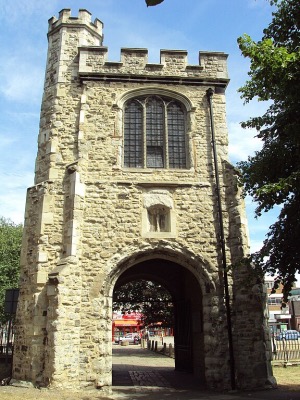
The Curfew Tower. PICTURE: Rept0n1x (licensed under CC BY-SA 3.0)

In the late 900s, St Dunstan, the Archbishop of Canterbury introduced the Rule of St Benedict at the nunnery.

King William the Conqueror stayed here after his coronation while famous abbesses included Mary Becket, the sister of St Thomas Becket, Archbishop of Canterbury, who was given the title in 1173 in reparation for the murder of her brother, as well as several royals including Queen Maud, wife of King Henry I, and Matilda, wife of King Stephen.

The nunnery gained wealth and prestige but this suffered somewhat as a result of floods in 1377 with some 720 acres of land permanently lost. It nonetheless remained one of the wealthiest in England and it’s said the abbess had precedence over all other abbesses in the country.

After the abbey was dissolved, some of the building materials were reused elsewhere and the site was later used as a farm and quarry.

Most of the buildings were demolished – today only the Curfew Tower, which dates from around 1460, remains. The Grade II*-listed tower contains the Chapel of the Holy Rood and now serves at the gateway to the nearby St Margaret’s Church.

Building footings also remain buried under the ground in what is known today as Abbey Green (the layout is marked today by modern additions). There’s a model of how the abbey once appeared inside the gateway.

Barking Abbey ruins, Abbey Road, Barking (nearest Tube Station is Barking); WHEN: Daily: COST: Free; WEBSITE: https://www.lbbd.gov.uk/find-your-nearest/barking-abbey-ruins

10 atmospheric ruins in London – 8. Coldharbour Gate…

Located within the outer walls of the Tower of London are the remains of some early 13th century fortifications built by King Henry III.

The foundations of Coldharbour Gate in the foreground beside the White Tower with the remnants of the Inmost Ward Wall beyond. PICTURE: Elizabethe (licensed under CC BY-NC-ND 2.0)

These include the foundations of Coldharbour Gate which once adjoined the south-west corner of the White Tower as well as the western wall of the Inmost Ward which ran down to the Wakefiekd Tower.

The gate was defended by two cylindrical turrets while the Inmost Ward Wall has arrow loops installed, allowing archers to fire down on attackers who had breached the outer fortifications.

The gate was later used as a prison. Alice Tankerville, who was charged with piracy on the River Thames, became one of the most famous prisoners housed there when, despite having apparently been chained to the wall, she escaped with the help of two guards in 1533 (she was recaptured just outside the Tower).

The gateway was demolished in about 1675 and lead from the roof taken to Greenwich where it was redeployed at the Royal Observatory.

Much of the wall was hidden away behind later buildings but was re-exposed after being bomb damaged during World War II.

Not much remains to be seen today but the foundations do evoke a sense of the royal palace in times past and serve as a reminder that the buildings we see at the Tower today are not all that has existed here.

Other ruins at the Tower of London include the remains of the Wardrobe Tower, which lies at the south-east corner of the White Tower. It is thought to have dated from 1190 and incorporates the base of a Roman bastion.

WHERE: Tower of London (nearest Tube station Tower Hill); WHEN: 9am to 5.30pm (last admission 3.30pm), Tuesday to Saturday; 10am to 5.30pm (last admission 3.30pm) Sunday to Monday; COST: £34.80 adults; £17.40 children 5 to 15 (family tickets available; discounts for online purchases/memberships); WEBSITE: www.hrp.org.uk/toweroflondon/.

Lost London – Nonsuch House, London Bridge…

Once located at the southern end of London Bridge, Nonsuch House is the earliest documented prefabricated building.

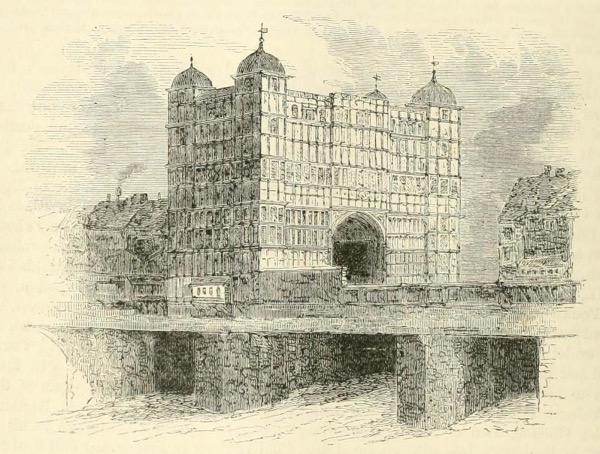
Nonsuch House as seen in ‘Old and New London, Illustrated’ (1873). PICTURE: Via Wikipedia

Originally constructed in what is now The Netherlands, it was shipped to London in pieces – each individually marked – in 1578 with the reassembly completed the following year.

The four storey building, which was said to have been constructed using wooden pegs and no nails, featured an arched tunnel through the middle through which bridge traffic would pass.

The main facade faced toward Southwark and there were towers at each of the four corners, topped with onion domes. The east and west sides of the building, which protruded beyond the bridge out over the Thames were elaborately carved.

The northern facade of the building abutted other properties while the southern side had a clear space in front over which a drawbridge is believed to have been located (it could be raised to allow larger ships through).

The name may have referenced King Henry VIII’s Nonsuch Palace, located near Ewell in Surrey, and was said to refer to the fact there was no such building as splendid.

The property was demolished along with the other buildings on the bridge in about 1757.

This Week in London – “Forgotten” stories from royal palaces; and, St Patrick’s Day celebrations…

A scene from the Untold Lives exhibition at Kensington Palace. PICTURE: Courtesy of Historic Royal Palaces.

The “forgotten” stories of those who worked behind the scenes at London’s royal palaces are the subject of a new exhibition at Kensington Palace. Untold Lives: A Palace at Work shines a spotlight on those working in various roles at the palace between 1660 and 1830 – everyone from pages and cooks to wetnurses and seamstresses. Among the items on display is an apron worn by Queen Charlotte’s Wardrobe Maid, Ann Elizabeth Thielcke, a newly conserved portrait depicting a young Black attendant standing by King William III and holding his armour, and a specially commissioned photographic piece by Peter Braithwaite which reimagines figures from the Kensington Palace’s Kings Staircase. Among those whose stories are featured is the “Rat-Killer”, who wore a special rat-embroidered uniform, the Groom of the Stool, who was responsible for looking after the monarch on the toilet, and the Keeper of Ice and Snow, whose job was to cut ice so those at the palace could enjoy cold drinks and iced desserts all year round. The exhibition also explores the unexpected origins of some of those who served at the palaces, such as Abdullah, a wild cat keeper from India, and Mehmet von Könsigstreu, Keeper of the Privy Purse for King George I.. The exhibition, entry to which is included in general admission to the palace, can be seen until 27th October. For more, see https://www.hrp.org.uk/kensington-palace/.

St Patrick’s Day is being celebrated this Sunday with the annual parade and a free, family-friendly afternoon of entertainment in Trafalgar Square. The procession, which sets off from Hyde Park Corner at noon and winds its way through the city to Whitehall, will include Irish marching bands, dance troupes and pageantry. From 1pm to 6pm, Trafalgar Square will host family concerts, children’s films and youth performances, as well community choirs, schools and dancing with Anna Haugh, International Chef of the Year 2019, running food demos alongside the main stage and children’s workshops. Entry is free. For more, see www.london.gov.uk/events/st-patricks-day-2024.

Send all items to exploringlondon@gmail.com

This Week in London – Underground shelters in wartime – then and now; new Ravenmaster at the Tower; and, ‘La Ghirlandata’ back at the Guildhall Art Gallery…

A new photographic exhibition exploring how Underground stations and metro systems provide shelter to citizens during periods of war, both now and in the past, opened at the London Transport Museum in Covent Garden last week. Echoes of the Blitz: Underground shelters in Ukraine and London features 70 images, including historical pictures from the museum’s collection as well as 38 contemporary photographs shot by six renowned, mainly Ukrainian, documentary photographers. The latter include photography showing ordinary Ukrainian citizens sleeping, waiting, cooking, washing clothes, caring for their pets and creating temporary make-shift homes in metro stations of Kyiv and and Kharkiv show alongside black and white archive images of Londoners taking refuge in Tube stations during World War II. The exhibition, which is being run in partnership with Berlin-based journalistic network n-ost, can be seen until spring next year. Admission charge applies. For more, see www.ltmuseum.co.uk.

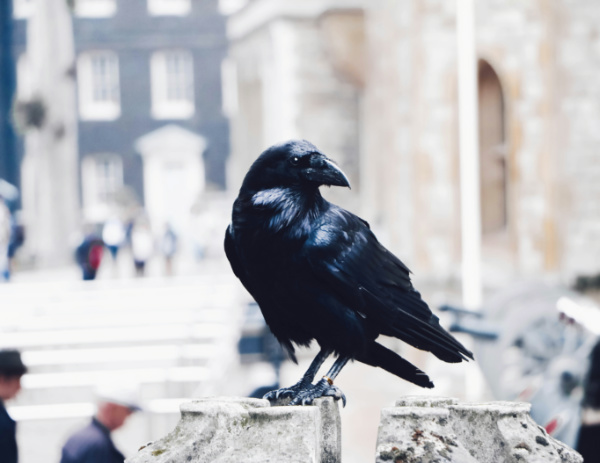
A raven at the Tower of London. PICTURE: Kasturi Roy/Unsplash

A new Ravenmaster has been appointed at the Tower of London. Yeoman Warder Michael ‘Barney’ Chandler took up the role at the start of this month, 15 years after he first became a Yeoman Warder at the Tower. The Ravenmaster oversees a team of four responsible for the care of the Tower’s seven ravens which legend says must remain at the Tower to ensure its protection. The legend apparently goes back to at least the reign of King Charles II – when the King’s astronomer John Flamsteed complained that the resident ravens were impeding his work at the Tower and requested their removal, the King was told that if the ravens left the Tower then the Kingdom would fall (and so they remained). While the Yeoman Warders have longed cared for the ravens, the post of Ravenmaster was only created in the past 50 years and was first held by Yeoman Warder Jack Wilmington. Yeoman Warder Chandler, who became the 387th Yeoman Warder at the Tower when he was appointed in March, 2009, is only the sixth person to hold the office. For more, see www.hrp.org.uk/tower-of-london/.

One of the most popular paintings at the Guildhall Art Gallery is being reinstalled to mark International Women’s Day on Friday. Dante Gabriel Rossetti’s La Ghirlandata has been on loan – first to the Tate Britain and then to the Delaware Art Museum in the US – but is now being returned. The painting dates from 1873 and depicts a ‘garlanded woman’ playing an arpanetta and looking directly at the viewer. The muse for the woman is said to have been the actor and model, Alexa Wilding, while the two ‘angels’ in the top corners were posed by William and Jane Morris’ youngest daughter, May Morris. The City of London Corporation acquired the oil on canvas work in 1927. On Saturday, free family activities will be held at the gallery to mark the work’s return. For more, see www.thecityofldn.com/la-ghirlandata.

Send items to exploringlondon@gmail.com.

10 atmospheric ruins in London – 6. Tudor and medieval remains at Eltham Palace…

Once a medieval royal palace, Eltham Palace in London’s east was transformed into a 1930s house which incorporates the medieval great hall.

Tudor ruins in the garden of Eltham Palace (with the home behind). PICTURE: Peter Gasston (licensed under CC BY-NC-ND 2.0)

But there are also some other remains of the former medieval palace on the site – including the footings of the palace’s west range incorporating royal apartments used in the Tudor era.

These included separate apartments for the king and queen as well as a gallery where the king could walk in inclement weather.

The ruins feature diamond-patterned brickwork (pictured), part of the west range which was built during the reign of Queen Elizabeth I in the 1580s.

There are also the remains of a tower of yellow brick, which possibly dates from the 14th century when, prior to the site being a royal palace, it was rebuilt as a manor house by Anthony Bek, Bishop of Durham (it was Bek who gave the manor to the future Edward II in 1305).

These days the ruins lie within the home’s magnificent gardens, recreated to show how they might hav. Alongside the remains of the west range (and the medieval great hall which dates from the reign of King Edward IV and is largely intact), are the remains of a late 15th century bridge over a medieval moat, at the south end of which are the remains of a gatehouse.

There’s also an oak pedestrian bridge, supported by medieval brick and foundations which once formed part of the main southern entrance to the palace.

WHERE: Eltham Palace, Court Yard, Eltham, Greenwich (nearest train station is Mottingham); WHEN: 10am to 4pm Wednesday to Sunday; COST (advance online tickets): £14.50 adults/£8.60 children/£12.70 concessions/£37.60 family (can include a donation/English Heritage members free); WEBSITE: www.english-heritage.org.uk/visit/places/eltham-palace-and-gardens/.

10 atmospheric ruins in London – 4. Spitalfields Charnel House…

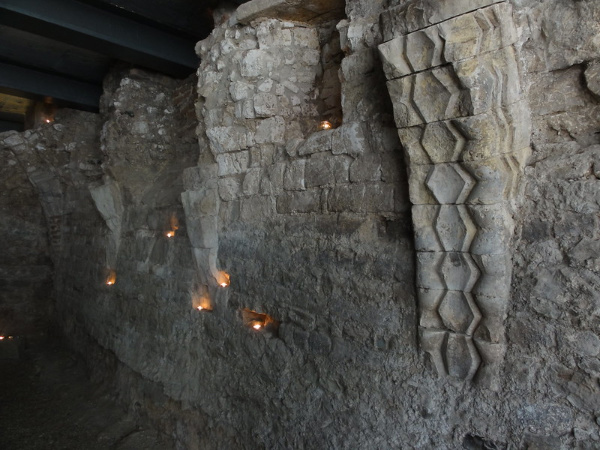
Located under glass beneath a modern square just to the north-east of the line of the City of London’s walls are the ruins of a medieval building which once held human bones.

Charnel House detail. PICTURE: Ben Rimmer (licensed under CC BY-NC-ND 2.0)

Built on what had originally been a Roman burial ground, the medieval hospital known as St Mary Spital was constructed towards the end of the 12th century and a graveyard was located on the site for the burial of those who died there.

A small chapel was built on the site in about 1320, the crypt of which became a charnel house housing the bones of those remains disturbed when

The hospital, which had been run by Austin canons, was dissolved by King Henry VIII in 1539 and most of the bones removed. The crypt was later used as a house which was demolished around 1700 and later lost between the gardens of terraced houses.

The remains of the charnel house was discovered in the late 1990s during excavation works – complete with some 10,000 skeletons – and now lies under a glass floor in Bishop’s Square just to the west of Spitalfields Market (it can also be seen through a glass window in the basement level accessed via stairs in the square).

PICTURE: Matt Brown (licensed under CC BY 2.0)

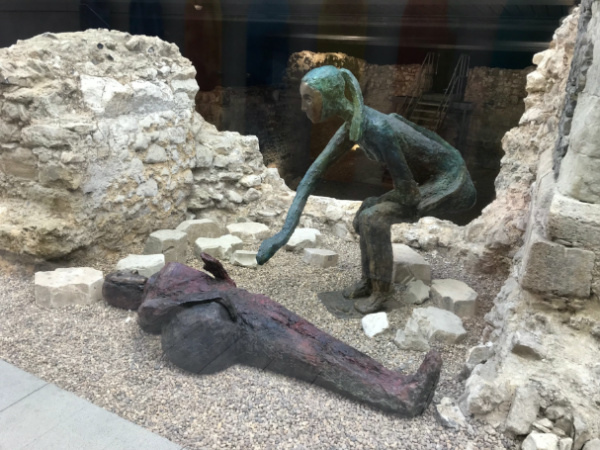
Two statues can be seen inside the ruins – a greenish figure crouching over a prone purple-red figure. Installed in 2014, they are the work of David Teager-Portman and are called Choosing the Losing Side and The Last Explorer.

Spitalfields Chapel and Charnel House, Bishops Square, London, Spitalfields (nearest Tube station is Liverpool Street; nearest Overground is Liverpool Street and Shoreditch High Street).

Where’s London’s oldest…roundabout?

PICTURE: Matt Brown (licensed under CC BY 2.0)

London’s oldest roundabout is said to be located in Southwark at the intersection of Borough, Westminster Bridge, Waterloo, London and Blackfriars Roads.

St George’s Circus was built in 1771 (during the reign of King George III) and designed by Robert Mylne as a grand southern entrance to London with radiating roads leading to three bridges over the Thames: London Bridge, Westminster Bridge and Blackfriars Bridge.

Mylne also designed the obelisk which still stands in the centre of the circus. As well as showing the date on which it was erected, the obelisk also records distances to Palace Yard in Westminster, Fleet Street, and London Bridge. Gas lamps were placed at each corner to illuminate the intersection.

The now Grade II*-listed obelisk has a rather interesting history in itself. Having stood at the roundabout for more than a century, in about 1897 it was relocated to Geraldine Mary Harmsworth Park outside the Imperial War Museum on Lambeth Road to make way for a clocktower designed to mark Queen Victoria’s Diamond Jubilee.

The clocktower itself, however, was removed in the 1930s to help with traffic flow. It wasn’t until 1998 that the obelisk was moved back to its original site (now minus the oil lamps).

Interestingly, an Act of Parliament passed in 1812 specifies that all buildings on the intersection must be located 240 feet from the obelisk (the reason, apparently, for curved facades on some of the surrounding buildings).

10 atmospheric ruins in London – 2. St George’s Garrison Church…

This mid-18th century church in Woolwich was constructed to serve the soldiers of the Royal Artillery but was badly damaged when hit by a bomb during World War II.

View of the church apse with altar and mosaic. PICTURE: Kleon3 (licensed under CC BY-SA 4.0)

Designed by Thomas Henry Wyatt with the aid of his younger brother, Matthew Digby Wyatt, in the style of an Early Christian/Italian Romanesque basilica, the church was built between 1862 and 1863 on the orders of Lord Sidney Herbert, the Secretary of State for War.

It was among a number of buildings built to provide for the well-being of soldiers after a public outcry about their living conditions during the Crimean War.

The interior featured lavish decoration including mosaics said to have been based on those found in Roman and Byzantine monuments in Ravenna, Italy. Those that survive at the church’s east end – which include one of St George and the Dragon and others featuring a peacock and phoenix – are believed to have been made in Venice in the workshop of Antonio Salviati.

A mosaic featuring St George and the Dragon. PICTURE: Kleon3 (licensed under CC BY-SA 4.0)

The mural of St George formed part of a memorial to the Royal Artillery’s Victoria Cross recipients located in the church and paid for through public subscription in 1915. The interior also featured five tall stained glass windows which served as memorials to fallen officers.

Plaques on the perimeter walls record the names of soldiers killed in military conflict or Royal Artillery servicemen who died of natural causes. 

The church was visited by King George V and Queen Mary in 1928.

The church, which had survived a bombing in World War I, was largely destroyed on 13th July, 1944, when it was hit by a V1 flying bomb. Most of the interior was gutted in the fire that followed.

While plans to rebuild it after World War II were shelved, in 1970 it became a memorial garden with a roof placed over the church’s east end to protect the mosaics.

Services are still held in the Grade II-listed ruin, located opposite the Woolwich Barracks, and since 2018 it has been under the care of the Woolwich Garrison Church Trust.

WHERE: St George’s Garrison Church, A205 South Circular, Grand Depot Road, Woolwich (nearest DLR station is Woolwich Arsenal); WHEN: 10am to 1pm Sundays (October to March) and 10am to 4pm Sundays (April to September); COST: Free; WEBSITE: https://www.stgeorgeswoolwich.org.

Note that we’ve changed the title of this special series to allow us to explore a bit wider than the medieval period alone!

10 London locations related to Sir Christopher Wren…8. The Bankside Plaque…

PICTURE: Robin Sones (licensed under CC BY-SA 2.0)

Sir Christopher Wren’s name is one which pops up in association with buildings all over London – some authentically so, others less so.

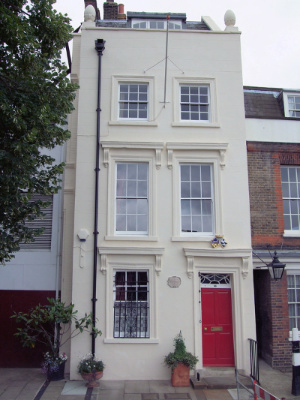
The house at 49 Bankside with the plaque to the left of the door. PICTURE: Jim Linwood (licensed under CC BY 2.0)

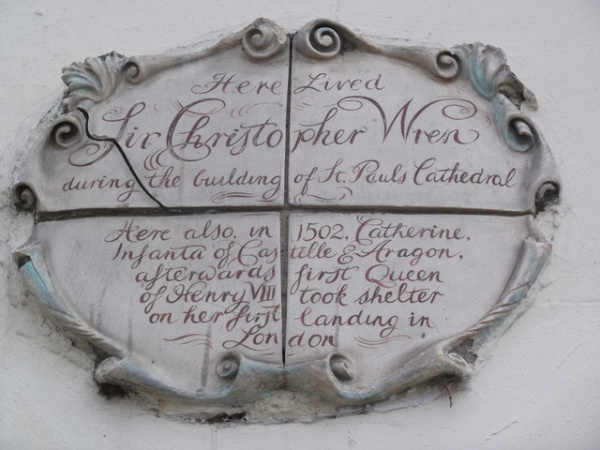
One of the more talked about locations where it can be physically seen is on a plaque attached to the front of a house overlooking the Thames at 49 Bankside, on the corner with Cardinal Cap Alley.

The plaque, written in a flowery script, claims that “Here lived Sir Christopher Wren during the building of St Pauls Cathedral” before going on to state that the property was also where in 1502, Catherine of Aragon, “took shelter” on first arriving in London before her marriage to King Henry VIII.

But author and historian Gillian Tyndall debunks the claim in her 2006 book The House by the Thames and the People who Lived There.

Tyndall explains that the property apparently dates from 1710 – St Paul’s was officially declared complete in 1711, leaving little cross-over (and certainly ruling out any residence by Queen Catherine who actually landed in Plymouth). She says that while it’s true the present house stands in the footprint of an older one, the house where Wren may have actually lodged during the 1670s is located further west along Bankside.

London Remembers notes that this property was apparently marked with an 18th century plaque commemorating Wren. But when that house was demolished in 1906, the plaque was saved and subsequently attached to a power station’s outer wall. When that was redeveloped in the post-war period, the plaque disappeared.

It was apparently that plaque which inspired the creation of the current plaque which was created by Major Malcolm Munthe, who acquired the property in 1945, and subsequently had the plaque made for the home’s exterior.

So it seems the plaque, despite what it says, does not commemorate a Wren residence (although perhaps it may commemorate the residence of Wren in the area). And, it’s been suggested, that while the plaque may not actually have marked a Wren home, its presence may have been enough to protect the building it adorns from threatened redevelopment in the mid-20th century.

This Week in London – Hans Holbein at The Queen’s Gallery; ‘Crown and Coronation’ at the Tower; Christmas at Kew; and, Charles Dickens’ friendship with Wilkie Collins explored…

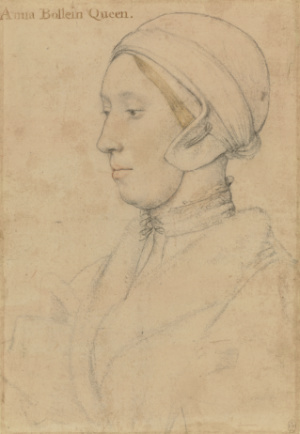
Hans Holbein the Younger, 
Anne Boleyn (1532)/Royal Collection Trust / © His Majesty King Charles III 2023.

The largest exhibition of the work of Tudor-era artist Hans Holbein the Younger has opened at The Queen’s Gallery, Buckingham Palace. Holbein at the Tudor Court features more than 50 works by Holbein including intimate portrait drawings of the royal family and the Tudor nobility including one of few surviving drawings of Anne Boleyn made during her lifetime, drawings of Jane Seymour and Sir Thomas More, and an unfinished portrait of King Henry VIII’s son Prince Edward. Other portraits include that of Derich Born, a 23-year-old Steelyard merchant, and one of Richard Southwell, a convicted murderer who was one of King Henry VIII’s closest advisors. The exhibition also features objects including a Brussels tapestry, jewel-like miniatures and Henry VIII’s magnificent armour, usually on show at Windsor and in London for the first time in a decade. Runs until 14th April. Admission charge applies. For more, see www.rct.uk/collection/themes/exhibitions/holbein-at-the-tudor-court/the-queens-gallery-buckingham-palace

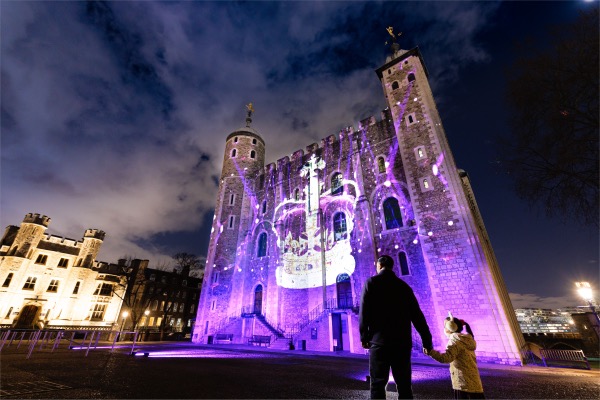
The White Tower looking south-east, showing a coloured light projection of St Edward’s Crown, the crown used at the moment of Coronation. PICTURE: © His Majesty King Charles III 2023 -Royal Collection Trust – Historic Royal Palaces

The magnificence of coronations and the Crown Jewels will be on show at the Tower of London from tomorrow night in a new light and sound show. Crown and Coronation – which has been created by Historic Royal Palaces in partnership with Luxmuralis as part of an artistic collaboration between artist Peter Walker and composer David Harper – brings the “spectacle, significance and shared experience” of coronations to life and demonstrates the pivotal role of the Crown Jewels in the ceremony as it takes visitors on a journey through the past 1,000 years. Images of the jewels will be projected on the White Tower in the show with visitors then able to view the actual jewels themselves in a special after hours opening. But you’ll have to be quick – the show can only be seen for nine days, ending on 25th November before it embarks on a two year UK-wide tour. Admission charge applies. For more, see www.hrp.org.uk/tower-of-london/.

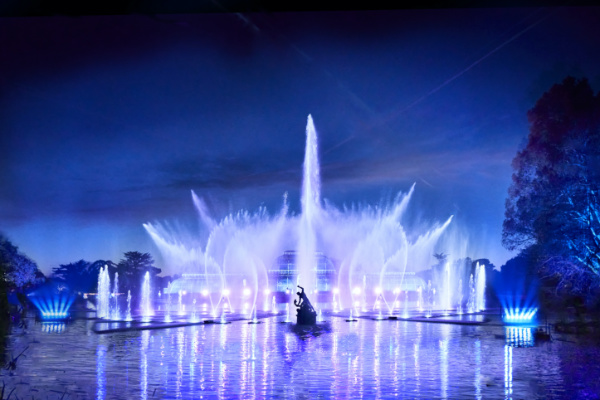
The Palm House light show, part of Christmas at Kew. PICTURE: © Raymond Gubbay Ltd, Richard Haughton

Christmas returned to Kew this week with the launch of it’s new festive light trail featuring seven new installations. Highlights of this year’s trail include three metre tall illuminated flowers, cascading lights suspended from the tree canopy, one of the longest light tunnels to ever feature in Kew’s Christmas celebrations and the Hive – which recreates life inside a beehive – as well as the iconic Palm House light show, the twinkling tunnel of light inspired by arched church windows known as the ‘Christmas Cathedral’, and a ‘Fire Garden’ at the Temperate House. There’s also festive treats to sample and visitors can experience a traditional Christmas dinner at The Botanical Brasserie. Admission charges applies. Runs until 7th January (advance bookings only). For more, see www.kew.org/christmas.

Charles Dickens’ friendship and collaboration with writer Wilkie Collins is explored in a new exhibition at The Charles Dickens Museum in Bloomsbury. Dickens met Collins, who would become one of his most significant friends, in 1851 as they performed together in a play at the house of John Forster and their personal and professional relationship lasted more than 15 years. The display features works produced as a result of the friendship – everything from articles in Dickens’s Household Words through to novellas and plays such as The Lazy Tour of Two Idle Apprentices and The Frozen Deep – and features original letters, historic objects, and interactive displays focusing on everything from the pair’s moustache-growing contests and cruising international entertainment districts to co-writing side by side, discussing writer’s block and plot devices. Admission is included with general admission. Runs until 25th February. For more, see https://dickensmuseum.com.

Send all items to exploringlondon@gmail.com.

LondonLife – London remembers…

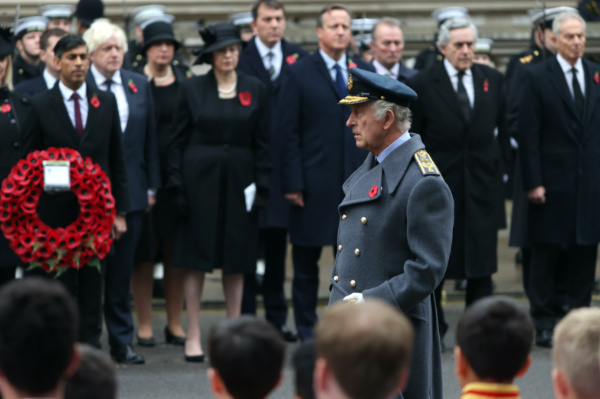
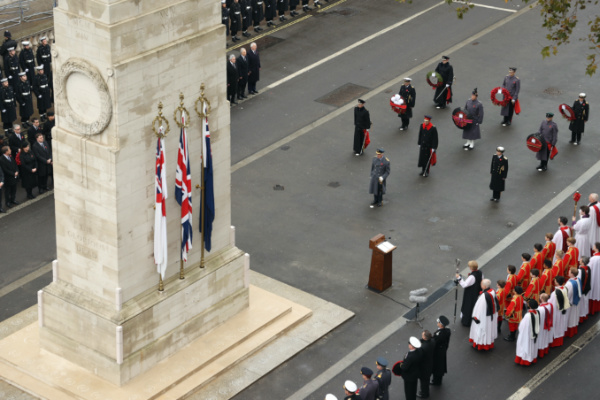
King Charles III having laid a wreath at the Cenotaph on Sunday during the National Service of Remembrance in Whitehall. PICTURE: Petty Officer Joel Rouse/UK MOD © Crown copyright 2023.
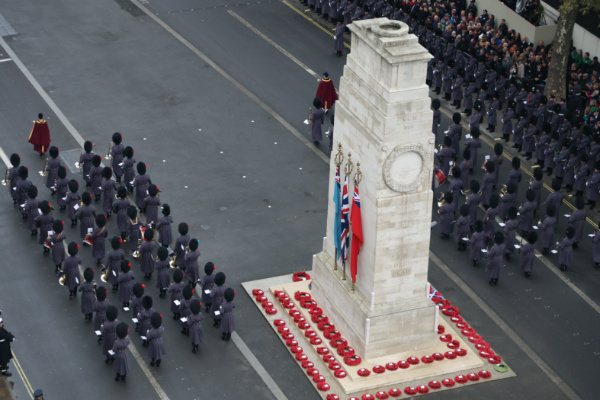
The Massed Bands of the Household Division march past the Cenotaph. More than 800 armed forces personnel took part in the annual Remembrance Sunday ceremonies in central London. PICTURE: AS1 Jake Hobbs RAF/UK MOD © Crown copyright 2023
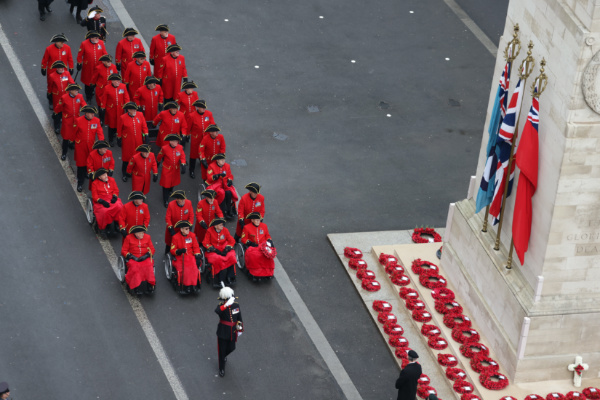
Chelsea Pensioners march past the the Cenotaph. PICTURE: AS1 Jake Hobbs RAF/UK MOD © Crown copyright 2023.
Members of the Royal Family at the Cenotaph. PICTURE: SSgt Dek Traylor/UK MOD © Crown copyright 2023.
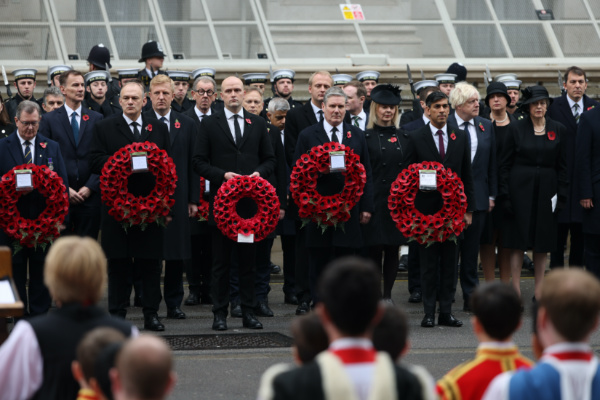
Political leaders including Prime Minister Rishi Sunak, Leader of the Opposition Sir Keir Starmer and former PM Boris Johnson at the Cenotaph. PICTURE: Petty Officer Joel Rouse/UK MOD © Crown copyright 2023

This Week in London – Charles Dickens’ court suit and Queen Elizabeth II’s coronation glove; Frans Hals at The National Gallery; Peter Paul Rubens at Dulwich; and, email explored…

• A piece of the only surviving dress worn by Queen Elizabeth I, Charles Dickens’ court suit, an RSC robe worn by David Tennant as Richard II, and the coronation glove of Queen Elizabeth II are among highlights of a new exhibition at the Guildhall Art Gallery. Marking the 400th anniversary of the Worshipful Company of Gold and Silver Wyre Drawers, Treasures of Gold and Silver Wire features more than 200 objects related to royalty, the arts, military, and the church spanning the period stretching from the Middle Ages to today. Other highlights include a uniform of the State Trumpeter, The Jubilee Cope from St Paul’s Cathedral, a robe of Order of the Garter and the burse of the Great Seal of King Charles II. The exhibition, which opens on Friday, runs until 12th November. Admission charge applies. For more, see www.cityoflondon.gov.uk/events/treasures-of-gold-and-silver-wire-exhibition.

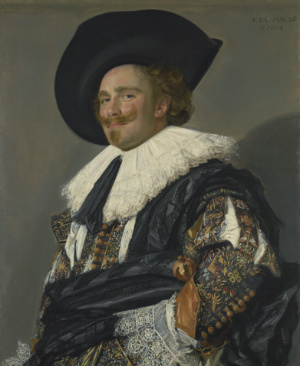
Frans Hals, ‘The Laughing Cavalier’ (1624)/ Oil on canvas, 83 x 67 cm © Trustees of the Wallace Collection, London    

The Laughing Cavalier serves as the centrepiece of a new exhibition of Frans Hals works at the National Gallery – the largest focused the 17th century Dutch painters’ works in more than 30 years. The Credit Suisse Exhibition: Frans Hals, which has been organised with the Rijksmuseum, Amsterdam features some 50 of the artists works gathered from across the globe. Alongside The Laughing Cavalier which is on loan from the Wallace Collection, highlights include Portrait of Isaac Massa (1626), Portrait of Pieter Dircksz. Tjarck (about 1635–38), The Rommel-Pot Player (1618–22) and Portrait of Tieleman Roosterman (1634). Admission charge applies. Runs until 21st January.

A major exhibition on the work of Flemish artist Peter Paul Rubens (1577-1640) has opened at the Dulwich Picture Gallery. Rubens & Women features more than 40 paintings and drawings along with archival material and challenges the perception that the artist only painted one type of women as it explores his relationships with women and how they nourished his career and creativity. Highlights include Portrait of a Woman (c1625), Marchesa Maria Serra Pallavicino or Marchesa Veronica Spinola Doria (1606-07), The Virgin in Adoration of the Child (c1616), Looking Down (Study for head of St Apollonia) (1628), Ceres and Two Nymphs (1615-17), The Birth of the Milky Way (1636-1638), and Clara Serena Rubens, the Artist’s Daughter (c1620-23). The exhibition runs until 28th January. Admission charge applies. For more, see www.dulwichpicturegallery.org.uk.

An interactive exhibition exploring email’s impact in our lives – how it shapes our work, relationships, cultures and economies – opens at The Design Museum today. Email is D̶e̶ad̶ ̶, being held in partnership with Intuit Mailchimp, charts the history of email, from its embryonic beginnings in the 1970s to what the email experience might be like in 2070. Admission is free. Runs until 22nd October. For more, see https://designmuseum.org.

Send all items to exploringlondon@gmail.com for inclusion.

This Week in London – The Indian Army at Hampton Court Palace; Chanel at the V&A; and, Mantegna’s ‘The Triumphs Caesar’ at the National Gallery…

Part of the Indian Army at the Palace display at Hampton Court Palace: PICTURE © Historic Royal Palaces.

A rare charity pin badge like those sold by Indian princess and suffragette Sophia Duleep Singh to raise funds for the Indian Army has gone on show at Hampton Court Palace. It’s part of a new display which shares the stories of Indian soldiers who took up residence on the Hampton Court estate four times: for the coronations of King Edward VII in 1902, King George V in 1911 and King George VI in 1937, as well as for the World War I Victory Parade in London. The Indian Army at the Palace explores their experiences in the camp and in London more generally – everything from food and rationing to entertainment, travel and religious accommodations. Highlights of the display include objects from the Historic Royal Palaces’ collection – such as an official plan from one of the camps, press cuttings depicting the soldiers’ arrival at Hampton Court station, and Indian soldiers in and around the Palace grounds – as well as items on loan from the South Asian community, including a 32nd Sikh Pioneers Indian Army Officer’s tunic, medals and photos belonging to soldiers from the 1902 and 1911 contingents, original photographs of the Gurkha regiment in the 1919 parade and newspaper articles depicting the visits. The display can be seen until 3rd March next year and entry is included in general admission. For more, see www.hrp.org.uk/hampton-court-palace/.

A scene from the ‘Gabrielle Chanel. Fashion Manifesto’ display. PICTURE: ©Victoria & Albert Museum, London.

The first UK exhibition dedicated to the work of pioneering fashion designer Gabrielle ‘Coco’ Chanel opens at the V&A on Saturday. Gabrielle Chanel. Fashion Manifesto, which is being presented in partnership with Palais Galliera, Fashion Museum of the City of Paris, Paris Musées, charts the evolution of Chanel’s iconic design style and the establishment of the House of Chanel, from the opening of her first millinery boutique in Paris in 1910 to the showing of her final collection in 1971. The display’s 10 sections feature more than 200 “looks” as well as accessories, perfumes and jewellery. Highlights include one of the earliest surviving Chanel garments from 1916; original Chanel-designed costumes for the 1924 Ballets Russes production of Le Train Bleu; outfits created for Hollywood stars Lauren Bacall and Marlene Dietrich; an early example of Chanel’s ground-breaking evening trousers; and, ensembles from Chanel’s final collection of 1971. Runs until 25th February. Admission charge applies. For more, see vam.ac.uk/chanel.

Six of Andrea Mantegna’s monumental paintings The Triumphs of Caesar go on display at The National Gallery from Monday. On loan from the Royal Collection, the Renaissance artist’s greatest masterpiece will be on show at the gallery for around two years, while their usual home, the Mantegna Gallery at Hampton Court Palace, is closed for maintenance. Mantegna painted a total of nine canvasses for the Gonzaga family in Mantua, between about 1485 and 1506. They were acquired by King Charles I in 1629 and taken to Hampton Court Palace soon after their arrival in England. The paintings, which are being displayed in specially made frames, will be able to be seen in Room 14, along with Peter Paul Rubens’ A Roman Triumph (about 1630) to show a later artistic response to the Triumphs. Other works by Mantegna from the National Gallery’s collection including The Introduction of the Cult of Cybele at RomeSamson and DelilahTwo Exemplary Women of Antiquity and The Virgin and Child with the Magdalen and Saint John the Baptist are displayed nearby in Room 5 while Mantegna’s The Agony in the Garden can be seen in Room 29. Admission is free. For more, see www.nationalgallery.org.uk.

Send all items to exploringlondon@gmail.com

LondonLife – Marking a year since the King’s accession…

PICTURE: Sgt Donald C Todd/UK MOD © Crown copyright 2023

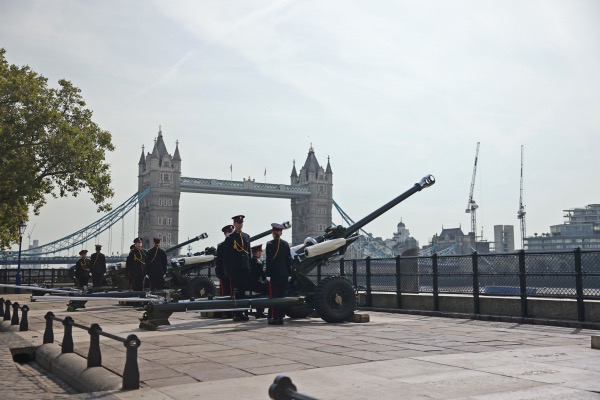
The King’s Troop Royal Horse Artillery fired 41 blank artillery rounds using six guns in Hyde Park to mark a year since the accession of King Charles III on 8th September. Below, the 105mm light artillery guns of the Honourable Artillery Company prepare to fire at The Tower of London in another salute on the same day. Both regiments taking part were responsible for firing the Death Gun salutes to mark the passing of Queen Elizabeth II one year ago, and the following day, the Proclamation salutes to mark the new reign.

PICTURE: Corporal Rob Kane/UK MOD © Crown copyright 2023

10 London locations related to Sir Christopher Wren…1. The Old Court House, Hampton Court Palace Green…

This year marks the 300th anniversary of the death of Sir Christopher Wren (25th February, 1723), whose designs helped to transform post-Great Fire London.

In a new series we’re looking at 10 locations which help tell Wren’s story but while we’ve previously runs numerous articles focused on the many buildings he designed, in this series the focus is more on his personal life.

First up, it’s one of the most well-known properties related to Wren’s life – the home in which he spent the latter years after his life just outside Hampton Court Palace.

Known as the Old Court House, Wren first came to live in the house after he was appointed Surveyor-General to King Charles II in 1669. His post brought with it lodgings at the royal palaces and at Hampton Court Palace, it was the Old Court House (the property had been built for in 1536 as a wood and plaster house; Wren’s immediate predecessor in the office, Sir John Denham, had rebuilt it partly in brick).

Then in 1708, Queen Anne granted him a 50-year lease on the property, apparently at least partly in lieu of overdue fees he was owed for the building of St Paul’s Cathedral. It’s also believed that the Queen had granted the lease on condition that Wren repair or rebuilt the property.

Wren, who had hitherto only lived intermittently at the property (presumably while working on Hampton Court Palace on the orders of King William III and Queen Mary II), made some major alterations to the property from 1710 onwards (it’s suggested this was done to the designs of Wren’s assistant William Dickinson).

He came to live here on a more permanent basis after he retired from the Office of Works in 1718 and remained here until his death in 1723 (although he didn’t die here – more on that later).

It’s said Wren, whose time as the Royal Surveyor-General spanned the reigns of six monarchs, spent his time here “free from worldly affairs”, choosing to and pass his days ‘in contemplation and studies”.

It was subsequently the home of Wren’s son Christopher (1645-1747) and his grandson Stephen (b 1772). It remained a grace and favour house associated with Hampton Court Palace until 1958.

The Grade II* brown and red brick property, which was combined with the house next door in the early 19th century and them divided off in 1960, is now in private ownership and there’s an English Heritage Blue Plaque on the outside wall mentioning Wren’s residence.

What’s in a name?…Chalk Farm…

This area in London’s north was recorded as far back as the 13th century when it was known Chaldecote, meaning “cold cottages”.

It’s been suggested that the name may have referred to accommodation for travellers who were travelling up to Hampstead.

Chalk Farm Underground Station in the heart of the area. PICTURE: Courtesy of Google Maps

The area was part of the prebendal manor of Rugmere and was gifted to Eton College by King Henry VIII in the 15th century.

The area was still farmland by the 17th century and what was then known as Upper Chalcot Farm was located at the end of what’s now England’s Lane. At Lower Chalcot was an inn known as the White House (apparently for its white-washed walls) – believed to have been built on the site of the original manor house.

By the 18th century, the farm was known as Chalk House Farm (apparently a corruption of Chalcot). The Chalk Farm Tavern was built on the site in the 1850s and was a popular entertainment venue which featured tea gardens (and in more recent times was a restaurant).

The area, which had been a popular site for duelling, underwent development from the 1820s – some of the street names, such as Eton Villas and Provost Road reflect the area’s relationship with Eton College.

This development received a considerable boost in the early 1850s when the London to Birmingham railway had its London terminus in Chalk Farm (it’s now Primrose Hill Station). The former railway building known as the Roundhouse is a legacy of the railway’s arrival.

Chalk Farm became part of the London Borough of Camden in the 1960s.