Located at the south-western end of the Houses of Parliament, the rather grand Victoria Tower was built as part of Sir Charles Barry’s 19th century redevelopment of the site in the Gothic Perpendicular style.
We invite you to support our work and subscribe for just £3 a month to gain access to all our coverage!
The Bloody Tower (centre, with the gateway) at the Tower of London. PICTURE: David Adams
Carrying rather a gruesome name, this rectangular-shaped tower sits over a gate leading from outer ward into the inner ward in the Tower of London.
The tower, which once controlled the watergate before the outer walls were constructed, was originally known as the Garden Tower due to its location adjoining the Tower Lieutenant’s Garden.
To see the rest of this post (and all of our coverage), subscribe for just £3 a month. This small contribution – less than the cost of a cup of coffee – will help us continue and grow our coverage.We appreciate your support!
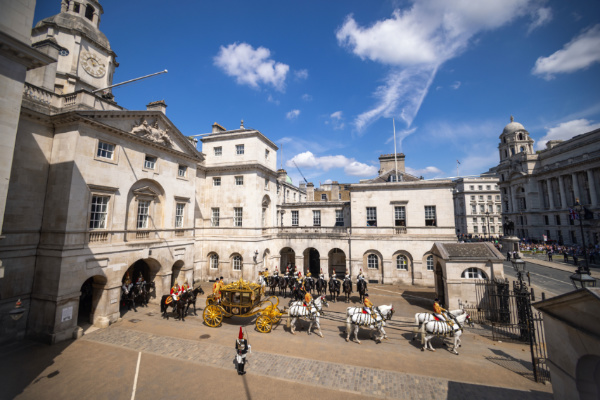
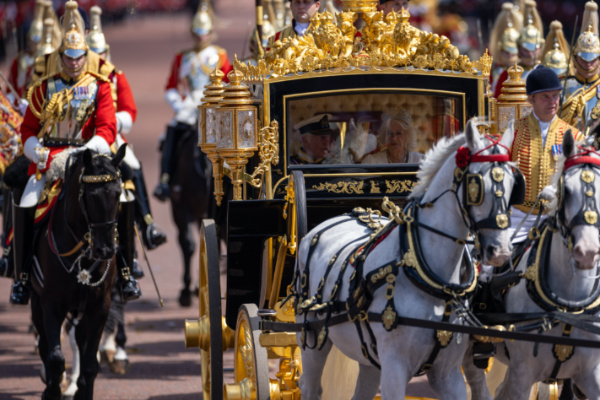
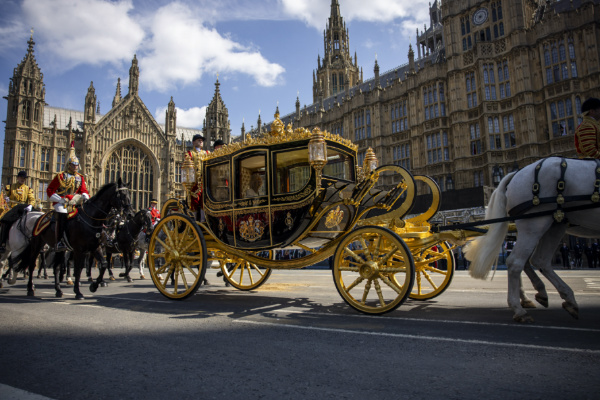
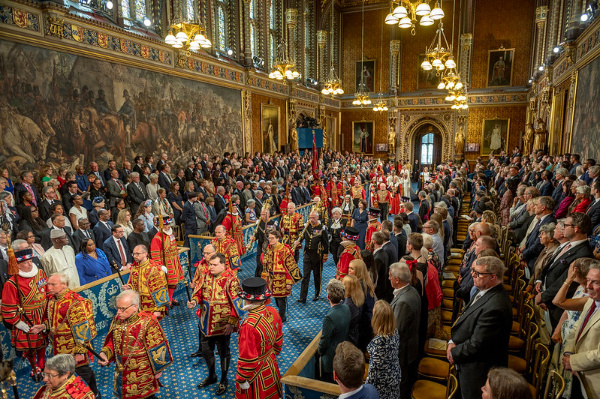
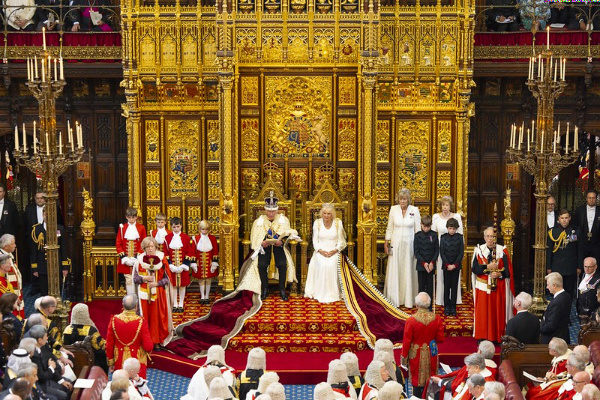
Last Wednesday, 17th July, was the State Opening of Parliament, the first since the new Labour government took office. More than 1,100 members of the armed forces were in attendance, accompanied by 200 military horses, as the procession of King Charles III and Queen Camilla made its way to the Houses of Parliament where the King delivered a speech outlining the government’s plans.
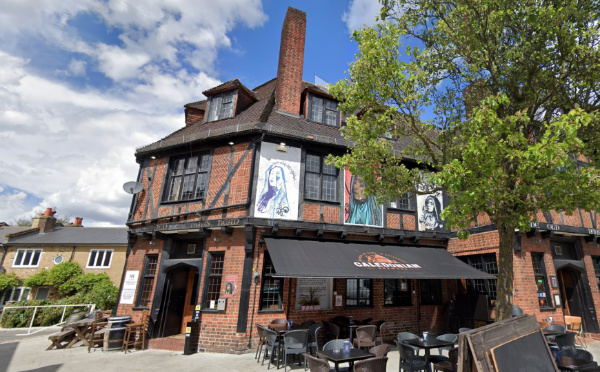
This district of London, which lies to the south-east of Peckham in the London Borough of Southwark, is believed to owe its name to a local tavern named, you guessed it, the Nun’s Head on the linear Nunhead Green (there’s still a pub there, called The Old Nun’s Head, in a building dating from 1905).
The Old Nun’s Head near Nunhead Green. PICTURE: Google Maps
There may well have been actual nuns here (from which the tavern took its name) – it’s suggested that there was a nunnery here which may have been connected to the Augustinian Priory of St John the Baptist founded in the 12th century at Holywell (in what is now Shoreditch).
A local legend gets more specific. It says that when the nunnery was dissolved during the Dissolution, the Mother Superior was executed for her opposition to King Henry VIII’s policies and her head was placed in a spike on the site near the green where the inn was built.
While the use of the name for the area goes back to at least the 16th century, the area remained something of a rural idyll until the 1840s when the Nunhead Cemetery, one of the “Magnificent Seven” cemeteries of Victorian London, was laid out and the area began to urbanise.
A fireworks manufactory – Brocks Fireworks – was built here in 1868 (evidenced by the current pub, The Pyrotechnists Arms). The railway arrived in 1871.
St Antholin’s Church was built in 1877 using funds from the sale of the City of London church, St Antholin’s, Budge Row, which was demolished in 1875. St Antholin’s in Nunhead was destroyed during the Blitz and later rebuilt and renamed St Antony’s (the building is now a Pentecostal church while the Anglican parish has been united with that of St Silas).
There’s also a Dickens connection – he rented a property known as Windsor Lodge for his long-term mistress, actress Ellen Ternan, at 31 Lindon Grove and frequently visited her there (in fact, it has even been claimed that he died at the property and his body was subsequently moved to his home at Gad’s Hill to avoid a scandal).
Nunhead became part of the Metropolitan Borough of Camberwell in 1900. These days, it’s described by Foxtons real estate agency as “a quiet suburb with pretty roads and period appeal”.
Hanging in the Tudor Great Hall at Hampton Court Palace, this series of 10 huge tapestries are believed to have been commissioned by King Henry VIII and were first hung in the hall in 1546.
To see the rest of this post (and all of our coverage), subscribe for just £3 a month. This small contribution – less than the cost of a cup of coffee – will help us continue and grow our coverage.We appreciate your support!
• West Ham Park celebrates its 150th anniversary this weekend with a festival of music, food, sport, and other activities. On Saturday there will be a free, family-friendly festival with music – including appearances by Australian-born singer-songwriter Celina Sharma and singer-songwriter, Fiaa Hamilton, as well as a DJ set from Ellis – along with arts and crafts, a children’s fun fair and local food stalls. On Sunday, activities are based around the theme of ‘give it a go’ with visitors able try out various sports and health activities, including football, cricket, tennis, athletics, Tai Chi, and long-boarding. There will also be free taster sessions and opportunities to meet local sporting legends. An outdoor exhibition about the park’s history can be seen in Guildhall Yard in the City leading-up to the event after which it will be moved to Aldgate Square. West Ham Park is the largest green space in the London Borough of Newham and has been managed by the City of London Corporation since 1874. Activities on both days start at 12pm. For more, see www.cityoflondon.gov.uk/westhampark150.
To see the rest of this post (and all of our coverage), subscribe for just £3 a month. This small contribution – less than the cost of a cup of coffee – will help us continue and grow our coverage.We appreciate your support!
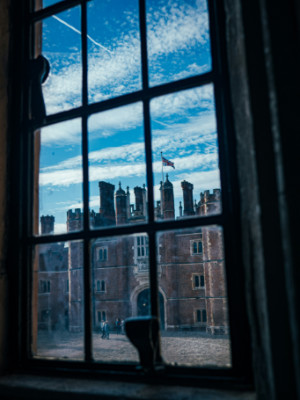
Looking out a window at Hampton Court Palace. PICTURE: Greg Willson/Unsplash
• The oldest surviving rooms at Hampton Court Palace – the Wolsey Rooms which King Henry VIII and Thomas Wolsey once used – are the location of a new display opening today exploring the early years of Henry VIII’s reign and the lives of the ‘ordinary’ men and women who shaped the Tudor dynasty.The Tudor World has, at its centre, rare surviving paintings from the Royal Collection including The Embarkation of Dover – depicting the Tudor navy – and The Field of Cloth of Gold which details Henry VIII’s summit with King Francis I of France in 1520. Also on show is a gold ring believed to have belonged to the Boleyn family, a brightly coloured silk hat linked to King Henry VIII, Wolsey’s portable sundial, a wooden chest used to hide religious contraband by Catholic priests during the reign of Queen Elizabeth I, and, an original Tudor chain pump used to help empty the Hampton Court cesspool. Among the stories of “ordinary” Tudor people being shared is that of Anne Harris, Henry VIII’s personal laundry woman who washed the bandages for his leg ulcers and, Jacques Francis, a free-diver from West Africa who was involved in the expedition to salvage guns from the sunken Mary Rose and who later became one of the first Black African voices heard in an English court, when he was called to testify in a case concerning his employer, Paulo Corsi. Included in palace admission. For more, see www.hrp.org.uk/hampton-court-palace/.
• Crossing Borders, a day of free activities, performances and workshops run by local newly arrived people, will be held at the Horniman Museum Gardens in Forest Hill this Saturday. The day will feature arts and crafts workshops led by IRMO, dance performances by Miski Ayllu and the Honduran Folkloric Pride Group, the chance to learn circus skills with young people from Da’aro Youth Project and South London Refugee Association, and the opportunity to make kites with Southwark Day Centre for Asylum Seekers. The free event runs from 11am to 4pm. For more, see https://www.horniman.ac.uk/event/crossing-borders/.
• Transport for London customers can save 30 per cent on entry to the Painted Hall at the Old Royal Naval College when using the TfL network until 17th November. Simply show customers show your TfL journey on the day of your visit via the TfL Oyster and Contactless app and receive the discount, taking the adult entry price, when booked online to just £11.55. For bookings, head to https://londonblog.tfl.gov.uk/2022/07/27/in-the-city/.
Send all items for inclusion to exploringlondon@gmail.com.
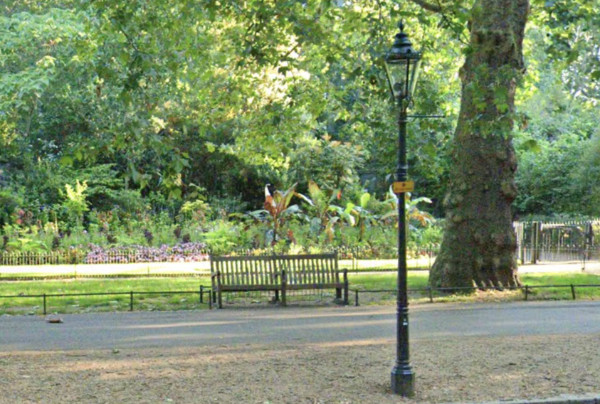
One of the George IV lamps in Birdcage Walk. PICTURE: Via Google Maps
There remain some 1,300 publicly maintained gas lamps still in use in London’s streets but the oldest surviving gas lamps can be found in Birdcage Walk (along the south side of St James’s Park).
These cast iron lamps bear the insignia of King George IV who ruled from 1820 to 1830. While lamps had been installed in London since the reign of King George III (the earliest permanent placement was on Westminster Bridge in 1813), these lamps were installed during his successor’s reign.
They are among numerous Grade II-listed lamp stands on Birdcage Walk (some others are marked with thee insignia of King William IV).
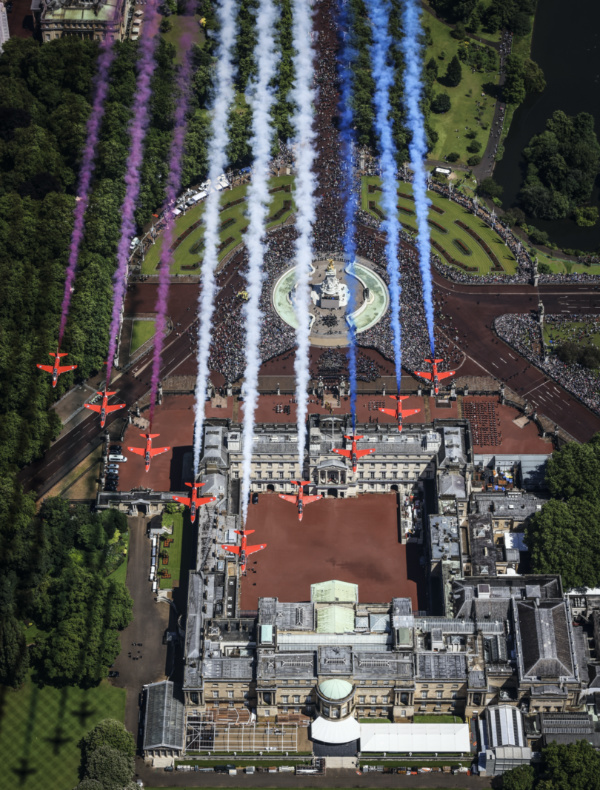
The King’s Birthday Parade took place in central London on Saturday featuring some 242 military working horses, 250 military musicians, 40 pipers and drummers, and more than 1,000 dual role soldiers of the British Army’s Household Division. The parade is a gift from the British Army’s Household Division to the King and is traditionally held on the second Saturday in June, regardless of the Sovereign’s actual date of birth.
Members of the Household Division in London rehearse for the King’s Birthday Parade, known as Trooping the Colour. The Colonel’s Review is held one week before and saw some 250 musicians, 20 pipers, 240 military working horses, and almost 1,000 dual role soldiers of the British Army’s Household Division run through their paces on Saturday. Trooping the Colour will take place on 15th June.
Postcard showing the Empire Stadium. PICTURE: Via Wikipedia/Public Domain
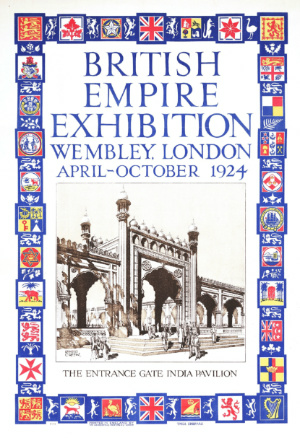
It’s 100 years ago this year that the British Empire Exhibition was held in Wembley Park.
Located on a more than 200 acre site, the exhibition was designed to showcase the diversity and reach of the empire. It ran for two six-month long summer seasons – first opening on 23rd April, 1924, and running until 1st November that year and then reopening on 9th May, 1925, and running until 1st October.
The opening ceremony, which took place on St George’s Day, was attended by King George V and Queen Mary, and the event, in a first for a monarch, was broadcast on BBC radio.
The exhibition, which cost £12 million and attracted some 27 million visitors, featured what was said to be the largest sports arena in the world – Empire Stadium (later known as Wembley Stadium) – as well as four main pavilions dedicated to industry, engineering, the arts and the government, and a series of pavilions for 56 of the empire’s 58 territories as well as some commercial pavilions.
The latter included an Indian pavilion modelled on Jama Masjid in Delhi and the Taj Mahal in Agra, a West African pavilion designed to look like an Arab fort, a Burmese pavilion designed to look like a temple and a Maltese pavilion designed as a fortress with the entrance resembling the famed Mdina Gate.
The Empire Stadium hosted events including military tattoos and Wild West rodeos while other attractions included a lake, a 47 acre fairground, a garden, restaurants and a working replica coal mine.
Star attractions included a replica of King Tutankhamen’s tomb (housed in the fairground), a working model of Niagara Falls and a full-sized sculpture of the Prince of Wales (later Edward VIII) made of butter (both in the Canadian pavilion), a 16 foot diameter ball of wool (Australian pavilion) and dodgem cars (also in the funfair). Queen Mary’s Dollhouse – now housed at Windsor – was designed by Sir Edwin Lutyens and served as a miniature showcase of the finest goods of the period.
Reinforced concrete was the main building material used in its construction, earning it the title of the first “concrete city”. The streets of the exhibition, meanwhile, were named by Rudyard Kipling.
The Malta Pavilion entrance. PICTURE: Wikipedia/Public Domain
Wembley Park Tube station, which had first opened in 1893, was rebuilt for the event and a new station – Exhibition Station (Wembley) added (it was officially closed in 1969).
While many of the buildings were dismantled after the exhibition, some survived for decades afterwards including, of course, the Empire Stadium which became Wembley Stadium and was the home of English football until replaced in 2003.
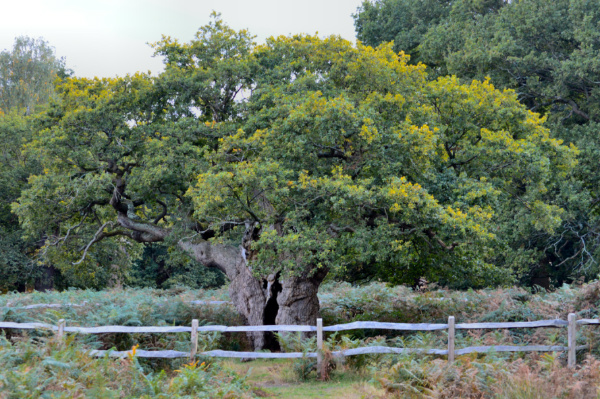
Estimated to be more than 750-years-old, the tree known as the Royal Oak is located near Pen Ponds and Richmond Gate.
This massive English oak (Quercus robur), which is hollow, doesn’t have any direct connections to royalty but it did survive the felling of trees which took place in Richmond Park and across the south-east of England so King Henry VIII’s navy could be built.
That may have been thanks to the King himself, who wisely passed a law to spare every 10th tree in the park for future seed.
While the park had been used by King Henry VIII as a hunting ground, it wasn’t until 1637 – during the reign of King Charles I – that it was first enclosed.
The tree, which is said to be one of 1,400 “veteran trees” in the park, was pollarded for several hundred years which helped create its shape – this is a method of pruning which removes the top-most branches to form a denser head (and creates wood which can be used for a variety of purposes).
Spring is upon us, so we thought it an appropriate time to consider some of London’s greatest natural assets – its trees. But, as well as being significant for their environmental impact, each of these trees (or, in some cases, the remains of them), are significant for historic reasons (we’ve previously mentioned a couple including what’s believed to be the oldest tree and the unusual – and sadly now deceased – Hardy Tree).
PICTURE: Steve Daniels (licensed under CC BY-SA 2.0)
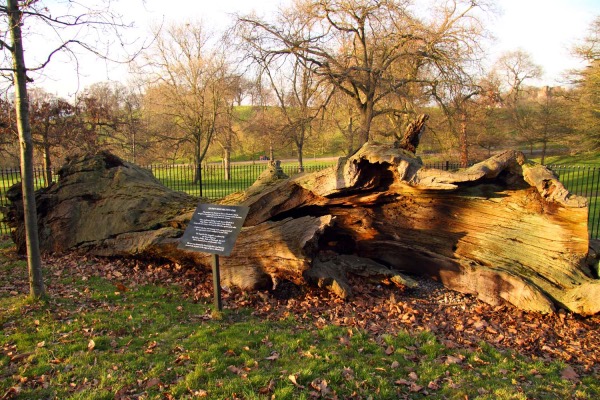
First up, it’s the tree known as Queen Elizabeth’s Oak in Greenwich. Thought to date from possibly as far back as the late 13th century, this tree survived until the 19th century before its carcass finally fell to the ground during a storm in 1991. It has lain in Greenwich Park ever since.
The tree, which is located at the end of what is now Lover’s Walk close to the Maze Hill Gate, was located in the grounds of Greenwich Palace (also known as the Palace of Placentia) and was there when King Henry VIII resided at the palace.
In fact, it’s said that he and Anne Boleyn danced around the oak while courting, and (and here’s where the name comes from) that Elizabeth, their daughter (and later Queen Elizabeth I), picnicked under its canopy (some accounts suggest she actually picnicked in the tree’s hollow – but still then upright – trunk).
Following the creation of what is now Greenwich Park, the hollow tree was apparently used as a prison for those caught illicitly on the grounds. They were secured behind a heavy wooden door fitted to the trunk (a park keeper’s lodge was built nearby in the 17th century; it was demolished in the 1850s).
The tree, one of 3,000 in the park, had died in the 19th century and was reduced to an eight metre high stump, partly supported by ivy, when it was blown over by the storm in June, 1991.
A replacement oak, which was donated by the Greenwich Historical Society was planted nearby by the Duke of Edinburgh on 3rd December, 1992, to mark Queen Elizabeth II’s 40 years on the throne.
A ring analysis carried out on the tree found in 2014 it dated back to at least 1569 but with the core missing a precise date of germination couldn’t be found. Estimates, however, place the date of germination to the last 13th or early 14th century. The analysis placed the tree’s death to between 1827 and 1842.
The tree is marked with a plaque and both it and the new tree are surrounded by an iron railing.
One of the lamp-posts in Russell Street, Covent Garden, in 2012. PICTURE: Google Maps
Recently listed as Grade II, these four gas lamps on Russell Street in Westminster were among a series of lamps installed around Covent Garden to mark the beginning of King George V’s reign.
While the columns of the lamps date from 1910, three of the lanterns – described as an ‘Upright Rochester lantern’ and manufactured by William Sugg and Company Limited – are replacements believed to have been installed around 1930. The fourth was installed following a campaign to save Covent Garden from redevelopment in the 1970s.
The newly listed lamp-posts – the first Westminster lamps to be listed in 40 years – are located outside numbers 4-6, 24, 29, and 34-43.
There are currently about 1,300 working gas lamps in London, around 270 of which are in Westminster (and about half of which are listed).
• Happy Easter to all our readers! We’ll be taking a break over the next few days with our usual coverage returning next Tuesday.
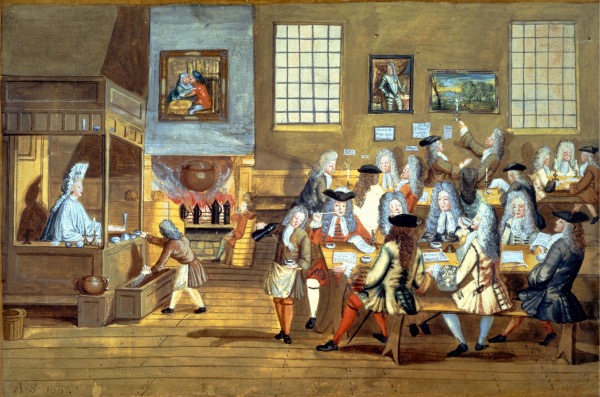
A caricature of Lloyd’s Coffee House from the 17th century.
• Experience a recreation of Grace and Thomas Tosier’s famous ‘royal’ Chocolate House in Greenwich this Easter. Located in the Old Royal Naval College, Chocolate House Greenwich recreates the Tosier Chocolate House which was located in what became known as Chocolate Row, on the edge of Blackheath. A social space for the leading figures of the day, the chocolate house was run by Grace while her husband Thomas served as chocolate maker for King George I, running the chocolate kitchen at Hampton Court Palace. Visitors will be able to immerse themselves in the chocolate house via an audio and visual experience created by Unusual Expo and actor-writer Jonathan Coote. As well as meeting Grace, there is also the chance to listen in to luminaries such as architect and astronomer Sir Christopher Wren, writer and diarist John Evelyn, the first Astronomer Royal, John Flamsteed, and playwright and architect John Vanbrugh. A series of events will accompany the exhibition – which opens tomorrow – including an Easter Trail for families, a gin and chocolate tasting experience and a ‘Choc-o-Late’ event. Admission charge applies. Runs until 3rd November. For more, see https://ornc.org/whats-on/chocolate-house-greenwich/.
• A wig worn by Golda Rosheuvel in Netflix’s hit series Queen Charlotte: A Bridgerton Story goes on display at Kew Palace from the end of this month. The grey wig with accompanying tiara will be showcased in Queen Charlotte’s dressing room, alongside a lock of the real Queen Charlotte’s hair. Visitors will also be able to join daily 30 minute Queen Charlotte: A Kew Palace story tours, walking in the footsteps of famous royals like King George III and Queen Charlotte. Admission charge applies. For more, see https://www.hrp.org.uk/kew-palace/.
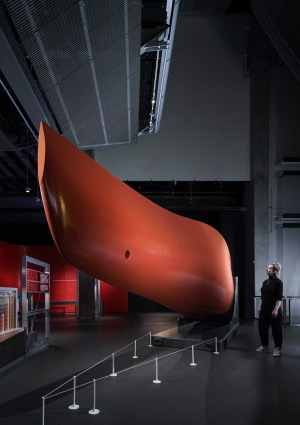
• A major new gallery examining the rapid energy transition and decarbonisation needed globally to limit climate change has opened at the Science Museum. The Energy Revolution: The Adani Green Energy Gallery is divided into three sections – Future Planet, Future Energy and Our Future – and highlights technologies and projects being used to address the climate crisis. Objects on show include a seven metre long tidal turbine blade made by Orbital Marine Power which was used in the Orkneys, rare surviving Edison tube mains cables used to power world’s first public electricity network in London in 1882, and a three metre high CoolAnt passive air-cooling facade from India that reduces dependence on powered air conditioning. At the centre of the gallery sits Only Breath, a kinetic sculpture created by artists Alexandra Carr and Colin Rennie from Torus Torus Studios that moves and blooms, stretching to around five metres in diameter when unfurled. The gallery can be found on Level 2 of the South Kensington museum. Admission is free. For more, see sciencemuseum.org.uk/energy-revolution.
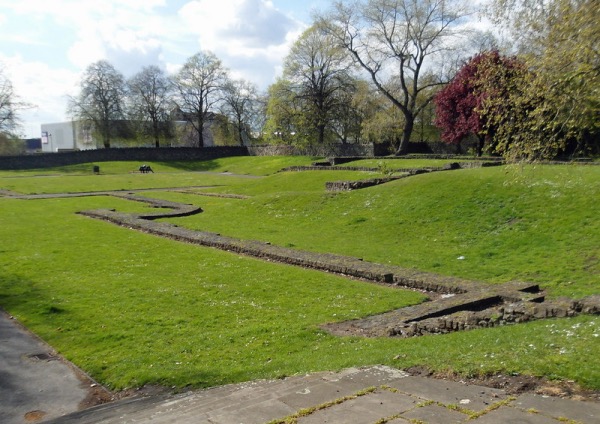
Footings of the abbey (these are modern with the real foundations below ground). PICTURE: diamond geezer (licensed under CC BY-NC-ND 2.0)
Once one of the most important nunneries in the country, Barking Abbey was originally established in the 7th century and existed for almost 900 years before its closure in 1539 during King Henry VIII’s Dissolution.
The abbey was founded by St Erkenwald (the Bishop of London between 675 and 693) for his sister St Ethelburga who was the first abbess.
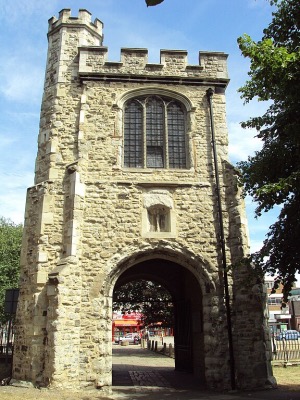
The Curfew Tower. PICTURE: Rept0n1x (licensed under CC BY-SA 3.0)
In the late 900s, St Dunstan, the Archbishop of Canterbury introduced the Rule of St Benedict at the nunnery.
King William the Conqueror stayed here after his coronation while famous abbesses included Mary Becket, the sister of St Thomas Becket, Archbishop of Canterbury, who was given the title in 1173 in reparation for the murder of her brother, as well as several royals including Queen Maud, wife of King Henry I, and Matilda, wife of King Stephen.
The nunnery gained wealth and prestige but this suffered somewhat as a result of floods in 1377 with some 720 acres of land permanently lost. It nonetheless remained one of the wealthiest in England and it’s said the abbess had precedence over all other abbesses in the country.
After the abbey was dissolved, some of the building materials were reused elsewhere and the site was later used as a farm and quarry.
Most of the buildings were demolished – today only the Curfew Tower, which dates from around 1460, remains. The Grade II*-listed tower contains the Chapel of the Holy Rood and now serves at the gateway to the nearby St Margaret’s Church.
Building footings also remain buried under the ground in what is known today as Abbey Green (the layout is marked today by modern additions). There’s a model of how the abbey once appeared inside the gateway.
Located within the outer walls of the Tower of London are the remains of some early 13th century fortifications built by King Henry III.
The foundations of Coldharbour Gate in the foreground beside the White Tower with the remnants of the Inmost Ward Wall beyond. PICTURE: Elizabethe (licensed under CC BY-NC-ND 2.0)
These include the foundations of Coldharbour Gate which once adjoined the south-west corner of the White Tower as well as the western wall of the Inmost Ward which ran down to the Wakefiekd Tower.
The gate was defended by two cylindrical turrets while the Inmost Ward Wall has arrow loops installed, allowing archers to fire down on attackers who had breached the outer fortifications.
The gate was later used as a prison. Alice Tankerville, who was charged with piracy on the River Thames, became one of the most famous prisoners housed there when, despite having apparently been chained to the wall, she escaped with the help of two guards in 1533 (she was recaptured just outside the Tower).
The gateway was demolished in about 1675 and lead from the roof taken to Greenwich where it was redeployed at the Royal Observatory.
Much of the wall was hidden away behind later buildings but was re-exposed after being bomb damaged during World War II.
Not much remains to be seen today but the foundations do evoke a sense of the royal palace in times past and serve as a reminder that the buildings we see at the Tower today are not all that has existed here.
Other ruins at the Tower of London include the remains of the Wardrobe Tower, which lies at the south-east corner of the White Tower. It is thought to have dated from 1190 and incorporates the base of a Roman bastion.
WHERE: Tower of London (nearest Tube station Tower Hill); WHEN: 9am to 5.30pm (last admission 3.30pm), Tuesday to Saturday; 10am to 5.30pm (last admission 3.30pm) Sunday to Monday; COST: £34.80 adults; £17.40 children 5 to 15 (family tickets available; discounts for online purchases/memberships); WEBSITE: www.hrp.org.uk/toweroflondon/.
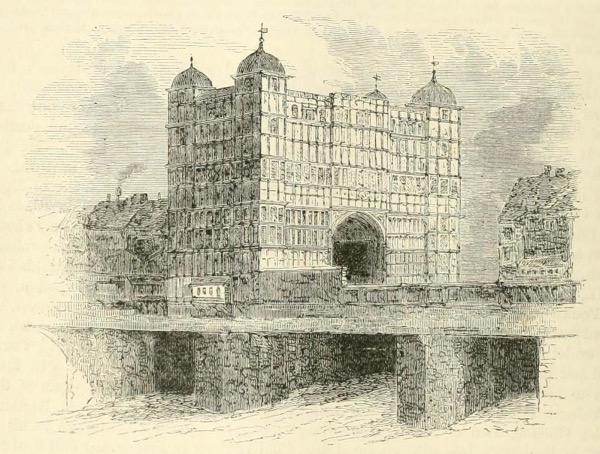
Once located at the southern end of London Bridge, Nonsuch House is the earliest documented prefabricated building.
Nonsuch House as seen in ‘Old and New London, Illustrated’ (1873). PICTURE: Via Wikipedia
Originally constructed in what is now The Netherlands, it was shipped to London in pieces – each individually marked – in 1578 with the reassembly completed the following year.
The four storey building, which was said to have been constructed using wooden pegs and no nails, featured an arched tunnel through the middle through which bridge traffic would pass.
The main facade faced toward Southwark and there were towers at each of the four corners, topped with onion domes. The east and west sides of the building, which protruded beyond the bridge out over the Thames were elaborately carved.
The northern facade of the building abutted other properties while the southern side had a clear space in front over which a drawbridge is believed to have been located (it could be raised to allow larger ships through).
The name may have referenced King Henry VIII’s Nonsuch Palace, located near Ewell in Surrey, and was said to refer to the fact there was no such building as splendid.
The property was demolished along with the other buildings on the bridge in about 1757.
A scene from the Untold Lives exhibition at Kensington Palace. PICTURE: Courtesy of Historic Royal Palaces.
• The “forgotten” stories of those who worked behind the scenes at London’s royal palaces are the subject of a new exhibition at Kensington Palace.Untold Lives: A Palace at Work shines a spotlight on those working in various roles at the palace between 1660 and 1830 – everyone from pages and cooks to wetnurses and seamstresses. Among the items on display is an apron worn by Queen Charlotte’s Wardrobe Maid, Ann Elizabeth Thielcke, a newly conserved portrait depicting a young Black attendant standing by King William III and holding his armour, and a specially commissioned photographic piece by Peter Braithwaite which reimagines figures from the Kensington Palace’s Kings Staircase. Among those whose stories are featured is the “Rat-Killer”, who wore a special rat-embroidered uniform, the Groom of the Stool, who was responsible for looking after the monarch on the toilet, and the Keeper of Ice and Snow, whose job was to cut ice so those at the palace could enjoy cold drinks and iced desserts all year round. The exhibition also explores the unexpected origins of some of those who served at the palaces, such as Abdullah, a wild cat keeper from India, and Mehmet von Könsigstreu, Keeper of the Privy Purse for King George I.. The exhibition, entry to which is included in general admission to the palace, can be seen until 27th October. For more, see https://www.hrp.org.uk/kensington-palace/.
• St Patrick’s Day is being celebrated this Sunday with the annual parade and a free, family-friendly afternoon of entertainment in Trafalgar Square. The procession, which sets off from Hyde Park Corner at noon and winds its way through the city to Whitehall, will include Irish marching bands, dance troupes and pageantry. From 1pm to 6pm, Trafalgar Square will host family concerts, children’s films and youth performances, as well community choirs, schools and dancing with Anna Haugh, International Chef of the Year 2019, running food demos alongside the main stage and children’s workshops. Entry is free. For more, see www.london.gov.uk/events/st-patricks-day-2024.
• A new photographic exhibition exploring how Underground stations and metro systems provide shelter to citizens during periods of war, both now and in the past, opened at the London Transport Museum in Covent Garden last week.Echoes of the Blitz: Underground shelters in Ukraine and London features 70 images, including historical pictures from the museum’s collection as well as 38 contemporary photographs shot by six renowned, mainly Ukrainian, documentary photographers. The latter include photography showing ordinary Ukrainian citizens sleeping, waiting, cooking, washing clothes, caring for their pets and creating temporary make-shift homes in metro stations of Kyiv and and Kharkiv show alongside black and white archive images of Londoners taking refuge in Tube stations during World War II. The exhibition, which is being run in partnership with Berlin-based journalistic network n-ost, can be seen until spring next year. Admission charge applies. For more, see www.ltmuseum.co.uk.
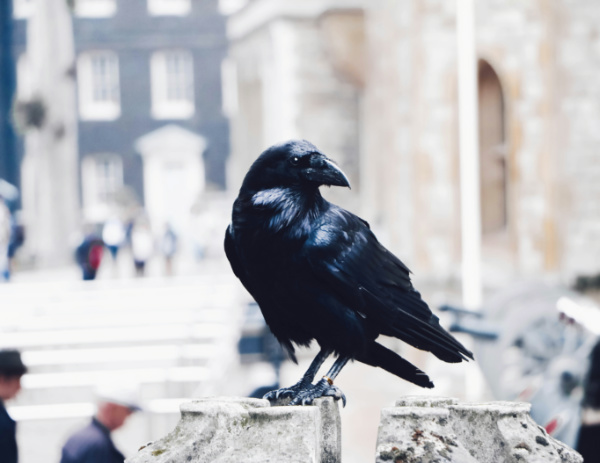
A raven at the Tower of London. PICTURE: Kasturi Roy/Unsplash
• A new Ravenmaster has been appointed at the Tower of London. Yeoman Warder Michael ‘Barney’ Chandler took up the role at the start of this month, 15 years after he first became a Yeoman Warder at the Tower. The Ravenmaster oversees a team of four responsible for the care of the Tower’s seven ravens which legend says must remain at the Tower to ensure its protection. The legend apparently goes back to at least the reign of King Charles II – when the King’s astronomer John Flamsteed complained that the resident ravens were impeding his work at the Tower and requested their removal, the King was told that if the ravens left the Tower then the Kingdom would fall (and so they remained). While the Yeoman Warders have longed cared for the ravens, the post of Ravenmaster was only created in the past 50 years and was first held by Yeoman Warder Jack Wilmington. Yeoman Warder Chandler, who became the 387th Yeoman Warder at the Tower when he was appointed in March, 2009, is only the sixth person to hold the office. For more, see www.hrp.org.uk/tower-of-london/.
• One of the most popular paintings at the Guildhall Art Gallery is being reinstalled to mark International Women’s Day on Friday. Dante Gabriel Rossetti’s La Ghirlandata has been on loan – first to the Tate Britain and then to the Delaware Art Museum in the US – but is now being returned. The painting dates from 1873 and depicts a ‘garlanded woman’ playing an arpanetta and looking directly at the viewer. The muse for the woman is said to have been the actor and model, Alexa Wilding, while the two ‘angels’ in the top corners were posed by William and Jane Morris’ youngest daughter, May Morris. The City of London Corporation acquired the oil on canvas work in 1927. On Saturday, free family activities will be held at the gallery to mark the work’s return. For more, see www.thecityofldn.com/la-ghirlandata.