Located close to the River Thames, Richmond Lodge was a royal hunting lodge before becoming a favoured residence for Hanoverian royals for several decades in the 18th century.
William III
Treasures of London – The Abraham Tapestries, Hampton Court Palace…
Hanging in the Tudor Great Hall at Hampton Court Palace, this series of 10 huge tapestries are believed to have been commissioned by King Henry VIII and were first hung in the hall in 1546.
To see the rest of this post (and all of our coverage), subscribe for just £3 a month. This small contribution – less than the cost of a cup of coffee – will help us continue and grow our coverage. We appreciate your support!
10 London locations related to Sir Christopher Wren…1. The Old Court House, Hampton Court Palace Green…
This year marks the 300th anniversary of the death of Sir Christopher Wren (25th February, 1723), whose designs helped to transform post-Great Fire London.
In a new series we’re looking at 10 locations which help tell Wren’s story but while we’ve previously runs numerous articles focused on the many buildings he designed, in this series the focus is more on his personal life.
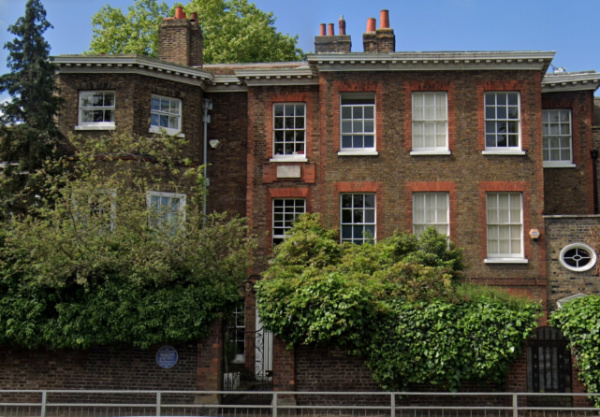
First up, it’s one of the most well-known properties related to Wren’s life – the home in which he spent the latter years after his life just outside Hampton Court Palace.
Known as the Old Court House, Wren first came to live in the house after he was appointed Surveyor-General to King Charles II in 1669. His post brought with it lodgings at the royal palaces and at Hampton Court Palace, it was the Old Court House (the property had been built for in 1536 as a wood and plaster house; Wren’s immediate predecessor in the office, Sir John Denham, had rebuilt it partly in brick).
Then in 1708, Queen Anne granted him a 50-year lease on the property, apparently at least partly in lieu of overdue fees he was owed for the building of St Paul’s Cathedral. It’s also believed that the Queen had granted the lease on condition that Wren repair or rebuilt the property.
Wren, who had hitherto only lived intermittently at the property (presumably while working on Hampton Court Palace on the orders of King William III and Queen Mary II), made some major alterations to the property from 1710 onwards (it’s suggested this was done to the designs of Wren’s assistant William Dickinson).
He came to live here on a more permanent basis after he retired from the Office of Works in 1718 and remained here until his death in 1723 (although he didn’t die here – more on that later).
It’s said Wren, whose time as the Royal Surveyor-General spanned the reigns of six monarchs, spent his time here “free from worldly affairs”, choosing to and pass his days ‘in contemplation and studies”.
It was subsequently the home of Wren’s son Christopher (1645-1747) and his grandson Stephen (b 1772). It remained a grace and favour house associated with Hampton Court Palace until 1958.
The Grade II* brown and red brick property, which was combined with the house next door in the early 19th century and them divided off in 1960, is now in private ownership and there’s an English Heritage Blue Plaque on the outside wall mentioning Wren’s residence.
Moments in London’s history – Five (more) unusual facts about royal coronations past…
Following last week’s unusual facts, here’s five more…
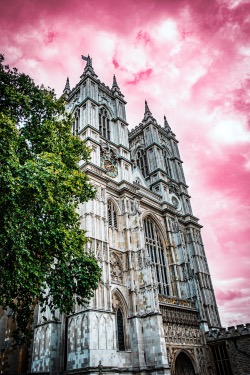
• The coronation of King William I (aka William the Conqueror) was marred by riots. The new King had chosen to be crowned in Westminster Abbey on Christmas Day, 1066, in a display of power (kings had in the past been crowned in Winchester). But when shouts of support for the new king were mistakenly thought to be an assassination attempt, Norman soldiers outside the abbey began setting fire to nearby houses, causing the abbey to fill with smoke and the congregation to flee while outside people rioted. William nonetheless ensured the service was completed.
• Henry, the eldest son of King Henry II, had a coronation service at Westminster Abbey while his father was still monarch – the only instance of this occurring. While crowning the heir during the lifetime of the monarch was a more common practice in France, it was not so in England. But in an effort to settle the succession, King Henry II had Henry crowned on 14th June, 1170. Sadly Henry, known as Henry the Young King, did not live to succeed his father but died at just the age of 28 in 1183 after contracting dysentery while campaigning with his younger brother Richard (later King Richard I) against their father. King Henry II died on 6th July, 1189, and was succeeded by Richard.
• There has only been one coronation in the abbey in which two monarchs were crowned at the same time. After King James II was deposed, William of Orange and his wife Mary were jointly invited to rule in what was known as the Glorious Revolution. They were crowned together at Westminster Abbey on 11th April, 1689. King William III sat in the Coronation Chair while another chair was specifically made for Queen Mary II, and, while the king was crowned using the traditional regalia, a special set of regalia was made for Mary.
• Only two of King Henry VIII’s six wives had coronations. Catherine of Aragon was crowned alongside the King on 24th June, 1509 (she sat on a lower chair). Anne Boleyn, meanwhile, was crowned on 1st June, 1533. Interestingly, she was crowned with St Edward’s Crown which had up until then only been used to crown the monarch. Jane Seymour died before she could be crowned (there had been plague in London at the time she married Henry), while his marriage with Anne of Cleves was annulled before she could be crowned and Catherine Howard was executed before any coronation took place. By the time the king married Catherine Parr, he was ageing and ill and a coronation was unlikely to be high on his agenda.
• King Henry VI is the youngest monarch to have been crowned at Westminster Abbey. He was aged just eight-years-old when he was crowned on 6th November, 1429, having become king at the age of just eight-months-old when his father, King Henry V, died on 31st August, 1422 (other children to have been crowned in the abbey include King Edward VI, who was just nine at his coronation). King Charles III – whose coronation will take place on 6th May – will be the oldest monarch to have been crowned at the abbey.
Correction: We’ve corrected the position of the two Catherines after the names were accidentally transposed.
This Week in London – Coronations at Westminster Abbey; tulips at Hampton Court; St Bartholomew at The National Gallery; and, Food Season at the British Library…
• A new exhibition exploring the 1,000-year history of coronations at Westminster Abbey has opened in the abbey’s medieval chapter house. The exhibition, which has opened ahead of the coronation of King Charles III on 6th May, draws on historic illustrations and archive photography to explore the elements of the coronation service including the oath-taking, anointing, investing and crowning and takes a closer look any some of key artefacts present in the ceremony including the Coronation Chair. The exhibition, which is free with admission to the abbey and which runs until the end of September, is part of a season of events celebrating the coronation including themed late evenings, family activities and special afternoon teas at the Cellarium Café. Meanwhile, the abbey has also announced that visitors will be able to view the ‘Coronation Theatre’ – the special area which will be built for the historic occasion, from the Abbey’s North and South Transepts – following the coronation. Tickets for the special viewing – which will include the chance to see key elements from the coronation service including the Coronation Chair still in position on the Cosmati Pavement – can be purchased for timed slots between 8th and 13th May. For more on the abbey’s events surrounding the coronation, see www.westminster-abbey.org/events.

• Hampton Court Palace bursts into colour from Friday with its annual Tulip Festival. More than 110,000 bulbs have been planted to creat dramatic displays in the formal gardens and cobbled courtyards, among them a selection of heirloom bulbs on display in the Lower Orangery Garden which presents visitors with the chance to see tulips as they would have looked during the time of King William III and Queen Mary II, soon after the flowers were first introduced to Britain. Thanks to a special relationship with Netherlands-based Hortus Bulborum, the bulbs on display include Sylvestris (1595) and Rubella Broken (1700) as well as the Orange King (1903) and Queen of the Night (1940). Other highlights of the festival include 3,000 wine-toned tulips, including the merlot variety, flowing down from the steps and parapet of the Wine Fountain, as well as a floral fantasy in the palace’s courtyards in which tulips such as Raspberry Ripple, Apricot Emperor and Purple Prince flow out of wheelbarrows, barrels and a horse cart, and a free-style tulip planting in the Kitchen Garden inspired by Van Gogh’s 1883 painting, Bulb Fields. Runs until 1st May. Admission charge applies. For more, see https://www.hrp.org.uk/hampton-court-palace/whats-on/tulip-festival/.

PICTURE: © The National Gallery, London
• The recently acquired Bernardo Cavallino work, Saint Bartholomew has gone on show at The National Gallery. The painting, which dates from 1640-45 and which was last exhibited at The Metropolitan Museum of Art in New York in 1993, is being displayed alongside other 17th century works by artists such as Caravaggio, Artemisia and Orazio Gentileschi, Guercino, Reni and Ribera in the Hans and Julia Rausing Room (Room 32). The National Gallery has one other work by Cavallino – Christ driving the Traders from the Temple – but his depiction of Saint Bartholomew is considered one of his most splendid works. Admission is free. For more, see nationalgallery.org.uk.
• Featuring everything from a celebration of African Caribbean takeaways to a “deep-dive” into the issues surrounding food production and access, Food Season kicks off at the British Library Monday. Highlights include a discussion of the sandwich by food writers Nigella Lawson, Jonathan Nunn and Rebecca May Johnson, a day-long celebration of African Caribbean cuisine featuring chefs and broadcasters Jimi Famurewa, Fatmata Binta and Andi Oliver, and, an exploration of the big challenges in food, land use and food production featuring author Henry Dimbleby alongside Dr Tara Garnett, Nick Saltmarsh, Abby Allen and Dimitri Houtart. Runs until 7th June. Admission charges apply. For the full programme, see www.bl.uk/events/food-season.
Send all items to exploringlondon@gmail.com
8 locations for royal burials in London…5. Henry VII’s Lady Chapel, Westminster Abbey…
Located just to the east of St Edward the Confessor’s Chapel in Westminster Abbey is the lavishly ornate Lady Chapel built on the orders of King Henry VII.
Described as the “last masterpiece of English medieval architecture”, the chapel is the resting place of King Henry VII and his wife Queen Elizabeth of York.

The couple were the first to be buried in a vault under the floor rather than a tomb but still features an elaborate monument above the floor.
The monument was designed in the Renaissance style by Italian sculptor Pietro Torrigiano and features gilt bronze effigies of the King and Queen lying side-by-side above a black marble base decorated with six medallions representing the Virgin Mary and Henry’s patron saints (who included St Edward the Confessor). At either end of the base are coats of arms supported by cherubs.
A fine grille, designed by Thomas Ducheman, surrounds the monument – once gilded, it featured 30 statues in niches but only six – depicting saints – now remain. The lengthy Latin inscription written on the grille lauds King Henry as “a wise and watchful monarch, a courteous lover of virtue” among other superlatives. There are further inscriptions on the monument.
They’re not the only kings and queen’s buried in the chapel. King James I is buried in the vault under the King Henry VII’s tomb and his wife Queen Anne of Denmark is buried nearby.
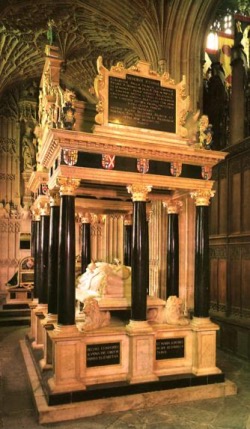
Queen Elizabeth I is buried in the chapel’s north aisle with a monument above depicting her effigy. Her coffin was placed on top of her half-sister Queen Mary I whose body had been placed there after her death in 1558. The monument was installed on the orders of King James I who, while commissioning a depiction of Queen Elizabeth, didn’t order an effigy of Mary to be made. Instead, she is commemorated with an inscription translated as “Partners both in throne and grave, here rest we two sisters, Elizabeth and Mary, in the hope of the Resurrection.”
The religious differences of the two Queens – Elizabeth being a Protestant and Mary a Catholic – are meanwhile commemorated in an inscription on the floor which reads: “Remember before God all those who divided at the Reformation by different convictions laid down their lives for Christ and conscience sake.”
Buried in a vault beneath the south aisle of the chapel – with just simple inscriptions on stones above (no monuments were erected due to the lack of space apparently – are the remains of the Stuart monarchs King Charles II, Queen Anne (and her husband Prince George), Queen Mary II and King William III.
The rather flamboyant tomb of Mary, Queen of Scots, is also in this aisle. King James I had her remains brought to the abbey from Peterborough Cathedral in 1612 and laid to rest in a marble tomb featuring an elaborate canopy and a white marble effigy at the feet of which stands a crowned Scottish lion. The eldest son of King James I, Henry Frederick, Prince of Wales, was also buried in the Queen’s vault (she was his grandmother), probably due to lack of space.
The young king Edward VI is buried beneath the floor in front of the altar and the last monarch to be buried in the abbey – King George II – lies in a vault under the central aisle along with his wife Queen Caroline and some of their children as well as other family members. On the King’s orders, the sides of the coffins of King George II and that of Queen Caroline were removed so their remains could mingle.
Several other royals – including Princess Mary of Orange, eldest daughter of Charles I and Henrietta Maria, and Prince Rupert of the Rhine – are also buried in the chapel.
HERE: Lady Chapel, Westminster Abbey (nearest Tube stations are Westminster and St James’s Park); WHEN: Times vary – see the website for details; COST: £27 adults/£24 concession/£12 children (discounts for buying online; family rates available); WEBSITE: www.westminster-abbey.org
Treasures of London – The ‘Line of Kings’…
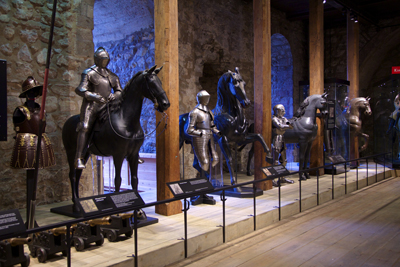
A star sight at the Tower of London for some 350 years, the ‘Line of Kings’ dates back to the mid-17th century and was originally installed in the Royal Armouries at the Tower to promote the restored monarchy of King Charles II and the Stuart dynasty.
Often described as the “world’s longest running tourist attraction” (the first visitor was recorded in 1652), it features the historic armour of monarchs on wooden figures and accompanied by fully decked-out carved horses – the work of Grinling Gibbons and others among Britain’s best woodcarvers.
The line has been added to and redisplayed numerous times over its history, partly to accommodate successive monarchs (17 in all were included with King George II being the last).
Only those monarchs deemed worthy were included – this deemed “bad” kings like King Richard III were omitted while “good” kings like King William the Conqueror, King Edward III and King Henry V were included. Queens were not included – when Queen Mary II and King William III were created joint monarchs, only King William was included.
The display began to be mentioned in guidebooks from the 1750s onwards. In 1825, amid growing scholarship and criticism, the line underwent a major change.
It was dismantled and then redisplayed in a purpose-built gallery adjoining the south side of the White Tower. The new line-up included prominent noblemen as well as kings while the kings themselves were reshuffled with some, like King Edward III, dropped, and King James II added.
It was further enhanced in 1869 but the display closed in 1882. The equestrian figures then appeared on the upper floor of the White Tower.
The Line of Kings, which is now located on the entrance floor of the Tower, last underwent a significant revamp between 2011 and 2013.
Highlights include the earlier surviving armour of King Henry VIII – a silvered and engraved armour which was made in the years following his coronation in 1509 – as well as the gilded armours of King Charles I and King James II.
WHERE: White Tower, Tower of London (nearest Tube station Tower Hill); WHEN: 9am to 5.30pm daily; COST: £29.90 adults; £14.90 children under 15; £24 concession; family tickets from £52.20; WEBSITE: www.hrp.org.uk/toweroflondon/.
Treasures of London – The Tijou Screen at Hampton Court Palace…
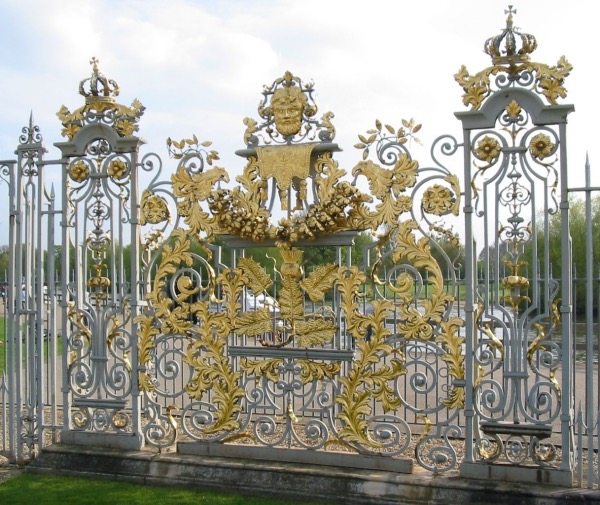
Standing at the river end of the Privy Garden at Hampton Court Palace is a stretch of wrought-iron screen designed and made by Huguenot ironworker Jean Tijou for King William III and Queen Mary II.
The screen, which is one of the finest examples of 17th century ironwork in the world, was created between 1689 to 1692. It features 12 panels displaying symbols including the monogram of William and Mary, the garter emblem and representations of England, Ireland, Scotland and France.
William expressed his personal admiration for the work.
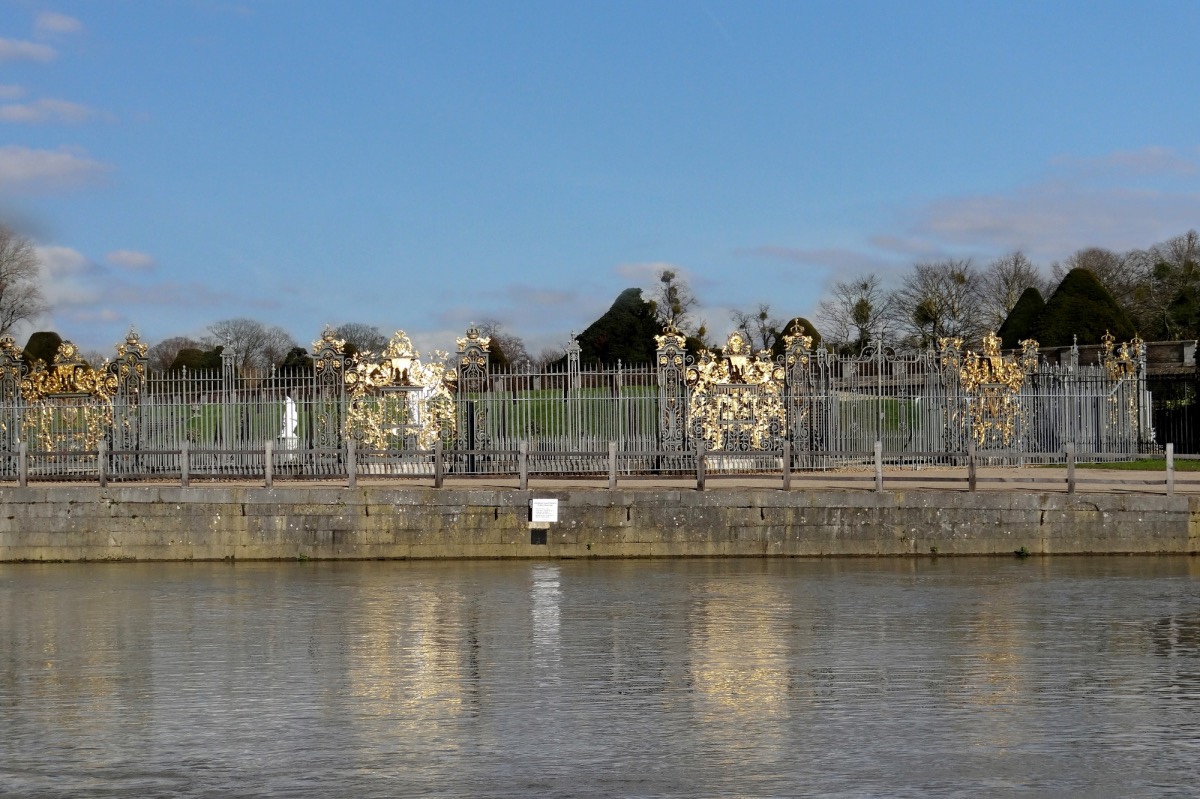
The screen was among numerous royal commissions created by Tijou, who had arrived in England in about 1689 and secured the patronage of the joint monarchs.
The screen fell into neglect in the 18th century and were subsequently repaired numerous times before being split up in the 19th century. It was re-erected at Hampton Court in 1902 and since been restored several times.
London Explained – Royal residences…
There are numerous royal palaces in London but which are royal residences?
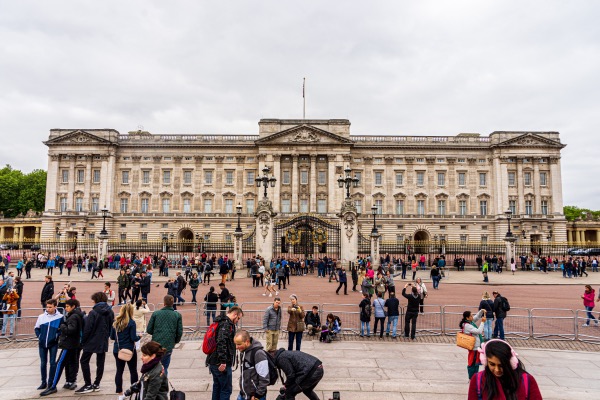
Foremost is Buckingham Palace, the official residence and office of the monarch – Queen Elizabeth II – in London. The palace – acquired for the Crown by King George III in 1761, converted to a palace by King George IV and first lived in by Queen Victoria – is also used for State ceremonies and for official entertaining.
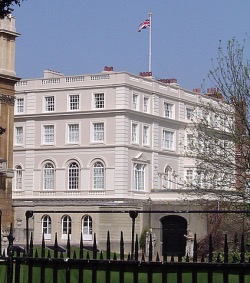
Other royal residences include Clarence House which is the official London residence of Prince Charles and Camilla, Duchess of Cornwall.
The property was built between 1825 and 1827 to the designs of John Nash for Prince William Henry, Duke of Clarence (hence the name).
It was the home of Queen Elizabeth, the Queen Mother, between 1953 and her death in 2002, and was also temporarily the home of the then-Princess Elizabeth and Prince Philip following their marriage in 1947.
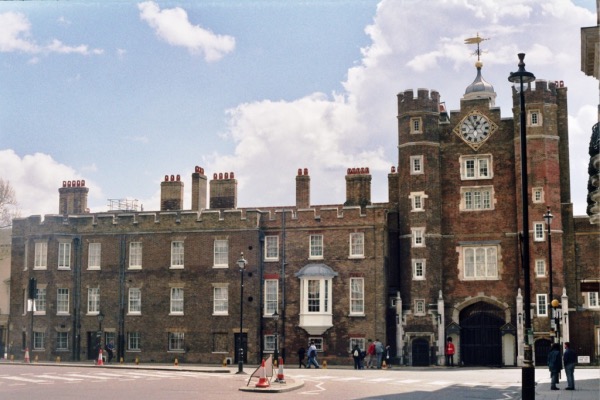
St James’s Palace, which was largely built by King Henry VIII and served as the residence of numerous monarchs until King William IV, also remains the home of several members of the Royal Family – including Princess Anne and Princess Alexandra – and their household offices.
The State Apartments are sometimes used for entertaining during in-coming State Visits, as well as for other ceremonial and formal occasions. Its history means diplomats are still accredited to the Court of St James.
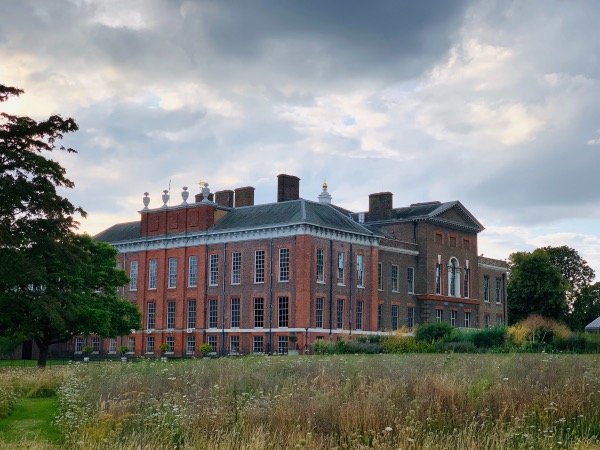
Kensington Palace – childhood home of Queen Victoria and favoured residence of monarchs from King William III to King George II – is these days the official London residence of Prince William and Katherine, the Duchess of Cambridge.
It also contains the London residences and offices of the Duke and Duchess of Gloucester, the Duke and Duchess of Kent and Prince and Princess Michael of Kent.
While Hampton Court Palace, the Tower of London, Kew Palace and the remnant of the Palace of Whitehall known as the Banqueting House are all royal palaces, they ceased being used regularly for royal court purposes in the 18th century and are now in the care of Historic Royal Palaces (along with parts of Kensington Palace).
This Week in London – Tulips at Hampton Court; new Falklands-related displays at the IWM; and, a new garden for The Regent’s Park…
Hoping you have a wonderful Easter break.
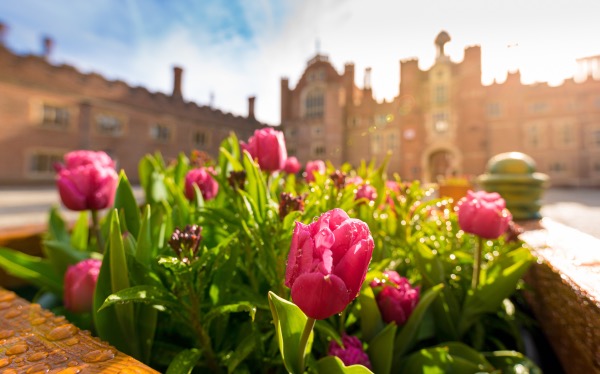
• Hampton Court Palace’s Tulip Festival – the largest of its kind in the UK – is returning following its successful inaugural year in 2021. From Friday until 2nd May (depending on flowering periods), the palace’s 60 acres of formal gardens are expected to be filled with rare, historic and specialist tulip varieties inspired by Queen Mary II’s famous 17th century collection which was once housed at the palace. Some 120,000 tulip bulbs of 60 different varieties have been planted, including breath-taking floating tulip vases located in the palace’s famous fountains, and floral displays which will fill the cobbled courtyards of Base Court and Clock Court. Visitors will be able to find out all about the links between the flower and the palace’s history with a dedicated Tulip Festival Guide. Included with admission. For more, head here.
• New exhibits marking the 40th anniversary of the Falklands Conflict have gone on show at the Imperial War Museum in Lambeth. Among the new items on display are drawings by Linda Kitson, the first female artist commissioned by IWM to accompany troops into conflict, and images of the conflict – many of which have never been seen before – taken by photographer Paul RG Haley who covered it for Soldier Magazine. The museum is also exploring the story and legacy of the conflict through a digital programme of events including a series of short films and a new episode of the Conflict of Interest podcast featuring actor Katherine Parkinson. For more, see www.iwm.org.uk.
• The Regent’s Park will soon boast a new 1.5 acre garden at its centre in honour of Queen Elizabeth II’s Platinum Jubilee. The new garden, to be created on the site of a former plant nursery near the Inner Circle, will include design features that reflect the Queen’s “love of trees and nature”. The Royal Parks will be committing £1 million to the project and will seek external funding and public donations. Designs for the new park will be shared as they are developed. Meanwhile, The Royal Parks have also announced they will be creating a new wood in Richmond Park as part of the Queen’s Green Canopy Initiative. The new woodland, which will be located adjacent to Ham Cross, will be planted with 70 large trees, each one to mark a year of Her Majesty’s reign.
Send all items to exploringlondon@gmail.com.
10 historic stairways in London – 8. The King’s Staircase, Kensington Palace…
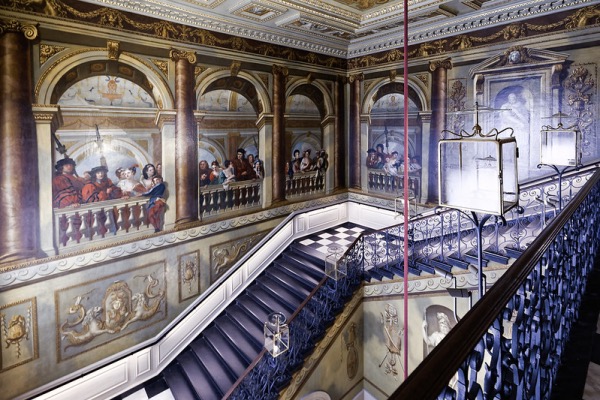
This staircase, a grand entrance to the King’s State Apartments at Kensington Palace, are famous for the paintings on the walls and ceiling which depict an 18th century court looking down on those who ascend.
The work of William Kent, the staircase paintings were complete in 1724 and replaced earlier wooden panelling.
The stairs were originally constructed as part of Sir Christopher Wren’s remodelling Nottingham House into Kensington Palace for King William III and Queen Mary II. Following a fire in 1691, they were rebuilt in marble.
There are 45 people in Kent’s painting and only about a dozen have been identified. As well as members of the Yeomen of the Guard, the images depict King George I’s Polish page Ulric, his Turkish servants Mahomet and Mustapha, Peter the ‘wild boy’, a child found in the woods in Germany, and Dr John Arbuthnot, a medical doctor and satirist who tried to teach Peter to speak.
Interestingly, Kent included a selfie on the ceiling – a depiction of himself, wearing a brown turban and carrying an artist’s palette, standing with his mistress by his side.
The trompe l’oeil (a technique which creates the optical illusion of 3D) work features architecture inspired by Rome where Kent had trained while there’s also a painted figure of Diana on the top landing which is based on an antique statue at Holkham Hall in Norfolk.
In 1734, Queen Caroline commissioned Kent to rework the stairs to the Queen’s State Apartments. His work there features a Roman-inspired scene again created as a trompe l’oeil. There is also a homage to Queen who is compared to Britannia. The staircase’s balustrade was another by Huguenot ironworker Jean Tijou.
WHERE: The Broad Walk, Kensington Gardens, Kensington (nearest tube stations are High Street Kensington or Queensway); WHEN: Daily 10am to 6pm (last admission 5pm); COST: £16 adult/£12.80 concession/£8 child (Historic Royal Palaces members free); WEBSITE: www.hrp.org.uk/KensingtonPalace.
10 historic stairways in London – 5. The King’s Staircase, Hampton Court Palace…
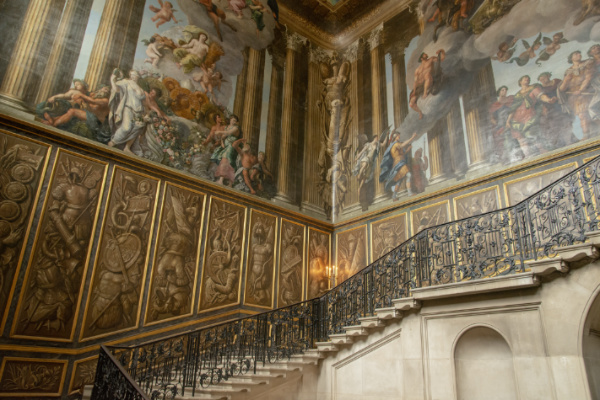
This grand staircase was installed in Hampton Court Palace during the reign of King William III and Queen Mary II as a grand entrance to the King’s Apartments.
The staircase, which features shallow steps, was designed Sir Christopher Wren and features a wrought iron balustrade designed by French ironsmith Jean Tijou.
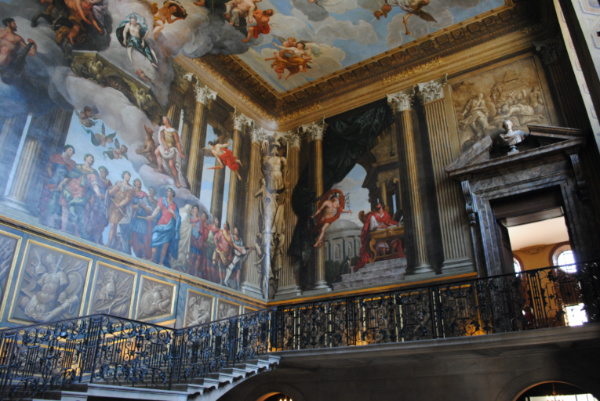
It was decorated in about 1700 by Italian painter Antonio Verrio to resemble a Roman courtyard which is open to the sky. The main image depicts ‘Victory of Alexander over the Caesars’ which features King William III as Alexander the Great and is painted as an allegory of William’s triumph over the Stuart King, James II, in the Glorious Revolution of 1688 (with the Stuarts represented by the 12 Caesars).
The stairs lead up to the Guard Chamber, an anteroom which had to be passed through to reach the Presence Chamber.
10 historic stairways in London – 2. Queen Mary’s Steps, Whitehall…

This small stone stairway which now sits in the midst of a grassy expanse at the back of the Ministry of Defence was once part of the Palace of Whitehall.
Named for Queen Mary II, wife of King William III, for whom they were designed, the stairs were part of a terrace built in 1691 abutting the Thames in front of an old river wall constructed for King Henry VIII.
Designed by Sir Christopher Wren, the stairs were one of a pair located at either end of the terrace which gave direct access to the river – and state barges – from the Royal Apartments.
Excavations in 1939 during construction of the MoD revealed the Tudor river wall, the terrace and the northern-most of the two flights of steps. The upper part of the steps have been repaired and the terrace and wall reconstructed.
The steps and palace fragments are now a Grade I listed monument.
London Explained – The Royal Parks…
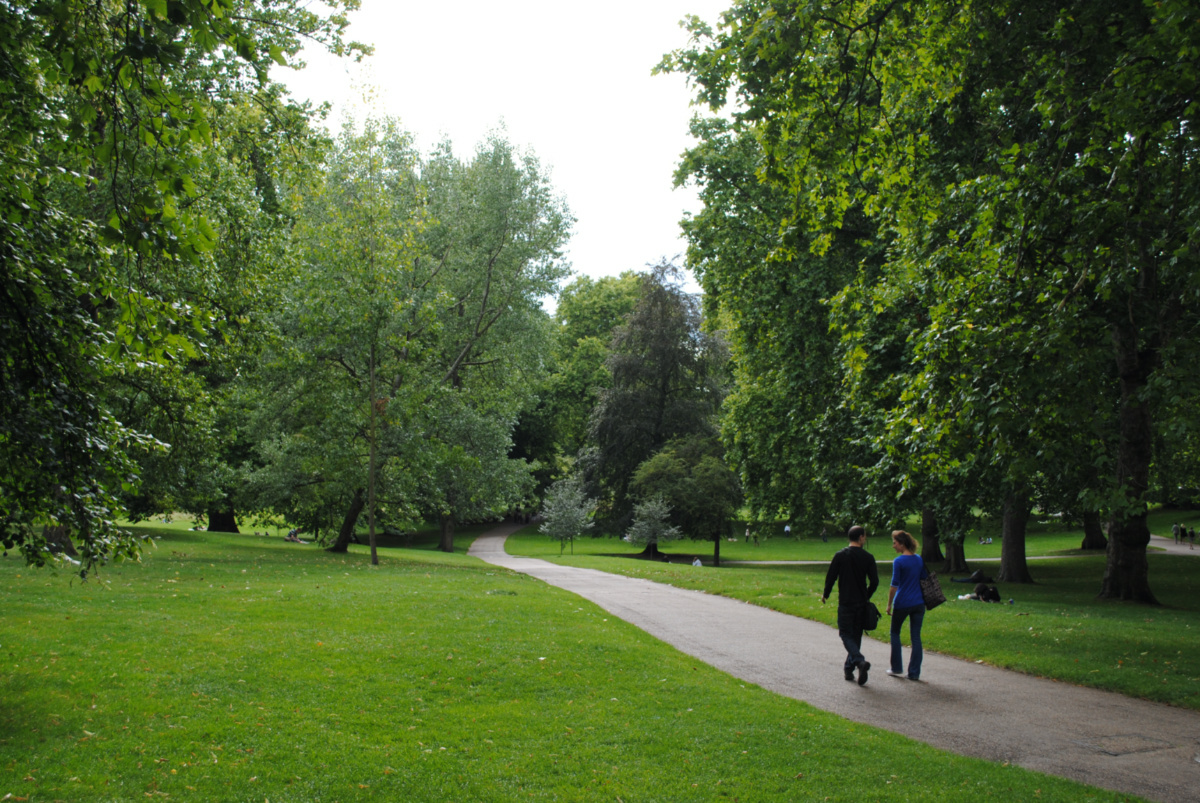
One of the most beautiful features of London are its Royal Parks.
The parks, which covers some 5,000 acres, are owned by the Crown and managed by a charity, The Royal Parks. They include eight of London’s largest open spaces – Hyde Park, The Green Park, Richmond Park, Greenwich Park, St James’s Park, Bushy Park, The Regent’s Park, and Kensington Gardens – as well as some other important open spaces such as Brompton Cemetery, Victoria Tower Gardens, Canning Green and Poet’s Corner.
All eight of the Royal Parks have historically been owned by the Crown with St James’s Park considered the oldest (while Greenwich Park is the oldest enclosed park).
Under an Act of Parliament passed in 1851, the Crown transferred management of the parks to the government. These powers were originally vested in the Commissioners of Works and later transferred to the Minister of Works in 1942. They now rest with the Secretary of State for Culture, Media and Sport.
The Royal Parks charity was created in 2017 when The Royal Parks Agency – a former executive agency of the Department for Culture, Media and Sport – and the Royal Parks Foundation came together. It is governed by a board led by chairman Loyd Grossman.
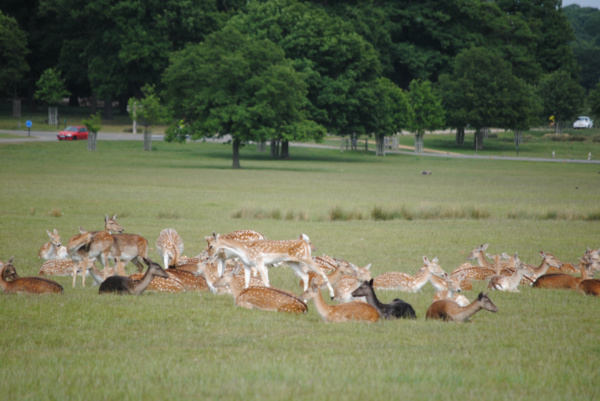
The largest of the eight Royal Parks is Richmond Park which covers some 2,500 acres in London’s south-west (it’s followed by Bushy Park which is just over 1,000 acres). The smallest of the parks is Green Park at just 40 acres.
Interestingly, Hampton Court Palace gardens, which are open to the public are not part of The Royal Parks but instead are under the care of Historic Royal Palaces.
Here’s one fact about each of the eight Royal Parks.
- Cardinal Thomas Wolsey gave Bushy Park to King Henry VIII in 1529 (along with Wolsey’s home, Hampton Court Palace).
- Green Park was initially known as Upper St James’s Park after it was enclosed by King Charles II in 1668.
- The Royal Observatory, designed by Sir Christopher Wren, is located in Greenwich Park.
- Hyde Park became the location of the first artificially lit highway in the country when King William III, who had moved his court to Kensington Palace and found his walk back to St James’s rather dangerous, had 300 oil lamps installed upon a route which later became known as Rotten Row.
- Queen Caroline, wife of George II, gave Kensington Gardens much of its present form when, in 1728, she oversaw the creation of the the Serpentine and the Long Water.
- Horse Guards Parade is considered part of St James’s Park.
- Architect John Nash designed a summer palace for the Prince Regent which was to be located in The Regent’s Park but was never built.
- Prime Minister Lord John Russell was given a home in Richmond Park (Pembroke Lodge) by Queen Victoria in 1847.
Treasures of London – Thomas Tuttell’s celestial globe…
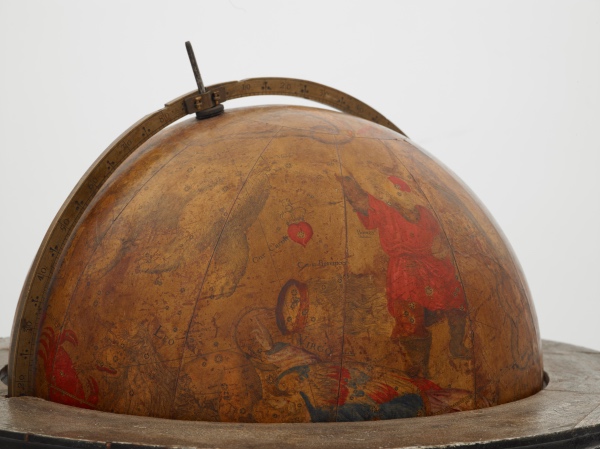
Dating from 1700, this celestial globe was made by Thomas Tuttell, hydrographer and mathematical Instrument maker to King William III in the year 1700.
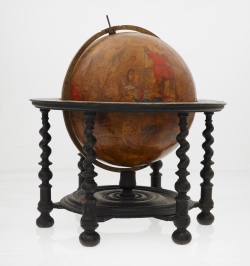 The globe, a unique survivor of its age, is identical to a celestial globe made by Joseph Moxon in 1653, except for one additional constellation in the northern hemisphere named the ‘Cor Caroli’ (Heart of Charles), a reference to King Charles I (the constellation was named by Sir Charles Scarborough to commemorate the restoration of the monarchy in 1660 and it was first published on a star map in 1673).
It is one of 10 historic globes which have been made available for close-up inspection, including using an augmented reality tool which allows you to spin and zoom in at will, on the British Library’s website.
The 10 are the first tranche of globes to go online in a project involving British Library staff and digitisation company Cyreal that will eventually involve 30 globes.
Others among the first 10 include what is possibly the earliest miniature ‘pocket’ globe – dating from 1679, it was made by Joseph Moxon, two globes made by Willem Janszoon Blaeu – a terrestrial globe and a small table star globe – which date from 1606, and Johann Doppelmayr’s terrestrial and star globes from 1728.
There’s also Richard Cushee’s 1730 terrestrial globe with its unusually late inclusion of the island of California, Charles Price’s 1715 globe containing unusual annotations, and Gabriel Wright and William Bardin’s 1783 globes.
The globes, which are part of the library’s map collection, can be found at www.bl.uk/maps/articles/european-globes-of-the-17th-and-18th-centuries.
PICTURES: © British Library (licensed under CC BY-NC-SA 4.0).
London Pub Signs – Williamson’s Tavern…
Located in the heart of the City of London (actually, according to a myth, it’s the exact centre of the Roman-era city), Williamson’s Tavern dates from the mid-18th century.
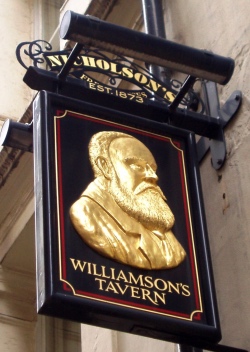 The tavern, located in Groveland Court, just off Bow Lane, owes its name to Robert Williamson who bought residence which once stood on the site – and happened to be the home of the Lord Mayor of London – in the mid-1700s.
It was Williamson who turned the premises, which had been built soon after the Great Fire of 1666, into a hotel and tavern (the Lord Mayor, meanwhile, moved into the George Dance-designed Mansion House in 1752).
Said to be popular among merchants and seafarers, the hotel, meanwhile, remained in the family until 1914 when James Williamson died and the property was auctioned. The hotel eventually disappeared but the tavern – now housed in a building dating from the early 1930s – lives on.
There is a remnant of its glorious past nearby – King William III and Queen Mary II, who were said to have dined at the previous Lord Mayor’s residence, presented the Lord Mayor with a gift in the form of now Grade II-listed wrought-iron gates with their monogram and they still stand at one end of Groveland Court.
The tavern, meanwhile, claims to have “probably…the oldest excise license in the City of London”. It also features a stone plaque in the floor which, so the story goes, marks the exact centre of London (although its apparently covered by carpet) and there are some Roman-era bricks or tiles incorporated into a fireplace which were discovered during the 1930s rebuild.
It’s also said to have a resident ghost – Martha (also the name of one of the pub’s dining rooms). According to the pub’s website, police dogs won’t go near the place as a result while longer serving members of staff say they have all seen a painting of her in various parts of the pub (of course, no such painting exists).
The tavern is now part of the Nicholson’s chain. For more, see www.nicholsonspubs.co.uk/restaurants/london/williamsonstaverngrovelandcourtlondon.
PICTURE: Ewan Munro (licensed under CC BY-SA 2.0)
What’s in a name?…Belgravia
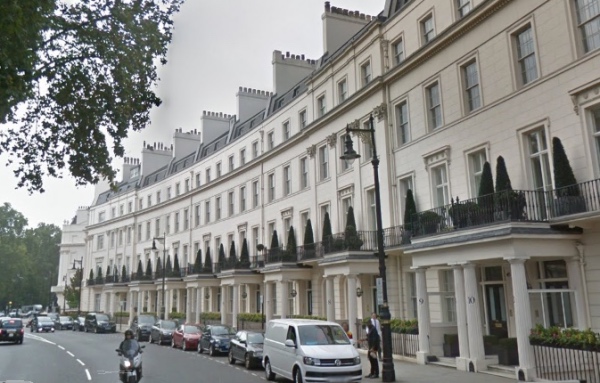
This well-to-do district of west London owes its name to the family of Hugh Grosvenor, the 7th Duke of Westminster and owner of the Grosvenor Estate, the land upon which Belgravia is located.
The country estate of the duke’s family – the Grosvenors – is known as Eaton Hall and it lies just to the south of Chester. Various names related to the estate appear on the London map. Among them is Belgravia.
Belgravia take its name from the tiny village of Belgrave which lies within the estate’s boundary (the word Belgrave, incidentally, comes from the Old French for “beautiful wood”).
 The London residential area now known as Belgravia, meanwhile, was formerly known as Five Fields and used for grazing. The Westbourne River meandered through it, crossed by “Bloody Bridge”, so-called because it was a known haunt of robbers.
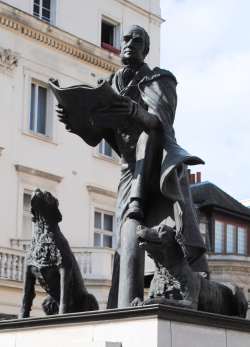
It later became the site of market gardens and houses began to appear in the area following King George III’s move to what was then Buckingham House but development of the area didn’t begin in earnest until the 1820s when Robert Grosvenor, later the first Marquess of Westminster (pictured here in a statue in Belgrave Square), began developing the estate with the aid of builder Thomas Cubitt.
Designed with Belgrave Square at its centre, the new development immediately became associated with the more affluent end of society, a connection which continues to this day.
As well as Belgrave Square, the district, which straddles both the City of Westminster and the Royal Borough of Kensington and Chelsea, includes Eaton, Chester and Lowndes Squares (the first two names associated with the duke’s country estate; the third named after William Lowndes, a politician and Secretary to the Treasury under King William III and Queen Anne.
Palatial terraced houses aside, landmarks include the Grade II-listed St Peter’s Church, located at the east end of Eaton Square, which was first built in the 1820s and rebuilt in the 1830s. The area is also home to numerous embassies and consulates including those of Norway, Spain, Malaysia and Egypt, and, in keeping with the international feel, also boasts several statues of notable foreigners including Simon Bolivar and Christopher Columbus.
Famous residents have included former Prime Ministers Stanley Baldwin, Neville Chamberlain and Margaret Thatcher (the first two lived in Eaton Square; Thatcher in Chester Square), Louis Mountbatten, who lived in Wilton Crescent, and Alfred, Lord Tennyson, who lived in Upper Belgrave Street, as did Lord Lucan who mysteriously disappeared in 1974 after his children’s nanny was found murdered.
PICTURES: Top – Terraced homes in Grosvenor Crescent, which runs off Belgrave Square (Google Maps); Right – Statue of Lord Robert Grosvenor, first Marquess of Westminster (David Adams).
This Week in London – Greenwich’s Painted Hall reopens; ‘Christian Dior’ extended; and, merchant shipping explored…
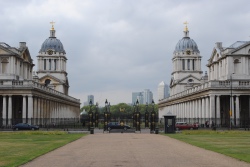 • The Painted Hall in Greenwich’s Old Royal Naval College reopens on Saturday following a two-year, £8.5 million restoration project. The hall, known as the UK’s “Sistine Chapel”, was designed by Sir Christopher Wren as a ceremonial dining room for what was then the Royal Hospital for Seamen. Completed in 1705, its 4,000 square metre interior features a decorative scheme painted by Sir James Thornhill, the first British artist to be knighted, which took 19 years to complete. The paintings celebrate English naval power as well as the then newly installed Protestant monarchy with joint monarchs King William III and Queen Mary II as well as Queen Anne and King George I all represented in the artworks along with hundreds of other mythological, allegorical, historical and contemporary figures. The restoration project has also seen the King William Undercroft, located underneath the hall, converted into a new cafe, shop and interpretation gallery. Two cellar rooms from King Henry VIII’s palace – which once stood on the site – were discovered during the restoration works and are also now on public display. Other new touches include the return of a series of carved oak benches to the hall (having been introduced when it was used as an art gallery in the 19th century they were removed 100 years ago), two ‘treasure chests’ containing objects related to the ceiling artworks which can be handled, and new tour options – not just of the hall and undercroft but of the entire Old Royal Naval College site. There’s a host of special activities over the opening weekend, including a parade and official opening ceremony from 9.30am, the chance to meet historical characters, music, food stalls, kids activities and more. Admission charge applies. For more, see www.ornc.org. PICTURED: The Old Royal Naval College, home of the Painted Hall.
• The V&A has announced it is extending its sell-out Christian Dior: Designer of Dreams exhibition due to unprecedented demand. The exhibition at the South Kensington museum, which had originally been scheduled to close on 14th July, will now run until 1st September with new tickets made available on 15th of each month (there’s also a limited number of tickets available to purchase daily at 10am from the V&A’s Grand Entrance on a first-come, first-served basis; V&A members, of course, attend free-of-charge with no need to book). The exhibition, which initially sold out of its five month run with 19 days of opening, is the most comprehensive exhibition ever staged in the UK on the House of Dior and the museum’s biggest fashion exhibition since Alexander McQueen: Savage Beauty in 2015. For more, see vam.ac.uk.
• On Now: Merchant Navy Treasures: An Introduction to the Newall Dunn Collection. This display at the City of London’s Guildhall Library delves into the Newall Dunn Collection, one of the world’s most comprehensive photographic and reference collections on merchant shipping, and showcases the achievements of shipping historian Peter Newall and artist and writer Laurence Dunn. Alongside images, press releases and newspaper cuttings, on show are company brochures, menus and other items from the ocean liners and cargo vessels of three famous lines from the golden age of shipping: the Cunard, Orient and Union-Castle. Admission is free. Runs until 24th May. For more, follow this link.
Send all items for inclusion to exploringlondon@gmail.com.
LondonLife – Looking toward The Orangery, Kensington Palace…
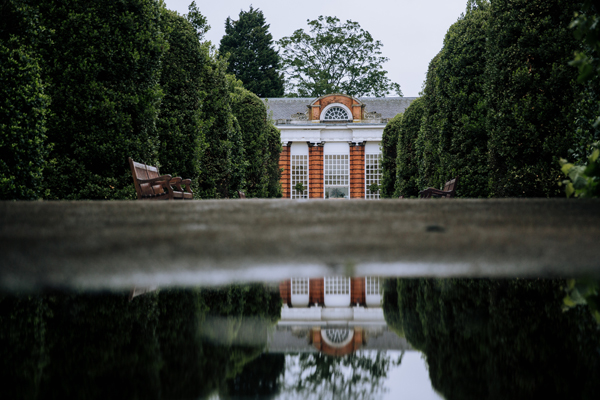 Now an elegant place to have lunch or afternoon tea, The Orangery was originally built in 1704-05. Its construction came at the behest of Queen Anne – the younger sister of Queen Mary II, she had ascended to the throne after the death of Mary’s husband King William III in 1702 following a fall from a horse (Mary had died of smallpox at Kensington Palace in 1694). Queen Anne used the building for parties in summer and in winter, thanks to underfloor heating, as a conservatory for plants (two engines were later fitted to the building to lift the orange trees kept there in colder months). The building’s architect is thought to have been the renowned Nicholas Hawksmoor, clerk of works for Kensington Palace, but it was extensively modified by Sir John Vanbrugh. The building also contains carvings by Grinling Gibbons. For more, see www.orangerykensingtonpalace.co.uk. PICTURE: Vapor Kopeny/Unsplash
LondonLife – Gnomes talk it up in Hampton Court Palace gardens…
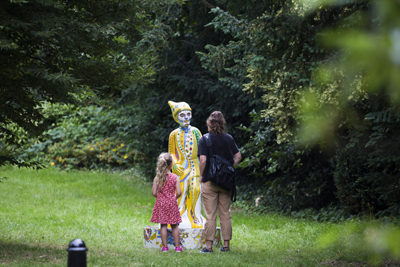
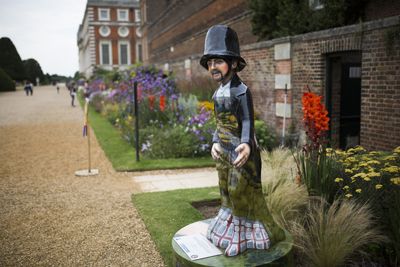
Fifteen gnomes have taken up residence in Hampton Court Palace’s gardens for the next couple of months and they’re feeling particularly chatty. The gnomes have been specially designed by local community groups and each reflects a unique aspect of the palace landscapes. They also each have a unique tale to tell through the voice of Umbriel, a gnome who starred in Alexander Pope’s epic poem, The Rape of the Lock, which was set at Hampton Court Palace (in fact it was the first time the word gnome appeared in English). Umbriel, voiced by actor Stephen Mangan, will regale visitors with tales from the palace’s rich history – from the time a mole unhorsed King William III through to the time a periwig was left behind by its owner in the maze (the stories were all written by schools and community groups for the project as well as children’s author Francesca Simon, poet Michael Rosen, and Historic Royal Palace’s joint chief curator Lucy Worsley). The gnomes (and Umbriel) can be experienced until 2nd October. For more, see www.hrp.org.uk/hampton-court-palace/. PICTURES: Courtesy HRP
 Exploring London