Around London – West End’s VIP day; National Curry Week; Kenwood House to close for repairs; and Horatio’s handwriting…

• Oxford Street and Regent Street in London’s West End will be closed to cars and buses this Saturday (27th November) as part of the sixth annual West End VIP Day. The day, which is sponsored by American Express,  will also bring singers, entertainers and celebrities hit the streets as they fundraise for the Starlight Children’s Foundation. Other entertainment will include a seven foot climbing wall on Regent Street, giant TV screens, fair ground style rides and the chance to climb inside a lifesize snow globe. Runs from 9am to 10pm. For more information, see www.westendlondon.com/vip.

• This week was National Curry Week, so to celebrate, we thought we’d tell you about London’s oldest curryhouse (in fact it’s said to be the oldest in the UK). Veeraswamy was founded in 1926 at its current location of 99 Regent Street (entry via Swallow Street) by, according to the restaurant’s website, “the great grandson of an English General, and an Indian princess”. Customers are said to have included Indira Gandhi, Charlie Chaplin, King Hussein of Jordan and Marlon Brando. See www.nationaleatingoutweek.com or www.veeraswamy.com.

• Kenwood House in Hampstead, north London, is set to undergo major repair and conservation works meaning the house will be closed to the public from early summer 2012 for just over a year. The grounds will remain open. The current house was designed by Robert Adam and built over the period of 1762 to 1779 for William Murray, 1st Earl of Mansfield and the Lord Chief Justice. It now houses a collection of paintings bequeathed to the nation in 1927 by Edward Cecil Guinness, 1st Earl of Iveagh, which includes works by Rembrandt, Vermeer, Gainsborough and Turner. For more information, see www.english-heritage.org.uk/daysout/properties/kenwood-house/.

• On now: Compare Horatio Nelson’s handwriting before and after he lost his right arm in battle at a special showing of two of his letters at the Wellcome Collection tomorrow night (26th November). The letters are part of Hands: Amazing Appendages, a one night only show. There will also be the chance to try out some nail art, try out some surgeon’s tools and hear talks and see performances. Admission is free (but some talks and performances will be tickets – tickets available on the night only from 7pm). See www.wellcomecollection.org/whats-on/events/hands.aspx.
 

Around London – New VC gallery at Imperial War Museum; Roman remains unearthed at Syon Park; and, High Society at the Wellcome Collection…

• An exhibition containing the world’s largest collection of Victoria Crosses has opened at the Imperial War Museum, housed in what is the museum’s first new major permanent gallery for 10 years. The Extraordinary Heroes exhibition – housed in the Lord Ashcroft Gallery – contains his Lordship’s collection of 162 Victoria Crosses, awarded for parts played in wars stretching from the Crimean to the Falklands, displayed alongside the 48 Victoria Crosses and 31 George Crosses already held by the museum. As well as the awards, the new gallery will display many objects for the first time, including a badly damaged backpack worn by Lance Corporal Matt Croucher when he leapt on a grenade during action in Afghanistan in 2008 to save the lives of his fellow soldiers (he survived as well), and the diving suit worn by Acting Leading Seaman James Magennis who won a VC for his role in placing limpet mines in the Johore Straits in World War II. The gallery was paid for with a £5 million donation from Lord Ashcroft. Admission is free. For more information, see www.iwm.org.uk.

• The remains of a Roman settlement have been unearthed at historic home, Syon Park, in London’s west. Archaeological experts from the Museum of London have already removed around 11,500 pieces of pottery, jewellery and about 100 coins from the site on the Syon Park estate. Syon Park, the home of the Duke of Northumberland, sits on the northern bank of the Thames, opposite Kew Gardens. The site was excavated in 2008 in preparing for the construction of a new luxury hotel there. Some of the artefacts will go on display at the new hotel, the London Syon Park, A Waldorf Astoria Hotel, which will open early next year. The settlement, which includes a Roman road and burials, was discovered only half a metre below ground level. For more information on the property, see www.syonpark.co.uk.

• Now on: From an early morning coffee in European cities to chewing betel nut in Asia, the Wellcome Collection’s major winter exhibition, High Society, traces the role mind-altering drugs have played in history and culture. The display includes more than 200 exhibits, from an 11th century manuscript written by monks in Suffolk detailing poppy remedies, to a 17th century account by Captain Thomas Bowrey describing his crew’s experiments with the cannabis drink bhang, and an account of NASA’s experiments with intoxicated spiders. Admission is free. The exhibition runs until 27th February. For more information, see www.wellcomecollection.org.

Around London – Lord Mayor’s Show tomorrow; Book of the Dead at British Museum; and Evolving English at the British Library

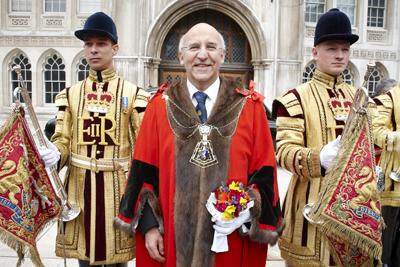
• The Lord Mayor’s Show is tomorrow. The world’s oldest civic procession, it’s been held for 795 years (the last time it was interrupted was due to the Duke of Wellington’s funeral) and commemorates the day when the newly elected Mayor had to make the journey from the City to Westminster to declare his allegiance to the monarch. This year’s Lord Mayor of the City of London – the City’s 683rd – is Alderman Michael Bear (not to be confused with the Mayor of London Boris Johnson). The procession kicks off at 11am and travels from Mansion House to St Paul’s Cathedral, where the Lord Mayor, who formally took office yesterday in a silent ceremony held at Guildhall, is blessed. The procession then moves on to the Royal Courts of Justice where the Lord Mayor swears an oath of allegiance before returning to Mansion House via Victoria Embankment. This year the procession will involve from than 6,000 people from livery companies, military units, marching bands, local schools and businesses and community groups as well as 200 vehicles, 21 carriages – including, of course, the Lord Mayor’s State Coach – and 71 floats. Don’t forget to hang around for the fireworks. For more about the event – where to stand and what you’ll be seeing, see www.lordmayorsshow.org.

PICTURE: Alderman Michael Bear on the occasion of his election as the 683rd Lord Mayor of London. Courtesy Lord Mayor’s Show.

•  Now On: The British Museum exhibition, Journey through the afterlife: ancient Egyptian Book of the Dead, was launched last week. The exhibition centres on the museum’s collection of Book of the Dead papyri, many of which have never before been put on display to the public. They include the Greenfield Papyrus, which at 37 metres long is the longest Book of the Dead in the world and has never been displayed in its entirity before. The display also features famous paintings from the papyri of Ani and Hunefer and an array of painted coffins, gilded masks, amulets, jewellery, tomb figurines and mummy trappings. Runs until 6th March. For more information, including admission prices, see www.britishmuseum.org.

• Now On: A new exhibition exploring the development of the English language opens today at the British Library. Evolving English: One Language, Many Voices looks at how the language has evolved from Anglo-Saxon runes to modern day rap and where it’s headed next. Highlights of the exhibition include the first book printed in English, Recuyell of the Historyes of Troye (printed by William Caxton), a 1611 King James Bible, Poor Letter H – a pamphlet dating from 1854 explaining why pronouncing your h’s correctly is important to climbing the social ladder, and the earliest surviving copy of Beowulf. On until April 3rd. Admission is free. For more information, see www.bl.uk.

Favourite Places – The Museum of London’s Lynne Connell revisits Greenwich

In the first of a new series looking at some of the favorite historical places of Londoners, Lynne Connell, a host at the Museum of London, nominates Greenwich…

“When I was a child my grandparents took me to Greenwich for the day.  I remember being very impressed with Admiral Nelson’s uniform (complete with blood stains) and the haunted tulip staircase in the Queen’s house. While we sat and ate cheese and onion crisps in front of the Cutty Sark, my Grandmother (who was a little eccentric) told me ‘there is so much history here you can feel it’.

“So what can you see in Greenwich today?

“You can visit the Greenwich Observatory, stand on the Meridian line and know you are in the centre of the world! Admission is free there, as well as the National Maritime Museum and the Queen’s House. You can also see the magnificent Wernher collection at Ranger’s House (free to members of English Heritage) and don’t forget the tiny Fan Museum.

“A favourite lazy Sunday morning, includes a stroll in the Royal Park to visit the deer enclosure, a leisurely coffee in one of the two cafes and a visit to the craft market.

“The remains of a Roman villa can be seen in the park and you can visit Princess Caroline’s bath. Don’t miss Queen Elizabeth’s oak, Henry VIII is reputed to have courted Anne Boleyn under the boughs of his ancient hollow tree. It fell during high winds in the 1990’s and is now slowly rotting away.

“Look down from the Observatory Gardens upon the magnificent Royal Naval College and go to visit the beautiful painted hall. Remember, beneath the college lie the remains of the Royal Palace of Placentia, birth place of Henry VIII and Elizabeth I.

“It is easy to get to Greenwich by over ground train, DLR or (to really pick up the atmosphere) by river boat.

“It is more than 40 years since my introduction to the history of Greenwich, and perhaps I am becoming a little eccentric myself, but my grandmother was right, you really can ‘feel the history’.”

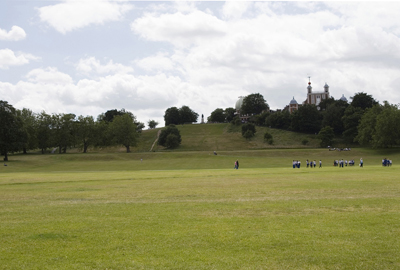
PICTURE: Greenwich Park, © Anne Marie Briscombe (Royal Parks)

Around London – where did you go last weekend?

Exploring London visited the home of 19th century artist Lord Frederic Leighton in Kensington last weekend as part of Open House London.

Built over a period of more than 30 years from 1864 until Lord Leighton’s death in the home in 1896, the house is a monument to the decorative arts with a series of intricately decorated halls and rooms including the superb domed ‘Arab Hall’ featuring tiles brought from Damascus in Syria and an overhanging lattice window from Egypt.

The house, which once hosted Queen Victoria as well as nineteenth century luminaries poet Robert Browning and artist William Morris, was preserved as a museum as far back as 1900 and is now in the care of the Royal Borough of Kensington and Chelsea.

WHERE: 12 Holland Park Road (nearest tube station is High Street Kensington); WHEN: 10am to 5.30pm, closed Tuesdays; COST: £5 adult, £1 concessions ( with free return entry within 12 months); WEBSITE: www.rbkc.gov.uk/subsites/museums/leightonhousemuseum.aspx

So where did you go as part of Open House London and what was good about it? Share your experiences with us here…

Around London…

• A 9 ft (2.7 metre) tall bronze statue of Air Chief Marshal Sir Keith Park, commander of the RAF in London and the south-east during the Battle of Britain, was unveiled in Waterloo Place, just off Pall Mall, this week. Sir Keith, a New Zealander who joined the RAF after fighting at Gallipoli and the Somme during World War I, was described as the “brain” behind London’s air defences. The unveiling of the statue on Battle of Britain Day (12th September) follows a three year campaign to honor Sir Keith, who died in 1975, with such a monument. A prototype of the statue occupied the Fourth Plinth at Trafalgar Square for six months after it was unveiled in November last year. For more information, see www.sirkeithpark.com.

• Spend a night at the museum (well, part of one anyway). The Natural History Museum is opening its doors for one night only as part of European Researchers’ Night on Friday, 24th September. Scientists will be on hand to chat and there will be opportunities to see rare specimens not usually on display including a giant squid. There will also be three bars offering drinks and food. The event, which we can promise won’t include you being chased down hallways by dinosaur skeletons, runs from 4pm – 10pm. For more information, see www.nhm.ac.uk.

• Don’t forget! Open House London kicks off this weekend. For more information, see last week’s Around London post.

10 sites in London you may not know about – 7. Geffrye Museum

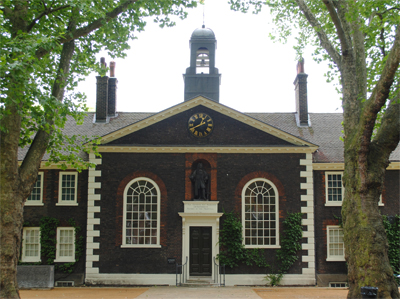
Tucked away just north-east of the city of London, this surprisingly interesting museum features reconstructed interiors of London homes from the 1600s through to modern times. The museum is located in former almhouses built in the early 1700s by the Company of Ironmongers using a bequest left them by Sir Robert Geffrye, a former twice-master of the company and a former Lord Mayor of London.

Worth visiting for the almhouses alone, these were used until early in the 20th century when, given the overcrowding in Shoreditch, the company decided to relocate the remaining pensioners. Thankfully, due to the fact that the almshouses were built around a large garden not to mention the lack of public open space in the area, the almhouses and grounds were preserved; the former to be used as a museum.

The museum itself features a series of informational rooms between those in which the lavishly detailed reconstructions – which are largely of the main living rooms – are contained and there’s an audio guide which is well worth taking the time to listen to as you work your way through. There’s also a restaurant and special exhibition spaces on site (contained in a modern wing opened in 1998) and preserved within the museum are the chapel once used by the pensioners and the promenade which overlooks gardens at the rear.

For those who want a closer look at what life was like for the pensioners, for a £2 fee you can take a tour of one of the former almshouses which has been restored to show the living conditions of the almhouses in the 18th and 19th centuries. At the rear of the museum, meanwhile, lies some magnificent gardens including a walled herb garden filled with herbs from Roman times onward and a series of ‘period garden rooms’. Keep an eye out as well for the statue of Sir Robert which adorns the front of the building.

WHERE: 136 Kingsland Road, Shoreditch. Nearest tube is Liverpool Street or Old Street (a fair walk) or Hoxton Overground Station (next door); WHEN: Tuesdays to Saturdays, 10am-5pm or Sundays and Bank Holidays, 12-5pm; COST: Free (admission to almhouses £2 at set times during the day); WEBSITE: www.geffrye-museum.org.uk

10 sites in London you may not know about – 4. Sir John Soane’s Museum

Sir John Soane’s Museum is still unknown to many but that is starting to change as growing numbers of tourists descend upon the property at Lincoln’s Inn Fields (as evidenced by the queues you can now often find waiting patiently outside).

The museum is housed in the former home of noted architect and collector, Sir John Soane, who left it to the nation after he died in 1837 by an Act of Parliament with the caveat that it be kept “as nearly as circumstances will admit in the state” it was on his death.

Sir John, born the son of the bricklayer in Oxfordshire in 1753, rose to become a famous – and somewhat controversial – architect, his most famous contribution being the Bank of England.

Having married into money – his wife, Elizabeth Smith was the daughter of a wealthy builder whose fortune he inherited, Sir John bought 12 Lincoln’s Inn Fields in 1792 and subsequently demolished and rebuilt it. In the early 1800s, he bought the property next door, number 13, and again demolished and rebuilt it, and, in the 182os bought number  14, which received the same treatment, eventually creating the delightfully odd and expansive home which now occupies the site.

Sir John was an avid collector of statues, furnishings, paintings and curiosities and the uniquely designed house remains filled with his collections – ranging from the Sarcophagus of Egypt’s Seti I (dating from around 1370 BC) to Sir Robert Walpole’s desk, medieval European stained glass, and William Hogarth’s famous series of paintings, A Rake’s Progress.

This is a museum worth visiting for its sheer eccentricity but it should be noted that it’s not really a place for young children – many of the rooms are small and crowded with artefacts that may just prove too tempting.

WHERE: 13 Lincoln’s Inn Fields. Nearest tube is Holborn. WHEN:10am to 5pm, Tuesday to Saturday; COST: Free to enter (there is a museum tour on Saturdays for £5); WEBSITE: www.soane.org