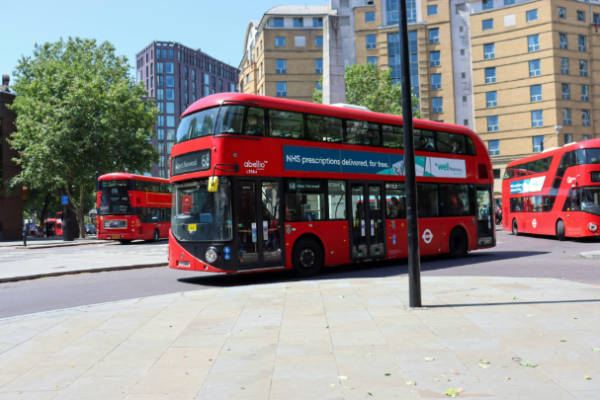
Some of London’s iconic red buses (not one of the images in the exhibition). PICTURE: Dele Oke/Unsplash
• A new photographic display featuring a mix of historical and newly commissioned images has gone on show at the London Transport Museum. The exhibition – Then and now: London’s transport in photographs – marks the 25th anniversary of Transport for London and more than 160 years of transport history within the capital and features 40 photographs exploring how public transport in London has evolved amid social change. As well as historical images drawn from the collection, the display features images taken by photographer and train driver,Anne Maningas. Runs until spring, 2026. Admission charge applies. For more, see www.ltmuseum.co.uk/visit/museum-guide/then-and-now-londons-transport-photographs.
• A display of portraits by acclaimed artist Sir Quentin Blake has gone on show at the Foundling Museum in Bloomsbury.The Foundling Portraits: Quentin Blake features a series of 10 Stabilo watercolour pencil on paper artworks which depict imaginary children created by Blake during a period of self-isolation during the COVID-19 pandemic. The images are among a collection of 45 which were gifted to the museum by Sir Quentin. Admission charge applies. For more, see https://foundlingmuseum.org.uk/event/the-foundling-portraits-quentin-blake/.
• On Now: Prison Nursing Unlocked – A History of Care and Justice.This exhibition at the Royal College of Nursing Library and Museum in Cavendish Square looks at the role of health care in prisons, from the work of early reformers like Elizabeth Fry to the role nurses play today. Co-created with Royal College of Nursing members, it tells the story of the suffragettes who were force-fed in Holloway Prison, the formation of secure hospitals like Broadmoor, and features artwork created by prisoners and nurses at HM Prison Eastwood Park and HM Prison Warren Hill. Runs until 19th December. For more (and a link to the exhibition online), see www.rcn.org.uk/news-and-events/news/prison-nursing-unlocked-exhibition.
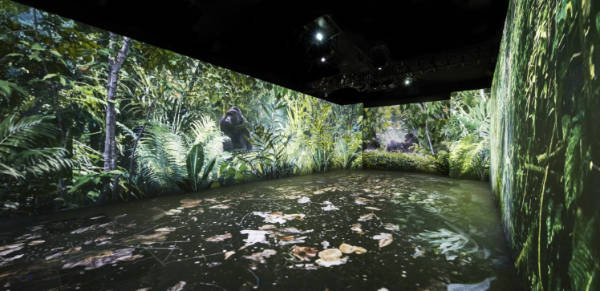
• Our Story with David Attenborough – the first ever immersive experience at the Natural History Museum – opens its doors today. Created by Open Planet Studios, the 50 minute experience in the Jerwood Gallery features animations, projections, real-world footage and full 360 degree immersion as Sir David draws on his life of exploration to tell the story of humanity and the planet on which we live. The experience is taking bookings until 18th January, 2026. Admission charge applies. For more, see www.nhm.ac.uk/visit/exhibitions/our-story-with-david-attenborough.
• The Royal Academy’s 257th Summer Exhibition opened this week. Co-ordinated by internationally acclaimed architect and Royal Academician Farshid Moussavi in conjunction with the Summer Exhibition Committee, this year’s display of art and architecture explores the theme of ‘Dialogues’. Among the works on show is a six metre high installation of ostrich feathers and steel chain by British artist Alice Channer, a 4.5 metre high and seven metre wide wall made from deconstructed matchboxes by Brazilian artist Antonio Tarsis, and installation of textile carcasses by Argentine-American artist Tamara Kostianovsky. Meanwhile, the Annenberg Courtyard hosts a large scale installation by Royal Academician Ryan Gander which features five three metre diameter inflatable balls inscribed with absurd questions developed with children in a representation of the “inquisitiveness of children who ask what grown-up minds often dismiss as nonsensical or illogical”. Runs until 17th August. Admission charge applies. For more, see royalacademy.org.uk.
• The London Transport Museum has launched an appeal for £30,000 to help complete the restoration of three 1930s Q stock Underground carriages. The funds will be used to re-upholster the seats of two of the Underground cars in moquette – the durable, woollen seating material used in upholstery on public transport all over the world. Q stock trains first entered service on the District line in November, 1938, and were retired from service in 1971. The restoration of the three carriages – which aims to restore them to operational condition – has mainly been carried out at the London Transport Museum Depot in Acton, west London. Donations can be made on London Transport Museum’s website: www.ltmuseum.co.uk/make-donation?campaign=qstock
Send all items for inclusion to exploringlondon@gmail.com.
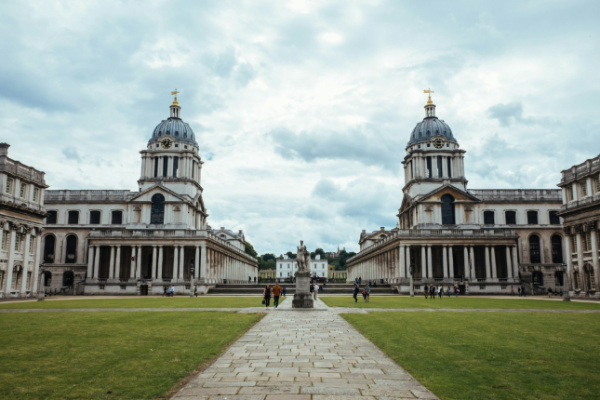
• The Old Royal Naval College in Greenwich is celebrating at 100 years of film and TV at the site and mark the occasion, it’s launched a new film-related tour. The new tour – Wigs, Weddings, Powder and Palaces – looks at where productions such as Bridgerton, The Crown, Pirates of the Caribbean and Les Misérables have been filmed and promises to explore some “closely guarded secrets of filmmaking” as well as letting those on the tour “step in the shoes and onto the set of stars”. The tour, which leaves from the Visitor Centre, also includes a fun and interactive 15-minute class of hand fan etiquette and its secret meanings inspired by the filming of Bridgerton. Charges apply. For bookings, head to https://ornc.org/whats-on/wigs-weddings-powder-and-palaces-film-tour/.
• A major exhibition exploring how design can help the planet thrive by shifting its focus beyond human needs has opened at the Design Museum.More Than Human – the first major exhibition from a growing movement of ‘more-than-human’ design, features more than 140 works by more than 50 artists, architects and designers. They include Japanese artist Shimabuku’s artworks created for octopuses, a new monumental seaweed installation by artist Julia Lohmann, a vast new tapestry that explores the perspectives of pollinators by Alexandra Daisy Ginsberg, and an eight metre long mural by MOTH (More Than Human Life Project) depicting the growing movement to award legal rights to waterways around the world. Runs until 5th October. Admission charges apply. For more, see https://designmuseum.org/exhibitions/more-than-human.
• The UK AIDS Memorial Quilt goes on display in the Tate Modern’s Turbine Hall today. Started around 1989, the work is made of 42 quilts and 23 individual panels which represent 384 people affected by HIV and AIDS. Volunteers from the UK AIDS Memorial Quilt Partnership will be present alongside the Tate’s staff to welcome visitors and on Saturday, at 11am and 2pm, the hall will host live readings of the names. Runs until 16th June. For more, see https://www.tate.org.uk/whats-on/tate-modern/uk-aids-memorial-quilt.
• On Now: Unearthed: The Power of Gardening. This display at the British Library explores the “transformative, enriching and sometimes radical power” of gardening in the UK and the impact it’s had on the nation. Among the items on display is the only surviving illustrated collection of herbal remedies from Anglo-Saxon England (dating from around 1000–25), the first English gardening manual, Thomas Hill’s A Most Briefe and Pleasaunte Treatise (1563), the first mechanical lawnmower (1832), and gardening boots which once belonged to horticulturalist and designer Gertrude Jekyll (1843-1932). Runs until 10th August. Admission charge applies. For more, see https://events.bl.uk/exhibitions/unearthed-the-power-of-gardening.
Send all items for inclusion to exploringlondon@gmail.com
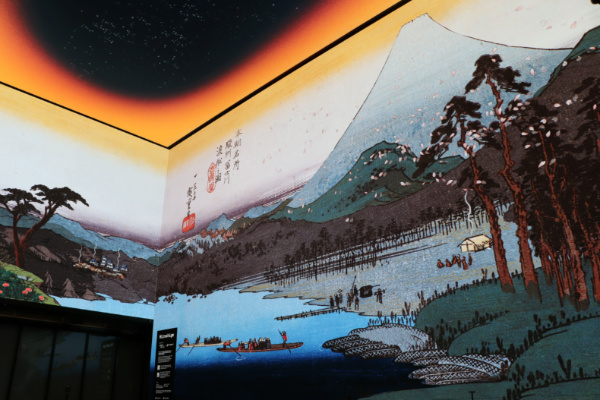
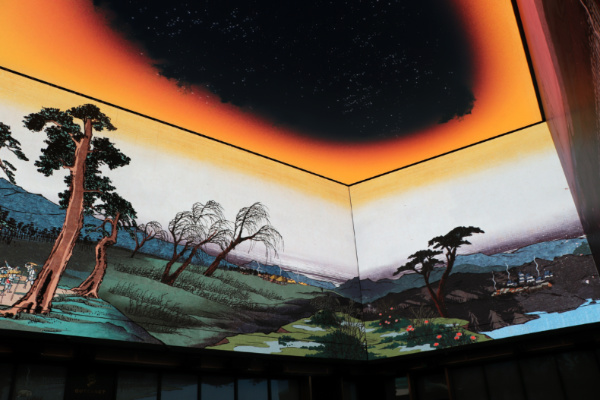
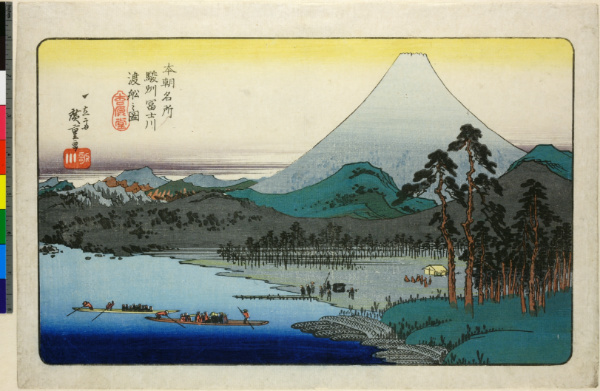
The work of Japanese artist Utagawa Hiroshige has entered the digital realm thanks to a partnership between the British Museum and Outernet London. The collaboration centres on a animated reimagining of Hiroshige’s print Ferry on the Fuji River, Suruga Province from Hiroshige’s Famous Places in Japan series (1832). Using state-of-the-art technology, the installation transforms what was a serene landscape into a large-scale digital experience across Outernet’s 16K wraparound screens. The installation, which can be seen for free in the Now Building until 7th September, complements the British Museum exhibition, Hiroshige: artist of the open road which invites visitors on a journey through Edo Japan. For more, head to outernet.com. For more on the exhibition, see britishmuseum.org/hiroshige.
• The intersection between design and disability is at the focus of a new exhibition at the V&A which opens on Saturday. Design and Disability showcases the contributions of disabled, deaf and neurodivergent people to contemporary culture from the 1940s until now and spans the disciplines of design, art, architecture, fashion and photography. Highlights include: the world’s first commercially made adaptive Xbox controller by Microsoft; photographs by Simon Way which capture the work of Jaipur Foot as it makes free prosthetic legs, feet and arms for millions of people across India; the McGonagle Reader – an audio-assisted voting device to help Blind and low vision people to vote independently; and, the Squeeze Chaise Longue, a red recliner developed by artist Wendy Jacobs, which embraces the sitter between two red mohair arms and provides comforting sensory feedback for those who appreciate deep pressure stimulation. The exhibition in The Porter Gallery at the South Kensington institution runs until 15th February. Admission charges apply. For more, see vam.ac.uk/exhibitions/design-and-disability.
• Eid on the Square returns to Trafalgar Square this Sunday. The free, family-friendly festival, hosted by Deana Soni and Haroon Rashid, will feature traditional and contemporary performances by Nasheed artist Mesut Kurtis, Chand Ali Khan Qawwal & Group, the Indonesian Angklung Ensemble feat HE Dr Desra Percaya, and children’s entertainers Omar & Hana. Halal Tourism Britain are running guided walking tours and presenting a pop-up Muslim Museum of Britain, and there will be workshops including drumming, coconut leaf weaving, calligraphy and poetry at the WAW Creative Arts Family Zone, while Rumi’s Cave – Spearhead Creatives will hosts an interactive tent which blends comedy, music and creative writing. Market stalls will offer books, crafts and jewellery, and the chance to indulge in delicious dishes ranging from Uzbek and Afghan cuisine to Korean fried chicken, churros and much more. Runs from noon to 6pm. For more, see www.london.gov.uk/events/eid-square-2025.
• On Now – James Brimble’s Picture Archive. This free exhibition at the Epping Forest Visitor Centre in Chingford celebrates James Brimble’s 1950 book London’s Epping Forest and includes a range of restored images by James, most of which are previously unpublished, including framed prints and a digital display of around 100 images of Epping Forest and the surrounding areas from the 1950s, 60s and 70s. The display also contains some of the original copper printing plates from his book and supporting material depicting Brimble’s photographic legacy. Can be seen until 28th September. For more, see www.cityoflondon.gov.uk/things-to-do/green-spaces/epping-forest/where-to-go-in-epping-forest/chingford-visitor-centre.
Send all items for inclusion to exploringlondon@gmail.com
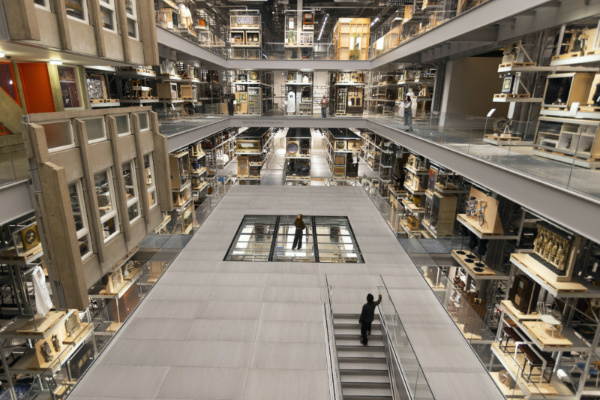
Visitors in the central Weston Collections Hall at V&A East Storehouse, a working store and new visitor attraction from the V&A located in Queen Elizabeth Olympic Park in Stratford, London, opening this Saturday, 31st May. PICTURE: David Parry/PA Media Ass
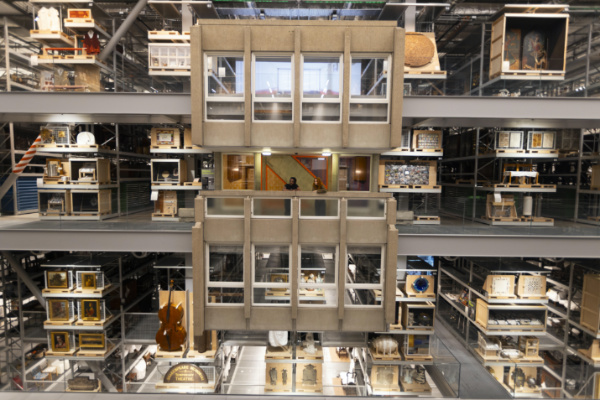
• The V&A East Storehouse opens to the public for the first time in Queen Elizabeth Olympic Park this Saturday. The venue features more than 100 mini-displays centred on the themes of ‘Collecting Stories’, ‘Sourcebook for Design’ and ‘The Working Museum’ and boasting more than 1,500 items from across the V&A’s collections with works by Hew Locke, Zaha Hadid, Daniel Liebskind and Thomas Heatherwick’s London 2012 Olympic cauldron model among those featured. A massive 11-metre-wide stage cloth designed by Pablo Picasso for the Ballets Russes’ 1924 production, Le Train Bleu, will be displayed for first time in more than 10 years while among large scale objects are a section of the now-demolished housing estate, Robin Hood Gardens, and Frank Lloyd Wright’s 1930s Kaufmann Office – the only Frank Lloyd Wright interior outside of the US. Anyone can book access to any object in the storehouse for free via the ‘Order an Object’ process and the venue is also hosting a series of live events including back2back: Archival Bodies, and new programming strand, A Life in the Work of Others– featuring Turner-Prize-winning artist, Jasleen Kaur. Admission to the Storehouse at Queen Elizabeth Olympic Park in Stratford, is free. For more, see www.vam.ac.uk/east.
Visitors looking at a two-storey section of Robin Hood Gardens, at V&A East Storehouse, a working store and new visitor attraction from the V&A located in Queen Elizabeth Olympic Park in Stratford, London, opening this Saturday, 31st May. PICTURE: David Parry/PA Media Assignme
• The home where novelist Barbara Pym began writing her celebrated 1952 novel Excellent Women has been given an English Heritage Blue Plaque. Pym lived at the second floor flat at 108 Cambridge Street in Pimlico with her sister Hilary between November 1945 to autumn 1949. It was from a corner room, overlooking Warwick Square and St Gabriel’s Church, that she meticulously recorded her observations, and laid the groundwork for her distinctive literary voice. Her work during this period also included revising the text for her first published novel, Some Tame Gazelle (1950). In March, three more Blue Plaques were unveiled commemorating women: Una Marson (1905–1965), the BBC’s first Black woman producer at The Mansions, Mill Lane in West Hampstead where she lived from at least 1939 to 1943; and, Rhoda Garrett (1841–1882) and Agnes Garrett (1845–1935), at 2 Gower Street in Bloomsbury where they founded Britain’s first female-run interior-decorating business. For more, see www.english-heritage.org.uk/visit/blue-plaques/.
• A free family trail inspired by Jessie Burton’s new children’s book, Hidden Treasure, has launched at the London Museum Docklands. Inspired by the tale of two young mudlarks, the trail takes families on a journey around the museum’s galleries to learn more about centuries of life by the river. It’s aimed at children under 12-years-old, who also have free entry into the museum’s mudlarking exhibition, Secrets of the Thames. For more, see www.londonmuseum.org.uk.
Send all items for inclusion to exploringlondon@gmail.com
• A first-of-its-kind exhibition at the Imperial War Museum in Lambeth aims to shed light on sexual violence in conflicts.Unsilenced: Sexual Violence in Conflict features case studies which span the period from the World War I to today and examines how and why sexual violence is perpetrated, its impact on victims and survivors and the pursuit of justice and reconciliation. The exhibition features some 162 objects, including never-before-seen items, as well as testimonies and interviews with experts such as Christina Lamb, journalist and author of Our Bodies, Their Battlefield: What War Does to Women, and Sarah Sands, journalist and former chair of the G7 Gender Equality Advisory Council. The display also highlights the ongoing work of four NGOs working in the field of sexual violence: Women for Women International, All Survivors Project, Free Yezidi Foundation and Waging Peace. The free display opens on Friday and runs until 2nd November. For more, see www.iwm.org.uk/events/unsilenced-sexual-violence-in-conflict.
• The origins of three of the world’s major religions – Hinduism, Buddhism and Jainism – and their practice today are explored through a new exhibition of sacred art at the British Museum.Ancient India: living traditions features more than 180 objects including sculptures, paintings, drawings, and manuscripts. Among the objects on show is a statue of the elephant-headed god Ganesh made of in Java from volcanic stone, dating from about AD 1000–1200, while among the stories told in the display are how depictions of Buddha have changed over time while those of Hindu goddess Lakshmi have remained relatively unchanged. Runs until 19th October in The Sainsbury Exhibitions Gallery. For more, see www.britishmuseum.org.
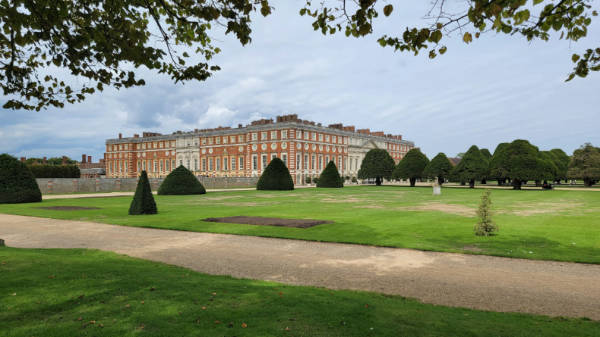
• The circus and street performance are coming to Hampton Court Palace this weekend for a three day family-friendly festival featuring live music, acrobatics and physical theatre. Featuring performers from Cirque Bijou, the Big Bahooey will, as well as breathtaking stunts, slapstick comedy and interactive performances, feature hands-on workshops where you can learn skills such as juggling, wire walking or spinning plates. Entrance is included in palace admission. Runs from 24th to 26th May. For more, see www.hrp.org.uk/hampton-court-palace/whats-on/the-big-bahooey/.
Send all items for inclusion to exploringlondon@gmail.com
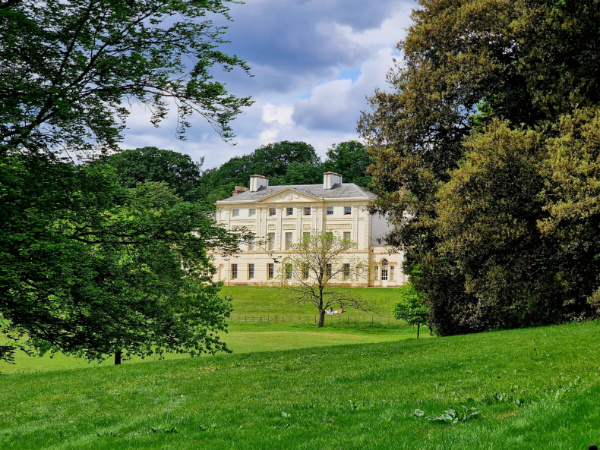
• An exhibition marking the centenary of the death of painter John Singer Sargent (1856-1925)opens at Kenwood House tomorrow. Heiress: Sargent’s American Portraits focuses on a series of portraits of women who married into British and European aristocracy and who were once dismissively referred to as the “Dollar Princesses’. They include a war-time nurse, a helicopter pilot and the first sitting female MP. Among the works on show are Kenwood House’s portrait of Daisy Leiter, a Chicago heiress who married the Earl of Suffolk and Berkshire; a portrait of Edith, Lady Playfair, from the Museum of Fine Art, Boston; and a portrait of Mrs Joseph Chamberlain from the National Gallery of Art in Washington, DC. Runs until 5th October. Admission charge applies. For more, see https://www.english-heritage.org.uk/visit/whats-on/kenwood-heiress-exhibition-16-may–5-oct-2025/.
• A new experiential space to help children and their families journey through the British Library’s collection opens tomorrow.Story Explorers takes children on a journey, directed by Daisy the library cat, through four distinct environments – a library, the far reaches of outer space, a jungle and the bottom of the ocean floor – and features sound recordings, artworks, prints and books from across the world. Among the objects they’ll encounter are Victorian record from the Library’s Sound Archive featuring animal sounds, one of the first photographs taken of the Moon, an Arabic astrological and astronomical handbook from the Middle Ages and one of the earliest printed Japanese works that captures the anatomy of a whale. The free space is open for children aged two to nine and their families until 18th January. Booking is essential. For more, see https://events.bl.uk/exhibitions/story-explorers.
• Narrative, humour and nostalgia are explored into a new display at the Heath Robinson Museum in Pinner.Ways of seeing; Narrative-Humour-Nostalgia, which opens on Saturday, features painting, sculpture, video, soundscapes, and augmented reality to show how artists continue to use storytelling, satire, and memory to “provoke thought, entertain, and challenge perceptions”. Artists represented include Glenn Baxter, Sir Peter Blake, Chila Burman, Peter Coyte, Adam Dant, David van Eyssen, Nicky Hirst, Patrick Hughes, John Humphreys, Harland Miller, Heath Robinson, Richard Wilson, and Ronnie Wood. Runs until 19th July. Admission charge applies. For more, see https://www.heathrobinsonmuseum.org/whats-on/ways-of-seeing-narrative-humour-nostalgia/
Send all items for inclusion to exploringlondon@gmail.com
• VE Day commemorations continue in London this week with an Evensong service to be held outside St Paul’s Cathedral this evening. The service to commemorate the 80th anniversary of the end of the war in Europe will be held between 5pm and 6pm. Following the service will be a lamp-lighting ceremony and blessing on the cathedral’s west steps with the cathedral bells being tolled as part of a national bell-ringing at 6:30pm. A replica of a World War II Spitfire can also be seen in front of the West Steps. The service is free and unticketed – entry is via Paternoster Square. For more, see www.stpauls.co.uk/whats-on/special-evensong-to-commemorate-80th-anniversary-of-end-of-second-world-war-in-europe-ve80.
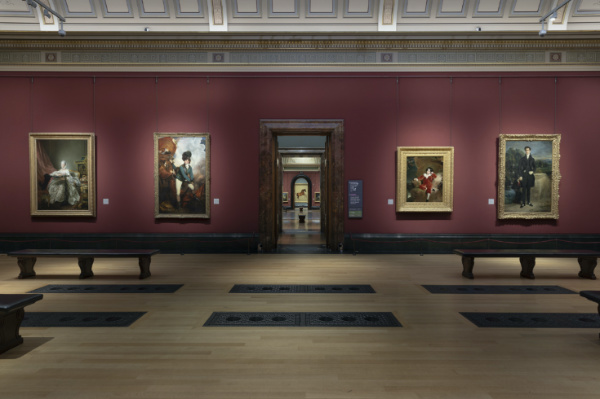
• A major redisplay of the National Gallery’s collection – created as part of its bicentenary celebrations – can be seen from Saturday. C C Land: The Wonder of Art, which coincides with the opening of the transformed Sainsbury Wing after more than two years of building works, features more than 1,000 works and traces the development of painting in the Western European tradition from the 13th to 20th centuries. Among the works displayed are the Coronation State Portraits, commissioned from the artists Peter Kuhfeld and Paul S Benney and unveiled by King Charles III and Queen Camilla this week, which will be on display until 5th June when they will be moved to the Throne Room at Buckingham Palace. There are also newly restored works including the Pollaiuolo brothers’ The Martyrdom of San Sebastian and Jan van Eyck’s Portrait of a Man (Self Portrait?) and newly acquired works such as Eva Gonzalès’ The Full-length Mirror (about 1869‒70), Sir Lawrence Alma-Tadema’s After the Audience (1879) and Nicolas Poussin’s Eucharist (about 1637‒40) – one of the greatest paintings of the Last Supper. Meanwhile, a series of rooms have been dedicated to the work of individual artists including the likes of Titian (active about 1506‒1576), Rembrandt (1606‒1669) and Monet (1840‒1926) and one part of the new display focuses on King Charles I (1600‒1649) as a collector of art and includes major loans from the Royal Collection. Finally, in a first for the gallery, Segna di Bonaventura’s Crucifix (about 1310‒15) has been suspended from the gallery’s ceiling, enabling today’s audiences to view the work in the way it would have been seen in the 14th century. Entry to the gallery is free. For more, see nationalgallery.org.uk.
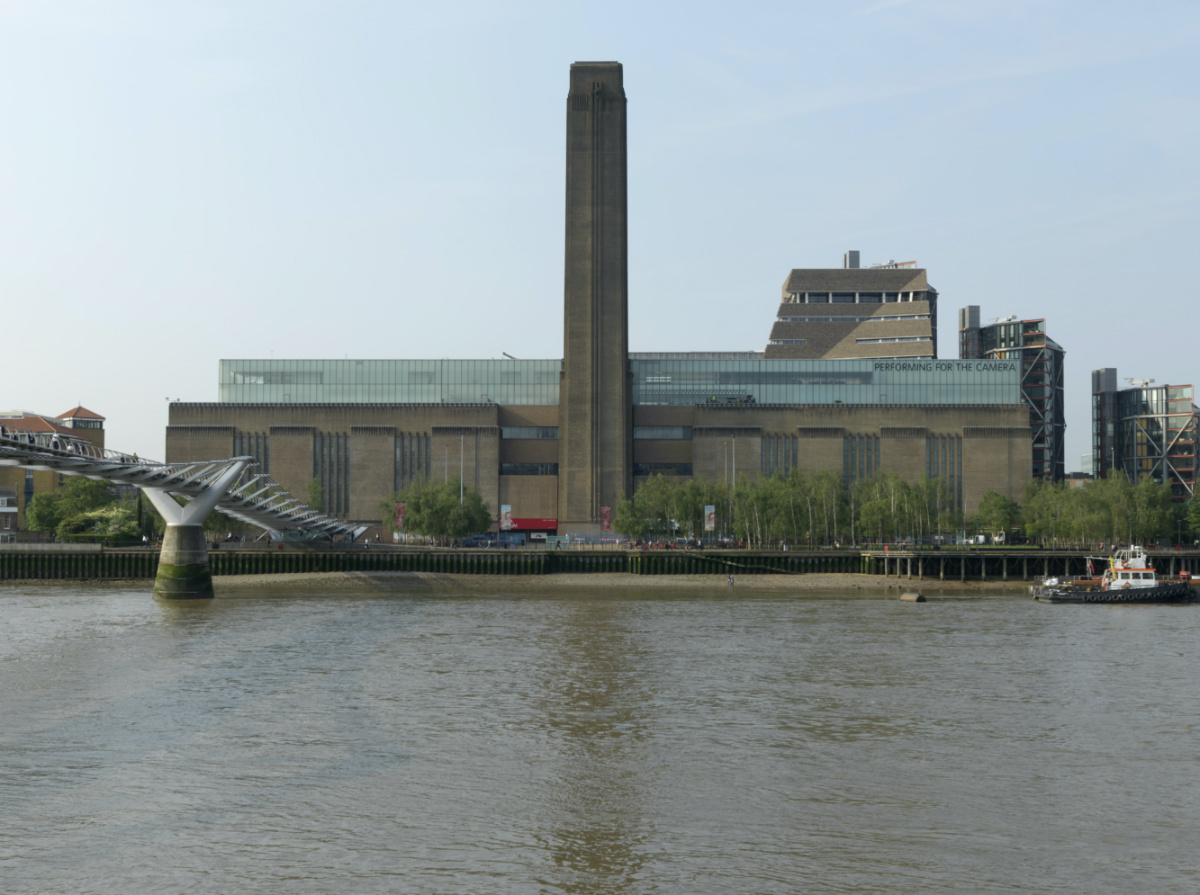
Tate Modern. PICTURE: Courtesy of the Tate Modern.
• The Tate Modern is celebrating 25 years this weekend with four days of festivities starting from tomorrow (Friday). A number of recent additions to Tate’s collection will go on display around the building for the anniversary and some of the most iconic works from Tate Modern’s history are coming back including Louise Bourgeois’s 10 metre high bronze spider Maman which was the first work to greet visitors when Tate Modern opened in 2000. Other returning works include Mark Rothko’s Seagram murals and Dorothea Tanning’s Eine Kleine Nachtmusik while among contemporary works being highlighted over the weekend is an immersive multi-screen film installation by Nalini Malani. Two new exhibitions are also open for the anniversary weekend – A Year in Art: 2050 whichexplores how artists imagine possible futures, and, Gathering Ground which features international contemporary art united by a deep connection to land and community. The weekend also features live music and performances, pop-up talks and tours, and special food and drink offers. For more, see https://www.tate.org.uk/whats-on/tate-modern/birthday-weekender.
Send all items for inclusion to exploringlondon@gmail.com
• An exhibition exploring the art and legacy of Japanese artist Hiroshige opens at the British Museum today.Hiroshige: artist of the open road takes visitors on a “lyrical journey” through Edo-period Japan, exploring both natural landscapes and urban life as well as considering Utagawa Hiroshige’s (1797– 1858) lasting influence on modern and contemporary art. The display marks the major gift of 35 Hiroshige prints to the American Friends of the British Museum from the collection of Alan Medaugh, a leading US collector of the artist’s work with these works being shown alongside 82 Hiroshige prints loaned by Medaugh and other works. Among them are the series Fifty-three Stations of the Tōkaidō Highway (1833–35), One Hundred Famous Views of Edo (1856–58) and Eight Views of Stations along the Main and Secondary Roads (about 1839) as well as examples of his famous bird-and-flower prints Runs in the Joseph Hotung Great Court Gallery (Room 35) until 7th September. Admission charge applies. For more, see britishmuseum.org/hiroshige.
• The 80th anniversary of World War II is being marked with a new display of ceramic poppies in the Tower of London. Almost 30,000 poppies, previously seen in Paul Cummins’ 2014 artwork, Blood Swept Lands and Seas of Red, are being used in the new installation designed by Tom Piper. Opens on 6th May in advance of the 80th anniversary of VE Day, marking the official end of the World War II in Europe, on 8th May. Included in admission with a small section visible from the public footpath. For more, see www.hrp.org.uk/tower-of-london/whats-on/tower-remembers-2025.
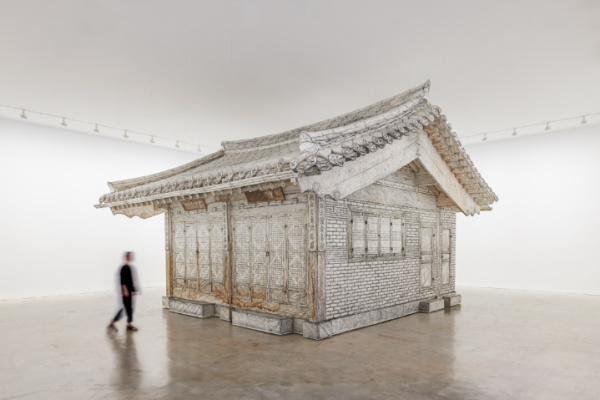
• The large-scale installations, sculptures, videos and drawings of artist Do Ho Suh are going on show at the Tate Modern from today. The Genesis Exhibition: Do Ho Suh: Walk the House, the title of which comes from a Korean expression referring to the hanok – a house that could theoretically be disassembled, transported and reassembled at a new site, includes works from across three decades. They include the new installation Nest/s (2024) and Perfect Home: London, Horsham, New York, Berlin, Providence, Seoul (2024), Who Am We? (2000_ – a mosaic of tens of thousands of tiny portrait photographs collected from sources including school yearbooks, and his major Rubbing/Loving Project: Seoul Home (2013-22) project. Runs at the Bankside institution until 19th October. Admission charge applies. For more, see tate.org.uk.
Send all items for inclusion to exploringlondon@gmail.com
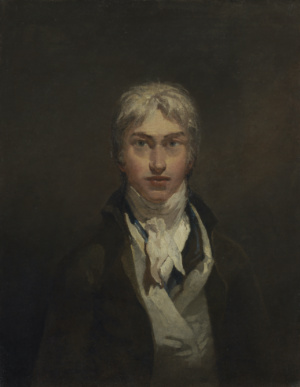
JMW Turner, ‘Self-Portrait’, c1799, PICTURE: Courtesy of Tate
• A new room dedicated to the watercolours and drawings of painter JMW Turner has opened at the Tate Britain to mark the 250th anniversary of his birth. The new room at the Millbank gallery, whichfeatures some of the more than 100 works by Turner on display in the gallery, includes the earliest Turner in Tate’s collection, made when he was only 12-years-old, as well as a dramatic image of a building on fire, long thought to be the Houses of Parliament but now revealed to in fact be the Tower of London. The display draws on the latest research developed in preparing a new catalogue of Turner’s 37,500 works on paper which, to be completed this year, will be freely accessible on Tate’s website from November and offers a news insight into the artist’s ideas and methods. Further events related to Turner are planned for later this year. The new room can be seen daily. Entry is free. For more on how the Tate is marking the Turner anniversary, see tate.org.uk/turner-250.
• The stories of enslaved people – whose labour fuelled 19th century postal ships between the UK and the Caribbean – are explored in an exhibition at the Postal Museum in Clerkenwell. Voices of Resistance: Slavery and Post in the Caribbean draws on letters between plantation owners and managers to provide glimpses into the lives of enslaved people who worked on the plantations and celebrates their courageous acts of resistance. The display also features a movie by filmmaker Emmanual Phillips which honours the Caribbean coal workers involved in refuelling postal ships on the island of St Thomas (and which was created in partnership with Dollar fo’ Dollar, St Thomas-based organisation that works to ensure the legacies of the coal workers live on to inspire people). Entry is included in the museum ticket. Runs until 5th January. For more, see www.postalmuseum.org.
• On Now: The Power of Trees. This exhibition at Kew Garden’s Shirley Sherwood Gallery of Botanical Art celebrates trees and their use as a source of artistic inspiration across cultures and time. The display features a variety of botanical works including 20 newly commissioned botanical artworks created by the artists of the Bedgebury Florilegium Society and Horizontal – Vaakasuora, a spectacular cinematic installation from Finnish artist Eija-Liisa Ahtila. Entry is free with Kew Gardens admission. Runs until 14th September. For more, see www.kew.org.
• The Lindt GOLD BUNNY hunt has returned to Hampton Court Palace this Easter. People visiting the palace can seek out the gold bunnies hidden around the gardens – currently also the location of the Tulip Festival – and those children who believe they have found them all will be rewarded with a chocolate treat. Included in general admission. Runs until 21st April. For more, see https://www.hrp.org.uk/hampton-court-palace/
• A free, family-friendly event celebrating England’s rich heritage through music, dance, and workshops will be held in Trafalgar Square on Monday to mark St George’s Day. The event, which runs from noon to 6pm, will be hosted by singer-songwriter Harleymoon Kemp and includes performances by The Nigel Grice Jazz Collective, the English Folk Dance and Song Society, singer-songwriter Matilda Garcia, South London-based dance company Bird and Gang, spoken word artist Palacio de Poetas, West End Kids, and harmony group Vocal Shack. St George and the famous Dragon will also be roaming the square and the event also features traditional Morris dancing from the Belles of London City, the chance to meet the Pearly Kings and Queens and a closing ceilidh led by Cut A Shine, a troupe of traditional musicians and dancers. There will also be a variety of food and beverage stalls. For more, see www.london.gov.uk/events/st-georges-day-2025
• The British Library’s ‘Food Season’ – featuring a programme of live talks, panel discussions, workshops, and exclusive tastings – kicks off today. Now in its seventh year, events include a conversation with cookery icon Dame Prue Leith who will be talking about her life in food with journalist Jimi Famurewa, an expert panel discussion on the impact of weight-loss injections on our society, a contribution from cult food magazine Vittles looking at the point of a cookbook?, and a conversation between chef Nadiya Hussain and celebrated author Candice Brathwaite. There’s also an event celebrating the late Californian feminist food writer, MFK Fisher, with her daughter, Kennedy Golden, Alastair Harper from band Extradition Order (who will be performing as part of the event) and authors Rebecca May Johnson and Gurdeep Loyal. The final weekend (31st May to 1st June) will feature the ‘BIG WEEKEND’, a two day celebration of food through words, sounds, cultures, ideas and tastings. For tickets and the full programme of events, head to https://events.bl.uk/whats-on/food-season.
CCambridge took the honours over Oxford in both the men’s and women’s races as well as both reserve races and the lightweight men’s and women’s races in the annual rowing event on the River Thames in west Londonon Sunday.
The Cambridge women’s team, wearing the light “duck egg” blue, celebrate their win over the Dark-Blues (Oxford). ALL PICTURES: Courtesy of Row360
The Light-Blues won the men’s race by five-and-a-half lengths – their sixth victory in seven years, while the women won by two-and-a-half lengths in their eighth consecutive win.
Cambridge celebrations.
There was controversy when the women’s race had to be restarted – the first time its happened on the Championship Course (the women’s race moved there in 2015 having earlier been held at Henley-on-Thames and before 1977 on the River Isis in Oxford and the Cam in Cambridge – and history was also made in the men’s race with Sarah Winckless the first female umpire.
The crowd along the River Thames shoreline at Barnes.
The first men’s race was held in 1829 and the first women’s in 1927. It takes place over what is known as the Championship Course which covers 4.25 miles between Putney and Mortlake.
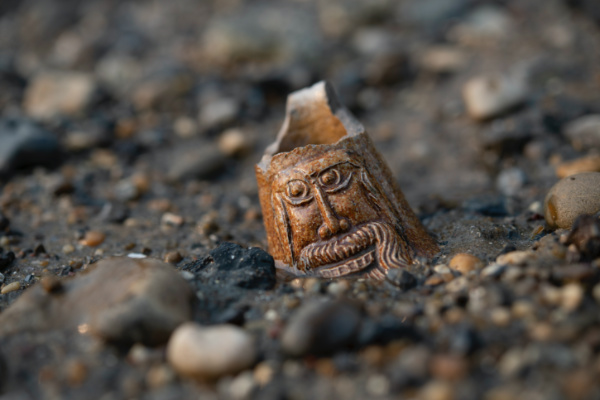
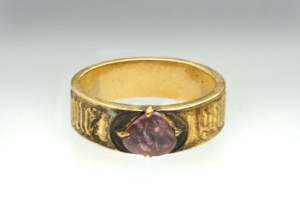
• The first major exhibition on mudlarking opens at the Museum of London Docklands tomorrow. Secrets of the Thames: Mudlarking London’s lost treasures features some of the fascinating finds made along the Thames foreshore – from a Tudor head-dress and a medieval gold ring to an an elaborately decorated Viking era dagger and a pair of 18th century false teeth. While mudlarking was historically an activity of the poor, often children, during the 19th century, it has evolved into a popular hobby for some (albeir permits are required) and in recent years led to some spectacular finds. Others among the more than 350 objects on show include a 16th century ivory sundial, the nationally significant Iron Age Battersea Shield, a pair of medieval spectacles, 16th century wig curlers, and a Roman badge decorated with a phallus. The exhibition also features the installation, The Moon by artist Luke Jerram, which highlights the role the moon and tides play in creating the unique conditions for mudlarks to explore the river’s banks. Admission charge applies. Runs until 1st March next year. For more, see www.londonmuseum.org.uk/whats-on/secrets-thames/.
• The hidden world of MI5 is being revealed in a new exhibition opening at the National Archives in Kew on Saturday.MI5: Official Secrets features original case files, photographs and papers alongside equipment used by spies and spy-catchers during the organisation’s 115 year history. Among the items on show are first-hand account of Kim Philby’s confession in 1963, papers related to the past activities of Cambridge spy Anthony Blunt, M15’s first camera – a pocket-sized ‘Ensignette’ made by Houghton Ltd from 1910, evidence that led to German spy Josef Jakobs being the last person executed at the Tower of London, and, advanced radio equipment found buried in the garden of Soviet spies Helen and Peter Kroger in the 1960s. The exhibition also features video insights from former MI5 directors general, intelligence experts including Professor Christopher Andrew – author of MI5’s official history, and Baroness May, former Prime Minister and one of Britain’s longest serving Home Secretaries. The exhibition is free to visit and runs until 28th September. For more, see https://www.nationalarchives.gov.uk/mi5-official-secrets/.
• The first new permanent gallery at the Natural History Museum – Fixing Our Broken Planet – opens today. The new gallery brings together pioneering research from the museum’s scientists with advice from environmentalists and young changemakers on how to better care for the planet and its future and aims to be a “definitive destination for those looking to explore the threats to our natural world whilst discovering where solutions can be found”. Visitors will come face-to-face with more than 250 specimens including a Sumatran rhinoceros, parasitic worms and whale’s earwax; each telling an important story about our fragile relationship with the natural world and will also see research showing how fungi is used to fertilise crops, how bacteria can be harnessed to extract copper from mine waste, how bison are helping to engineer forests in the UK to store more carbon and how vital DNA analysis on mosquitos is being used to fight mosquito-borne diseases, such as malaria. The new display is located in the restored original 1881 Waterhouse building. The gallery is free to visit. For more, see www.nhm.ac.uk.
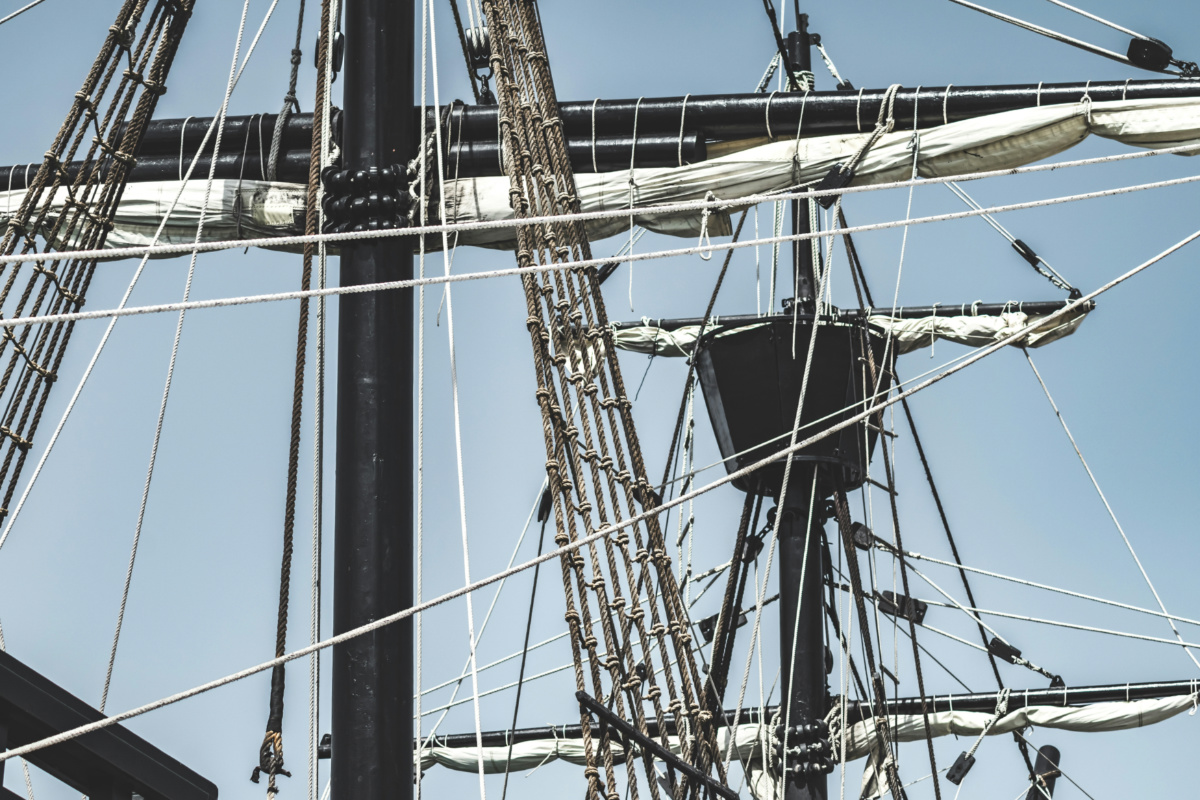
• A major exhibition tracing the changing depictions of pirates through the ages and revealing their often brutal role in history opens at the National Maritime Museum in Greenwich on Saturday. Pirates deconstructs some of the myths which have developed around buccaneers as it reveals the real-life stories of the likes of Edward ‘Blackbeard’ Teach, William Kidd, Anne Bonny and Mary Read. The exhibition features almost 200 objects ranging from the costume worn by Orlando Bloom in Pirates of the Caribbean: The Curse of the Black Pearl, to copies of A General History of the Pyrates by Captain Charles Johnson (first published in 1724), a hanging believed to have been part of a shrine captured from a junk in the fleet of the mid-19th century Chinese pirate Shap Ng-tsai, and a silver centerpiece depicting the bombardment of Algiers, 1816, when a combined British Dutch force attacked Algiers in an attempt to resolve the longstanding issue of piracy on the North coast of Africa. Runs until 4th January. Admission charge applies. For more, see www.rmg.co.uk/pirates.
• The ‘design of swimming’ – covering everything from fashions to architecture – is the subject of a new exhibition opening at the Design Museum tomorrow. Splash! A Century of Swimming and Style is split across three sections focusing on three locations in which people swim – the pool, the lido and nature – and starts in the 1920s when beach holidays exploded in popularity. More than 200 objects are on display including Pamela Anderson’s Baywatch swimsuit, the first Olympic solo swimming gold medal won by a British woman, the banned ‘technical doping’ LZR Racer swimsuit, one of the earliest surviving examples of a bikini, and a detailed architectural model of the Zaha Hadid-designed London 2012 Aquatics Centre. Runs until 17th August. Admission charge applies. For more, see https://designmuseum.org.
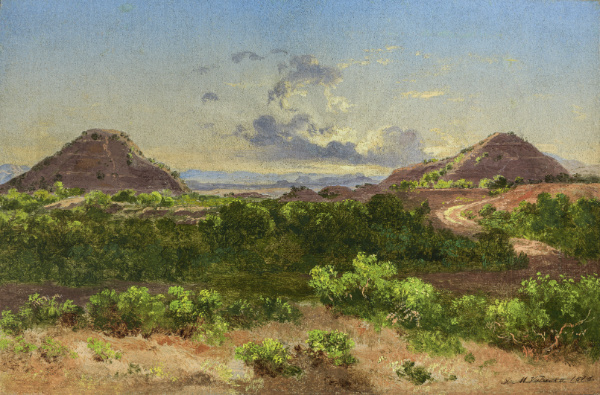
• Mexico’s most celebrated 19th century painter, José María Velasco (1840–1912), is the subject of a new exhibition opening at The National Gallery on Saturday.José María Velasco: A View of Mexico – which coincides with the 200th anniversary of the establishment of diplomatic relations between the UK and Mexico, explores how he approached drawing and painting and how he explored the relationship between different cultures, Mexico’s mountainous terrain, flora and fauna, and the impact of industrialisation on the landscape. The display also considers the links between Velasco’s work and paintings in the gallery’s collection, in particular Édouard Manet’s The Execution of Maximilian (1867–8), which depicts the execution of the Austrian ruler imposed on Mexico. Runs until 17th August. Admission charge applies. For more, see nationalgallery.org.uk.
Send all items for inclusion to exploringlondon@gmail.com.
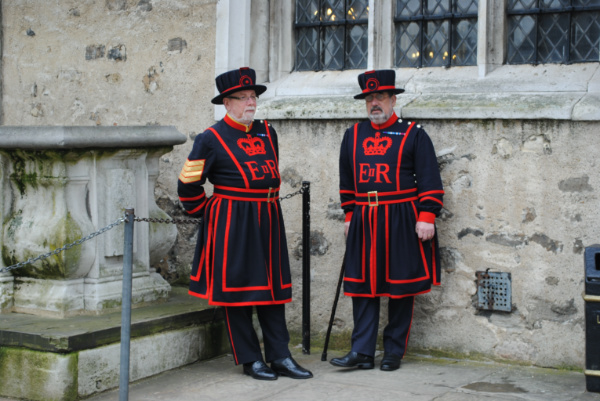
Yeoman Warders at the Tower of London. PICTURE: David Adams
• Almost 200 garments from the Royal Ceremonial Dress Collection are able to be explored online thanks to a new collaboration between Historic Royal Palaces, which looks after six royal palaces including Hampton Court Palace and the Tower of London, and Google Arts & Culture. Drawing on ultra-high-resolution photography and 3D scanning, the garments – which include everything from ceremonial uniforms such as those worn by Yeoman Warders and a rare Bristow hat which may have been worn by King Henry VIII to Queen Victoria’s silk shoes, a waistcoat worn by King George III and a dress worn by the future Queen Elizabeth II in 1927 when she was just 18-months-old – can now be viewed in unprecedented detail (a billion pixels per image) without the risk of the damage which can occur thanks to light, humidity, and handling. The Royal Ceremonial Dress Collection comprises over 10,000 pieces of historic dress and related materials spanning the period from the 16th century to the present day and features garments worn by monarchs and key historical figures, including, as well as the aforementioned, Prince Albert, Princess Margaret, and Diana, Princess of Wales. To see the items, head to goo.gle/royalwardrobe.
• Author, politician and artist Victor Hugo’s rarely seen works on paper have gone on show at the Royal Academy of Arts. Astonishing Things: The Drawings of Victor Hugo features around 70 works drawn from European collections and follows his preoccupation with drawing from early caricatures and travel drawings to later landscapes and abstract works. Arranged across four sections, the works on show include everything from Mushroom (1850) – which depicts a giant anthropomorphic toadstool, some of his many works depicting castles such as The cheerful castle (c 1847), and drawings that Hugo created in tandem with writing his 1866 novel The Toilers of the Sea, set in Guernsey in the years following the Napoleonic Wars, as well some relating to his most famous work, Les Misérables. The exhibition, being held in theJillian and Arthur M Sackler Wing of Galleries, can be seen until 19th June. Admission charge applies. For more, see royalacademy.org.uk.
• A “ground-breaking” exhibition showing the outsized impact British Black music has had on the world stage over the past 100 years has opened at the Barbican Music Library. Black Sound London highlights artists who created their own platforms, audiences, and spaces, often without mainstream support and spans genres including jazz, lovers’ rock, jungle, grime, and drill. Among the objects on show are vintage mixtapes, iconic magazine covers, and fly-posted walls. Runs until 19th July. For more, see www.cityoflondon.gov.uk/services/libraries/barbican-music-library.
Send all items for inclusion to exploringlondon@gmail.com.
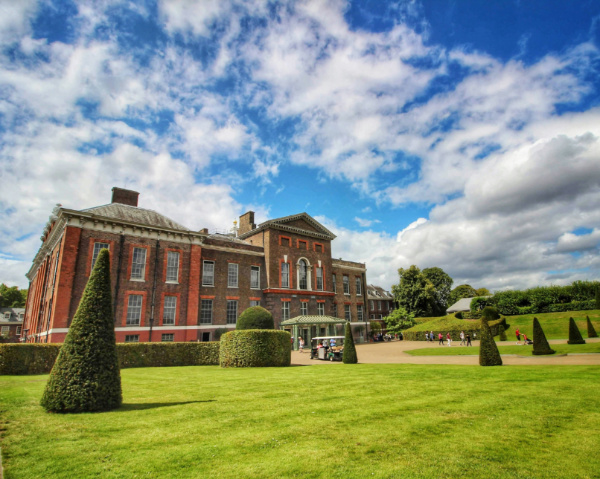
• Never-before-seen royal clothing is going on show at a new exhibition opening at Kensington Palace today. Dress Codes, which includes rarely seen highlights from the Royal Ceremonial Dress Collection, explores the codes and conventions of royal clothing, and the impact fashion can make “when boundaries are pushed and dress codes evolve”. Highlights include two matching Liberty print floral cotton dresses, worn in 1936 by Queen Elizabeth II (then Princess Elizabeth) and her younger sister Princess Margaret, a glittering red Bruce Oldfield gown worn by Diana, Princess of Wales, for a state visit to Saudi Arabia in 1987, and a Catherine Walker green silk velvet tuxedo-style dress which was shared with the world as one of 79 dresses famously auctioned to raise money for HIV/AIDS and cancer charities in 1997. There also two dresses worn by Princess Margaret which are going on show for the first time in the UK – a 1978 Thea Porter evening ensemble and a colourful green embroidered evening gown by the Filipino designer Jose Pitoy Moreno, worn in 1980. Other items include a never-before-displayed black mourning bodice worn by Queen Victoria. Runs until 30th November. Admission charges apply. For more, see www.hrp.org.uk/kensington-palace/whats-on/dress-codes.
• The first ever exhibition of Edvard Munch portraits opens at the National Portrait Gallery. The display, Edvard Munch Portraits, include Munch’s portraits of lawyer Thor Lütken and physicist Felix Auerbach as well as early family portraits such as Evening (1888) which shows his sister Laura on a family holiday and Andreas Munch Studying Anatomy (1886). Other works include The Brooch (1902) and full-length portraits of Jappe Nilssen, the painter Ludvig Karsten and writer Christian Gierløff – all from the group of men he called his ‘Lifeguards’ or ‘Guardians’. Runs until 15th June. Admission charge applies. For more, see www.npg.org.uk.
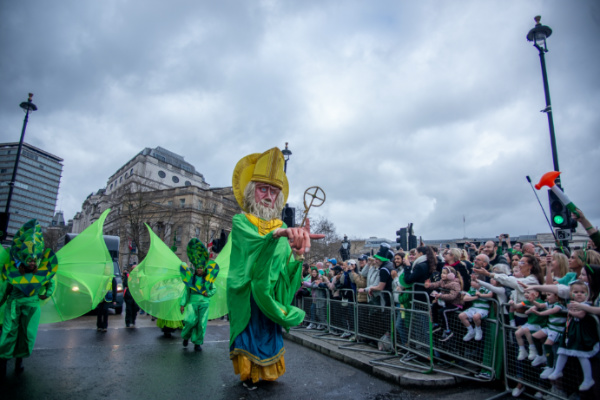
• The St Patrick’s Day Parade and Festival returns to London this Sunday. Irish Paralympic gold medal winning cyclist Katie-George Dunlevy and Olympic gold medal winning boxer Kellie Harrington are serving as this year’s Grand Marshals of the parade which, with more than 50,000 participants, will feature floats, marching bands, and dance troupes. The parade kicks off at noon and will make its way from Hyde Park Corner past Piccadilly and Trafalgar Square and on to Whitehall. Meanwhile, Trafalgar Square will host an afternoon of entertainment hosted by Irish-Indian-Malaysian DJ and broadcaster Tara Kumar and featuring a wide range of family-friendly performances by the likes of Kíla, Irish Women in Harmony and Ragz-CV. Celebrity chef Anna Haugh will provide Irish cooking demonstrations and there will be an exhibition celebrating Ireland’s unsung women heroes as well as the chance to learn Irish dancing and a dedicated zone for kids with free creative workshops. For more, see https://www.london.gov.uk/events/st-patricks-day-2024.
• An audio-led exploration of Hampton Court Palace after dark kicks off next Wednesday to mark International Women’s History Month. Still The Hours uses a layered soundscape to guide visitors through the palace’s darkened halls as established actors including Kathryn Hunter (Harry Potter, Black Doves, Poor Things) and Miranda Richardson (Harry Potter, Good Omens, The Hours) can be heard alongside up-and-coming female voices to “weave a vivid tapestry” of women’s lives at the palace. The stories explored in the hour long presentation range from a suffragette to a mistress and a queen to a maid. Runs until 30th March. Admission charge applies (for ages 14+, under 16s must be accompanied by an adult). For more, see www.hrp.org.uk.
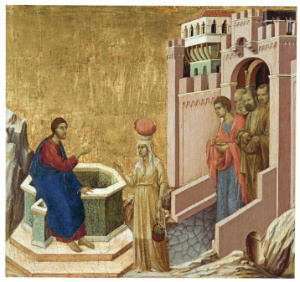
• Paintings by some of the greatest Italian artists of the 14th century have been reunited in a new exhibition opening at the National Gallery on Saturday. Siena: The Rise of Painting 1300‒1350, which is being held to mark the gallery’s 200th anniversary, features around 100 works including some of the most innovative in the Western tradition. Highlights include Maestà, painted by Sienese artist Duccio di Buoninsegna (active 1278, died 1319). The first double-sided altarpiece in Western painting, it was dismantled in the 18th century and the National Gallery’s own three panels are now reunited with others from the original ensemble including Christ and the Woman of Samaria from the Museo Thyssen- Bornemisza in Madrid, and The Calling of the Apostles Peter and Andrew from the National Gallery of Art in Washington DC. Another work being reunited for the exhibition is the Orsini Polyptych by Sienese artist Simone Martini (1284‒1344). A folding work of art made for private devotion, probably for Cardinal Napoleone Orsini, it is today divided into six works held by the Louvre, Paris, the Royal Museum of Fine Arts, Antwerp and the Gemäldegalerie, Berlin. All six panels are being brought together for the National Gallery’s exhibition. Two triptychs by Duccio which seem to have been conceived as a single work are also being reunited and the display also features works by Pietro Lorenzetti (active possibly 1306; died probably 1348) and his brother Ambrogio Lorenzetti (active 1319; died 1348/9) as well as Sienese works in a variety of media (metalwork, enamel, gilded glass, wood, marble, and manuscript illumination). The display runs until 22nd June. Admission charge applies. For more, see www.nationalgallery.org.uk.
Hylozoic/Desires, ‘The Hedge of Halomancy’, 2025. PICTURE: Courtesy the artists
• An installation featuring new work by artist duo Hylozoic/Desires (Himali Singh Soin & David Soin Tappeser) has opened at Tate Britain. In The Hedge of Halomancy, which runs in parallel with a large-scale new commission by Hylozoic/Desires at Somerset House, the artists excavate the lost archive of the Inland Customs Line, a 4,000 kilometre-longe barrier which comprised 2,500 kilometres of planted hedge and was created by the British Empire in the 19th century to prevent salt smuggling between British-occupied territories and neighbouring independent states. A 23-minute film at the heart of the installation focuses on Mayalee, a character inspired by a courtesan who defied the British Empire’s attempts to cut off her stipends of salt. Alongside it sits an embroidered tapestry, entitled Mokshapat (Snakes and Ladders) which was woven as mashru fabric – cotton on one side and silk on the other. Runs until 25th August. Admission is free. For more, see www.tate.org.uk.
• On Now: Unfolding Time: The Medieval Pocket Calendar. A “remarkable” set of medieval concertina-fold almanacs grappling with the concept of time is on display at the Lambeth Palace library. Less than 30 such manuscripts are known to exist and the display brings a group of the works, in which time is expressed in colourful pictures, poems, tables and devices, together for the first time. Runs until 15th May. For more, see https://www.lambethpalacelibrary.info.
Send all items for inclusion to exploringlondon@gmail.com.
Guildhall Yard where the annual Inter-Livery Pancake Race is held. PICTURE: David Adams
• Shrove Tuesday, also known as Pancake Day, takes place this coming Tuesday and to mark the event, representatives from the City of London’s livery companies are coming in their annual Inter-Livery Pancake Race around Guildhall Yard. The event is organised by the Worshipful Company of Poulters while the Worshipful Company of Gunmakers provide the starting gun, the Worshipful Company of Clockmakers time the races and the Worshipful Company of Fruiterers provide lemons to accompany the pancakes. The starter’s gun fires at noon. Entry is free.
• East Enders is celebrating its 40th anniversary and to mark the occasion, the Museum of the Home in Hoxton is featuring props and costumes from the show in its displays. EastEnders at 40: Icons of Home and Drama features props and costumes including the costumes from Syed and Amira’s wedding in 2010, Kat Slater’s leopard print coat and Frank Butcher’s spinning bow tie. Runs until 22nd June. Admission is free. For more, see www.museumofthehome.org.uk.
• The origins of the Hallelujah Chorus and its special connecting to the Foundling Hospital is the subject of a new display at the Foundling Museum in Bloomsbury. Composer George Frideric Handel first held a benefit concert at the venue in 1749 in which he premiered his Foundling Hospital Anthem. He returned the following year to perform the Messiah, which had made its debut in Dublin in 1742, and this event proved so popular it was held annually until the 1770s. The display can be seen until 29th March, 2026. Admission charge applies. For more, see https://foundlingmuseum.org.uk/event/hallelujah-display/.
In an article first published on The Conversation, LACEY WALLACE of the University of Lincoln, looks at the recent discovery….
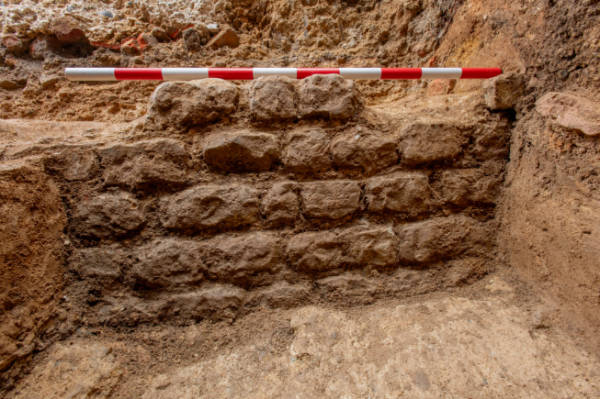
Archaeologists from the Museum of London have discovered a well-preserved part of the ancient city of London’s first Roman basilica underneath the basement of an office block. The basilica was constructed for use as a public building in the 70s or early 80s AD.
A section of the wall from the Roman basilica. PICTURE: MOLA
In a Roman town, a basilica was a multi-functional civic building. Often paid for by leading local inhabitants, it provided a large indoor space for public gatherings. These ranged from political speeches to judicial proceedings.
Along with the connected forum – an arrangement of buildings that surrounded an open courtyard space – the building formed the centre of administrative and civic life in the ancient Roman city of Londinium.
Other walls of London’s basilica and forum have been known by archaeologists since the early 1880s. But they were only recognised as remains of the social and civic centre of Londinium in 1923.
The story until now
Peter Marsden, the author of The Roman Forum Site in London (1987), compiled disconnected evidence for the different phases of London’s forum basilica complex.
Referring to the current area of excavations (on Gracechurch Street), he noted that: “More than half of the archaeological deposits still remain, and should be carefully excavated when the opportunity arises, since only then will the history of the site be elucidated.”
Occasional opportunities have arisen to reveal small parts of the forum basilica. For example, during construction of a shaft to install a lift at 85 Gracechurch Street, some important remains from the first century were found. But the excavated area was too small to contribute greatly to our knowledge.
In contrast, the recent work is part of a major redevelopment. It has opened targeted excavation areas where walls of the basilica were expected to be found, exposing substantial parts of the building.
Archaeologists have found one-metre-wide foundations and walls of the interior, some of which probably extend for more than 10 metres in length. The walls are constructed of flint, tile and Kentish ragstone (a type of limestone quarried in Kent), and some stand at four metres high.
What was the basilica for?
Londinium was constructed on an unoccupied site beginning in about AD47 or 48. It began to gain the trappings of a Roman-style town, including a basilica building, in the lead-up to its destruction in the Boudican Revolt in AD60 or 61.
The city did not have a monumental forum and basilica complex until later, however, when a major programme of public and private construction was undertaken in the Flavian period (AD69–96).
London’s Flavian basilica took the plan of a long rectangle (44m x 22.7m) divided into three aisles. There is good evidence from the deeper central aisle (nave) wall foundations that the nave roof was raised to two storeys, to allow for windows to provide internal light.
A reconstruction drawing of the first London forum. PICTURE: PeterMarsden/MOLA
Shallow foundations crossing the nave are evidence of a raised dais or platform at the eastern end. The speaker or judge would sit there, elevated above the crowds, increasing both his visibility and status. This platform, or “tribunal”, is the area that has recently been revealed.
The basilica would have risen above the north side of the buildings that formed the forum courtyard. It would have dominated the high ground of this monumental space at the highly visible crossroads leading straight up from the Roman Thames bridge.
It would have been the largest building in the area and firmly announced that the people of Londinium were constructing a high-status Roman city.
Rebuilding following the British Queen Boudica’s revolt had been swift. The post-Revolt fort that was built only 100 metres or so down the street had likely been decommissioned and the people were ready to embark on a new phase and a major expansion of the urban centre.
The designs of late first century forum basilica complexes varied across the provinces. But generally they combined religious, civic, judicial and mercantile space.
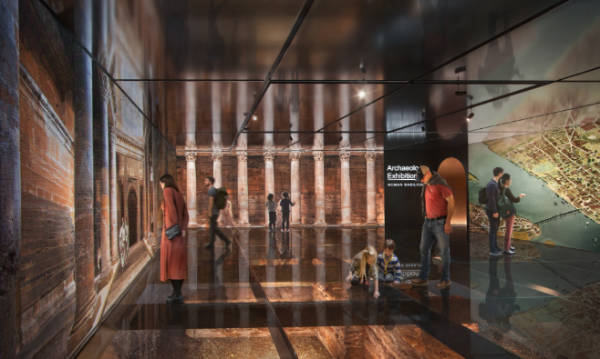
An artist’s impression of the proposed exhibition space that will showcase the newly discovered walls. PICTURE: Woods Bagot/MOLA
In places like Pompeii, the forum had developed over time. But, when the town was buried by the ash of Vesuvius in AD79 (approximately the same time the forum basilica of London was built), the focus of the elongated monumental space was the Temple of Jupiter, symbol of the Roman state.
Although a classical temple was constructed to the west of the exterior of Londinium’s Flavian forum, it was clearly separate. No forum in Britannia was dominated by a temple, setting the core of urban space in this province apart from most examples in the rest of the empire.
The Flavian forum basilica at Londinium is one of the earliest examples to demonstrate this characteristic, along with that at Verulamium (St Albans). There, an inscription links the circa AD79–81 construction to the governor Agricola, who is well known among historians from the celebratory biography written by his son-in-law, Tacitus.
The Flavian basilica and forum only stood for about 20 or 30 years, however. With increased prosperity in the early second century, they were demolished and replaced by a new structure which was five times larger, leaving the remains of the first basilica underneath the surface of the later courtyard space.
Museum of London Archaeology will now analyse and publish the results of its find, applying modern methods to advance our understanding of the development of the first forum basilica. We can expect refined dating evidence and an improved understanding of the architecture from the post-excavation analyses. An exhibition space to make the remains visible for the public is also planned.








 Exploring London