10 atmospheric ruins in London – 8. Coldharbour Gate…

Located within the outer walls of the Tower of London are the remains of some early 13th century fortifications built by King Henry III.

The foundations of Coldharbour Gate in the foreground beside the White Tower with the remnants of the Inmost Ward Wall beyond. PICTURE: Elizabethe (licensed under CC BY-NC-ND 2.0)

These include the foundations of Coldharbour Gate which once adjoined the south-west corner of the White Tower as well as the western wall of the Inmost Ward which ran down to the Wakefiekd Tower.

The gate was defended by two cylindrical turrets while the Inmost Ward Wall has arrow loops installed, allowing archers to fire down on attackers who had breached the outer fortifications.

The gate was later used as a prison. Alice Tankerville, who was charged with piracy on the River Thames, became one of the most famous prisoners housed there when, despite having apparently been chained to the wall, she escaped with the help of two guards in 1533 (she was recaptured just outside the Tower).

The gateway was demolished in about 1675 and lead from the roof taken to Greenwich where it was redeployed at the Royal Observatory.

Much of the wall was hidden away behind later buildings but was re-exposed after being bomb damaged during World War II.

Not much remains to be seen today but the foundations do evoke a sense of the royal palace in times past and serve as a reminder that the buildings we see at the Tower today are not all that has existed here.

Other ruins at the Tower of London include the remains of the Wardrobe Tower, which lies at the south-east corner of the White Tower. It is thought to have dated from 1190 and incorporates the base of a Roman bastion.

WHERE: Tower of London (nearest Tube station Tower Hill); WHEN: 9am to 5.30pm (last admission 3.30pm), Tuesday to Saturday; 10am to 5.30pm (last admission 3.30pm) Sunday to Monday; COST: £34.80 adults; £17.40 children 5 to 15 (family tickets available; discounts for online purchases/memberships); WEBSITE: www.hrp.org.uk/toweroflondon/.

This Week in London – “Forgotten” stories from royal palaces; and, St Patrick’s Day celebrations…

A scene from the Untold Lives exhibition at Kensington Palace. PICTURE: Courtesy of Historic Royal Palaces.

• The “forgotten” stories of those who worked behind the scenes at London’s royal palaces are the subject of a new exhibition at Kensington Palace. Untold Lives: A Palace at Work shines a spotlight on those working in various roles at the palace between 1660 and 1830 – everyone from pages and cooks to wetnurses and seamstresses. Among the items on display is an apron worn by Queen Charlotte’s Wardrobe Maid, Ann Elizabeth Thielcke, a newly conserved portrait depicting a young Black attendant standing by King William III and holding his armour, and a specially commissioned photographic piece by Peter Braithwaite which reimagines figures from the Kensington Palace’s Kings Staircase. Among those whose stories are featured is the “Rat-Killer”, who wore a special rat-embroidered uniform, the Groom of the Stool, who was responsible for looking after the monarch on the toilet, and the Keeper of Ice and Snow, whose job was to cut ice so those at the palace could enjoy cold drinks and iced desserts all year round. The exhibition also explores the unexpected origins of some of those who served at the palaces, such as Abdullah, a wild cat keeper from India, and Mehmet von Könsigstreu, Keeper of the Privy Purse for King George I.. The exhibition, entry to which is included in general admission to the palace, can be seen until 27th October. For more, see https://www.hrp.org.uk/kensington-palace/.

• St Patrick’s Day is being celebrated this Sunday with the annual parade and a free, family-friendly afternoon of entertainment in Trafalgar Square. The procession, which sets off from Hyde Park Corner at noon and winds its way through the city to Whitehall, will include Irish marching bands, dance troupes and pageantry. From 1pm to 6pm, Trafalgar Square will host family concerts, children’s films and youth performances, as well community choirs, schools and dancing with Anna Haugh, International Chef of the Year 2019, running food demos alongside the main stage and children’s workshops. Entry is free. For more, see www.london.gov.uk/events/st-patricks-day-2024.

Send all items to exploringlondon@gmail.com

This Week in London – Underground shelters in wartime – then and now; new Ravenmaster at the Tower; and, ‘La Ghirlandata’ back at the Guildhall Art Gallery…

• A new photographic exhibition exploring how Underground stations and metro systems provide shelter to citizens during periods of war, both now and in the past, opened at the London Transport Museum in Covent Garden last week. Echoes of the Blitz: Underground shelters in Ukraine and London features 70 images, including historical pictures from the museum’s collection as well as 38 contemporary photographs shot by six renowned, mainly Ukrainian, documentary photographers. The latter include photography showing ordinary Ukrainian citizens sleeping, waiting, cooking, washing clothes, caring for their pets and creating temporary make-shift homes in metro stations of Kyiv and and Kharkiv show alongside black and white archive images of Londoners taking refuge in Tube stations during World War II. The exhibition, which is being run in partnership with Berlin-based journalistic network n-ost, can be seen until spring next year. Admission charge applies. For more, see www.ltmuseum.co.uk.

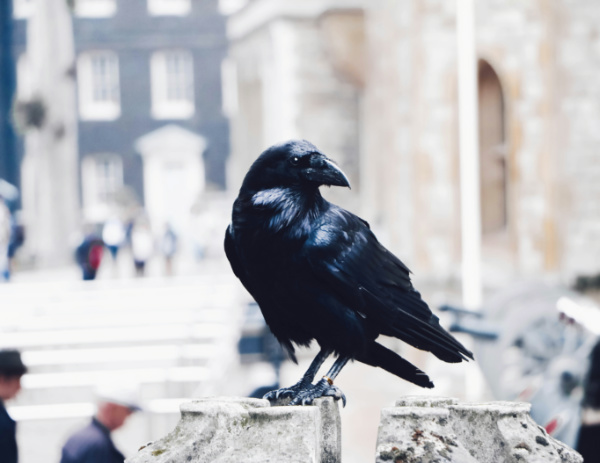
A raven at the Tower of London. PICTURE: Kasturi Roy/Unsplash

• A new Ravenmaster has been appointed at the Tower of London. Yeoman Warder Michael ‘Barney’ Chandler took up the role at the start of this month, 15 years after he first became a Yeoman Warder at the Tower. The Ravenmaster oversees a team of four responsible for the care of the Tower’s seven ravens which legend says must remain at the Tower to ensure its protection. The legend apparently goes back to at least the reign of King Charles II – when the King’s astronomer John Flamsteed complained that the resident ravens were impeding his work at the Tower and requested their removal, the King was told that if the ravens left the Tower then the Kingdom would fall (and so they remained). While the Yeoman Warders have longed cared for the ravens, the post of Ravenmaster was only created in the past 50 years and was first held by Yeoman Warder Jack Wilmington. Yeoman Warder Chandler, who became the 387th Yeoman Warder at the Tower when he was appointed in March, 2009, is only the sixth person to hold the office. For more, see www.hrp.org.uk/tower-of-london/.
• One of the most popular paintings at the Guildhall Art Gallery is being reinstalled to mark International Women’s Day on Friday. Dante Gabriel Rossetti’s La Ghirlandata has been on loan – first to the Tate Britain and then to the Delaware Art Museum in the US – but is now being returned. The painting dates from 1873 and depicts a ‘garlanded woman’ playing an arpanetta and looking directly at the viewer. The muse for the woman is said to have been the actor and model, Alexa Wilding, while the two ‘angels’ in the top corners were posed by William and Jane Morris’ youngest daughter, May Morris. The City of London Corporation acquired the oil on canvas work in 1927. On Saturday, free family activities will be held at the gallery to mark the work’s return. For more, see www.thecityofldn.com/la-ghirlandata.

Send items to exploringlondon@gmail.com.

10 most popular (new) posts for 2023 – Numbers 4 and 3…

4. 10 historic London homes that are now museums…2. Carlyle’s House…

3. 10 London locations related to Sir Christopher Wren…1. The Old Court House, Hampton Court Palace Green…

10 London locations related to Sir Christopher Wren – A recap…

We finish our series on Christopher Wren by providing a quick recap…

1. The Old Court House, Hampton Court Palace Green…

2. St Martin-in-the-Fields…

3. Scotland Yard…

4. Gresham College…

5. London coffee houses…

6. Westminster Abbey…

7. St Stephen Walbrook…

8. The Bankside Plaque…

9. St James’s Street, Piccadilly…

10. St Paul’s Cathedral…

We’ll start a new series in the New Year!

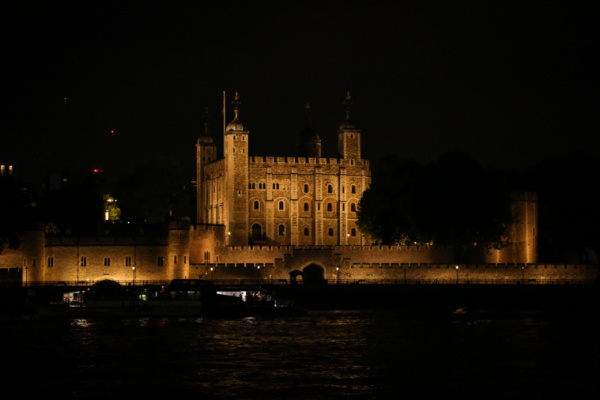
LondonLife – Tower by night…

PICTURE: Hamayoon Pacha/Unsplash

This Week in London – Hans Holbein at The Queen’s Gallery; ‘Crown and Coronation’ at the Tower; Christmas at Kew; and, Charles Dickens’ friendship with Wilkie Collins explored…

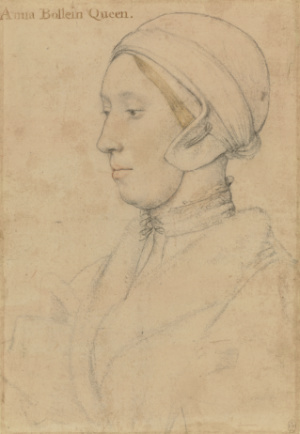
Hans Holbein the Younger, 
Anne Boleyn (1532)/Royal Collection Trust / © His Majesty King Charles III 2023.

• The largest exhibition of the work of Tudor-era artist Hans Holbein the Younger has opened at The Queen’s Gallery, Buckingham Palace. Holbein at the Tudor Court features more than 50 works by Holbein including intimate portrait drawings of the royal family and the Tudor nobility including one of few surviving drawings of Anne Boleyn made during her lifetime, drawings of Jane Seymour and Sir Thomas More, and an unfinished portrait of King Henry VIII’s son Prince Edward. Other portraits include that of Derich Born, a 23-year-old Steelyard merchant, and one of Richard Southwell, a convicted murderer who was one of King Henry VIII’s closest advisors. The exhibition also features objects including a Brussels tapestry, jewel-like miniatures and Henry VIII’s magnificent armour, usually on show at Windsor and in London for the first time in a decade. Runs until 14th April. Admission charge applies. For more, see www.rct.uk/collection/themes/exhibitions/holbein-at-the-tudor-court/the-queens-gallery-buckingham-palace

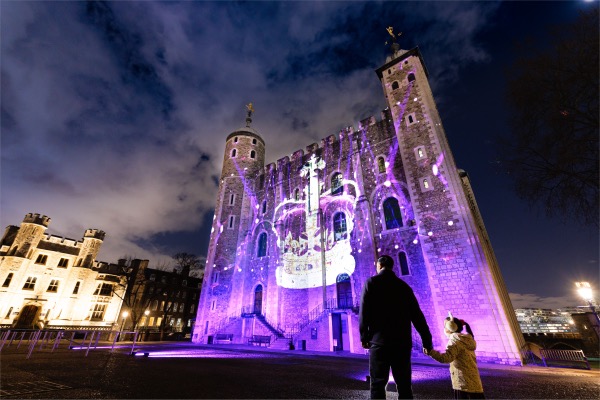
The White Tower looking south-east, showing a coloured light projection of St Edward’s Crown, the crown used at the moment of Coronation. PICTURE: © His Majesty King Charles III 2023 -Royal Collection Trust – Historic Royal Palaces

• The magnificence of coronations and the Crown Jewels will be on show at the Tower of London from tomorrow night in a new light and sound show. Crown and Coronation – which has been created by Historic Royal Palaces in partnership with Luxmuralis as part of an artistic collaboration between artist Peter Walker and composer David Harper – brings the “spectacle, significance and shared experience” of coronations to life and demonstrates the pivotal role of the Crown Jewels in the ceremony as it takes visitors on a journey through the past 1,000 years. Images of the jewels will be projected on the White Tower in the show with visitors then able to view the actual jewels themselves in a special after hours opening. But you’ll have to be quick – the show can only be seen for nine days, ending on 25th November before it embarks on a two year UK-wide tour. Admission charge applies. For more, see www.hrp.org.uk/tower-of-london/.

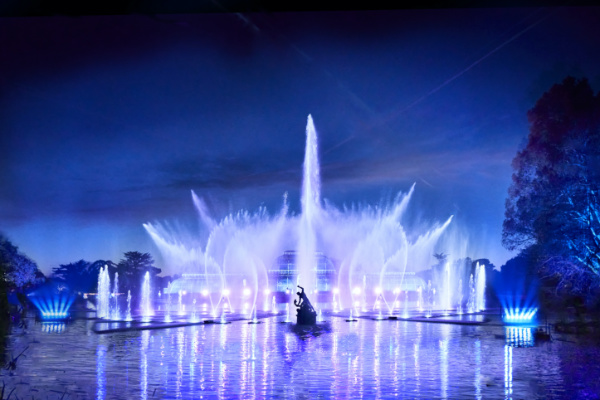
The Palm House light show, part of Christmas at Kew. PICTURE: © Raymond Gubbay Ltd, Richard Haughton

• Christmas returned to Kew this week with the launch of it’s new festive light trail featuring seven new installations. Highlights of this year’s trail include three metre tall illuminated flowers, cascading lights suspended from the tree canopy, one of the longest light tunnels to ever feature in Kew’s Christmas celebrations and the Hive – which recreates life inside a beehive – as well as the iconic Palm House light show, the twinkling tunnel of light inspired by arched church windows known as the ‘Christmas Cathedral’, and a ‘Fire Garden’ at the Temperate House. There’s also festive treats to sample and visitors can experience a traditional Christmas dinner at The Botanical Brasserie. Admission charges applies. Runs until 7th January (advance bookings only). For more, see www.kew.org/christmas.

• Charles Dickens’ friendship and collaboration with writer Wilkie Collins is explored in a new exhibition at The Charles Dickens Museum in Bloomsbury. Dickens met Collins, who would become one of his most significant friends, in 1851 as they performed together in a play at the house of John Forster and their personal and professional relationship lasted more than 15 years. The display features works produced as a result of the friendship – everything from articles in Dickens’s Household Words through to novellas and plays such as The Lazy Tour of Two Idle Apprentices and The Frozen Deep – and features original letters, historic objects, and interactive displays focusing on everything from the pair’s moustache-growing contests and cruising international entertainment districts to co-writing side by side, discussing writer’s block and plot devices. Admission is included with general admission. Runs until 25th February. For more, see https://dickensmuseum.com.

Send all items to exploringlondon@gmail.com.

This Week in London – The Indian Army at Hampton Court Palace; Chanel at the V&A; and, Mantegna’s ‘The Triumphs Caesar’ at the National Gallery…

Part of the Indian Army at the Palace display at Hampton Court Palace: PICTURE © Historic Royal Palaces.

• A rare charity pin badge like those sold by Indian princess and suffragette Sophia Duleep Singh to raise funds for the Indian Army has gone on show at Hampton Court Palace. It’s part of a new display which shares the stories of Indian soldiers who took up residence on the Hampton Court estate four times: for the coronations of King Edward VII in 1902, King George V in 1911 and King George VI in 1937, as well as for the World War I Victory Parade in London. The Indian Army at the Palace explores their experiences in the camp and in London more generally – everything from food and rationing to entertainment, travel and religious accommodations. Highlights of the display include objects from the Historic Royal Palaces’ collection – such as an official plan from one of the camps, press cuttings depicting the soldiers’ arrival at Hampton Court station, and Indian soldiers in and around the Palace grounds – as well as items on loan from the South Asian community, including a 32nd Sikh Pioneers Indian Army Officer’s tunic, medals and photos belonging to soldiers from the 1902 and 1911 contingents, original photographs of the Gurkha regiment in the 1919 parade and newspaper articles depicting the visits. The display can be seen until 3rd March next year and entry is included in general admission. For more, see www.hrp.org.uk/hampton-court-palace/.

A scene from the ‘Gabrielle Chanel. Fashion Manifesto’ display. PICTURE: ©Victoria & Albert Museum, London.

• The first UK exhibition dedicated to the work of pioneering fashion designer Gabrielle ‘Coco’ Chanel opens at the V&A on Saturday. Gabrielle Chanel. Fashion Manifesto, which is being presented in partnership with Palais Galliera, Fashion Museum of the City of Paris, Paris Musées, charts the evolution of Chanel’s iconic design style and the establishment of the House of Chanel, from the opening of her first millinery boutique in Paris in 1910 to the showing of her final collection in 1971. The display’s 10 sections feature more than 200 “looks” as well as accessories, perfumes and jewellery. Highlights include one of the earliest surviving Chanel garments from 1916; original Chanel-designed costumes for the 1924 Ballets Russes production of Le Train Bleu; outfits created for Hollywood stars Lauren Bacall and Marlene Dietrich; an early example of Chanel’s ground-breaking evening trousers; and, ensembles from Chanel’s final collection of 1971. Runs until 25th February. Admission charge applies. For more, see vam.ac.uk/chanel.

• Six of Andrea Mantegna’s monumental paintings The Triumphs of Caesar go on display at The National Gallery from Monday. On loan from the Royal Collection, the Renaissance artist’s greatest masterpiece will be on show at the gallery for around two years, while their usual home, the Mantegna Gallery at Hampton Court Palace, is closed for maintenance. Mantegna painted a total of nine canvasses for the Gonzaga family in Mantua, between about 1485 and 1506. They were acquired by King Charles I in 1629 and taken to Hampton Court Palace soon after their arrival in England. The paintings, which are being displayed in specially made frames, will be able to be seen in Room 14, along with Peter Paul Rubens’ A Roman Triumph (about 1630) to show a later artistic response to the Triumphs. Other works by Mantegna from the National Gallery’s collection including The Introduction of the Cult of Cybele at Rome, Samson and Delilah, Two Exemplary Women of Antiquity and The Virgin and Child with the Magdalen and Saint John the Baptist are displayed nearby in Room 5 while Mantegna’s The Agony in the Garden can be seen in Room 29. Admission is free. For more, see www.nationalgallery.org.uk.

Send all items to exploringlondon@gmail.com

LondonLife – Marking a year since the King’s accession…

PICTURE: Sgt Donald C Todd/UK MOD © Crown copyright 2023

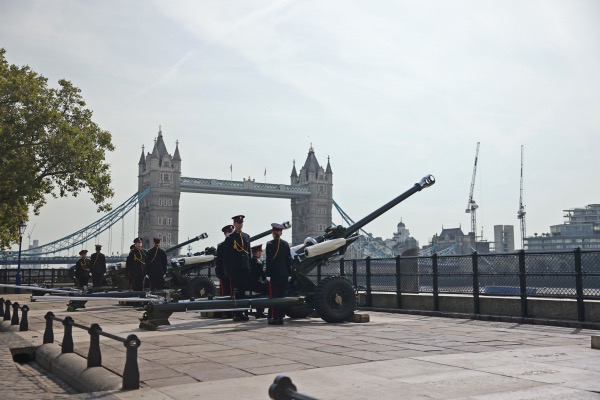
The King’s Troop Royal Horse Artillery fired 41 blank artillery rounds using six guns in Hyde Park to mark a year since the accession of King Charles III on 8th September. Below, the 105mm light artillery guns of the Honourable Artillery Company prepare to fire at The Tower of London in another salute on the same day. Both regiments taking part were responsible for firing the Death Gun salutes to mark the passing of Queen Elizabeth II one year ago, and the following day, the Proclamation salutes to mark the new reign.

PICTURE: Corporal Rob Kane/UK MOD © Crown copyright 2023

10 London locations related to Sir Christopher Wren…1. The Old Court House, Hampton Court Palace Green…

This year marks the 300th anniversary of the death of Sir Christopher Wren (25th February, 1723), whose designs helped to transform post-Great Fire London.

In a new series we’re looking at 10 locations which help tell Wren’s story but while we’ve previously runs numerous articles focused on the many buildings he designed, in this series the focus is more on his personal life.

First up, it’s one of the most well-known properties related to Wren’s life – the home in which he spent the latter years after his life just outside Hampton Court Palace.

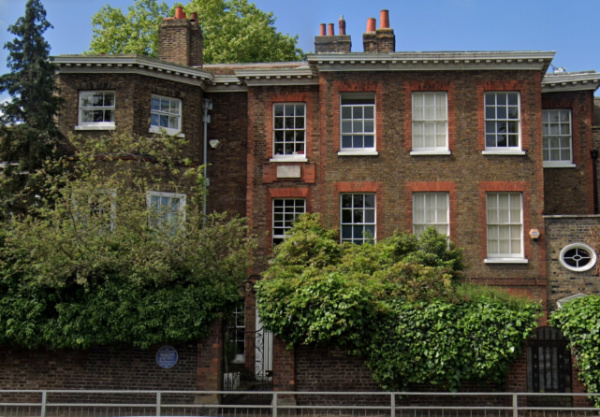
Known as the Old Court House, Wren first came to live in the house after he was appointed Surveyor-General to King Charles II in 1669. His post brought with it lodgings at the royal palaces and at Hampton Court Palace, it was the Old Court House (the property had been built for in 1536 as a wood and plaster house; Wren’s immediate predecessor in the office, Sir John Denham, had rebuilt it partly in brick).

Then in 1708, Queen Anne granted him a 50-year lease on the property, apparently at least partly in lieu of overdue fees he was owed for the building of St Paul’s Cathedral. It’s also believed that the Queen had granted the lease on condition that Wren repair or rebuilt the property.

Wren, who had hitherto only lived intermittently at the property (presumably while working on Hampton Court Palace on the orders of King William III and Queen Mary II), made some major alterations to the property from 1710 onwards (it’s suggested this was done to the designs of Wren’s assistant William Dickinson).

He came to live here on a more permanent basis after he retired from the Office of Works in 1718 and remained here until his death in 1723 (although he didn’t die here – more on that later).

It’s said Wren, whose time as the Royal Surveyor-General spanned the reigns of six monarchs, spent his time here “free from worldly affairs”, choosing to and pass his days ‘in contemplation and studies”.

It was subsequently the home of Wren’s son Christopher (1645-1747) and his grandson Stephen (b 1772). It remained a grace and favour house associated with Hampton Court Palace until 1958.

The Grade II* brown and red brick property, which was combined with the house next door in the early 19th century and them divided off in 1960, is now in private ownership and there’s an English Heritage Blue Plaque on the outside wall mentioning Wren’s residence.

This Week in London – Notting Hill Carnival weekend; new TV and film tour at Hampton Court; and, Museum of London seeks signage…

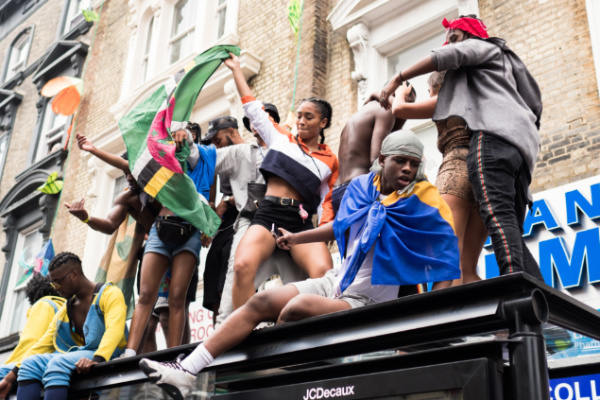
A scene from the Notting Hill Carnival in 2019. PICTURE: Glodi Miessi/Unsplash

• It’s the Notting Hill Carnival weekend, three days of festivities celebrating Caribbean culture culminating in the main parade on Monday. Europe’s biggest street festival, which has been taking place since 1966 with a couple of exceptions, features music, street food and spectacular costumes. Saturday is Steel Band Competition Day, a ticketed event featuring the UK National Panorama Steel Band Competition, while Sunday is Families and Children’s Day featuring a children’s parade and carnival. On Monday, the main parade and carnival is held. For more information, see https://nhcarnival.org.

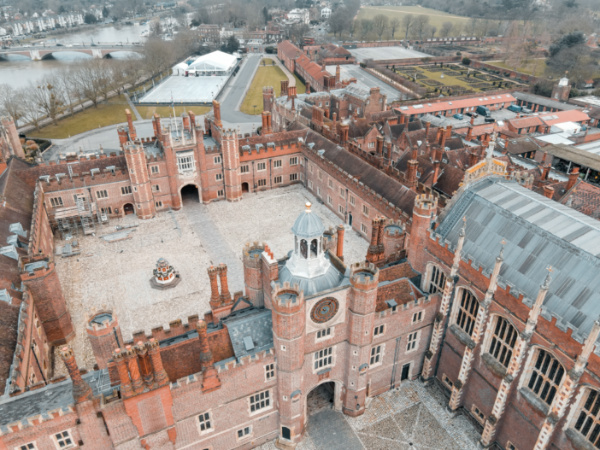
Aerial view of Hampton Court Palace. PICTURE: Ollie Craig/Pexels

• Hampton Court Palace has launched a new ‘film and TV locations’ audio tour, taking visitors behind the scenes of everything from Pirates of the Caribbean to The Favourite and the recent Netflix series Bridgerton. The palace first appeared in a 1926 movie bearing its name which detailed the marriage of King Henry VIII and Catherine Howard and has since gone on to appear in numerous productions ranging from The Theory of Everything and A Little Chaos to Sherlock Holmes: A Games of Shadows and Mamma Mia: Here We Go Again!. The tour includes exclusive interviews with the director and executive producer of Bridgerton and also details the involvement of Historic Royal Palace staff who ensure the site remains protected during photo shoots. The ‘Film and TV Locations Tour’ is included in general admission. For more, head here.

• The Museum of London is calling for suggestions for signs to feature in ‘Hanging Out’, a permanent installation planned for the new London Museum, set to open in Smithfield’s General Market building in 2006. It’s intended the space will represent a broad range of London’s communities with the focus on the last 80 years. Signs could relate to everything from sports venues and cafes and pubs to nightclubs, music venues and theatres. People with suggestions for signs are asked to email ourtime@museumoflondon.org.uk.

Send all items to exploringlondon@gmail.com

This Week in London – Open House Festival programme out; women’s lives celebrated at Tower of London; and, families at Buckingham Palace…

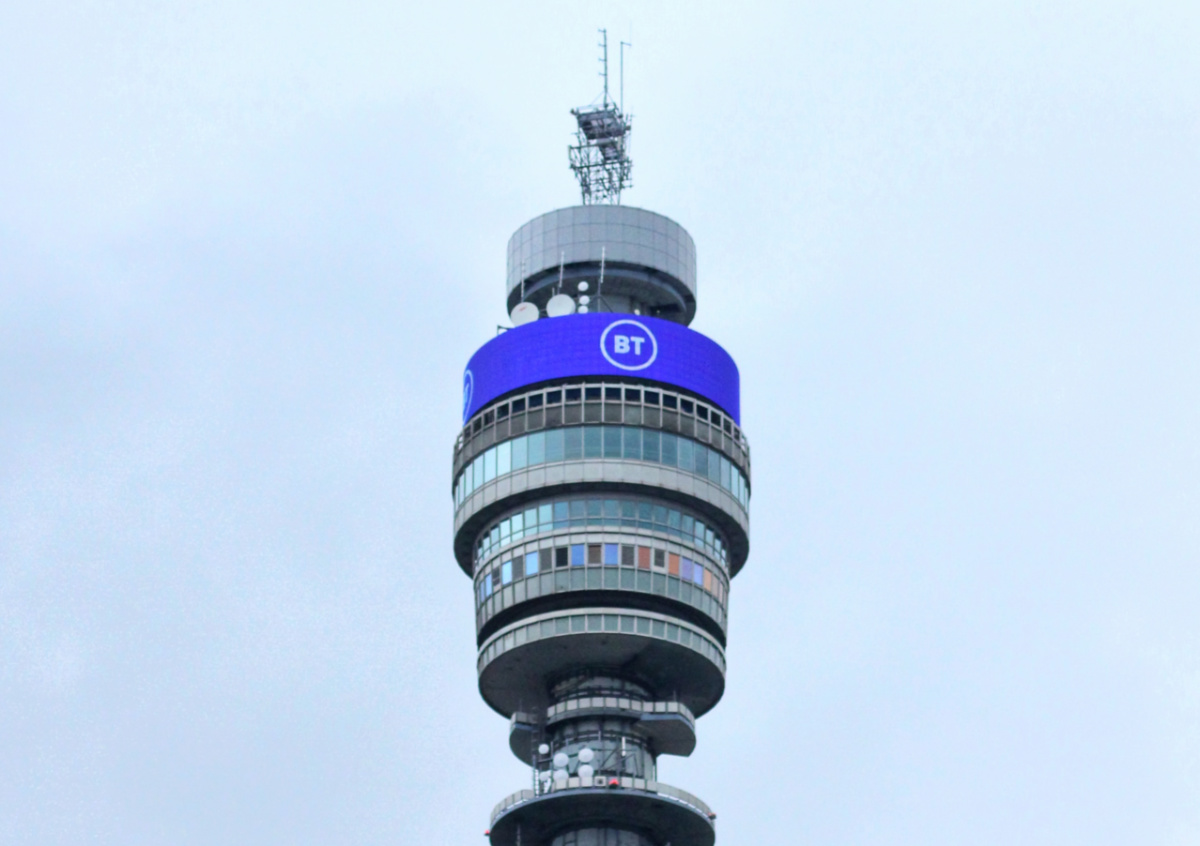
BT Tower. PICTURE: Metin Ozer/Unsplash

• London’s Open House Festival celebrates 30 years this September with two weeks of tours, events, and, of course, the chance to look inside some rarely opened buildings. The full programme of events has been released with highlights including the chance to see up close the conservation and restoration project revitalising the Crystal Palace Victorian Subway, a rare opportunity to visit the BT Tower’s famous revolving floor and the ability to join a guided tour of Burlington House, home to the Royal Astronomical Society since 1874 (and refurbished in 2007). The event runs from 8th to 21st September. For more, see https://programme.openhouse.org.uk.

• The stories of five women – from a servant to a Queen to a suffragette who smashed the Crown Jewels display – are being highlighted at the Tower of London. Trailblazers: Women at the Tower of London, which runs until 3rd September, celebrates the five women with processions through the grounds, staged performances on the South Lawn, and the opportunity to meet and interact with them. Among the women being featured are Catalina of Motril, a servant to Henry VIII’s first wife, Katherine of Aragon; Alice Tankerville, who was imprisoned at the Tower of London in 1534 for piracy; Leonora Cohen, a suffragette who smashed the Crown Jewels display with a crowbar; and Phillis Wheatley, the first published African-American woman who visited the Tower in 1773. Trailblazers is included in the cost of admission. For more, see www.hrp.org.uk/tower-of-london/.

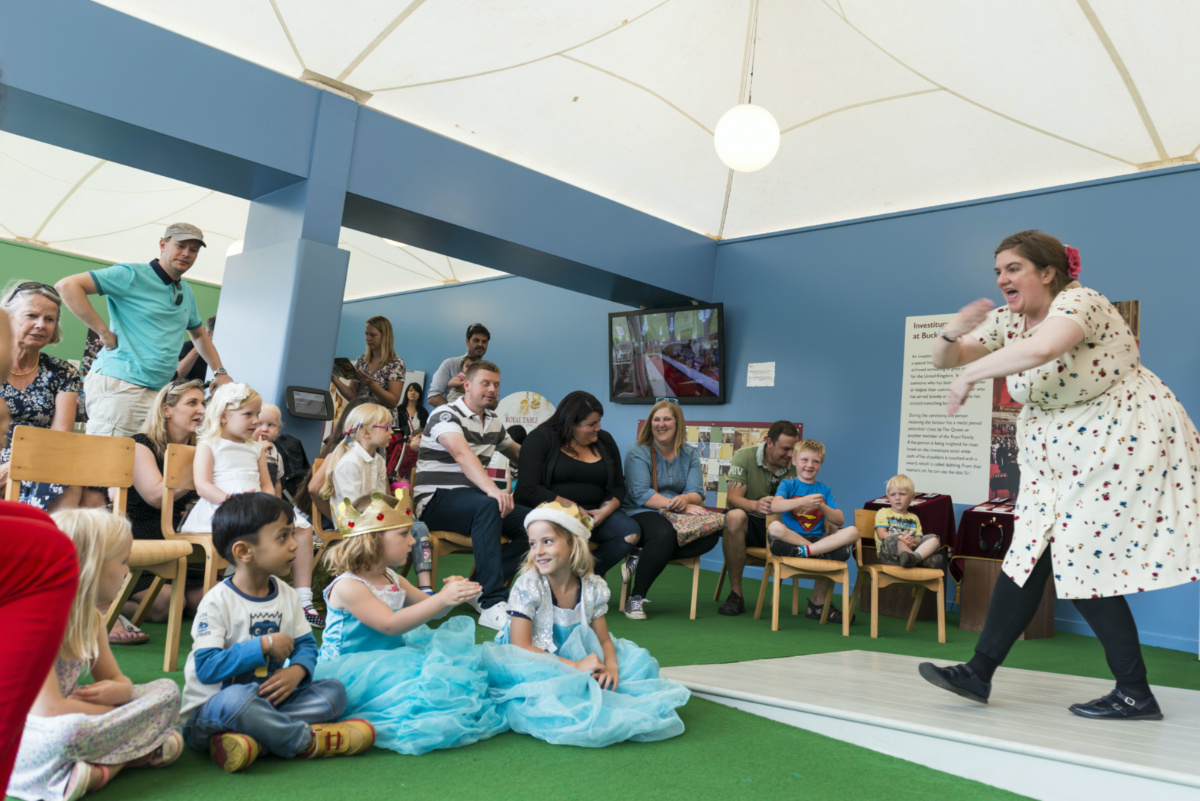
Story-telling in the Family Pavilion PICTURE: Royal Collection Trust / © His Majesty King Charles III 2023

• Families are a special focus of this year’s Summer Opening at Buckingham Palace with a special “Family Pavilion” in the palace garden, “Family Mondays” and a special “Family Festival Day”. The Family Pavilion is open daily and features a range of activities including, inspired by the recent coronations, the chance for children to dress up in gowns and crowns and pose for a photo in a model Gold State Coach. The pavilion also features a rotating programme of arts and crafts activities on Mondays and the family activities will culminate in a special ‘Family Festival’ on 28th August at which families visiting the State Rooms can enjoy story-telling sessions exploring Queen Victoria’s coronation and take part in craft activities outside in the palace garden. Activities are included in the price of admission. For more, see www.rct.uk/visit/buckingham-palace.

Send all items to exploringlondon@gmail.com

London Explained – The Pool of London…

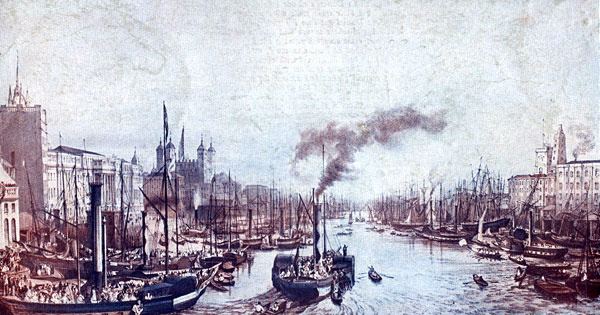
A lithograph showing the Pool of London from London Bridge in 1841. PICTURE: W Parrott/Public Domain

A stretch of the River Thames which spans the area from London Bridge to below Limehouse, the Pool of London was the highest part of the river navigable by tall-masted ships (thanks to the them not being able to pass under London Bridge).

The term originally referred to the stretch of the river at Billingsgate in the City of London which was where all imports had to be delivered for inspection by customs officers (hence these wharves were given the name ‘legal quays’).

But as trade expanded and reached its peak in the 18th and 19th centuries, so too did the stretch referred to as the “Pool of London”. It came to be divided into two sections – the Upper Pool, which stretches from London Bridge to Cherry Garden Pier in Bermondsey (and is bisected by Tower Bridge), and the Lower Pool, which stretched from the latter pier to Limekiln Creek.

The Upper Pool’s north bank includes the Tower of London, the old Billingsgate Market and the entrance to St Katharine’s Dock while the south bank features Hay’s Wharf and the HMS Belfast. The Lower Pool’s north bank includes the entrance to Limehouse Cut as well as Regent’s Canal and Execution Docks while below it runs the Thames and Rotherhithe Tunnels.

This Week in London – Coronation outfits at Buckingham Palace; Rex the Raven; and, a Crystal Palace dinosaur recreated…

Royal Collection Trust / © His Majesty King Charles III 2023

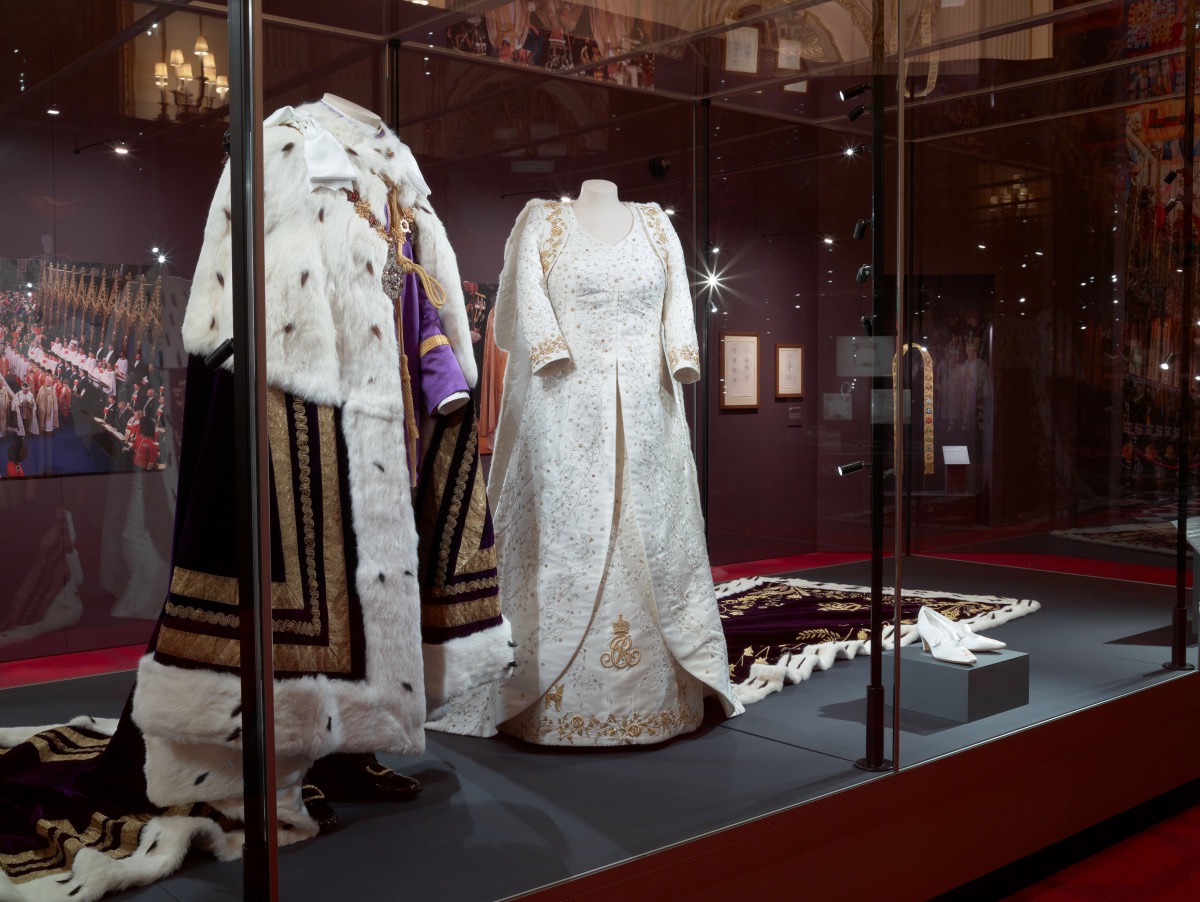
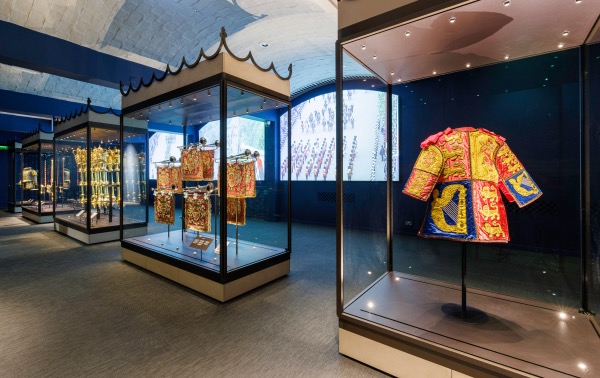
• The coronation outfits worn by King Charles III and Queen Camilla can be seen at Buckingham Palace from Friday as part of the summer opening of the State Rooms. The clothing includes the Robe of Estate worn by the King for his departure from Westminster Abbey (it had been worn by his grandfather King George VI for his coronation in 1937), the King’s cream silk overshirt and the Purple Coronation Tunic – both specially created for the occasion – and the King’s Royal Naval Trousers as well as Queen Camilla’s Bruce Oldfield-designed Coronation Dress and her Robe of Estate. Also on display will be the Coronation Glove and the Girdle or Coronation Sword Belt – both of which were first worn by King George VI at his coronation. Visitors to the State Rooms will also be able to see the Diamond Jubilee State Coach, and by combining their trip with a visit to the Royal Mews, the Gold State Coach, used in every coronation procession since King William IV in 1831. The State Rooms are open until 24th September. Admission charges apply. For more, including an accompanying programme of events, see www.rct.uk.

• A new raven chick, Rex, has joined the flock at the Tower of London. Rex, who is joining the six other ravens at the Tower, is named for the Latin title meaning “King, Ruler” – appropriate for a Tower raven born in the year of HM King Charles III’s Coronation. The term is referenced on King Charles III’s cypher that appears on the uniforms of Yeoman Warders, and above the entrance to the Jewel House. The cypher displays the intertwining initials “C” and “R”, representing “Charles” and “Rex”, an update from Her Late Majesty Queen Elizabeth’s cypher “E R” “(Elizabeth Regina).

PICTURE: James Balston

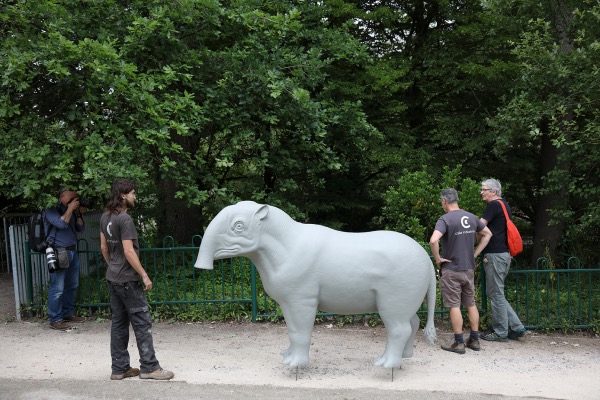
• A recreation of a Victorian-era sculpture of an extinct mammal distantly related to horses, has been placed at the Grade I-listed Crystal Palace dinosaurs site. The 2.2 metre-long sculpture of Palaeotherium magnum is the work of one of Britain’s leading palaeo artist, Bob Nicholls, under the supervision of the Friends of Crystal Palace Dinosaurs, scientists from the Natural History Museum and the University of Portsmouth. It has been funded by the new Crystal Palace Park Trust and Friends of Crystal Palace Dinosaurs.

Send all items to exploringlondon@gmail.com.

A Moment in London’s History…The opening (and subsequent burning) of Alexandra Palace…

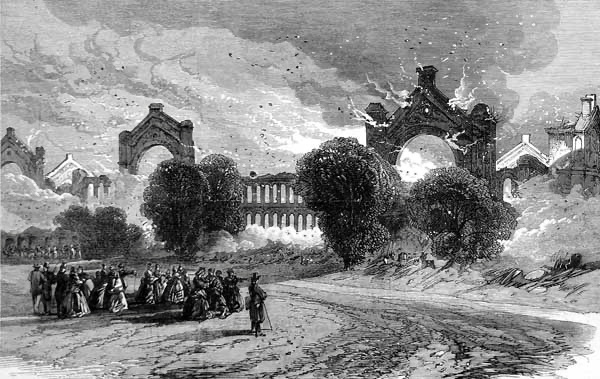
This month marks the 150th anniversary of the fire which destroyed the first Alexandra Palace in the north of London, only two weeks after it was opened.

Conceived by British architect Owen Jones as a “palace of the people”, the palace at Muswell Hill was created to serve as a public centre of recreation, entertainment and education for the people of north London as something of a counterpart to the Crystal Palace in the city’s south.

The 1873 fire as depicted in the Illustrated London News.

Designed by Alfred Meeson and John Johnson, the massive glass, iron and brick building covered some 250,000 square feet. It was constructed using recycled materials from the vast temporary building built for the 1862 International Exhibition in South Kensington. Building works commenced in September, 1865, and it was completed in early 1873.

Officially named Alexandra Palace after the popular Princess of Wales, Alexandra of Denmark (although the name Palace of the People – which had originally been given to the project – remained an alternative as did, later, the shortened “Ally Pally”), it featured a vast 900 foot long central nave capped with a 220 foot high dome as well as first floor galleries and terraces.

The palace and surrounding park were officially opened on 24th May, 1873, the 54th birthday of Queen Victoria. The grand celebration, which was attended by tens of thousands of people, featured concerts, recitals and ended with fireworks.

It was only 16 days after the opening, at lunchtime on 9th June, that the palace was destroyed by a fire believed to have started when a burning ember from a brazier being used by plumbers working on the roof set fire to the building’s timber. Numerous horse drawn and manual fire engines were dispatched to the scene along with some 120 firefighters but to no avail.

Tragically three staff members died as a result of the blaze which left only the outer walls of the palace standing. Among the items destroyed was a collection of English pottery and porcelain which, comprising some 4,700 items, had been on loan.

Plans to rebuild the palace were quickly acted upon and a new and improved palace opened on 1st May, 1875. This building survived a fire in 1980 but about a third of the building was destroyed.

The now Grade II-listed building has since been rebuilt(but that’s a story for a another time).

This Week in London – The Crown Jewels (redisplayed); The Troubles at IWM; and, Tate Britain, rehung…

Part of the new Jewel House display of the Crown Jewels at The Tower of London. PICTURE: ©Historic Royal Palaces

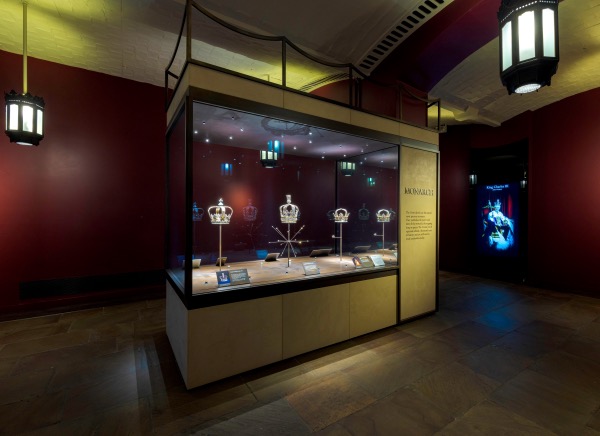
• A new display of the Crown Jewels opens in the Tower of London’s Jewel House tomorrow – the first major change to the display in more than a decade. Opening just weeks after the coronation regalia was used in the coronation of King Charles III and Queen Camilla at Westminster Abbey, the re-presentation of the jewels comes about thanks to a partnership between Historic Royal Palaces and royal jewellers Garrard and is the culmination of a four year project aimed at delving deeper into the history of the collection and coronations. The display, which features images from the recent coronation, starts with a celebration of the timelessness of monarchy featuring the State Crown frames worn by King George I, King George IV and Queen Victoria. It explains how historic jewels including the Black Prince’s Ruby have passed from crown to crown and explores the origins of the current jewels, starting with the destruction of the medieval coronation regalia in 1649. The story of gems including the Koh-i-Noor and Cullinan Diamond will also be explored while at the heart of the display is a room dedicated to the spectacle of the Coronation Procession. It ends with the Treasury containing more than 100 objects including the St Edward’s Crown of 1661, the Sovereign’s Sceptre with Cross and the Sovereign’s Orb. As an added spectacle, for nine nights in November, the Tower will also host a touring light and sound show, Crown and Coronation, which, created in partnership with Luxmuralis Artist Collaboration, will feature imagery and footage of monarchs and coronations past, along with images of the regalia. Images will be projected on buildings of the Inner Ward including the White Tower. The light and sound show, which will run at the Tower from 17th to 25th November, will tour the UK in 2024. Entry is included in general admission. For more, see www.hrp.org.uk/tower-of-london/whats-on/the-crown-jewels/.

More of the new display in the Jewel House of the Crown Jewels at The Tower of London. PICTURE: ©Historic Royal Palaces

• The almost 30-year conflict in Northern Ireland known as The Troubles is the subject of a new exhibition at the Imperial War Museum. Northern Ireland: Living with the Troubles, which opens tomorrow, features familiar objects including rubber bullets, propaganda posters and a Good Friday Agreement booklet as well as rarer items such as a screen-printed handkerchief made by UVF paramilitaries in the Long Kesh internment camp. There will also be the chance to hear first-hand testimonies including from republican and loyalist paramilitaries as well as British soldiers, local police and ordinary civilians, and the opportunity to see archival photography depicting hunger strike riots, army checkpoints and bomb wreckage. Admission is free. Runs until 7th January. For more, see www.iwm.org.uk/visits/iwm-london.

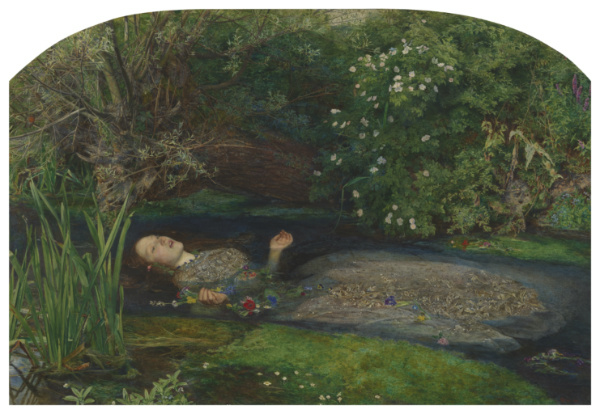
Sir John Everett Millais, Ophelia, 1851-2, Oil paint on canvas; Support: 762 × 1118 mm, frame: 1105 × 1458 × 145 mm
PICTURE: Tate (Seraphina Neville)

•Tate Britain has completed a complete rehang of its free collection displays – the first for 10 years. Visitors can see more than 800 works by 350 artists including iconic treasures such as John Everett Millais’ Ophelia (pictured above), William Hogarth’s The Painter and his Pug, David Hockney’s A Bigger Splash, Barbara Hepworth’s Pelago and Chris Ofili’s No Woman, No Cry. The collection also includes more than 100 works by JMW Turner, rooms devoted to such luminaries as William Blake, John Constable, the Pre-Raphaelites and Henry Moore, and a series of changing solo displays exploring other ground-breaking artists such as Annie Swynnerton, Richard Hamilton, Aubrey Williams and Zineb Sedira. Some 70 of the works in the collection – ranging from Tudor portraits to contemporary installations – which have been acquired in the last five years alone. For more, see www.tate.org.uk.

Send all items to exploringlondon@gmail.com.

LondonLife – The Tower and City of London from another angle…

PICTURE: Zetong Li/Unsplash

LondonLife – Coronation moments…

Some more images from the coronation of King Charles III and Queen Camilla on the weekend…

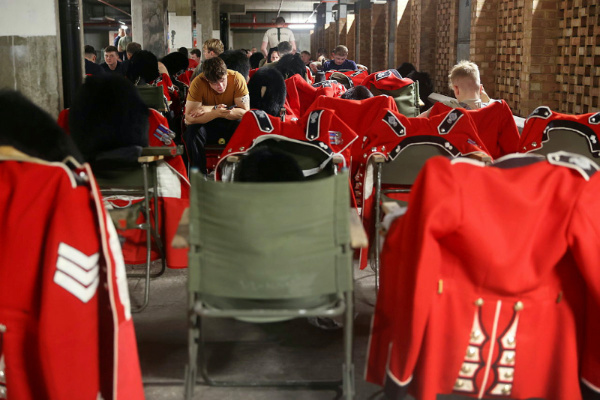
Military personnel, seen here at Wellington Barracks, before taking part in the King’s Coronation. PICTURE: Graeme Main/UK MOD © Crown copyright 2023
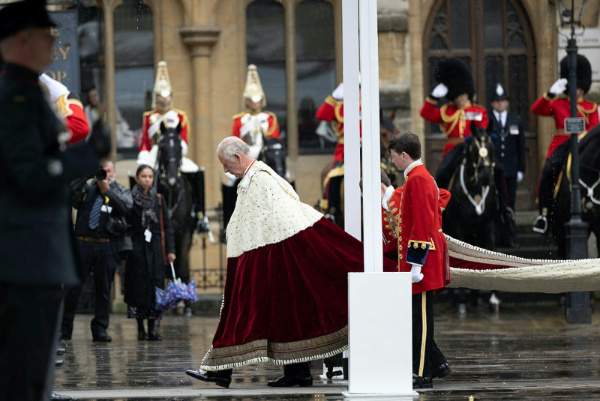
A quiet moment before the Coronation Service in Westminster Abbey as the King walks through the Great West Doors. PICTURE: Sgt Robert Weideman, RLC/ UK MOD © Crown copyright 2023
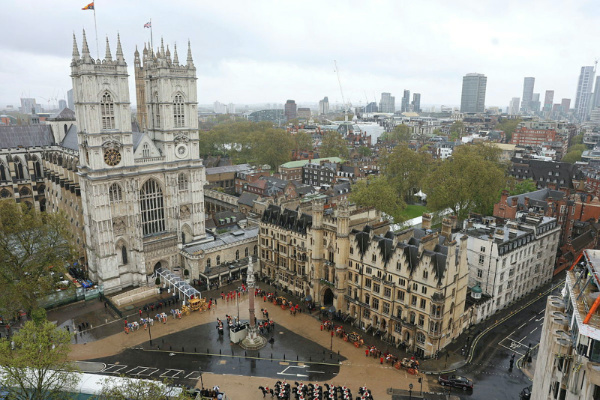
The Gold State Coach, and other royal coaches waiting outside Westminster Abbey for members of the Royal Family before the Coronation Procession. PICTURE: Sgt Jimmy Wise/UK MOD © Crown copyright 2023
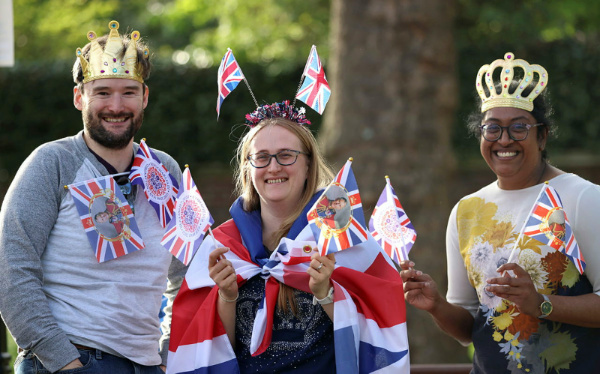
Three of the thousands who lined The Mall to watch the Coronation Procession on Saturday. PICTURE: Sgt EJ Marriott. PICTURE: UK MOD Crown Copyright 2023
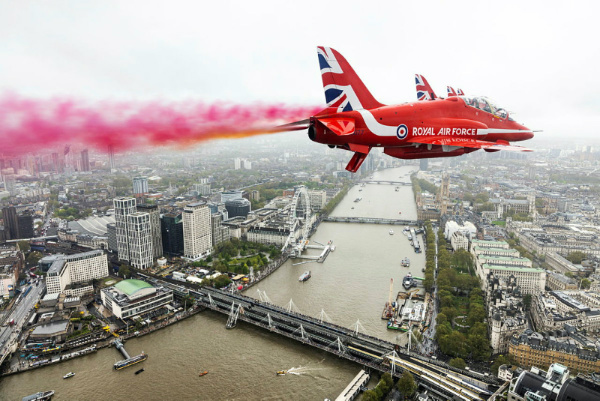
The Red Arrows perform a fly past for King Charles III’s Coronation Day. The sortie was led by Squadron Leader Tom Bould (Red 1). The Red Arrows aerobatics team flew directly down the length of The Mall and over Buckingham Palace, where members of the Royal Family watched on the balcony during the fly past, which was reduced in size because of the weather. PICTURE: Cpl Phil Dye/UK MOD © Crown copyright 2023
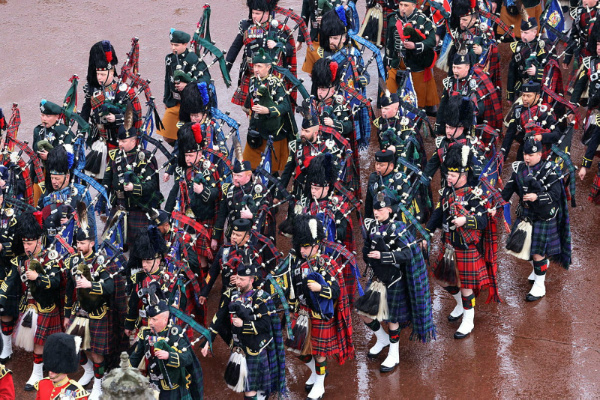
The massed pipers muster before the Royal Salute in the garden of Buckingham Palace following the Coronation Procession. PICTURE: Sgt EJ Marriot/UK MOD © Crown copyright 2023

This Week in London – It’s Coronation weekend!…

Part of the final Coronation Procession rehearsal this week. PICTURE: Sgt Robert Weideman, RLC/Copyright: UK MOD © Crown copyright 2023

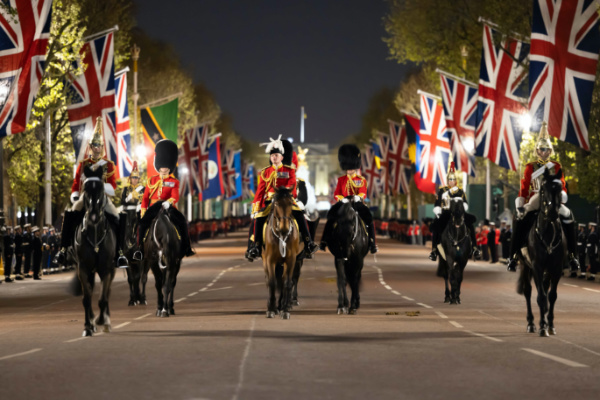
• It’s Coronation weekend in London, so first up it’s a look at the Coronation Procession. The 1.42 mile route from Buckingham Palace to Westminster Abbey, which opens for viewers at 6am on Saturday, will see the procession – with King Charles III and Queen Camilla travelling in the Diamond Jubilee State Coach – leave Buckingham Palace at 10:20am. Known as The King’s Procession, the coach, which will be accompanied by The Sovereign’s Escort of the Household Cavalry, will travel down The Mall, through Admiralty Arch and past Trafalgar Square, before turning down Whitehall. The procession will then make its way down to the Houses of Parliament and around the east and south sides of Parliament Square to Broad Sanctuary and Westminster Abbey.

• The ceremony is scheduled to begin at 11am and is expected to run for two hours. There is, of course, no access to the abbey for uninvited guests but the ceremony will be broadcast live by the BBC and big screens are being set up to watch in St James’s Park, Green Park and Hyde Park as well as Holland Park, Valence Park in Dagenham and Walpole Park in Ealing. 

• At 1pm, the King and Queen will return from Westminster Abbey to Buckingham Palace in The Coronation Procession. They will be riding in the 260-year-old Gold State Coach that has been used in every coronation since that of William IV and accompanied by almost 4,000 members of the armed forces in what’s been called the largest ceremonial military operation in recent decades. Representatives of Commonwealth nations and British Overseas Territories will also take part in the return procession. The route will be the reverse of the outgoing route and see the procession travel back through Parliament Square (lined with an honour guard of 100 members of the Royal British Legion) and up Whitehall to Trafalgar Square, turning left to travel through Admiralty Arch and back down The Mall. Reaching Buckingham Palace, the King and Queen will receive a Royal Salute from the armed forces who have been escorting them followed by three cheers.

• The balcony appearance and flypast. The newly crowned King and Queen Consort are scheduled to appear on the famous balcony on Buckingham Palace at 2.30pm accompanied by members of the royal family. They will watch a six minute flypast of military planes, ending with a display by the Red Arrows.

• On Sunday, communities are invited to join in the Coronation Big Lunch (communities will also be holding street parties throughout the weekend). On Sunday night, the BBC will broadcast The Coronation Concert from Windsor Castle. The concert will feature the Coronation Choir as well as ‘Lighting Up The Nation’ in which locations across the UK will take part. For details on where events are being held, head to https://coronation.gov.uk/events/.

• On Monday, people are encouraged to join in The Big Help Out by volunteering time to help out in your local community. To find out where your local events are, head to https://thebighelpout.org.uk.

Four sites related to royal coronations in London – 4. Buckingham Palace…

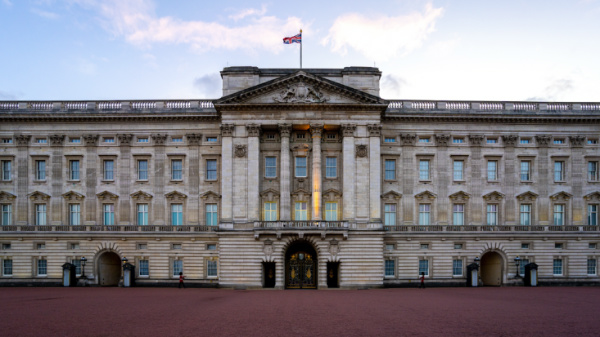
Buckingham Palace. PICTURE: Mike Marrah/Unsplash

Buckingham Palace will play an important role in this weekend’s coronation of King Charles III – not only as the location from which he and Queen Camilla will leave for the ceremony, but also for the famous balcony appearance.

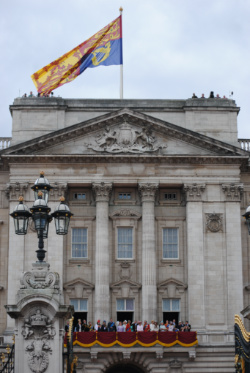
Not just for coronations – the Royal Family on the Buckingham Palace balcony at Trooping the Colour in 2010. PICTURE: David Adams

Monarchs have only been living at the palace since 1837 when Queen Victoria moved in and it has been the official London residence of kings and queens ever since (although it should be noted that since becoming King, Charles has reportedly continued to reside at Clarence House and apparently intends continuing to do so following the coronation).

The palace has been in royal hands since 1761 when King George III bought what was then Buckingham House for the use of his wife Queen Charlotte, given, in particular, its proximity to St James’s Palace where court was held. Hence it become known as the Queen’s House.

King George IV intended using it the same way but in the 1820s had a change of heart and decided, with the aid of architect John Nash, to transform it into a palace. The ballooning work was unfinished when he died, and his successor and younger brother, King William IV, replaced Nash with Edward Blore to complete the work (thanks, apparently, to Nash’s budget blow-outs).

But William didn’t move into the property (in fact, he offered it up as a new home for parliament after much of the old Houses of Parliament were consumed by fire in 1834 – an offer which was not taken up).

Queen Victoria, however, decided to make it her home and she became the first monarch to leave the palace headed to a coronation when she did so in June, 1838.

Victoria also made the first balcony appearance by a monarch at the palace, doing so during celebrations to make the opening of the Great Exhibition in 1851.

But the first balcony appearance by a monarch immediately after their coronation was her son King Edward VII, who appeared on the balcony with his wife Queen Alexandra, to the joy of onlookers following his coronation on 9th August, 1901. Every monarch since has done so after their coronation (King Edward VIII, of course, never having had a coronation).

The King’s mother, Queen Elizabeth II, was the first monarch to watch a flypast on the balcony after her coronation, a tradition the King is expected to continue.

Buckingham Palace has also been the site of Coronation Banquets since the coronation of Queen Victoria (when it replaced Westminster Hall as the location). Queen Elizabeth held two Coronation Banquets in the palace following her coronation on 3rd and 4th June, each attended by 400 guests.

Few details have yet been released about King Charles III’s Coronation Banquet.