The Tower of London is known for many mysteries – the most famous, perhaps, being the fate of the two ‘Princes in the Tower’. But among the other mysterious deaths which took place behind the closed doors of the fortress is the death of the deposed King Henry VI.
Palaces
This Week in London – Queen Victoria’s Christmas childhood; Parmagianino’s Madonna and Child with Saints; and, Buckingham Palace winter tours…
• Step back in time at Kensington Palace this Christmas with an experience inspired by Queen’s Victoria’s childhood at the palace. Victoria’s Childhood Christmas features intricately designed installations – everything from trees hung with sugar ornaments and handmade paper decorations to bespoke illustrations and period-style gifts – as well as an exploration of how some of the traditions still celebrated today – such as arranging numerous Christmas trees on table tops and displaying unwrapped presents around them – can be traced back to the 1830s at Kensington Palace. There’s also a pop-up theatre set which captures the magic of Victoria’s winter trips to London opera houses and a festive-themed afternoon tea inspired by Princess Victoria’s Christmas traditions served in The Orangery. The experience, which is included in general admission, can be seen until 5th January. For more, see www.hrp.org.uk/kensington-palace/
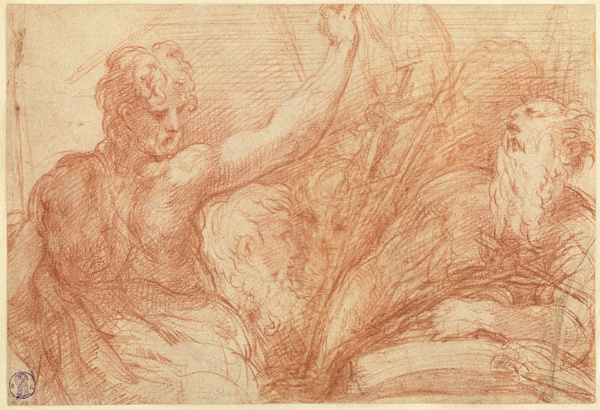
• Parmigianino’s Madonna and Child with Saints (1526‒7) returns to display in The National Gallery for the first time in a decade in honour of the gallery’s 200th anniversary. The work, which is also known as The Vision of Saint Jerome, was presented to the gallery in 1826 and is being displayed with a selection of some of the most important preparatory drawings providing a rare opportunity to follow the artist’s creative process. The painting can be seen in Room 46 until 9th March. Entry is free. For more, see nationalgallery.org.uk.
• The Buckingham Palace State Rooms are open for one hour tours on select dates throughout winter. Led by an expert guide, the tours, which have a maximum of 30 people, include a complimentary guide. For more, see https://www.rct.uk/whatson
Send all items to exploringlondon@gmail.com
This Week in London – Lord Mayor’s Show; ‘Poppy Fields at the Tower’; and, ‘The Great Mughals’ at the V&A…
• The Lord Mayor’s Show – featuring the 696th Lord Mayor of London, Alastair King – will be held this Saturday. The three-mile long procession – in which the Lord Mayor will ride in the Gold State Coach – features some 7,000 people, 250 horses, and 150 floats. It will set off from Mansion House at 11am and travel down Poultry and Cheapside to St Paul’s Cathedral before moving on down Ludgate Hill and Fleet Street to the Royal Courts of Justice. The return journey will set off again at 1:10pm from Temple Place and travel via Queen Victoria Street back to Mansion House where he will take the salute from the Pikemen and Musketeers at 2:40pm. For more information, including where to watch the show, head to https://lordmayorsshow.london.
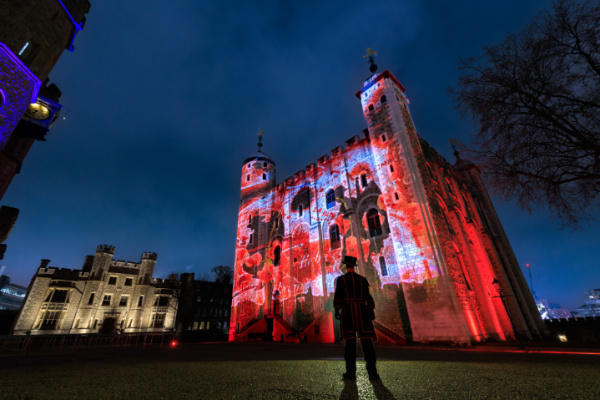
• An immersive sound and light show commemorating World War I and II opens at the Tower of London tomorrow ahead of Armistice Day and Remembrance Sunday. Historic Royal Palaces has partnered with Luxmuralis to present Poppy Fields at the Tower with visitors invited to go inside the Tower where – recalling the 2014 display Bloodswept Lands and Seas of Red in the Tower of London moat to mark the centenary of World War I – the walls will not only be illuminated with tumbling poppies but also historic photographs, documents and plans. The display is being accompanied by music composed by David Harper, and poetry recordings. Visitors will also be granted special access to see the Crown Jewels after-hours to learn more about their removal from the Tower during both World Wars. Runs until 16th November and should be pre-booked. Admission charges apply. For more, see https://www.hrp.org.uk/tower-of-london/whats-on/poppy-fields-at-the-tower/.
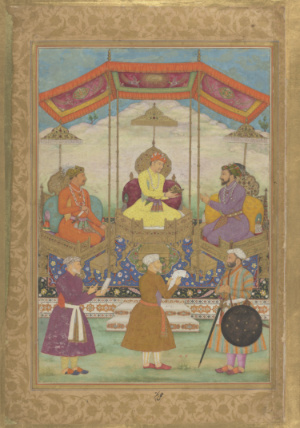
from the Minto Album. © CC BY – 4.0. Chester Beatty, Dublin
• An exhibition celebrating the golden age of the Mughal Court opens at the V&A in South Kensington on Saturday. The Great Mughals: Art, Architecture and Opulence examines the “creative output and internationalist culture” of Mughal Hindustan during the age of its greatest emperors, a period spanning c1560 to 1660. More than 200 objects are on display arranged in three sections corresponding to the reigns of the Emperor Akbar (1556-1605), Jahangir (1605 to 1627) and Shah Jahan (1628 to 1658). The objects include paintings, illustrated manuscripts, vessels made from mother of pearl, rock crystal, jade and precious metals. Highlights include four folios from the Book of Hamza, commissioned by Akbar in 1570, and the Ames carpet which was made in the imperial workshops between c1590 and 1600 and is on display for the first time in the UK. There’s also a unique wine cup made from white nephrite jade in the shape of a ram’s head for Shah Jahan in 1657, two paintings depicting a North American Turkey Cock and an African zebra created by Jahangir’s artists, and a gold dagger and scabbard set with over 2,000 rubies, emeralds and diamonds. Runs in Galleries 38 and 39 until 5th May. Admission charge applies. For more, see www.vam.ac.uk.
• Send all items for inclusion to exploringlondon@gmail.com.
This Week in London – Medieval women at the British Library; Renaissance drawings at The King’s Gallery; and, ‘Duo’ in the Painted Hall…
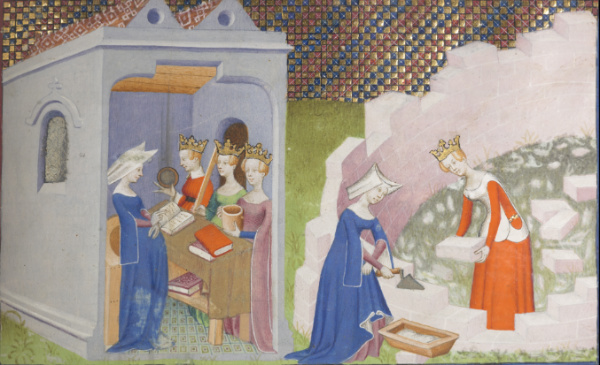
• The lives of medieval women are the subject of a new exhibition at the British Library. Medieval Women: In Their Own Words features more than 140 objects with highlights including a letter bearing the earliest known signature of Joan of Arc which has never before been displayed outside France, a manuscript made in the early 15th century under the personal supervision of Christine de Pizan – the first professional women author in Europe, a 12th century ivory carving which belonged to Sybilla of Flanders, and, the oldest surviving Valentine’s Day letter, sent by Margery Brews in 1477. There’s also the book Behinat Olam Mantua, published between 1476 and 1480 by Estellina Conat who was the first recorded woman to print a book in Hebrew, the only surviving copy of the earliest known autobiography in English, The Book of Margery Kempe, which was probably written around 1438, a 15th century birthing girdle and the largest hoard of medieval gold coins ever discovered in Britain which was probably gathered as a result of Margaret of Anjou’s fundraising efforts in support of the Lancastrian side in the Wars of the Roses. The display is a multi-sensory experience which, as well as the objects on show, features scent installations, films, music and interactive digital technologies. The exhibition, which is accompanied by a programme of events, can be seen until 2nd March. Admission charge applies. For more, see www.bl.uk.
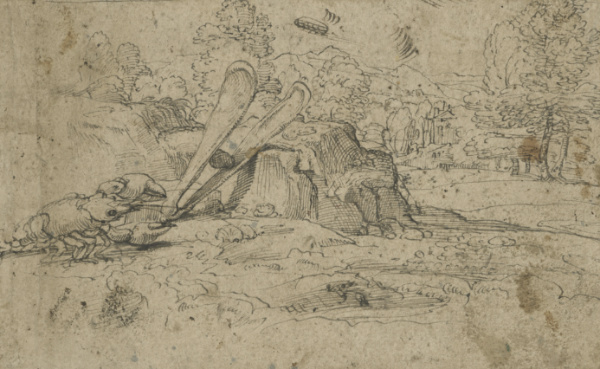
• An exhibition of the widest range of drawings from the Italian Renaissance ever to be shown in the UK opens at The King’s Gallery in Buckingham Palace on Friday. Drawing the Italian Renaissance features more than 160 works by more than 80 artists including Leonardo da Vinci, Michelangelo, Raphael and Titian. The works are all drawn from the Royal Collection and more than 30 are on display for the first time while a further 12 have never been shown in the UK. Highlights include Raphael’s The Three Graces in red chalk (c1517-18), Fra Angelico’s The bust of a cleric (c1447-50), a chalk study of an ostrich attributed to Titian (c1550), Leonardo da Vinci’s A costume study for a masque (c1517-18), Michelangelo’s The Virgin and Child with the young Baptist (c1532), and works by lesser-known artists such as Paolo Farinati’s 1590 study of three mythological figures under an arch. Admission charge applies. Can be seen until 9th March. For more, head to www.rct.uk/collection/exhibitions/drawing-the-italian-renaissance/the-kings-gallery-buckingham-palace
• Melek Zeynep Bulut’s postponed installation Duo can be seen in the Painted Hall at the Old Royal Naval College in Greenwich – but only until Sunday. Presented in partnership with the London Design Festival, Duo is a suspended installation which explores the concepts of duality and interaction. Admission charge applies. For more, see https://ornc.org/whats-on/ldf/.
Send all items for inclusion to exploringlondon@gmail.com
10 towers with a history in London – A recap…
This Week in London – ‘The World of Tim Burton’; Halloween at Hampton Court, the Tower, and Kew Gardens; and, Diwali celebrations…
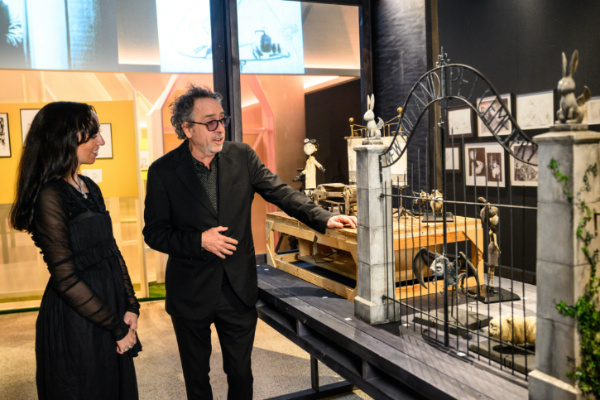
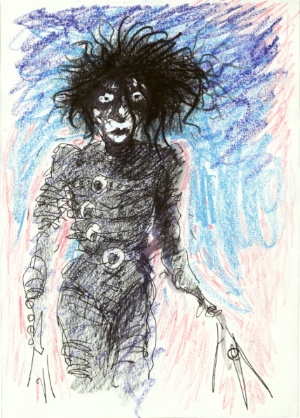
• The fantastical world of celebrated film-maker Tim Burton is on display in a touring exhibition opening at the Design Museum on Friday. The World of Tim Burton, making its final stop after a decade-long world tour, showcases his 50 years of creative output and looks at not only his role as film-maker but as illustrator, painter, photographer and author. Drawn from Tim Burton’s personal archive as well as film studio collections and other private holdings, the more than 600 objects include film props, drawings, paintings, photographs, sketchbooks, moving-image works, sculptural installations, set and costume design. Highlights include the Catwoman suit from 1992’s Batman Returns, Wednesday Addams’ viral Rave’N dance dress from the recent Netflix series and the Edward Scissorhands costume worn by actor Johnny Depp in the 1990 film. There’s also early drawings of the Martians from Mars Attacks! (1996), the Mad Hatter from Alice in Wonderland (2010), and Emily in Tim Burton’s Corpse Bride (2005) and a specially created cinema experience which gives voice to some of Burton’s key collaborators and is being shown in a bespoke art-deco space reminiscent of the theatres Burton frequented as a child growing up in Hollywood. Runs until 21st April. Admission charge applies. For more, see https://designmuseum.org/exhibitions/the-world-of-tim-burton.
• Hampton Court Palace and the Tower of London are marking Halloween with a series of spine-tingling events which delve into the mysterious past of the royal residences. From Saturday, visitors to Hampton Court Palace can, among other things, discover the ‘Alchemist’s Apothecary’ and meet the ghost of a long-departed alchemist, venture into the ‘Spider’s Lair’ in the depths of the palace’s wine cellar, catch a glimpse the frantic ghost of Catherine Howard in the Haunted Gallery, and encounter the spirit of Sybil Penn, a former nurse to Henry VIII’s son Edward, who has haunted the palace hallways ever since her tomb was disturbed. At the the Tower of London, meanwhile, the grounds have been transformed, hosting everything from a haunted chess game on the South Lawn to a glimpse into the tower’s astronomical past, complete with celestial maps and scientific instruments. Events take place until 3rd November. Admission charge applies. For more, see www.hrp.org.uk/hampton-court-palace/ or www.hrp.org.uk/tower-of-london/.
• The first Halloween-themed light trail has opened at Kew Gardens with eerie illuminated trees, ghoulish installations and fire performers. Visitors can wander through an illuminated spiders web or discover a neon Carnivorous Tree feeding on unsuspecting skeletons by choosing one of three sessions to attend (daylight, twilight and moonlight) with things getting scarier as the evening progresses. Runs until 3rd November. Admission charge applies. For more, see www.kew.org/kew-gardens/whats-on/halloween-at-kew.
• Diwali is being celebrated on Trafalgar Square this Sunday in a free, family-friendly festival. Delivered in partnership with the volunteer-led Diwali in London committee, the event – which showcases the culture of London’s Hindu, Sikh and Jain communities – features a programme of dance, music, activities and food. Highlights include dance workshops, sari and turban tying and the new Bhajan singing space where groups will perform throughout the day. The day runs from 1pm to 7pm. For more, see www.london.gov.uk/events/diwali-square-2024.
Send all items to exploringlondon@gmail.com
10 towers with a history in London – 8. The Bell Tower…
We return to the Tower of London this week to look at the history of another of its storied towers.
Support out work and subscribe for just £3 a month for full access to the site.
10 towers with a history in London – 1. The Bloody Tower…

Carrying rather a gruesome name, this rectangular-shaped tower sits over a gate leading from outer ward into the inner ward in the Tower of London.
The tower, which once controlled the watergate before the outer walls were constructed, was originally known as the Garden Tower due to its location adjoining the Tower Lieutenant’s Garden.
To see the rest of this post (and all of our coverage), subscribe for just £3 a month. This small contribution – less than the cost of a cup of coffee – will help us continue and grow our coverage. We appreciate your support!
Treasures of London – The Abraham Tapestries, Hampton Court Palace…
Hanging in the Tudor Great Hall at Hampton Court Palace, this series of 10 huge tapestries are believed to have been commissioned by King Henry VIII and were first hung in the hall in 1546.
To see the rest of this post (and all of our coverage), subscribe for just £3 a month. This small contribution – less than the cost of a cup of coffee – will help us continue and grow our coverage. We appreciate your support!
This Week in London – West Ham Park celebrates its 150th; rare examples of 17th century paper-cutting; King Henry VIII jousts at Hampton Court; the collection of Elizabeth Legh; and, ‘Horrible Science’…
• West Ham Park celebrates its 150th anniversary this weekend with a festival of music, food, sport, and other activities. On Saturday there will be a free, family-friendly festival with music – including appearances by Australian-born singer-songwriter Celina Sharma and singer-songwriter, Fiaa Hamilton, as well as a DJ set from Ellis – along with arts and crafts, a children’s fun fair and local food stalls. On Sunday, activities are based around the theme of ‘give it a go’ with visitors able try out various sports and health activities, including football, cricket, tennis, athletics, Tai Chi, and long-boarding. There will also be free taster sessions and opportunities to meet local sporting legends. An outdoor exhibition about the park’s history can be seen in Guildhall Yard in the City leading-up to the event after which it will be moved to Aldgate Square. West Ham Park is the largest green space in the London Borough of Newham and has been managed by the City of London Corporation since 1874. Activities on both days start at 12pm. For more, see www.cityoflondon.gov.uk/westhampark150.
To see the rest of this post (and all of our coverage), subscribe for just £3 a month. This small contribution – less than the cost of a cup of coffee – will help us continue and grow our coverage. We appreciate your support!
This Week in London – ‘The Tudor World’ explored; ‘Crossing Borders’ at the Horniman; and, TfL deal at the Painted Hall…
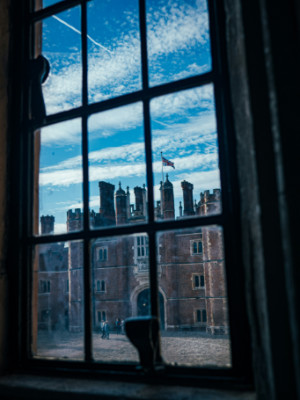
• The oldest surviving rooms at Hampton Court Palace – the Wolsey Rooms which King Henry VIII and Thomas Wolsey once used – are the location of a new display opening today exploring the early years of Henry VIII’s reign and the lives of the ‘ordinary’ men and women who shaped the Tudor dynasty. The Tudor World has, at its centre, rare surviving paintings from the Royal Collection including The Embarkation of Dover – depicting the Tudor navy – and The Field of Cloth of Gold which details Henry VIII’s summit with King Francis I of France in 1520. Also on show is a gold ring believed to have belonged to the Boleyn family, a brightly coloured silk hat linked to King Henry VIII, Wolsey’s portable sundial, a wooden chest used to hide religious contraband by Catholic priests during the reign of Queen Elizabeth I, and, an original Tudor chain pump used to help empty the Hampton Court cesspool. Among the stories of “ordinary” Tudor people being shared is that of Anne Harris, Henry VIII’s personal laundry woman who washed the bandages for his leg ulcers and, Jacques Francis, a free-diver from West Africa who was involved in the expedition to salvage guns from the sunken Mary Rose and who later became one of the first Black African voices heard in an English court, when he was called to testify in a case concerning his employer, Paulo Corsi. Included in palace admission. For more, see www.hrp.org.uk/hampton-court-palace/.
• Crossing Borders, a day of free activities, performances and workshops run by local newly arrived people, will be held at the Horniman Museum Gardens in Forest Hill this Saturday. The day will feature arts and crafts workshops led by IRMO, dance performances by Miski Ayllu and the Honduran Folkloric Pride Group, the chance to learn circus skills with young people from Da’aro Youth Project and South London Refugee Association, and the opportunity to make kites with Southwark Day Centre for Asylum Seekers. The free event runs from 11am to 4pm. For more, see https://www.horniman.ac.uk/event/crossing-borders/.
• Transport for London customers can save 30 per cent on entry to the Painted Hall at the Old Royal Naval College when using the TfL network until 17th November. Simply show customers show your TfL journey on the day of your visit via the TfL Oyster and Contactless app and receive the discount, taking the adult entry price, when booked online to just £11.55. For bookings, head to https://londonblog.tfl.gov.uk/2022/07/27/in-the-city/.
Send all items for inclusion to exploringlondon@gmail.com.
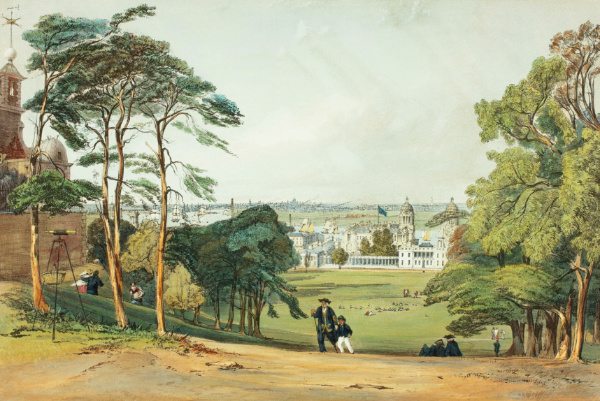
LondonLife – Views of London past…
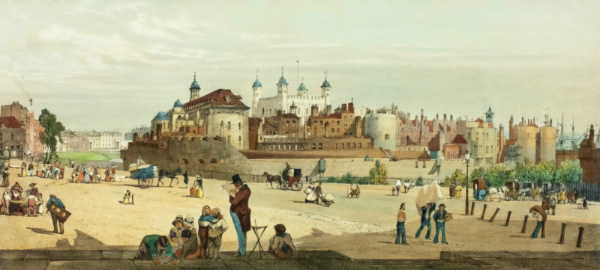
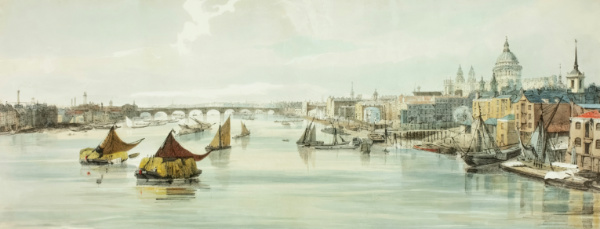
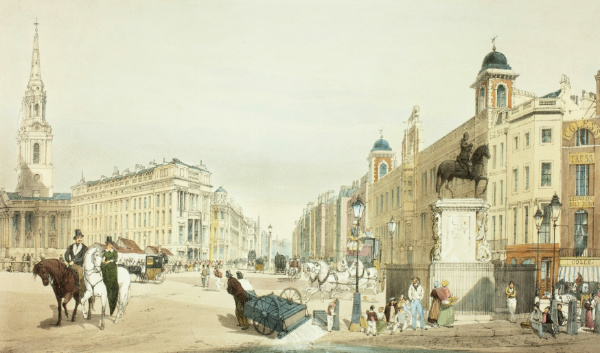
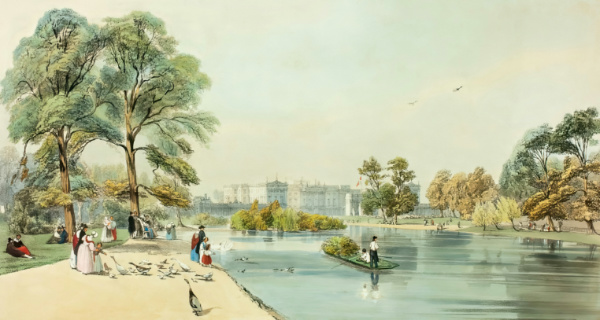
This Week in London – Trail-blazing women celebrated at the Tower; ‘The Judgement of Paris’ back on show; and, Barbie at the Design Museum…
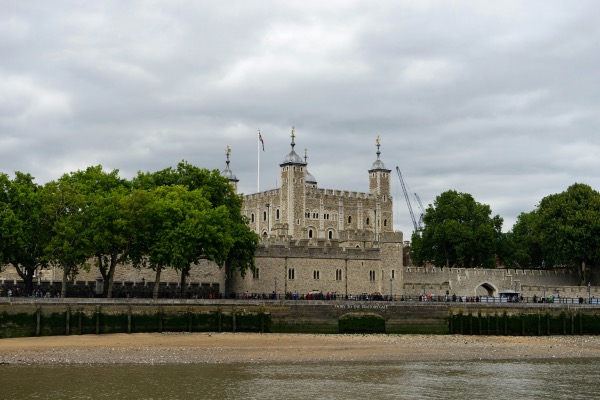
• The lives of five little-known trail-blazing women are being celebrated at the Tower of London. The five women – who will take part in a guided procession through the grounds and features in staged performances and face-to-face interactions at the Tower this summer – include Winifred Maxwell, a fearless Jacobite who smuggled her husband out of the Tower the night before his execution and Katherine le Fevre, who served as the Master Smith of the Tower during the Hundred Year War with France. Also represented are Phillis Wheatley, an intellectual prodigy and enslaved woman hailing from West Africa who became the first African-American author of a published book of poetry; Catalina of Motril, a Granadan bedchamber attendant of Katherine of Aragon who was privy to her former mistress’ secrets; and, Leonora Cohen, Yorkshire-born Suffragette who smashed the case holding the Crown Jewels at the Tower with an iron bar – and kept campaigning until she was 105. The chance to meet the women is included in general admission until 1st September. For more, see www.hrp.org.uk/tower-of-london/.
• Peter Paul Rubens’ The Judgement of Paris has returned to public display after a 14 month restoration project. The project found that the painting, believed to date from 1632‒5 during the last decade of Ruben’s life, has been restored several times including a significant re-working of the composition sometime between 1676 and 1721. The new analysis reveals what changes were made by Rubens himself to the work – which arrived in Britain in 1792 and was acquired by the National Gallery in 1844 – and which were done after his death. For more, see www.nationalgallery.org.uk.
• A major exhibition on the creation and evolution of Barbie opens at the Design Museum on Friday. Barbie: The Exhibition, which coincides with the 65th anniversary of the Barbie brand, showcases the diversity of the Barbie range, as well as her friends (and, of course Ken) and looks at how Barbie’s homes, vehicles and other products have reflected the tastes and trends of day. Highlights include a rare first edition of the first doll released by Mattel in 1959 (‘Number 1 Barbie’), the ground-breaking ‘Day to Night Barbie’ from 1985 and the best-selling Barbie of all time, 1992’s ‘Totally Hair Barbie’, which sold more than 10 million across the globe. There are also examples of the first Black, Hispanic and Asian dolls to bear the Barbie name as well as the first Barbie with Down syndrome, the first to use a wheelchair, and the first to be designed with a curvy body shape. Runs until 23rd February. Admission change applies. For more, see https://designmuseum.org/exhibitions/barbie-the-exhibition.
Send all items to exploringlondon@gmail.com.
LondonLife – Trooping the Colour…

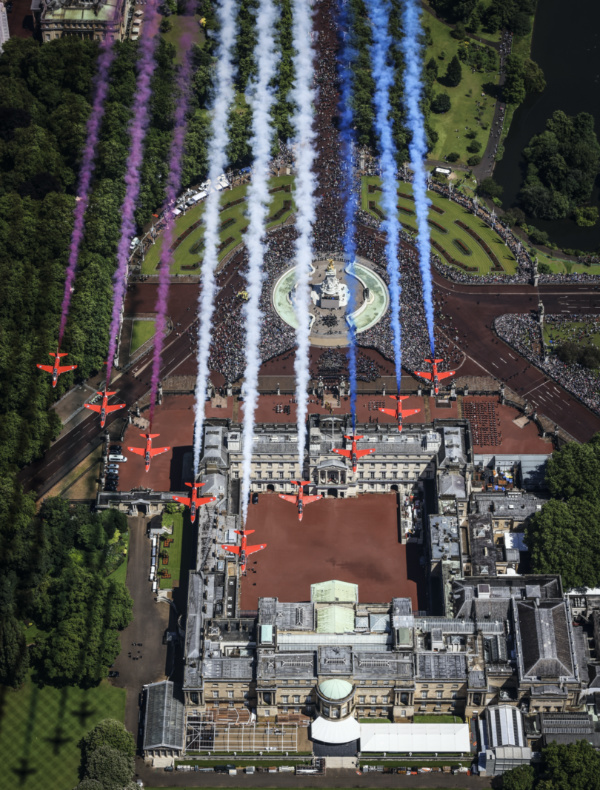
The King’s Birthday Parade took place in central London on Saturday featuring some 242 military working horses, 250 military musicians, 40 pipers and drummers, and more than 1,000 dual role soldiers of the British Army’s Household Division. The parade is a gift from the British Army’s Household Division to the King and is traditionally held on the second Saturday in June, regardless of the Sovereign’s actual date of birth.


This Week in London – Royal portraits; Sir Elton’s photographic collection revealed; and, women artists…
• Royal portrait photography, from the 1920s through to today, is the subject of a new exhibition opening at the King’s Gallery at Buckingham Palace on Friday. Royal Portraits: A Century of Photography features more than 50 photographic prints, proofs and documents from the Royal Collection and the Royal Archives. Among the royal photographers whose work is on show are everyone from Cecil Beaton and Dorothy Wilding to Annie Lebovitz and Rankin as well as Lord Snowdon (born Antony Armstrong-Jones). Highlights include Beaton’s 1939 shoot featuring Queen Elizabeth, The Queen Mother, in Buckingham Palace Gardens dressed in her “White Wardrobe” by Norman Hartnell, and his original coronation portraits of Queen Elizabeth II. Admission charge applies. Runs until 6th October. For more, head here.
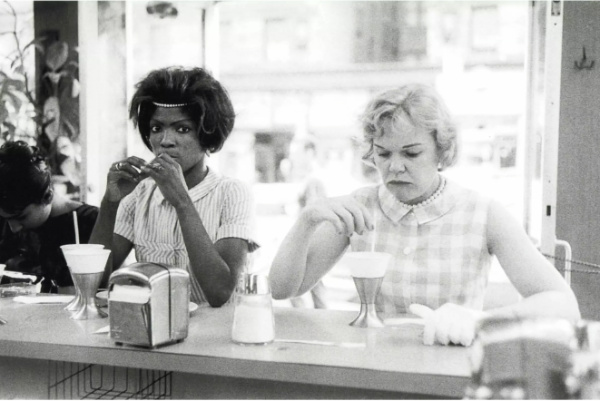
• More than 300 prints from the private photographic collection of Sir Elton John and David Furnish got on display at the V&A from Saturday. Fragile Beauty: Photographs from the Sir Elton John and David Furnish Collection will showcase the work of more than 140 photographers and the V&A’s largest temporary exhibition of photography to date. Photographers include everyone from Robert Mapplethorpe, Cindy Sherman, and William Eggleston to Diane Arbus, Sally Mann, Zanele Muholi, Ai Weiwei and Carrie Mae Weems and the subjects explored include fashion, reportage, celebrity, the male body, and American photography. Portraits of Marilyn Monroe, Miles Davis, and Chet Baker are among the highlights. Runs until 5th January in The Sainsbury Gallery. Admission charge applies. For more, see www.vam.ac.uk.

• An exhibition focusing on the path women have taken to being recognised as professional artists opens today at Tate Britain. Now You See Us: Women Artists in Britain 1520-1920 features more than 200 works, including oil painting, watercolour, pastel, sculpture, photography and ‘needlepainting’, created by more than 100 artists including Artemisia Gentileschi, Angelica Kauffman, Julia Margaret Cameron and Gwen John. Highlights include Tudor miniatures by Levina Teerlinc, Gentileschi’s Susanna and the Elders (1638-40), the work of 18th century needlewoman Mary Linwood, Elizabeth Butler (née Thompson)’sThe Roll Call (1874), and, the work of Laura Knight and Ethel Walker, who, on the 120th century achieved critical acclaim and membership of the Royal Academy. Runs until 13th October. Admission charge applies. Head to tate.org.uk.
Send all items to exploringlondon@gmail.com.
This Week in London – Caravaggio’s last painting; Hampton Court’s Tulip Festival; and, ‘Beyond the Bassline’….
• Caravaggio’s last painting – the 1610 work known as The Martyrdom of Saint Ursula – has gone on display in the UK for the first time in almost 20 years. The National Gallery is displaying the work – lent by the Intesa Sanpaolo Collection (Gallerie d’Italia – Naples) – alongside another late work by the Italian artist from the gallery own collection – Salome receives the Head of John the Baptist (about 1609–10). The Martyrdom of Saint Ursula, which features a self-portrait of the artist, was only reattributed to Caravaggio in 1980 following the discovery of an archival letter describing its commission. The letter – which is being displayed along with the painting – was sent from Naples, where Caravaggio created the work, to Genoa, where his patron, Marcantonio Doria, lived. Caravaggio died in Porto Ercole on 18th July, 1610, less than two months after finishing the work. He was attempting to return to Rome where he believed he would be pardoned for a 1606 murder at the time. Admission to the display is free. Runs until 21st July. For more, see www.nationalgallery.org.uk.
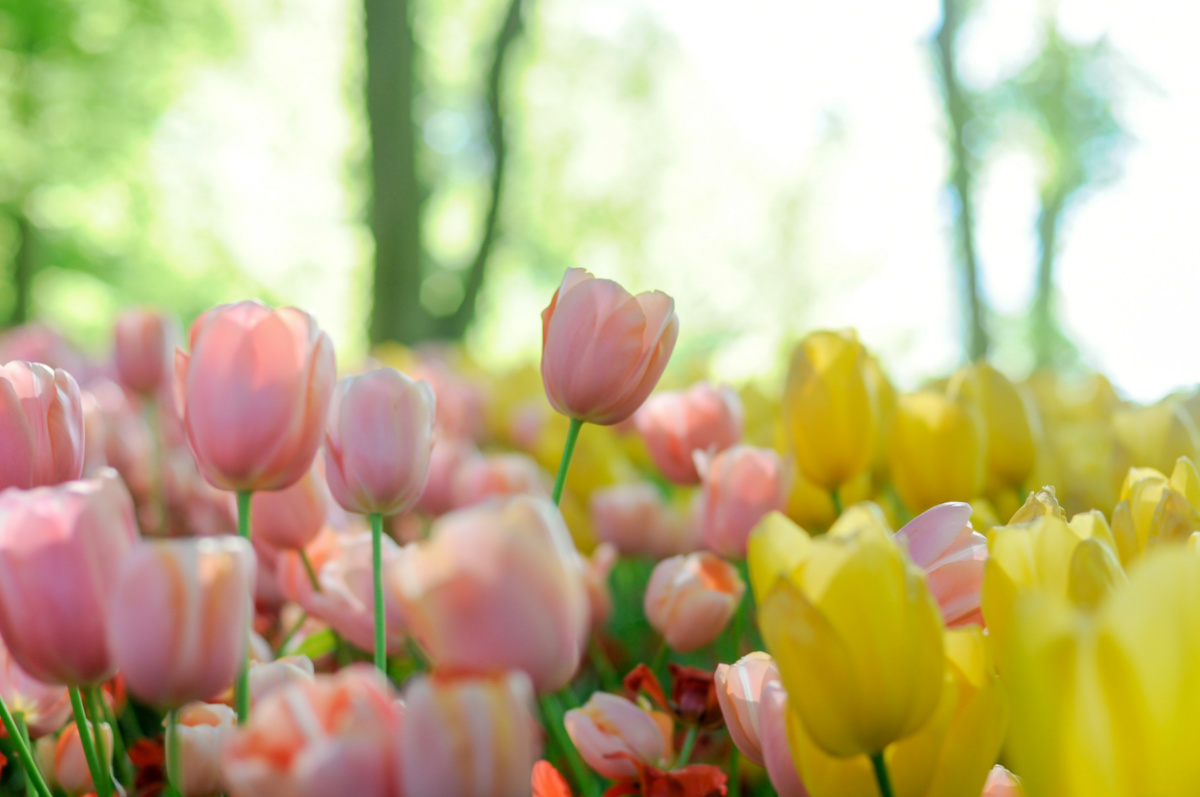
• Hampton Court Palace’s Tulip Festival is on again. Displays include thousands of tulips spilling from a Victorian horse cart in the heart of the palace courtyards, giving the appearance of a Dutch flower seller’s cart, ‘floating’ bowls in the Great Fountain, free-style plantings in the kitchen gardens and more than 10,000 tulips in a display in Fountain Court. There are also daily ‘Tulip Talks’ sharing the history of the flower and Queen Mary II, who was responsible for introducing them to Hampton Court. Runs until 6th May (including in palace admission). For more, see www.hrp.org.uk/hampton-court-palace/whats-on/tulip-festival/.
• Five hundred years of Black British music is being celebrated in a new exhibition at the British Library. Beyond the Bassline: 500 Years of Black British Music features soundscapes, artworks and films along with costumes, interactive displays, and of course, music. Highlights among the more than 200 exhibits include letters from 18th-century composer Ignatius Sancho, records by likes of Fela Kuti and Shirley Bassey, a nostalgic video archive of grime’s golden era captured on Risky Roadz DVD, and the equipment that Jamal Edwards used to start SB.TV, theYouTube channel dedicated to Black British music. The display concludes with a multi-screen film installation by South London-based musical movement and curatorial platform Touching Bass. Admission charge applies (with Pay What You Can days on the first Wednesday of each month). Runs until 26th August. For more, see https://beyondthebassline.seetickets.com/timeslots/filter/beyond-the-bassline.
Send all items to exploringlondon@gmail.com
Famous Londoners – Princess Sophia Duleep Singh…
A suffragette and women’s right’s campaigner, Princess Sophia Jindan Alexandrovna Duleep Singh was the daughter of the deposed Maharaja Sir Duleep Singh, last Sikh emperor of Punjab, and god-daughter of Queen Victoria and is known for having leveraged her position to advocate for the rights of others.

Singh was born on 8th August, 1876, at a house in Belgravia, the third daughter of the Maharajah and his German-born first wife, Bamba Müller. The fifth of six children, she was named Sophia for her maternal grandmother, a formerly enslaved woman from Ethiopia who married a wealthy German banker, and Alexandrovna in tribute to her godmother, Queen Victoria.
Following his forced abdication, the Maharaja had travelled to England as a boy in 1854 where he lived on an annual government pension of £25,000. Having later married Bamba in Cairo, he returned to England where in 1863 he purchased Elvedon Hall in Suffolk (which he later rebuilt). Sophia subsequently spent her childhood there.
But after the breakdown of her parents’ marriage (after which her father remarried before being exiled to Paris where he campaigned for a return to India until his death in 1889) and the death of her mother in 1887 from typhoid (she had contracted the disease but survived), Sophia and her siblings were placed in the care of Arthur Craigie Oliphant – chosen by Queen Victoria to be guardian – first at their home in Folkestone and then in Brighton.
After finishing her education at a girls school in Brighton, Sophia and her sisters sisters Bamba and Catherine embarked upon a six-month tour of Holland, Germany, Greece, Italy, and Egypt.
Sophia, who had inherited some of her father’s fortune, was given Faraday House – part of the Hampton Court estate – as a grace-and-favour apartment by Queen Victoria in 1896 (along with an annual grant to maintain the property and a key to Hampton Court Palace where she could walk her dogs).
The princess took a keen interest in dogs – she was a member of the Ladies’ Kennel Association and showed her dogs on several occasions – as well in music, photography and fashion. She also supported Indians in London, particularly those in the Sikh community, and travelled to India a number of occasions.
Princess Sophia is known for her work in the women’s suffrage movement and was an active member of the Women’s Social and Political Union. She was present in Parliament Square ion 18th November, 1910, when more than 300 suffragettes including Emmeline Pankhurst gathered and demanded to see the Prime Minister HH Asquith and, having refused to disperse when he refused to see them, were met with a violent response by police. The day, which resulted in injuries to more than 200 women including two who died of them, became known as Black Friday.
Sophia was also, perhaps more importantly in terms of public impact, a member of the Women’s Tax Reform League and refused to pay fines on a couple of occasions, protesting that taxation without representation was “tyranny” (with the result that some of her jewels were confiscated and auctioned off).

During World War I, Princess Sophia – as well as being part of a 10,000-strong march calling for the establishment of a female volunteer force – was involved in fundraising for organisations such as the Red Cross and in support of Indian soldiers and also worked as a nurse at the Brighton Pavilion and other hospitals where Indian soldiers were recovering.
During World War II, Sophia moved to Penn, Buckinghamshire, with her sister Catherine, and took in evacuee children from London.
Having never married, Princess Sophia died in her sleep in Penn on 22nd August, 1948. A full band played Wagner’s Funeral March at her cremation and her ashes were taken to India for burial.
Sophia’s name and image are among those on the plinth of the statue of Millicent Fawcett in Parliament Square. In 2023, an English Heritage Blue Plaque was unveiled on Faraday House in Richmond.
Sources: Historic Royal Palaces; Oxford Dictionary of National Biography; BBC.
This Week in London – Buckingham Palace to open East Wing; ‘Now Play This’ marks 10 years; Vaisakhi at Trafalgar Square; and, the warden’s private apartments opened at Walmer…

• The East Wing of Buckingham Palace – including the room off which the famous central balcony sits – is being opened to the public for the first time this year as part of the annual summer opening. Tours will take visitors to locations including the Principal Corridor, where paintings by artists such as Thomas Gainsborough, Sir Thomas Lawrence and Franz Xaver Winterhalter are on display, as well as the Yellow Drawing Room, decorated with recently restored Chinese hand-painted wallpaper from the 18th century, where visitors will see two hexagonal, nine-tiered Chinese porcelain pagodas and the Kylin Clock. They’ll also see the Centre Room, which leads on to the balcony, where highlights include a newly restored glass chandelier shaped to resemble a lotus flower, and two Chinese 18th-century imperial silk wall hangings, presented to Queen Victoria by Guangxu, Emperor of China, for her Diamond Jubilee in 1897. A limited number of tours will run daily from 15th July and through August. Tours must be booked in addition to standard entry. Admission charge applies. For more, see https://www.rct.uk/event/the-state-rooms-and-east-wing-highlights-tour-07-2024.
• Now Play This, London’s festival of innovative and experimental games marks its 10th anniversary as part of the city-wide London Games Festival from Saturday. The eight day event at Somerset House, this year running under the theme of ‘Liminal: Playing Between Worlds’, features games including Atuel (Matajuegos) which involves shapeshifting into animals within Argentina’s Atuel River Valley ecosystem and Proteus (Ed Key & David Kanaga) in which players explore unknown fantasy worlds as well as daytime events such as GOLF, a build-your-own mini-golf course, and evening events such as the Boring office party, a twist on the classic murder mystery. Admission charges apply. Runs until 14th April. For more, see https://nowplaythis.net.
• Trafalgar Square will host celebrations for the Sikh festival of Vaisakhi this Saturday. From noon until 6pm, the celebration of Sikh and Punjabi culture and heritage will be co-hosted by DJ and presenter Tommy Sandhu and entrepreneur, disability specialist and speaker Shani Dhanda. Events include Kirtan performances, demonstrations of Gatka, a Sikh martial art and talks by expert chefs as well as turban tying, film screenings, sports with the Sikh Games, and Sikh artists displaying their work. There’s also a children’s marquee with free activities from Kiddie Sangat and free vegetarian treats and traditional Indian tea will be available over the course of the afternoon. For more, see www.london.gov.uk/vaisakhi.

Walmer Castle in Kent. PICTURE: Ben Garratt/Unsplash
• Further Afield: The Lord Warden’s private apartment has opened to the public for the first time at Walmer Castle, the seaside retreat of the late Queen Elizabeth, The Queen Mother, in Kent. The private apartment is given to the Lord Warden of the Cinque Ports, a position the Queen Mother held between 1978 and 2002. Visitors are able to tour a selection of rooms in the apartment, including the sitting, dining and master bedroom, which were used by The Queen Mother, Lord Boyce and other 20th century Lord Wardens and their families. Among the private items on show are family photos of the Boyce family and artwork, including a selection of paintings from a private and much-treasured collection belonging to Sir Robert Menzies and which depict places connected with his political career, including his time as Prime Minister of Australia. The post of warden is currently vacant following the death of Lord Boyce in 2022. Some rooms in the castle are currently closed to allow for a major conservation project to take place, however visitors can still see Wellington’s bedroom and the famous Wellington boots. Admission charges apply. For more, see https://www.english-heritage.org.uk/walmer.
Send all items to exploringlondon@gmail.com.
This Week in London – A Greenwich chocolate house recreated; Bridgerton wig debuts at Kew; and, climate tech at the Science Museum…
• Happy Easter to all our readers! We’ll be taking a break over the next few days with our usual coverage returning next Tuesday.
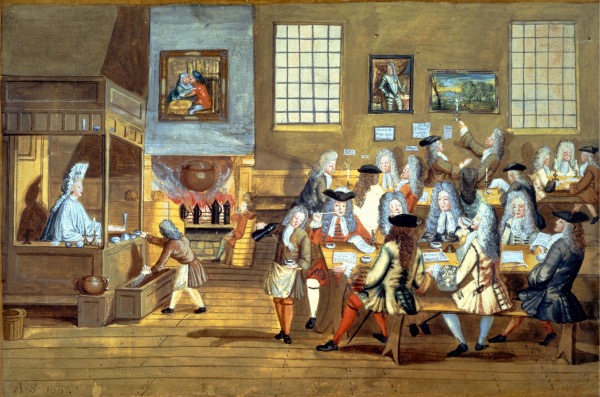
• Experience a recreation of Grace and Thomas Tosier’s famous ‘royal’ Chocolate House in Greenwich this Easter. Located in the Old Royal Naval College, Chocolate House Greenwich recreates the Tosier Chocolate House which was located in what became known as Chocolate Row, on the edge of Blackheath. A social space for the leading figures of the day, the chocolate house was run by Grace while her husband Thomas served as chocolate maker for King George I, running the chocolate kitchen at Hampton Court Palace. Visitors will be able to immerse themselves in the chocolate house via an audio and visual experience created by Unusual Expo and actor-writer Jonathan Coote. As well as meeting Grace, there is also the chance to listen in to luminaries such as architect and astronomer Sir Christopher Wren, writer and diarist John Evelyn, the first Astronomer Royal, John Flamsteed, and playwright and architect John Vanbrugh. A series of events will accompany the exhibition – which opens tomorrow – including an Easter Trail for families, a gin and chocolate tasting experience and a ‘Choc-o-Late’ event. Admission charge applies. Runs until 3rd November. For more, see https://ornc.org/whats-on/chocolate-house-greenwich/.
• A wig worn by Golda Rosheuvel in Netflix’s hit series Queen Charlotte: A Bridgerton Story goes on display at Kew Palace from the end of this month. The grey wig with accompanying tiara will be showcased in Queen Charlotte’s dressing room, alongside a lock of the real Queen Charlotte’s hair. Visitors will also be able to join daily 30 minute Queen Charlotte: A Kew Palace story tours, walking in the footsteps of famous royals like King George III and Queen Charlotte. Admission charge applies. For more, see https://www.hrp.org.uk/kew-palace/.
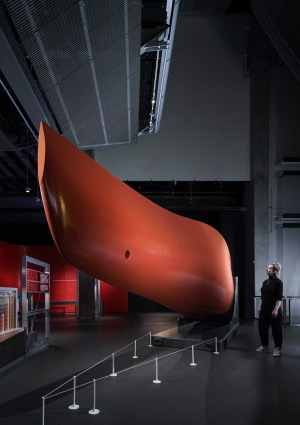
• A major new gallery examining the rapid energy transition and decarbonisation needed globally to limit climate change has opened at the Science Museum. The Energy Revolution: The Adani Green Energy Gallery is divided into three sections – Future Planet, Future Energy and Our Future – and highlights technologies and projects being used to address the climate crisis. Objects on show include a seven metre long tidal turbine blade made by Orbital Marine Power which was used in the Orkneys, rare surviving Edison tube mains cables used to power world’s first public electricity network in London in 1882, and a three metre high CoolAnt passive air-cooling facade from India that reduces dependence on powered air conditioning. At the centre of the gallery sits Only Breath, a kinetic sculpture created by artists Alexandra Carr and Colin Rennie from Torus Torus Studios that moves and blooms, stretching to around five metres in diameter when unfurled. The gallery can be found on Level 2 of the South Kensington museum. Admission is free. For more, see sciencemuseum.org.uk/energy-revolution.
Send all items to exploringlondon@gmail.
This Week in London – Hampton Court’s bunny hunt returns; vintage prints at the National Portrait Gallery; and, ‘Sounds of Blossom’ at Kew…

• The Lindt Gold Bunny hunt returns to Hampton Court Palace this Saturday with families once again invited to search the gardens for those elusive Gold Bunny statues. Each statue offers a chance to match the names of influential characters from Hampton Court Palace’s history to the distinctive red ribbons and a small Lindt bunny chocolate awaits those who succeed in finding the bunnies. Visitors will also have the chance to encounter a selection of the characters roaming the palace over the Easter period. The Gold Bunny hunt is included in general admission. Until 14th March. For more, see www.hrp.org.uk/hampton-court-palace/whats-on/easter-lindt-gold-bunny-hunt/.
• Rare vintage prints by two of art history’s most influential photographers – Francesca Woodman (1958-1981) and Julia Margaret Cameron (1815-1879) – go on show at the National Portrait Gallery today. Francesca Woodman and Julia Margaret Cameron: Portraits to Dream In showcases more than 160 rare vintage prints including 97 by Woodman and 71 by Cameron as well as artist’s books by Woodman which have never been exhibited before in the UK. Key works include Cameron’s self-declared “first success” – a portrait of Annie Wilhemina Philpot taken in 1864, Woodman’s Self-portrait at thirteen, taken during a summer holiday in Italy in 1972, images from Woodman’s Angel series and Cameron’s ethereal portraits of actor Ellen Terry taken in 1864. Also featured are Woodman’s Caryatid pieces and Cameron’s portraits of her niece and favorite model Julia Jackson, Alice Liddell as the goddess Pomona, a portrait of John Frederick William Herschel called The Astronomer (1867), and those of her frequent muses, May Prinsep and Mary Ann Hillier. Runs until 16th June. Admission charge applies. For more, see www.npg.org.uk.
• A new collaboration with the Royal College of Music blends music with spring blooms at Kew Gardens. Sounds of Blossom: Awaken your senses, the first ever spring festival to be held at the gardens, features six bespoke commissions that celebrate Kew’s unique landscape in the spring emerging from locations such as Cherry Walk, Asano Avenue and the Japanese Landscape. And on weekends during the festival, visitors can enjoy live musical performances from the Royal College of Music as they showcase a varied repertoire from classical favourites to jazz melodies. Included in general admission. Runs until 14th April. For more, see www.kew.org/kew-gardens/whats-on/sounds-of-blossom.
Send all items to exploringlondon@gmail.com

