This Week in London – New room for Turner at Tate Britain; slavery and Caribbean post ships; and, ‘The Power of Trees’ at Kew…

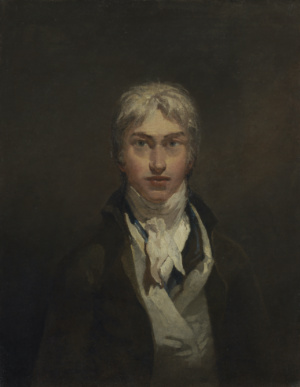
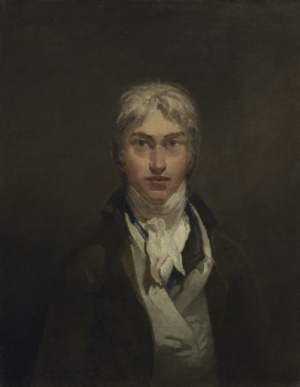
JMW Turner, ‘Self-Portrait’, c1799, PICTURE: Courtesy of Tate

A new room dedicated to the watercolours and drawings of painter JMW Turner has opened at the Tate Britain to mark the 250th anniversary of his birth. The new room at the Millbank gallery, whichfeatures some of the more than 100 works by Turner on display in the gallery, includes the earliest Turner in Tate’s collection, made when he was only 12-years-old, as well as a dramatic image of a building on fire, long thought to be the Houses of Parliament but now revealed to in fact be the Tower of London. The display draws on the latest research developed in preparing a new catalogue of Turner’s 37,500 works on paper which, to be completed this year, will be freely accessible on Tate’s website from November and offers a news insight into the artist’s ideas and methods. Further events related to Turner are planned for later this year. The new room can be seen daily. Entry is free. For more on how the Tate is marking the Turner anniversary, see tate.org.uk/turner-250.

The stories of enslaved people – whose labour fuelled 19th century postal ships between the UK and the Caribbean – are explored in an exhibition at the Postal Museum in Clerkenwell. Voices of Resistance: Slavery and Post in the Caribbean draws on letters between plantation owners and managers to provide glimpses into the lives of enslaved people who worked on the plantations and celebrates their courageous acts of resistance. The display also features a movie by filmmaker Emmanual Phillips which honours the Caribbean coal workers involved in refuelling postal ships on the island of St Thomas (and which was created in partnership with Dollar fo’ Dollar, St Thomas-based organisation that works to ensure the legacies of the coal workers live on to inspire people). Entry is included in the museum ticket. Runs until 5th January. For more, see www.postalmuseum.org.

On Now: The Power of Trees. This exhibition at Kew Garden’s Shirley Sherwood Gallery of Botanical Art celebrates trees and their use as a source of artistic inspiration across cultures and time. The display features a variety of botanical works including 20 newly commissioned botanical artworks created by the artists of the Bedgebury Florilegium Society and Horizontal – Vaakasuora, a spectacular cinematic installation from Finnish artist Eija-Liisa Ahtila. Entry is free with Kew Gardens admission. Runs until 14th September. For more, see www.kew.org.

Send all items to exploringlondon@gmail.com.
This Week in London – Marking Turner’s 250th; ‘Helios’ at the Painted Hall; Churchill in cartoons; and, Royal Parks’ new Elizabeth II garden wins grant…

JMW Turner, Self-Portrait, c.1799
Image courtesy of Tate

• Cultural institutions across the UK have announced a year long celebration of renowned painter JMW Turner in honour of the 250th anniversary of his birth. Turner 250 includes more than 30 events with Turner’s birthday on 23rd April a particular focus. Events on the day include the opening of an exhibition of Turner’s rarely-seen images of wildlife at Turner’s House in Twickenham, and the opening of a newly refreshed room in Tate Britain’s Clore Gallery which will be home to a permanent free display of 100 works by the artist. More information will be forthcoming.

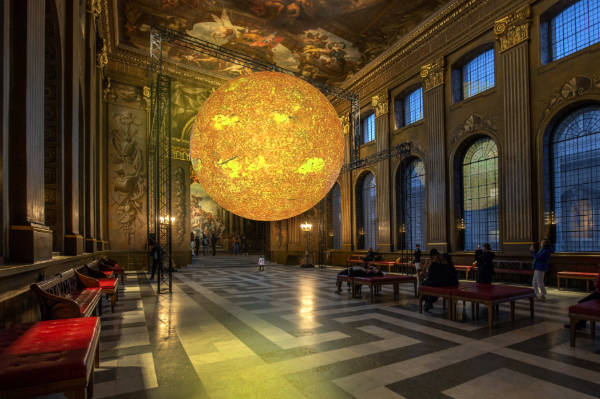
• Luke Jerram’s newest and most ambitious large scale artwork, Helios, is making its London premiere at the Old Royal Naval College. Co-commissioned by the Old Royal Naval College, this new seven-metre celestial artwork depicts the Sun in all its glory at a scale of 1:200 million. The imagery for the artwork has been compiled using photographs of the Sun provided by astrophotographer Dr Stuart Green (taken between May, 2018, to June, 2024) and NASA observations of the Sun along with guidance from solar scientist, Professor Lucie Green of University College London (UCL). The sculptural work is accompanied by a specially created surround sound composition created by acclaimed artists Duncan Speakman and Sarah Anderson. Runs from Saturday until 25th March. Admission charge applies. For more, see https://ornc.org/whats-on/helios/

Helios by Luke Jerram in the Painted Hall. PICTURE: Courtesy of the Old Royal Naval College.

On Now: Churchill in Cartoons: Satirising a Statesman. The Imperial War Museum in Lambeth is marking the 150th anniversary of the birth of Sir Winston Churchill with this exhibition examining how Churchill is represented in political cartoons, both during his life and after. The display features 24 original artworks spanning the period from 1909 to 2003 and examines how these portrayals influenced public perception of the statesman, from his early career as an MP to the role he played in both World Wars, the “Wilderness Years” between and after he lost the 1945 General Election. Among the works are
a cartoon from Punch magazine in 1914 depicting Churchill supporting the Roman sea god Neptune with aircraft (representing the establishment of the Royal Naval Air Service), a 1941 David Low cartoon shows a cigar-smoking Churchill with US President Franklin D Roosevelt during their Atlantic Conference, and, a cartoon by US cartoonist Jim Berryman marking Churchill’s defeat in the 1945 election. The free exhibition closes on 23rd February. For more, see www.iwm.org.uk/events/churchill-in-cartoons-satirising-a-statesman.

Royal Parks have been awarded a £450,000 grant to support the creation of a new, two-acre garden in The Regent’s Park. The garden, to be funded with the grant from the Garfield Weston Foundation, will commemorate the life and legacy of Queen Elizabeth II and will feature a circular pond enhancing wildlife habitats, a central promenade with an accessible platform over the pond, and a vibrant flower garden showcasing species which were significant to the late Queen, such as the specially bred Narcissus ‘Diamond Jubilee’ or Tulipa ‘Royal Celebration’. The new garden is set to open in 2026.

Send all items for inclusion to exploringlondon@gmail.com.

10 historic London homes that are now museums…9. Turner’s House…

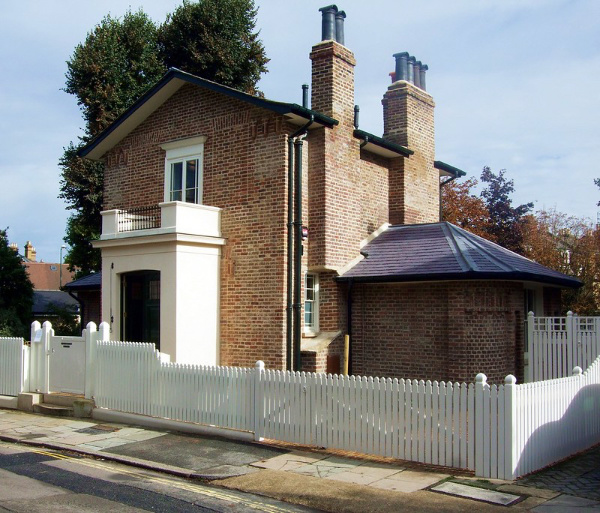
PICTURES: Jim Linwood (licensed under CC BY 2.0)

Located close to the River Thames in south-west London, Sandycombe Lodge was designed and built by the artist JMW Turner as a country retreat.

The Twickenham property, which was constructed in 1812-13 on land the famed “painter of light” had bought six years earlier, also provided a home for Turner’s father, ‘Old William’, who was a retired Covent Garden barber and wigmaker. Old William would tend the garden and keep the house when Joseph Mallord William Turner, who is best known for his expressive landscapes and marine paintings, wasn’t present.

The finished property featured a large sitting room overlooking the expansive garden. It was initially known as Solus Lodge and the name later changed to Sandycombe.

Turner would use the home as a base for sketching and fishing trips. He painted many scenes of local landscapes including, notably, England: Richmond Hill on the Prince Regent’s Birthday in 1819.

Among those who visited Turner at the property was his friend and fishing companion, Sir John Soane (his influence can be seen on the home’s design in features such as the use of arches inside and the skylight above the stairs).

Turner, who also had a property in Cheyne Walk, Chelsea, where he died in 1851, only had the house for 13 years – with his father’s health declining and his own touring schedule which meant he wasn’t able to spend as much time at the property as he would have liked, Turner sold Sandycombe in 1826 to his neighbour Joseph Todd. Todd, the owner of Twickenham Park, enlarged the villa and rented it out.

It subsequently passed through numerous hands (the large grounds around gradually diminishing).

Used as a factory for making goggles in World War II, it was in a poor state when purchased by Professor Harold Livermore and his wife Ann in 1947. In the 1950s, they secured a Grade II*-listing for the property and later set up the The Sandycombe Lodge Trust, now Turner’s House Trust, in 2005.

On Livermore’s death in 2010 at the age of 95, the trust became the owner of Sandycombe. Following a significant restoration which aimed to take the house back to Turner’s original designs and which was completed in 2017, it opened to the public as a museum.

Displayed in the house are some of Turner’s sketches as well as model ships he used in creating his art. A ‘speaking clock’ captures recollections of friends and Old William is brought to life digitally in the basement. What remains of the gardens have also been restored.

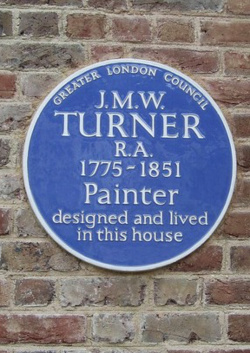
The house features an English Heritage Blue Plaque.

WHERE: Sandycombe Lodge, 40 Sandycoombe Road, St Margarets, Twickenham (nearest rail is St Margarets; nearest Tube station is Richmond); WHEN: 12pm to 4pm Wednesday to Sunday (until 2nd July); COST: £8 adults/£3 child (3 to 15 years)/£17 family; WEBSITE: https://turnershouse.org.