This Week in London – The glamour of the Edwardian Royals; tulips at Hampton Court; and, Cartier jewels at the V&A…

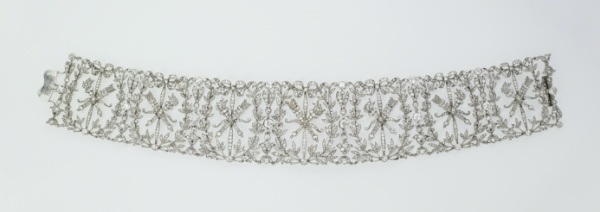
Attributed to R. & S. Garrard, ‘Love Trophy’ Collar, 1901
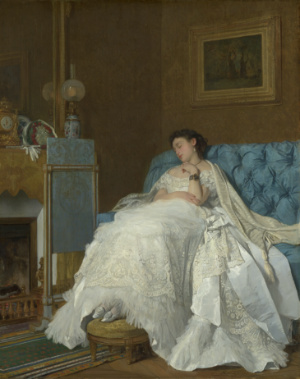
Charles Baugniet, ‘After the Ball’: a Lady in a Ballgown Asleep on a Sofa, c1860–67

The glamour and opulence of the Edwardian era – and the two royal couples that exemplified it – is the subject of a new exhibition opening at The King’s Gallery at Buckingham Palace tomorrow. The Edwardians: Age of Elegance takes an in-depth look at the lives of King Edward VII and Queen Alexandra, and King George V and Queen Mary, exploring not only their family interactions but their glittering social circles, travel adventures and, of course, the royal events they attended. More than 300 items are on display in the exhibition – almost half on show for the first time – with highlights including Queen Mary’s ‘Love Trophy’ Collar necklace which is on display for the first time, a Cartier crystal pencil case set with diamonds and rubies, and, a blue enamel Fabergé cigarette case featuring a diamond-encrusted snake biting its own tail which was given to King Edward VII in 1908 by his favourite mistress as a symbol of eternal love. There’s also a never-before-seen photograph of Edward wearing fancy-dress as a knight of the Order of Malta as he attended a ball celebrating Queen Victoria’s 1897 Diamond Jubilee, a previously unseen study of Sleeping Beauty by the Pre-Raphaelite artist Sir Edward Burne-Jones, and, Charles Baugniet’s After the Ball which is on show for the first time in more than a century. Runs until 23rd November. Admission charge applies. For more, see www.rct.uk.

More than 100,000 tulip bulbs are springing to life at Hampton Court Palace for its annual Tulip Festival. The display includes an installation of 10,000 tulips in the palace’s Fountain Court, floating tulip bowls in the Great Fountain, a vintage horse cart spilling tulips in the Clock Court, free-style planting, inspired by the tulip fields of the Netherlands, in the Kitchen Garden and rare, historic and specialist varieties of tulips in the Lower Orangery. There will be daily “tulip talks” in the palace’s wine cellar exploring the history of the flower and how Queen Mary II introduced them to the palace. Runs from Friday until 5th May. Included in general admission. For more, see www.hrp.org.uk.
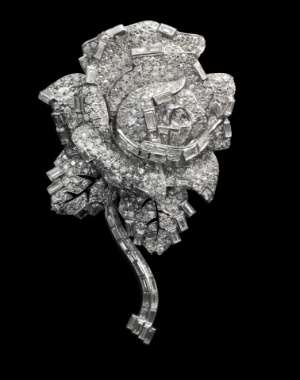
Rose clip brooch, Cartier London, 1938. Diamonds and platinum. Vincent Wulveryck, Collection Cartier © Cartier

The first major exhibition in 30 years dedicated to Cartier jewels and watches opens at the V&A this Saturday. Cartier, which is being held in The Sainsbury Gallery, charts the rise of the globally recognised jewellery house and how it became known as “the jeweller of kings and the king of jewellers”. The display features more than 350 objects with highlights including the Williamson Diamond brooch which was commissioned by Queen Elizabeth II in 1953 and which features the rare 23.6 carat pink Williamson diamond; the Scroll Tiara commissioned in 1902 and worn to the coronation of Elizabeth II and later by Rihanna on the cover of W magazine in 2016; Grace Kelly’s engagement ring (1956) that she wore in her final film High Society; Mexican film star María Félix’s snake necklace (1968); and, a selection of Cartier timepieces that embody its pioneering approach to watchmaking, including the Crash wristwatch, designed by Cartier London (1967). The exhibition runs until 16th November. Admission charge applies. For more, see vam.ac.uk/exhibitions/cartier.

Send all items to exploringlondon@gmail.com.
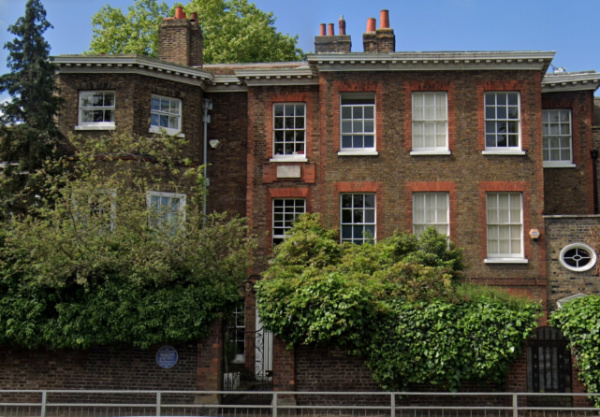
10 London locations related to Sir Christopher Wren…1. The Old Court House, Hampton Court Palace Green…

This year marks the 300th anniversary of the death of Sir Christopher Wren (25th February, 1723), whose designs helped to transform post-Great Fire London.

In a new series we’re looking at 10 locations which help tell Wren’s story but while we’ve previously runs numerous articles focused on the many buildings he designed, in this series the focus is more on his personal life.

First up, it’s one of the most well-known properties related to Wren’s life – the home in which he spent the latter years after his life just outside Hampton Court Palace.

Known as the Old Court House, Wren first came to live in the house after he was appointed Surveyor-General to King Charles II in 1669. His post brought with it lodgings at the royal palaces and at Hampton Court Palace, it was the Old Court House (the property had been built for in 1536 as a wood and plaster house; Wren’s immediate predecessor in the office, Sir John Denham, had rebuilt it partly in brick).

Then in 1708, Queen Anne granted him a 50-year lease on the property, apparently at least partly in lieu of overdue fees he was owed for the building of St Paul’s Cathedral. It’s also believed that the Queen had granted the lease on condition that Wren repair or rebuilt the property.

Wren, who had hitherto only lived intermittently at the property (presumably while working on Hampton Court Palace on the orders of King William III and Queen Mary II), made some major alterations to the property from 1710 onwards (it’s suggested this was done to the designs of Wren’s assistant William Dickinson).

He came to live here on a more permanent basis after he retired from the Office of Works in 1718 and remained here until his death in 1723 (although he didn’t die here – more on that later).

It’s said Wren, whose time as the Royal Surveyor-General spanned the reigns of six monarchs, spent his time here “free from worldly affairs”, choosing to and pass his days ‘in contemplation and studies”.

It was subsequently the home of Wren’s son Christopher (1645-1747) and his grandson Stephen (b 1772). It remained a grace and favour house associated with Hampton Court Palace until 1958.

The Grade II* brown and red brick property, which was combined with the house next door in the early 19th century and them divided off in 1960, is now in private ownership and there’s an English Heritage Blue Plaque on the outside wall mentioning Wren’s residence.

Moments in London’s history – Five (more) unusual facts about royal coronations past…

Following last week’s unusual facts, here’s five more…

The coronation of King William I (aka William the Conqueror) was marred by riots. The new King had chosen to be crowned in Westminster Abbey on Christmas Day, 1066, in a display of power (kings had in the past been crowned in Winchester). But when shouts of support for the new king were mistakenly thought to be an assassination attempt, Norman soldiers outside the abbey began setting fire to nearby houses, causing the abbey to fill with smoke and the congregation to flee while outside people rioted. William nonetheless ensured the service was completed.

Henry, the eldest son of King Henry II, had a coronation service at Westminster Abbey while his father was still monarch – the only instance of this occurring. While crowning the heir during the lifetime of the monarch was a more common practice in France, it was not so in England. But in an effort to settle the succession, King Henry II had Henry crowned on 14th June, 1170. Sadly Henry, known as Henry the Young King, did not live to succeed his father but died at just the age of 28 in 1183 after contracting dysentery while campaigning with his younger brother Richard (later King Richard I) against their father. King Henry II died on 6th July, 1189, and was succeeded by Richard.

There has only been one coronation in the abbey in which two monarchs were crowned at the same time. After King James II was deposed, William of Orange and his wife Mary were jointly invited to rule in what was known as the Glorious Revolution. They were crowned together at Westminster Abbey on 11th April, 1689. King William III sat in the Coronation Chair while another chair was specifically made for Queen Mary II, and, while the king was crowned using the traditional regalia, a special set of regalia was made for Mary.

Only two of King Henry VIII’s six wives had coronations. Catherine of Aragon was crowned alongside the King on 24th June, 1509 (she sat on a lower chair). Anne Boleyn, meanwhile, was crowned on 1st June, 1533. Interestingly, she was crowned with St Edward’s Crown which had up until then only been used to crown the monarch. Jane Seymour died before she could be crowned (there had been plague in London at the time she married Henry), while his marriage with Anne of Cleves was annulled before she could be crowned and Catherine Howard was executed before any coronation took place. By the time the king married Catherine Parr, he was ageing and ill and a coronation was unlikely to be high on his agenda.

King Henry VI is the youngest monarch to have been crowned at Westminster Abbey. He was aged just eight-years-old when he was crowned on 6th November, 1429, having become king at the age of just eight-months-old when his father, King Henry V, died on 31st August, 1422 (other children to have been crowned in the abbey include King Edward VI, who was just nine at his coronation). King Charles III – whose coronation will take place on 6th May – will be the oldest monarch to have been crowned at the abbey.

Correction: We’ve corrected the position of the two Catherines after the names were accidentally transposed.

This Week in London – Coronations at Westminster Abbey; tulips at Hampton Court; St Bartholomew at The National Gallery; and, Food Season at the British Library…

A new exhibition exploring the 1,000-year history of coronations at Westminster Abbey has opened in the abbey’s medieval chapter house. The exhibition, which has opened ahead of the coronation of King Charles III on 6th May, draws on historic illustrations and archive photography to explore the elements of the coronation service including the oath-taking, anointing, investing and crowning and takes a closer look any some of key artefacts present in the ceremony including the Coronation Chair. The exhibition, which is free with admission to the abbey and which runs until the end of September, is part of a season of events celebrating the coronation including themed late evenings, family activities and special afternoon teas at the Cellarium Café. Meanwhile, the abbey has also announced that visitors will be able to view the ‘Coronation Theatre’ – the special area which will be built for the historic occasion, from the Abbey’s North and South Transepts – following the coronation. Tickets for the special viewing – which will include the chance to see key elements from the coronation service including the Coronation Chair still in position on the Cosmati Pavement – can be purchased for timed slots between 8th and 13th May. For more on the abbey’s events surrounding the coronation, see www.westminster-abbey.org/events.

Tulips at Hampton Court Palace in 2021. PICTURE: Derek Winterburn (licensed under CC BY-ND 2.0)

Hampton Court Palace bursts into colour from Friday with its annual Tulip Festival. More than 110,000 bulbs have been planted to creat dramatic displays in the formal gardens and cobbled courtyards, among them a selection of heirloom bulbs on display in the Lower Orangery Garden which presents visitors with the chance to see tulips as they would have looked during the time of King William III and Queen Mary II, soon after the flowers were first introduced to Britain. Thanks to a special relationship with Netherlands-based Hortus Bulborum, the bulbs on display include Sylvestris (1595) and Rubella Broken (1700) as well as the Orange King (1903) and Queen of the Night (1940). Other highlights of the festival include 3,000 wine-toned tulips, including the merlot variety, flowing down from the steps and parapet of the Wine Fountain, as well as a floral fantasy in the palace’s courtyards in which tulips such as Raspberry Ripple, Apricot Emperor and Purple Prince flow out of wheelbarrows, barrels and a horse cart, and a free-style tulip planting in the Kitchen Garden inspired by Van Gogh’s 1883 painting, Bulb Fields. Runs until 1st May. Admission charge applies. For more, see https://www.hrp.org.uk/hampton-court-palace/whats-on/tulip-festival/.

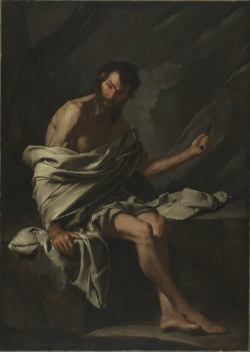
Bernardo Cavallino (1616 ‑ 1656?), Saint Bartholomew (about 1640-1645), oil on canvas H x W: 176 x 125.5 cm; The National Gallery, London. Bought with the support of the American Friends of the National Gallery, 2023
PICTURE: © The National Gallery, London

The recently acquired Bernardo Cavallino work, Saint Bartholomew has gone on show at The National Gallery. The painting, which dates from 1640-45 and which was last exhibited at The Metropolitan Museum of Art in New York in 1993, is being displayed alongside other 17th century works by artists such as Caravaggio, Artemisia and Orazio Gentileschi, Guercino, Reni and Ribera in the Hans and Julia Rausing Room (Room 32). The National Gallery has one other work by Cavallino – Christ driving the Traders from the Temple – but his depiction of Saint Bartholomew is considered one of his most splendid works. Admission is free. For more, see nationalgallery.org.uk.

Featuring everything from a celebration of African Caribbean takeaways to a “deep-dive” into the issues surrounding food production and access, Food Season kicks off at the British Library Monday. Highlights include a discussion of the sandwich by food writers Nigella Lawson, Jonathan Nunn and Rebecca May Johnson, a day-long celebration of African Caribbean cuisine featuring chefs and broadcasters Jimi Famurewa, Fatmata Binta and Andi Oliver, and, an exploration of the big challenges in food, land use and food production featuring author Henry Dimbleby alongside Dr Tara Garnett, Nick Saltmarsh, Abby Allen and Dimitri Houtart. Runs until 7th June. Admission charges apply. For the full programme, see www.bl.uk/events/food-season.

Send all items to exploringlondon@gmail.com

10 (lesser known) statues of English monarchs in London…10. Four Queens…

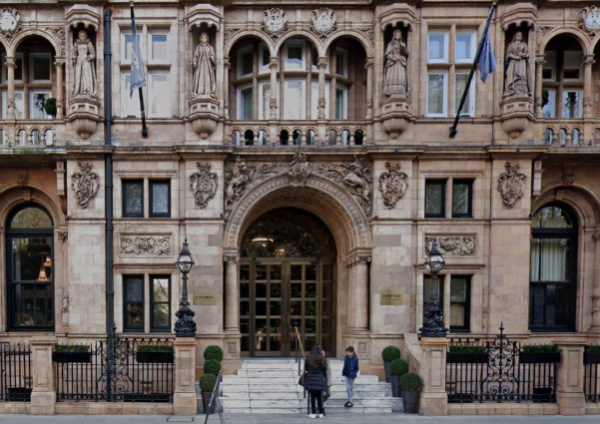
The facade of the former Hotel Russell featuring the statues of the four Queens. PICTURE: Courtesy of Google maps.

We finish our series of lesser known statues of English monarchs with a Bloomsbury building featuring four English queens.

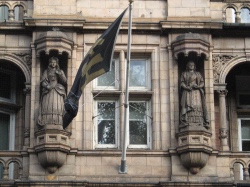
Tucked away in niches over the main entrance of the Hotel Russell – which opened in 1898, the four queens – Elizabeth I, Mary II, Anne, and Victoria – were the work of Henry Charles Fehr.

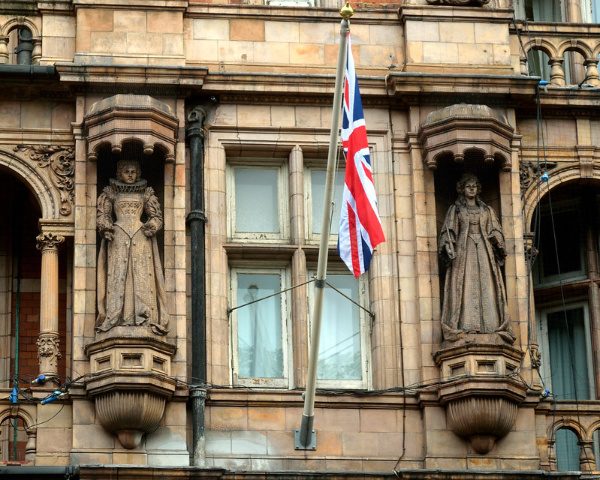
Queen Elizabeth and Queen Mary II. PICTURE: Tom Hilton (licensed under CC BY 2.0)

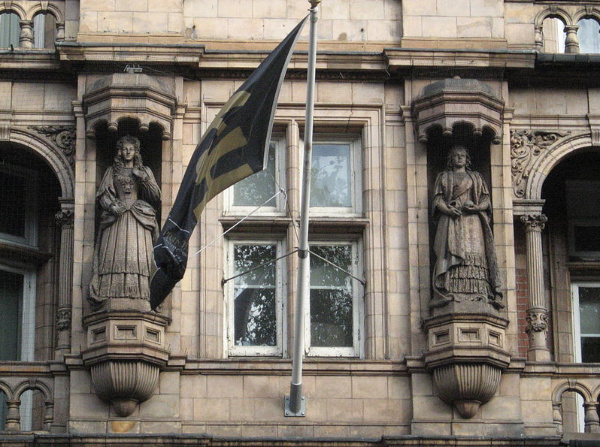
The larger than lifesize terracotta statues – which face out to Russell Square – don’t include Queen Mary I and are rather unusual and represent idealised versions of the queens. Elizabeth is readily identifiable due to the ruff she wears but there is some confusion over who’s who when it comes to Mary II and Anne. Victoria, meanwhile, is depicted as a very young woman.

Queen Anne and Queen Victoria. PICTURE: Jack1956 (Public domain)

Among other ornamentation, the building – which was designed by C Fitzroy Doll, also features the busts of four Prime Ministers – Lord Derby, Lord Salisbury, William Gladstone and Benjamin Disraeli – on the Guilford Street facade.

The hotel is now the Kimpton Fitzroy London.

Treasures of London – The Tijou Screen at Hampton Court Palace…

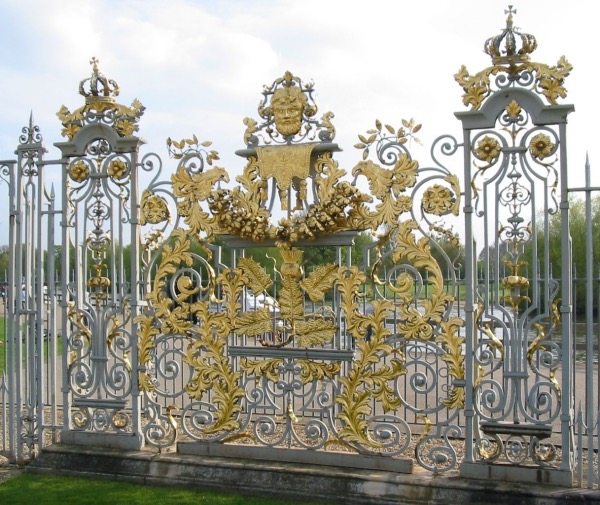
A section of the Tijou Screen representing Scotland. PICTURE: Man vyi

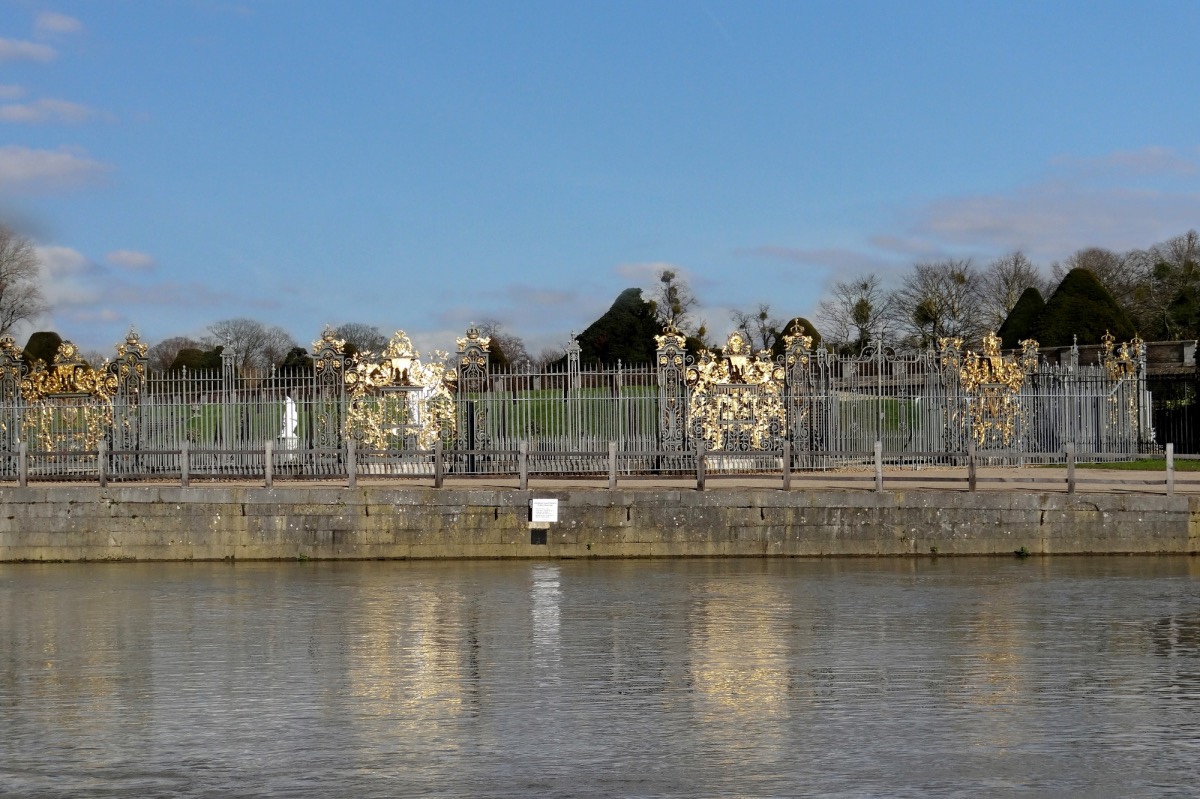
Standing at the river end of the Privy Garden at Hampton Court Palace is a stretch of wrought-iron screen designed and made by Huguenot ironworker Jean Tijou for King William III and Queen Mary II.

The screen, which is one of the finest examples of 17th century ironwork in the world, was created between 1689 to 1692. It features 12 panels displaying symbols including the monogram of William and Mary, the garter emblem and representations of England, Ireland, Scotland and France.

William expressed his personal admiration for the work.

The Tijou Screen seen from the Thames. PICTURE: Maxwell Hamilton (licensed under CC BY-SA 3.0)

The screen was among numerous royal commissions created by Tijou, who had arrived in England in about 1689 and secured the patronage of the joint monarchs.

The screen fell into neglect in the 18th century and were subsequently repaired numerous times before being split up in the 19th century. It was re-erected at Hampton Court in 1902 and since been restored several times.

This Week in London – Tulips at Hampton Court; new Falklands-related displays at the IWM; and, a new garden for The Regent’s Park…

Hoping you have a wonderful Easter break.

PICTURE: © Historic Royal Palaces

Hampton Court Palace’s Tulip Festival – the largest of its kind in the UK – is returning following its successful inaugural year in 2021. From Friday until 2nd May (depending on flowering periods), the palace’s 60 acres of formal gardens are expected to be filled with rare, historic and specialist tulip varieties inspired by Queen Mary II’s famous 17th century collection which was once housed at the palace. Some 120,000 tulip bulbs of 60 different varieties have been planted, including breath-taking floating tulip vases located in the palace’s famous fountains, and floral displays which will fill the cobbled courtyards of Base Court and Clock Court. Visitors will be able to find out all about the links between the flower and the palace’s history with a dedicated Tulip Festival Guide. Included with admission. For more, head here.

New exhibits marking the 40th anniversary of the Falklands Conflict have gone on show at the Imperial War Museum in Lambeth. Among the new items on display are drawings by Linda Kitson, the first female artist commissioned by IWM to accompany troops into conflict, and images of the conflict – many of which have never been seen before – taken by photographer Paul RG Haley who covered it for Soldier Magazine. The museum is also exploring the story and legacy of the conflict through a digital programme of events including a series of short films and a new episode of the Conflict of Interest podcast featuring actor Katherine Parkinson. For more, see www.iwm.org.uk.

The Regent’s Park will soon boast a new 1.5 acre garden at its centre in honour of Queen Elizabeth II’s Platinum Jubilee. The new garden, to be created on the site of a former plant nursery near the Inner Circle, will include design features that reflect the Queen’s “love of trees and nature”. The Royal Parks will be committing £1 million to the project and will seek external funding and public donations. Designs for the new park will be shared as they are developed. Meanwhile, The Royal Parks have also announced they will be creating a new wood in Richmond Park as part of the Queen’s Green Canopy Initiative. The new woodland, which will be located adjacent to Ham Cross, will be planted with 70 large trees, each one to mark a year of Her Majesty’s reign.

Send all items to exploringlondon@gmail.com.
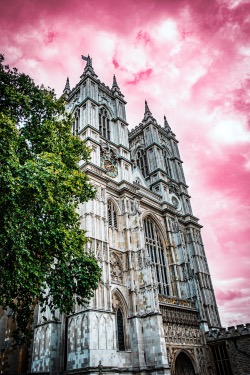
10 historic stairways in London – 8. The King’s Staircase, Kensington Palace… 

PICTURE: Tuomo Lindfors (licensed under CC-BY-NC-SA 2.0)

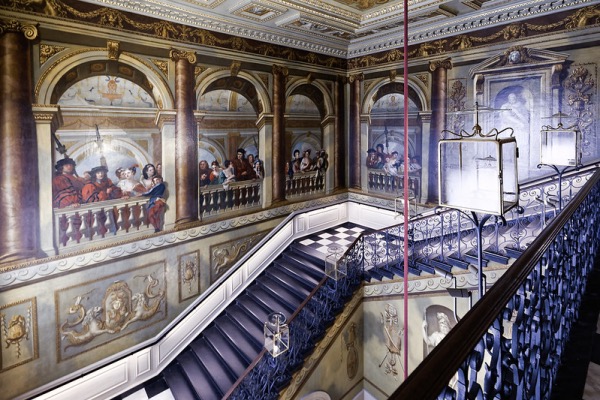
This staircase, a grand entrance to the King’s State Apartments at Kensington Palace, are famous for the paintings on the walls and ceiling which depict an 18th century court looking down on those who ascend.

The work of William Kent, the staircase paintings were complete in 1724 and replaced earlier wooden panelling.

The stairs were originally constructed as part of Sir Christopher Wren’s remodelling Nottingham House into Kensington Palace for King William III and Queen Mary II. Following a fire in 1691, they were rebuilt in marble.

There are 45 people in Kent’s painting and only about a dozen have been identified. As well as members of the Yeomen of the Guard, the images depict King George I’s Polish page Ulric, his Turkish servants Mahomet and Mustapha, Peter the ‘wild boy’, a child found in the woods in Germany, and Dr John Arbuthnot, a medical doctor and satirist who tried to teach Peter to speak.

Interestingly, Kent included a selfie on the ceiling – a depiction of himself, wearing a brown turban and carrying an artist’s palette, standing with his mistress by his side.

The trompe l’oeil (a technique which creates the optical illusion of 3D) work features architecture inspired by Rome where Kent had trained while there’s also a painted figure of Diana on the top landing which is based on an antique statue at Holkham Hall in Norfolk.

In 1734, Queen Caroline commissioned Kent to rework the stairs to the Queen’s State Apartments. His work there features a Roman-inspired scene again created as a trompe l’oeil. There is also a homage to Queen who is compared to Britannia. The staircase’s balustrade was another by Huguenot ironworker Jean Tijou.

WHERE: The Broad Walk, Kensington Gardens, Kensington (nearest tube stations are High Street Kensington or Queensway); WHEN: Daily 10am to 6pm (last admission 5pm); COST: £16 adult/£12.80 concession/£8 child (Historic Royal Palaces members free); WEBSITE: www.hrp.org.uk/KensingtonPalace.

10 historic stairways in London – 5. The King’s Staircase, Hampton Court Palace…

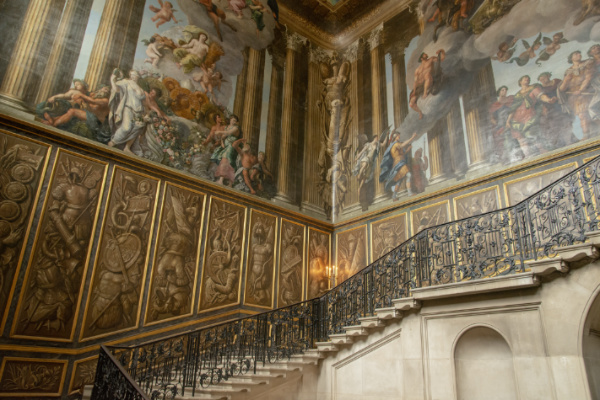
The King’s Staircase at Hampton Court Palace. PICTURE: Peter K Burian (licensed under CC BY-SA 4.0)

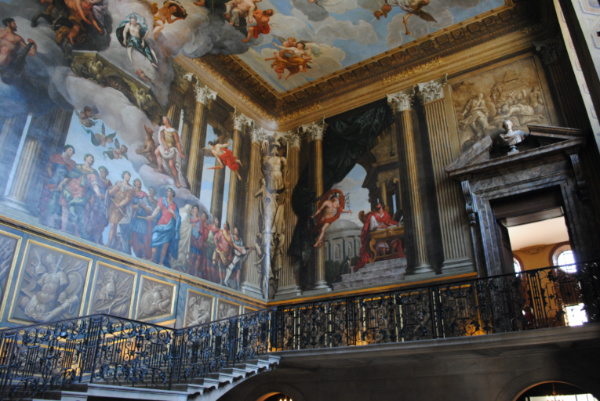
This grand staircase was installed in Hampton Court Palace during the reign of King William III and Queen Mary II as a grand entrance to the King’s Apartments.

The staircase, which features shallow steps, was designed Sir Christopher Wren and features a wrought iron balustrade designed by French ironsmith Jean Tijou.

Another view of the staircase and accompanying art. PICTURE: David Adams

It was decorated in about 1700 by Italian painter Antonio Verrio to resemble a Roman courtyard which is open to the sky. The main image depicts ‘Victory of Alexander over the Caesars’ which features King William III as Alexander the Great and is painted as an allegory of William’s triumph over the Stuart King, James II, in the Glorious Revolution of 1688 (with the Stuarts represented by the 12 Caesars).

The stairs lead up to the Guard Chamber, an anteroom which had to be passed through to reach the Presence Chamber.

10 historic stairways in London – 2. Queen Mary’s Steps, Whitehall…

PICTURE: Paul Farmer (licensed under CC BY-SA 2.0).

This small stone stairway which now sits in the midst of a grassy expanse at the back of the Ministry of Defence was once part of the Palace of Whitehall.

Named for Queen Mary II, wife of King William III, for whom they were designed, the stairs were part of a terrace built in 1691 abutting the Thames in front of an old river wall constructed for King Henry VIII.

Designed by Sir Christopher Wren, the stairs were one of a pair located at either end of the terrace which gave direct access to the river – and state barges – from the Royal Apartments.

Excavations in 1939 during construction of the MoD revealed the Tudor river wall, the terrace and the northern-most of the two flights of steps. The upper part of the steps have been repaired and the terrace and wall reconstructed.

The steps and palace fragments are now a Grade I listed monument.

This Week in London – Hampton Court Palace’s Tulip Festival, National Gallery acquires ‘Portrait of a Girl’, and, art at Canary Wharf…

Hampton Court Palace is hosting its first ever Tulip Festival. Featuring more than 100,000 bulbs placed throughout the formal gardens, the festival pays homage to the estate’s long history of tulip cultivation and, thanks to partnership with the Hortus Bulborum in the Netherlands, involves some types of tulip that have not been on show at the palace since the 17th century. First introduced to the British Isles in the 1630s, tulip planting at Hampton Court dates back to the reign of Queen Mary II. Ten different heritage and modern types have been planted across the gardens for the festival including Parrot, Triumph, Rembrandt and Darwin tulips. Visitors can undertake a self-guided trail which takes in both the palace’s courtyards – filled with ornate planters and flowers specially-selected to match the historic brickwork – and the gardens. Admission charge applies (tickets must be pre-booked). Runs until 3rd May. For more, see www.hrp.org.uk/hampton-court-palace/whats-on/tulip-festival-2021.

Isaack Luttichuys (1616–1673), Portrait of a Girl, about 1650 © The National Gallery, London

The National Gallery has acquired Portrait of a Girl (about 1650) by Isaack Luttichuys, the first work by the artist to enter a British public collection. Luttichuys, who name is pronounced ‘Lootickhouse’, was born in London to Dutch parents and spent his early life in England (where the family was known as Littlehouse, the literal English translation of the name). The artist later moved to Amsterdam where he enjoyed a highly successful career as a portrait painter until his death in 1673. The work was acquired from the estate of banker and philanthropist George Pinto under the Acceptance in Lieu scheme, administered by the Arts Council. 

Escape to faraway lands with a new art installation at Crossrail Place Roof Garden at Canary Wharf. Crossorelle is the work of artists Baker & Borowski, and features a design inspired by the Jardin Majorelle in Marrakech which fuses the Moroccan garden’s rich palette and art deco shapes with exotic flora. Free to visit, the display can be seen until 19th June. For more, see https://canarywharf.com/whats-on/crossorelle-roof-garden-mar-jun-2021/.

Send all items for inclusion to exploringlondon@gmail.com.
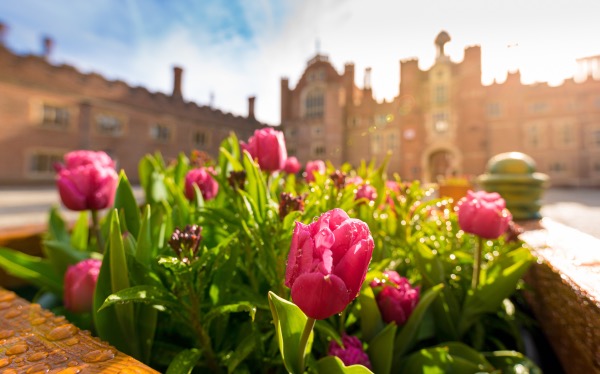
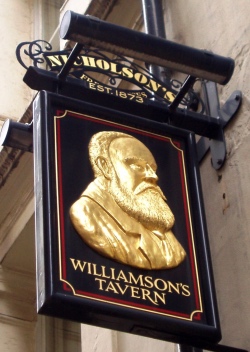
London Pub Signs – Williamson’s Tavern…

Located in the heart of the City of London (actually, according to a myth, it’s the exact centre of the Roman-era city), Williamson’s Tavern dates from the mid-18th century.

The tavern, located in Groveland Court, just off Bow Lane, owes its name to Robert Williamson who bought residence which once stood on the site – and happened to be the home of the Lord Mayor of London – in  the mid-1700s.

It was Williamson who turned the premises, which had been built soon after the Great Fire of 1666, into a hotel and tavern (the Lord Mayor, meanwhile, moved into the George Dance-designed Mansion House in 1752).

Said to be popular among merchants and seafarers, the hotel, meanwhile, remained in the family until 1914 when James Williamson died and the property was auctioned.  The hotel eventually disappeared but the tavern – now housed in a building dating from the early 1930s – lives on.

There is a remnant of its glorious past nearby – King William III and Queen Mary II, who were said to have dined at the previous Lord Mayor’s residence, presented the Lord Mayor with a gift in the form of now Grade II-listed wrought-iron gates with their monogram and they still stand at one end of Groveland Court.

The tavern, meanwhile, claims to have “probably…the oldest excise license in the City of London”. It also features a stone plaque in the floor which, so the story goes, marks the exact centre of London (although its apparently covered by carpet) and there are some Roman-era bricks or tiles incorporated into a fireplace which were discovered during the 1930s rebuild.

It’s also said to have a resident ghost – Martha (also the name of one of the pub’s dining rooms). According to the pub’s website, police dogs won’t go near the place as a result while longer serving members of staff say they have all seen a painting of her in various parts of the pub (of course, no such painting exists).

The tavern is now part of the Nicholson’s chain. For more, see www.nicholsonspubs.co.uk/restaurants/london/williamsonstaverngrovelandcourtlondon.

PICTURE: Ewan Munro (licensed under CC BY-SA 2.0)


This Week in London – Greenwich’s Painted Hall reopens; ‘Christian Dior’ extended; and, merchant shipping explored…

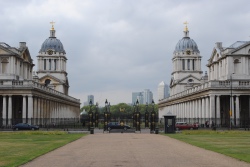
The Painted Hall in Greenwich’s Old Royal Naval College reopens on Saturday following a two-year, £8.5 million restoration project. The hall, known as the UK’s “Sistine Chapel”, was designed by Sir Christopher Wren as a ceremonial dining room for what was then the Royal Hospital for Seamen. Completed in 1705, its 4,000 square metre interior features a decorative scheme painted by Sir James Thornhill, the first British artist to be knighted, which took 19 years to complete. The paintings celebrate English naval power as well as the then newly installed Protestant monarchy with joint monarchs King William III and Queen Mary II as well as Queen Anne and King George I all represented in the artworks along with hundreds of other mythological, allegorical, historical and contemporary figures. The restoration project has also seen the King William Undercroft, located underneath the hall, converted into a new cafe, shop and interpretation gallery. Two cellar rooms from King Henry VIII’s palace – which once stood on the site – were discovered during the restoration works and are also now on public display. Other new touches include the return of a series of carved oak benches to the hall (having been introduced when it was used as an art gallery in the 19th century they were removed 100 years ago), two ‘treasure chests’ containing objects related to the ceiling artworks which can be handled, and new tour options – not just of the hall and undercroft but of the entire Old Royal Naval College site. There’s a host of special activities over the opening weekend, including a parade and official opening ceremony from 9.30am, the chance to meet historical characters, music, food stalls, kids activities and more. Admission charge applies. For more, see www.ornc.org. PICTURED: The Old Royal Naval College, home of the Painted Hall.

The V&A has announced it is extending its sell-out Christian Dior: Designer of Dreams exhibition due to unprecedented demand. The exhibition at the South Kensington museum, which had originally been scheduled to close on 14th July, will now run until 1st September with new tickets made available on 15th of each month (there’s also a limited number of tickets available to purchase daily at 10am from the V&A’s Grand Entrance on a first-come, first-served basis; V&A members, of course, attend free-of-charge with no need to book). The exhibition, which initially sold out of its five month run with 19 days of opening, is the most comprehensive exhibition ever staged in the UK on the House of Dior and the museum’s biggest fashion exhibition since Alexander McQueen: Savage Beauty in 2015. For more, see vam.ac.uk.

On Now: Merchant Navy Treasures: An Introduction to the Newall Dunn Collection. This display at the City of London’s Guildhall Library delves into the Newall Dunn Collection, one of the world’s most comprehensive photographic and reference collections on merchant shipping, and showcases the achievements of shipping historian Peter Newall and artist and writer Laurence Dunn. Alongside images, press releases and newspaper cuttings, on show are company brochures, menus and other items from the ocean liners and cargo vessels of three famous lines from the golden age of shipping: the Cunard, Orient and Union-Castle. Admission is free. Runs until 24th May. For more, follow this link.

Send all items for inclusion to exploringlondon@gmail.com.
10 historic London hotels…10. The Hotel Russell (the Kimpton Fitzroy London Hotel)…

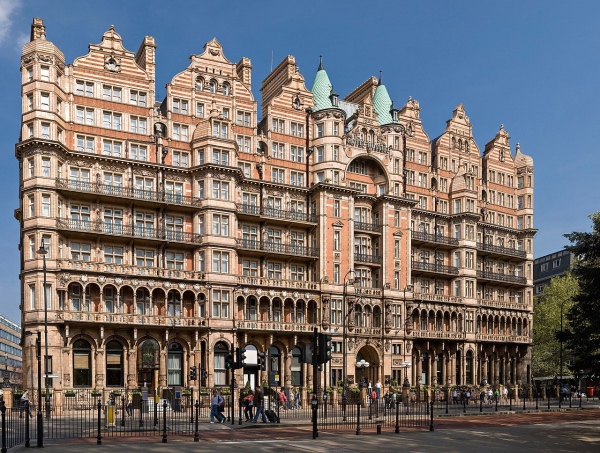
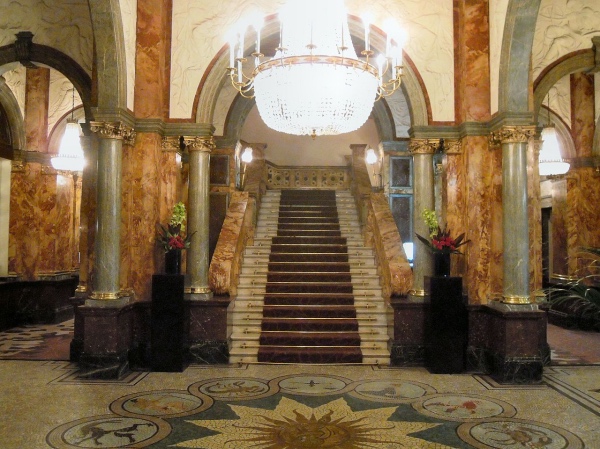
Designed by the architect Charles Fitzroy Doll in distinctive French Renaissance-style for the Frederick Hotels Company, the Hotel Russell opened on the east side of Russell Square in 1898.

The now Grade II*-listed building, which is said to have been based on the 16th century Château de Madrid in Paris, is clad in decorative Doulton’s thé-au-lait (“tea with milk”) terracotta.

Its facade incorporates the coats-of-arms of the world’s nations as they were in 1898 and above the entrance are life-sized statues of four queens – Elizabeth I, Mary II, Anne and Victoria – which were designed by sculptor Henry Charles Fehr (pictured). The Guilford Street frontage features busts of four Prime Ministers: Lord Derby, Lord Salisbury, William Gladstone, and Benjamin Disraeli.

The hotel’s interior features ornate fixtures and fitting including a Pyrenean marble staircase which runs off the opulent marble foyer and an interior courtyard housing a Palm Court. Each bedroom was fitted with an en-suite bathroom.

Its restaurant, now named the Neptune but originally named after Doll, was designed almost identically to the RMS Titanic‘s dining room (Doll designed both). That’s not the only Titanic connection – the hotel also features a bronze statue of a dragon on the stairs named ‘Lucky George’ and the Titanic carried an identical statue.

The hotel survived World War II largely intact – with the exception of a roof-top dome which was damaged in an air raid in 1941 and not replaced.

Fast forward to April, 2018, and the hotel reopened as the The Principal Hotel (on the 106th anniversary of the sinking of the Titanic) following an extensive £85 million, two year renovation by designer Tara Bernerd.

But the Principal Hotel Company sold its portfolio of hotels to Covivio a few months later and they, in turn, leased the management of the hotels to the InterContinental Hotels Group. The Principal was renamed the Kimpton Fitzroy London in October that year.

Alongside 330 or so rooms, amenities at the five star hotel include the glass-roofed Palm Court, cocktail bar Fitz’s (named for Charles Fitzroy Doll), and the coffee shop Burr & Co. There’s also a grand ballroom, meeting rooms and a fitness centre.

Interestingly, Doll designed another hotel, the Imperial, also on Russell Square, which opened in 1911. It was demolished in 1966.

For more, see www.kimptonfitzroylondon.co.uk/us/en/.

PICTURES: Top – David Iliff (licensed under CC BY 3.0); Right and below – Jack1956.

This is the final in our series on historic London hotels. We’ll be launching a new special series next Wednesday.

LondonLife – Looking toward The Orangery, Kensington Palace…

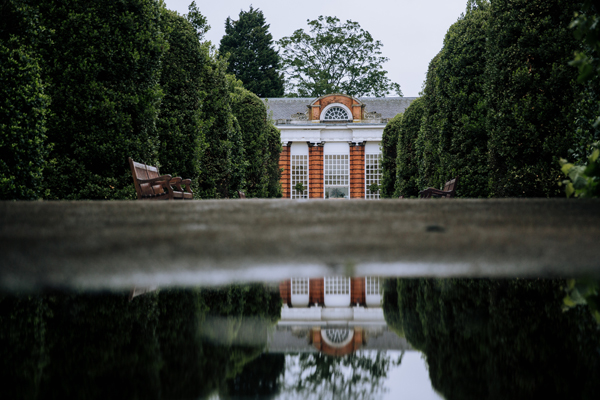
Now an elegant place to have lunch or afternoon tea, The Orangery was originally built in 1704-05. Its construction came at the behest of Queen Anne – the younger sister of Queen Mary II, she had ascended to the throne after the death of Mary’s husband King William III in 1702 following a fall from a horse (Mary had died of smallpox at Kensington Palace in 1694). Queen Anne used the building for parties in summer and in winter, thanks to underfloor heating, as a conservatory for plants (two engines were later fitted to the building to lift the orange trees kept there in colder months). The building’s architect is thought to have been the renowned Nicholas Hawksmoor, clerk of works for Kensington Palace, but it was extensively modified by Sir John Vanbrugh. The building also contains carvings by Grinling Gibbons. For more, see www.orangerykensingtonpalace.co.ukPICTURE: Vapor Kopeny/Unsplash

Famous Londoners – Judge Jeffreys…

The-Town-of-Ramsgate2

Best known as the “Hanging Judge” thanks to his role in the so-called Bloody Assizes of 1685, George Jeffreys climbed the heights of England’s legal profession before his ignominious downfall.

Born on 15th May, 1645, at the family home of Acton Hall in Wrexham, North Wales, Jeffreys was the sixth son in a prominent local family. In his early 20s, having been educated in Shrewsbury, Cambridge and London, he embarked on a legal career in the latter location and was admitted to the bar in 1668.

Town-of-RamsgateIn 1671, he was made a Common Serjeant of London, and despite having his eye on the  more senior role of Recorder of London, was passed over. But his star had certainly risen and, despite his Protestant faith, he was a few years later appointed to the position of solicitor general to James, brother of King Charles II and the Catholic Duke of York (later King James II), in 1677.

The same year he was knighted and became Recorder of London, a position he had long sought, the following year. Following revelations of the so-called the Popish Plot in 1678 – said to have been a Catholic plot aimed the overthrow of the government, Jeffreys – who was fast gaining a reputation for rudeness and the bullying of defendants – served as a prosecutor or judge in many of the trials and those implicated by what turned out to be the fabricated evidence of Titus Oates (Jeffreys later secured the conviction of Oates for perjury resulting in his flogging and imprisonment).

Having successfully fought against the Exclusion Bill aimed at preventing James from inheriting the throne, in 1681 King Charles II created him a baronet. In 1683 he was made Lord Chief Justice and a member of the Privy Council. Among cases he presided over was that of Algernon Sidney, implicated in the Rye House Plot to assassinate the king and his brother (he had earlier led the prosecution against Lord William Russell over the same plot). Both were executed.

It was following the accession of King James II in February, 1685, that Jeffreys earned the evil reputation that was to ensure his infamy. Following the failed attempt by James Scott, 1st Duke of Monmouth and illegitimate son of the late King Charles II, to overthrow King James II, Jeffreys was sent to conduct the trials of the captured rebels in West Country towns including Taunton, Wells and Dorchester – the ‘Bloody Assizes’.

Of the almost 1,400 people found guilty of treason in the trials, it’s estimated that between 150 and 200 people were executed and hundreds more sent into slavery in the colonies. Jeffreys’, meanwhile, was busy profiting financially by extorting money from the accused.

By now known for his corruption and brutality, that same year he was elevated to the peerage as Baron Jeffreys of Wem and named Lord Chancellor as well as president of the ecclesiastical commission charged with implementing James’ unpopular pro-Catholic religious policies.

His fall was to come only a couple of years later during Glorious Revolution which saw King James II overthrown by his niece, Mary, and her husband William of Orange (who become the joint monarchs Queen Mary II and King William III).

Offered the throne by a coalition of influential figures who feared the creation of a Catholic dynasty following the birth of King James II’s son, James Francis Edward Stuart, William and Mary arrived in England with a large invasion force. King James II’s rule collapsed and he eventually fled the country.

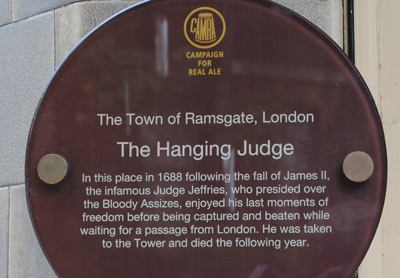
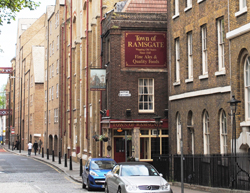
Remaining in London after the king had fled, Lord Jeffreys only attempted to flee as William’s forced approached the city. He made it as far as Wapping where, despite being disguised as a sailor, he was recognised in a pub, now The Town of Ramsgate (pictured above).

Placed in custody in the Tower of London, he died there of kidney problems on 18th April, 1689, and was buried in the Chapel Royal of Saint Peter ad Vincula (before, in 1692, his body was moved to the Church of St Mary Aldermanbury). All traces of his tomb were destroyed when the church was bombed during the Blitz (for more on the church, see our earlier post here).

What’s in a name?…Seven Dials…

Seven-Dials---bigStanding at the junction of seven streets in London’s West End is a pillar topped with six – that’s right, six – sundials, giving the intersection and the surrounding area its name.

The layout of the area was originally designed by Thomas Neale, an MP and entrepreneur, in the early 1690s – it was part of the rebuilding of London after the Great Fire of 1666 – and initially had the pillar standing at the centre of six streets before it was later increased to seven. The streets which radiate out from the hub include Earlham, Mercer and Monmouth Streets and Shorts Gardens.

Seven-dialsWhile Neale, who designed the street layout to maximise street frontages and thus his return, had hoped the area would attract the well-to-do, it was not be and by the 19th century the area had become one of the cities most notorious slums, considered part of the infamous rookery of St Giles.

That has since changed and today the area is at the heart of a bustling commercial district, the streets which run off it housing stylish shops and offices.

The pillar itself apparently never had seven faces – there is the suggestion that the column itself was the seventh – and while the original column was removed in 1773, apparently by city authorities keen to rid the area of undesirables, it was replaced with a replica column in the late 1980s and unveiled by Queen Beatrix of The Netherlands to commemorate the tercentenary of the reign of King William III and Queen Mary II in June, 1989.

The original column, meanwhile, was apparently first acquired by an architect, James Paine, who kept it at his house in Surrey, before, in 1820, being taken to Weybridge where, in 1820, the column was re-erected as a memorial to Princess Frederica, Duchess of York (who had lived there). The dial-stone, meanwhile, was used as a mounting block before eventually being placed outside the Weybridge Library.

This Week In London – Kensington Palace celebrates Christmas; plant a tree at Epping; and, the Long Range Desert Group memorial unveiled at Westminster Abbey…

Apologies we didn’t post a new instalment in our Wednesday series yesterday – it will resume next week!

Inspired by a spectacular month of partying by King William III in December, 1699, Kensington Palace is celebrating Christmas with a month of family-friendly entertainment in the Georgian State Apartments. Historic Royal Palaces has joined with games makers Hide & Seek to create Game of Crowns, transforming Kensington into a play palace with games, mummery and the chance to proclaim yourself king or queen for a day. On the weekends, there’s also the chance to join in parlour games from 1700 onward and a Christmas Day sensory room which brings to life King William III and Queen Mary II’s Christmas morning (by which time they must have been exhausted!). The palace will also play host to its largest ever Christmas tree – 30 feet tall – and on December 16th, you can join in Carols by Candlelight. Admission charge applies. Runs until 6th January. For more, see www.hrp.org.uk/KensingtonPalace/.

Epping Forest is expanding and this weekend, you have a chance to help by planting some new saplings. The City of London Corporation, which runs the forest, is creating a new area of woodland, named Gifford Wood in honour of former Lord Mayor Roger Gifford, after purchasing 30 acres of land at Upshire last year. Members of the public are invited to join City of London staff and the Friends of Epping Forest at Upshire Village Hall, Horseshoe Hill (EN9 3SP) between 11am and 1pm on Saturday to plant 2,000 new oaks and hornbeam as well as a mix of alder, birch, beech, cherry, field maple, rowan, small lime, wild apple, wild service, holly and yew. Bring your spade. For more, phone 0208 532 1010 or email epping.forest@cityoflondon.gov.uk.

A memorial to the Long Range Desert Group was dedicated in Westminster Abbey this week.  The LRDG was formed in 1940 by Major Ralph Bagnold to act as the forward intelligence arm of the British army in North Africa. The group later shared their expertise in desert navigation with the fledgling SAS (Special Air Service) who also carried out offensives in the desert from 1941. The memorial is located in the west cloister below that of the SAS. For more, see www.westminster-abbey.org.

Treasures of London – The Mostyn Tompion Clock…

Mostyn-ClockCreated by celebrated London clock-maker, Thomas Mostyn, the Mostyn Tompion Clock was produced to celebrate the coronation of joint monarchs King William III and Queen Mary II in 1689.

Currently on display in the British Museum in an exhibition coinciding with the 300th anniversary of Mostyn’s death, the clock – which shows the hours and minutes as well as the days of the week – continues to keep good time and runs for more than a year on a single wind.

Noted as much for being a work of art as for its mechanical works, the case features an ebony veneer, silver and gilt brass mounts and is crowned with a statuette of Britannia and a shield combining the crosses of St George and St Andrew while decorations on the four corners commemorate the union of the United Kingdom and depict a rose, thistle, lion and unicorn.

The clock was kept in the Royal Bedchamber until the death of King William III in 1702 after which it passed to Henry Sydney, the Earl of Romney and Gentleman of the Bedchamber and Groom of the Stole. It was later inherited by Lord Mostyn (hence the ‘Mostyn’ Tompion) and remained in that family until acquired by the British Museum in 1982.

Keep an eye out for upcoming famous Londoners on Thomas Tompion.

The clock, featured in the The Asahi Shimbun Display, is on display in Room 3 of the British Museum until 2nd February, 2014. Entry is free. 

WHERE: British Museum, Great Russell Street (nearest Tube stations are Russell Square, Tottenham Court Road, Goodge Street and Holborn); WHEN: 10am to 5.30pm daily; COST: Free; WEBSITE: www.britishmuseum.org.

PICTURE:  © The Trustees of the British Museum

Around London: Historic pearls at the V&A; ‘Big Brother’ house opening; aircraft pioneers honoured; and Jonathan Yeo at the NPG…

The_Rosebery_Tiara_QMA_Collection._Photo_c_SothebysA pearl-drop earring worn by King Charles I at his execution in 1649, pearl tiaras worn by European nobles and a pearl necklace given to Marilyn Monroe by Joe DiMaggio in 1954 are among the items on display as part of a new exhibition which opened at the V&A last Saturday. The V&A and Qatar Museums Authority exhibition traces the history of pearls from the early Roman Empire to now and features more than 200 pieces of jewellery and works of art. Other items on display include ‘Queen Mary II’ pearls dating from 1662-1664, a miniature portrait of Queen Charlotte wearing pearl jewellery and a set of buttons, finely enamelled and framed with pearls, worn by George III in 1780. There’s also the Dagmar necklace given to Princess Alexandra when she married the future King Edward VII in 1863. The exhibition is part of the Qatar UK 2013 Year of Culture. Admission charge applies. Runs until 19th January. For more, see www.vam.ac.uk. PICTURE: Lady Rosebery’s pearl and diamond tiara (1878) © Christie’s Images.

The Big Brother house – located in Elstree Studios in north London – opens to the public tomorrow and on Saturday as part of a partnership between Initial – an Endemol Company, Channel 5 and the National Trust. Some two million people tuned in to watch the final night of the show this summer leading one TV critic to describe the property as “the most important house in Britain”. The opening is being preceded by an Opening Gala featuring housemates past and present as well as celebrities – but that’s an invitation only event. Sadly, tickets for the opening are already sold out – for returns and your last chance of getting in, follow this link.

The UK’s first aircraft manufacturers – Horace, Eustace and Oswald Short – have been commemorated with an English Heritage blue plaque placed on their former workshop in Battersea. Unveiled this week by Jenny Body – the first female president of the Royal Aeronautical Society, the plaque can be found at the railway arches near Queen’s Circus where the brothers, who lived nearby in the Prince of Wales Mansions, worked on ballooning and first made the transition to aircraft construction. Among their firsts was the construction of the first British powered aircraft to complete a circular mile of flight and the creation of Britain’s first ever purpose-built aircraft factory (it was located on the Isle of Sheppey in Kent). For more, see www.english-heritage.org.uk/discover/blue-plaques/.

On Now: Jonathan Yeo Portraits. New and previously unseen works including a six foot high portrait of controversial artist Damien Hirst and a portrait of Kevin Spacey as King Richard III feature in this exhibition running at the National Portrait Gallery. Other subjects featured in the painted works include media mogul Rupert Murdoch, model Erin O’Connor, artist Grayson Perry and actor Sierra Miller. Runs until 5th January. Admission is free. For more, see www.npg.org.uk.