10 places to encounter London’s animal life…A recap…

Before we move on to our next Wednesday series, here’s a recap…

1. Deer in Richmond Park…

2. Mudchute Park and Farm…

3. WWT London Wetland Centre…

4. Bushy Park…

5. Golders Hill Park Zoo…

6. The River Thames…

7. Kew Gardens…

8. Epping Forest…

9. Walthamstow Wetlands…

10.. Hanwell Zoo…

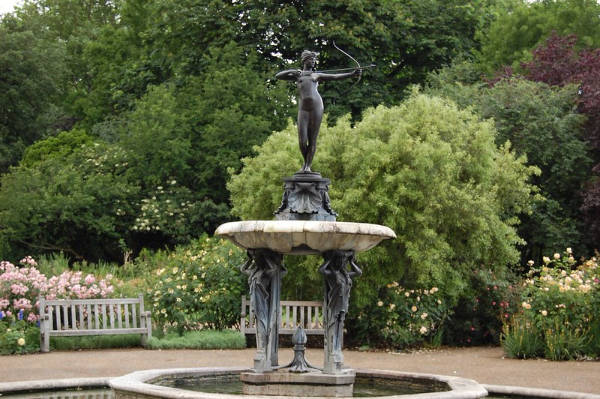
Treasures of London – The Huntress Fountain, Hyde Park…

PICTURE: Ilya Bogin (Licensed under CC BY 2.0)

Located in the Hyde Park Rose Garden in the south-east corner of Hyde Park, the Huntress Fountain dates from 1906.

It is topped with a bronze statue depicting Diana, the Roman goddess of hunting (known as Artemis to the Greeks), naked and in the process of shooting an arrow.

The statue, which was once known as the Diana Fountain, is the work of Countess Feodora Gleichen. She was posthumously named one of the first female members of the Royal Society of Sculptors in 1922.

It is said to have been originally made for Sir Walter Palmer’s pile, Frognal, at Ascot in 1899 but was instead donated the park by Sir Walter and Lady Palmer.

10 places to encounter London’s animal life…4. Bushy Park…

Famous for its herd of Red and Fallow deer, the expansive Bushy Park in south-west London is also a haven for many other kinds of wildlife – from birds and fish to insects and small mammals.

Subscribe now for access to all Exploring London’s stories and support our work!

10 places to encounter London’s animal life…1. Deer in Richmond Park…

We start a new series looking at places to encounter (at a distance, for some), London’s wildfire and we start by heading west to Richmond Park.

Subscribe for just £3 a month to access all of Exploring London’s articles – and support our work!

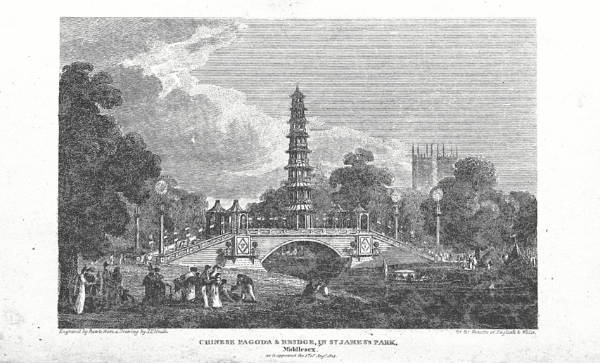
Lost London – The Chinese Bridge and Pagoda, St James’s Park…

Briefly a sizeable landmark on London’s skyline, this seven-storey high structure and bridge were built over the canal in St James’s Park in 1814 as part of celebrations over the 100th anniversary of the accession of the House of Hanover, the 16th anniversary of Nelson’s victory at the Battle of the Nile and the signing of Treaty of Paris with France on 30th May following Napoleon’s abdictation in April.

British Library digitised image from “A Topographical and Historical Description of London and Middlesex” By Brayley, Brewer, and Nightingale

The pagoda and bridge, designed by none other than John Nash and Auguste Pugin, were among a number of structures built for the celebrations held in Royal Parks on 1st August – others included a ‘Temple of Concord’ and a naval arch. There was also a naval re-enactment on The Serpentine in Hyde Park.

As well as bands, food stalls and marquees for guests, the event, which was billed (among other names) as the Grand Jubilee, also included balloon ascents and fireworks.

The latter wasn’t good news for the pagoda – it was hit by a stray firework and destroyed (and tragically at least one person lost their life). The bridge lasted a few years longer – it apparently survived until 1825.

LondonLife – Bold play in Hyde Park…

PICTURE: Laura Gogue/Unsplash

LondonLife – Swans on the Serpentine…

PICTURE: Brett Wharton/Unsplash

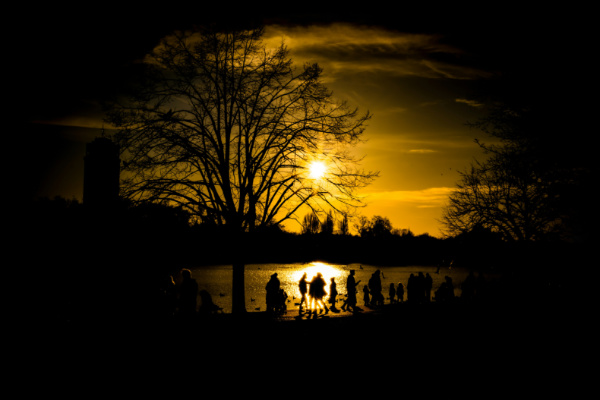
LondonLife – Sunset, Hyde Park…

PICTURE: F X/Unsplash

This Week in London – Marking Turner’s 250th; ‘Helios’ at the Painted Hall; Churchill in cartoons; and, Royal Parks’ new Elizabeth II garden wins grant…

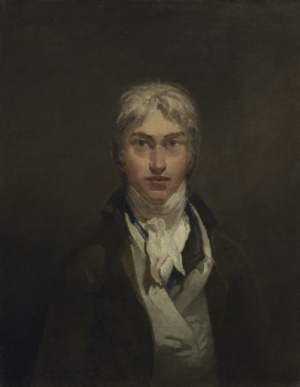
JMW Turner, Self-Portrait, c.1799
Image courtesy of Tate

• Cultural institutions across the UK have announced a year long celebration of renowned painter JMW Turner in honour of the 250th anniversary of his birth. Turner 250 includes more than 30 events with Turner’s birthday on 23rd April a particular focus. Events on the day include the opening of an exhibition of Turner’s rarely-seen images of wildlife at Turner’s House in Twickenham, and the opening of a newly refreshed room in Tate Britain’s Clore Gallery which will be home to a permanent free display of 100 works by the artist. More information will be forthcoming.

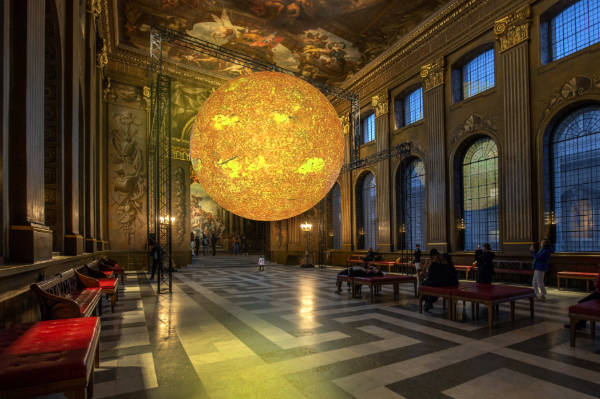
• Luke Jerram’s newest and most ambitious large scale artwork, Helios, is making its London premiere at the Old Royal Naval College. Co-commissioned by the Old Royal Naval College, this new seven-metre celestial artwork depicts the Sun in all its glory at a scale of 1:200 million. The imagery for the artwork has been compiled using photographs of the Sun provided by astrophotographer Dr Stuart Green (taken between May, 2018, to June, 2024) and NASA observations of the Sun along with guidance from solar scientist, Professor Lucie Green of University College London (UCL). The sculptural work is accompanied by a specially created surround sound composition created by acclaimed artists Duncan Speakman and Sarah Anderson. Runs from Saturday until 25th March. Admission charge applies. For more, see https://ornc.org/whats-on/helios/

Helios by Luke Jerram in the Painted Hall. PICTURE: Courtesy of the Old Royal Naval College.

On Now: Churchill in Cartoons: Satirising a Statesman. The Imperial War Museum in Lambeth is marking the 150th anniversary of the birth of Sir Winston Churchill with this exhibition examining how Churchill is represented in political cartoons, both during his life and after. The display features 24 original artworks spanning the period from 1909 to 2003 and examines how these portrayals influenced public perception of the statesman, from his early career as an MP to the role he played in both World Wars, the “Wilderness Years” between and after he lost the 1945 General Election. Among the works are
a cartoon from Punch magazine in 1914 depicting Churchill supporting the Roman sea god Neptune with aircraft (representing the establishment of the Royal Naval Air Service), a 1941 David Low cartoon shows a cigar-smoking Churchill with US President Franklin D Roosevelt during their Atlantic Conference, and, a cartoon by US cartoonist Jim Berryman marking Churchill’s defeat in the 1945 election. The free exhibition closes on 23rd February. For more, see www.iwm.org.uk/events/churchill-in-cartoons-satirising-a-statesman.

Royal Parks have been awarded a £450,000 grant to support the creation of a new, two-acre garden in The Regent’s Park. The garden, to be funded with the grant from the Garfield Weston Foundation, will commemorate the life and legacy of Queen Elizabeth II and will feature a circular pond enhancing wildlife habitats, a central promenade with an accessible platform over the pond, and a vibrant flower garden showcasing species which were significant to the late Queen, such as the specially bred Narcissus ‘Diamond Jubilee’ or Tulipa ‘Royal Celebration’. The new garden is set to open in 2026.

Send all items for inclusion to exploringlondon@gmail.com.
10 significant (and historic) London trees – A recap…

We’ll kick off a new series next week, but, in the meantime, here’s a recap…

1. Queen Elizabeth’s Oak, Greenwich…

2. The Cheapside Plane…

3. Charter Oak of Bexley…

4. The Royal Oak, Richmond Park…

5. Black mulberry trees, Middle Temple Gardens…

6. Mendelssohn’s Tree…

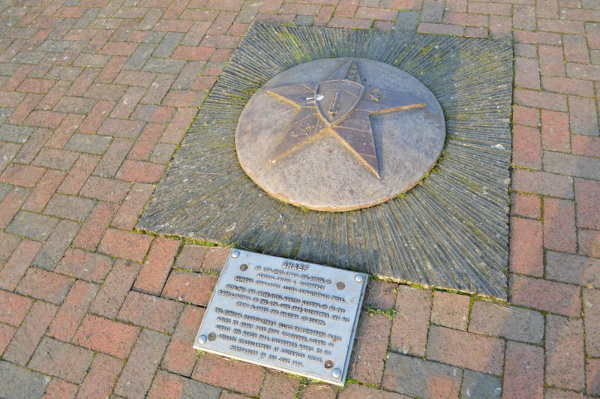
7. D-Day Tree…

8. The Old Lions…

9. The Fulham Palace Oak…

10. Berkeley Square Plane Tree…

This Week in London – Memorial to Victims of Transatlantic Slavery designs; and, images of the Royal Parks in spring…

Members of the public are invited to view a shortlist of ideas for the proposed Memorial to Victims of Transatlantic Slavery to be located in West India Quay. Mayor of London Sadiq Khan pledged £500,000 to fund the memorial which will be the first of its kind in the UK. Short-listed works include Alberta Whittle”s Echoes from beneath the deep and in between the canes (a Caribbean-style pavilion alongside a sugarcane field and cowrie shells which are synonymous with the trade in enslaved people); Zak Ové’s Nana Buluku (an 11 metre tall and richly decorated representation of an African Queen, Nana Buluku); Grada Kilomba’s Archaeology of Contemplation (this uses the image of a boat as a metaphor of remembrance, remembering those who were transported as cargo by the British and other nations); Helen Cammock’s Ripple (a large-scale, circular stone structure with six discoverable engraved texts in West African wood); Hew Locke’s Memorial for the victims of the transatlantic slave trade (bronze sculptures of boys and girls carrying buildings which were built in London from money earned by the trade in enslaved people); and, Khaleb Brooks – The Wake (a large scale cowrie shell which represents the perseverance, prosperity and beauty rooted in African and African diasporic heritage). An online exhibition of the shortlisted work is available to view on https://www.london.gov.uk/transatlantic-slavery-memorial and the public is invited to give their feedback.    

Winning entries from the Royal Parks’ photographic competition Creating Spaces for Life can be seen online. Take a gander, which features four goslings under the protective wing of a parent, won the competition which invited visitors to photograph the new life emerging in the eight Royal Parks during the springtime. Other entries among the winners included a swan taking flight, a silhouetted coot appearing to walk on water and a common blue butterfly pictured in the spring sunshine. To see the winning images, head to www.royalparks.org.uk/photography-competition-creating-spaces-for-life.

Send all items to exploringlondon@gmail.com.

This Week in London – Exploring Bushy Park’s D-Day history; lost and found umbrellas; and, British comics in the US…

The Eisenhower Memorial in Bushy Park. PICTURE: Matt Brown (licensed under CC BY 2.0)

A new digital exhibition revealing the role Bushy Park played in planning D-Day has gone online ahead of the 80th anniversary of D-Day on 6th June. The exhibition, which is on the Royal Parks website and coincides with new interpretative material at the park itself, features previously unseen archive images of Camp Griffiss which once housed more than 3,000 service personnel. For more, see www.royalparks.org.uk/read-watch-listen/operation-bushy-park-plotting-d-day-royal-park

Umbrellas lost on London’s trains, Tubes and buses have been transformed into
yōkai – a class of supernatural beings and entities that abound in Japanese folklore, literature, art and popular culture – in a new installation at the Young V&A.
Lost and Found Yōkai, which features the sounds of supernatural Japan, celebrates Young V&A’s current exhibition, Japan: Myths to Manga and takes visitors on a journey through “Kasa-obake Alley”, where the umbrellas once lost, now dance with life. The installation can be experienced until 1st December which Myths to Manga runs until 8th September. For more, see vam.ac.uk/young.

• On Now: HEROES: The British invasion of American comics. This exhibition at how early American comics such as Buster Brown, Miss Fury and Superman influenced British artists and culture, and then explores how subsequent British comic creations, such as Watchmen and V For Vendetta, were then exported to the US. Highlights include British imitations of American comic strips dating from the 1940s; an exploration of the story behind the 1972 launch of Marvel UK; see rarely-seen full-colour early American comic newspaper pages by RF Outcault, Harold Foster and Alex Raymond; and artwork by key figures from the history of British and American comics, including works by Jack Kirby, Jack Davis and Tarpe Mills. Runs until 19th October. Admission charge applies. For more, see www.cartoonmuseum.org.

Send all items to exploringlondon@gmail.com.

10 significant (and historic) London trees…4. The Royal Oak, Richmond Park…

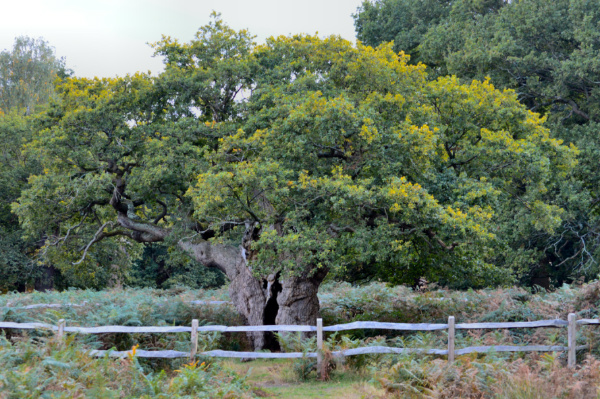
The Royal Oak. PICTURE: AndyScott (licensed under CC BY-SA 4.0)

Estimated to be more than 750-years-old, the tree known as the Royal Oak is located near Pen Ponds and Richmond Gate.

This massive English oak (Quercus robur), which is hollow, doesn’t have any direct connections to royalty but it did survive the felling of trees which took place in Richmond Park and across the south-east of England so King Henry VIII’s navy could be built.

That may have been thanks to the King himself, who wisely passed a law to spare every 10th tree in the park for future seed.

While the park had been used by King Henry VIII as a hunting ground, it wasn’t until 1637 – during the reign of King Charles I – that it was first enclosed.

The tree, which is said to be one of 1,400 “veteran trees” in the park, was pollarded for several hundred years which helped create its shape – this is a method of pruning which removes the top-most branches to form a denser head (and creates wood which can be used for a variety of purposes).

WHERE: Near Pen Ponds, Richmond Park; WHEN: 24/7 pedestrian access; COST: Free; WEBSITE: www.royalparks.org.uk/visit/parks/richmond-park

Treasures of London – The Griffin Tazza…

PICTURE: Marc (licensed under CC BY-NC-ND 2.0/image cropped)

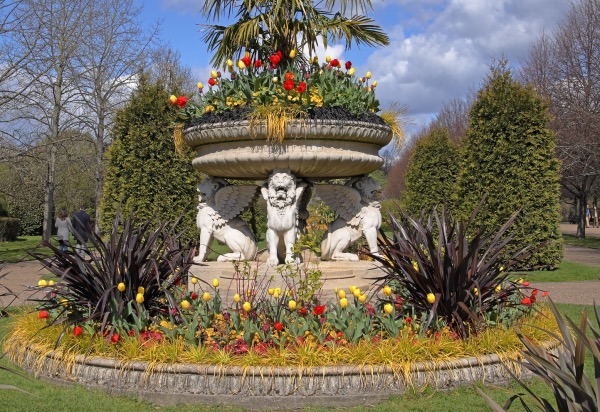
Located in The Regent’s Park, this circular stone planter – often called the ‘Lion Vase’ – dates from the 1860s.

The vase (‘tazza’ just means ‘vase’), which features a circular bowl sitting atop four winged lions or griffins, was designed by Austin and Seeley out of artificial stone.

It was installed as the centrepiece of the Italian Gardens by their designer, William Andrews Nesfield, in 1863.

The vase – which is one of about 30 stone vases in the Avenue Gardens – was restored in the mid-1990s.

WHERE: The Griffin Tazza, The Avenue Gardens, The Regent’s Park (nearest Tube stations are Regent’s Park and Great Portland Street); WHEN: 5am to 9:30pm daily; COST: Free: WEBSITE: www.royalparks.org.uk/visit/parks/regents-park-primrose-hill

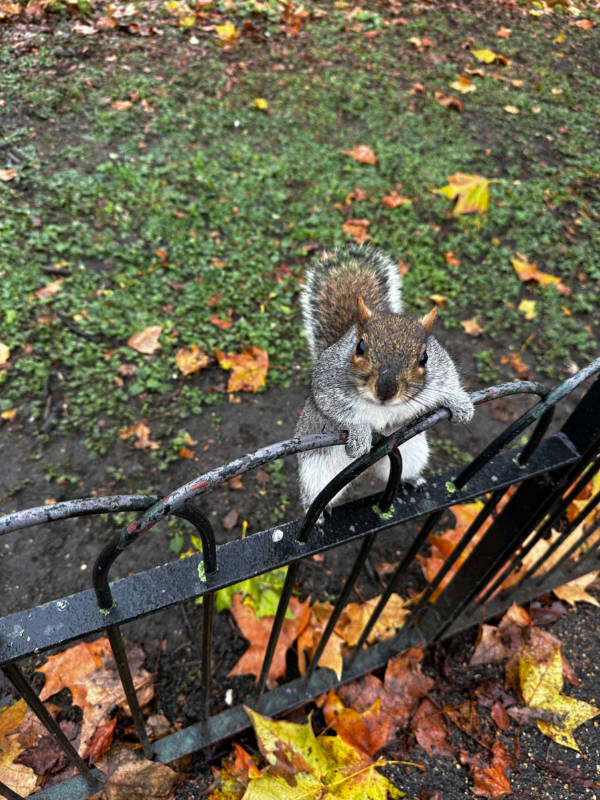
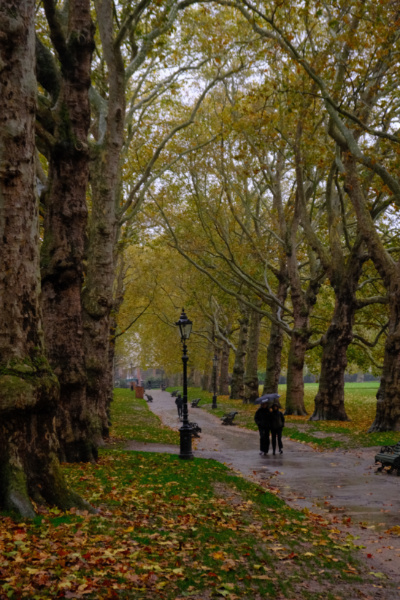
LondonLife – Autumnal walk…

PICTURE: Kostas Vourou/Unsplash

Seen in Green Park on a wet day.

LondonLife – Marking a year since the King’s accession…

PICTURE: Sgt Donald C Todd/UK MOD © Crown copyright 2023

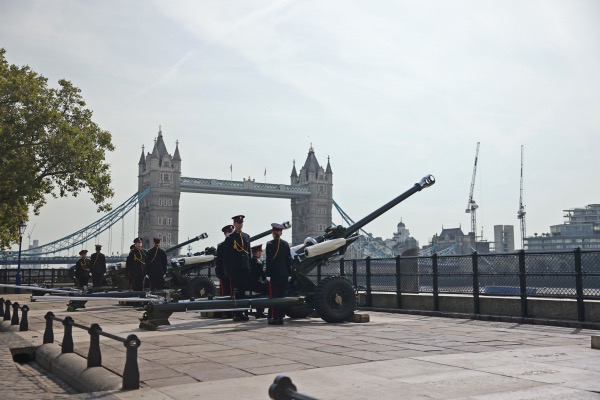
The King’s Troop Royal Horse Artillery fired 41 blank artillery rounds using six guns in Hyde Park to mark a year since the accession of King Charles III on 8th September. Below, the 105mm light artillery guns of the Honourable Artillery Company prepare to fire at The Tower of London in another salute on the same day. Both regiments taking part were responsible for firing the Death Gun salutes to mark the passing of Queen Elizabeth II one year ago, and the following day, the Proclamation salutes to mark the new reign.

PICTURE: Corporal Rob Kane/UK MOD © Crown copyright 2023

LondonLife – Taking flight…

Geese in Richmond Park. PICTURE: John Cox/Unsplash

This Week in London – ‘After Impressionism’; a new woodland for Richmond Park; and, a new exhibition at the Heath Robinson…

Paintings and sculptures by artists including Cézanne, Van Gogh, Rodin, Picasso, Matisse, Klimt, Kandinsky and Mondrian opens at The National Gallery on Saturday. After Impressionism: Inventing Modern Art features more than 100 paintings and sculptures from museums and private collections around the world spanning the period between 1886 and 1914. Highlights include André Derain’s La Danse, Edgar Degas’s Dancers in the Foyer, Paul Cézanne’s Grandes Baigneuses, Edvard Munch’s The Death Bed, Paul Gauguin’s Vision of the Sermon, Camille Claudel’s Imploration / l’Implorante, and Lovis Corinth’s Nana, Female Nude. Admission charge applies. Runs until 13th August. For more, see www.nationalgallery.org.uk/exhibitions/after-impressionism-inventing-modern-art.

Sir David Attenborough has planted an English oak tree to officially open the Platinum Jubilee Woodland, a new woodland in Richmond Park. The woodland has been created as part of The Queen’s Green Canopy initiative to celebrate and honour the late Queen Elizabeth II’s lifetime of service. Some 70 young trees have been planted in the woodland, including oak, Dutch elm-disease-resistant elm, small-leaved lime, and sweet chestnut trees, planted around a focal point which will later incorporate a seating area. Sir David’s tree is one of the last to be planted as part of The Queen’s Green Canopy initiative which concludes on 31st March. The project invited people from across the nation to plant trees in honour of Queen Elizabeth II to mark the Platinum Jubilee and benefit future generations. For more on the park, see www.royalparks.org.uk/parks/richmond-park.

Illustrative works by William Heath Robinson, Charles Robinson and Thomas Health Robinson, many of which have not be exhibited before, are on show in a new exhibition at the Heath Robinson Museum in Pinner. The works, which come from the collection of Martin and Joanne Verden, include original drawings for Railway Ribaldry and William Heath Robinson’s How to… series of books. Admission charge applies. Runs until 21st May. For more, see www.heathrobinsonmuseum.org.

Send all items for inclusion to exploringlondon@gmail.com.
This Week in London – Stephen Lawrence and Dick Whittington remembered; Museum of London seeks Jewish-fashion items for new display; and, become a volunteer ranger at The Regent’s Park…

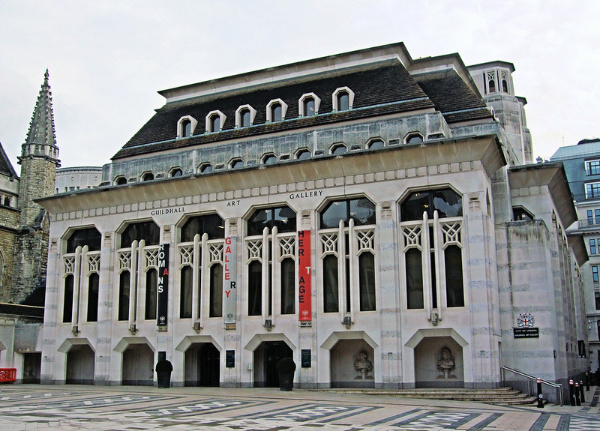
The Guildhall Art Gallery which contains the City of London Heritage Gallery. PICTURE: Jim Linwood (licensed under CC BY 2.0)

Stephen Lawrence, a London teenager who was killed in a racially motivated murder in 1993, and four-times medieval Mayor of London, Richard Whittington, are both remembered in a new display at the City of London Heritage Gallery. Among the items on show is a report by the headteacher of John Roan School in Greenwich which was created following Lawrence’s death along with the last will and testament of Whittington and a book recording his third election as mayor in 1406 and showing his decorated coat of arms. Also on show in the gallery is a Bomb Damage Map which, produced by London County Council, shows the extent of damage to Rotherhithe and part of the Isle of Dogs following a German Luftwaffe raid in September, 1940. The display can be seen until 28th April. Admission is free but booking is recommended. For more, see www.cityoflondon.gov.uk/events/heritage-gallery-exhibition.

The Museum of London is seeking information on high-profile items of clothing created by leading Jewish fashion designers ahead of an exhibition running later this year. Fashion City: How Jewish Londoners Shaped Global Style, scheduled to open in October, will explore the major contribution of Jewish designers had in making London an iconic fashion city during the 20th century. It will feature pieces from the museum’s own collections but those behind the exhibition are also looking for a range of other high profile items. These include menswear made by Mr Fish and Cecil Gee which were worn by famous names such as Sean Connery, David Bowie, Mick Jagger, Muhammad Ali, Michael Caine and The Beatles, womenswear made by Rahvis in the 1930s and 1940s and worn by Hollywood film stars, hats made by Otto Lucas and worn by the likes of Greta Garbo and Wallis Simpson, a theatre costume made by Neymar for Cecil Landau’s 1949 production of Sauce Tartare, and 1930s gowns made by dressmaker Madame Isobel (Isobel Spevak Harris). Anyone who has information about the location of these objects are asked to email fashioncity@museumoflondon.org.uk with any information. More information on the exhibition will be provided closer to the date.

The Royal Parks is looking for volunteer rangers in The Regent’s Park this spring. Following the success of volunteer ranger programmes in Richmond, Bushy and Greenwich Parks, the charity is seeking “friendly and chatty people who are passionate about The Regent’s Park, and keen to inspire and educate visitors”. Volunteers, who need to commit to a minimum of three hours per month, will work in pairs and share facts about the park’s heritage as well as provide tips on the best walking and cycling routes and inform visitors on how everyone can help nature thrive in the parks. Rangers can choose from a range of 90-minute volunteering sessions across weekdays and weekends. Applications close on 26th February. Full training will be provided. To apply, visit www.royalparks.org.uk/rangers.

Send all items for inclusion to exploringlondon@gmail.com

King Charles III proclaimed monarch in London…

The Principal Proclamation of King Charles III was read by the Garter King of Arms at 11am from the balcony above Friary Court, St James’s Palace on Saturday. 10th September. PICTURE: LSgt Galvin/UK MOD © Crown copyright 2022
A wider view of the crowd gathered outside St James’s Palace. PICTURE: Sgt Donald C Todd RLC Photographer//UK MOD © Crown copyright 2022
A Gun Salute at the Tower of London for the Principal Proclamation of King Charles III. Immediately following the Principal Proclamation, a Royal Salute of 41 rounds was fired by the King’s Troop Royal Horse Artillery in Hyde Park, and a Royal Salute of 62 rounds from HM Tower of London was fired by the Honourable Artillery Company (below). PICTURES: Above – Corporal Cameron Eden, RLC/UK MOD © Crown copyright 2022; Below – Sgt Jimmy Wise/UK MOD © Crown copyright 2022
At noon, the Proclamation was read from the steps of The Royal Exchange (pictured) by Clarenceux King of Arms. The Lord Mayor of the City of London, together with the Court of Aldermen and Members of Common Council, were present. The Company of Pikemen and Musketeers of the Honourable Artillery Company, the Lord Mayor’s Body Guard in the City of London, were on duty at the Royal Exchange, accompanied by The Band of the Honourable Artillery Company and eight State Trumpeters of The Household Cavalry. PICTURE: PO Phot Joel Rouse/UK MOD © Crown copyright 2022
One of the State Trumpeters positioned on the steps of the Royal Exchange echoing the fanfare from four State Trumpeters at Mansion House as part of the ceremony of the Proclamation of His Majesty King Charles III from the Royal Exchange. PICTURE: Giles Anderson/©MoD Crown Copyright 2022
The Company of Pikemen and Musketeers (pictured) of the Honourable Artillery Company, the Lord Mayor’s Body Guard in the City of London, were on duty at the Royal Exchange. PICTURE: PO Phot Joel Rouse/UK MOD © Crown copyright 2022