Where is it? #18

The latest in the series in which we ask you to identify where in London this picture was taken and what it’s of. If you think you can identify this picture, leave a comment below. We’ll reveal the answer early next week. Good luck!

Congratulations to Janet Holmes who correctly stated this is the weathervane on top of the cupola Whitechapel Gallery, located in Whitechapel High Street. The weathervane was created by Canadian artist Rodney Graham for the opening of the extended gallery in 2009 when the gallery was expanded to include the former Passmore Edwards Library next door (a weathervane had been planned to top the library’s cupola when it was built in the late 19th century but was never installed). Graham’s weathervane depicts the Renaissance scholar Erasmus sitting backwards on a horse reading a book, In Praise of Folly (there’s a story that this is how Erasmus wrote the book). For more on the gallery, see www.whitechapelgallery.org. Or check out Rodney Graham’s art book, British Weathervanes.

Around London – Family festival to celebrate Diamond Jubilee; British Library publishes world’s first detective novel; and, Closing Ceremony Celebration Concert tickets on sale Friday…

Sainsbury’s and Royal Parks have unveiled plans for a two day festival in Hyde Park – billed as the largest family festival London has ever seen – celebrating the Queen’s Diamond Jubilee over the June holiday weekend. The Jubilee Family Festival will feature live music and entertainment with one of the key highlights of each day being the finale – a 70 minute Disney concert specially created to celebrate the Jubilee. Other activities will include appearances by celebrity performers and dancer and children’s TV characters as well as equestrian events and motorcycle displays. There will also be a range of “Commonwealth-inspired” acts, food and drink supplied by Sainsbury’s and giant screens showing Jubilee-related events taking place elsewhere. There will be capacity for 50,000 ticket holders on each of the two days – Saturday, 2nd June, and Sunday, 3rd June. The event will run from 10.30am to 7pm on each day. Tickets – priced at £20 an adult/£12.50 for under 16s (children under three free) or £52 for a family of two adults and two children – go on sale at 9am tomorrow (Friday 24 February) from Ticketmaster – www.ticketmaster.co.uk or call 0844 847 1661 (+44 161 385 3211 from outside the UK) – or Seetickets –  www.seetickets.com  or call 0844 858 6760 (+44 1142 249 784 from outside the UK). In addition, from 28th March, Sainsbury’s customers who spend £60 in store will be able to enter a daily ballot for free family tickets. For more information on the festival, see www.sainsburys.co.uk/jubilee.

• The British Library has republished what many believe was the first detective novel ever published. The Notting Hill Mystery by Charles Felix was originally serialised between 1862 and 1863 in the magazine Once a Week (pictured right – image courtesy of the British Library). It was also published as a single volume in 1863, meaning it predates both Wilkie Collins’ The Moonstone (1868) and Emile Gaboriau’s first Monsieur Lecoq novel, L’Affaire Lerouge, but has not been available commercially since. The story is presented in the form of diary entries, family letters, chemical analysis reports, and interviews with witnesses as well as a crime scene map and follows an insurance investigator, Ralph Henderson, as he builds a case against the sinister Baron ‘R___’ whom he suspects of murdering his wife for life insurance. Available from the British Library bookshop – www.bl.uk/shop.

• Tickets for the BT London Live Closing Ceremony Celebration Concert go on sale tomorrow. The open air event will feature headline act Blur and will be held in Hyde Park on Sunday, 12th August, the day of the Olympic Games Closing Ceremony. Other artists performing at the concert will include The Specials and New Order, and giant screens in the park will show highlights of the Closing Ceremony. Another concert will be held in Hyde Park on Friday July 27, coinciding with the Games’ Opening Ceremony (headline acts and ticket prices will be announced shortly – BT customers will have 48 hour priority access for tickets for both concerts via www.bt.com/londonlive. Tickets for the August concert, priced at £55 (plus booking fee) go on sale at 9am on Friday via www.btlondonlive.com.

10 London sites to celebrate Charles Dickens – 3. Recalling a journalistic career…

We kick off this week’s special – which looks at some of the London premises in which Dickens spent his working life – where we left off last week. Charles Dickens, now 15, had once again been forced to leave school and seek employment – this time as a solicitor’s clerk. From 1827 to 1828, the future author worked at two firms before, having taught himself shorthand, he launched his career as a journalist.

Dickens started his life in his new profession as a freelance law reporter working out of Doctor’s Commons where civil cases were heard (the site of which is marked with a blue plaque on the north side of Queen Victoria Street). Around 1830, he began to work for the newspaper, Mirror of Parliament, which was owned by his uncle and then, in 1832 he was employed at the True Sun newspaper.

His first published literary works started appearing in Monthly Magazine in December the following year (his first printed story was initially entitled A Dinner at Poplar Walk) and eight months later, in August 1834, he took on a new job as a reporter at the influential Whig paper, the Morning Chronicle. His writing was subsequently also published in the Evening Chronicle.

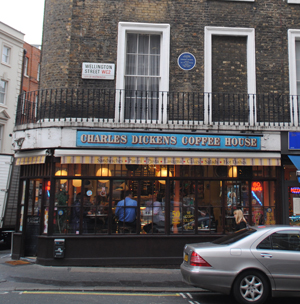
Among the magazine’s Dickens edited were Bentley’s Miscellany – this was the vehicle in which Oliver Twist was first published – and Household WordsHard Times was first published in this – as well as All the Year RoundA Tale of Two Cities and Great Expectations were both first serialised in this magazine which was located at 26 Wellington Street not far from Covent Garden. The building is now the home to the Charles Dickens Coffee House (pictured).

Next week we’ll be taking a look at some of places in London where Dickens lived…

LondonLife – Hunting for giant eggs…

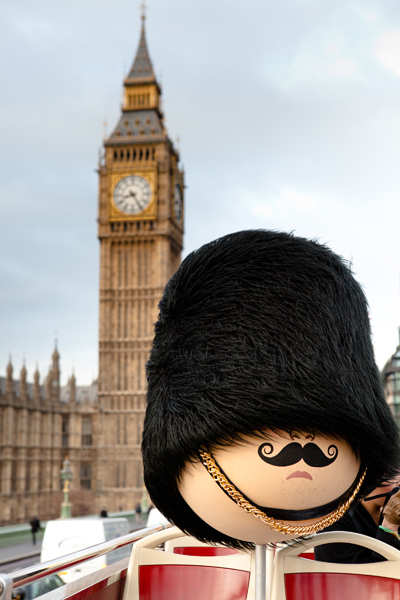
This is one of the more than 200 giant eggs which have been hidden around London as part of The Fabergé Big Egg Hunt.

Launched this week, the hunt aims to raise £2 million for children’s charity Action for Children and the Asian elephant conservation charity Elephant Family as well as to set a couple of new Guinness World Records, including one for the most participants in an Easter egg hunt.

Each of the eggs have been specially designed by leading artists, architects, jewellers and designers including Mulberry, Sir Ridley Scott, Bruce Oldfield, Zaha Hadid, and Zandra Rhodes.

Those participating in the hunt have the chance to win the £100,000 Diamond Jubilee Egg which has been crafted from 500 grams of rose gold and features 60 gemstones – one for each year of the Queen’s reign.

Simply locate the unique SMS keyword located on each egg and text it to 80001 to enter (you’ll be entered in the prize draw each time you SMS through a different egg keywords – it costs £3 to enter the hunt plus 25p for each egg collected plus usual phone costs).

There will also be the chance to bid online and at auction for the hand-crafted eggs along with an exclusively designed, stunning 127ct emerald, a gold egg pendant ‘Le Collier Plume d’Or’ created by Fabergé, and a chocolate egg designed by William Curley.

It is hoped the auction of the latter will set another new Guinness World Record, this time for the world’s most expensive non-jewelled chocolate egg sold at auction – both world record attempts are part of World Record London, which involves attempting more than 20 Guinness World Records.

Members of the public are also invited to take part in The Fabergé Big Egg Hunt Photo Competition, held in conjunction with the World Photography Organisation, with the best photographs to go on display at Somerset House within the prestigious Sony World Photography Awards Exhibition from the 27th April to 20th May.

For more information, see www.thebigegghunt.co.ukPICTURE: Charlie Clift.

Where is it? #17

The latest in the series in which we ask you to identify where in London this picture was taken and what it’s of. If you think you can identify this picture, leave a comment below. We’ll reveal the answer early next week. Good luck!

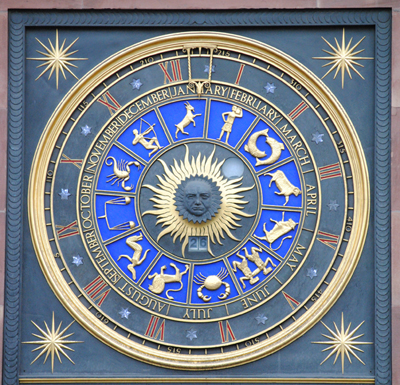
This is an image of the metre wide zodiacal clock on Bracken House on Friday Street. The clock was designed by Frank Dobson and Philip Bentham and, alongside the classical influences on its face, curiously features the image of Winston Churchill’s face at its centre. Churchill was apparently a friend of Bernard Bracken, the former chairman of the Financial Times, after whom the building, which dates from the 1950s, was named. The Financial Times newspaper was published here until the 1989 when it moved to Number One Southwark Bridge. Meanwhile, Bracken House, which was one of the first post-war buildings in the city to be listed, was redeveloped in the early Nineties but retained its original facade.

Around London – Chiswick House’s Camellia Festival; Picasso at the Tate; and, Mondrian at the Courtauld…

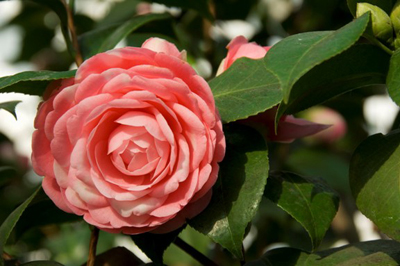
The second annual Camellia Festival kicks off in  gardens surrounding the neo-Palladian property, Chiswick House,  in west London this weekend. The month long festival, run by the Chiswick House & Gardens Trust, was kicked off in 2011 with the aim of showcasing Chiswick’s world renowned Camellia Collection, believed to be the largest in the Western world. Following the success of last year’s festival following a £12.1 million garden restoration project, the flowers will once again be on display in the Conservatory (designed by Samuel Ware in 1813). Complementing the display of camellias will be a showcase of early spring flowers planted in the newly restored Italian Garden (originally created for the 6th Duke of Devonshire in 1814, it was, at the time, at the forefront of horticultural fashion). The Camellia Collection, meanwhile, includes rare and historically significant plants featuring pink, red, white and striped blooms, many of which are descended from the original planting in 1828. Among them is the Middlemist’s Red which was originally brought to Britain from China in 1804 by John Middlemist, a nurseryman from Shepherds Bush. It is one of only two in the world known to exist (the other is in Waitangi in New Zealand). The festival runs from the 18th February to the 18th March.  Admission charge applies. For more information, see www.chgt.org.uk. PICTURE:  The Middlemist’s Red Camellia at Chiswick House © Clare Kendall.

• On Now: Picasso and Modern British Art. This exhibition at Tate Britain explores the influence of Spanish artist Pablo Picasso on British art and the role this played in the acceptance of modern art in Britain as well as celebrating the connections Picasso made with Britain following his first London visit in 1919. It features more than 150 works including 60 by Picasso, among them Weeping Woman and The Three Dancers, as well as works by the likes of Duncan Grant, Wyndham Lewis, Ben Nicholson, Henry Moore, Francis Bacon, Graham Sutherland and David Hockney. Runs until 15th July. Admission charge applies. For more information, see www.tate.org.uk

On Now: Mondrian || Nicholson in Parallel. This show at the Courtauld Gallery tells the story of the extraordinary relationship between celebrated 20th century painter Piet Mondrian and Ben Nicholson, one of the UK’s greatest modern artists. The exhibition will follow the parallel artistic paths taken by the two artists in the 1930s and their subsequent creative relationship. Each of the works selected for the exhibition have a particular historical significance and the presentation also includes archival material such as photographs and letters. Admission charge applies. For more information, see www.courtauld.ac.uk.

10 London sites to celebrate Charles Dickens – 2. A London childhood…

Born the second child of a naval clerk then stationed in Portsmouth, Charles Dickens had what one would imagine was a fairly typical childhood for the son of a naval clerk, his family following his father John Dickens from one place to another – Sheerness, Chatham and briefly, in 1815, in London – as he took up different posts.

But in 1822, amid increasing financial difficulties, John Dickens was recalled to London and he and the family moved into a house at 16 Bayham Street in Camden Town in the city’s north, Charles joining them after completing schooling in Chatham (the house at number 16 Bayham Street is now commemorated by a plaque – it was demolished in 1910).

The family subsequently moved to another, recently built, premises at 4 Gower Street North (later renumbered 147 Gower Street) but soon after this, on 20th February, 1824, John Dickens was arrested over debt and taken to Marshalsea Prison where he subsequently resided with his family with the exception of Charles (the prison, in use since the 14th century, was closed in 1842 and finally mostly demolished in the 1870s – a single wall of the second prison on the site is all that remains).

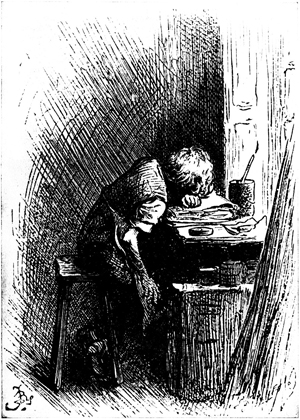
Twelve-year-old Charles, meanwhile, was put to work in the Warren’s Blacking Factory (pictured) near Hungerford Stairs, which stood just off the Strand (it’s said to have stood roughly where Charing Cross Railway Station now stands). While doing so, he roomed firstly at a house in Little College Street, Camden Town, and then in rooms at Lant Street in Borough (which was much closer to the prison).

John Dickens was out of prison in May but Charles continued working at the factory for almost another year until his father’s fortunes improved and Charles, now living with the family once again – at 29 Johnson Street and then, after being evicted, at The Polygon in Somers Town (an area in St Pancras) – returned to school, becoming enrolled at the Wellington House Classical and Commercial Academy in Hampstead Road.

In 1827, his father’s finances once more having taken a turn for the worse, he began work as a solicitor’s clerk (but more of that later)…

PICTURE: A nineteenth century etching of Dickens at Warren’s Blacking Factory – Source: Wikipedia.

LondonLife – Celebrate Valentine’s Day with Victoria and Albert

The countdown to the March re-opening of Kensington Palace and accompanying launch of the major new exhibition, Victoria Revealed, has begun and to celebrate Historic Royal Palaces is releasing a new animated film about the “era defining” romance between Queen Victoria and Prince Albert. Released in five short daily episodes starting today, the film, Victoria 4 Albert, portrays the story of the couple from their same day births to their wedding ceremony and draws on excerpts from Queen Victoria’s personal diaries and Albert’s letters. The film, which also includes key moments from Victoria’s life at Kensington Palace, have been created and directed by acclaimed filmmaker and animator Chiara Ambrosio and features a voiceover by Julia Rayner (of The Pianist, Extras). The palace reopens on 26th March following a £12 million refurbishment project. In the meantime, head here to see the first of the clips…

What’s in a name?…Tooting

The name of the south London suburb of Tooting has nothing to do with the railways or trains. In fact, its origins go back to Saxon times.

The area was recorded under the name of Totinge in 675 and in the Domesday Book compiled in the years after the Norman Conquest of 1066. By the late 11th century, the Abbey of St Mary Bec in Normandy was recorded as holding the manors of Tooting Bec and Upper Tooting.

The name apparently derives from the Saxon name Tota and the word ‘ing’, which literally translates as ‘the people who lived at’ – hence the name in its original form means something like “the place where Tota’s people lived” with Tota being a local Anglo-Saxon chieftain.

It’s also been suggested – perhaps less likely given the absence of hills in the area – that the name could be derived from the words ‘to tout’, meaning ‘to look out’, and relate to a watchtower that stood here on the road to London, the word then literally meaning something like “the people of the look-out”. (Interestingly, there was a major Roman road here – running from London to Chichester, Tooting High Street is now built upon it).

The suburb of Tooting largely owes its development to more recent times – it grew rapidly during the Victorian era and then again in the Twenties and Thirties.

PICTURE:  © Roger Whiteway (www.istockphoto.com)

Where is it? #16

The latest in the series in which we ask you to identify where in London this picture was taken and what it’s of (or in this case who is the person named?). If you think you can identify this picture, leave a comment below. We’ll reveal the answer early next week. Good luck!

Thanks to those who had a guess at where and what this was and congratulations to Janet for correctly stating that it is located in Finsbury Avenue Square in the City of London’s Broadgate development. The group of bronze figures, located in front of the UBS building, dates from the 1980s and is the work of US sculptor George Segal. It is called Rush Hour and depicts office workers making the grim daily march to the office (or away from it!).

Lost London: Gates Special – Cripplegate

Originally the northern gate of the Roman fort constructed in about 120 AD, Cripplegate was rebuilt several times during the medieval period before finally being demolished in 1760 as part of road widening measures.

The origins of the gate’s name are shrouded by the mists of time but it has been suggested that it was named for the beggars or cripples that once begged there or that it could come from an Anglo-Saxon word crepel which means a covered walkway.

The name may even be associated with an event which took place there in 1100 when, fearful of marauding Danes, Bishop Alwyn ordered the body of Edmund the Martyr, a sainted former Anglo-Saxon king, to be tranferred from its usual home in Bury St Edmunds to St Gregory’s Church near St Paul’s in London so that it could be kept safe. It was said that when the body passed through the gate, many of the cripples there were miraculously healed.

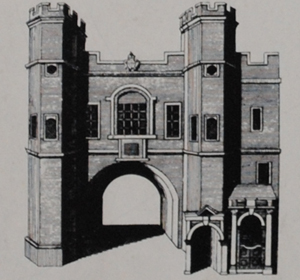
The gate (pictured here in an 18th century etching as it would have looked in 1663 in an image taken from a London Wall Walk plaque), which gave access in medieval times to what was then the village of Islington, was associated with the Brewer’s Company and was used for some time as a prison.

It was defensive works, known as a barbican, built on the northern side of the gate in the Middle Ages which are apparently responsible for the post World War II adoption of the name Barbican for that area of London which once stood outside the gate’s northern facade (the gates stood at what is now the intersection of Wood Street and St Alphage Garden).

The gate’s name now adorns the street known as Cripplegate as well as the name of the church St Giles Cripplegate, which originally stood outside the city walls. It is also the name of one of the 25 wards of the City of London. The original site of the gate is marked with a blue plaque.

Around London – Butler’s Retreat reopens in Epping Forest; Designs of the Year; and, Lucian Freud’s last work…

• Epping Forest’s historic Butler’s Retreat has reopened its doors as a cafe following a refurbishment project to restore the building to its former glory. The building was constructed in the 19th century and is one of the last remaining Victorian-era ‘retreats’ within the forest. Named for its 1891 occupier, John Butler, it was one of a number of retreats built to serve refreshments as part of the Temperance movement – said to have been “extremely popular” with visitors from the East End. The building, which now forms part of the Epping Forest visitor hub, is expected to host a range of events this summer and will have its opening hours extended with the slated opening of a restaurant upstairs in the evenings. Owned by the City of London, Epping Forest is the largest public open space in the London area, stretching across 12 miles from Manor Park in East London to a spot past Epping in Essex. The cafe, the refurbishment of which was carried out with funding provided via the Heritage Lottery’s Branching Out project, will be open from 9am to 5pm weekdays and 8am to 5pm weekends. For more on the cafe, see www.worldslarder.co.uk. For more on Epping Forest, see www.cityoflondon.gov.uk/eppingforest

• On Now – Designs of the Year Exhibition: The London Olympic Torch and the Duchess of Cambridge’s wedding dress are among 90 objects nominated as one of the “best designs in the world” in this year’s Design of the Year competition. The objects, which go on display at the Design Museum today, have been entered in seven categories – architecture, digital, fashion, furniture, graphics, product and transport – with winners to be announced on 24th April. Among the other objects nominated are a wind-propelled landmine detector, a pop-up cinema in Hackney, the London 2012 velodrome and the first Tesco virtual store. An admission charge applies for the exhibition which runs until 15th July.  For more information, see designsoftheyear.com.

On Now – Lucian Freud Portraits. The last work of the late artist Lucian Freud is on show for the first time in this exhibition at the National Portrait Gallery. The unfinished painting, Portrait of the Hound 2011, which depicts Freud’s assistant assistant David Dawson and his dog Eli, is a highlight of the exhibition which also includes works dating back as far as the 1940s. The 130 paintings and works on paper – which feature sitters including artists Francis Bacon and David Hockney along with the likes of Andrew Parker Bowles and Baron Rothschild – have been loaned from museums and private collections around the world. Runs until 27th May, 2012. Admission charge applies. See www.npg.org.uk.

10 London sites to celebrate Charles Dickens – 1. The Charles Dickens Museum

In the first of a new special series written in honor of the bicentenary of the birth of author Charles Dickens (he was born on 7th February, 1812), we take a look at the Charles Dickens Museum.

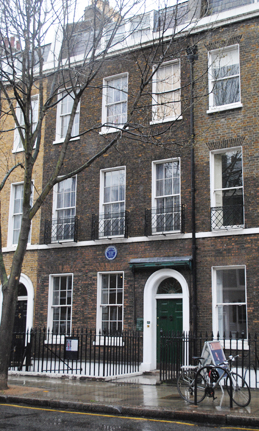
Housed in one of Dickens’ former London residences at 48 Doughty Street in Bloomsbury, this property is now the focal point for people wanting to find out more about the writer and his life as evidenced by the visit of Prince Charles and Camilla, the Duchess of Cornwall, on Tuesday to officially mark Dickens’ birth.

Dickens lived in the property from 1837 to 1839 and it was here that significant family events, such as the birth of two of his children – Mary and Kate – and the death of his wife Catherine’s 17-year-old sister Mary took place (Mary’s tragic death is believed to be the inspiration for that of the character Little Nell in the novel The Old Curiosity Shop). It was also at the property that he wrote some of his most famous novels, including Oliver Twist, Nicholas Nickleby, and The Pickwick Papers.

A growing demand for space, however, led Dickens to move his household to 1 Devonshire Terrace in 1839. The Doughty Street house meanwhile, the only one of Dickens’ London homes to have survived, remained a residential property but in 1923 it was threatened with demolition and subsequently acquired by the Dickens Fellowship. The museum opened there two years later.

The museum now claims to hold more than 100,000 Dickens-related artifacts. The house is displayed as it might have been when Dickens lived there – artifacts on display over four floors include his personal possessions and furnishings as well as manuscripts, letters, first edition copies of some of his books and portraits, including R.W. Buss’ spectacular (and unfinished) Dickens’ Dream, showing the author at his country home of Gads Hill Place in Kent surrounded by many of the characters that he had created.

It’s important to note that from 9th April, the museum will be closed as it undergoes a £3.2 million project, called Great Expectations, which will involve the restoration and expansion of the museum. It is expected to reopen in December this year in time to celebrate a Dickensian Christmas.

For more on events celebrating Charles Dickens and his works this year, see www.dickensfellowship.org or www.dickens2012.org.

WHERE: 48 Doughty Street, Bloomsbury (nearest Tube stations are Russell Square, Chancery Lane or Holborn). WHEN: 10am to 5pm Monday to Sunday (last admission 4.30pm) COST: £7 adults/£5 concessions/£3 children (under 10 free); WEBSITE: www.dickensmuseum.com.

LondonLife – A look back at Queen Elizabeth II’s reign…

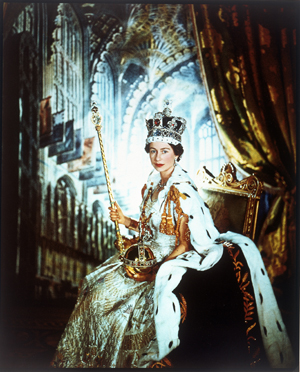
In celebration of Queen Elizabeth II’s Diamond Jubilee (the 60th anniversary of her reign officially passed on Monday), the Victoria and Albert Museum is holding an exhibition of portraits of the Queen taken by the acclaimed late photographer Cecil Beaton, including this one of Queen Elizabeth II in Coronation Robes taken in June, 1953. The exhibition, Queen Elizabeth II by Cecil Beaton: A Diamond Jubilee Celebration, depicts the Queen in various roles – as princess, monarch and mother – and includes a number of never-before-seen photographs as well as excerpts from Beaton’s diaries and letters. Runs from tomorrow (8th February to 22nd April). For more, see http://www.vam.ac.uk.

Image: Copyright, Victoria and Albert Museum, London

LondonLife Special – Long-serving royals…

Today marks 60 years since Queen Elizabeth II ascended to the throne, making her Britain’s second-longest serving monarch. While the celebrations are yet to kick off in earnest (the Diamond Jubilee weekend will be officially held over the 2nd to 5th June), we thought we’d take a quick look at the top 10 longest-serving monarchs who were crowned at Westminster Abbey in London:

1. Queen Victoria – 63 years (20th June, 1837-22nd January, 1901)

2. Queen Elizabeth II – 60 years (6th February, 1952-current)

3. King George III – 59 years (25th October, 1760-29th January, 1820)

4. King James I (VI of Scotland) – 57 years (24th July, 1567-27th March, 1625)

5. King Henry III – 56 years (18th October, 1216-16th November, 1272)

6. King Edward III – 50 years (25th January, 1327-21st June, 1377)

7. Queen Elizabeth I – 44 years (17th November, 1558-24th March, 1603)

8. King Henry VI – 38 years (31st August, 1422-4th March,1461, and, 31st October, 1470-11th April, 1471)

9. King Henry VIII – 37 years (22nd April, 1509-28th January, 1547)

10. King Henry I – 35 years (3rd August, 1100-1st December, 1135)

Treasures of London – Painted Hall, Greenwich

Often described as the “finest dining hall in Europe”, the Painted Hall in Greenwich was originally designed to be the Royal Hospital for Seamen’s communal dining hall. 

But the domed hall, which forms part of King William Court – the image, right, is taken from the west end, wasn’t used as such following its completion in the mid 1720s – designed by Sir Christopher Wren and his assistant Nicholas Hawksmoor with spectacular interior paintings by Sir James Thornhill, it was deemed too grand for such a mundane purpose and instead the veteran seamen, who had moved their dining hall to the undercroft, acted as tour guides for those who would pay to see its splendour.

The paintings, for which Thornhill received his knighthood, took almost 20 years to complete. They were designed to show Britain’s naval power as well as a variety of royal subjects in their splendour. The Stuart dynasty are featured on the ceiling of the Lower Hall while the West Wall depicts the Hanoverians – King George I surrounded by his children and grandchildren including the future King George II. Thornhill himself is also present on the lower right hand section of the West Wall painting while in the background is the dome of St Paul’s Cathedral – a reference to Sir Christopher Wren.

The hall has since served a variety of purposes but among the most significant events to take place there was the lying in state of the body of Admiral Lord Nelson following his death in the Battle of Trafalgar in October, 1805. A plaque at the top of the hall marks the spot where the coffin stood.

Between 1834 and 1936, the Painted Hall served as the National Gallery of Naval Art during which more than 300 paintings around naval themes were displayed there (today these form part of the basis of the National Maritime Museum’s art collection).

After an extensive restoration, in 1939 it was again used as a dining room for officers attending the Royal Naval College and for other grand dinners, including one celebrating the formation of the United Nations in 1946.

It’s now available for hire and has also served as a film location – including for films such as The Madness of King George, Quills and the more recent film Pirates of the Caribbean: On Stranger Tides.

An appeal has been launched to restore the hall with the expected nine month, £450,000 restoration of the West Wall paintings slated to begin after the Olympic Games. To donate, head here.

WHERE: King William Court, Old Royal Naval College, Greenwich (nearest Docklands Light Rail station is Cutty Sark for Maritime Greenwich). WHEN: 10am to 5pm daily COST: Free; WEBSITE: www.ornc.org/visit/attractions/painted-hall.

Around London – ‘Cathedral of Middlesex’ to be opened in west London; Roman brothel token on display; wifi in Westminster and Kensington; and, looking at the Hajj at the British Museum…

• A medieval barn in west London, said to be the “Cathedral of Middlesex”, will open to the public in April. The Grade I listed Harmondsworth Barn was built in 1426 by Winchester College, who owned a manor farm at Harmondsworth, and was used to store grain. Nearly 60 metres long, the roof is held up by 13 massive oak trusses. In 2006, the barn was bought by an off-shore company who subsequently agreed to sell it to English Heritage following the issuing of a notice for emergency repairs. English Heritage say the barn, called the “Cathedral of Middlesex” by the late poet-laureate Sir John Betjeman, will now be “run by and for the local community”. “Harmondsworth Barn is one of the greatest medieval buildings in Britain, built by the same skilled carpenters who worked on our magnificent medieval cathedrals,” says Simon Thurley, chief executive of English Heritage. “Its rescue is at the heart of what English Heritage does – protecting this nation’s architectural treasures and helping people discover our national story through them. We will complete the repair of this masterpiece and working with local people, will open it to the public to enjoy.” For more, see www.english-heritage.org.uk. (Image: Copyright English Heritage; Photographer Boris Baggs).

The oldest Roman brothel token to have been discovered in London has gone on temporary display at the Museum of London. The token, which may be the oldest of its kind to have been found in Britain (or, indeed, even the only one of its kind ever found in Britain), was known as a spintria and depicts two reclining human figures on one side and the Roman numeral 14 on the other. It was found on the Thames foreshore near Putney Bridge by a mudlarker using a metal detector. Only the size of a 10 cent piece, its use remains something of a mystery – it may have been exchanged for sexual services or used as gaming piece. The token is on display at the museum until April. For more, see www.museumoflondon.org.uk.

Free wifi is being rolled out across Westminster, Kensington and Chelsea as part of deal between Westminster City Council, the Royal Borough of Kensington and Chelsea and network operator, O2. The network, installation of which began last month, is initially being rolled out in a limited number of areas but will eventually cover all of the boroughs and create the largest free wireless hub in Europe.

Now On: Hajj: journey to the heart of Islam. This exhibition at the British Museum is the first to focus on the pilgrimage to Mecca in Saudi Arabia – a central tenet of the Islamic faith. Organised in partnership with the King Abdulaziz Public Library in Riyadh, it’s based around three central themes: the pilgrim’s journey to Mecca with an emphasis on the major routes taken; the Hajj today and its associated rituals; and the origins and importance of the Hajj to Mecca. Objects featured in the exhibition include a seetanah which covers the door of the Ka’ba as well as gifts offered to the sanctuary and souvenirs taken back home. It’s the first of three exhibitions at the British Museum focused on spiritual journeys. Runs until 15th April. Admission charge applies. For more, see www.britishmuseum.org.

10 curiously named churches of London – 10. St Olave Hart Street

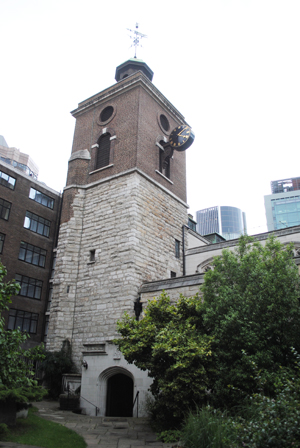
One of a few London churches to have escaped the Great Fire of 1666 (the flames are said to have come within 100 metres before the wind changed direction), St Olave Hart Street is named after the patron saint of Norway, St Olaf – a figure more known for his ability as a warrior than as a saint.

King Olaf II was King of Norway in the early 11th century and an ally of the Saxon King, Ethelred the Unready. The Norwegian king won the thanks of the English after he fought alongside Ethelred against the Danes in 1014 in what some refer to as the Battle of London Bridge.

According to some, the church was built on the site of where the battle was fought – many also believe the battle was also the inspiration for the nursery rhyme, London Bridge Is Falling Down, for it was during that battle that Olaf, who was helping Ethelred retake London, is credited with using his longships to pull down London Bridge in a effort to thwart the Danish occupiers.

The church, meanwhile, was rebuilt a couple of times in the Middle Ages, when it was said to have been known as St Olave-towards-the-Tower. The church which now stands on the site was built in 1450 with the distinctive red brick on the tower added in the early 18th century.

Having survived the Great Fire in 1666, the church was not so fortunate during the Blitz when it was struck by German bombs. It was subsequently restored with King Haakon VII of Norway attending the re-opening in the mid-1950s (there is a stone laid in front of the sanctuary which he brought from Trondheim Cathedral).

Other features inside include a recently returned 17th century bust of a prominent physician Dr Peter Turner – part of a monument which went missing after World War II, it resurfaced at an auction in 2010.

The church’s most famous parishioner was the 17th century diarist Samuel Pepys who lived and worked in the nearby Naval Office (for more on Pepys see our earlier entry here). The door through which he would have entered the church is marked with a 19th century memorial.

Pepys and his wife Elizabeth are both buried in the church (the memorial Pepys commissioned for her is still there) as is his brother John. Samuel Pepys’ life is commemorated at a service held close to the day he died – 26th May – each year.

Others associated with the church include Sir William Penn, an admiral and father of the William Penn who founded Pennsylvania in what is now the United States, and Charles Dickens, who gave it the name “Ghastly Grim” thanks to the skulls above its Seething Lane entrance.

St Olave’s is also the chapel of the The Clothworker’s Company, The Worshipful Company of Environmental Cleaners and Trinity House, a charitable organisation dedicated to the safety, welfare and training of mariners established by Royal Charter from King Henry VIII in 1514.

WHERE: Corner of Hart Street and Seething Lane in the City (nearest Tube stations are Tower Hill and Monument). WHEN: See website for detailsCOST: Free; WEBSITE: www.sanctuaryinthecity.net/St-Olaves.html

LondonLife – The Ceremony of the Dues…

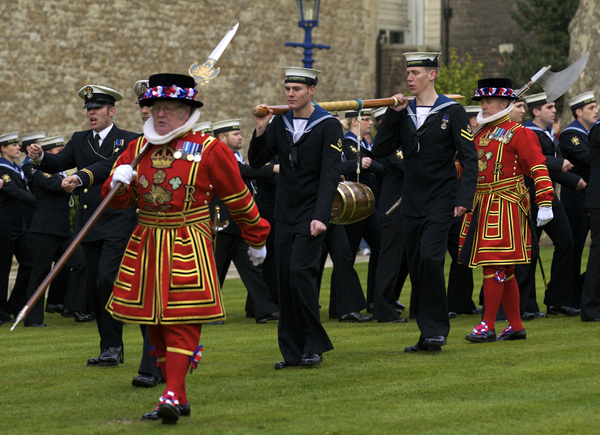
The Constable of the Tower of London, General Lord Richard Dannatt, was presented with a barrel of wine in the Ceremony of the Constable’s Dues by the commander and crew of the Royal Navy destroyer, the HMS Liverpool,  last Saturday. The annual ceremony dates back to the 14th century and relates to the right of the tower’s constable to demand tolls from vessels on the Thames on behalf of the king. Previous offerings have included  barrels of rum, oysters, mussels and cockles. The HMS Liverpool, commanded by Colin N O Williams, was berthed at West India Docks before the ceremony and the wine escorted to the Tower where, after being challenged by Yeoman Warders it was delivered to the constable at the Queen’s House. The ship is to be decommissioned in spring after 30 years of service in which it saw service in Iraq, the Caribbean and during the recent Libyan conflict. For more on the Tower of London, see www.hrp.org.uk/TowerOfLondon/

PICTURE: Courtesy of Historic Royal Palaces

Where is it? #15

The latest in the series in which we ask you to identify where in London this picture was taken and what it’s of (or in this case who is the person named?). If you reckon you know the answer, leave a comment below. We’ll reveal the answer early next week. Good luck!

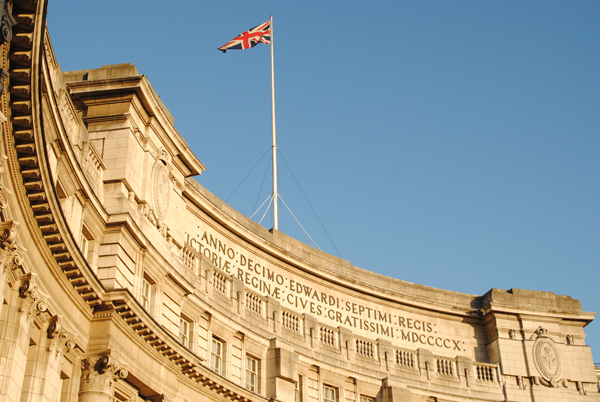
Of course, as those below noted, this is Admiralty Arch, an ornate archway which stands between The Mall and Trafalgar Square. Commissioned by King Edward VII to honor the memory of his mother, Queen Victoria, it was designed by Sir Aston Webb and completed in 1912. Named for the fact that it joins the Old Admiralty Buildings in Whitehall, the structure contains office space and up until last year were occupied by the Cabinet Office. It is currently on the market with a reported price tag of £75 million. Mooted future uses include it being transformed into a swanky hotel.