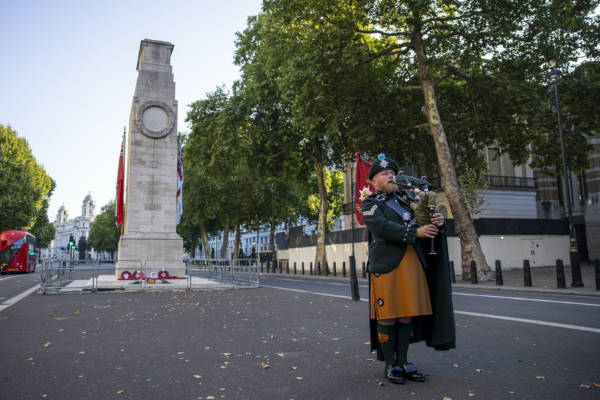
Lance Corporal James Bell plays the bag pipes in front of the Cenotaph to commemorate the 80th anniversary of Victory in Japan Day on Friday, 15th August. Lance Corporal Bell was one of six military pipers who performed solemn laments across the UK, the Far East, and aboard HMS Prince of Wales at sea, to honour the end of World War II and the sacrifices of the Commonwealth forces.
Lord Mayor of London or Mayor of London? They have similar titles but their roles and responsibilities (not to mention their history) are quite different.
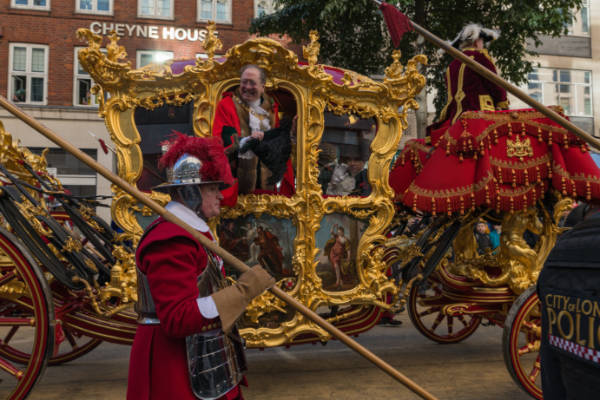
The Lord Mayor’s Show in November, 2023, with then newly elected Lord Mayor of London Michael Mainelli. PICTURE: j Thomas Salas/Shutterstock
The older of the two posts is the Lord Mayor of London, a title which refers to the governance of the City of London, known to many as the “Square Mile” in the heart of the capital.
The Lord Mayor of London (officially, since 2006, known as the Lord Mayor of the City of London) heads the City of London Corporation and is an elected position; in fact it’s one of the world’s oldest continuously elected offices dating back to the late 12th century.
The Lord Mayor, who holds office for one year, is elected by the City liverymen at the Common Hall held on Michaelmas (29th September) each year. They must be serving in the office of Alderman at the time.
The Lord Mayor of London takes office on the Friday before the second Saturday of November in what is known as The Silent Ceremony (the Lord Mayor’s Show, a celebration of the newly elected Lord Mayor, takes place the following day).
The role of the Lord Mayor of London – who takes precedence over all individuals in the City of London with the exception of the monarch – has historically been to represent the residents and businesses within the City although in modern times the role is effectively an “international ambassador” for the UK’s financial and professional services sector.
The current Lord Mayor of London is Alastair King who is the 696th Lord Mayor of London. The Lord Mayor of London works out of offices at their official residence near the Royal Exchange and Bank of England known as Mansion House.
Onto the Mayor of London. A much more modern position (it was created in the year 2000), the Mayor of London is directly elected by the registered voters of Greater London. They serve as the chief executive of the Greater London Authority and work with the 25 members of the London Assembly.
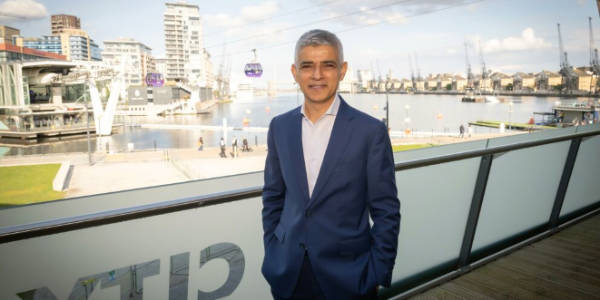
The Mayor of London, Sadiq Khan. PICTURE: Courtesy of the Mayor of London
The Mayor of London is charged with overseeing the strategic governance of Greater London which includes the City of London and all 32 London boroughs (each of which also has a ceremonial or elected mayor).
Responsible for setting an overall vision for the city, the Mayor is tasked with creating policies on everything from arts and culture, the environment and the economy to policing and crime, transport, sport and housing.
The Mayor of London is based at City Hall at Royal Docks in Newham.
The current Mayor of London is Sadiq Khan, the third to serve in the role, has been mayor since 2016. The previous two mayors include Ken Livingstone and Boris Johnson, who, of course, went on to be PM.
• One of only two surviving choirbooks from the reign of King Henry VIII is on display in a new exhibition at the Lambeth Palace Library.Sing Joyfully: Exploring Music in Lambeth Palace Library displays the ‘Arundel’ or ‘Lambeth’ Choirbook (Arundel, Sussex, c. 1525) – this year marking its 500th birthday – along with other items from the library’s collection such as two leaves of a 14th century polyphony recently discovered in the binding of an early printed book. The exhibition, which is free, can be seen until 6th November. For more, see www.lambethpalacelibrary.info/sing-joyfully/.
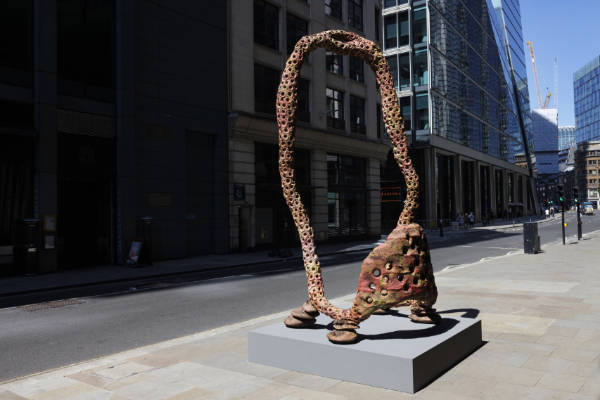
• On Now: Sculpture in the City. The 14th edition of the annual sculpture exhibition in the City of London features 11 pieces including three new works as well as six works which have been retained from previous iterations of the exhibition and two permanent acquisitions. The new works include: Ai Weiwei’s Roots: Palace, a cast-iron tree root sculpture located outside St Botolph without Bishopsgate which, as part of a series created in collaboration with Brazilian artists and communities, explores the concept of unrootedness; Jane and Louise Wilson’s Dendrophiles which, located beneath the escalators of The Leadenhall Building, combines ink drawings based on images of DNA with 3D scans of ancient oak wooden samples; and, Andrew Sabin’s Looping Loop which, located outside 70 St Mary Axe, which forms a continuous loop creating what’s described as a “lively, pulsating sensation”. Runs until April. For more – including a map of the locations – see https://www.sculptureinthecity.org.uk/.
• Rare, behind the scenes images of US band Blondie have gone on show at the Barbican Music Library from today. Taken by photographer Martyn Goddard during the group’s breakthrough year of 1978, the 50 images show the band in concert, backstage, in the studio and during photo shoots. The display of photographs is complemented by poster prints, album covers, tour and concert memorabilia, period cameras, and photographic equipment. There are also items lent by Alan Edwards, who has handled Blondie’s publicity since 1978, from his private collection. Blondie in Camera 1978 runs until 5th January. Admission is free. For more see, www.cityoflondon.gov.uk/services/libraries/barbican-music-library.
Send all items for inclusion to exploringlondon@gmail.com.
The shop, located at 155 Brick Lane, is sometimes known as the ‘yellow shop’, thanks to its bright yellow sign, to distinguish it from the ‘white one’, another bagel bakery a few doors down, Beigel Bake.
Two brothers named David Barel and Aron Zelman took over the business, then known as the Evering Bakery, in 1987, and were, according to the shop’s website, joined by their sister Mazal White soon after.
The shop, which changed the spelling of bagel to beigel in its name in 2002 in reflection of its Yiddish roots, introduced a bagel-shaping machine in 1994 but many products are still hand-made. According to the website, the bakery these days makes more than 7,000 bagels a day.
The shop, which is famously open 24 hours a day, did briefly close for several months last year, explaining on social media when it reopened in June that the closure had been for a range of reasons including a long-standing family dispute over the building’s ownership and rents and the health struggles of Aron.
They announced that the next generation – including Aron’s 22-year-old quadruplets and Mazal’s three children – would be taking over the business and launched a funding raising effort to help with some of financial burdens the shop was facing.
This barrel-shaped object, which can be found in the church of All Hallows by the Tower in the City of London, was used the crow’s nest on the ship Quest during Sir Ernest Shackleton’s third – and last – Antarctic voyage in the early 1920s.
Subscribe for just £3 a month to access all of Exploring London’s content…
• The first UK exhibition in almost 50 years dedicated to the works of 19th century French artist Jean-François Millet (1814-1875) opens at The National Gallery today.Millet: Life on the Land, which coincides with the 150th anniversary of his death, features around 13 drawings and paintings from British public collections including The National Gallery’s The Winnower (about 1847‒8) as well as L’Angelus (1857‒9) from the Musée d’Orsay, Paris. The exhibition can be seen in Room 1 until 19th October. Admission is free. For more, see www.nationalgallery.org.uk/exhibitions/millet-life-on-the-land.
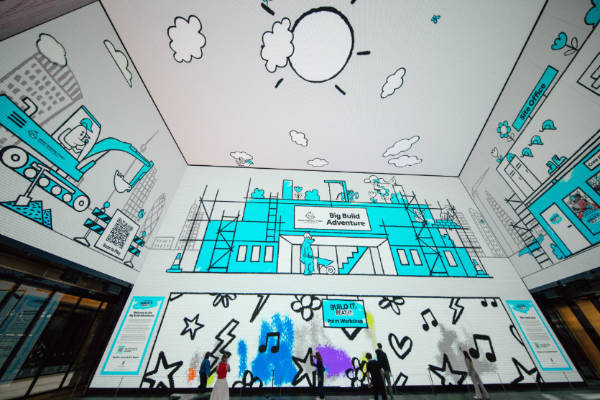
The Big Build Adventure at Outernet London.
• An immersive digital experience which brings to life the Great Ormond Street Hospital’s new Children’s Cancer Centre opened at Outernet London off Tottenham Court Road this week. The Big Build Adventure, a partnership between the Great Ormond Street Hospital Charity and Outernet London, features a giant virtual paint wall, building themed games, a construction site selfie station and the chance to symbolically buy a brick to help build the centre. The free experience can be experienced until 31st August. Admission is free. For more, see www.outernet.com/news/great-ormond-street-hospital-charity-and-outernet-studios-launch-the-big-build-adventure.
• An artwork by Banksy – depicting a rat hanging from the arm of a clock – has gone on show at the London Transport Museum in Covent Garden. The artwork first appeared on the door of a Transport for London signal controller cabinet in Croydon in October, 2019, which was located in front of the artist’s pop-up showroom installation, Gross Domestic Product. The work, which was preserved by the museum, has been mounted onto an identical cabinet body to provide context for its original appearance. Admission charge applies. For more, see www.ltmuseum.co.uk.
Send all items for inclusion to exploringlondon@gmail.com
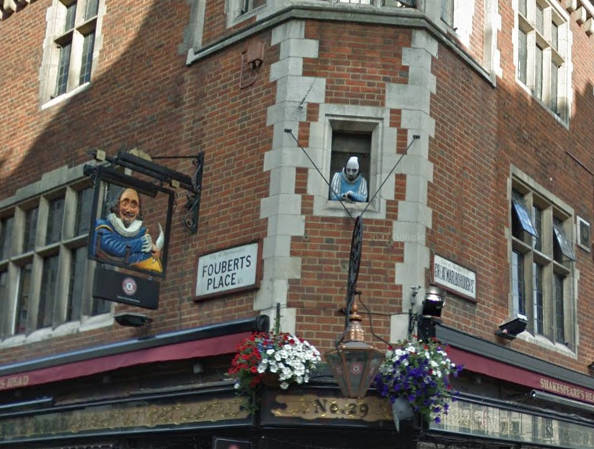
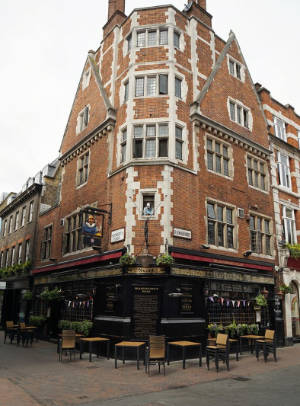
Located at the northern end of Carnaby Street, this Soho pub features a life-sized bust of the Bard looking out of a first floor window at the people passing by in the street below.
The pub in 2015. PICTURE: David (licensed under CC BY 2.0)
According to the pub’s signage, it was first constructed in 1735 and owned by Thomas and John Shakespeare, who were said to be distant relatives of William (and, if indeed they were the owners, no doubt keen to capitalise on his fame).
The current, rather ornate, building, designed in a faux-Tudor style, reportedly dates from the late 19th century.
As well as the bust, which features a missing hand due to damage from a bomb in World War II, the pub sign features an image of Shakespeare with his quill poised.
The pub, now part of the Greene King chain, is located on the corner of Fouberts Place and Carnaby Street (although its address is 29 Great Marlborough Street – it has a street sign for this on its facade – we’ll try and find out some more about why this is so). For more, see www.greeneking.co.uk/pubs/greater-london/shakespeares-head.
A knight prepares to joust at an earlier event at Hampton Court Palace. PICTURE: David Adams
• Eltham Palace returns to the medieval age this weekend with a jousting tournament in which knights will compete for glory. The ‘Legendary Joust’ will feature four knights, each representing a character from myth or legend including The Wyvern, The Wildman, Sir Lancelot and Jason of the Argonauts. The event runs from 10am to 5pm on Saturday and Sunday. Admission charge applies. For more, see https://www.english-heritage.org.uk/visit/whats-on/eltham-palace-legendary-joust-2-3-aug-2025/.
• The Thamesmead Festival returns to Southmere Park in south-east London over the next two weekends. The free, family-friendly festival boasts four big stages with headline guest Omar and musical performances across genres including Afrobeat, R&B, rock and pop as well as spoken word, comedy, and street dance. There will also be a market featuring local artists and food from around the world. Runs from 12pm to 7:30pm on Saturday and on 8th August. For more, head to https://www.thamesmeadnow.org.uk/whats-on/arts-culture/thamesmead-festival-2025/.
• On Now: Robot Zoo. This exhibition at the Horniman Museum in Forest Hill features a range of larger-than-life animals recreated using machine parts and gadgets in a bid to reveal how their real life counterparts see, eat, hunt and hide. The display also features interactive exhibits giving visitors the chance to try jet-propelled squid racing and shoot a chameleon’s ‘tongue-gun’. There’s also two specially commissioned interactive murals by artist Giulia Casarotto. Runs until 2nd November. Admission charge applies. For more, see www.horniman.ac.uk/event/robot-zoo/.
Send all items for inclusion to exploringlondon@gmail.com
This evocative memorial, which stands on the north bank of the River Thames at Wapping, is designed to show the figure (or rather the absence of the figure) of a dove.
Subscribe for just £3 a month to access all of Exploring London’s content – and support our work…
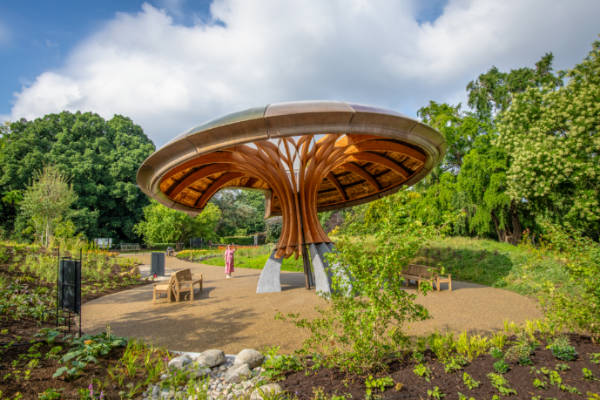
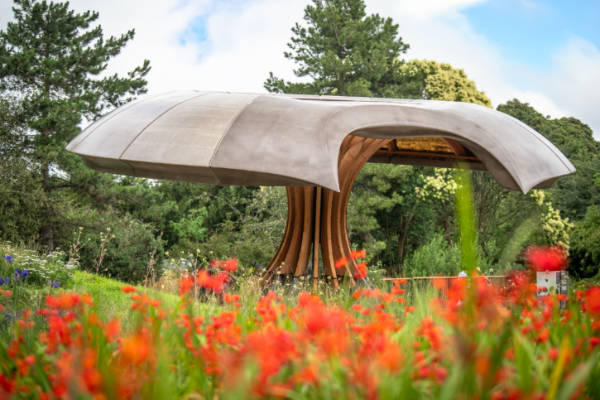
A cutting edge ‘Carbon Garden’ opened at Kew Gardens on 25th July with the aim of revealing the critical role carbon plays in sustaining life on Earth, the scale of the climate crisis, and the “extraordinary potential of the natural world to combat it”. The permanent new garden features a selection of herbaceous perennials which illustrate the dramatic rise in global average temperatures over time, a dry garden which showcases how we can work with plants to adapt to a changing climate, more than 20 new trees selected for their resilience to projected future climate conditions, a rain garden and bioswale which, among other things, illustrate the ways we can manage waterflow, prevent soil erosion, and reduce flooding, and carbon storage. and grasslands, wildflower meadows and native hedgerows which aim to boost biodiversity. At the centre of the garden is a pavilion designed by Mizzi Studio which is inspired by the symbiotic relationship between the plant and fungal kingdoms, and is created using low-carbon, natural materials. Admission charges apply. For more, see www.kew.org/kew-gardens/whats-in-the-gardens/carbon-garden
The only woman prisoner recorded as having escaped from the Tower of London, Alice Tankerville was accused, along with her common-law husband John Wolfe, of committing piracy in 1533.
It was alleged that Tankerville had lured two wealthy Italian merchants into a wherry out in the Thames where her accomplices – including Wolfe and two men disguised as watermen – had robbed and murdered them. They were also accused of burgling a home near St Benet Gracechurch where the two men had been staying.
Despite apparently having attempted to seek sanctuary in a special precinct near Westminster Abbey, the couple were arrested, charged with piracy and murder among other things, and, following a trial neither apparently attended, found guilty.
Taken to the Tower of London in 1534 (Wolfe had done a previous stint there for the theft of 366 gold crowns from a ship berthed at the Hanseatic League’s Steelyard but had eventually been released due to a lack of evidence), Alice is said to have been imprisoned in Coldharbour Gate.
Alice wasn’t done yet, however. On 23rd March that year, she managed to escape, apparently with the aid of gaoler John Bawde who provided her with ropes and a key.
It was a short-lived liberation – believed to have been wearing man’s clothes, she and Bawde were arrested trying to reach waiting horses on a road just outside the Tower (it’s worth noting that not only was Alice the only women prisoner to ever escape the Tower of London, she was also the only escapee during the reign of King Henry VIII).
Both she and Wolfe were subsequently executed and due to the nature of their crime, their execution took place on the Thames.
They were hanged in chains in the Thames near the site of their crime and, before a small flotilla of boats filled with sight-seers come to witness the event, were slowly drowned as the tide rose. Their bodies were then left hanging on the spot as a warning to others.
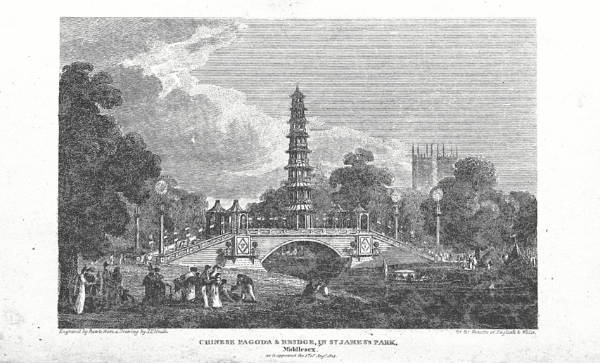
Briefly a sizeable landmark on London’s skyline, this seven-storey high structure and bridge were built over the canal in St James’s Park in 1814 as part of celebrations over the 100th anniversary of the accession of the House of Hanover, the 16th anniversary of Nelson’s victory at the Battle of the Nile and the signing of Treaty of Paris with France on 30th May following Napoleon’s abdictation in April.
British Library digitised image from “A Topographical and Historical Description of London and Middlesex” By Brayley, Brewer, and Nightingale
The pagoda and bridge, designed by none other than John Nash and Auguste Pugin, were among a number of structures built for the celebrations held in Royal Parks on 1st August – others included a ‘Temple of Concord’ and a naval arch. There was also a naval re-enactment on The Serpentine in Hyde Park.
As well as bands, food stalls and marquees for guests, the event, which was billed (among other names) as the Grand Jubilee, also included balloon ascents and fireworks.
The latter wasn’t good news for the pagoda – it was hit by a stray firework and destroyed (and tragically at least one person lost their life). The bridge lasted a few years longer – it apparently survived until 1825.
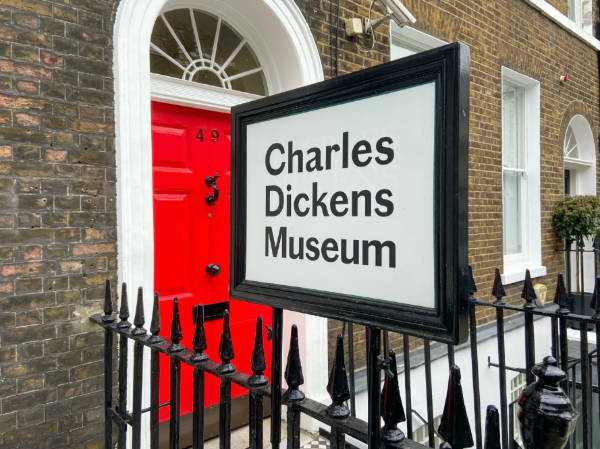
• The enduring appeal of Charles Dickens’ works and how they have been adapted for the stage, screen and radio is the focus of a new exhibition at the Charles Dickens Museum in Bloomsbury. Showtime! looks at productions starting from as far back as 1837 and including such classics as The Muppets Christmas Carol and Oliver! the musical with objects on show including original playbills, posters, programmes, photographs and props. There’s also the opportunity to hear from actors and writers about what makes Dickens so adaptable and see Dickens’ own works which he annotated with stage directions. The display can be seen until 26th January. Admission charge applies. For more, see www.dickensmuseum.com.
• A major new exhibition on the future of food – how science is creating more sustainable ways of producing and consuming food – opens at the Science Museum today.Future of Food reveals how the way we grow food and eat impacts the climate, nature, and society. Among the more than 100 objects on show are cricket burgers and cell-grown salmon as well as 3,500-year-old fermented sourdough bread, the first Quorn burger dating from 1981 and the first beef steak grown outside a cow. There is also the chance to join a multiplayer interactive game and create your own “future for food”. Runs until 4th January. Admission is free. For more, see https://www.sciencemuseum.org.uk/see-and-do/future-of-food.
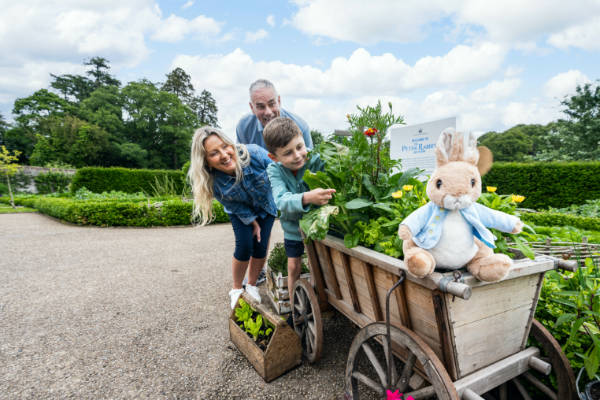
The Peter Rabbit Adventure at Hampton Court Palace. PICTURE: Courtesy of Historic Royal Palaces.
• Peter Rabbit is hopping over to Hampton Court Palace to take part in a new family trail that brings Beatrix Potter’s beloved characters to life in the palace gardens from tomorrow. The Peter Rabbit Adventure, included as part of the palace admission, is spread over the Kitchen Garden, Tiltyard, and Wilderness and the activities on the trail will introduce little ones to the plants, vegetables and wildlife that inhabit the gardens. These include the chance to use Mrs Tiggy-winkle’s washing equipment to make music among the trees, to join in a search for Peter Rabbit under wheelbarrows and flowerpots in the Tiltyard, and to try to hop, skip and jump as high as Peter and his friends. A larger-than-life Peter Rabbit will be greeting families in the Kitchen Gardens. Runs until 7th September. For more, see https://www.hrp.org.uk/hampton-court-palace/whats-on/the-peter-rabbit-adventure/.
This rather poignant monument stands in a park above where an air raid shelter once stood in which a wedding party, 13 people in total, lost their lives in late 1940.
Subscribe for just £3 a month to access all of Exploring London’s content…
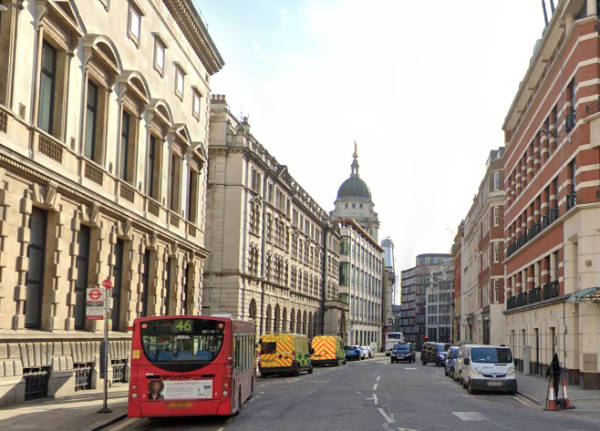
This City of London street runs north-south from the junction of Newgate Street, Holborn Viaduct and Old Bailey to West Smithfield. Its name comes from those who once travelled along it.
Looking south down Giltspur Street, with the dome of the Old Bailey visible, in 2018. PICTURE: Courtesy of Google Maps
An alternative name for the street during earlier ages was Knightrider Street which kind of gives the game away – yes, the name comes from the armoured knights who would ride along the street in their way to compete in tournaments held at Smithfield. It’s suggested that gilt spurs may have later been made here to capitalise on the passing trade.
The street is said to have been the location where King Richard II met with the leaders of the Peasant’s Revolt who had camped at Smithfield. And where, when the meeting deteriorated, the then-Lord Mayor of London William Walworth, ending up stabbing the peasant leader Wat Tyler who he later captured and had beheaded.
St Bartholomew’s Hospital can be found on the east side of the street. On the west side, at the junction with Cock Lane is located Pye Corner with its famous statue of a golden boy (said to be the place where the Great Fire of London was finally stopped).
There’s also a former watch house on the west side which features a monument to the essayist late 18th century and 19th century Charles Lamb – the monument says he attended a Bluecoat school here for seven years. The church of St Sepulchre-without-Newgate stands at the southern end with the Viaduct Tavern on the opposite side of the road.
The street did formerly give its name to the small prison known as the Giltspur Street Compter which stood here from 1791 to 1853. A prison for debtors, it stood at the street’s south end (the location is now marked with a City of London blue plaque).
• An exhibition of items unearthed at the site of the former Red Lion Playhouse and the subsequent inn – the White Raven Tavern – built on the site in Whitechapel has opened at UCL East Culture Lab. Patterns Beneath Our Feet tells the story of a 2015-19 excavation on the site and features some of the discoveries made there – everything from clay pipe fragments to Bellarmine jugs and sugar moulds. The White Raven has particular associations with the history of Black Londoners and was one of the taverns from where members of London’s Black community began coerced journeys of resettlement to West Africa in 1786. The free exhibition is open Wednesdays and Saturdays by appointment. Members of the excavation team will be at the Culture Lab (UCL East Marshgate, 7 Sidings Street, Stratford) this Monday (21st July) to guide people through the exhibition as well as answer questions as part of the Festival of Archaeology. There will be a parallel event at the excavation site. For more, see https://www.ucl.ac.uk/archaeology-south-east/research-projects/2025/jul/whitechapel.
• A 1950s fountain in Victoria Embankment Gardens is once again flowing after more than 20 years of silence. The fountain, located at the end of Villiers Street, is octagonal in design and was inspired by a pumping station erected nearby in 1675-76. Standing at more than 70 feet tall, the water tower used to be a major landmark on the London skyline and had provided water pressure for houses along the Strand by using a heavy weight on the top of the tower. The bandstand which surrounds the fountain dates from the 1870s, when it was used to host midday concerts for workers from the neighbouring printing works. The £85,000 restoration project preserved the fountain’s original teak finish and involved replacing the sprinkler system and water treatment as well as adding LED lighting to each tier of the fountain.
• Britain’s first female civil servant has been honoured with a blue plaque at the site of her former home in Battersea. Jeanie Senior became the first female civil servant in 1873 when she was appointed as the first female inspector for girls being educated in pauper schools and workhouses (and later went to work with soldiers returning from the Franco-Prussian War, which contributed to the foundation of the National Society for Aid to Sick and Wounded in War, a predecessor to the British Red Cross, as well as being a co-founder of the Metropolitan Association for Befriending Young Servants). The plaque, funded by The Battersea Society and the FDA union, is located on the Battersea Arts Centre where the property named Elm House was once located.
Send all items for inclusion to exploringlondon@gmail.com.



 Exploring London
