Where’s London’s oldest…(still running) Indian restaurant)?

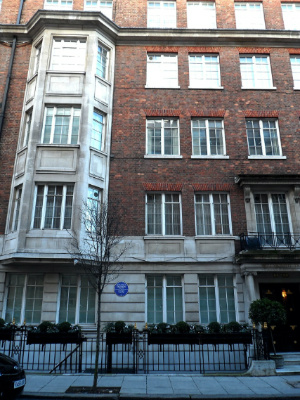
The oldest Indian restaurant in London – and, according to the website, the UK – Veeraswamy was founded in 1926, at 99 Regent Street.

PICTURE: Alex.muller (licensed under CC BY-SA 3.0)

The restaurant was opened by Edward Palmer, the great-grandson of General William Palmer, who was secretary to Warren Hastings, the first Governor General of India and the Moghul Princess Faisan Nissa Begum.

It’s name is said to have come from his mother’s family and Palmer is said to have been greatly influenced by the princess in the creation of the menu.

The restaurant – located in Victory House and entered from Swallow Street – was taken over by the MP William Steward in 1934. He sold it in 1967 and the restaurant later passed through several hands.

The current owners – Namita Panjabi & Ranjit Mathrani of MW Eat – bought it in 1996. They have since modernised the menu and interiors.

Over the years, the restaurant has attracted a star-studded clientele which included royalty including Edward, Prince of Wales (later King Edward VIII), King Abdullah of Jordan, and the Maharajah of Cooch-Behar as well as Winston Churchill, actor Marlon Brando and Princess Anne.

In 2016, the restaurant was awarded a Michelin star.

The restaurant, which is located on the Crown Estate, is currently collecting signatures for a petition asking King Charles III to intercede with the Crown Commissioners, asking them to renew its lease after the commissioner served a notice to vacate. The matter is currently before the courts.

For more, see www.veeraswamy.com/.

This Week in London – Hiroshige at the British Museum; poppies return to Tower for VE Day commemoration; and, Do Ho Suh at the Tate Modern…

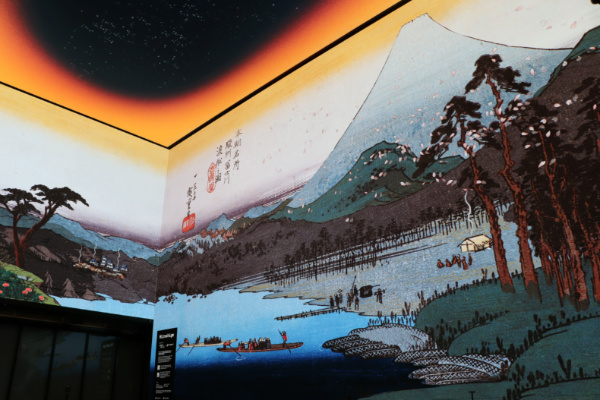
Ferry on the Fuji River. From Famous Places in Japan, Utagawa Hiroshige (1797 – 1858). Colour -woodblock print, about 1832. © The Trustees of the British Museum

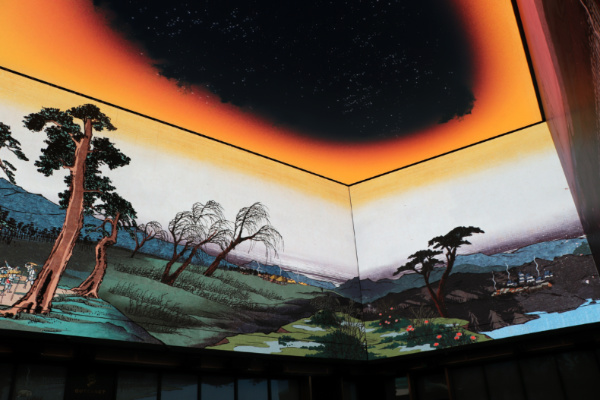
An exhibition exploring the art and legacy of Japanese artist Hiroshige opens at the British Museum today. Hiroshige: artist of the open road takes visitors on a “lyrical journey” through Edo-period Japan, exploring both natural landscapes and urban life as well as considering Utagawa Hiroshige’s (1797– 1858) lasting influence on modern and contemporary art. The display marks the major gift of 35 Hiroshige prints to the American Friends of the British Museum from the collection of Alan Medaugh, a leading US collector of the artist’s work with these works being shown alongside 82 Hiroshige prints loaned by Medaugh and other works. Among them are the series Fifty-three Stations of the Tōkaidō Highway (1833–35), One Hundred Famous Views of Edo (1856–58) and Eight Views of Stations along the Main and Secondary Roads (about 1839) as well as examples of his famous bird-and-flower prints Runs in the Joseph Hotung Great Court Gallery (Room 35) until 7th September. Admission charge applies. For more, see britishmuseum.org/hiroshige.

• The 80th anniversary of World War II is being marked with a new display of ceramic poppies in the Tower of London. Almost 30,000 poppies, previously seen in Paul Cummins’ 2014 artwork, Blood Swept Lands and Seas of Red, are being used in the new installation designed by Tom Piper. Opens on 6th May in advance of the 80th anniversary of VE Day, marking the official end of the World War II in Europe, on 8th May. Included in admission with a small section visible from the public footpath. For more, see www.hrp.org.uk/tower-of-london/whats-on/tower-remembers-2025.

Do Ho Suh, Rubbing/Loving Project: Seoul Home, 2013-2022. Installation view at Museum of Contemporary Art Australia, Sydney, Australia. Photography by Sebastian Mrugalski Courtesy of the artist, Lehmann Maupin, New York, Seoul and London and Victoria Miro. © Do Ho Suh

• The large-scale installations, sculptures, videos and drawings of artist Do Ho Suh are going on show at the Tate Modern from today. The Genesis Exhibition: Do Ho Suh: Walk the House, the title of which comes from a Korean expression referring to the hanok – a house that could theoretically be disassembled, transported and reassembled at a new site, includes works from across three decades. They include the new installation Nest/s (2024) and Perfect Home: London, Horsham, New York, Berlin, Providence, Seoul (2024), Who Am We? (2000_ – a mosaic of tens of thousands of tiny portrait photographs collected from sources including school yearbooks, and his major Rubbing/Loving Project: Seoul Home (2013-22) project. Runs at the Bankside institution until 19th October. Admission charge applies. For more, see tate.org.uk.

Send all items for inclusion to exploringlondon@gmail.com

10 historic London docks…8. St Saviour’s Dock…

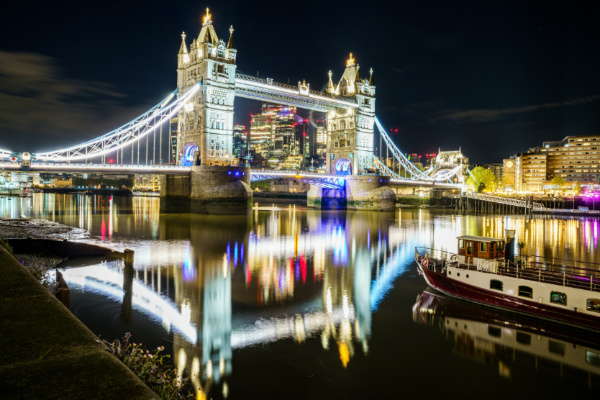
Located in an inlet where the River Neckinger enters the Thames just to the east of Tower Bridge, this dock has been used since the early middle ages.

Subscribe for just £3 a month to see all of Exploring London’s content – and support our work.

This Week in London – New room for Turner at Tate Britain; slavery and Caribbean post ships; and, ‘The Power of Trees’ at Kew…

JMW Turner, ‘Self-Portrait’, c1799, PICTURE: Courtesy of Tate

A new room dedicated to the watercolours and drawings of painter JMW Turner has opened at the Tate Britain to mark the 250th anniversary of his birth. The new room at the Millbank gallery, whichfeatures some of the more than 100 works by Turner on display in the gallery, includes the earliest Turner in Tate’s collection, made when he was only 12-years-old, as well as a dramatic image of a building on fire, long thought to be the Houses of Parliament but now revealed to in fact be the Tower of London. The display draws on the latest research developed in preparing a new catalogue of Turner’s 37,500 works on paper which, to be completed this year, will be freely accessible on Tate’s website from November and offers a news insight into the artist’s ideas and methods. Further events related to Turner are planned for later this year. The new room can be seen daily. Entry is free. For more on how the Tate is marking the Turner anniversary, see tate.org.uk/turner-250.

The stories of enslaved people – whose labour fuelled 19th century postal ships between the UK and the Caribbean – are explored in an exhibition at the Postal Museum in Clerkenwell. Voices of Resistance: Slavery and Post in the Caribbean draws on letters between plantation owners and managers to provide glimpses into the lives of enslaved people who worked on the plantations and celebrates their courageous acts of resistance. The display also features a movie by filmmaker Emmanual Phillips which honours the Caribbean coal workers involved in refuelling postal ships on the island of St Thomas (and which was created in partnership with Dollar fo’ Dollar, St Thomas-based organisation that works to ensure the legacies of the coal workers live on to inspire people). Entry is included in the museum ticket. Runs until 5th January. For more, see www.postalmuseum.org.

On Now: The Power of Trees. This exhibition at Kew Garden’s Shirley Sherwood Gallery of Botanical Art celebrates trees and their use as a source of artistic inspiration across cultures and time. The display features a variety of botanical works including 20 newly commissioned botanical artworks created by the artists of the Bedgebury Florilegium Society and Horizontal – Vaakasuora, a spectacular cinematic installation from Finnish artist Eija-Liisa Ahtila. Entry is free with Kew Gardens admission. Runs until 14th September. For more, see www.kew.org.

Send all items to exploringlondon@gmail.com.

10 historic London docks…7. Royal Docks…

This series of three inter-connected docks in London’s east were once the largest enclosed docks in the world (they’re still the largest enclosed docks in the UK).

Subcribe for just £3 a month to access all of Exploring London’s content…

LondonLife – London in bloom…

PICTURE: Dang Khoi Ta/Unsplash

This Week in London – Gold bunnies at Hampton Court; St George’s Day at Trafalgar Square; and, ‘Food Season’ at the British Library…

Wishing all our readers a happy Easter!

Hampton Court Palace. PICTURE:  Karen McKeogh/Unsplash

The Lindt GOLD BUNNY hunt has returned to Hampton Court Palace this Easter. People visiting the palace can seek out the gold bunnies hidden around the gardens – currently also the location of the Tulip Festival – and those children who believe they have found them all will be rewarded with a chocolate treat. Included in general admission. Runs until 21st April. For more, see https://www.hrp.org.uk/hampton-court-palace/

A free, family-friendly event celebrating England’s rich heritage through music, dance, and workshops will be held in Trafalgar Square on Monday to mark St George’s Day. The event, which runs from noon to 6pm, will be hosted by singer-songwriter Harleymoon Kemp and includes performances by The Nigel Grice Jazz Collective, the English Folk Dance and Song Society, singer-songwriter Matilda Garcia, South London-based dance company Bird and Gang, spoken word artist Palacio de Poetas, West End Kids, and harmony group Vocal Shack. St George and the famous Dragon will also be roaming the square and the event also features traditional Morris dancing from the Belles of London City, the chance to meet the Pearly Kings and Queens and a closing ceilidh led by Cut A Shine, a troupe of traditional musicians and dancers. There will also be a variety of food and beverage stalls. For more, see www.london.gov.uk/events/st-georges-day-2025

The British Library’s ‘Food Season’ – featuring a programme of live talks, panel discussions, workshops, and exclusive tastings – kicks off today. Now in its seventh year, events include a conversation with cookery icon Dame Prue Leith who will be talking about her life in food with journalist Jimi Famurewa, an expert panel discussion on the impact of weight-loss injections on our society, a contribution from cult food magazine Vittles looking at the point of a cookbook?, and a conversation between chef Nadiya Hussain and celebrated author Candice Brathwaite. There’s also an event celebrating the late Californian feminist food writer, MFK Fisher, with her daughter, Kennedy Golden, Alastair Harper from band Extradition Order (who will be performing as part of the event) and authors Rebecca May Johnson and Gurdeep Loyal. The final weekend (31st May to 1st June) will feature the ‘BIG WEEKEND’, a two day celebration of food through words, sounds, cultures, ideas and tastings. For tickets and the full programme of events, head to https://events.bl.uk/whats-on/food-season.

Send all items to exploringlondon@gmail.com.

10 historic London docks…6. St Mary Overie’s Dock…

This small but historic London dock is located at Bankside on the south bank of the Thames.

Subscribe to get access

Read more of this content when you subscribe today.

LondonLife – Cambridge completes a clean sweep at The Boat Race…

CCambridge took the honours over Oxford in both the men’s and women’s races as well as both reserve races and the lightweight men’s and women’s races in the annual rowing event on the River Thames in west London on Sunday.

The Cambridge women’s team, wearing the light “duck egg” blue, celebrate their win over the Dark-Blues (Oxford). ALL PICTURES: Courtesy of Row360

The Light-Blues won the men’s race by five-and-a-half lengths – their sixth victory in seven years, while the women won by two-and-a-half lengths in their eighth consecutive win.

Cambridge celebrations.

There was controversy when the women’s race had to be restarted – the first time its happened on the Championship Course (the women’s race moved there in 2015 having earlier been held at Henley-on-Thames and before 1977 on the River Isis in Oxford and the Cam in Cambridge – and history was also made in the men’s race with Sarah Winckless the first female umpire.

The crowd along the River Thames shoreline at Barnes.

The first men’s race was held in 1829 and the first women’s in 1927. It takes place over what is known as the Championship Course which covers 4.25 miles between Putney and Mortlake.

For more on the race, see www.theboatrace.org.

Lost London – Gatehouse Prison…

Located in what was the gatehouse of Westminster Abbey, this small prison dates from 1370.

It was built by Walter de Warfield, then the abbey’s Cellarer, and featured two wings, built at right angles to each other.

The Gatehouse Prison in an 18th century depiction. PICTURE: Wikipedia

Under the jurisdiction of the Abbot, the prison had two sections – one for clerics and one for laymen. The Abbey’s Janitor was its warder.

Among the most famous inmates was the Cavalier poet Richard Lovelace who was imprisoned for petitioning to have the Clergy Act 1640 annulled. While inside, he wrote the famous work, To Althea, from Prison which features the famous lines: “Stone walls do not a prison make, Nor iron bars a cage”.

Other notables include Sir Walter Raleigh, held here on the night before he was beheaded in Old Palace Yard on 29th October 1618, diarist Samuel Pepys – detained for a few weeks in 1689 on suspicion of being a Jacobite (but released because of ill health), and Gunpowder Plot conspirator Thomas Bates.

Falling into a state of decay, the prison was demolished in 1776-77 (although one wall stood until the 1830s). A gothic column, the Westminster Scholars’ Memorial which is also known as the Crimea and Indian Mutiny Memorial, now stands on the site.

This Week in London – The glamour of the Edwardian Royals; tulips at Hampton Court; and, Cartier jewels at the V&A…

Attributed to R. & S. Garrard, ‘Love Trophy’ Collar, 1901
Charles Baugniet, ‘After the Ball’: a Lady in a Ballgown Asleep on a Sofa, c1860–67

The glamour and opulence of the Edwardian era – and the two royal couples that exemplified it – is the subject of a new exhibition opening at The King’s Gallery at Buckingham Palace tomorrow. The Edwardians: Age of Elegance takes an in-depth look at the lives of King Edward VII and Queen Alexandra, and King George V and Queen Mary, exploring not only their family interactions but their glittering social circles, travel adventures and, of course, the royal events they attended. More than 300 items are on display in the exhibition – almost half on show for the first time – with highlights including Queen Mary’s ‘Love Trophy’ Collar necklace which is on display for the first time, a Cartier crystal pencil case set with diamonds and rubies, and, a blue enamel Fabergé cigarette case featuring a diamond-encrusted snake biting its own tail which was given to King Edward VII in 1908 by his favourite mistress as a symbol of eternal love. There’s also a never-before-seen photograph of Edward wearing fancy-dress as a knight of the Order of Malta as he attended a ball celebrating Queen Victoria’s 1897 Diamond Jubilee, a previously unseen study of Sleeping Beauty by the Pre-Raphaelite artist Sir Edward Burne-Jones, and, Charles Baugniet’s After the Ball which is on show for the first time in more than a century. Runs until 23rd November. Admission charge applies. For more, see www.rct.uk.

More than 100,000 tulip bulbs are springing to life at Hampton Court Palace for its annual Tulip Festival. The display includes an installation of 10,000 tulips in the palace’s Fountain Court, floating tulip bowls in the Great Fountain, a vintage horse cart spilling tulips in the Clock Court, free-style planting, inspired by the tulip fields of the Netherlands, in the Kitchen Garden and rare, historic and specialist varieties of tulips in the Lower Orangery. There will be daily “tulip talks” in the palace’s wine cellar exploring the history of the flower and how Queen Mary II introduced them to the palace. Runs from Friday until 5th May. Included in general admission. For more, see www.hrp.org.uk.

Rose clip brooch, Cartier London, 1938. Diamonds and platinum. Vincent Wulveryck, Collection Cartier © Cartier

The first major exhibition in 30 years dedicated to Cartier jewels and watches opens at the V&A this Saturday. Cartier, which is being held in The Sainsbury Gallery, charts the rise of the globally recognised jewellery house and how it became known as “the jeweller of kings and the king of jewellers”. The display features more than 350 objects with highlights including the Williamson Diamond brooch which was commissioned by Queen Elizabeth II in 1953 and which features the rare 23.6 carat pink Williamson diamond; the Scroll Tiara commissioned in 1902 and worn to the coronation of Elizabeth II and later by Rihanna on the cover of W magazine in 2016; Grace Kelly’s engagement ring (1956) that she wore in her final film High Society; Mexican film star María Félix’s snake necklace (1968); and, a selection of Cartier timepieces that embody its pioneering approach to watchmaking, including the Crash wristwatch, designed by Cartier London (1967). The exhibition runs until 16th November. Admission charge applies. For more, see vam.ac.uk/exhibitions/cartier.

Send all items to exploringlondon@gmail.com.

10 historic London docks…5. The London Docks…

Once the largest enclosed docks in the world, the London Docks were constructed in Wapping in the early 19th century.

Subscribe for just £3 a month to access all of Exploring London’s content.

This Week in London – Mudlarking finds celebrated; MI5 reveals its secrets; and, fixing the broken planet at the Natural History Museum…

The neck from a stoneware bottle with a bearded face known as a Bartmann bottle 1500s – 1600s. The bearded face decorating the neck lies half-buried on the foreshore. PICTURE:
© Alessio Checconi /London Museum.
Gold finger ring, late medieval, mid 15th century, with pink ‘spinel’ stone. The engraved band includes an inscription ‘pour amor say donne’- For Love I am Given. © London Museum

The first major exhibition on mudlarking opens at the Museum of London Docklands tomorrow. Secrets of the Thames: Mudlarking London’s lost treasures features some of the fascinating finds made along the Thames foreshore – from a Tudor head-dress and a medieval gold ring to an an elaborately decorated Viking era dagger and a pair of 18th century false teeth. While mudlarking was historically an activity of the poor, often children, during the 19th century, it has evolved into a popular hobby for some (albeir permits are required) and in recent years led to some spectacular finds. Others among the more than 350 objects on show include a 16th century ivory sundial, the nationally significant Iron Age Battersea Shield, a pair of medieval spectacles, 16th century wig curlers, and a Roman badge decorated with a phallus. The exhibition also features the installation, The Moon by artist Luke Jerram, which highlights the role the moon and tides play in creating the unique conditions for mudlarks to explore the river’s banks. Admission charge applies. Runs until 1st March next year. For more, see www.londonmuseum.org.uk/whats-on/secrets-thames/.

The hidden world of MI5 is being revealed in a new exhibition opening at the National Archives in Kew on Saturday. MI5: Official Secrets features original case files, photographs and papers alongside equipment used by spies and spy-catchers during the organisation’s 115 year history. Among the items on show are first-hand account of Kim Philby’s confession in 1963, papers related to the past activities of Cambridge spy Anthony Blunt, M15’s first camera – a pocket-sized ‘Ensignette’ made by Houghton Ltd from 1910, evidence that led to German spy Josef Jakobs being the last person executed at the Tower of London, and, advanced radio equipment found buried in the garden of Soviet spies Helen and Peter Kroger in the 1960s. The exhibition also features video insights from former MI5 directors general, intelligence experts including Professor Christopher Andrew – author of MI5’s official history, and Baroness May, former Prime Minister and one of Britain’s longest serving Home Secretaries. The exhibition is free to visit and runs until 28th September. For more, see https://www.nationalarchives.gov.uk/mi5-official-secrets/.

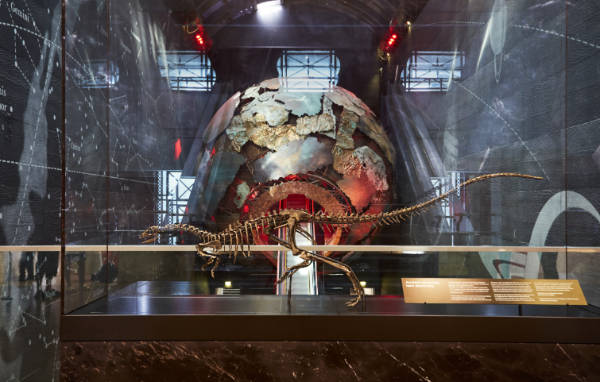
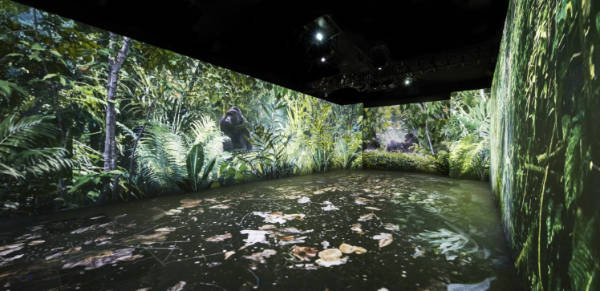
The first new permanent gallery at the Natural History Museum – Fixing Our Broken Planet – opens today. The new gallery brings together pioneering research from the museum’s scientists with advice from environmentalists and young changemakers on how to better care for the planet and its future and aims to be a “definitive destination for those looking to explore the threats to our natural world whilst discovering where solutions can be found”. Visitors will come face-to-face with more than 250 specimens including a Sumatran rhinoceros, parasitic worms and whale’s earwax; each telling an important story about our fragile relationship with the natural world and will also see research showing how fungi is used to fertilise crops, how bacteria can be harnessed to extract copper from mine waste, how bison are helping to engineer forests in the UK to store more carbon and how vital DNA analysis on mosquitos is being used to fight mosquito-borne diseases, such as malaria. The new display is located in the restored original 1881 Waterhouse building. The gallery is free to visit. For more, see www.nhm.ac.uk.

• Send all items to exploringlondon@gmail.com

10 historic London docks…4. West India Docks…

A complex of three docks located on the Isle of Dogs, the West India Docks were founded more than 200 years ago and in recent decades have been redeveloped as the financial centre of Canary Wharf.

Subscribe to see all our content for just £3 a month!

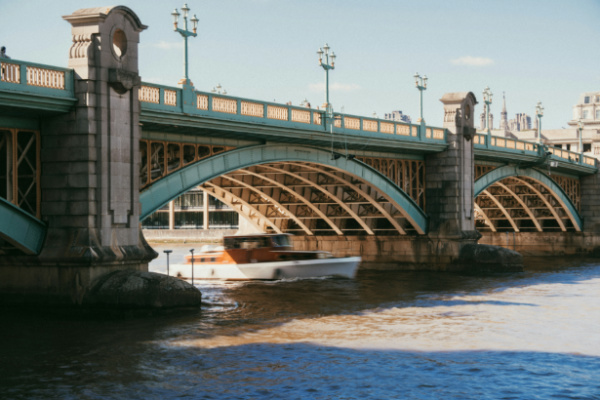
LondonLife – View of Westminster Bridge…

PICTURE: Jeffrey Zhang/Unsplash

London pub signs – The Mudlark…

PICTURE: Courtesy of Google Maps

This pub, located in Southwark, just north of Borough Market (and Southwark Cathedral), owes its name to the proximity of the river and the traditional practice of mudlarking – a word used to describe the idea of scavanging the banks of the Thames for valuables.

Mudlarking rose to prominence in the 18th and 19th centuries and the mudlarks were often children, mostly boys, who would undertake the dangerous activity of scavanging the foreshore of the tidal Thames on a daily basis in an effort to supplement the family income.

The 19th century journalist Henry Mayhew wrote about mudlarks he encountered on the river, including a nine-year-old who, dressed in nothing but trousers that had been worn away to shorts, had apparently already been about the activity for three years.

The mudlarks were after anything that could be sold for a small income – coal, ropes, bones, iron and copper nails.

The pub sign as it is now. PICTURE: Google Maps

The practice continues today – and has unearthed some fascinating historic finds – but anyone wanting to do so needs a permit from the Port of London Authority (and must respect rules around their finds that are of an historical nature).

The pub, meanwhile, originally dates from the mid-1700s and used to feature child mudlarks on its sign (it now has a hand holding a mudlark’s find of a coin).

It is (unsurprisingly, given the location) said to be popular with market traders and attendees.

The pub, located on Montague Close, is these days part of the Nicholson’s chain. For more, see https://www.nicholsonspubs.co.uk/restaurants/london/themudlarklondonbridge#/

This Week in London – ‘Pirates’ at the National Maritime Museum; the ‘design of swimming’; and, José María Velasco explored…

PICTURE: Frames For Your Heart/Unsplash

A major exhibition tracing the changing depictions of pirates through the ages and revealing their often brutal role in history opens at the National Maritime Museum in Greenwich on Saturday. Pirates deconstructs some of the myths which have developed around buccaneers as it reveals the real-life stories of the likes of Edward ‘Blackbeard’ Teach, William Kidd, Anne Bonny and Mary Read. The exhibition features almost 200 objects ranging from the costume worn by Orlando Bloom in Pirates of the Caribbean: The Curse of the Black Pearl, to copies of A General History of the Pyrates by Captain Charles Johnson (first published in 1724), a hanging believed to have been part of a shrine captured from a junk in the fleet of the mid-19th century Chinese pirate Shap Ng-tsai, and a silver centerpiece depicting the bombardment of Algiers, 1816, when a combined British Dutch force attacked Algiers in an attempt to resolve the longstanding issue of piracy on the North coast of Africa. Runs until 4th January. Admission charge applies. For more, see www.rmg.co.uk/pirates.

The ‘design of swimming’ – covering everything from fashions to architecture – is the subject of a new exhibition opening at the Design Museum tomorrow. Splash! A Century of Swimming and Style is split across three sections focusing on three locations in which people swim – the pool, the lido and nature – and starts in the 1920s when beach holidays exploded in popularity. More than 200 objects are on display including Pamela Anderson’s Baywatch swimsuit, the first Olympic solo swimming gold medal won by a British woman, the banned ‘technical doping’ LZR Racer swimsuit, one of the earliest surviving examples of a bikini, and a detailed architectural model of the Zaha Hadid-designed London 2012 Aquatics Centre. Runs until 17th August. Admission charge applies. For more, see https://designmuseum.org.

José María Velasco, ‘Pirámides del sol y de la luna’, 1878, Oil on canvas, 18.5 x 26.3 cm, Colección Pérez Simón, Mexico © Oliver Santana

• Mexico’s most celebrated 19th century painter, José María Velasco (1840–1912), is the subject of a new exhibition opening at The National Gallery on Saturday. José María Velasco: A View of Mexico – which coincides with the 200th anniversary of the establishment of diplomatic relations between the UK and Mexico, explores how he approached drawing and painting and how he explored the relationship between different cultures, Mexico’s mountainous terrain, flora and fauna, and the impact of industrialisation on the landscape. The display also considers the links between Velasco’s work and paintings in the gallery’s collection, in particular Édouard Manet’s The Execution of Maximilian (1867–8), which depicts the execution of the Austrian ruler imposed on Mexico. Runs until 17th August. Admission charge applies. For more, see nationalgallery.org.uk.

Send all items for inclusion to exploringlondon@gmail.com.
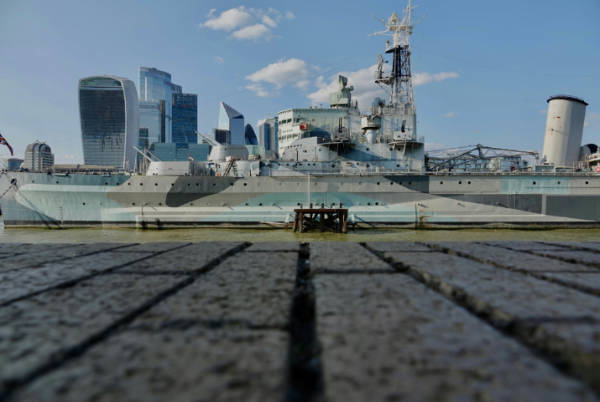
10 historic London docks…3. Greenland Dock…

The oldest riverside wet dock in London (and for many years the largest), the origins of the expansive Greenland Dock in Rotherhithe go back to the late 17th century.

Subscribe for £3 a month to access all of Exploring London’s content…

LondonLife – View down Whitehall…

PICTURE: Samuel Hagger/Unsplash

A Moment in London’s History – The taking of the Stone of Scone…

A rectangular block of pale yellow sandstone decorated with a Latin cross, the Stone of Scone, also known as the Stone of Destiny, long featured in the crowning of Scottish kings. But in 1296, it was seized by King Edward I as a trophy of war.

The Coronation Chair in a photograph taken between 1875-1885. PICTURE: Cornell University Library

He brought it back to England (or did he? – it has been suggested the stone captured by Edward was a substitute and the real one was buried or otherwise hidden). In London, it was placed under a wooden chair known as the Coronation Chair or King Edward’s Chair on which most English and later British sovereigns were crowned.

On Christmas Day, 1950, four Scottish nationalist students – Ian Hamilton, Kay Matheson, Gavin Vernon and Alan Stuart – decided to liberate the 152 kilogram stone and return it to Scotland.

The stone broke in two when it was dropped while it was being removed (it was later repaired by a stone mason). The group headed north and, after burying the greater part of it briefly in a field to hide it, the stone was – on 11th April, 1951 – eventually left on the altar of Arbroath Abbey in Scotland.

No charges were ever laid against the students.

It was brought back to the abbey and used in the coronation of Queen Elizabeth II in 1953.

The stone was eventually returned to Scotland in 1996 on the proviso it could be temporarily relocated back to London for coronations and now sits in Edinburgh Castle. It was taken to London temporarily in 2023 for the coronation of King Charles III but has since been returned.

The replica Stone of Scone at Scone Castle in Scotland. PICTURE: David Adams

There is a replica of the stone at Scone Castle in Scotland.