Famous Londoners – US founding fathers…

The US is celebrating the 250th anniversary of the signing of the Declaration of Independence with celebrations taking place across the weekend just passed.

We thought it a good time to take a quick look at which of the seven founding fathers lived in London…
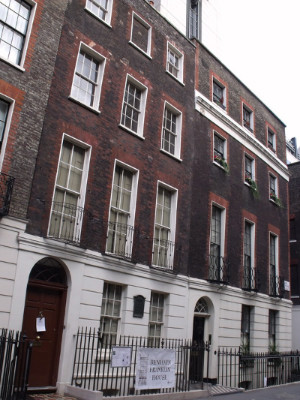
Benjamin Franklin House. PICTURE:
Elliott Brown (licensed under CC BY 2.0)

1. Benjamin Franklin. Franklin, perhaps the founding father most associated with London, lived in the city for two periods in his life. The first was when he was working as a printer’s apprentice between 1724-26 and the second was when he was representing the interests of the American colonies to the British Government from 1757 to 1775. It was during the latter period that he lived at 36 Craven Street – now a Grade I-listed property known as Benjamin Franklin House and the only remaining residence in the world still standing in which Franklin lived (and one which carried a fascinating past).

2. John Adams. Adams, who was to go on to succeed George Washington as president, lived in London between 1785 and 1788 in the role of first American Minister to Great Britain (actually to the Court of St James), charged by Congress with establishing trade and diplomatic contacts. He lived in a property at 9 Grosvenor Square in Mayfair, a location which remains connected to the US today, housing the US embassy and numerous US memorials. A plaque marks the location of the property.

3. John Jay. The first Chief Justice of the US Supreme Court, he lived in London from June to November, 1794, while, as an envoy of the first US President George Washington, he was negotiating the controversial Jay Treaty with the British Government which dealt with some of the lingering issues of the Revolutionary War.

4. Thomas Jefferson. To say Jefferson lived in London may be a stretch but he did visit for an extended period in March and April, 1786 when, serving as the American minister in France, he crossed the channel and spent a month-and-a-half largely based in the city with John Adams as trade treaties were being negotiated. During his visit he is known to have taken in the gardens at Chiswick House and the Royal Botanic Gardens in Kew (as well as some further afield such as at Blenheim Palace).
This Week in London – America’s 250th at the British Museum; Ferdinand Georg Waldmüller’s landscapes; and, ‘rival queens’ at the Foundling Museum…

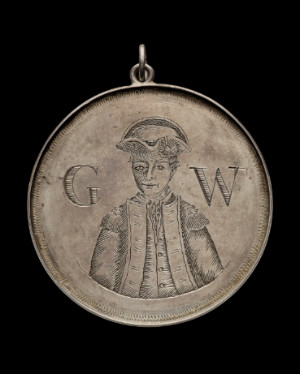
Washington Peace Medal PICTURE © The Trustees of the British Museum

The Washington Peace Medal, engraved to bear a portrait of George Washington by Paul Revere in 1777, is at the heart of a new exhibition at the British Museum marking the 250th anniversary of the Declaration of Independence. Declaring independence: USA 250 also features a ceremonial copy of the Declaration of Independence, handwritten in sheepskin and on loan from the West Sussex Record Office, known as the Sussex Declaration (it will be added halfway through the display’s run), a wampum belt representing the diplomacy between the Lenape people and the Haudenosaunee Confederacy in 1712 (the Lenape later signed the Treaty of Fort Pitt in 1778 with the Revolutionaries in what was the first formal treaty between an Indigenous Nation and the United States), and a pipe tomahawk given to Thayendanegea (Joseph Brant), a Mohawk, Haudenosaunee leader, which represents the Mohawk alliance with the British. The free display can be seen in Room 3 until 29th November. For more, see www.britishmuseum.org/exhibitions/declaring-independence-usa-250.

The first UK exhibition of the works of Austrian painter Ferdinand Georg Waldmüller (1793-1865) – and the first to be devoted solely to his landscapes – opens at the National Gallery today. Waldmüller: Landscapes features about 14 works including landscapes depicting scenes in the Prater, Vienna’s famous park, the Alpine region near Salzburg in Austria known as the Salzkammergut, views of Sicily, and later works such as Early Spring in the Vienna Woods (1861). Waldmüller, who was trained at the Academy in Vienna, visited London in 1856, bringing with him 34 works which were sold at auction following a private audience with Queen Victoria and Prince Albert, each of whom bought one. The exhibition in Room 1, which has been organised in cooperation with the Belvedere, Vienna, runs until 20th September. Admission is free. For more, see www.nationalgallery.org.uk/exhibitions/waldmüller-landscapes.

A new display celebrating 300 years since the debut of two operas by George Frideric Handel in London – Alessandro and Scipione – is running at the Foundling Museum in Bloomsbury. 300 Years of the ‘Rival Queens’: Handel’s 1726 Opera Season focuses on Italian soprano Faustina Bordoni and her rival Francesca Cuzzoni and how Handel carefully composed operas with two equally important roles to suit both singers, known as the ‘rival queens’. Admission charge applies. Runs until 25th October. For more, see https://foundlingmuseum.org.uk/event/handels-1726-opera-season/

Send all items for inclusion to exploringlondon@gmail.com

This Week in London – Biggest ever Magna Carta exhibition; 200 years since Waterloo at the NPG; and, Alexander McQueen at the V&A…

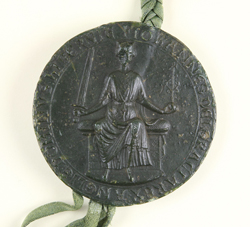
great-seal-king-john-eton-college-british-library-magna-carta-law-liberty-legacyThe largest ever exhibition related to the Magna Carta opens at the British Library in King’s Cross tomorrow to mark the 800th anniversary of the document’s sealing. Magna Carta: Law, Liberty, Legacy features two original Magna Carta manuscripts from 1215 as well as 1215 document, the Articles of the Barons (known as ‘draft’ of the Magna Carta), the Petition of Right (1628), the English Bill of Rights (1689), and the Universal Declaration of Human Rights (1948). It will also display two of the most celebrated documents in American history – the Delaware copy of the Bill of Rights and Thomas Jefferson’s handwritten copy of the Declaration of Independence (both on loan from the US National Archives) –  along with UK cabinet papers from 1941 in which it was proposed an original Magna Carta manuscript from 1215 be given to the US in return for their support in World War II and artefacts including King John’s teeth, thumb bone and fragments of clothing taken from his tomb in 1797 as well as his will. The exhibition tells the story of the Magna Carta from its creation in 1215 through to its later use by people fighting for various rights and freedoms and its continuing impact on the world today. There’s also a series of interviews with politicians, historians and public figures including Burmese activist Aung San Suu Kyi, former US President Bill Clinton and William Hague. Runs until 1st September. Admission charge applies. For more – and a digitised gallery of artifacts – visit www.bl.uk/magna-carta-exhibition. PICTURE: Great Seal of King John, 1203 © Eton College Archives on display in Magna Carta: Law, Liberty, Legacy.

The first gallery exhibition devoted to the Duke of Wellington opens at the National Portrait Gallery off Trafalgar Square today. Marking the 200th anniversary year of the Battle of Waterloo, Wellington: Triumphs, Politics, and Passions explores Wellington’s political and military career as well as his personal life. Highlights include Goya’s 1812 portrait of Wellington following his entry into Madrid (later modified to recognise further battle honours and awards), and Thomas Lawrence’s famous portrait painted in 1815, the same year as the Battle of Waterloo (the painting, which normally hangs in Apsley House, was used as the basis of the design of the £5 British note from 1971 to 1991). The exhibition of 59 portraits and other works also includes rarely seen works loaned by Wellington’s family include a John Hoppner portrait of the duke as a young soldier and a daguerreotype portrait taken by Antoine Claudet for Wellington’s 75th birthday in 1844. Runs until 7th June. Admission is free. For more, see www.npg.org.uk or for more on the 200th anniversary of the Battle of Waterloo, see www.waterloo200.org.

An exhibition celebrating the works of the late fashion designer Alexander McQueen opens at the V&A in South Kensington on Saturday. Alexander McQueen: Savage Beauty presents his works in 10 sections which focus on everything from McQueen’s roots in London, his “skilful subversion of traditional tailoring practices”, his fascination with the animal world and his longstanding interest in Eastern cultures. At the centre of the exhibition is The Cabinet of Curiosities, a display showcasing more than 100 garments and accessories and shown with film footage from his many catwalk presentations. The exhibition runs until 2nd August. Admission charge applies but you’ll have to be quick – the exhibition has already set the record for the most ever advance sales for an exhibition at the museum. For more, see www.vam.ac.uk/savagebeauty.

Send all items for inclusion to exploringlondon@gmail.com.