This Week in London – Science and the making of America; Freddie Mercury’s looks; ‘Diwali On The Square’; and tapestries at Guildhall…

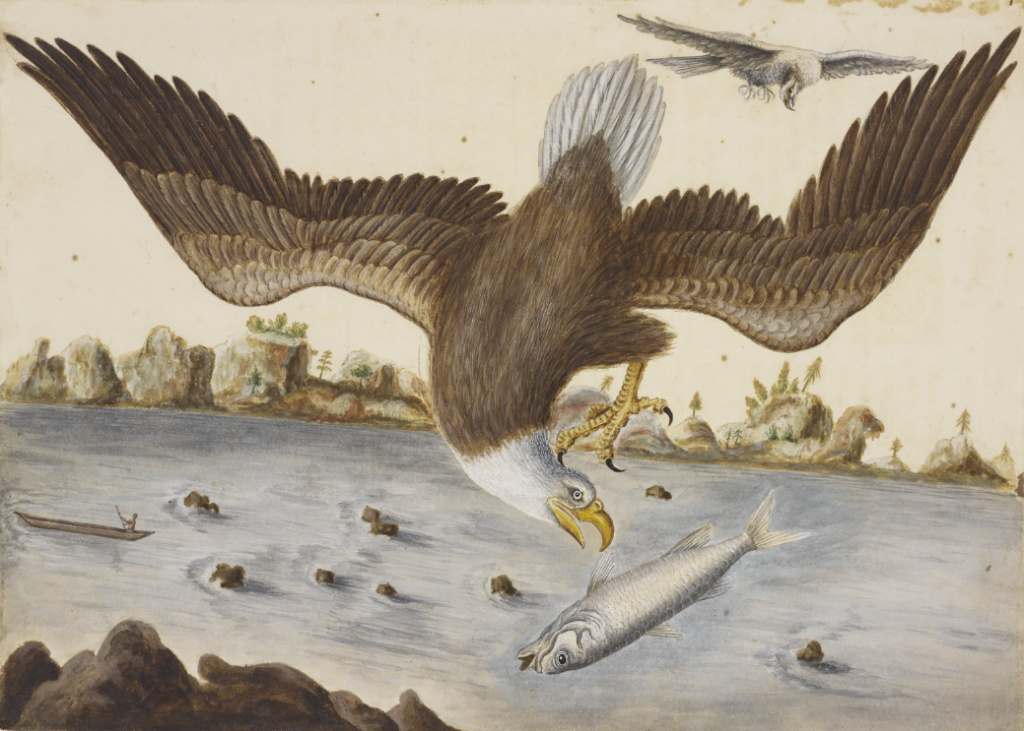
‘The Bald Eagle’, Mark Catesby, 1722-26 © Royal Collection Enterprises Limited 2026 | Royal Collection Trust

• The role science played in shaping America is explored in a new exhibition at the Science Museum. Opening tomorrow, Becoming America: How Science Shaped a Nation marks the 250th anniversary of the signing of the Declaration of Independence and features at its heart a rare surviving copy of the Declaration as well as items used by King George III and George Washington and a pioneering map made by Benjamin Franklin which charts the Gulf Stream. Others among the 100 items on display in this free exhibition include a 10 foot long traditional Indigenous dugout canoe, the painting The Exhumation of the Mastadon which became a symbol of national pride for the US, and a surveyor’s compass believed to have been used to define the Mason-Dixon Line. The ticketed event runs until 25th April next year. For more, see https://www.sciencemuseum.org.uk/see-and-do/becoming-america.
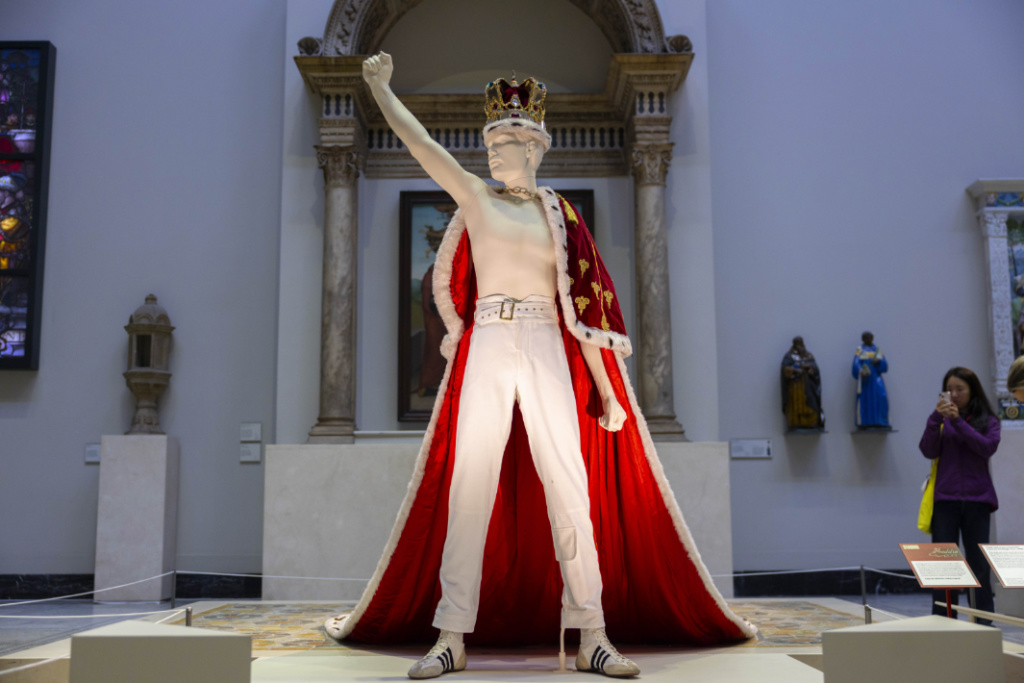
General view of the cloak and crown ensemble worn on the Magic Tour, 1986, featured in ‘Splendid Things’. PICTURE. David Parry/Assignments/the Press Association

• Eight looks worn by iconic performer and songwriter Freddie Mercury go on display at the V&A this Saturday. Freddie Mercury | Splendid Things marks the 80th anniversary of the late singer’s birth and has been developed with Mary Austin, Freddie’s former fiancée and confidante. The looks span the 1970s and 1980s and include a monochrome ensemble Freddie wore at an early Queen gig at Imperial college which later featured on the cover of Queen’s debut album in 1973, the ‘Mercury Wing’ catsuit designed by Wendy de Smet that was worn on stage for Night At the Opera tour in 1975- 1976 (and seen in Bohemian Rhapsody video), and Mercury’s signature crown and cloak designed by Diana Moseley and worn on the Magic Tour including for his last stage appearance with Queen at Knebworth, 1986. The free display runs until 17th January. For more, see https://www.vam.ac.uk.

• Diwali returns to Trafalgar Square this Sunday. Diwali On The Square is a free, family-friendly event which runs from 1pm to 7pm and features music, dance and performances celebrating the cultural heritage of London’s Hindu, Sikh and Jain communities as well as arts, crafts, storytelling, yoga and meditation, dance workshops and food stalls. Families can enjoy StoryHour UK’s Ramayana Puppet Show, which brings the Diwali story to life with handcrafted puppets, music and narration. For more, see https://www.london.gov.uk/events/diwali-square-2026

• More than 20 tapestries created with world-leading artists including David Hockney, Yinka Shonibare, Tania Kovats, Alberta Whittle, and Rachel Maclean go on show at the Guildhall Art Gallery tomorrow. Beyond Bayeux: Tapestry Now, which complements the display of the Bayeux Tapestry at the British Museum, represents a unique collaboration between the gallery and Dovecot Studios and features two major new commissions by Hurvin Anderson and Farshid Moussavi. The display can be see until 21st March next year. Admission is under a pay what you can approach. For more, see www.onecitylondon.com/beyond-bayeux-tapestry-now.

Send all items for inclusion to exploringlondon@gmail.com

This Week in London – GPO’s archaeological finds on show; Flora Japonica at Kew; and, a blue plaque for Freddie Mercury…

roman-mortarium-made-by-albinus• The most prized archaeological finds from a 1975 excavation of the General Post Office on Newgate Street, one of the largest archaeological sites ever excavated in London, are on show in a new exhibition at the Museum of London. Delivering the Past, the free display features objects from across a 3,000 year period and include everything from Roman era finds such as a dog skull, a rare amber die, a spoon and mortar with the makers’ names of Albinus, Sollus and Cassarius stamped on the side (pictured) to floor tiles and architectural fragments from the medieval parish church of St Nicholas Shambles. There’s also a 17th century Bellarmine beer bottle (these were widely imported from Germany in the 1600s), the only 19th century twisted clay tobacco pipe ever excavated in London, and a 19th/20th century ceramic fragment showing General Post Office branding. The exhibition runs until 8th January. The museum is also offering free 45 minute walks to notable excavation sites around Newgate Street every weekday until the end of October. For more, see www.museumoflondon.org.uk.

• Japan’s native flora comes to Kew from this weekend with a new exhibition in the Shirley Sherwood Gallery of Botanical Art. Flora Japonica features paintings from 30 of the Asian nation’s best contemporary artists as they attempt to capture the beauty of everything from camellias to cherry trees and the delicate Japanese maple. The watercolours have been produced based specimens collected from across Japan as well as, in a couple of cases, specimens found within Kew Gardens. Also on display are works never before seen outside Japan including historic drawings and paintings by revered botanists and artists such as Dr Tomitaro Makino (1863-1957), Sessai Hattori and Chikusai Kato (both Edo period artists), artefacts from Kew’s Economic Botany Collection including traditional Japanese lacquerware collected in the 1880s and wooden panels from 1874, and  illustrations from Kew’s collections such as a 17th century illustrated manual of medicinal plants. Runs from Saturday until 5th March after which the exhibition will move to Japan. Admission charge applies. For more, see www.kew.org.

• An English Heritage blue plaque honouring late Queen frontman Freddie Mercury was unveiled at his childhood home in Feltham, in London’s west, earlier this month. Mercury’s parents bought the house in Gladstone Avenue in 1964 after the family had left Zanzibar for the UK. He was still living in the home when he met Queen band mates Brian May and Roger Taylor. The new plaque was revealed on 1st September, on what would have been the singer’s 70th birthday.  For more, see www.english-heritage.org.uk/visit/blue-plaques/.

Send all items for inclusion to exploringlondon@gmail.com.

What’s in a name?…Earls Court

A residential district in inner west London, the origins of the name Earls Court apparently go back almost to the time of the Norman Conquest when the area was granted to the de Vere family as part of the Manor of Kensington. 

The de Veres, who held a court at the manor, were named the Earls of Oxford in 1141 and hence, according to Cyril M. Harris, author of What’s in a Name?: Origins of Station Names on the London Underground, came about the name Earl’s Court. The courthouse, which was demolished in the late 1800s, apparently stood on a site by Old Manor Lane now occupied by gardens.

Originally fertile farmland, Earl’s Court’s development took place in the mid to late 1800s after the arrival of the railway line (the station was built in 1869). The area officially became part of London in 1889 when the London County Council was formed and the city’s boundaries extended.

The area became famous for the Earls Court Exhibition Grounds – established by John Robinson Whitley in 1887 –  which featured rides and an arena which hosted Buffalo Bill’s Wild West Show. A giant wheel was added 10 years later.

After the Second World War, the area attracted large numbers of Polish immigrants leading to Earl’s Court Road being named ‘The Danzig Corridor’. The arrival of large numbers of Australian and New Zealander travellers in the late Sixties saw it earning a new nickname – this time ‘Kangaroo Valley’. The area is now undergoing gentrifcation.

Notable buildings include the art deco Earl’s Court Exhibition Centre, former home of the Royal Tournament and site of the volleyball competition during this year’s Olympic Games, while notable residents have included the Egyptian archaeologist Howard Carter, film director Alfred Hitchcock, and Queen frontman Freddie Mercury.