This Week in London – Rare Tudor choirbook at Lambeth; Sculpture in the City returns; and, picturing Blondie…

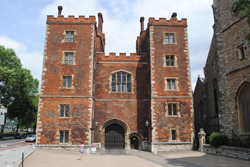
One of only two surviving choirbooks from the reign of King Henry VIII is on display in a new exhibition at the Lambeth Palace Library. Sing Joyfully: Exploring Music in Lambeth Palace Library displays the ‘Arundel’ or ‘Lambeth’ Choirbook (Arundel, Sussex, c. 1525) – this year marking its 500th birthday – along with other items from the library’s collection such as two leaves of a 14th century polyphony recently discovered in the binding of an early printed book. The exhibition, which is free, can be seen until 6th November. For more, see www.lambethpalacelibrary.info/sing-joyfully/.
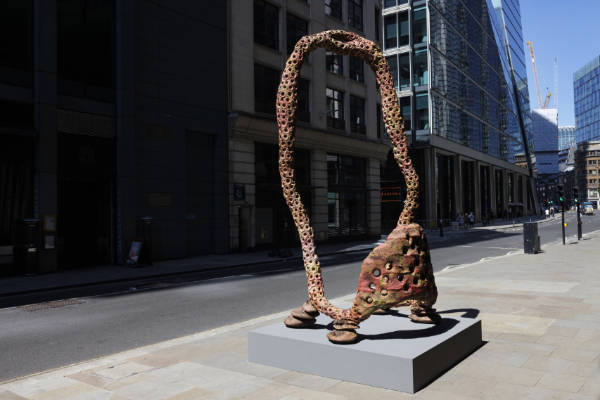
Looping Loop, © Andrew Sabin, Courtesy of the artist and Brooke Benington. PICTURE © Nick Turpin

On Now: Sculpture in the City. The 14th edition of the annual sculpture exhibition in the City of London features 11 pieces including three new works as well as six works which have been retained from previous iterations of the exhibition and two permanent acquisitions. The new works include: Ai Weiwei’s Roots: Palace, a cast-iron tree root sculpture located outside St Botolph without Bishopsgate which, as part of a series created in collaboration with Brazilian artists and communities, explores the concept of unrootedness; Jane and Louise Wilson’s Dendrophiles which, located beneath the escalators of The Leadenhall Building, combines ink drawings based on images of DNA with 3D scans of ancient oak wooden samples; and, Andrew Sabin’s Looping Loop which, located outside 70 St Mary Axe, which forms a continuous loop creating what’s described as a “lively, pulsating sensation”. Runs until April. For more – including a map of the locations – see https://www.sculptureinthecity.org.uk/.

Rare, behind the scenes images of US band Blondie have gone on show at the Barbican Music Library from today. Taken by photographer Martyn Goddard during the group’s breakthrough year of 1978, the 50 images show the band in concert, backstage, in the studio and during photo shoots. The display of photographs is complemented by poster prints, album covers, tour and concert memorabilia, period cameras, and photographic equipment. There are also items lent by Alan Edwards, who has handled Blondie’s publicity since 1978, from his private collection. Blondie in Camera 1978 runs until 5th January. Admission is free. For more see, www.cityoflondon.gov.uk/services/libraries/barbican-music-library.

Send all items for inclusion to exploringlondon@gmail.com.
10 sites from London at the time of the Magna Carta – 5. Lambeth Palace…

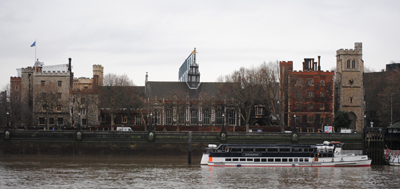
Lambeth-palaceThe London residence of the Archbishop of Canterbury, Lambeth Palace was first acquired by the archbishopric in around the year 1200 with Archbishop Stephen Langdon – an important figure in the whole Magna Carta saga – believed to be the first to have lived there.

Lambeth-Palace2The complex built in the early 13th century included a chapel, a great hall, a ‘great chamber’ where the archbishop would receive guests, and private apartments for Archbishop Langdon, who was appointed to the archbishopric in 1207 and remained in the post until his death in 1228 (his appointment was a major point of contention between King John and Pope Innocent III and a key factor in the dispute which led to the creation of the Magna Carta).

Not much remains of the original palace but the sections that do include the originally free-standing Langdon’s Chapel (although now much altered and connected to the rest of the complex) and the crypt beneath it (described as one of the best preserved medieval stone vaults in London it is now a chapel but was originally used for the storage of wine and beer).

They are both believed to have been completed in about 1220 with the other buildings now present added later over the centuries.

These include the formidable red brick gatehouse that fronts the complex today – known as Morton’s Tower, it is named after Archbishop Cardinal John Morton and dates from 1490 – while the Guard Room, which has its origins in the archbishop’s ‘great chamber’, dates from the 14th century and the infamous Lollard’s Tower – used as a prison in the 17th century – from the 15th century.

The Great Hall – now used as a library, first established in 1610 – was rebuilt in the mid 17th century although it is believed to stand on the site of that first used by Langdon (we’ll deal more with the later history of Lambeth Palace in a later post).

WHERE: Lambeth Palace, corner of Lambeth Palace Road and Lambeth Road (nearest tube stations are Westminster, Waterloo, Vauxhall, and Lambeth North); WHEN: Guided tours (90 minutes) only – check website for details; COST: £12 a person plus £2.95 booking fee (under 17s are free); WEBSITE: www.archbishopofcanterbury.org/pages/about-lambeth-palace.html.

Around London – The Tower hosts Royal Beasts; take a ride on a 1938 tube train; Lambeth Palace Library celebrates the King James Bible; and, see model cathedrals at Sir John Soane’s house…

• The history of the Royal Menagerie is the focus of a new exhibition on now at the Tower of London. Royal Beasts explores the history of the Tower menagerie which, founded during the reign of King John in the early 1200s, remained there for more than 600 years. Among the animals were lions (the first record of which dates from 1210), a grizzly bear (a gift from the Hudson Bay Company to King George III), elephants, tigers, ostriches and kangaroos. Highlights of the exhibition include modern animal sculptures by artist Kendra Haste and interactive sensory displays. The recently restored north wall walk and the never before opened Brick Tower will host some of the displays, including sights, sounds and smells of some of the animals. See www.hrp.org.uk/TowerofLondon.

A 1938 tube train will run along the western end of the Piccadilly Line this Sunday (that’s Father’s Day in case you’ve forgotten) as part of the London Transport Museum’s Heritage Vehicles on the Move 2011 programme. Leaving Northfields, the train will travel to High Street Kensington via Earl’s Court (crossing from the Piccadilly to the District Line in a move not normally experienced by the general public) before heading back down the District Line to Acton Town where it will change back onto the Piccadilly Line. The train will then undertake the “fishhook move”, visiting Heathrow Terminal 4 before going to Terminals 1,2,3 and 5. The entire journey is expected to last about two hours. Tickets, which can be purchased at the museum ticket desk or by calling 020 7565 7298, will need to be collected at Northfields Station. For more, see www.ltmuseum.co.uk/whats-on/events/vehicles-on-the-move.

• Lambeth Palace Library is celebrating the 400th anniversary of the King James Bible with a new exhibition. The exhibits include a 1611 edition of the Bible as well as Medieval Bible translations, landmark editions of the Bible which drew on the textual scholarship of the Renaissance and Reformation and early printed vernacular versions. Runs until 29th July. Admission is by pre-booking only. For information on buying tickets and more, see www.lambethpalacelibrary.org/content/2011exhibition.

On Now: Time is running out to see Sir Herbert Oakley’s collection of 27 models of European and English cathedrals at the Sir John Soane Museum. The models were made in the 1850s by William Gorringe, who was a modelmaker by appointment to Queen Victoria. Runs until 25th June. For more, see www.soane.org/exhibitions/