Bonfire Night – Five places in London featured in the events of the Gunpowder Plot…

It’s 5th November and that means Bonfire Night, the annual event featuring bonfires, effigies of Guy Fawkes (and others), and fireworks displays in commemoration of the November, 1605, foiling of a conspiracy to kill King James I (and many others) by blowing up the House of Lords (you can read more about it in earlier posts here and here).

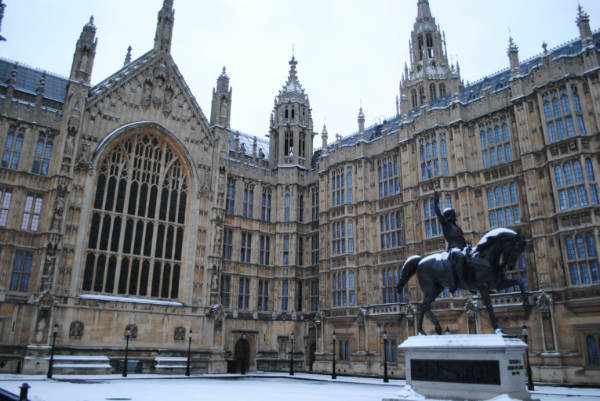
Looking across Old Palace Yard outside the Houses of Parliament to the southern end of Westminster Hall. PICTURE: David Adams

Here’s five places of significance to the story of the plot:

1. The Houses of Parliament: It was in the undercroft beneath the House of Lords that Guy Fawkes was found with 36 barrels of gunpowder. The cellar is now gone – having been destroyed when the Houses of Parliament burned down in 1834.

Subscribe for just £3 a month to support our work and access all of our stories…

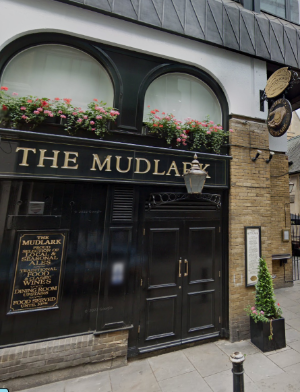
London pub signs – The Mudlark…

PICTURE: Courtesy of Google Maps

This pub, located in Southwark, just north of Borough Market (and Southwark Cathedral), owes its name to the proximity of the river and the traditional practice of mudlarking – a word used to describe the idea of scavanging the banks of the Thames for valuables.

Mudlarking rose to prominence in the 18th and 19th centuries and the mudlarks were often children, mostly boys, who would undertake the dangerous activity of scavanging the foreshore of the tidal Thames on a daily basis in an effort to supplement the family income.

The 19th century journalist Henry Mayhew wrote about mudlarks he encountered on the river, including a nine-year-old who, dressed in nothing but trousers that had been worn away to shorts, had apparently already been about the activity for three years.

The mudlarks were after anything that could be sold for a small income – coal, ropes, bones, iron and copper nails.

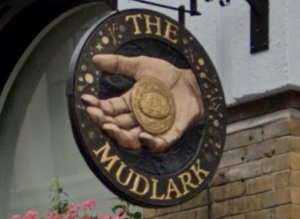
The pub sign as it is now. PICTURE: Google Maps

The practice continues today – and has unearthed some fascinating historic finds – but anyone wanting to do so needs a permit from the Port of London Authority (and must respect rules around their finds that are of an historical nature).

The pub, meanwhile, originally dates from the mid-1700s and used to feature child mudlarks on its sign (it now has a hand holding a mudlark’s find of a coin).

It is (unsurprisingly, given the location) said to be popular with market traders and attendees.

The pub, located on Montague Close, is these days part of the Nicholson’s chain. For more, see https://www.nicholsonspubs.co.uk/restaurants/london/themudlarklondonbridge#/

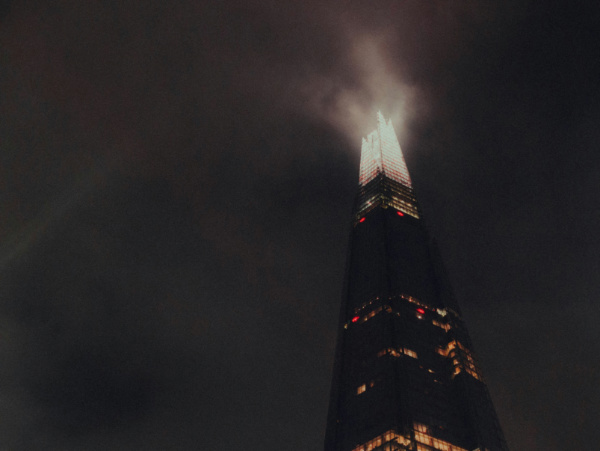
LondonLife – Lighthouse…

The Shard. PICTURE: Sharan Pagadala/Unsplash

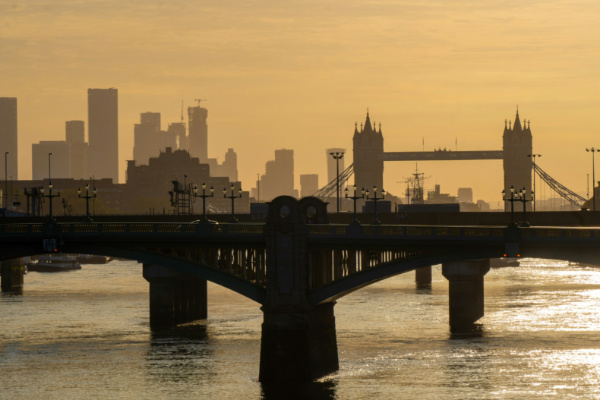
LondonLife – Crossings…

PICTURE: Arun Pushpam Raj/Unsplash

Lost London – Nonsuch House, London Bridge…

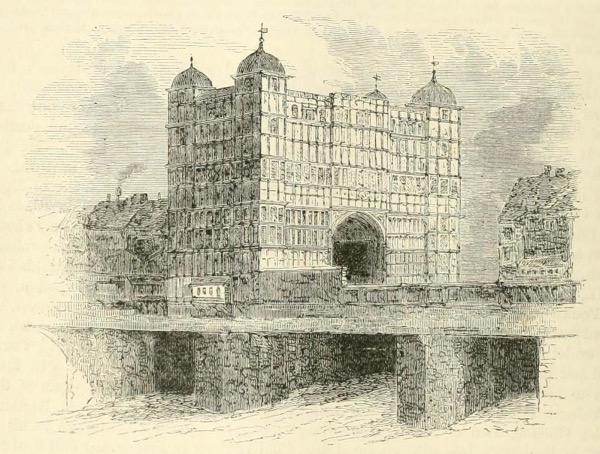
Once located at the southern end of London Bridge, Nonsuch House is the earliest documented prefabricated building.

Nonsuch House as seen in ‘Old and New London, Illustrated’ (1873). PICTURE: Via Wikipedia

Originally constructed in what is now The Netherlands, it was shipped to London in pieces – each individually marked – in 1578 with the reassembly completed the following year.

The four storey building, which was said to have been constructed using wooden pegs and no nails, featured an arched tunnel through the middle through which bridge traffic would pass.

The main facade faced toward Southwark and there were towers at each of the four corners, topped with onion domes. The east and west sides of the building, which protruded beyond the bridge out over the Thames were elaborately carved.

The northern facade of the building abutted other properties while the southern side had a clear space in front over which a drawbridge is believed to have been located (it could be raised to allow larger ships through).

The name may have referenced King Henry VIII’s Nonsuch Palace, located near Ewell in Surrey, and was said to refer to the fact there was no such building as splendid.

The property was demolished along with the other buildings on the bridge in about 1757.

London Explained – The Pool of London…

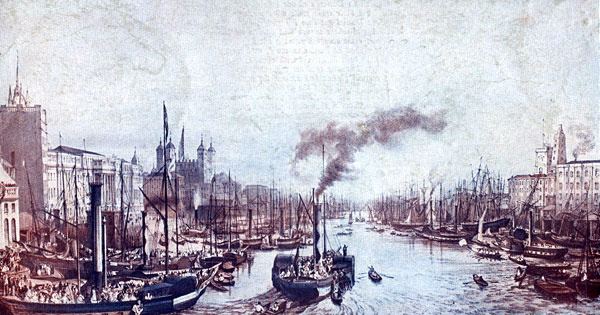
A lithograph showing the Pool of London from London Bridge in 1841. PICTURE: W Parrott/Public Domain

A stretch of the River Thames which spans the area from London Bridge to below Limehouse, the Pool of London was the highest part of the river navigable by tall-masted ships (thanks to the them not being able to pass under London Bridge).

The term originally referred to the stretch of the river at Billingsgate in the City of London which was where all imports had to be delivered for inspection by customs officers (hence these wharves were given the name ‘legal quays’).

But as trade expanded and reached its peak in the 18th and 19th centuries, so too did the stretch referred to as the “Pool of London”. It came to be divided into two sections – the Upper Pool, which stretches from London Bridge to Cherry Garden Pier in Bermondsey (and is bisected by Tower Bridge), and the Lower Pool, which stretched from the latter pier to Limekiln Creek.

The Upper Pool’s north bank includes the Tower of London, the old Billingsgate Market and the entrance to St Katharine’s Dock while the south bank features Hay’s Wharf and the HMS Belfast. The Lower Pool’s north bank includes the entrance to Limehouse Cut as well as Regent’s Canal and Execution Docks while below it runs the Thames and Rotherhithe Tunnels.

A Moment in London’s History – The Great Fire of Southwark…

Think of fire in relation to London and the events of 1666 no doubt spring to mind. But London has had several other large fires in its history (with a much higher loss of life), including during the reign of King John in July, 1212.

The fire started in Southwark around 10th July and the blaze destroyed most of the buildings lining Borough High Street along with the church of St Mary Overie (also known as Our Lady of the Canons and now the site of Southwark Cathedral) before reaching London Bridge.

PICTURE: Guido Jansen/Unsplash

The wind carried embers across the river and ignited buildings on the northern end before the fire spread into the City of London itself (building on the bridge had been authorised by King John so the rents could be used to help pay for the bridge’s maintenance).

Many people died on the bridge after they – and those making their way south across the bridge to aid people in Southwark (or perhaps just to gawk) – were caught between the fires at either end, with some having apparently drowned after jumping off the bridge into the Thames (indeed, it’s said that some of the crews of boats sent to rescue them ended up drowning themselves after the vessels were overwhelmed).

Antiquarian John Stow, writing in the early 17th century, stated that more than 3,000 people died in the fire – leading some later writers to describe the disaster as “arguably the greatest tragedy London has ever seen”.

But many believe this figure is far too high for a population then estimated at some 50,000. The oldest surviving account of the fire – Liber de Antiquis Legibus (“Book of Ancient Laws”) which was written in 1274 and mentions the burning of St Mary Overie and the bridge, as well as the Chapel of St Thomas á Becket built upon it – doesn’t mention a death toll.

London Bridge itself survived the fire thanks to its recent stone construction but for some years afterward it was only partly usable. King John then raised additional taxes to help rebuild destroyed structures while the City’s first mayor, Henry Fitz Ailwyn, subsequently apparently joined with other officials in creating some regulations surrounding construction with fire safety in mind.

The cause of the fire remains unknown.

10 historic stairways in London – 10. Nancy’s Steps…

PICTURE: Matt Brown (licensed CC-BY-2.0)

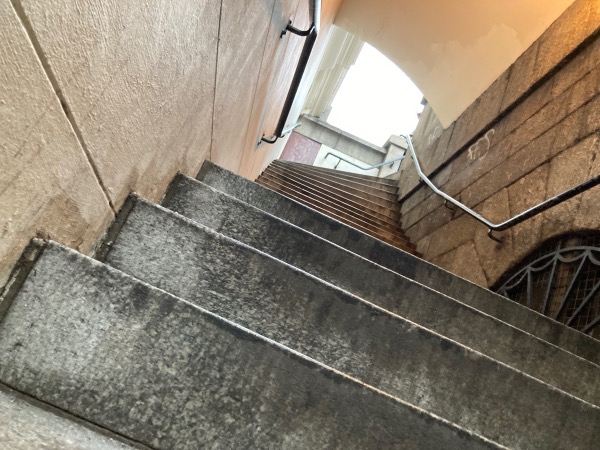
We close our series of historic London stairs with a stairway that has raised its share of controversy in recent years, largely due to the plaques associated with it.

The steps, which are located in Southwark at the southern end of London Bridge and which lead down to Montague Close, are a remnant of the John Rennie-designed London Bridge which was completed in 1831 and which was replaced in the mid-20th century (and which was sold off and relocated to Lake Havasu in the US).

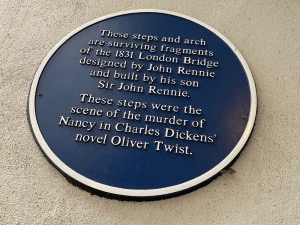
The plaque at the base of the steps. PICTURE: Matt Brown (licensed CC-BY-2.0)

The controversy arises through the plaques associated with the steps which state that the steps where the scene of the murder of Nancy in Charles Dickens’ Oliver Twist. There’s a couple of problems with that claim.

The first is that Nancy wasn’t murdered here in the book – it is in their lodgings that Bill Sikes kills Nancy believing she has betrayed him. The confusion probably comes about because the musical Oliver! did set Nancy’s murder on the steps.

The bridge does, however, play a role in the book and have a connection to Nancy and its probably due to this connection that it has its name, Nancy’s Steps.

Because it was on steps located here – “on the Surrey bank, and on the same side of the bridge as Saint Saviour’s Church [now known as Southwark Cathedral]” that Nancy talks to Oliver’s benefactors while Noah Claypole eavesdropped on the conversation (which leads him reporting back to Sikes and eventually to her murder).

The second error made in the plaque is that Rennie’s bridge (and hence the steps) was completed in 1831 and with Oliver Twist published in serial form just a few years later can’t be the “ancient” bridge referred to in the text. The reference can only relate to the medieval bridge which occupied the site for hundreds of years until it was demolished following the completion of Rennie’s bridge.

LondonLife – Largest Roman mosaic found in 50 years…

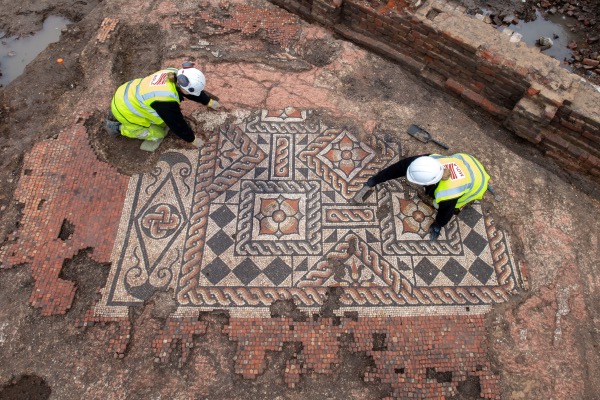
MOLA archaeologists at work on the mosaic unearthed in Southwark. PICTURE: © MOLA/Andy Chopping

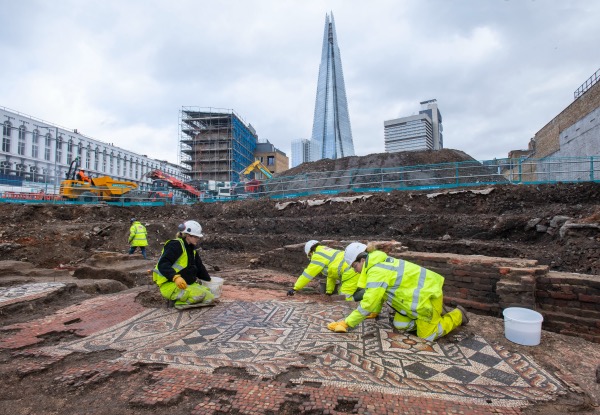
The largest Roman mosaic to be unearthed in London in 50 years has been found near The Shard in Southwark.

The well-preserved mosaic, parts of which are thought to be 1,800-years-old, features two highly decorated panels.

The largest of the two shows large, colourful flowers surrounded by bands of intertwining strands – a motif known as a guilloche – while the design also features lotus flowers and several different geometric elements, including a pattern known as Solomon’s knot which is made of two interlaced loops.

The smaller panel features a simpler design, with two Solomon’s knots, two stylised flowers and striking geometric motifs in red, white and black. Its design is the “almost exact parallel” of a mosaic found in the German city of Trier which suggests a travelling group of artists may have been responsible for both.

The mosaic is believed to be floor of a dining room or ‘triclinium’ of a Roman ‘mansio’, an “upmarket ‘motel'” which offered accommodation, stabling, and dining facilities to people of high rank. The room would have contained couches on which people would have reclined to eat and would have featured brightly painted walls. Fragments of colourful wall plaster have been found on the site as well as traces of an earlier mosaic underneath the one they discovered.

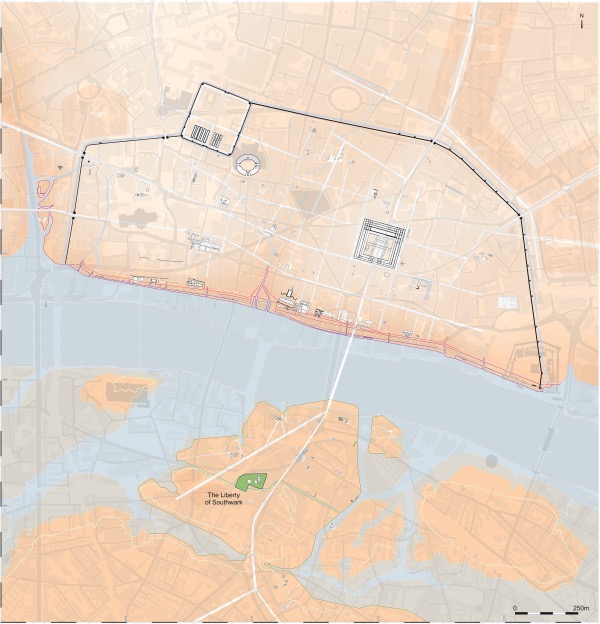
Location of The Liberty of Southwark site in Roman London (detail). PICTURE: © MOLA reproduced with permission of Ordnance Survey.

The discovery was made by archaeologists from Museum of London Archaeology (MOLA) during an excavation ahead of building work on a new mixed use development to be constructed on the site, which was previously used as a car park.

MOLA site supervisor, Antonietta Lerz, described the discovery in a statement as a “once-in-a-lifetime find in London”.

“It has been a privilege to work on such a large site where the Roman archaeology is largely undisturbed by later activity-when the first flashes of colour started to emerge through the soil everyone on site was very excited!” 

The archaeologists have identified another large Roman building neighbouring the mansio which they believe is likely to have been the private residence of a wealthy individual or family.

Plans for the future display of the mosaic are currently under discussion.

MOLA archaeologists at work on the mosaic unearthed in Southwark. PICTURE: © MOLA/Andy Chopping

LondonLife – The Shard under a mackerel sky…

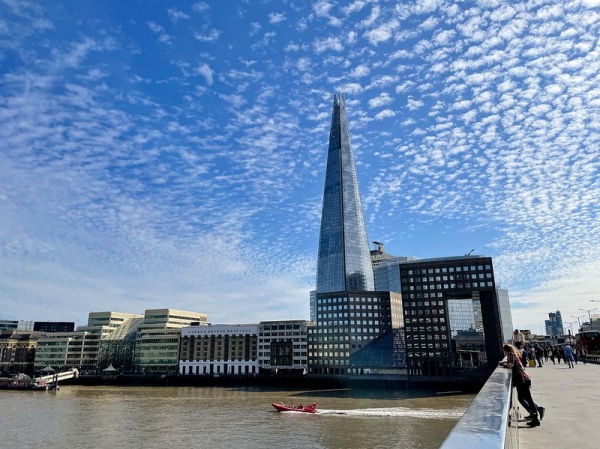
PICTURE: Bex Walton/licensed under CC BY 2.0)

Lost London – ‘Canute’s Canal’…

A waterway said to have been cut by the Viking Canute (also spelled Cnut) in the 11th century, the canal, according to the story, was constructed so his fleet of ships – blocked by London Bridge – could get upstream.

The entrance to Greenland Dock from The Thames in 2012 – one of the many places posited as the location where Canute’s Canal started. PICTURE: Public Domain

The story goes that in May, 1016, the Dane Canute (and future King of England), led an army of invasion into England to reclaim the throne his father, Sweyn Forkbeard, had first won three years earlier.

Canute needed to get his ships upriver of London Bridge to besiege the city which was held by the Saxons under Edmund Ironside (made king in April after his father Athelred’s death) but was blocked by the fortified, although then wooden, London Bridge.

So Canute gave orders for the digging of a trench or canal across some part of Southwark so his ships could pass into the river to the west of the bridge and he could encircle the city.

The canal – also known as ‘Canute’s Trench’ – was duly dug and the city was besieged – although the Vikings lifted the siege without taking the city (which does seems like a lot of work for not much result in the end) and the war was eventually decided elsewhere.

Various routes of the canal have been posited as possibilities – including the suggestion that there was an entry at Rotherhithe (Greenland Dock has been sited as one location) and exit somewhere near Lambeth or further south at Vauxhall (and one possibility is that Canute, rather than digging a long canal, simply cut through the bank holding back the Thames on either side of London Bridge and flooded the lands behind).

Various waterways have also been identified with it including the River Neckinger, parts of which survive, and the now lost stream known as the Tigris.

Whether the canal actually existed – and what form it took – remains a matter of some debate (although the low-lying, marshy land of Southwark at the time surely would have helped with any such project). But whether lost or simply mythical, the truth of ‘Canute’s Canal’ remains something of a mystery. For the moment at least.

10 London buildings that were relocated…5. The Wellington Clock Tower…

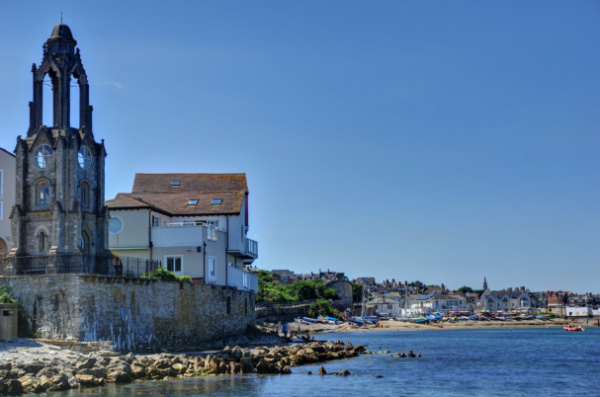
The Wellington Clock Tower (left), pictured in Swanage in 2012. PICTURE: Neil Alexander McKee (licensed under CC BY-NC 2.0)

Now situated on the seafront of the town of Swanage in Dorset, the Wellington Clock Tower was originally located at the southern end of London Bridge.

The tower was erected in 1854 as a memorial to the Duke of Wellington, Arthur Wellesley, who had died two years earlier.

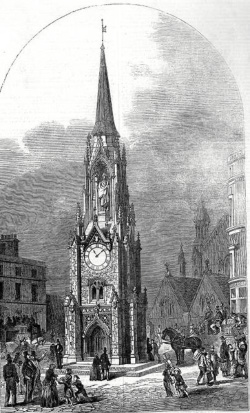
The then proposed Wellington Clock
Tower depicted in the London Illustrated
News in June, 1854

Its construction was funded through public subscription and contributions of railway companies with the support of the Commissioners for Lighting the West Division of Southwark. It was designed in the Perpendicular Gothic style by Arthur Ashpitel and, after the foundation stone was laid on 17th June, 1854, took six months to build.

The three level structure, which was topped with a tall spire, housed a clock with four faces. The clock was made by Bennett of Blackheath for the 1851 Great Exhibition but the constant rumbling of the carts passing its new location apparently meant the mechanism never kept good time.

There was also small telegraph office in the ground floor room of the tower. A statue of Wellington was intended to be placed within the open top level but funds apparently ran out before it could be commissioned and it never appeared (Wellington’s declining popularity at the time may have also been a factor).

The location of this rather splendid structure meant, however, that it was soon overshadowed by construction of nearby raised railway lines. When the Metropolitan Police condemned the tower as an obstruction to traffic, it was the final straw and having spent little more than a decade in position, the decision was made to demolish the tower.

It was taken down in 1867 but rather than simply being scrapped, Swanage-based contractor George Burt had the building shipped in pieces – they apparently served as ballast during the journey – to his hometown in Dorset where he presented it as a gift to fellow contractor Thomas Docwra. Docwra had the tower reconstructed in a seafront location on the grounds of his property, The Grove, at Peveril Point.

The rebuilt tower lacked the original clock – its faces were replaced with round windows – and in 1904 the spire was also removed and replaced with a small cupola (there’s been various reasons suggested for this, including that the spire was damaged in a storm or because it was felt to be sacrilegious by the religious family which then owned the property).

The tower, which was granted a Grade II heritage listing in 1952, can still be seen on the Swanage waterfront today.

Exploring London’s 100 most popular posts of all time! – Numbers 62 and 61…

The next two entries in Exploring London’s 100 most popular posts countdown…

62. Lost London – London Bridge

61. Where’s London’s oldest…public toilets?

LondonLife – London Bridge under sunny skies…

PICTURE: Magda V/Unsplash

LondonLife – London Bridge from on high…

PICTURE: Harshil Gurka/Unsplash

Famous Londoners – Thomas Guy…

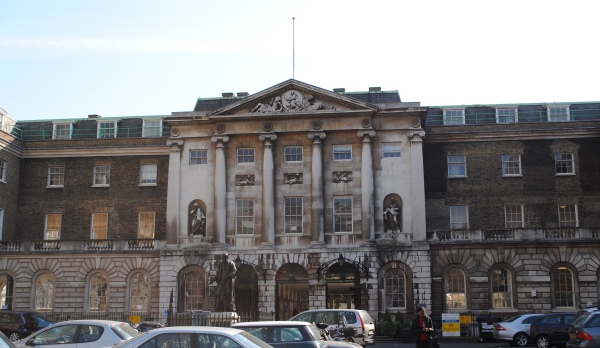
Bookseller and philanthropist, Thomas Guy’s memory is still preserved in the London hospital which still bears his name (pictured above).

Guy was born the son of Thomas Guy, Sr, a lighterman, carpenter and coalmonger (and Anabaptist) in Southwark, in about 1644. But his father died when he was just eight-years-old and his mother Anne moved the family to Tamworth, her home town, where he was educated at the local free grammar school.

In 1660, he returned to London where he was apprenticed to a bookseller in Cheapside. Eight years later (and having lived through the Great Plague and The Great Fire), his apprenticeship completed and now admitted as a freeman to Worshipful Company of Stationers, he opened his own bookstore on the corner of Cornhill and Lombard Street  in the City of London where he found success in selling illegal fine quality printed Bibles from what is now The Netherlands.

He went on to obtain a contract from Oxford University for the printing of Bibles, prayer books and other classical works – a move which saw his fortune begin to take off, so much so he apparently renamed his shop the ‘Oxford Arms’.

But Guy also became a noted investor and it was through doing so – particularly his success in investing in and then offloading shares in the booming South Sea Company (before it collapsed) – which, alongside his success as a publisher, helped to create his fortune.

He had a somewhat notorious reputation for frugality (there is a somewhat dubious story that he broke off an engagement with a maidservant following a dispute concerning some paving works she authorised without his permission) but is also known to have been a significant philanthropist.

His giving included funding upgrades to his former school in Tamworth as well the building of almshouses there in 1678. In fact, his connections with the town were still deep – he represented the town as its MP between 1675 to 1707 – he was so angry was he at his rejection in 1608 that he threatened to pull down the town hall and, later, in his will specifically deprived the inhabitants of Tamworth of use of the almshouses.

Guy had, meanwhile, refused the offer of taking up the post of Sheriff of London after he was elected, apparently because of the expense involved, and paid a fine instead.

He was appointed a governor of St Thomas’s Hospital in 1704 which he also funded the expansion of (using the money he’d made through his investment in the South Sea Company), building three new wards. Having obtained permission to build a hospital for “incurables” discharged from St Thomas’ Hospital, he began building his own hospital, Guy’s, near London Bridge in 1722.

Guy never married and died at his home in the City on 27th December, 1724. He laid in state in the Mercer’s Chapel before being buried in the crypt beneath the chapel at Guy’s Hospital (a fine monument by John Bacon now stands over the site).

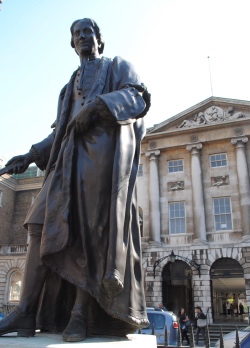
He left considerable bequeathments to various charitable organisations as well as to relatives but the bulk of his estate went to his hospital – which was now roofed – so that the works could be completed. The bronze statue outside the hospital, by Scheemakers, depicts guy in his livery.

PICTURE: David Adams

Treasures of London – The Southwark Needle…

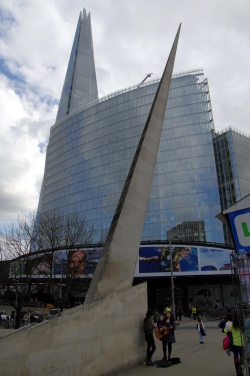
A 16 metre long splinter of stone sticking up in the air at the southern end of London Bridge, the Southwark Needle (its official name is actually the Southwark Gateway Needle) was erected in 1999.

Made of Portland stone and sitting on an angle of 19.5 degrees, it was designed by Eric Parry Architects as part of the Southwark Gateway Project which also included the creation of a new tourist information centre.

There’s been much speculation about what the pointed obelisk actually represents with some believing that the sharp spike is a kind of memorial to those whose heads were placed on spikes above the gateway which once stood at the southern end of London Bridge.

It seems, however, that the subject remembered in the monument is rather more mundane – it’s a marker and apparently points across the Thames the Magnus the Martyr church which marked the start of where London Bridge was formerly located (several metres to the east of the current bridge’s location). And for those trying to figure out how the needle points to that, word is that is the line of the base of the marker which points to the start of the old bridge – not the sharp end of the obelisk.

The needle is now commonly used as a meeting point.

PICTURE: Donald Judge (licensed under CC BY 2.0)

A Moment in London’s History – The opening of “new” London Bridge…

This month marks the 187 years since the opening of “new” London Bridge – the first bridge built over the Thames in London for more than 600 years.

Designed by John Rennie (who had won a competition, beating the likes of Thomas Telford for the honour), work on the new granite bridge had began in 1825 and was completed in 1831.

It was constructed alongside the medieval bridge which had been first completed in the 13th century and added to over the years since (and was eventually completely demolished after the opening of the ‘new’ bridge).

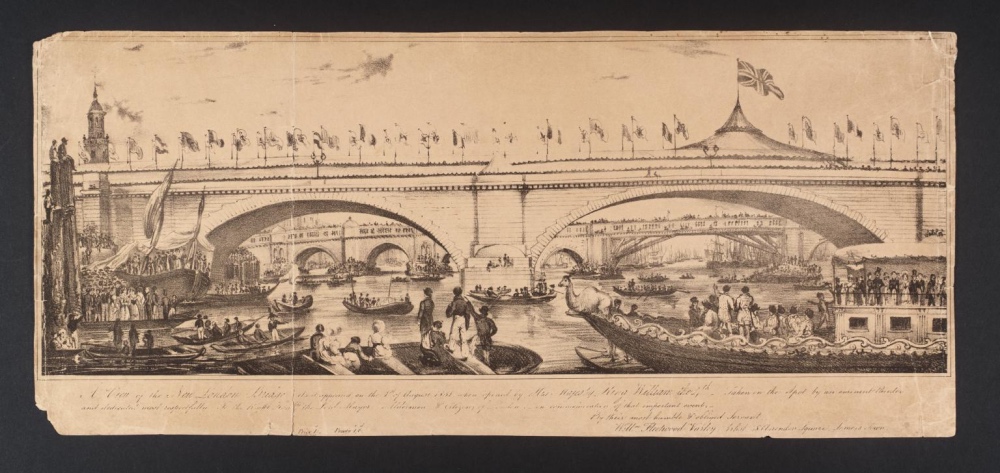
The ‘new’ bridge, said to have cost £506,000 to construct, was formally opened by King William IV on 1st August, 1831, in an event described by The Times as “the most splendid spectacle that has been witnessed on the Thames for many years”.

The royal party – which included Queen Adelaide – had approached the bridge, lined with flags for the occasion, after setting off from Somerset House amid cheering described as “almost deafening” (to add to cacophony of sound, church bells were rung and cannon fired throughout the day).

Watched by thousands of onlookers (who were entertained by bands at various locations), the royal party had processed their way downstream on the river to the bridge with the royal bargemen wearing new livery specially designed for the occasion. Two parallel lines of rivercraft – including barges and steamers – had gathered along the river to provide a sort of honour guard and ensure they had clear passage.

The royals arrived at the bridge at 4pm and the royal party made their way up red carpeted stairs to the bridge’s City end. Following a short ceremony in which the King was presented by the Lord Mayor of London with the sword and keys to the City of London as well as a specially made gold medal to mark the occasion, their Majesties then walked across from the across the bridge to the Southwark end where entertainments had included the ascension of a hot air balloon.

The King and the royal party then returned to the City end of the bridge to attend a banquet – guests were said to number 1,500 people – held under a pavilion erected atop the new structure.

The Gentleman’s Magazine reported that food was provided by a coffee house proprietor, a Mr Leech, and was said to include 150 hams and tongues, 370 “dishes of chickens”, and 300 turtles as well as 200 fruit tarts and 300 “ice-creams”.

The King and royal party then returned up the river.
Rennie’s bridge was replaced in the mid-20th century with another bridge which was officially opened by Queen Elizabeth II in 1973 and rather than being demolished, was sold to US oil magnate Robert P McCulloch who had it dismantled and shipped to Arizona where it was reconstructed at Lake Havasu City where it can now be seen.

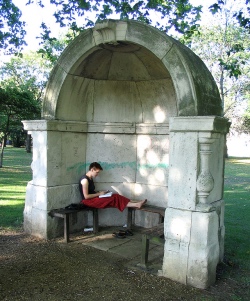
A couple of sections of the bridge survive in London – two of its pedestrian alcoves, one of which can be found in Victoria Park in London’s east and the other at King’s College London.

There is a famous painting – Clarkson Stanfield’s, The Opening of New London Bridge, 1 August 1831 – which captures the moment of the bridge’s opening and is part of the Royal Collection.

PICTURES: Top – ‘A View of the New London Bridge as It Appeared on the 1st August 1831, When Opened by His Majesty, King William the 4th’, Unknown artist, Lithograph on paper, Photo © Tate (licensed under CC-BY-NC-ND 3.0 (Unported)); Right – The alcove in Victoria Park (Public Domain).
10 of London’s modern icons…10. The Shard…


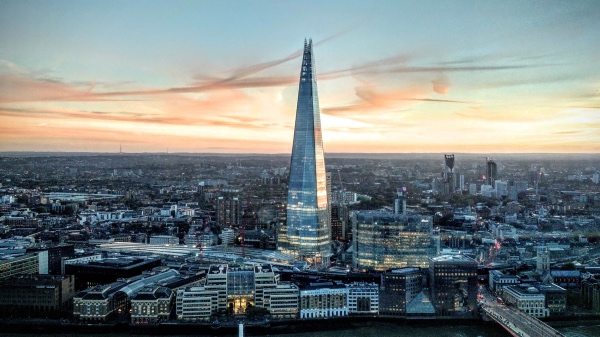
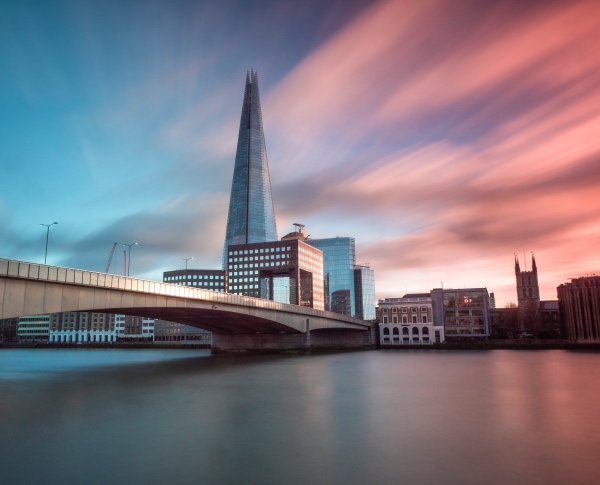
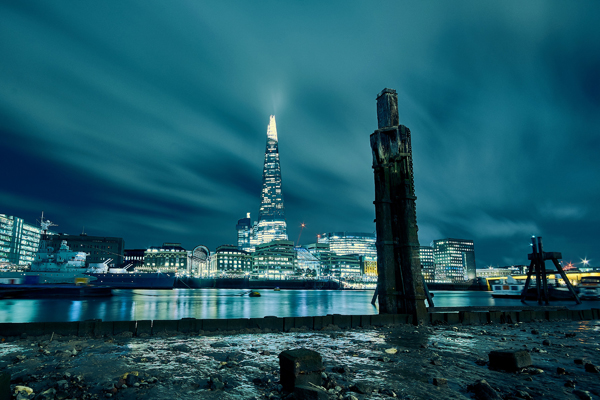
For the final in our series of modern icons of London, we’re looking at the tallest in London (and, at the time it was completed, the tallest in Europe) – the Shard.

Based in London Bridge, the 310 metre high skyscraper, was constructed between 2009 and mid-2012, and inaugurated by Qatar’s Prime Minister, Sheikh Hamad Bin Jassem Bin Jabor Al Thani, and Prince Andrew, the Duke of York, in July, 2012 – an event marked by a light and laser show (late that year, Prince Andrew abseiled down the building in a fund-raising effort for charity).

The observation deck of the building – originally known as London Bridge Tower and often referred to as The Shard of Glass – was opened to the public on 1st February, 2013, in an event overseen by the then Mayor of London, Boris Johnson.

Architect Renzo Piano’s lofty design for the building – first sketched out on the back of a napkin in a Berlin restaurant back in 2000 – was inspired by the London church spires and ship masts as seen in the work of 18th century Venetian painter Canaletto, to appear as a “spire-like sculpture emerging from the River Thames”.

It features eight sloping glass walls – the shards – with gaps or “fractures” between them to provide natural ventilation and a tapered structure to give the impression of lightness and transparency as it disappears into the clouds.

As well as office space, the building’s 72 habitable floors features shops, restaurants and bars, as well as a hotel – the Shangri-La, and apartments. News organisation Al Jazeera is also based in the building.

Located on floors 68, 69 and 72, the visitor attraction, The View from The Shard, offers panoramic views of up to 40 miles from an indoor viewing platform and the open air Skydeck (as well as the view, there are also virtual reality experiences available on the Skydeck for an additional cost).

The Shard – which attracted a million visitors in its first year alone – remained the tallest building in Europe until November, 2012, when it was surpassed by Moscow’s Mercury City Tower (it is still the tallest building in the European Union).

We’ll be kicking off a new special Wednesday series after Easter.

WHERE: The View from the Shard, Joiner Street (nearest Tube station is London Bridge); WHEN: Times vary, so check the website for details; COST: Pre-purchased timed and dated tickets range from £22.95 for adults/£16.95 for children aged four to 15 (check website for further details); WEBSITE: www.theviewfromtheshard.com.

PICTURES: Top: The Shard (Fred Mouniguet/Unsplash); Below – The Shard from the Thames (Matt Holland/Unsplash).


LondonLife – Across the Thames…

Across-the-Thames

Near London Bridge, looking over the Thames at The Shard. PICTURE: JJ Jordan/Unsplash