This Week in London – Kew’s Christmas light trail returns; ‘Time’ at the Old Royal Naval College; and, a royal Christmas shop…

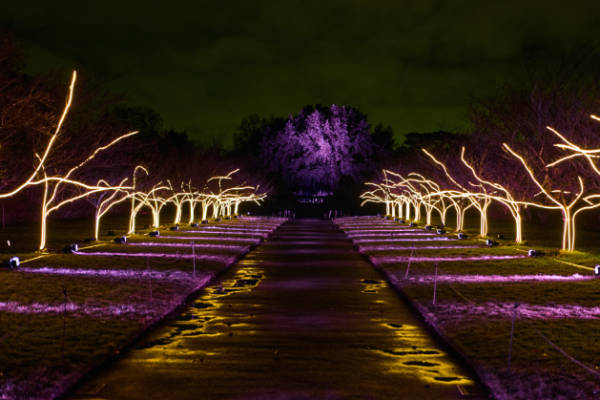
A scene from last year’s light show. PICTURE: James Carter-Johnson/iStockphoto

• Kew Garden’s famous light trail opens tomorrow and this year the three kilometres features eight new world premiere installations, interactive dance floors with giant headphones and, for the first time, the illumination of the Great Pagada. Christmas at Kew will also feature seasonal staples such as illuminated trees, a festive funfair and the ever-popular Christmas Cathedral. Among the new installations are Creative Culture’s Christmas Orchestra featuring festive music coordinated with lights and In Bloom, an installation by Netherlands’ multidisciplinary artist Wilhelmsusvlug said to evoke “delicate petals dancing through the air”. There will be a newly created projection at the Palm House while the Palm House Pond will feature a light display of 100 lillies and the trail concludes with a music and light show at the Temperate House. Runs until 4th January. Admission charge applies. For more, see www.kew.org/christmas.

Time, a sound and light show by Luxmuralis, has transformed the Old Royal Naval College after dark with an “unforgettable journey through history and science”. Visitors start in the Painted Hall where they’s see Peter Walker’s Connection & Identity illuminated after which they’ll move through the Ripley Tunnel, Queen Mary Undercroft and chapel before heading outside across the colonnades and into the courtyard. Runs until 22nd November. Admission charge applies. For more, see https://ornc.org/whats-on/time-by-luxmuralis/.

The Royal Shop in the Royal Mews at Buckingham Palace has been transformed into a Christmas pop-up shop for the first time. The Royal Mews Christmas Shop, which opens tomorrow, features a range of official royal gifts as well as food and drink from the Royal Collection Trust, a department of the Royal Household. Among the new offerings this year are mini 20cl bottles of gins infused with botanicals hand-picked from the grounds of royal residences including Buckingham Palace and Windsor Castle as well as a Property of the Royal Kitchen range of kitchen accessories, which takes its inspiration from the Great Kitchen at Windsor Castle, and wine accessories including crystal wine glasses, delicately etched with a pattern of knotted vines and grape leaves inspired by the Grand Punch Bowl, a majestic wine cistern in the Royal Collection known to have been used by Queen Victoria. To visit the shop online, head to www.royalcollectionshop.co.uk.

Send all items to exploringlondon@gmail.com
This Week in London – The story of Henry VIII’s lost dagger; ‘Secret Maps’ at the British Library; and, ‘Connection and Identity’ at Greenwich…

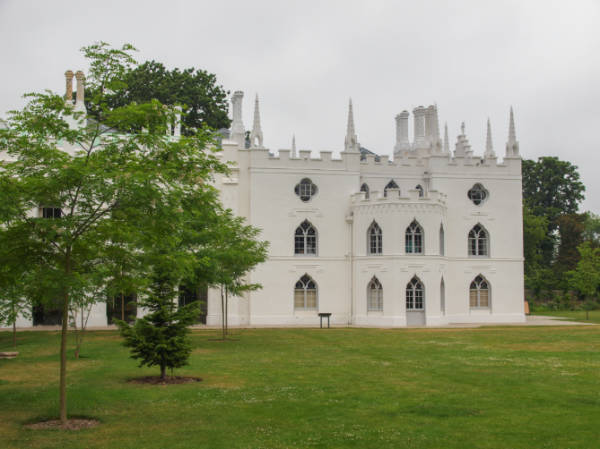
Strawberry Hill House. PICTURE: claudiodivizia/iStockphoto

• The disappearance of a jewelled Ottoman dagger which is believed to have once belonged to King Henry VIII has inspired a new exhibition at Strawberry Hill House, Horace Walpole’s former home in Twickenham in London’s west. Henry VIII’s Lost Dagger: From the Tudor Court to the Victorian Stage looks at the history of the 16th century dagger which, said to have been richly decorated with “a profusion of rubies and diamonds”, was once part of Horace Walpole’s collection. When the collection was sold in 1842, the dagger passed into ownership of the Shakespearean actor Charles John Kean who directed private theatricals for Queen Victoria at Windsor Castle. Kean (1811-1868) pioneered what critics dubbed “living museums” on the Victorian stage by using real artifacts, including the dagger, during performances. But after Kean’s death the dagger vanished without a trace. Dr Silvia Davoli, the principal curator at Strawberry Hill House, launched an investigation to find the dagger and instead found six almost identical daggers scattered around the globe. Two of these daggers – known as the Vienna and Welbeck Abbey examples – are featured in the exhibition alongside reproductions of 18th century materials which related to Walpole’s lost dagger from Yale University’s Lewis Walpole Library. The exhibition can be seen from Saturday until 16th February. Admission charge applies. For more, see www.strawberryhillhouse.org.uk.

The role maps have played in preserving secrets for the benefit of their creators from the 14th century to the present day is the subject of a new exhibition at the British Library. Secret Maps features more than 100 items ranging from hand-drawn naval charts given to Henry VIII to maps of cable networks used to intercept messages between the world wars; and the satellite tracking technology used by apps today. Among highlights are a map from 1596 attributed to Sir Walter Raleigh on an expedition in search of the mythical city of El Dorado in what is now Guyana in South America; a map produced in 1946 of British India (modern-day India, Pakistan and Bangladesh) with a ‘top secret’ report investigating the potential economic and military impact of partition for the proposed state of Pakistan; one of only two known existing copies of a secret map produced by Ordnance Survey during the General Strike of 1926 amid fears of a public uprising; and a 1927 Cable Map of the world which reveals a global network of censorship stations and was used by the British government to intercept messages sent via submarine and overland cables. Runs until 18th January (and accompanied by a programme of events). Admission charge applies. For more, see https://events.bl.uk/exhibitions/secretmaps.

Staffordshire-based artist Peter Walker’s large scale interactive artworks, Connection and Identity, can be seen in the Painted Hall at the Old Royal Naval College in Greenwich from Friday. Identity features eight columns suspended within the hall which shift in colour and light while Connection showcases “a dramatic and modern reinterpretation of Michelangelo’s Creation of Adam“. The installation, which is located in the hall sometimes described as “Britain’s Sistine Chapel”, is accompanied by music specially composed by David Harper. Runs until 25th January. Admission charge applies. For more, see https://ornc.org/whats-on/connection-and-identity/.

Send all items for inclusion to exploringlondon@gmail.com.

LondonLife – Screen characters set a new record in Greenwich…

It’s official, a new Guinness World Record was set in Greenwich on the weekend when some 874 people gathered at the Old Royal Naval College on Saturday dressed as their favourite characters from the big (and little) screen. The Old Royal Naval College team partnered with Elstree Studios for the event, part of the festivities being held to mark 100 years of film and TV at the site, which featured everyone from Stormtroopers to Jack Sparrow, Batman to characters from Bridgerton and Sherlock Holmes. The record, which was verified by Guinness, is officially known as the ‘largest gathering of people dressed as screen characters’.

This Week in London – New film tour at the Old Royal Naval College; beyond human design; the UK AIDS Memorial Quilt on display; and, the power of gardening…

PICTURE: Robert Bye/Unsplash

The Old Royal Naval College in Greenwich is celebrating at 100 years of film and TV at the site and mark the occasion, it’s launched a new film-related tour. The new tour – Wigs, Weddings, Powder and Palaces – looks at where productions such as BridgertonThe CrownPirates of the Caribbean and Les Misérables have been filmed and promises to explore some “closely guarded secrets of filmmaking” as well as letting those on the tour “step in the shoes and onto the set of stars”. The tour, which leaves from the Visitor Centre, also includes a fun and interactive 15-minute class of hand fan etiquette and its secret meanings inspired by the filming of Bridgerton. Charges apply. For bookings, head to https://ornc.org/whats-on/wigs-weddings-powder-and-palaces-film-tour/.

• A major exhibition exploring how design can help the planet thrive by shifting its focus beyond human needs has opened at the Design Museum. More Than Human – the first major exhibition from a growing movement of ‘more-than-human’ design, features more than 140 works by more than 50 artists, architects and designers. They include Japanese artist Shimabuku’s artworks created for octopuses, a new monumental seaweed installation by artist Julia Lohmann, a vast new tapestry that explores the perspectives of pollinators by Alexandra Daisy Ginsberg, and an eight metre long mural by MOTH (More Than Human Life Project) depicting the growing movement to award legal rights to waterways around the world. Runs until 5th October. Admission charges apply. For more, see https://designmuseum.org/exhibitions/more-than-human.

• The UK AIDS Memorial Quilt goes on display in the Tate Modern’s Turbine Hall today. Started around 1989, the work is made of 42 quilts and 23 individual panels which represent 384 people affected by HIV and AIDS. Volunteers from the UK AIDS Memorial Quilt Partnership will be present alongside the Tate’s staff to welcome visitors and on Saturday, at 11am and 2pm, the hall will host live readings of the names. Runs until 16th June. For more, see https://www.tate.org.uk/whats-on/tate-modern/uk-aids-memorial-quilt.

On Now: Unearthed: The Power of Gardening. This display at the British Library explores the “transformative, enriching and sometimes radical power” of gardening in the UK and the impact it’s had on the nation. Among the items on display is the only surviving illustrated collection of herbal remedies from Anglo-Saxon England (dating from around 1000–25), the first English gardening manual, Thomas Hill’s A Most Briefe and Pleasaunte Treatise (1563), the first mechanical lawnmower (1832), and gardening boots which once belonged to horticulturalist and designer Gertrude Jekyll (1843-1932). Runs until 10th August. Admission charge applies. For more, see https://events.bl.uk/exhibitions/unearthed-the-power-of-gardening.

Send all items for inclusion to exploringlondon@gmail.com
This week in London – Re-live the ‘Golden Age of Piracy’; getting below the surface of the Thames; a look inside East London houses through time; and, a new public garden in the City…

The Old Royal Naval College in Greenwich. PICTURE: Robert Bye/Unsplash

• ‘The Golden Age of Piracy’ will come to life in a living history weekend this Saturday and Sunday at the Old Royal Naval College in Greenwich. With the focus on the period between 1650 and 1720 (when more than 5,000 pirates were said to have been active), visitors will learn how to separate pirate fact from fiction, enjoy songs of the sea, witness sword and cutlass fights, and hear the tale of a real 18th-century mutiny. Each day culminates with a demonstration of the firepower of pirates and marines in the arena on the lawns overlooking the River Thames. There’s also the opportunity to wander through the pirate encampment and learn about the clothes and weapons of the period, listen to some love music and sample food from the Taste of History period kitchen. Runs from 11am to 4pm on Saturday and Sunday. Admission charge applies. For more, see https://ornc.org/whats-on/golden-age-of-piracy/.

The world of sound below the surface of the River Thames is the subject of a new contemporary art installation at the Natural History Museum which opens tomorrow. The River, composed by Norwegian sound artist Jana Winderen in collaboration with spatial audio expert Tony Myatt, uses underwater audio recordings to immerse visitors in a 360 degree audio composition which spans the river from the source by Kemble through central London and on to the sprawling estuary leading into the North Sea. The River is free to visit. Bookings, to ensure entry, can be made at https://www.nhm.ac.uk/visit.html.

One of the new rooms at the Museum of the Home – a Jewish tenement flat from 1913. PICTURE: Courtesy of the Museum of the Home.

Seven new and reimagined period rooms reflecting the stories of our East London community, past, present and future, have been unveiled at the Museum of the Home in Shoreditch. Thanks to the Real Rooms project, the expanded ‘Rooms Through Time: 1878-2049’ now includes a Jewish tenement flat from 1913, an Irish couple’s house in the 1950s, LGBTQ+ renters sharing an ex-council home in the 2005, a British-Vietnamese home in 2024, and the Innovo Room of the Future, which explores real homes amid challenges such as the climate crisis and technological advances. The scope of the existing 1870s Parlour and Front Room in 1976 have also both been expanded. Entry to the permanent display is free. For more, see https://www.museumofthehome.org.uk.

A new public garden has been opened at the intersection of Cheapside and New Change in the City of London. Formerly known as the Sunken Garden, the area has undergone a transformation and now features benches created from 150-year-old-plus granite stones salvaged from the Thames River Wall and recycled timber from fallen London Plane trees. There’s also new permeable paving which lets rain drain freely into the ground and stores it for trees to use later, reducing pressure on the sewer system while new plant species have been selected with local wildlife in mind.

Send all items for inclusion to exploringlondon@gmail.com.

This Week in London – Degas and Miss La La; World Oceans Day in Greenwich; and life at the Old Royal Naval College captured…

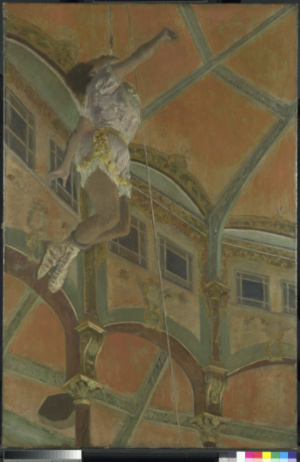
Hilaire-Germain-Edgar Degas,
‘Miss La La at the Cirque Fernando’ (1879) © The National Gallery, London

• Edgar Degas’ Miss La La at the Cirque Fernando (1879) takes centre stage in a new free exhibition at The National Gallery. Part of the free ‘Discover’ series of displays, Discover Degas & Miss La La takes a close look at the painting and reveals new information about the sitter, circus artist Miss La La, or Anna Albertine Olga Brown (1858‒1945). The display features new material, from rare, hitherto untraced drawings of her by Degas and entirely unpublished photographic portraits. In the Sunley Room until 1st September. For more, see www.nationalgallery.org.uk.

Daily life at the Old Royal Naval College has been captured in a series of photographic images now on show at the Greenwich institution. A Year in the Life: People and places of the Old Royal Naval College features 12 images snapped by award-winning photographer Hugh Fox over the past 12 months and includes some portraits of staff show alongside short interviews. Visitors are encouraged to bring their own headphones to better experience the audio-visual display in the Ripley Tunnel. Free to attend, the display can be seen until 1st September. For more, see https://ornc.org/whats-on/.

Send information for inclusion to exploringlondon@gmail.com.

This Week in London – A Greenwich chocolate house recreated; Bridgerton wig debuts at Kew; and, climate tech at the Science Museum…

• Happy Easter to all our readers! We’ll be taking a break over the next few days with our usual coverage returning next Tuesday.

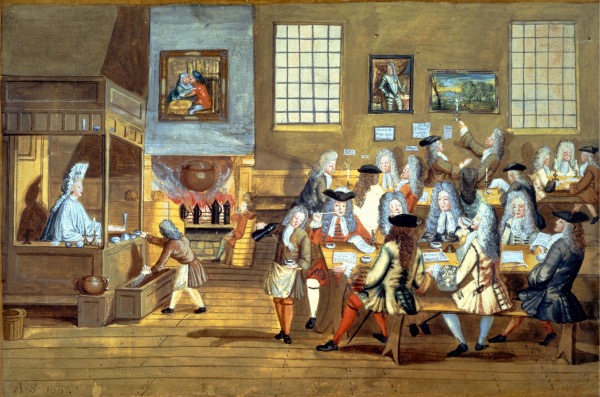
A caricature of Lloyd’s Coffee House from the 17th century.

Experience a recreation of Grace and Thomas Tosier’s famous ‘royal’ Chocolate House in Greenwich this Easter. Located in the Old Royal Naval College, Chocolate House Greenwich recreates the Tosier Chocolate House which was located in what became known as Chocolate Row, on the edge of Blackheath. A social space for the leading figures of the day, the chocolate house was run by Grace while her husband Thomas served as chocolate maker for King George I, running the chocolate kitchen at Hampton Court Palace. Visitors will be able to immerse themselves in the chocolate house via an audio and visual experience created by Unusual Expo and actor-writer Jonathan Coote. As well as meeting Grace, there is also the chance to listen in to luminaries such as architect and astronomer Sir Christopher Wren, writer and diarist John Evelyn, the first Astronomer Royal, John Flamsteed, and playwright and architect John Vanbrugh. A series of events will accompany the exhibition – which opens tomorrow – including an Easter Trail for families, a gin and chocolate tasting experience and a ‘Choc-o-Late’ event. Admission charge applies. Runs until 3rd November. For more, see https://ornc.org/whats-on/chocolate-house-greenwich/.

A wig worn by Golda Rosheuvel in Netflix’s hit series Queen Charlotte: A Bridgerton Story goes on display at Kew Palace from the end of this month. The grey wig with accompanying tiara will be showcased in Queen Charlotte’s dressing room, alongside a lock of the real Queen Charlotte’s hair. Visitors will also be able to join daily 30 minute Queen Charlotte: A Kew Palace story tours, walking in the footsteps of famous royals like King George III and Queen Charlotte. Admission charge applies. For more, see https://www.hrp.org.uk/kew-palace/.

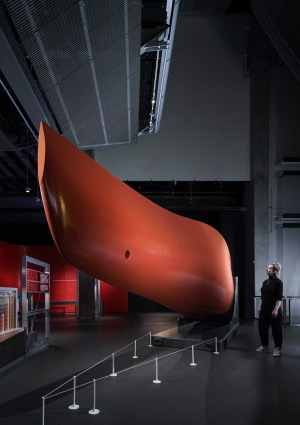
A visitor looks at a tidal turbine blade in Energy Revolution The Adani Green Energy Gallery at the Science Museum © Science Museum Group

A major new gallery examining the rapid energy transition and decarbonisation needed globally to limit climate change has opened at the Science Museum. The Energy Revolution: The Adani Green Energy Gallery is divided into three sections – Future Planet, Future Energy and Our Future – and highlights technologies and projects being used to address the climate crisis. Objects on show include a seven metre long tidal turbine blade made by Orbital Marine Power which was used in the Orkneys, rare surviving Edison tube mains cables used to power world’s first public electricity network in London in 1882, and a three metre high CoolAnt passive air-cooling facade from India that reduces dependence on powered air conditioning. At the centre of the gallery sits Only Breath, a kinetic sculpture created by artists Alexandra Carr and Colin Rennie from Torus Torus Studios that moves and blooms, stretching to around five metres in diameter when unfurled. The gallery can be found on Level 2 of the South Kensington museum. Admission is free. For more, see sciencemuseum.org.uk/energy-revolution.

Send all items to exploringlondon@gmail.

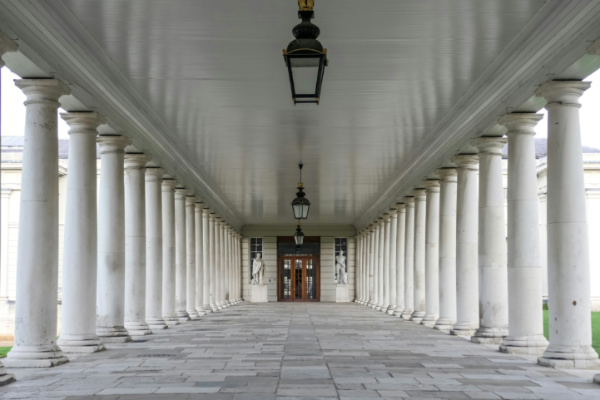
LondonLife – Greenwich colonnade…

PICTURE: Chikashi Miyamoto/Unsplash

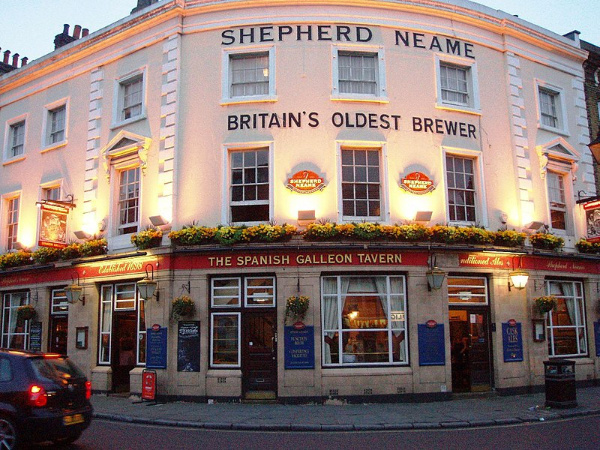
London Pub Signs – The Spanish Galleon…

PICTURE: Ewan Munro (licensed under CC BY-SA 2.0)

This early 19th century pub was built in the Regency style as part of a redevelopment of central Greenwich.

The redevelopment was undertaken by architect Joseph Kay in the 1830s while he served as clerk of works to what was then Greenwich Hospital (now known as the Old Royal Naval College).

Its name, one of a number of nautical names for pubs in the area, purportedly comes from the pictures of British naval victories at the hospital.

The pub received minor damage during the Blitz.

Located at 1 College Approach, the pub has been Grade II-listed since 1973. In 2012, the pub underwent a refurbishment.

Part of the Shepherd Neame chain. For more, see www.spanishgalleon.co.uk.

This Week in London – Newly restored ‘Nativity’ back on display for Christmas; Tutankhamun 100 years on; and, ‘Museum of the Moon’ at Greenwich…

Following a restoration, early Renaissance artist Piero Della Francesca’s The Nativity has gone on display in The National Gallery in time for Christmas. The painting, created circa 1470, had been in the possession of Piero’s family until it came to London in the 1860s. Then in a poor condition, it was acquired by The National Gallery in 1874. It has now been restored by the gallery’s senior restorer Jill Dunkerton with panel work by Britta New in a process which has shed new light on the painting. This includes the understanding that while it was previously framed and displayed as an altarpiece, instead the work is now believed to have been a very grand, domestic painting which Piero may even have painted for himself. To complement this new interpretation, the gallery has been able to acquire a carved walnut frame, of almost exactly the correct dimensions, date and probable origin. You can see a video of the conservation process below. For more, see www.nationalgallery.org.uk.

• Marking the 100th anniversary of the discovery of Tutankhamun’s tomb in Egypt in November, 1922, the British Museum has opened a new display looking at the way the ancient Egyptian pharaoh was viewed, both by his contemporaries and by people today. The free Asahi Shimbun Display Tutankhamun Reimagined features artwork by contemporary Egyptian graffiti artist Ahmed Nofal alongside a statue of Tutankhamun which was discovered before his tomb was even found. Accompanying the display is a trail through the Egyptian Sculpture Gallery (Room 4) in which visitors can learn more about Tutankhamun and his times. Can be seen until 29th January. For more, see www.britishmuseum.org.

Artist Luke Jerram – of Gaia fame – is returning to the Old Royal Naval College in Greenwich next week with his artwork Museum of the Moon. The large scale installation, which will hang in the Painted Hall, features NASA imagery of the lunar surface. Visitors are invited to lean back on daybeds to experience the installation which is accompanied by a surround sound composition by BAFTA-winning composer Dan Jones. Runs from Tuesday, 13th December, to 2nd February. Admission charge applies. For more, see https://ornc.org/whats-on/museum-of-the-moon/.

Send all items to exploringlondon@gmail.com.

This Week in London – 12 Days of Christmas at the Tower; Museum of London celebrates its London Wall closing; and, William Beatty at the Old Royal Naval College…

The Tower of London is getting into the festive spirit with a celebration of the Twelve Days of Christmas. Twelve installations have been installed at the Tower, each representing as different aspect of the fortress’s unique history – from nine wreaths representing “nine rowdy ravens” to five gold coins representing the Mint once housed there. There’s also the six Queens of King Henry VIII and three “lordly lions” – a reference to a gift presented to King Henry III and housed in a Lion Pit at the tower. Visitors will have the chance to collect a map at the start of their visit and follow a trail to find the installations at they explore the Tower. Christmas at the Tower of London runs daily until 3rd January. Admission charge applies. For more, see www.hrp.org.uk/tower-of-london/.

The Museum of London is preparing to close its doors at its London Wall site as it moves to its new location in Smithfield and to celebrate it’s holding two free weekend festivals. The first, to be held this weekend, will feature family-friendly activities including arts and crafts, dance, face painting and theatrical performances while the second, to be held on the weekend of 3rd and 4th December (after which the museum will close), will feature a celebration of London’s music scene from the 70s to the present day with a DJ sets, a late night film festival and museum’s first ever 24 hour opening. Visitors on both weekends can also take part in London Biggest Table Football competition for a chance to win an England shirt signed by Harry Kane and to see the museum’s collection in a new light thanks to an illuminated display. For more on the festivals, see www.museumoflondon.org.uk/museum-london.

Now On: Blood and Battle: Dissecting the life of William Beatty. The life and work of renowned 19th-century naval surgeon and physician, Sir William Beatty, is explored in this exhibition at the Old Royal Naval College in Greenwich. The display – which marks 200 years since Beatty, who had served as ship’s surgeon on HMS Victory during the Battle of Trafalgar (and who wore the musket ball that killed Nelson in a locket on his watch chain for the rest of his life afterwards) – took up the post of Physician to the Royal Hospital for Seamen – explores Beatty’s work as a ship’s surgeon, his time at Greenwich Hospital and how he was honoured by being knighted and appointed Physician Extraordinary to George IV and the Duke of Clarence (later William IV) as well as his outside interests including his involvement in developing the London – Greenwich Railway. Admission charge applies. For more, see https://ornc.org.

Send all items for inclusion to exploringlondon@gmail.com.

This Week in London – Marking the 500th anniversary of the Field of the Cloth of Gold; and, a new sculpture trail in Greenwich…

The 18 day meeting between King Henry VIII and King Francois I of France in 1520, known as the Field of the Cloth of Gold, is the subject of an exhibition at Hampton Court Palace. Gold and Glory: Henry VIII and the French King, which is being held to mark the 500th anniversary of the event (having been rescheduled from last year), is being held in rooms in Hampton Court Palace that were once used by the architect of the summit, Cardinal Thomas Wolsey, and features objects from the actual meeting as well as treasures from the courts of the two kings. They include the spectacular Stonyhurst vestments – woven from cloth of gold and chosen by Henry for use at the religious services held near Calais, Wolsey’s Book of Hours, and a unique tapestry which, manufactured in Tournai in the 1520s, depicts a bout of wrestling at the event with a black trumpeter shown among the brace of royal musicians. The display can be seen until 5th September. Admission charge applies. For more information and tickets – prebooking is essential, see www.hrp.org.uk/hampton-court-palace/.

A free sculpture trail, featuring works by artist Josie Spencer, has opened on the King William Lawns at the Old Royal Naval College in Greenwich. Fragments in Time features life-sized bodies captured in dramatic positions, including fractured figures, which demonstrate the beauty and resilience of the human spirit while highlighting the fragility of life. The artist says the works have been chosen from a group of pieces that treated the figures as if they were the “archaeology of our time found in another century, in the future, when those then looking at them can see the fragility of our life now”. The trail can be seen until 6th August.

Send all items for inclusion to exploringlondon@gmail.com.

This Week in London – Take One Picture images hit giant screens; Old Royal Naval College to reopen; and, women at the Jewish Museum…

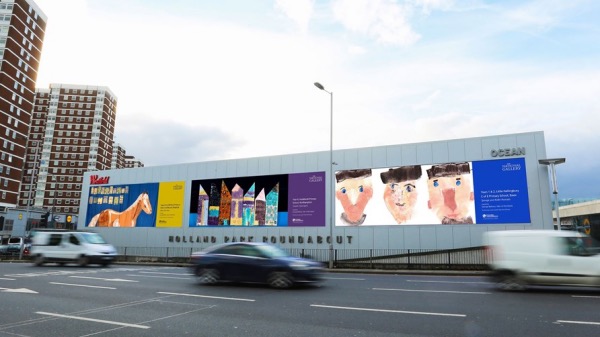
‘Take One Picture’ exhibition artwork displayed on Ocean Outdoor’s screen at Holland Park Roundabout, London. PICTURE: © The National Gallery, London

Artworks created by primary school children have taken centrestage on giant screens around the country including in London. The gallery’s 25th annual ‘Take One Picture’ exhibition, being run in partnership with Ocean Outdoor, sees the artworks appear on the large format screens until 15th March. Each year schools taking part in the initiative are invited to have students respond to a particular National Gallery collection work in creating their own works. This year’s focus painting is American painter George Bellows’ 1912 work Men of the Docks which depicts a group of longshoremen waiting to unload an ocean liner against the backdrop of a wintry river landscape in New York. For more, see www.nationalgallery.org.uk/take-one-picture.

The grounds of the Old Royal Naval College in Greenwich will be open from 12th April in line with government guidelines. Meanwhile, a route through the college grounds – along College Way via the East and West Gates – will continue to be open to pedestrians and cyclists between 7am and 7pm Monday to Friday and 8am and 4pm over the weekends.

The Jewish Museum has announced a new virtual tour focusing on the pioneering women whose stories are told in its collection. The tour, which will be delivered via Zoom on 8th March to mark International Women’s Day (as well as later dates), looks at the various ways women have contributed to Jewish history and culture in Britain over the centuries. Admission charge applies. For more, see https://jewishmuseum.org.uk/event/women-of-worth/.

Send all items for inclusion to exploringlondon@gmail.com.

This Week in London – ‘Artemisia’ at The National Gallery, ‘Black Greenwich Pensioners’, and, Bruce Nauman at the Tate…

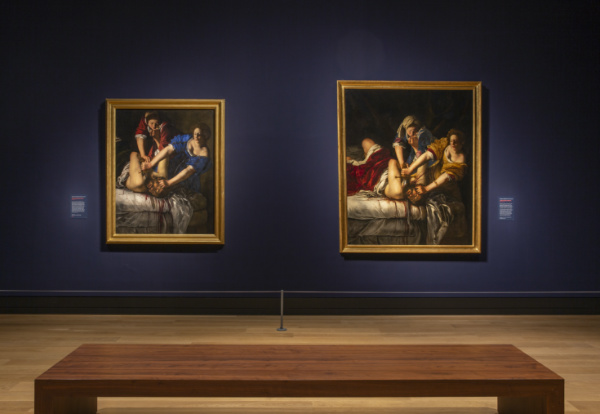
• The original transcript of the trial in which 17th century Italian artist Agostino Tassi faced charges of ‘deflowering’ female artist Artemisia Gentileschi will be public display for the first time as part of an exhibition on Gentileschi’s work opening at The National Gallery on Saturday. The rescheduled exhibition Artemisia, the first major monographic exhibition of Artemisia Gentileschi (1593–1654 or later), was inspired by the gallery’s recent acquisition of Self Portrait as Saint Catherine of Alexandria (about 1615–17), the first painting by the artist to enter a UK public collection. Gentileschi, the first women to gain membership of the artists’ academy in Florence, had a career spanning more than 40 years and is now widely recognised as one of the most gifted painters of the Italian Baroque period. Alongside her artistic achievements, elements of her biography have also attracted considerable attention including her rape as a young woman and the torture she choose to endure as part of the trial that followed (seen at the time as an accepted means by which testimony could be validated). As well as the trial transcript, written in Latin and Italian, the exhibition will include recently discovered personal letters and works such as two versions of Susannah and the Elders – one painted in 1610 when Gentileschi was just 17 and the other, her last known painting, dating from 1652. There’s also self portraits including Self Portrait as a Female Martyr (mid 1610s), and her two versions of Judith beheading Holofernes – one dating from 1612-13 and the other from 1613-14. Runs until 24th January. Admission charge applies. For more, see www.nationalgallery.org.uk. PICTURE: Installation view of Artemisia at the National Gallery. © The National Gallery, London.

The history of Black British mariners is the subject of a new exhibition opening at the Old Royal Naval College in Greenwich on Saturday. Marking Black History Month, Black Greenwich Pensioners explores the history of the Black Royal Navy personnel and how they formed one of Britain’s earliest Black communities when they became pensioners at the Royal Hospital for Seaman on the site where the Old Royal Naval College stands today. Through paintings, prints, photographs and a small selection of objects, the display looks at the role Black mariners played in British naval conflicts as well as the personal histories of prominent Greenwich pensioners including John Thomas, who escaped slavery and was later returned to enslavement in Barbados, John Simmonds, a Jamaican veteran of the 1805 Battle of Trafalgar whose descendants still reside in the UK, and Briton Hammon, author of the first slave narrative. Entry is free. Runs until 21st February in the mezzanine gallery at the Visitor Centre. For more, see https://ornc.org/uncovering-the-history-of-black-british-mariners/

The first exhibition to showcase the full spectrum of American artist Bruce Nauman’s work in more than 20 years opens at the Tate Modern on Wednesday. Bruce Nauman features more than 40 works and “unfolds” over a sequence of immersive installations. Highlights include a selection of early works such as Henry Moore Bound to Fail (1967/70) and A Cast of the Space Under My Chair (1965/68), the moving image installation MAPPING THE STUDIO II with color shift, flip, flop & flip/flop (Fat Chance John Cage) (2001), ground-breaking neon signs like The True Artist Helps the World by Revealing Mystic Truth (Window or Wall Sign) (1967), Human Nature Knows/Doesn’t Know (1983/86) and One Hundred Live and Die (1984) and large scale works such as Going Around the Corner Piece with Live and Taped Monitors (1970) and Double Steel Cage Piece (1974) as well as the whole-room installation, Shadow Puppets and Instructed Mime (1990). Runs until 21st February. Admission charge applies. For more, see www.tate.org.uk.

Send all items for inclusion to exploringlondon@gmail.com.

This Week in London – Rare Hebrew manuscripts at British Library; British Museum to reopen; and art at the Old Royal Naval College…

The launch of a new exhibition looking at Hebrew manuscripts marks the next phase of the British Library reopening. Hebrew Manuscripts: Journeys of the Written Word explores the history, culture and traditions of the Jewish people around the world and features rarely seen treasures including a letter to King Henry VIII written by an Italian rabbi in 1530 regarding Biblical laws that could support Henry VIII’s claim to annul his marriage to Catherine of Aragon as well as the earliest dated copy – 1380 – of Moses Maimonides’ Guide for the Perplexed, a rare uncensored copy of the Babylonian Talmud dating from the 13th century, and a 15th century illustrated copy of Abraham bar Hiyya’s Shape of the Earth, one of the first Jewish scientific works written in the Hebrew language. Also reopening is the library’s free permanent gallery – the Sir John Ritblat Gallery: Treasures of the British Library – with a new one-way route taking in treasures including Leonardo da Vinci’s sketchbooks and handwritten manuscripts by the Brontë sisters, Virginia Woolf and Sylvia Plath. For more on the exhibition and the library’s reopening, see www.bl.uk. PICTURE: David Jensen.

The British Museum reopens to visitors from today after the longest closure in its 261 year history. Tickets must be pre-booked online or over the phone and visitors will be able to access the ground floor galleries through a new one-way route. The museum has also announced that Grayson Perry’s work, The Tomb of the Unknown Craftsman – an elaborate, cast-iron coffin-ship originally created for his British Museum exhibition of the same name in 2011 – is returning to the museum. For more, see www.britishmuseum.org.

A “celestial choir of spinning sound machines” can be seen at the Old Royal Naval College in Greenwich this weekend. Positioned in Lower Grand Square, Chorus is the monumental work of award-winning artist and British Composer of the Year Ray Lee. It features a series of giant metal tripods supporting rotating arms, at the end of which are loudspeakers which emit finely turned musical pitches. It can be viewed from Friday through to Monday. Meanwhile, the Painted Hall is hosting Luke Jerram’s artwork Gaia which features NASA imagery in creating a virtual, 3D small scale Earth. Gaia can be seen from tomorrow until 6th September (admission charge applies).  For more, see www.ornc.org.

Send all items for inclusion to exploringlondon@gmail.com.

This Week in London – Kensington Palace reopens with Diana’s ‘Travolta dress’; institution reopenings; the Luna Cinema at Greenwich; and, ‘British Surrealism’ online…

Kensington Palace has reopened its doors today after four months of lockdown and, to celebrate, the famous “Travolta dress” worn by Princess Diana is going on show for the first time. Designed by Victor Edelstein, the midnight blue velvet gown became the focus of world attention in 1985 when the Princess wore it to a White House Gala during which she danced with actor John Travolta. Historic Royal Palaces acquired the dress at auction in 2019. The palace will feature a new one-way route as part of coronavirus social distancing measures. For more, see www.hrp.org.uk/kensington-palace/.

Other reopenings this week include: the Imperial War Museum, Churchill War Rooms, Wellington Arch, the Ranger’s House in Greenwich and the Jewel Tower in Westminster (Saturday, 1st July); the Royal Observatory in Greenwich (Monday, 3rd August); and, the Natural History Museum in South Kensington (Wednesday, 5th August).

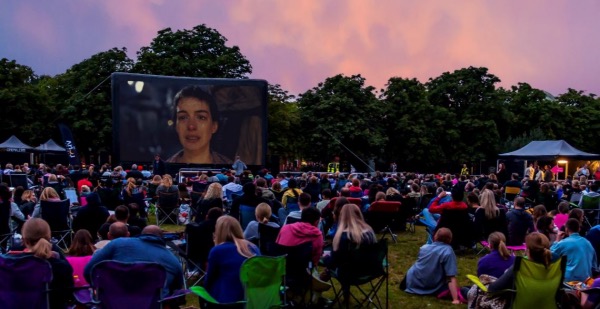
The Old Royal Naval College at Greenwich will host Luna Cinema’s open-air cinema from Tuesday 4th to Thursday, 6th August. Audiences will be able to sing and dance along to blockbuster hits RocketmanJudy and Dirty Dancing with the college as the backdrop. Meanwhile the Old Royal Naval College is launching new smartphone tours with the first, available for free on any smartphone using the Smartify app, a family tour aimed at those visiting with children aged five to 12 years. For more, see www.ornc.org.

The Dulwich Picture Gallery’s British Surrealism exhibition will be available for anyone to view online from Friday. The exhibition, which celebrates the British artists that contributed to the iconic surrealist movement, features more than 70 artworks from 42 artists, including Leonora Carrington, Francis Bacon, Henry Moore, Paul Nash, Ithell Colquhoun, and Conroy Maddox. For more, see www.dulwichpicturegallery.org.uk.

Send all items for inclusion to exploringlondon@gmail.com.

This Week in London – English Heritage sites online; and, The Painted Hall in virtual reality…

With historic properties and cultural institutions closed across London, we’re showcasing some of the online opportunities that are available to continue your explorations of the city…

London’s Eltham Palace and Kenwood House (pictured above) are among 29 English Heritage sites around the country which are being showcased on the Google Arts & Culture platform. English Heritage, which first announced the partnership with Google Arts & Culture, was the first heritage organisation and multi-site installation to do so and the Google site now contains a plethora of information and immersive experience about the English Heritage properties. To explore the site, head to https://artsandculture.google.com/project/english-heritage. And for those looking for more online experiences, the organisation is also pointing to its Stonehenge Skyscape site which allows visitors to experience a live sunrise over Stonehenge as well as see the journey of the stars and the moon from within the stone circle and learn about the monument’s design and how its builders may have understood their place in the cosmos. For more, see www.english-heritage.org.uk/skyscape/. PICTURE: It’s No Game (licensed under CC BY 2.0)

Reopened in 2019, The Painted Hall at the Old Royal Naval College in Greenwich following a two year conservation project. To celebrate the reopening – and the new life given to Sir James Thornhill’s 40,000 square feet of painted walls and ceilings – a virtual, 360 degree online tour was also launched so people could visit from the comfort of their own home. You can access the tour by following this link.

Send all items for inclusion to exploringlondon@gmail.com.

This Week in London – Greenwich’s Painted Hall reopens; ‘Christian Dior’ extended; and, merchant shipping explored…

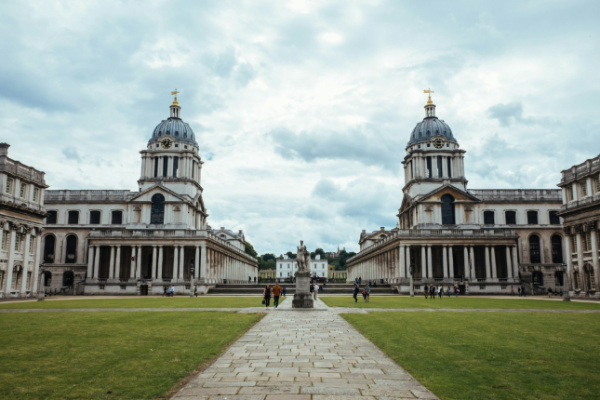
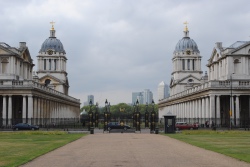
The Painted Hall in Greenwich’s Old Royal Naval College reopens on Saturday following a two-year, £8.5 million restoration project. The hall, known as the UK’s “Sistine Chapel”, was designed by Sir Christopher Wren as a ceremonial dining room for what was then the Royal Hospital for Seamen. Completed in 1705, its 4,000 square metre interior features a decorative scheme painted by Sir James Thornhill, the first British artist to be knighted, which took 19 years to complete. The paintings celebrate English naval power as well as the then newly installed Protestant monarchy with joint monarchs King William III and Queen Mary II as well as Queen Anne and King George I all represented in the artworks along with hundreds of other mythological, allegorical, historical and contemporary figures. The restoration project has also seen the King William Undercroft, located underneath the hall, converted into a new cafe, shop and interpretation gallery. Two cellar rooms from King Henry VIII’s palace – which once stood on the site – were discovered during the restoration works and are also now on public display. Other new touches include the return of a series of carved oak benches to the hall (having been introduced when it was used as an art gallery in the 19th century they were removed 100 years ago), two ‘treasure chests’ containing objects related to the ceiling artworks which can be handled, and new tour options – not just of the hall and undercroft but of the entire Old Royal Naval College site. There’s a host of special activities over the opening weekend, including a parade and official opening ceremony from 9.30am, the chance to meet historical characters, music, food stalls, kids activities and more. Admission charge applies. For more, see www.ornc.org. PICTURED: The Old Royal Naval College, home of the Painted Hall.

The V&A has announced it is extending its sell-out Christian Dior: Designer of Dreams exhibition due to unprecedented demand. The exhibition at the South Kensington museum, which had originally been scheduled to close on 14th July, will now run until 1st September with new tickets made available on 15th of each month (there’s also a limited number of tickets available to purchase daily at 10am from the V&A’s Grand Entrance on a first-come, first-served basis; V&A members, of course, attend free-of-charge with no need to book). The exhibition, which initially sold out of its five month run with 19 days of opening, is the most comprehensive exhibition ever staged in the UK on the House of Dior and the museum’s biggest fashion exhibition since Alexander McQueen: Savage Beauty in 2015. For more, see vam.ac.uk.

On Now: Merchant Navy Treasures: An Introduction to the Newall Dunn Collection. This display at the City of London’s Guildhall Library delves into the Newall Dunn Collection, one of the world’s most comprehensive photographic and reference collections on merchant shipping, and showcases the achievements of shipping historian Peter Newall and artist and writer Laurence Dunn. Alongside images, press releases and newspaper cuttings, on show are company brochures, menus and other items from the ocean liners and cargo vessels of three famous lines from the golden age of shipping: the Cunard, Orient and Union-Castle. Admission is free. Runs until 24th May. For more, follow this link.

Send all items for inclusion to exploringlondon@gmail.com.

This Week in London – ‘It’s beginning to look a lot like Christmas’…

Christmas is looming and that means Christmas themed events are kicking off all over the city. Here’s a sample of what’s happening:

The world famous Trafalgar Square Christmas Tree will be lit next Thursday – 7th December – in an event that kicks off at 6pm. The 25 metre high tree is an annual gift from the people of Norway as a thank you for Britain’s support during World War II. Christmas carols will kick off in the square on 11th December while the Mayor’s Christmas Carol Service will be held in Southwark Cathedral on 18th December. For more, see www.london.gov.uk/events.

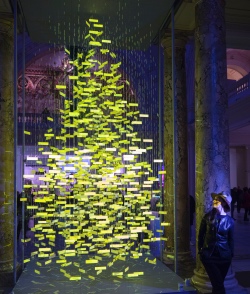
Sounds Like Christmas at the V&A. A month long musical celebration across the museum’s South Kensington and Museum of Childhood sites, it features choirs, candlelit concerts, pop-up performances, film screenings, decoration-making workshops, and special installations of objects relating to the music of Christmas, as well as, at the grand entrance to the South Kensington site, ‘The Singing Tree’ (pictured). A project conceived by leading stage designer Es Devlin, the tree features digital word projections that create a poem and comes with a layered polyphonic soundscape of human and machine-generated voices. The season runs until 6th January. For the full programme, see www.vam.ac.uk/Christmas. PICTURE: © Victoria and Albert Museum, London.

Greenwich Winter Time Festival. The inaugural festival, set in the grounds of the World Heritage-listed Old Royal Naval College, kicks off in December and features an alternative to the traditional seasonal market as well as a covered ice rink, entertainment including live music, theatre and children’s shows, and an “authentic” Father Christmas experience. Admission charge applies. Runs until 31st December. For more, see www.ornc.org.

Christmas at the Historic Royal Palaces. As well as its ice rink, Hampton Court Palace is hosting the BBC Good Food’s Festive Feast and a Christmas Music Weekend while at the Tower of London, visitors can once again skate in the dry moat, join in medieval Christmas festivities and enjoy a treat for their ears with the Noel Noel concert in the Chapel of St Peter ad Vincula. Kensington Palace, meanwhile, is hosting Christmas festivities under a Victorian theme with a 25 foot tall Christmas tree, a display of illuminated Victorian scenes, live music performances and family friendly events including ‘Under the Christmas Tree’, ‘Funtastic Sunday’, and ‘Tasty Talks’. Check website for dates – admission prices apply. See www.hrp.org.uk for more.

Meanwhile, the final release of New Year’s Eve tickets goes on sale tomorrow (Friday) from noon. People can buy up to four tickets, priced at £10 each to be among the 100,000 spectators lining the banks of the River Thames. Those without a ticket can still watch it live on BBC One. Head to www.london.gov.uk/nye for tickets.

Send all items for inclusion to exploringlondon@gmail.com.

LondonLife – Remains of Greenwich Palace unearthed…


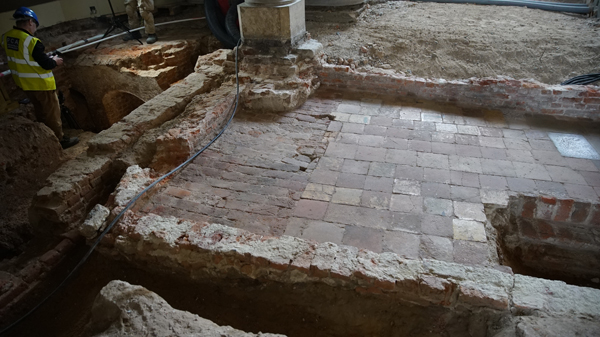
The remains of two rooms, which once formed part of the splendid Greenwich Palace – birthplace of King Henry VIII and his daughters Queen Mary I and Queen Elizabeth I, were discovered during works being undertaken ahead of the construction of a new visitor centre under the Old Royal Naval College’s famed Painted Hall, it was revealed last week.

The rooms, set well back from the river Thames, are believed to have formed part of the service range, believed to be the location of kitchens, a bakehouse, brewhouse and laundry.

As well as the discovery of a lead-glazed tiled floor, one of the rooms, which was clearly subterranean, featured a series of unusual niches where archaeologists believe may have been ‘bee boles’ – where ‘skeps’  (hive baskets) were stored during winter when the bee colonies were hibernating and where, when the bees were outside during summer, food and drink may have been stored to keep cool.

Discussions are reportedly now underway over the possibility of displaying the Tudor finds in situ. Duncan Wilson, chief executive of Historic England, hailed the find as “remarkable”.

“To find a trace of Greenwich Palace, arguably the most important of all the Tudor palaces, is hugely exciting,” he said. “The unusual and enigmatic nature of the structure has given us something to scratch our heads over and research, but it does seem to shine a light on a very poorly known function of the gardens and the royal bees. The most exciting aspect is that the Old Royal Naval College is able and willing to incorporate this into the new visitor centre, so everyone can see a small part of the palace, for the first time in hundreds of years.”

Greenwich Palace was built by King Henry V’s brother, Humphrey, Duke of Gloucester, in 1426 and rebuilt by King Henry VII between about 1500 and 1506.

Substantially demolished at the end of the 17th century (and with plans to build a new Stuart palace on the site never realised), it was replaced with the Greenwich Hospital which became the Royal Naval College designed by Sir Christopher Wren and Nicholas Hawksmoor between 1692 and 1728.

The Painted Hall, located in the Old Royal Naval College, is currently undergoing an 18 month transformation which includes the creation of a new visitor centre, Sackler Gallery and café. Visitors to the hall currently have the unique opportunity to get up close to the famous ceiling of the hall, described as the “Sistine Chapel of the UK”, on special tours. Visit www.ornc.org/painted-hall-ceiling-tours-tickets for more.

PICTURES: © Old Royal Naval College