This Week in London – Dick Whittington explored at the Guildhall Library; Francis Bacon’s portraits; and, the 60th Photographer of the Year competition…

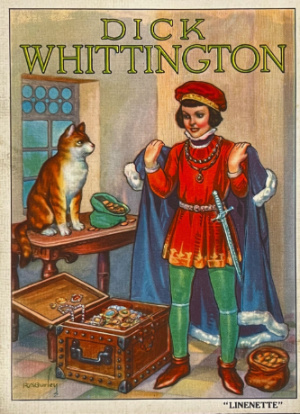
PICTURE: Courtesy of the City of London Corporation

A new exhibition exploring the life of one of the City of London’s most famous Lord Mayors has opened at the City of London’s Guildhall Library. Marking the library’s 600th anniversary, Whittington, the Man, the Myth and the Cat uses chapbooks (small printed booklets used for street literature in early modern Europe), children’s books, and works relating to pantomimes, to investigate Whittington’s story (including the question of whether or not he owned a cat). The exhibition details Whittington’s “rags to riches” tale and the many myths that later grew up around him, revealing information about his many loans to to kings (Richard II, Henry IV and Henry V), how he was three times Lord Mayor of London (1397, 1406 and 1419) and how he paid for the building of public lavatories at St Martin Vintry and a refuge for unmarried mothers at St Thomas’ Hospital as well as the rebuilding of Newgate Prison, and the establishment of the first library at Guildhall. Addressing the myth of the Whittington’s cat, it explains how it may have come about as a result of a play on words – ‘cat’ (or cattes) being a word used to describe a fleet of boats used for importing and exporting which was a mistranslation of the French word, ‘achat’, for trade. The exhibition, which runs until April next year, is free to visit. For more, see www.cityoflondon.gov.uk/services/libraries/guildhall-library.

The first exhibition in almost 20 years to focus on Francis Bacon’s portraits opened at the National Portrait Gallery, off Trafalgar Square, this week. Francis Bacon: Human Presence charts the artist’s career through 50 of his works arranged in five sections – ‘Portraits Emerge’, ‘Beyond Appearance’, ‘Painting from the Masters’, ‘Self Portraits’, and ‘Friends and Lovers’. Works on show include self-portraits as well as Head VI (1949), Study for a Pope I (1961), Three Studies for a Portrait of Isabel Rawsthorne (1965) and Portrait of a Man Walking Down Steps (1972). The exhibition also includes photographic portraits and film of Bacon by some of the century’s leading photographers, including Cecil Beaton, Arnold Newman, and Bill Brandt. Can be seen until 19th January. Admission charge applies. For more, see www.npg.org.uk.
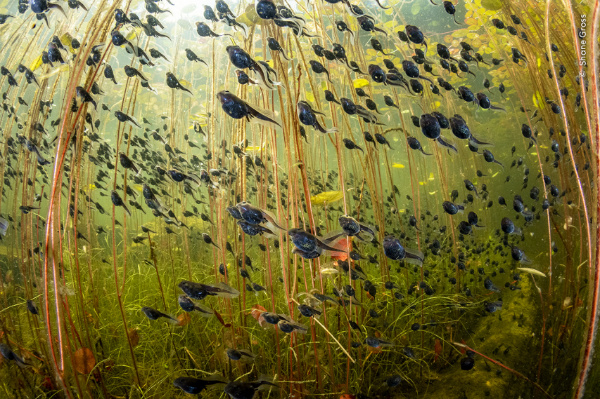
‘The Swarm of Life’ by Shane Gross, Canada, winner of the 60th Wildlife Photographer of the Year competition.

A Canadian marine conservation photojournalist, Shane Gross, has won this year’s Wildlife Photographer of the Year competition for an image capturing the magical underwater world of western toad tadpoles. The Swarm of Life is among 100 prize-winning images which are going on show at the Natural History Museum in South Kensington from tomorrow as it celebrates the 60th year of its Photographer of the Year competition. This year’s contest attracted a record-breaking 59,228 entries from 117 countries and territories. Among the other images on display are German Alexis Tinker-Tsavalas’ Life Under Dead Wood  depicting the fruiting bodies of slime mould with a tiny springtail (Tinker-Tsavalas won Young Wildlife Photographer of the Year). Wildlife Photographer of the Year is developed and produced by the Natural History Museum, London. The exhibition runs until 29th June. Admission charge applies. For more, see www.nhm.ac.uk/wpy.

Send all items for inclusion to exploringlondon@gmail.com
LondonLife – World War I remembered in St James’s Park…


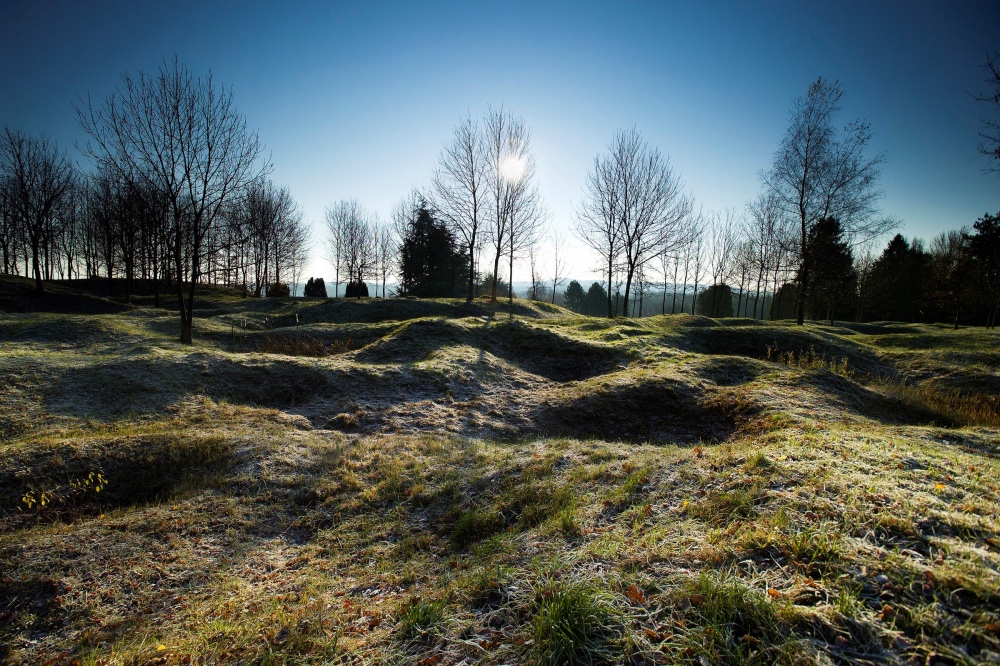
The last in a series of major exhibitions on World War I by celebrated photographer Mike St Maur Sheil, Fields of Battle, Lands of Peace and Reconciliation – 2018 is a free outdoor exhibition in St James’s Park reflecting on the final year of the war. The exhibition, like the others before it, features photographs of the battlefields of World War I as they appear today along with archival pictures and maps. Mike St Maur Sheil says the theme of his displays – which have reached an audience of more than 10 million and been exhibited at locations including Paris’ Jardin du Luxembourg, Dublin’s St Stephen’s Green and at the junction of Broadway and 5th Avenue in New York – “has always been that time and nature have healed the wounds of war and reveal that what were once places of horror and killing have now become landscapes of beauty and tranquillity.” The free exhibition can be seen until 19th November. For more on St James’s Park, see www.royalparks.org.uk/parks/st-jamess-parkPICTURES – Two of the images on show: Top, showing the effect of artillery bombardment upon the landscape at Verdun; Below, the landscape today at Beaumont Hamel on the Somme with the shell holes and trenches still clearly visible. (Mike St Maur Sheil / Mary Evans Picture Library).

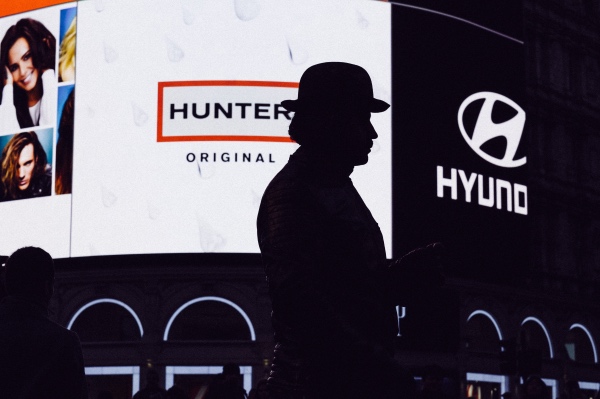
LondonLife – Lights at Piccadilly…

PICTURE: Clem Onojeghuo/Unsplash

LondonLife – Alley flurries…

PICTURE: Clever Visuals/Unsplash

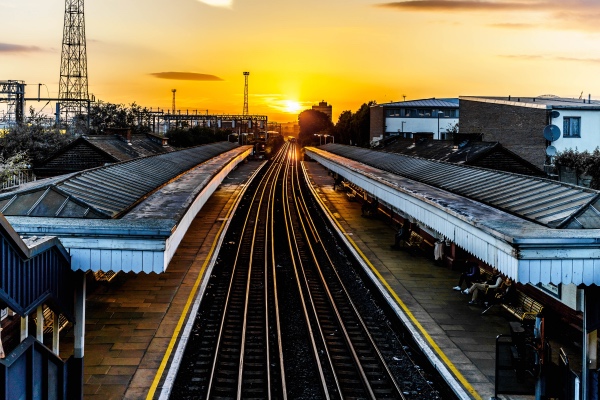
LondonLife – Waiting for the train…


PICTURE: Rene Böhmer/Unsplash

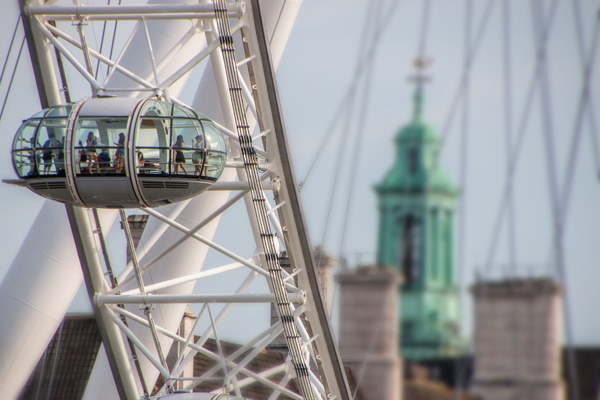
LondonLife – On board the London Eye…

PICTURE: designerpoint/Pixabay

Around London – New picture gallery at V&A; remembering the 5th of November; War Horse – the exhibition; and, celebrating Private Eye…

The Victoria and Albert Museum has opened a new permanent gallery displaying highlights from its internationally renowned collection of photographs in what amounts to a chronicle of the medium stretching from its invention in 1839 to the 1960s. The gallery, which opened in late October, initially features works such key figures as Henri Cartier Bresson, Man Ray, Alfred Stieglitz, Diane Arbus and Irving Penn. Among highlights are the oldest photograph in the V&A’s collection – a daguerrotype of Parliament Street taken from Trafalgar Square in 1839, a Robert Howlett portrait of Isambard Kingdom Brunel standing in front of the Great Eastern, and an early botanical photography taken without a camera in 1854. The display also includes two “in focus” sections, looking at the lives of two photographers – initially British photographer Julia Margaret and the influential Henri Cartier-Bresson – in depth. The V&A was the first museum to start collecting photographs when it did so in 1856. Entry is free. For more, see www.vam.ac.uk.

• Remember, remember, the 5th of November! This weekend is Bonfire Night (aka Guy Fawkes Night) and across London communities will be gathering around bonfires to gasp at fireworks displays. We don’t have the capacity to collect all the details of where they’re taking place but thankfully the people at View London do. Follow this link to see its listing of where fireworks displays are taking place. To see our previous entry looking at the origins of the night, follow this link. For more on the Gunpowder Plot, see our previous entry here.

• On Now – War Hose: Fact & Fiction. A book, a long running stage performance and a soon to be released film, War Horse is now also the subject of a major exhibition at the National Army Museum. War Hose: Fact & Fiction is a family-friendly exhibition which tells the real-life story of horses in war and includes archive material from the animal charity The Brooke, which was founded after Dorothy Brooke rescued some former war horses being sold into a life of hard labour in Cairo (Brooke, who rescued some 5,000 horses, went on to found the Old War Horse Memorial Hospital in Cairo in 1934). The exhibition also features content from Michael Morpurgo, author of the novel War Horse, as well as the National Theatre’s production and the upcoming Spielberg-directed movie. Entry is free. Runs until August 2012. For more, see www.nam.ac.uk.

On Now: Private Eye: The First 50 Years. A celebration of the irreverent Private Eye magazine which, since it was founded in October 1961, has distinguished itself through a combination of satire and hard-hitting journalism. The exhibition features more than 120 of the magazine’s funniest cartoons and a display of the magazine’s distinctive covers with one of from each year chosen by editor Ian Hislop. It also shows how surprisingly low-tech the magazine’s production remains despite great changes in technology, and there’s a recreation of the editor’s Soho office. Admission is free. Runs until 8th January. For more, see www.vam.ac.uk.