LondonLife – The Royal Menagerie

A new exhibition has opened at the Tower of London celebrating the Royal Menagerie which was located there for more than 600 years.

Over the years featuring everything from lions and leopards to elephants, camels, kangaroos and crocodiles, the menagerie was founded at the Tower of London during the reign of King John (1199-1216), although as far back as the reign of King Henry I (1100-1135) animals were being presented to the king as gifts. Some notable early animals included a ‘white bear’ believed to be a polar bear from Norway and an African elephant, a gift of King Louis IX of France, both of which were presented to King Henry III.

While the early location of the menagerie – which had a long history of attracting curious sightseers – remains unknown, during the rein of King Edward III (1327-1377) there is reference to it being in a position near the Middle Tower (now the main entrance to the Tower) which suggests it was then already located in what became known as the Lion Tower – a now ruined barbican built by King Edward I in 1276-77.

Animal accommodations in the Lion Tower were substantially upgraded during the reign of King James I (1603-1625) – James was noted to have enjoyed watching the lions fight other animals in the tower’s exercise yard). Further upgrades were made under the watchful eye of Sir Christopher Wren, then Surveyor of the King’s Works, between 1672 and 1675.

The office of the menagerie’s ‘keeper’, meanwhile, had been  formalised in the 1400s with the title awarded for life – it was subsequently held by some important officials.

While in 1687 some of the beasts and birds were transferred to new accommodations at St James’s Park, the menagerie remained at the Tower until 1830 when, following the death of King George IV, the decision to move the animals – then said to number 150 – to the recently founded Zoological Society of London’s zoo at Regent’s Park. Initially only some animals were sold to the zoo but by the end of 1835 the menagerie had been completely emptied with many of the remaining animals apparently sold to an American ‘showman’ Benjamin Franklin Brown who exported them to the US.

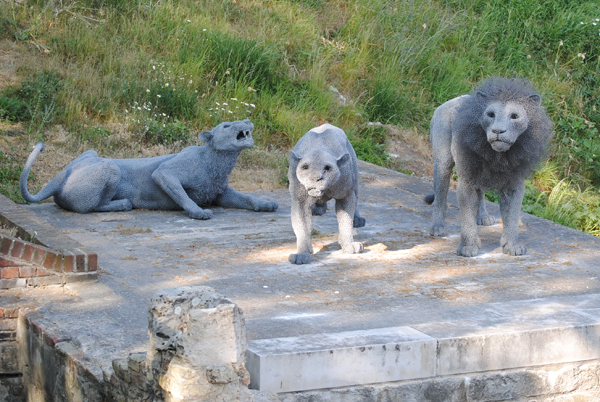
The new exhibition, Royal Beasts, is housed in the newly opened Brick Tower (entry via the Martin Tower, itself entered via the wall walk), and gives visitors views from a hitherto closed-off part of the north wall. There are also a series of life-size sculptures of various animals (see the three lions pictured), created by artist Kendra Haste, located around the tower. And, to gain a feel for how the menagerie was viewed during different eras, you can watch the short live action show featuring some of the “rarees” and “curiosities” which were housed within the tower (check with staff for times).

For more on the menagerie’s history, see Geoffrey Parnell’s guide, ‘The Royal Menagerie at the Tower of London’, available for sale at the Tower (£3.99).

WHERE: ‘Royal Beasts’, Tower of London (nearest tube station Tower Hill); WHEN: 9am to 5.30pm, Tuesday to Saturday, 10am to 5.30pm Sunday to Monday (until 31st October); COST: Included in Tower of London admission – £19.80 adults; £10.45 children under 15; £17.05 concessions; £55 for a family (prices include a voluntary donation); WEBSITE: www.hrp.org.uk/toweroflondon/.

10 sites in London you may not know about – 9. Regent’s Canal

Opened in 1820 as a link between the Grand Junction Canal and the London docks in the east, Regent’s Canal remains a terrific way to see another, oft forgotten (at least in visitor terms), part of the city.

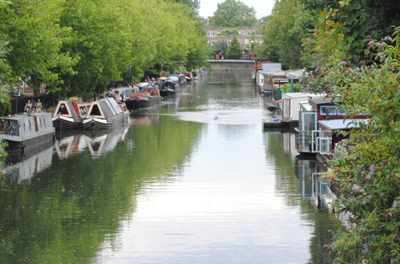
Once at the heart of London’s goods transportation system, the canal is now a recreational and residential precinct. There’s a terrific tow path which runs between Camden Lock, home of great markets including terrific food, and the pool of Little Venice in Paddington – taking in Regent’s Park, canal-side mansions, and the London Zoo along the way.

If you don’t want to walk, you can take a boat trip (among those offering trips between Little Venice and Camden Lock are the London Waterbus Company and Jason’s Trip; for kayaking, see Thames River Adventures) along largely the same route (although the tow path takes you over the top of Maida Hill while the boats head through a tunnel underneath).

John Nash, designer of Regent’s Park, was one of the proponents of the canal seeing it as nice addition to his park (he apparently originally wanted the route to run through the park but was convinced otherwise thanks to some fears over the language of those involved in steering boats along the canal).

He become one of the directors of the company which developed the canal following the passing of an act of parliament in 1812. It was named for the then Prince Regent, later King George IV.

You can find out more about the history of the canal at the London Canal Museum, located further to the east on the Regent’s Canal between St Pancras Lock and the Islington Tunnel.

WHERE: While the canal runs to the docks, the journey from Camden Lock to Little Venice is a walk of around 5 kilometres. Nearest tube stations are Warwick Avenue at the Little Venice end and Camden Town at the Camden Lock end; WHEN: Daily, tow path is open from dawn to dusk between Camden Lock and Little Venice (see the boating company websites for trip times); COST: The tow path is free, one way trips on boats between Little Venice and Camden Lock start at around £6.50WEBSITE: For more on the history of the Regent’s Canal, see www.canalmuseum.org.uk/history/regents.htm.