This Week in London – Wildlife Photographer of the Year exhibition; 20th century conflicts; Jennie Baptiste at Somerset House; and Nigerian Modernism…

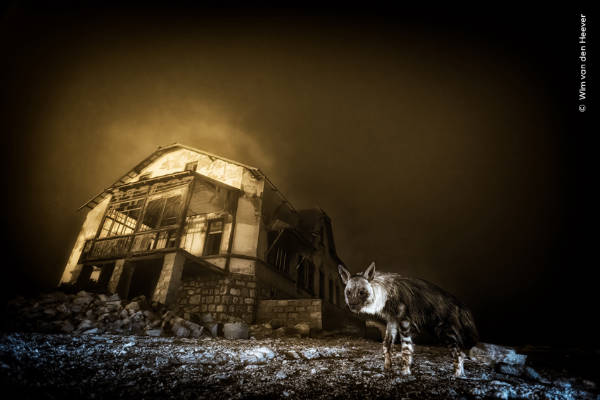
Wim van den Heever’s winning entry, Ghost Town Visitor.

An exhibition of entries into the annual Wildlife Photographer of the Year competition opens tomorrow at the National History Museum in South Kensington. The exhibition features 100 images selected from a record-breaking 60,636 entries and follows from this week’s announcement of the winners at a ceremony held at the museum earlier this week. The display includes the winning image – ‘Ghost Town Visitor’ which, captured by South African wildlife photographer Wim van den Heever depicts a brown hyena near the ruins of a long-abandoned diamond mining town in Kolmanskop, Namibia – as well as the winner of the Young Wildlife Photographer of the Year 2025 – 17-year-old Italian Andrea Dominizi’s After the Destruction which spotlights a longhorn beetle in the Lepini Mountains of central Italy, an area once logged for old beech trees, with a background of abandoned machinery. Other images on show include the winner of the Impact Award – Brazilian photographer, Fernando Faciole’s Orphan of the Road depicting an orphaned giant anteater pup following its caregiver after an evening feed at a rehabilitation centre – as well as category winners. The exhibition can be seen until 12th July next year. Admission charge applies. For more, head here.

Three 20th century conflicts which broke out in Malaya, Kenya and Cyprus after World War II are the subject of a new exhibition at the Imperial War Museum in Lambeth. Emergency Exits: The Fight for Independence in Malaya, Kenya and Cyprus looks at how these three conflicts, known as “emergencies” to the British Government, shaped and continues to shape Britain, its former territories and the wider world today. The display includes more than 70 objects such as propaganda posters, flags and artworks as well as oral histories and personal belongings which belonged to those impacted by them. As well as telling the stories of the three conflicts, Emergency Exits also explores Operation Legacy, the British Government’s attempt to prevent publication of sensitive documents related to the conflicts which included evidence of human rights abuses. The free exhibition, which opens on Friday, runs until 26th March. For more, see iwm.org.uk/events/emergency-exits-the-fight-for-independence-in-malaya-kenya-and-cyprus.

The first major solo exhibition focusing on the work of pioneering Black British photographer Jennie Baptiste opens in the Terrace Rooms at Somerset House on Friday. Jennie Baptiste: Rhythm & Roots, which is a highlights of Somerset House’s 25th birthday programme, charts how Baptiste used her lens to capture youth culture, music, fashion, and urban life within the Black British diaspora in London in the past few decades. The exhibition can be entered under a “pay what you can” model. Runs until 4th January. For more, see www.somersethouse.org.uk/whats-on/jennie-baptiste-rhythm-and-roots.
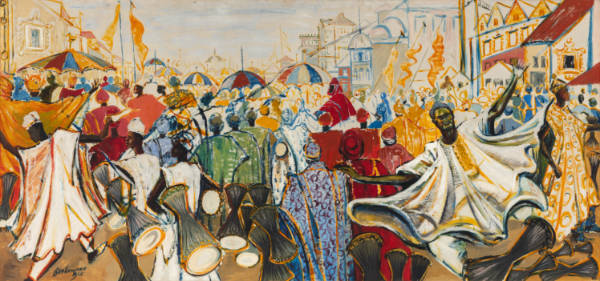
Ben Enwonwu, ‘The Durbar of Eid-ul-Fitr, Kano’, Nigeria 1955. © Ben Enwonwu Foundation. Private Collection

On Now: Nigerian Modernism. The Tate Modern is hosting the first UK exhibition to trace the development of modern art in Nigeria with more than 250 works by more than 50 artists on display. The exhibition, which spans the period from the 1940s to today, features works by globally celebrated artists of the 1940s, Ben Enwonwu and Ladi Kwali, as well as works by The Zaria Arts Society members Uche Okeke, Demas Nwoko, Yusuf Grillo, Bruce Onobrakpeya, and Jimo Akolo, Nsukka Art School members including Obiora Udechukwu, Tayo Adenaike and Ndidi Dike, and concludes with a spotlight on the work of Uzo Egonu. The display can be seen until 10th May. Admission charge applies. For more, see www.tate.org.uk/whats-on/tate-modern/nigerian-modernism.

Send all items for inclusion to exploringlondon@gmail.com.
This Week in London – Downton Abbey in London; new evening street market for Rupert Street; and, ‘Virtual Beauty’ at Somerset House…

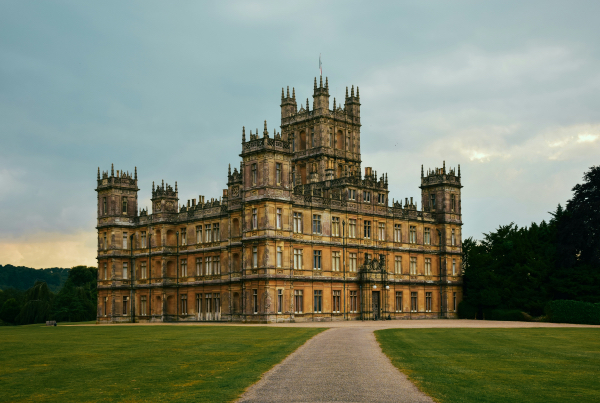
Highclere Castle in Hampshire which doubles as Downton Abbey in the TV series and movies. PICTURE: Tim Alex/Unsplash

Downton Abbey has popped up in London. With the final Downton Abbey movie, Downton Abbey: The Grand Finale next month, Bonhams auction house are auctioning off some iconic props, costumes and set pieces from across the series and is accompanying it with a preview exhibition which is open to the public. Among the items up for sale in Downton Abbey: The Auction are everything from a 1925 Sunbeam saloon car and various dresses and costumes including Lady Mary Crawley’s wedding dress (as worn by Michelle Dockery) to a George III oak dresser (seen in the Servant’s Hall in season 1), a silver pocket watch worn by Mr Carson (played by Jim Carter) and an autographed script from episode one, season one. The display can be seen at Bonham’s salesroom at 101 New Bond Street until 16th September. Admission is free but bookings are essential. For more head to https://www.eventbrite.co.uk/e/downton-abbey-the-auction-tickets-1555891024939

• A new evening market opens in Rupert Street, Soho, tomorrow night. The market – said to be the city’s first evening market – will be open from Mondays to Saturdays between 3pm and 10pm and will feature different themes on different days including artisan food on Wednesdays, world street food on Thursdays, vintage clothing on Fridays, and arts, crafts and jewellery on Saturday. Monday and Tuesday will be a general market. For more, see https://www.westminster.gov.uk/licensing/markets-and-street-trading/markets-westminster/rupert-street-w1.

On Now: Virtual Beauty. This exhibition at Somerset House explores the impact of digital culture and technologies on the traditional definitions of beauty today. It features the work of more than 20 artists with highlights including ORLAN’s Omniprésence (1993), a groundbreaking performance in which the artist live-streamed her own facial aesthetic surgery, and Amalia Ulman’s Excellences & Perfections, a powerful commentary on the authenticity of social media personas. There are also AI-generated portraits by Minnie Atairu, Ben Cullen Williams, and Isamaya Ffrench, and Harriet Davey, Frederik Heyman, and Andrew Thomas Huang explore digital self-expression and the creation of avatars beyond human boundaries. Not suitable for under 15s. Admission is pay what you can. Runs until 28th September. For more, see https://www.somersethouse.org.uk/whats-on/virtual-beauty.

Send all items to exploringlondon@gmail.com

This Week in London – Buckingham Palace to open East Wing; ‘Now Play This’ marks 10 years; Vaisakhi at Trafalgar Square; and, the warden’s private apartments opened at Walmer…

The East Wing of Buckingham Palace with the Central Balcony. PICTURE: Mike Marrah/Unsplash

• The East Wing of Buckingham Palace – including the room off which the famous central balcony sits – is being opened to the public for the first time this year as part of the annual summer opening. Tours will take visitors to locations including the Principal Corridor, where paintings by artists such as Thomas Gainsborough, Sir Thomas Lawrence and Franz Xaver Winterhalter are on display, as well as the Yellow Drawing Room, decorated with recently restored Chinese hand-painted wallpaper from the 18th century, where visitors will see two hexagonal, nine-tiered Chinese porcelain pagodas and the Kylin Clock. They’ll also see the Centre Room, which leads on to the balcony, where highlights include a newly restored glass chandelier shaped to resemble a lotus flower, and two Chinese 18th-century imperial silk wall hangingspresented to Queen Victoria by Guangxu, Emperor of China, for her Diamond Jubilee in 1897. A limited number of tours will run daily from 15th July and through August. Tours must be booked in addition to standard entry. Admission charge applies. For more, see https://www.rct.uk/event/the-state-rooms-and-east-wing-highlights-tour-07-2024.

Now Play This, London’s festival of innovative and experimental games marks its 10th anniversary as part of the city-wide London Games Festival from Saturday. The eight day event at Somerset House, this year running under the theme of ‘Liminal: Playing Between Worlds’, features games including Atuel (Matajuegos) which involves shapeshifting into animals within Argentina’s Atuel River Valley ecosystem and Proteus (Ed Key & David Kanaga) in which players explore unknown fantasy worlds as well as daytime events such as GOLF, a build-your-own mini-golf course, and evening events such as the Boring office party, a twist on the classic murder mystery. Admission charges apply. Runs until 14th April. For more, see https://nowplaythis.net.

Trafalgar Square will host celebrations for the Sikh festival of Vaisakhi this Saturday. From noon until 6pm, the celebration of Sikh and Punjabi culture and heritage will be co-hosted by DJ and presenter Tommy Sandhu and entrepreneur, disability specialist and speaker Shani Dhanda. Events include Kirtan performances, demonstrations of Gatka, a Sikh martial art and talks by expert chefs as well as turban tying, film screenings, sports with the Sikh Games, and Sikh artists displaying their work. There’s also a children’s marquee with free activities from Kiddie Sangat and free vegetarian treats and traditional Indian tea will be available over the course of the afternoon. For more, see www.london.gov.uk/vaisakhi.

Walmer Castle in Kent. PICTURE: Ben Garratt/Unsplash

Further Afield: The Lord Warden’s private apartment has opened to the public for the first time at Walmer Castle, the seaside retreat of the late Queen Elizabeth, The Queen Mother, in Kent. The private apartment is given to the Lord Warden of the Cinque Ports, a position the Queen Mother held between 1978 and 2002. Visitors are able to tour a selection of rooms in the apartment, including the sitting, dining and master bedroom, which were used by The Queen Mother, Lord Boyce and other 20th century Lord Wardens and their families. Among the private items on show are family photos of the Boyce family and artwork, including a selection of paintings from a private and much-treasured collection belonging to Sir Robert Menzies and which depict places connected with his political career, including his time as Prime Minister of Australia. The post of warden is currently vacant following the death of Lord Boyce in 2022. Some rooms in the castle are currently closed to allow for a major conservation project to take place, however visitors can still see Wellington’s bedroom and the famous Wellington boots. Admission charges apply. For more, see https://www.english-heritage.org.uk/walmer.

Send all items to exploringlondon@gmail.com.

LondonLife – Bamboo forest…

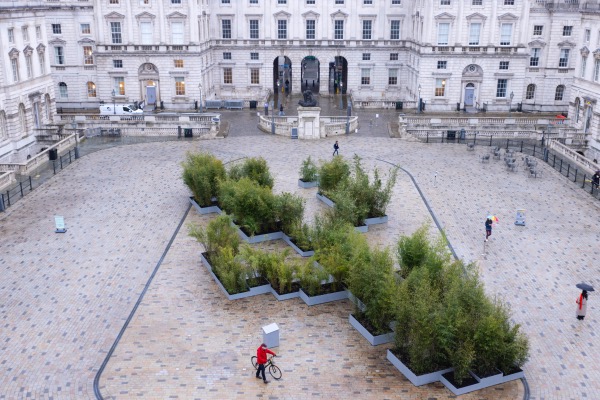
Hong Kong-based artist Zheng Bo’s new artwork, ‘Bamboo as Method’, situated in Somerset House’s courtyard. PICTURE:: David Parry/PA Wire

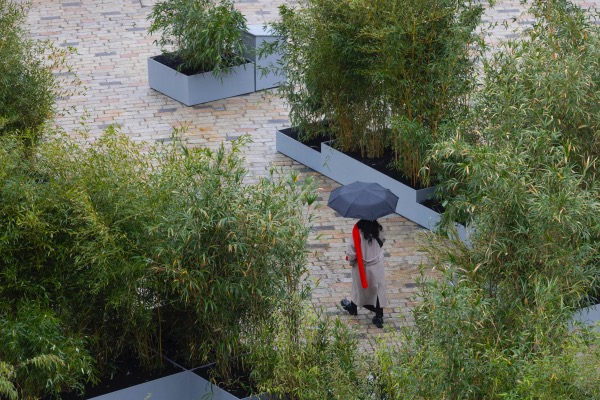
Located in the Edmond J Saffra courtyard at Somerset House is a forest of more than 300 bamboo plants. An art installation by Hong Kong-based artist Zheng Bo, Bamboo as Method invites visitors to take a moment out of their busy lives, immerse themselves in the garden and spend some time drawing. The installation features alcoves where visitors are encouraged to sketch some of the 10 different species of bamboo in the forest. They can also hear directly from the artist by scanning a QR code at the site. The artworks’s title pays homage to the late 15th century philosopher, Wang Yangming, who pursued enlightenment through the practice of gewu zhizhi – the acquisition of knowledge through the investigation of the nature of things. There’s an events programme accompanying the installation which is free to enter until 28th April. For more, see https://www.somersethouse.org.uk/whats-on/zheng-bo-bamboo-method.

PICTURE: David Parry/PA Wire

This Week in London – London Design Biennale; canal wildlife; a suffragette princess honoured; and, the ‘Polar Silk Road’ explored…

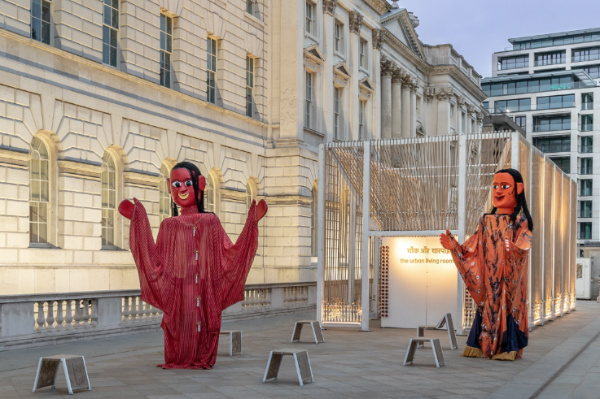
The Indian Pavilion at the London Design Biennale. PICTURE: Courtesy of London Design Biennale.

• The almost month-long London Design Biennale kicks off at Somerset House today under the theme of ‘The Global Game: Remapping Collaborations’. The fourth edition of the biennale is artistically directed by the Nieuwe Instituut – the Dutch national museum and institute for architecture, design and digital culture – and takes over the entirety of Somerset House. Among the exhibits is the India pavilion (pictured above) featuring a multi-sensory evocation of the essence of a contemporary Indian city chowk – an open market at the junction of streets – through the visual metaphor of a charpai – a traditional woven daybed, Malta’s large-scale ‘village-square’ installation that merges traditional city planning with the Phoenician-Maltese tradition of fabric production and dyeing of the multiple colours of Phoenician purple, the Ukrainian Pavilion which features am interior construction symbolising the country’s industrial, natural resource, and creative richness and a series of external projects which tell stories about new design collaborations in times of crisis for Ukraine and the vital role of design in creating new progressive connections. There’s also the chance to see the Ai-Da Robot, the world’s first humanoid robot artist, which will make history by showing her unique ability to design objects. Running alongside is the EUREKA exhibition which will share design-led innovation from leading research centres. Runs until 25th June. Admission charge applies. For more, see www.somersethouse.org.uk/whats-on/london-design-biennale-eureka-2023.

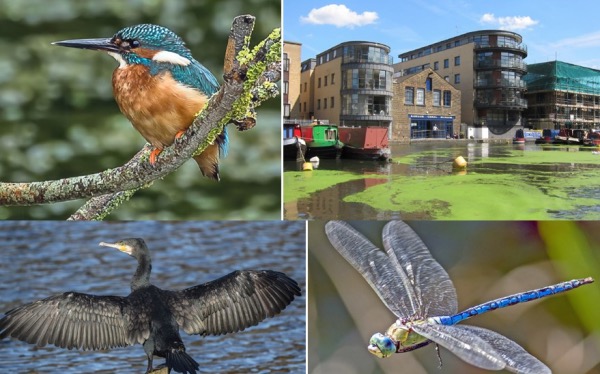
London canal wildlife. PICTURES: Courtesy of the London Canal Museum

A new exhibition highlighting the flora and fauna of London’s canals has opened at the London Canal Museum in King’s Cross. Many of the canals were derelict by the end of the 20th century but have received a new lease of life in recent times as leisure destinations. These days, they provide a “highway” for fauna including birds, fish and mammals to move in and out of the capital, some of which is showcased in this new display. Entry with general admission and for an extra fee, guided narrowboat trips along The Regent’s Canal are available on selected days. For more, see www.canalmuseum.org.uk.

Princess Sophia Duleep Singh, a suffragette, daughter of the last Maharajah of the Punjab, and god-daughter to Queen Victoria, has been commemorated with an English Heritage Blue Plaque. The plaque marks Faraday House in Hampton Court, granted to the princess and her sisters as a grace and favour apartment by Queen Victoria. Also known as ‘Apartment 41’, the property – which was named after scientist Michael Faraday – was home to Princess Sophia for more than 40 years and her base when she was campaigning for women’s suffrage. For more, see www.english-heritage.org.uk/visit/blue-plaques/.

North Warning System III, Tuktoyaktuk, Northwest Territories, Canada, 2020. PICTURE: © Gregor Sailer

• The ‘Polar Silk Road’ – a channel opened up thanks to melting Arctic Sea ice – is the subject of a new exhibition at the Natural History Museum. Gregor Sailer: The Polar Silk Road features 67 photographs taken by acclaimed Austrian artist and photographer Gregor Sailer showcasing manmade structures – from isolated research centres to Icelandic geothermal power stations – captured across four countries in the Arctic circle. There’s also a short film discussing the impacts of the climate crisis. The exhibition is free to visit. For more, see www.nhm.ac.uk/visit/exhibitions/the-polar-silk-road.html.

Send all items for inclusion to exploringlondon@gmail.com.

LondonLife – Somerset House goes for a ‘Whorl’…

‘Whorled (Here After Here After Here)’ by Jitish Kallat goes on display at Somerset House in London, as part of the Indian contemporary artist’s first major public UK commission, on Thursday 16th February, 2023. PICTURE: David Parry/PA Media.

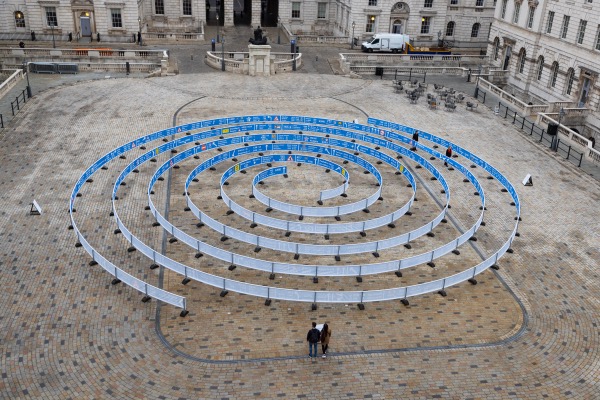
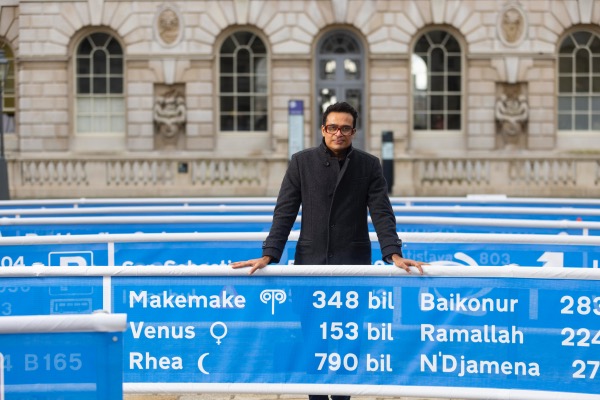
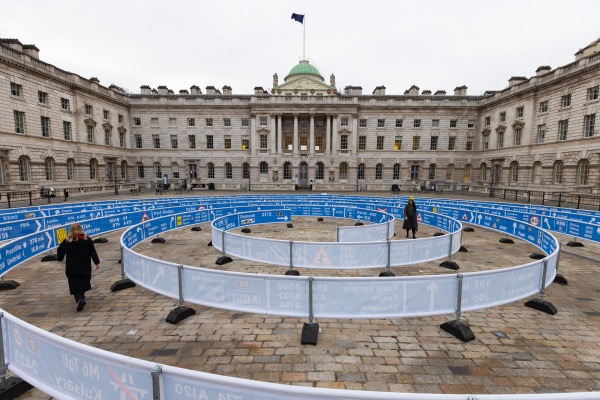
A new art installation – Jitish Kallat’s Whorled (Here After Here After Here) – has been unveiled at Somerset House. The work, located in the Edmond J Safra Fountain Court, is more than 30 metres in diameter and comprises two intersecting spirals that represent a “seismic ripple” or a galactic whorl which spirals outwards from the centre of the courtyard. The work, which draws upon sacred geometry and alchemical diagrams, features two 168 metre scrolls which follows the visual language of UK motorway signage. As visitors walk through the spirals, they are taken on a journey past signs indicating the distance from Somerset House to more than 300 locations across the planet and beyond including celestial bodies, such as the Moon, Mars, and distant stars in the Milky Way. The installation is free to see until 23rd April.

‘Whorled (Here After Here After Here)’artist Jitish Kallat. on Thursday 16th February, 2023. PICTURE: David Parry/PA Media
Whorled as seen on Thursday 16th February, 2023. PICTURE: David Parry/PA Media

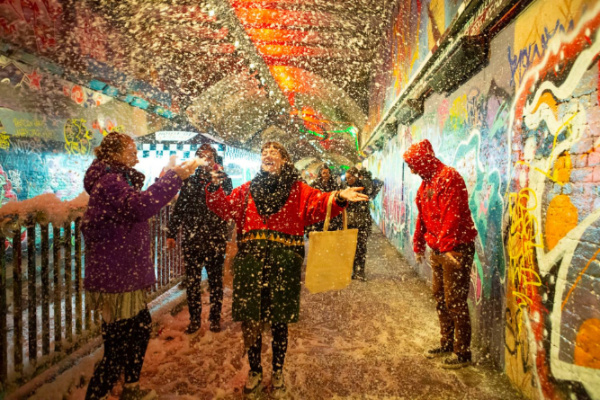
LondonLife – Christmas in London…

Ice skating at Somerset House. PICTURE: Owen Harvey
South Bank Winter Market. PICTURE: David Ogle
Part of the Miracle on Leake Street event in Waterloo. PICTURE: Leake Street
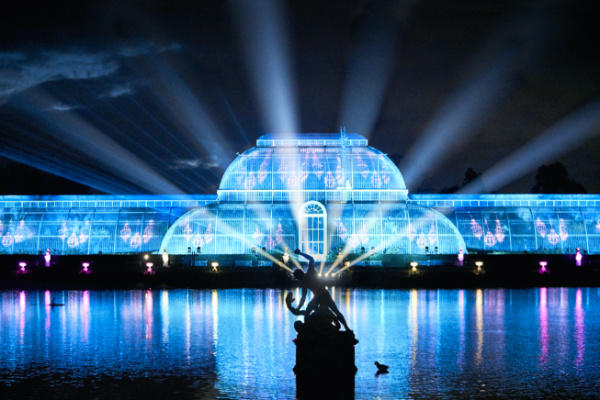
Christmas at Kew. PICTURE: Royal Botanic Gardens
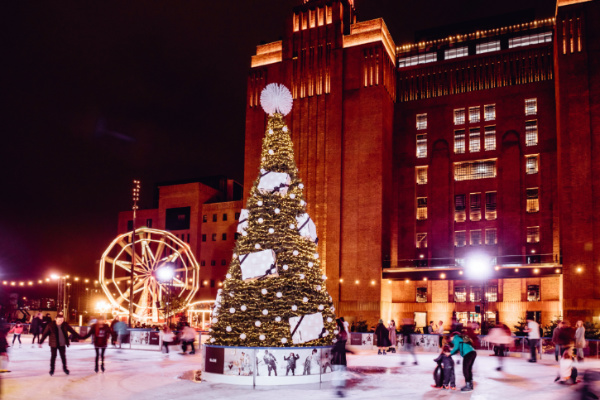
Glide at Battersea Power Station. PICTURE: Joshua Atkins

This Week in London – 10 years of Christmas at Kew; British and Chinese at the British Library; and, The Horror Show! at Somerset House…

Christmas returned to Kew this week with the launch of its 10th festive light trail. This year’s display features some past favourites as well as new light installations including Feathers by Pyrite Creative which features 16 floating UV feathers which sway in the breeze, LuminARTi’s Willow Hives which illuminate natural forms, and Illusion Hole by UxU Studio, a geometrically arranged pattern situated on the lake which presents visitors with an optical illusion in which water formed by light appears to flow into an unknown abyss. The popular Fire Garden has returned along with the Christmas Cathedral and a series of breath-taking projections dance across the surface of the Palm House and adjacent lake, set to a memorable soundtrack of much-loved Christmas classics. The display can be seen until 8th January. Admission charge applies. For more, see www.kew.org/christmas.

Frank Soo at the Victoria Ground, Stoke, 1933. PICTURE: The Sentinel & StokeonTrentLive

A free exhibition exploring British Chinese communities and culture opens at the British Library tomorrow. Chinese and British celebrates the lasting impact of Chinese communities in the UK and presents personal stories and artefacts. Highlights include a hand-drawn map of China by Shen Fuzong – the first recorded Chinese person to visit the UK in 1687, a detailed doll’s house model of a Chinese takeaway, Ling Shuhua’s 1953 autobiography, Ancient Melodies, which was dedicated to Virginia Woolf who offered advice on drafts of her memoir, a fan made of bamboo slats and paper from mulberry bark in Hangzhou and pair of hand-embroidered shoes belonging to Kathy Hall, a London-based practitioner of traditional Chinese opera. There’s also trench art produced by Chinese Labour Corps workers during World War I, cigarette cards featuring Frank Soo, the first player of Chinese origin to play in the English Football League, and Rosanna Lee’s 2022 film Parallel which follows a family during their weekly ritual of going out for dim sum at the Pearl Dragon restaurant in Southend-on-Sea. The exhibition can be seen until 23rd April. For more, see www.bl.uk.

On Now: The Horror Show!: A Twisted Tale of Modern Britain. This display at Somersert House, divided into three acts – ‘Monster’, ‘Ghost’ and ‘Witch’, explores how exploring how ideas rooted in horror have informed the last 50 years of creative rebellion, looking beyond horror as a genre and instead “taking it as a reaction and provocation to our most troubling times”. The display features more than 200 artworks and culturally significant objects including Chila Burman’s If There is No Struggle, There is no Progress – Uprising (1981), Derek Jarman’s last feature and magnum opus, Blue (1993), and a striking presentation of Turner Prize winning-artist Tai Shani’s The Neon Hieroglyph (2021). Admission charges apply. Runs until 19th February. For more, see somersethouse.org.uk. ​

Send all items to exploringlondon@gmail.com

This Week in London – New COVID memorial entrance portico at St Paul’s; observation wheel a centrepiece of new Somerset House festival; and newly acquired 16th century works at The National Gallery…

A new entrance to a memorial dedicated to those who died as a result of the COVID-19 pandemic has opened at St Paul’s Cathedral. The Remember Me memorial entrance portico, which is accessed through the cathedral North Transept door, has been designed by Caroe Architecture with Connolly Wellingham and is an elliptical structure made from British Oak into which the words ‘Remember Me’ have been etched in gold. It leads through to the Middlesex Chapel where a digital book of remembrance can be accessed. The inner portico is the first project of its kind to be built inside St Paul’s for nearly 150 years and this is the first time the North Transept of the cathedral has been used as a permanent entrance since this part of the cathedral was bombed during World War II. For more, see www.stpauls.co.uk/remember-me-memorial.

A temporary 35 metre high observation wheel providing new views of London is being placed in Somerset House’s central open-air courtyard as part of a new cultural festival which kicks off Monday. This Bright Land features art installations and a programme of events featuring everything from music and dance performances through to workshops and talks. As well as the wheel, the courtyard will host a ‘Wonder Garden’, a soundscape installation telling Londoners’ stories, a futuristic custom-built ‘Clubhouses’ where complimentary make-up services will be provided, and a pop-up experimental zone which will feature immersive installations and complimentary light treatments. The month-long festival, which runs until 29th August, will also include a series of open air balls and parties at night as well as weekly family-friendly activities. There is free daytime entry on weekdays and pay-what-you-can entry on Monday to Thursday evenings and Saturday daytimes. Charges apply for special events and observation wheel rides. For more, see www.somersethouse.org.uk/whats-on/this-bright-land.

Two 16th century works have gone on display in The National Gallery for the first time following their acquisition.  Paolo Veronese’s ful-length Portrait of a Gentleman of the Soranzo Family (about 1585) can be seen in Room 12 while Lo Spagna’s Christ Carrying the Cross (perhaps 1500–5) can be seen in Room 61. Admission to the gallery is free. For more, see www.nationalgallery.org.uk.

Send items for inclusion to exploringlondon@gmail.com

This Week in London – Free birdwatching sessions at The Royal Parks; London’s “grime scene” explored; and, repair, care and healing at Somerset House…

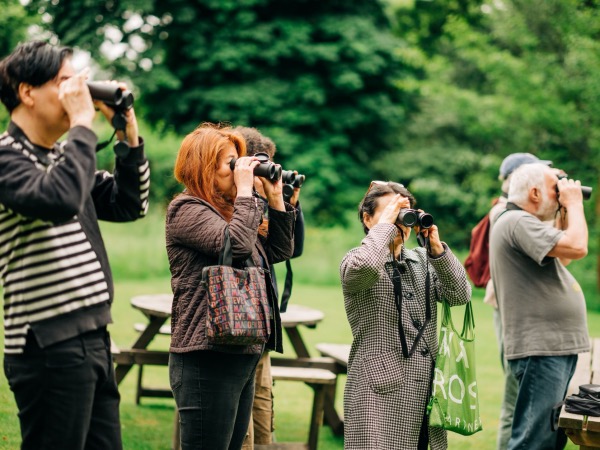
PICTURE: Courtesy of The Royal Parks.

The Royal Parks are running a series of free sessions for bird-watching novices in all eight of its London parks during June and July. The sessions, for which binoculars will be provided, last up to two hours. Pete Lawrence, The Royal Parks’ biodiversity manager, says many people growing up in a city may not have had the “opportunity, the equipment or the know-how to take up this activity” before. “These free sessions aim to make bird watching more accessible, and, if they prove popular, we hope to repeat them in future years.” Author and TV naturalist David Lindo, aka ‘The Urban Birder’, will be leading some of the free bird watching sessions along with The Royal Parks’ conservation officer, Tony Duckett – a six decade veteran birdwatcher, and local bird enthusiast Julia Holland. To book a place, head to www.royalparks.org.uk/birdingtours. The Royal Parks is also hosting a bird watching photography competition with a top prize, binoculars worth £400. Entrants need to take a photo of one of the birds included on the parks’ bird spotter sheets and send it to competition@royalparks.org.uk or submit via The Royal Parks’ social media channels. Find out more here.

The “music, people and places” central to the grime scene which first emerged in London in the early 2000s are the subject of a new exhibition at the Museum of London. Grime Stories: from the corner to the mainstream, which opens on Friday, is co-curated by Roony ‘Risky’ Keefe, one of grime’s early documentarians, and features a series of newly commissioned films that explore the community at the heart of grime’s success as well as a large-scale illustration from artist Willkay and personal artefacts from the MCs and producers who developed grime’s unique sound. Admission is free. For more, see www.museumoflondon.org.uk/museum-london/whats-on/exhibitions/grime-stories.

The ideas of repair, care and healing are explored in a new exhibition which opened at Somerset House this week. Eternally Yours, which is being staged across three Terrace Rooms, showcases some diverse examples of creative reuse including transformed items salved in the aftermath of Japan’s 2011 earthquake, shoes worn by Syrian migrants which have stories of survival sewn into the soles and a jumper from Annemor Sundbø’s ragpile collection which has been transformed by Celia Pym. At the heart of the exhibition is ‘The Beasley Brothers’ Repair Shop’, a pop-up created by designer Carl Clerkin and modelled on traditional East End repair shops of old, which is hosting live workshops and demonstrations from artists and designers. The free exhibition and accompanying events runs until 18th September. For more, see www.somersethouse.org.uk.

Send all items for inclusion to exploringlondon@gmail.com.

This Week in London – Free family festival kicks off this weekend; Beano the subject of Somerset House exhibition; and, lawyer Helena Normanton honoured…

Pop-Up London, a free festival for families, kicks off in central London on Saturday and runs throughout the half-term break until 31st October. The festival features more than 300 artists – including musicians, dancers, comedy acts and circus performers – who can be seen in more than 100 performances at locations including Trafalgar Square, King’s Cross, Spitalfields, and Canary Wharf. The diverse range of acts will include Brazilian drumming, Cantonese story-telling and Caribbean steelpans. For the full list of events. head to www.visitlondon.com/things-to-do/lets-do-london/pop-up-london.

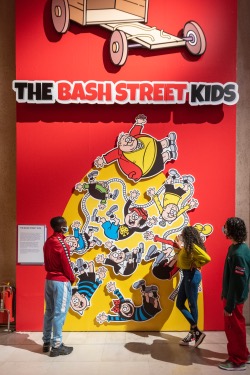
The Bash Street Kids cut outs in ‘Beano: The Art of Breaking the Rules’ PICTURE: Stephen Chung for Somerset House

The world’s longest-running weekly comic, Beano, is celebrated in a new exhibition opening at Somerset House today. Beano: The Art of Breaking the Rules features 100 comic artworks from the Beano archive exhibited, including original drawings never previously seen in public, and, works by contemporary artists including artist duo Gilbert & George, sculptor Phyllida Barlow and Oscar-winning animator Nick Park as well as larger-than-life recreations of Beano’s most iconic settings and interactive installations including Peter Liversidge’s patchwork of protest signs and a jukebox filled with music influenced by Beano’s rebellious streak. Beano was first released in 1938 and is still created weekly at its home in Dundee. This year marks the 70th since Dennis, Beano‘s top mischief-maker, made his debut. Runs until 6th March. Admission charge applies. For more, see www.somersethouse.org.uk/beano.

Barrister and women’s rights advocate Helena Normanton (1882-1957) has been honoured with an English Heritage Blue Plaque at her former home. The plaque at 22 Mecklenburgh Square – where Normanton lived from 1919 to 1931 – was unveiled almost 100 years since she passed her Bar finals on 26th October, 1921. Normanton played an instrumental tole in paving the way for women to practice law, being the first female students one of London’s Inns of Court, one of the first women to be called to the Bar, the first female counsel to lead a case in the High Court, the first woman to run a trial at the Old Bailey and the first women to lead murder trials in England as well as one of the first two women to take silk as King’s Counsel. For more, see www.english-heritage.org.uk/visit/blue-plaques.

Send all items for inclusion to exploringlondon@gmail.com.
This Week in London – Skateboarding explored at Somerset House; and, looking behind ‘Oliver Twist’…

One of the images in No Comply – ‘Here to win’ © Katie Edwards.jpg

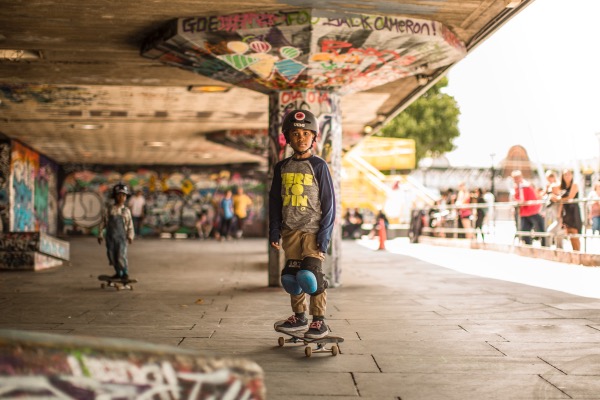
A celebration of skateboarding and its impact on communities and culture of the past 45 years is underway at Somerset House. No Comply: Skate Culture and Community is a free exhibition featuring imagery from some of the world’s foremost photographers capturing skateboarding scenes from across the UK as well as early editions of skateboarding titles like Alpine Sports, Read and Destroy (R.A.D) and Skateboard!, and original film commissions including a new short film from London-based director Dan Emmerson and a new short by skate videographer Sirus f Gahan. The display also explores the influence of skateboarding on mainstream culture – everything from fashion brands to video games – and uses archival objects, photographs and personal anecdotes to share stories from skate communities in the UK and beyond as well as those of skateboarding-related non-profit initiatives including Free Movement Skateboarding and SkatePal. Runs until 19th September; pre-booking required. For more, see www.somersethouse.org.uk.

• On Now: More! Oliver Twist, Dickens and Stories of the City. This exhibition at the Charles Dickens Museum in Doughty Street, Bloomsbury, showcases a selection of letters, illustrations, postcards and photos – including a provocative artwork by artist Cold War Steve – as it explores the story of Oliver Twist and the inspiration behind it. Can be seen until 17th October; admission charge applies. For more, see https://dickensmuseum.com.

Send all items for inclusion to exploringlondon@gmail.com.
This Week in London – ‘Hidden Highlights’ at Westminster Abbey; food and Black entrepreneurship; and, ride the Dodgems at Somerset House…

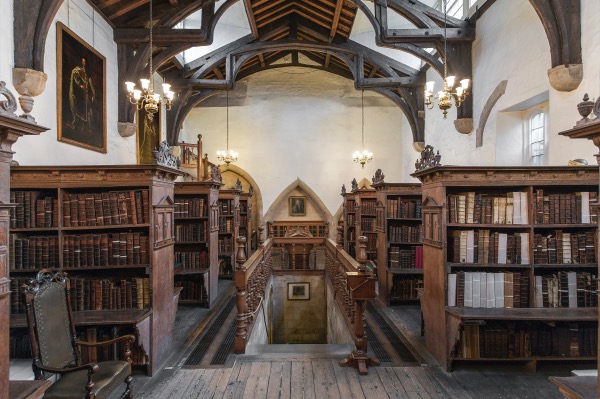
Westminster Abbey Library, part of of the ‘Hidden Highlights’ tour. PICTURE: Dean and Chapter of Westminster.

A lost medieval sacristy used by Westminster Abbey’s monks in the 13th-century which has been revealed in the abbey grounds has been opened to the public. A visit to the dig uncovering the former sacristy is one of the stops on new ‘Hidden Highlights’ tours which also take in other areas not usually open to the public including the Jerusalem Chamber where King Henry IV died in 1413 and, the Library, formerly part of the monk’s dormitory which features a 15th century oak roof and 17th century bookcases (pictured above). The tour, which finishes in the Diamond Jubilee Galleries which have been closed since the start of the pandemic, is part of a summer of events at the abbey which also includes open air cinema, visits to the abbey after dark, live music performances and a chance to look behind the scenes at the abbey’s role in the 2011 wedding of the Duke and Duchess of Cambridge. For more, see www.westminster-abbey.org/abbey-news/lost-medieval-sacristy-opens-to-public-for-summer-festival-of-events.

A new exhibition looking at the central role food plays in Black entrepreneurship and identity in the city’s south east has opened at the Museum of London Docklands. Feeding Black: Community, Power & Place puts four businesses in the spotlight – Livity Plant Based Cuisine in Croydon, Woolwich businesses African Cash & Carry and Junior’s Caribbean Stall, and Zeret Kitchen in Camberwell – and tells their stories through objects, recipes and videos as well as newly commissioned photography by Jonas Martinez and original oral histories and soundscapes by Kayode ‘Kayodeine’ Gomez. The free display can be seen until 17th July next year in the London, Sugar & Slavery gallery. For more, see www.museumoflondon.org.uk.

Ride the dodgems at Somerset House. Dodge, described as a “thrilling open air experience” that takes an “inventive twist on the traditional fairground”, features dodgem cars and installations from acclaimed artists as well as food and drink and DJ sets. The event runs until 22nd August. There is free entry to the site but charges apply for the dodgem rides. For more, see www.somersethouse.org.uk. The event is part of the #LetsDoLondon campaign, described as the “biggest domestic tourism the capital has ever seen”.

Send all items for inclusion to exploringlondon@gmail.com.
LondonLife – A forest at Somerset House…

Forest for Change – The Global Goals Pavilion at London Design Biennale. PICTURE: Ed Reeve

The courtyard at Somerset House has been transformed into a forest as part of the London Design Biennale. Forest for Change – The Global Goals Pavilion features some 400 trees with clearing in the middle containing an installation aimed at raising awareness of the United Nations’ Global Goals for Sustainable Development. The biennale also features a series of more than 30 pavilions from across all six continents – created in response to the theme ‘resonance’ – which have been placed in rooms and outdoor areas throughout the property. Among the countries represented with pavilions are Antarctica, Argentina, Austria, Canada, Chile, the Czech Republic, Finland, Germany, Ghana, Greece, Guatemala, Hong Kong, India, Indonesia, Ireland, Israel, Japan, Latvia, Poland, Taiwan, and Venezuela. Others, including Italy, Nile Region, Norway, New York City and Pakistan, are taking part digitally. There’s also an exhibition – Design in an Age of Crisis – showcasing radical design thinking from the world’s design community, the public, and young people, as well as a series of installations by a selected group of universities and galleries in which they demonstrate their contribution to global issues through design under the banner of ‘Sustainability and Innovation’. The biennale runs all month. Admission charge applies. For more and to book tickets, head to www.somersethouse.org.uk/whats-on/london-design-biennale-2021.

This Week in London – Exploring the ‘Raphael Cartoons’; using art to bridge Brexit divide; a 21st century police box; and, COVID’s viral tweets…

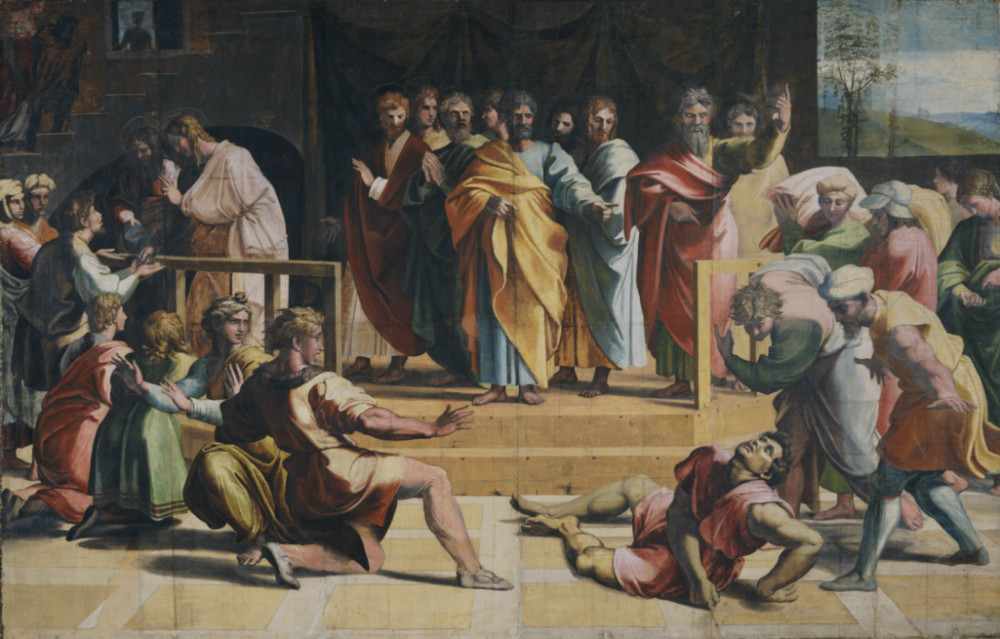
One of the Raphael Cartoons depicting ‘The Death of Ananias (Acts 5: 1-5)’, by Raphael, 1515 –16, Italy. Photo: © Victoria and Albert Museum, London. Courtesy Royal Collection Trust / Her Majesty Queen Elizabeth II 2021as.

An in-depth exploration of the so-called ‘Raphael Cartoons’ has gone online at the V&A ahead of the reopening of the newly transformed Raphael Court later this year. Among the greatest Renaissance treasures in the UK, the cartoons were commissioned by Pope Leo X for the Sistine Chapel in the Vatican shortly after his election in 1513. The Pope asked artist Raphael to create a series of 10 designs illustrating the lives of St Peter and St Paul which could then be turned into tapestries to grace the walls of the chapel. Created in the workshop of merchant-weaver Pieter van Aelst in Brussels, the 10 tapestries were each five metres wide and 3.5 metres high. Seven of Raphael’s original cartoons survive – they were brought to Britain in the early 17th century by the Prince of Wales (later King Charles I) and remained behind closed doors in the Royal Collection until they were lent to the South Kensington Museum – now the V&A – by Queen Victoria in 1865 in memory of Prince Albert. The cartoons have been on public display in the museum ever since. The new online offering traces the story of the cartoons and using ultra- high-resolution photography, infrared imagery, and 3D scans, and is the first time people have been able to explore the cartoons in such detail. It was produced as part of the V&A’s ‘Raphael Project’, marking the 500th anniversary of Raphael’s death in 2020, which includes a landmark renovation of the Raphael Court – home to the cartoons. The refurbished gallery will be unveiled when the museum reopens. To see the new online display, head to vam.ac.uk/raphael-cartoons.

A participatory art project exploring the relationship between the UK and France in a post-Brexit world has commenced this week. I Love You, Moi Non Plus – presented in partnership by Somerset House, Dover Street Market London, The Adonyeva Foundation, Collectif Coulanges, Eurostar and coordinated by Sabir, invites artists to share their interpretation of what the British-French relationship means to them with works to be displayed in a new online gallery alongside bespoke pieces from “project ambassadors” including Chinese artist Ai Weiwei, fashion designer Stella McCartney, English electronic musician Brian Eno, English National Ballet artistic director Tamara Rojo,and British artist Bob and Roberta Smith. The project seeks to highlight how art and creativity can “maintain connections between communities across the channels, unifying voices from across Britain and the EU”. Participants are asked to contribute either by sharing their creations on social media with hashtags #ILoveYouMoiNonPlus, #ILYMNP and #LifeAfterBrexit or submit them directly to the website here

Does this mean a new Tardis for Dr Who? The City of London Corporation is calling on architects, landscape architects, designers and artists to submit ideas for the design of a “21st century police box”. The competition, which is being run by the City in conjunction with the City of London Police, New London Architecture (NLA) and Bloomberg Associates, aims to provide “a modern and engaging way to provide information and safety” to the Square Mile’s residents, workers and visitors. Up to six shortlisted teams will be awarded funding to develop their idea into a design proposal and the winning design will be unveiled in the summer. For more, head to nla.london/submissions/digital-service-point-open-call-competition.

The Museum of London has acquired 13 tweets shared by Londoners during the initial coronavirus-related lockdown as part of its ongoing ‘Collecting COVID’ project. The tweets, which were collected under the ‘Going Viral’ strand of the Collecting COVID project, now form part of the museum’s permanent collection and lay bare what people were experiencing during 2020. The Going Viral project focused on collecting text, memes, videos and images that were ‘shared’ or ‘liked’ on Twitter more than 30,000 times. Additional tweets will be considered for acquisition this year.

Send all items for inclusion to exploringlondon@gmail.com.
This Week in London – Christmas Tree lighting goes virtual; Ottobah Cugoano’s Blue Plaque; and, see ‘Leila Alaoui: Rite of Passage’ online…

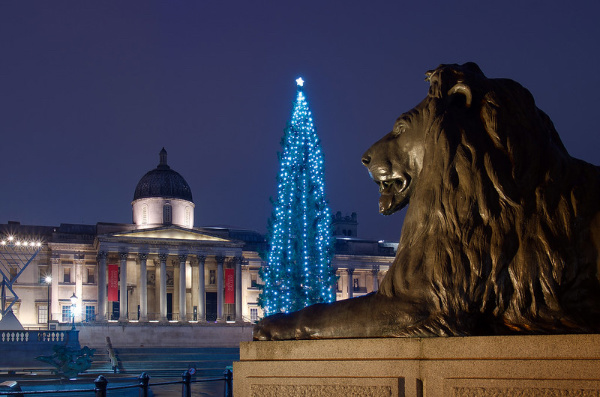
The Christmas Tree in Trafalgar Square in 2017. PICTURE: Raphaël Chekroun (licensed under CC BY-ND 2.0)

The traditional Trafalgar Square tree lighting ceremony has gone virtual for the first time this year due to coronavirus restrictions. The online event, which will be held at 6pm on 3rd December via YouTube and Facebook, will include messages from the Lord Mayor of Westminster and the Mayor of Oslo as well as information on the history behind the gift of the tree, footage of its journey from the forests of Norway to London, and performances from the Salvation Army, the Poetry Society and the St Martin-in-the-Fields Choir. While the tree felling ceremony in Norway is usually attended by the Lord Mayor of Westminster, this year COVID restrictions meant he was represented by the British Ambassador to Norway, Richard Wood, who was joined by the Mayor of Oslo, Marianne Borgen, and school children from Maridalen school in Oslo, to witness the tree begin its journey to London. A Norwegian spruce has been given by the people of Oslo to the people of the UK in thanks for their support during World War II in the lead-up to every Christmas since 1947. Once the tree arrives in London, it is decorated with Christmas lights in a traditional Norwegian manner.  For more on the tree, see westminster.gov.uk/trafalgar-square-christmas-tree.

Eighteenth century anti-slavery campaigner Ottobah Cugoano – a former slave himself – has been honoured with an English Heritage Blue Plaque. The plaque is located at Schomberg House at 80–82 Pall Mall, the property where he was employed as a servant by artists Richard and Maria Cosway. It was while living here in the 1780’s that Cugoano wrote the book, Thoughts and Sentiments on the Evil and Wicked Traffic of the Slavery and Commerce of the Human Species, Humbly Submitted to the Inhabitants of Great-Britain, one of the first black-authored anti-slavery books to be published in Britain. The house was actually mentioned in the frontispiece of the 1787 edition of Thoughts and Sentiments as one of the places where copies of the book might be obtained. It is, says English Heritage, “evidence of the Cosways’ support for their servant’s endeavours as an author and a campaigner”. For more, see www.english-heritage.org.uk/visit/blue-plaques/.

Somerset House is offering virtual tours of its exhibition Leila Alaoui: Rite of Passage. The exhibition is the first major retrospective of the work of Alaoui, a celebrated French-Moroccan photographer, video artist and activist who died in a terrorist attack at the age of 33 while working on a photography project promoting women’s rights in Burkina Faso in 2016. ​  ​Guided by award-winning broadcaster and cultural commentator Ekow Eshun, the tour of the exhibition takes in three of the artist’s defining series – No Pasara, which documents the lives of North African migrants trying to reach Europe; Natreen (We Wait), which follows families trying to flee the Syrian conflict, and Les Marocains, which, inspired by Robert Frank’s The Americans, meets the many individuals who make up the multifaceted fabric of contemporary Morocco.  The exhibition also includes an unfinished video project L’Ile du Diable ​(Devil’s Island) which Alaoui was working at the time of her death, featuring dispossessed migrant workers at the old Renault factory in Paris.  The free tour can be accessed at www.somersethouse.org.uk/blog/virtual-tour-leila-alaoui-rite-passage.

Send all items for inclusion to exploringlondon@gmail.com.

Treasures of London – The Diana Fountain…

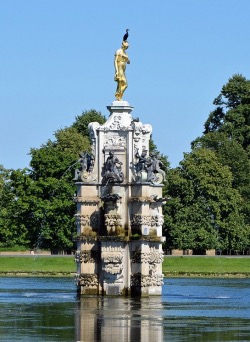
No, it’s not a memorial to that Diana, but a bronze statue depicting a mythological figure which forms the centrepiece of the Great Basin in Bushy Park.

Commissioned by King Charles I for his wife Queen Henrietta Maria, the statue (and other statuary on the monument) was the work of sculptor Hubert Le Sueur (he was also the sculptor of the famous equestrian statue of King Charles I which sits at the top of Whitehall).

While the 2.38 metre tall bronze statue, which weighs some 924 kilograms, is commonly referred to as Diana – the Roman goddess of hunting, she has none of the usual attributes of Diana, such as a bow, and is believed by some to actually represent Arethusa, a nereid or sea nymph from Greek mythology.

The statue is set on a marble and stone fountain carved with depictions of shells and sea life, and is surrounded, at a lower level, by groups of bronze statues -depicting boys holding fish or dolphins and water nymphs or mermaids astride sea monsters – through which water is discharged into four bronze basins.

The bronze figures were originally commissioned for a fountain, designed by Inigo Jones and built in the 1630s, in the Queen’s garden at Somerset House. Oliver Cromwell had the statues moved to the Hampton Court Palace’s Privy Garden in 1656 where they were incorporated into a fountain designed by Edward Pearce the Younger in 1689-90.

In 1713 the ensemble was moved again, this time to onto a new purpose-built podium in the middle of the Great Basin, located at the end of Bushy Park’s Chestnut Avenue, a grand avenue of trees designed by Sir Christopher Wren. While most of the statuary is believed to be from the original fountain designed by Inigo Jones, it’s thought some of the statues of the boys were recast for the new fountain.

The Grade I-listed monument was restored in 2009 and and during this process a stone which uncovered on its base which had a crown and the date AR 1712 (AR for ‘Anne Regis’) which would have been added when the statue and fountain were installed in the basin.

WHERE: The park lies north of Hampton Court Palace, just west of Kingston and Hampton Wick and south of Teddington (nearest train station is Hampton Wick or Hampton Court). WHEN: 24 hours except in September and November when it’s open between 8am and dusk; COST: Free; WEBSITE: www.royalparks.org.uk/parks/bushy-park

PICTURE: The Diana Fountain. PICTURE: It’s No Game (licensed under CC BY 2.0)

This Week in London – Mushrooms online; call for homemade signs; and, write a lockdown letter to the National Trust…

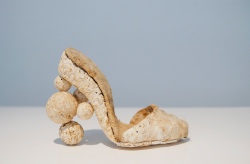
Somerset House is releasing a new virtual tour of its exhibition Mushrooms: The Art, Design and Future of Fungi so people can explore the world of the mushroom and its role in the world’s survival from home. The exhibition, which will go live online on Monday to mark International Museum Day, features highlights including Beatrix Potter’s watercolours of mushrooms, conceptual artist Carsten Höller’s spinning, solar-powered mushrooms, a psychedelic film by Adham Faramawy, Seana Gavin’s hand-cut collages of mushroom-human hybrids and, shoes and shades made from mycelium, the fungal mass which lies beneath the earth under mushrooms. The exhibition will be released online on 18th May at www.somersethouse.org.uk. PICTURED: Kristen Peters, Mycoshoen, courtesy of the artist.

The V&A are seeking homemade signs created during the coronavirus lockdown – everything from children’s rainbow signs to handwritten notes placed in public spaces – to add to its permanent collection. Noting the commonplace nature of such signs during the emergency, the V&A have said that “[w]hether they state temporary closure of a business, express messages of hope or critique, or raise awareness for a good cause, these signs have become a prominent way for us to communicate with the outside world during lockdown”. Through collecting the signs, the museum is aiming to “create and preserve a rich portrait of life under lockdown expressed through visual imagery.” Selected signs will be chosen to join the museum’s collections. Signs can be submitted to homemadesigns@vam.ac.uk while people are also encouraged to share signs they’ve come across on social media using #homemadesigns.

The National Trust is asking people to write letters to its Director General Hilary McGrady, about their lockdown experiences in order to add a selection of them to its collection of historic letters. People are asked to write about what they have most missed since lockdown began and about what solace they may have drawn from nature, art, creativity and any forms of social contact. The National Trust is asking writers to scan or photograph their letter and email it to lettersfromlockdown@nationaltrust.org.uk or share it via the National Trust’s social media channels using @nationaltrust to ease pressure on the postal service. The Trust says it will request postal hard copies from selected authors at a later date.

Send all items for inclusion to exploringlondon@gmail.com

10 (lesser known) National Trust properties in London…4. The Strand Lane ‘Roman’ Baths…

Please note: Exploring London is aware that sites across London have closed temporarily as a result of the COVID-19 outbreak. But we’re continuing our coverage as usual – in the hope you can visit at a later time…

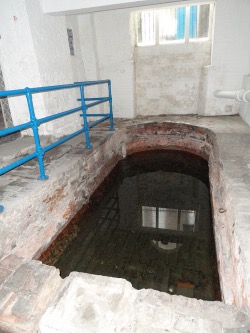
Located at 5 Strand Lane in the West End, these brick-lined baths were long-reputed to be of Roman origin. But they are actually believed to be the remains of a cistern built in 1612 to supply water to fountain in the gardens of Old Somerset House.

The fountain had been built by French engineer, Salomon de Caus, after he was commissioned to do so as part of King James I’s efforts to refurbish Somerset House for Queen Anne of Denmark.

Following the demolition of the fountain, the cistern was neglected until the 1770s when the cistern was used a public cold plunge bath attached to a property at 33 Surrey Street. A second bath, called the ‘Essex Bath’ was added (it’s now under the nearby KCL Norfolk Building).

The idea that they were Roman is believed to have originated in the 1820s when the bath was so described as an advertising gimmick (Charles Dickens’ helped popularise the idea in his book David Copperfield – it is believed Dickens himself may have bathed here).

The 1.3 metre deep bath passed through a couple of different hands in the ensuing decades including Oxford Street draper Henry Glave and Rev William Pennington Bickford, the Rector of St Clement Danes, who, believing in the bath’s Roman origins, hoped to turn them into a tourist attraction.

But his plans came to nothing due to a lack of funds and following his death, in 1944, the National Trust agreed to take on ownership while London County Council agreed to see to its maintenance. They reopened the baths, following repairs, in 1951.

These days, while owned by the Trust, the baths are managed by Westminster Council.

WHERE: 5 Strand Lane (nearest Tube station is Temple); WHEN: While National Trust properties are temporarily closed, viewings are usually arranged through Westminster Council and Somerset House Old Palaces tour; COST: Free; WEBSITE:  www.nationaltrust.org.uk/features/strand-lane-roman-baths.

PICTURE: Michael Trapp (licensed under CC BY-SA 4.0)

This Week in London – Inside the world of mushrooms; Tower Bridge ‘sings’; and, ‘La Ghirlandata’ restored…

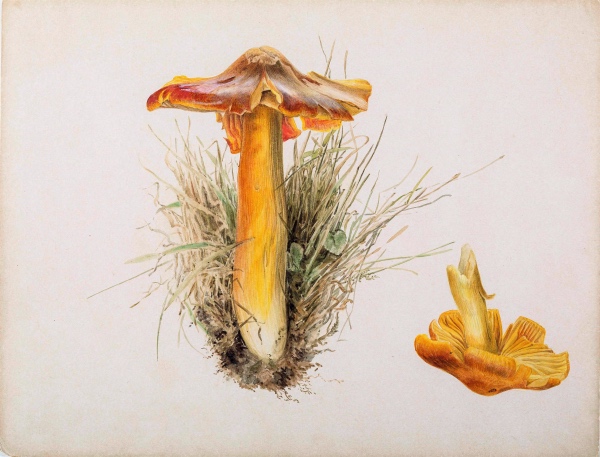
The world of mushrooms is explored in a new exhibition opening tomorrow at Somerset House. Part of the Charles Russell Speechly’s Terrace Rooms Series, Mushrooms: The art, design and future of fungi is curated by writer Francesca Gavin and features works by more than 35 artists, designers and musicians in an exploration of “the rich legacy and incredible potential of the remarkable organism, the ideas it inspires in the poetic, spiritual and psychedelic, and the powerful promise it offers to reimagine society’s relationship with the planet, inspiring new thinking around design and architecture”. Highlights include watercolours by renowned author Beatrix Potter (one of which is pictured), American artist Cy Twombly’s quasi-scientific portfolio Natural History Part I, Mushrooms (1974), and a spectacular floral display, featuring mushrooms grown in Somerset House’s former coalholes, by the London Flower School. The free exhibition, which runs until 26th April, is accompanied by a series of events. For more, see somersethouse.org.uk/mushrooms. PICTURE: Beatrix Potter, Hygrophorus puniceus, pencil and watercolour, 7.10.1894, collected at Smailholm Tower, Kelso, courtesy of the Armitt Trust

A newly commissioned film which reimagines Tower Bridge as a musical instrument is at the heart of a new exhibition which opened in the bridge’s Victorian Engine Rooms this week. Created by internationally acclaimed artist, inventor and filmmaker Di Mainstone to mark the bridge’s 125th anniversary, Time Bascule draws inspiration from Hannah Griggs, one of the first women to work at the bridge (in her case as a cook for the Bridge Master and his family between 1911-1915). The display also includes behind-the-scenes footage, storyboards and early sketches, as well as the opportunity for visitors to play a range of specially created musical instruments. Runs until March. Included in admission to the bridge. For more, see www.towerbridge.org.uk.

Dante Gabriel Rossetti’s Pre-Raphaelite masterpiece, La Ghirlandata, is being unveiled at the Guildhall Art Gallery today following a year-long restoration. William Russell, Lord Mayor of the City of London, is unveiling the portrait which was painted in 1873. Conversation work undertaken included cleaning the painting to reveal a “brighter, fresher scene with a cooler tonality”, repairing and cleaning Rossetti’s original frame, and replaced the deteriorating living canvas. The restoration was made possible thanks to a grant from the Bank of America.

Send all items for inclusion to exploringlondon@gmail.com.