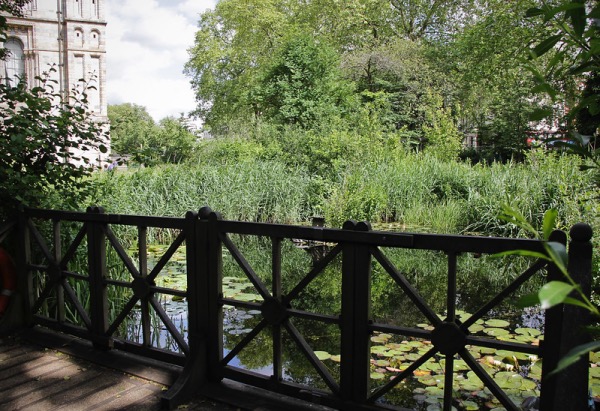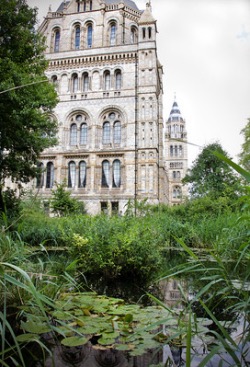
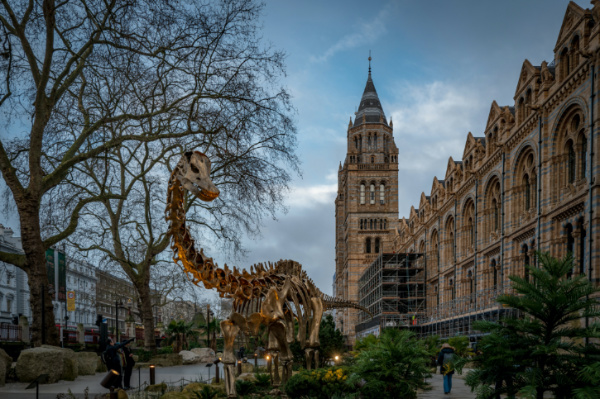
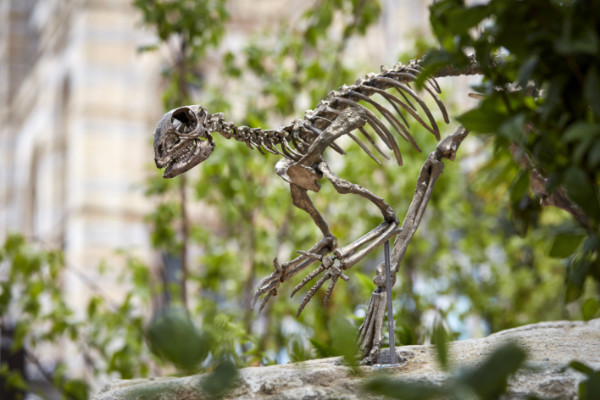
Fern the diplodicus stands in the Jurassic Garden outside the Natural History Museum in South Kensington.

Fern the diplodicus stands in the Jurassic Garden outside the Natural History Museum in South Kensington.

• A snake named after actor Leonardo DiCaprio, fossilised dung named after the author of Winnie the Pooh and a piranha named after Sauron, the evil Lord of the Rings figure, are among 190 new species named by London’s Natural History Museum scientists in 2024. The Anguiculus dicaprioi, or DiCaprio’s Himalayan snake, was named after DiCaprio while Alococopros milnei is a fossilised dung named after AA Milne in recognition of Winnie the Pooh (get it?) and a vegetarian piranha, or pacu, was named Myloplus sauron due to its resemblance to JRR Tolkien’s Eye of Sauron. Other newly named species included a new dinosaur from the Isle of Wight, now known as Comptonatus chasei, which was named for fossil hunter, Nick Chase, and a new species of pterosaur which was named Ceoptera evansae. For more on the museum, see www.nhm.ac.uk.
• The work of British-Indian artist Ketna Patel is the subject of a new exhibition at the Heath Robinson Museum. REMIXOLOGY: The Art of Cultural Storytelling by Ketna Patel invites audiences to
“reflect on how identity is shaped – by ourselves and by society” and celebrates what is described as her “signature approach” to her work which involves remixing diverse cultural influences into something new. The display can be seen at the Pinner museum until 8th February. Museum admission charge applies. For more, see www.heathrobinsonmuseum.org.
• Now on: Endurance & Joy in the East End: The photography of David Hoffman. This exhibition, hosted by the Museum of the Home, features the work of one of the leading “photographers of protest” in the UK and spans a 10 year period starting in 1973 when Hoffman lived in a squat in Fieldgate Mansions and documented issues seen in Whitechapel including homelessness, racism and the rise of protest. Running until 30th March, it can be seen in the Undercroft at 136 Kingsland Road. For more, see www.museumofthehome.org.uk/whats-on/exhibitions-and-installations/endurance-and-joy-david-hoffman/
Send all items for inclusion to exploringlondon@gmail.com.
It’s that time of year and while it seems less people are these days sending Christmas cards, there are many who still do.
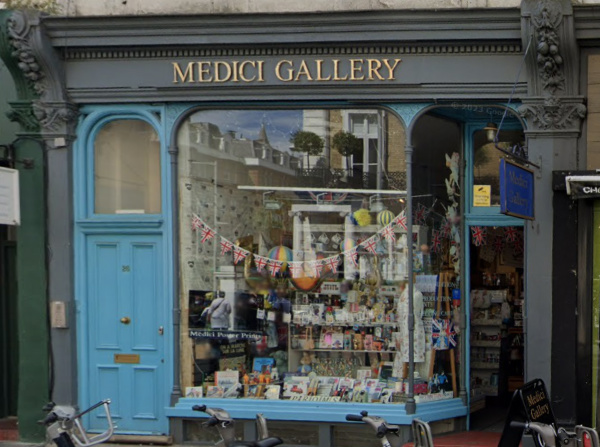
While we’ve previously written about the origins of greeting cards at Christmas (and who first sent them), today we’re taking a look at the oldest shop in which they’re still sold in London – often said to be the Medici Gallery in South Kensington.

The gallery was opened by the Medici Society in 1908. This organisation had been founded by Philip Lee Warner and Eustace Gurney with the intention of promoting the work of artists to a wider audience. It initially operated on a subscription basis under which subscribers pay a set rate and then obtain copies of prints but later became a limited company.
The name Medici was said to have been chosen as a homage to the Medici family known for, among other things, the promotion of the arts in Florence during the Renaissance.
The gallery first started selling greeting cards in the 1930s and continues to do so today.
For more on the shop at 26 Thurloe Street, see www.medici.co.uk/.

A nickname, connected to Prince Albert (beloved husband of Queen Victoria), which was given to an area of South Kensington centred on Exhibition Road which is packed with various cultural and educational institutions.
The land, which had been the Kensington Gore Estate, was purchased by the Royal Commission for the Exhibition of 1851 on the suggestion of Prince Albert using the profits made from the Great Exhibition which had been held just to the north in Hyde Park. His vision was for arts and science quarter which included schools, colleges and libraries as well as museums, exhibition rooms and spaces for events.
Among the buildings subsequently constructed upon it were those bearing Prince Albert’s name including Royal Albert Hall and the Victoria and Albert Museum along with the huge Albert Memorial.
Other institutions on the land include the Natural History Museum, Imperial College London, the Royal College of Music, the Royal College of Art, the Science Museum, the Royal Geographical Society and the since removed Royal Horticultural Society Gardens.
The area gained its nickname in the 1850s due to the Prince’s role in the Great Exhibition and its subsequent purchase and was seen to both celebrate, but also by some, to satirise him. It fell out of use after the Prince’s death in 1861 but was subsequently revived in the 1960s and since to bring attention to buildings in the area threatened with demolition.
A pedestrian subway under Exhibition Road runs north from South Kensington Station and gives access to the museums (when it was built in 1885, a toll of one penny was charged to use it).
‘Fern the Diplodicus’ has been unveiled at the Natural History Museum this morning, the latest addition to its transformed gardens which open to public on Thursday.

The bronze cast of the museum’s moved loved figure takes pride of place in the new Evolution Garden, which, along with the Nature Discovery Garden, sit within five acres of green space surrounding the South Kensington museum.
The Evolution Garden provides the opportunity to explore the 2.7 billion history of the planet and, as well as Fern, features a canyon clad in ancient Scottish stone, and a second dinosaur, Hypsiophodon.

The Nature Discovery Garden showcases different wildlife habitats in the UK’s urban spaces – complete with the frogs, newts, dragonflies and mandarin ducks that are already living there – and features a nw Nature Activity Centre which combines scientific facilities with a hub for school workshops and family activities.
For more, see www.nhm.ac.uk/visit/galleries-and-museum-map/our-gardens.html

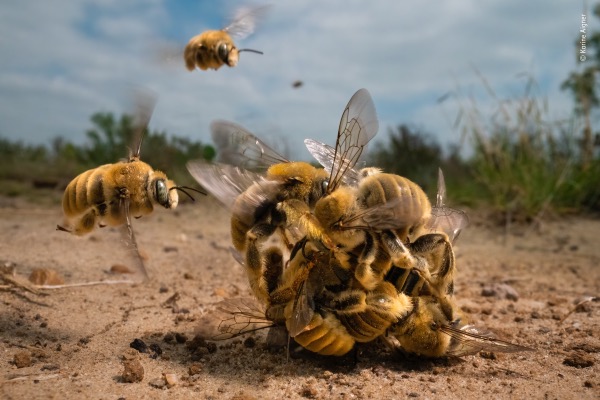
An up-close image of a buzzing ball of cactus bees over the hot sand at a Texas ranch has won American photographer Karine Aigner the honour of Wildlife Photographer of the Year. The image depicts male bees as they compete for the attention of the single female bee at the centre of the ball. Aigner is the fifth woman to win the Grand Title award in the 58 year history of the competition, which is run by the Natural History Museum. Her image is being shown along with that of 16-year-old Thai Katanyou Wuttichaitanakorn – who won Young Wildlife Photographer of the Year for an up-close image of a whale’s baleen – as well as those of category winners in this year’s contest in a redesigned exhibition at the museum in South Kensington. Alongside the photographs, the display features short videos, quotes from jury members and photographers and insights from museum scientists on how human actions continue to shape the natural world. The exhibition can be seen until 2nd July. Admission charge applies. For more, see www.nhm.ac.uk/visit/exhibitions/wildlife-photographer-of-the-year . The 59th annual competition is now open for entries. For more on how to enter, see www.nhm.ac.uk/wpy/competition.


Opened in July, 1995, this garden in the grounds of the Natural History Museum in South Kensington has been found to be home to more than 3,300 species.

The garden, located on the corner of Cromwell Road and Queen’s Gate, and covering a single acre, was envisaged as a “place to put habitat creation and wildlife conservation into practice”, according to the museum’s website, where visitors can learn about wildlife in the UK and where naturalists, students and museum scientists carry out research.
It features a variety of habitats – everything from woodland, grassland, scrub, heath, fen, aquatic, reedbed, and hedgerow as well as urban environments – and among the species living there have been hedgehogs, common frogs, ladybirds (Rhyzobius forestieri) and Greyface Dartmoor sheep which are brought in to graze in the autumn.
‘Bioblitzes’ are held during the year by experts and amateurs which involve recording as many species of plants, animals and fungi as possible within a day.
Under the museum’s Urban Nature Project, all five acres of the grounds are being transformed into a fully accessible green space that promotes urban wildlife research, conservation and awareness and according to the museum, the Wildlife Garden will have an integral role to play in that with its overall size doubled (check before visiting to ensure it’s not closed for the renovation work). The new gardens will open next summer.
WHERE: Wildlife Garden, Natural History Museum, Cromwell Road, South Kensington (nearest Tube stations are South Kensington and Gloucester Road); WHEN: 11am to 5pm daily until 31st October (closed during wet weather); COST: Free; WEBSITE: www.nhm.ac.uk/visit/galleries-and-museum-map/wildlife-garden.html
• The V&A in South Kensington reopens its doors to visitors today in the first phase of a staged reopening strategy. All of the ground floor galleries are reopening including the Medieval & Renaissance Gallery, the Cast Courts, The Jameel Gallery of Islamic Art and Fashion Gallery, as well as the Europe 1600–1815 galleries on lower ground floor. The first and second floor collection galleries including The William and Judith Bollinger Jewellery Gallery, Theatre & Performance Galleries, and the Photography Centre as well as the museum’s Paintings, Tapestries and Silver Galleries are all scheduled to open on 27th August as well as the exhibition Kimono: Kyoto to Catwalk, which had closed just two weeks into its run. For more, see www.vam.ac.uk. PICTURE: M.chohan (Public domain).
• Other recent and upcoming reopenings include: the Horniman Museum, the Foundling Museum, the National History Museum, The Queen’s House in Greenwich (Monday, 10th August) and the National Maritime Museum in Greenwich (exhibitions only; galleries coming later).
• ZSL London Zoo is calling for volunteers to help assist visitors as they make their way around the zoo via three new one-way trails. The move, which follows a successful fundraising effort fronted by Sir David Attenborough, is aimed especially at people still furloughed and students forced to cancel gap year travel plans. Those interested in volunteering are asked to commit to a minimum of half a day each fortnight. For more, see www.zsl.org/volunteering.
Send all items for inclusion to exploringlondon@gmail.com.
Queen Elizabeth II posted her first Instagram photo while visiting the Science Museum in South Kensington last Thursday in a promotion for its exhibition on computers. Under the account @theroyalfamily, the Queen posted two images of a letter at the museum which comes from the Royal Archives. It was written to Prince Albert and Queen Victoria by Charles Babbage and in it, the 19th century inventor and mathematician spoke of his invention of an “Analytical Machine” upon which the first computer programs were written by Ada Lovelace, daughter of Lord Byron. Having explained the origins of the letter, the Queen added: “Today, I had the pleasure of learning about children’s computer coding initiatives and it seems fitting to me that I publish this Instagram post, at the Science Museum which has long championed technology, innovation and inspired the next generation of inventors. Elizabeth R.” The Royal Family’s Instagram account has some 4.9 million followers. For more on the Science Museum, see www.sciencemuseum.org.uk.
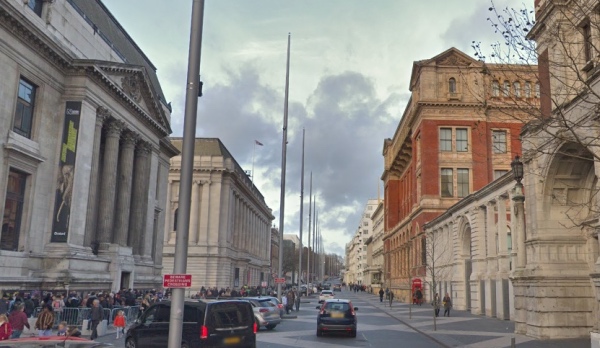
This important Kensington thoroughfare runs through the heart of South Kensington’s world-famous museum precinct from Thurloe Place, just south of Cromwell Road, all the way to Hyde Park.
Along its length, it takes in such important institutions as the Victoria & Albert Museum, the Natural History Museum, Science Museum and Imperial College London while Royal Albert Hall is only a stone’s throw to the west.
It was, as might be expected given the name, indeed laid out as part of Prince Albert’s grand scheme surrounding the Great Exhibition of 1851 as a means of accessing the vast Crystal Palace which was located in Hyde Park (before moving out to south London).
It wasn’t the only road in the area built specifically for that purpose – the transecting Cromwell Road and Queen’s Gate, which runs in parallel and, yes, is named for Queen Victoria, were also built for to provide access to the Great Exhibition.
After the exhibition was over, Exhibition Road formed part of the precinct known as “Albertopolis” in which, inspired by the Great Exhibition, became something of a knowledge and cultural centre featuring various museums and the great concert hall which sadly Albert didn’t live long enough to see.
In the 2000s, a scheme to give pedestrians greater priority along the road was realised (in time for the 2012 Olympics).
PICTURE: Looking north along Exhibition Road from the intersection with Cromwell Road (the Natural History Museum is on the left; the Victoria & Albert Museum – and the Aston Webb Screen – on the right)/Google Maps.
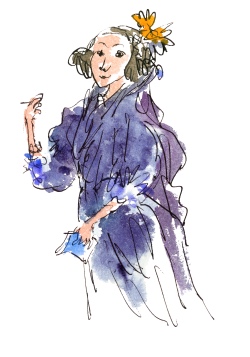
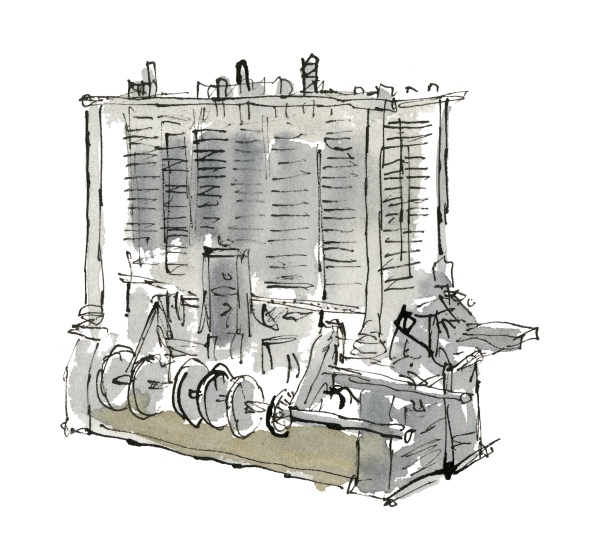
A new work by acclaimed illustrator Sir Quentin Blake has gone on show in the Science Museum in South Kensington. The work, which hangs on the external walls of Wonderlab: The Equinor Gallery, features five panels featuring some 20 women and men from the world of science of technology including the “enchantress of numbers”, mathematician Ada Lovelace (1815-1852 – pictured right; her ‘analytical machine’ is below), polymath Jagadis Chandra Bose (1858-1937) – the first scientist to use a semiconductor to detect radio waves, Sir Richard Arkwright (1732-1792) – pictured with his ground-breaking spinning machine, and pilot Amy Johnson (1903-1942) – pictured alongside the De Havilland Gipsy Moth in which she made the first solo flight from Britain to Australia. London-born Blake, who had his first cartoons published in Punch when just 16-years-old, is most famous for his illustrations in children’s books including in works by Roald Dahl and David Walliams. For more on the Science Museum, head to www.sciencemuseum.org.uk.
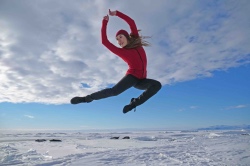
• A free dance and science festival celebrating Antarctica opens at the Science Museum in South Kensington on Tuesday. Antarctica Live features daily dance performances – including a newly devised performance by award-winning choreographer Corey Baker, workshops and hands-on experiences with real survival equipment to shed light on how the frozen continent is responding to increasing human activity and how its fate can affect us all. Visitors will also be able to see a scale model of the recently launched polar research vessel, the RRS Sir David Attenborough. A special “lates” event on 29th August in the museum’s IMAX Theatre will premiere the documentary film Dancing on Icebergs, which charts the two year making of the short film, Antarctica: The First Dance, featuring Madeleine Graham, star of the Royal New Zealand Ballet (pictured). The screening will be followed by a live Q&A with Corey Baker. Antarctica Live runs until 30th August. For more, see www.sciencemuseum.org.uk/see-and-do/antarctica-live. PICTURE: Madeleine Graham in Antarctica The First Dance © Jacob Bryant.
• On Now: Leaving Today – the Freuds in Exile 1938. This exhibition at the Freud Museum London in Hampstead focuses on the flight and exile of Sigmund Freud, his wife Marta and daughter Anna as, following Hitler’s annexation of Austria, they left Vienna on 4th June, 1938, heading to a new life in London. It features original documents, letters and objects, many of which have never been on public display before. Highlights included the documents Freud and his family required to exit Austria and enter Britain, Freud’s personal correspondence with figures like Albert Einstein and HG Wells, and the first public display of Marie-Louise von Motesiczky’s painting The Psychoanalyst. The exhibition also features a series of works created by young people attending the Baobab Centre for Young Survivors in Exile in collaboration with Barnaby Barford. Runs until 30th September. Admission charge applies. For more, see www.freud.org.uk.
Send all items for inclusion to exploringlondon@gmail.com.
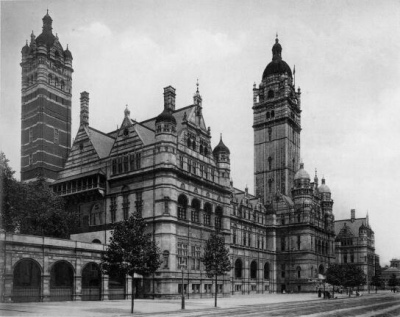
An ornate turreted building in South Kensington, construction of the Imperial Institute began in 1887 – the year of Queen Victoria’s Golden Jubilee.
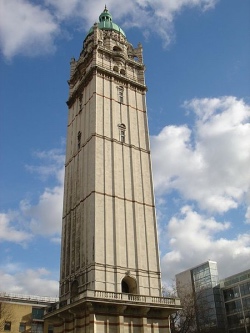
Designed by Thomas Edward Collcutt and paid for almost entirely by public subscription, the huge 213 metre long building featured three “Renaissance-style” towers with copper covered domes. Foremost among them was the 87 metre high Queen’s Tower (initially known as the Collcutt Tower after the architect).
Officially opened by Queen Victoria in 1893 (although the building was apparently never completed), the building – which was built to mark the Queen’s Golden Jubilee – was intended as an exhibition space to showcase the Empire’s industrial and commercial resources and also as a location for research and meetings.
The idea for a permanent exhibition space for colonial “produce” had apparently been enthusiastically backed by the Prince of Wales (and the Queen herself) following a series of exhibitions showcasing the wares of India and the colonies in preceding years.
But the enthusiasm for the institute, said to have cost more than £350,000, quickly waned (perhaps because of a vagueness over its purpose) and despite efforts to encourage people to use it through introducing “attractions” like a billiards room, the financial position of the institute became somewhat straitened.
Help came from the University of London which took over half of the building just six years later in 1899 and other tenants followed in attempt to keep money for maintenance flowing. Various government departments took on responsibility for the building in the following years.
With its purpose increasingly questioned by the middle of the 20th century, when Imperial College needed to expand, it was decided to demolish the building. Demolition started in 1957 and ran into the mid-1960s. Thanks to public protests led by Poet Laureate Sir John Betjeman, the Queen’s Tower, however, was preserved and is now part of Imperial College.
The tower, which once had a public viewing gallery (now closed) contains 10 bells, known as the Alexandra Peal, which are hung about halfway up the tower. They given by a Mrs Elizabeth A Miller, of Melbourne, Australia, in 1892 as a gift and are named after Queen Victoria, the then Prince and Princess of Wales, and other children and grandchildren of the Queen. They are rung on important college occasions.
Meanwhile, the institute, renamed the Commonwealth Institute, relocated to Kensington High Street. It later went into liquidation. That site now houses the recently unveiled Design Museum.
PICTURE: Top – Imperial Institute during the Edwardian era (public domain); Below – The Queen’s Tower is all that now remains of the institute (licensed under CC BY-SA 3.0
• Untold stories of suffragettes are uncovered in a new display at the Museum of London marking the centenary of women’s suffrage. Votes for Women tells the story of the likes of Emily ‘Kitty’ Willoughby Marshall – arrested six times and imprisoned three times in Holloway including once for throwing a potato at the resident of then-Home Secretary Winston Churchill, Winefride Mary Rix – sentenced to two months hard labour for smashing a window at the War Office, and Janie Terrero – a suffragist since the age of 18 who was imprisoned in Holloway for four months for window smashing during which time she twice went on a hunger strike and was force-fed. The objects on display include Emmeline Pankhurst’s iconic hunger strike medal, a pendant presented to suffragette Louise Eates on her release from prison, and a silver necklace commemorating Willoughby Marshall’s three prison terms. There’s also a newly commissioned film installation highlighting the individual commitment and courage of the lesser known suffragette women. The exhibition opens tomorrow and there’s a special family-friendly festival this weekend featuring interactive performances, workshops and special events. The exhibition Votes for Women runs until 6th January next year. For more, including the full programme of events, see www.museumoflondon.org.uk.
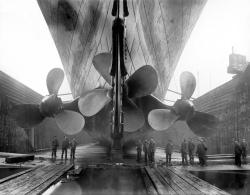
• The golden age of ocean liners is recreated in a new exhibition opening at the V&A this Saturday. Ocean Liners: Speed & Style showcases more than 250 objects with highlights including a Cartier tiara recovered from the doomed Lusitania in 1915, a panel fragment from the Titanic‘s first class lounge, Goyard luggage owned by the Duke of Windsor dating from the 1940s, and Stanley Spencer’s painting The Riveters from his 1941 series Shipbuilding on the Clyde. Other artists, architects and designers whose work is featured in the display include Le Corbusier, Albert Gleizes, Charles Demuth and Eileen Gary. Among the “design stories” explored in the exhibition is that of Brunel’s Great Eastern along with Kronprinz Wilhelm, Titanic and its sister ship Olympic (all known for their Beaux-Arts interiors), the Art Deco Queen Mary, Normandie and the Modernist SS United States and QE2. The display also features objects related to some of the ocean liner’s most famous passengers as well as the couturiers who saw ocean travel as a means of promoting their designs. These include a Christian Dior suit worn by Marlene Dietrich as she arrived in new York aboard the Queen Mary in 1950, a Lucien Lelong gown worn for the maiden voyage of the Normandie in 1935, and Jeanne Lanvin’s Salambo dress, which, as one of the most important flapper dresses in the V&A collection, once belonged to wealthy American Emilie Grigsby who regularly travelled between the UK and New York aboard the Aquitania, Olympic and Lusitania in the 1910s and 1920s. Runs until 10th June. Admission charge applies. For more, see www.vam.ac.uk/oceanliners.
PICTURE: Titanic in dry dock, c1911, Getty_Images (Courtesy Victoria & Albert Museum).
Send all items for inclusion to exploringlondon@gmail.com.
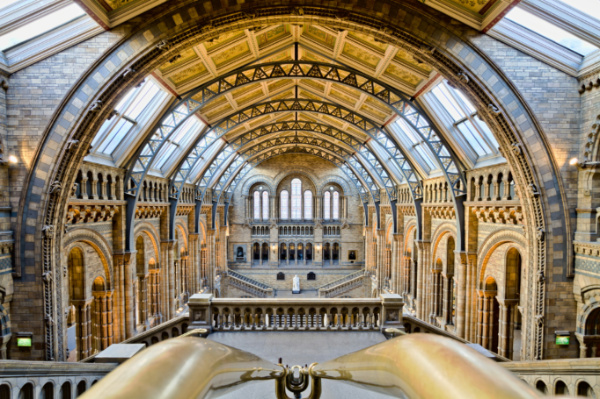
• The 25.2 metre long skeleton of a blue whale named Hope along with that of an American mastodon, a meteorite which is one of the oldest specimens in Earth, a taxidermal display of a giraffe and giant coral are among items on display in the Natural History Museum’s newly transformed Hintze Hall from tomorrow. Selected from the museum’s more than 80 million specimens, the sometimes historic items are at the heart of 10 new displays which go on show in the ground floor alcoves known as ‘wonder bays’ as part of what is being described as a “once-in-a-generation” transformation of the 136-year-old museum. The 10 ‘wonder bays’ include five on the eastern side of the building focused on the origins and evolution of life on earth while those on the western side show the diversity of life on earth today. Elsewhere in the museum, hundreds of new specimens have been introduced including those in two new displays on the first floor balconies: the ‘Rocks and Minerals Balcony’ on the east side which features almost 300 rocks, ores and minerals and the ‘Birds Balcony’ on the west side which features more than 70 birds from as far afield as New Zealand and the Falkland Islands. To coincide with the new displays is the launch of a new summer exhibition – Whales – which features more than 100 specimens showing the diversity of whales, dolphins and porpoises. Featuring species ranging from the double-decker bus sized sperm whale – the largest toothed predator on Earth – to the 1.5 metre long harbour porpoise – one of the smallest cetaceans, the exhibition’s highlights include skulls revealing how whales sense and their eating habits, organs showing how they breathe and digest food and flippers which reveal swimming styles. For more on the exhibition and the transformation of the South Kensington museum, see www.nhm.ac.uk. PICTURE: Blue whale in Hintze Hall © The Trustees of the Natural History Museum, London.
• The mysterious fate of Sir John Franklin and his 128 man crew – last seen in Baffin Bay in July, 1845, as they sailed in search of the North-West Passage – is the subject of a new landmark exhibition opening at the National Maritime Museum in Greenwich tomorrow. Death In The Ice: The Shocking Story of Franklin’s Final Expedition tells the story of the disappearance of the HMS Erebus and HMS Terror and the largely unsuccessful expeditions which were launched in the following 30 years to find them as well as the more recent work of forensic anthropologist, Dr Owen Beattie, and the 1845–48 Franklin Expedition Forensic Anthropology Project (FEFAP), and the eventual discovery of the remains of the HMS Erebus in 2014 and the HMS Terror in 2016. At the heart of the exhibition are objects found by Parks Canada’s archaeological teams including personal items, clothing and ship components with those from the Erebus, including the ship’s bell, being shown for the very first time since their discovery and some items found in earlier searches. Along with an examination of the Victorians fascination with the fate of the men, the exhibition will also show the significant role the Inuit played in learning their fate as well as in relation to recording the European exploration of the Arctic more generally and includes numerous Inuit objects, some of which incorporate materials of European origins traded from explorers or retrieved from abandoned ships. Developed by the Canadian Museum of History in partnership with Parks Canada and the National Maritime Museum and in collaboration with the Government of Nunavut and the Inuit Heritage Trust, the exhibition runs until 7th January. Admission charge applies. For more see www.rmg.co.uk/franklin.
• Fifty drawings from Britain’s finest collections by artists including Leonardo da Vinci, Albrecht Durer, Peter Paul Rubens and Rembrandt van Rijn and eight portraits by Hans Holbein the Younger from the Royal Collection have gone on show at the National Portrait Gallery. The Encounter: Drawings from Leonardo to Rembrandt includes many rarely seen works with all those on show chosen because they captured an apparent moment of connection between the artist and a sitter. While some of those pictured in the portraits can be identified – such as the emperor’s chaplain or the king’s clerk, many are simply faces seen in the street, such as those of a nurse or a shoemaker or an artist’s friend or student. The display also includes the types of tools and media used to create the artworks and shows how the artists moved away from using medieval pattern books to studying figures and faces from life. Runs until 22nd October. Admission charge applies. For more, see www.npg.org.uk/encounter.
Send all items for inclusion to exploringlondon@gmail.com.
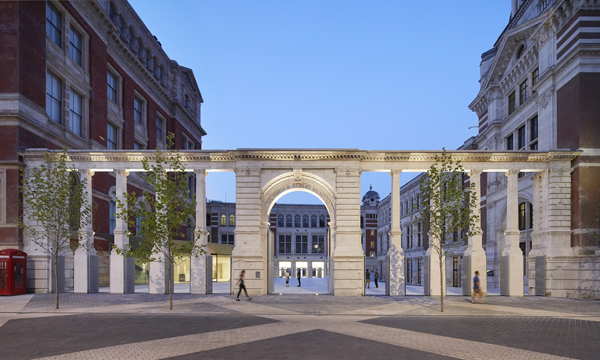
Restored and altered as part of the creation of the Victoria and Albert Museum’s £54.5 million Exhibition Road Quarter project, the screen was originally built in 1909 to conceal the museum’s boilers.
Named for renowned architect Sir Aston Webb, who designed the screen as part of his masterplan of the V&A conceived in the last 1800s (but who is perhaps most famous for designing the facade of Buckingham Palace), the screen originally featured a solid stone wall along Exhibition Road on the museum’s west side topped with a colonnade (through which glimpses of the buildings behind could be seen) and featuring a central arch through which to enter the museum.
The screen, which was damaged during World War II by shrapnel, later had black metal gates fitted in the arch for security. They were topped by a large coat-of-arms.
Under the guidance of architect Amanda Levete and her practice AL_A, the work – which actually involved moving the screen off-site in 2013 and then reassembling its 1375 stones last year – has seen the removal of the wall so that people now have 11 entrances into the courtyard beyond (now redesigned as the porcelain-tiled Sackler Courtyard).
Which means the screen that was once designed to hide what was beyond it has been recast to reveal it instead.
The screen – and the Exhibition Road Quarter project as a whole – is being unveiled to the public today. The V&A is hosting a week long event to celebrate the completion of the project.
WHERE: Aston Webb Screen, Exhibition Road entrance, Victoria and Albert Museum, South Kensington (nearest Tube station is South Kensington); WHEN: Anytime; COST: free; WEBSITE: www.vam.ac.uk
PICTURE: The Aston Webb Screen, the V&A Exhibition Road Quarter, designed by AL_A ©Hufton+Crow
• The fourth annual ‘Performance Festival’ opens at the V&A in South Kensington tomorrow. Highlights include a preview of the V&A’s exclusive virtual reality recording of David Bowie’s musical Lazarus, the museum’s first ever stand-up comedy night and a premiere screening of the film Lady Macbeth followed by a Q&A with director William Oldroyd, actress Florence Pugh and costume designer Holly Waddington. The festival, which runs until Sunday, 30th April, is being run in conjunction with the display The History of Europe – Told by its Theatres currently in the museum’s Theatre and Performance Gallery. Admission free to most events/selected events are ticketed in advance. For more, see vam.ac.uk/exhibitions/performance-festival.
• The secrets and hidden spaces of the London Underground will be laid bare in an open day at the London Transport Museum’s Acton Depot this weekend. Activities include art and poster tours, a program of talks including discussions of the finds made during the Crossrail excavations, London’s mail rail and the Thames Tunnel, miniature railway rides and the chance to see heritage vehicles including the restored 1892 ‘Carriage 353’ . There’s also plenty of options for eating and shopping. Runs Saturday and Sunday (22nd and 23rd April). Admission charge applies but kids are free. For more, see www.ltmuseum.co.uk/whats-on/museum-depot/open-weekends
• Turner Prize-winning artist Gillian Wearing has been commissioned to create a statue of suffragist leader Millicent Fawcett for Parliament Square, it was announced last week. The statue will be the first female statue to stand in the square when it’s unveiled next year as well as the first to do so which was created by a woman.
Send all items for inclusion to exploringlondon@gmail.com
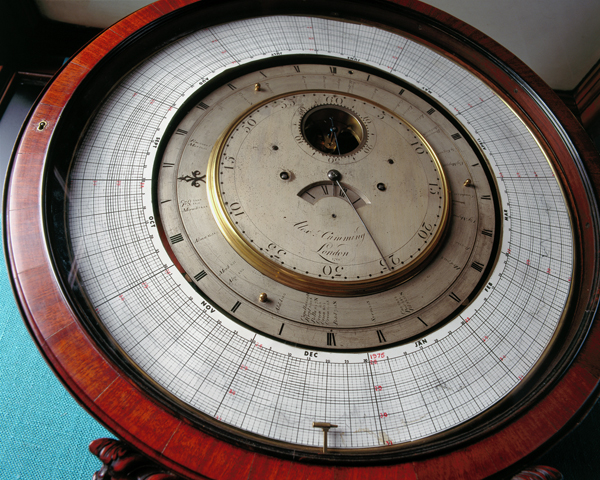
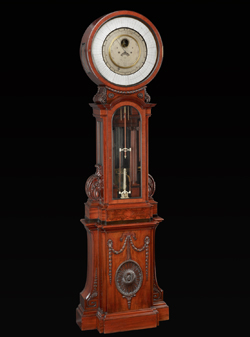
Acquired last year by the Science Museum, this rare Georgian clock records changes in air pressure and is one of only four of its type made by London clockmaker Alexander Cumming.
Dating from 1766, the clock (pictured) sits in a seven foot tall decorated case, believed to have been made by London cabinet-maker Thomas Chippendale. Inside is a barograph – comprised of two tubes of mercury in which a float rises and falls as atmospheric pressure changes and the data is recorded on the clock dial which rotates once a year.
Scottish-born Cumming, who constructed his first barograph clock on the orders of King George III a year before this one in 1765, designed this clock based on ideas first outlined by Royal Society founding member Robert Hooke.
Following Cumming’s death in 1814, the clock was purchased by meteorologist Luke Howard – known as the ‘father of scientific meteorology’ – who used it to observe atmospheric pressure at his homes in London and Ackworth. The data gathered was published in his book Barometrographia in 1847.
While it has previously been loaned for display at the museum, it now forms part of the permanent collection.
WHERE: Science Museum, Exhibition Road, South Kensington (nearest Tube stations are South Kensington and Gloucester Road); WHEN: 10am to 6pm daily; COST: free; WEBSITE: www.sciencemuseum.org.uk.
PICTURES: Courtesy of the Science Museum.
• A 17th century Peruvian gold bowl recovered from a shipwreck, Tudor fashion accessories and a collection of ‘micromosaics’ including tabletops commissioned by Tsar Nicholas I are among highlights of the newly reopened Rosalinde and Arthur Gilbert Galleries at the V&A. The South Kensington museum reopened the four galleries last month after the objects within the collection were removed in 2014 as part of the V&A’s Exhibition Road building project which will be completed in July next year. Amassed by collectors Rosalinde and Arthur Gilbert over a period of 40 years from the 1960s, the collection features about 1,200 objects, more than 500 of which are now on display. The collection was on display at the Los Angeles County Museum of Art before being transferred to the UK in 1996 and accepted as a gift to the nation by the Queen Mother in 2000. It was displayed at Somerset House until coming to the V&A where it opened to the public in 2009. Other highlights on display include a newly acquired silver christening gift presented by King George II to his god-daughter, Lady Emilia Lennox, in 1731, and a life-sized silver swan made by Asprey, London, in 1985 (pictured). Entry to the galleries is free. For more, see www.vam.ac.uk. PICTURE: © Victoria and Albert Museum, London
• The period living rooms at the Geffrye Museum of the Home have been transformed for Christmas in its annual Yuletide display. Now in its 25th year, the exhibition at the Shoreditch establishment recreates the Christmas traditions of times past including everything from kissing under the mistletoe to decorating the tree, parlour games such as blind man’s bluff to hanging up stockings and sending cards. Christmas Past is accompanied by a programme of events including craft fairs, festive evenings, carol sings and decoration workshops with festive food and drinks available in the cafe. Runs until 8th January. Entry is free. For more, see www.geffrye-museum.org.uk.
Send all items for inclusion to exploringlondon@gmail.com.
The result of four years of research, the Elytra Filament Pavilion is inspired by the fibrous forewing shells of flying beetles known as elytra. Featuring components which have been fabricated by a robot at the University of Stuttgart and then assembled on site in the V&A’s John Madejski Garden, the installation will grow and move in response to how visitors use the canopy thanks to anonymous data collected from sensors installed in the canopy fibres. On select dates – 17th and 18th June and 22nd September – visitors will be able to see new cells – each of which weighs about 45 kilograms and take an average of three hours to create – manufactured live by a Kuka robot. The installation is the work of experimental architect Achim Menges with Moritz Dorstelmann, structural engineer Jan Knippers and climate engineer Thomas Auer. The pavilion is one of the highlights of the V&A’s first ever ‘engineering season’ with the landmark exhibition – Engineering the World: Ove Arup and the Philosophy of Total Design opening on 18th June. Admission to see the installation, which can be seen at the South Kensington location until 6th November, is free. For more, see www.vam.ac.uk/EngineeringSeason. PICTURES: © Victoria and Albert Museum, London.