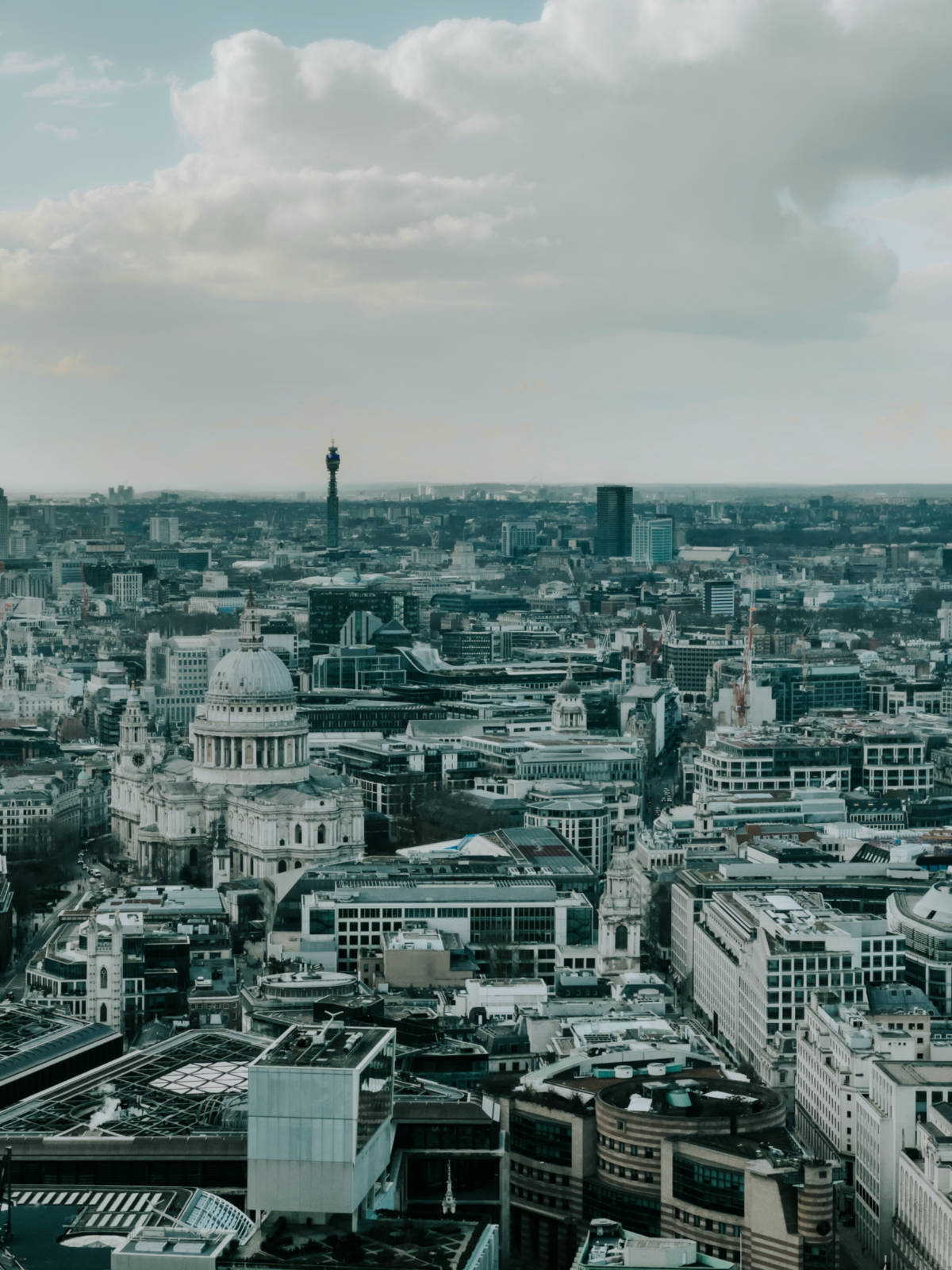
LondonLife – All in white…
Containing a residence for the Bishop of London (although, it has to be said, certainly not traditionally a bishop’s palace), the Old Deanery is located in Dean’s Court, to the south-east of St Paul’s Cathedral.
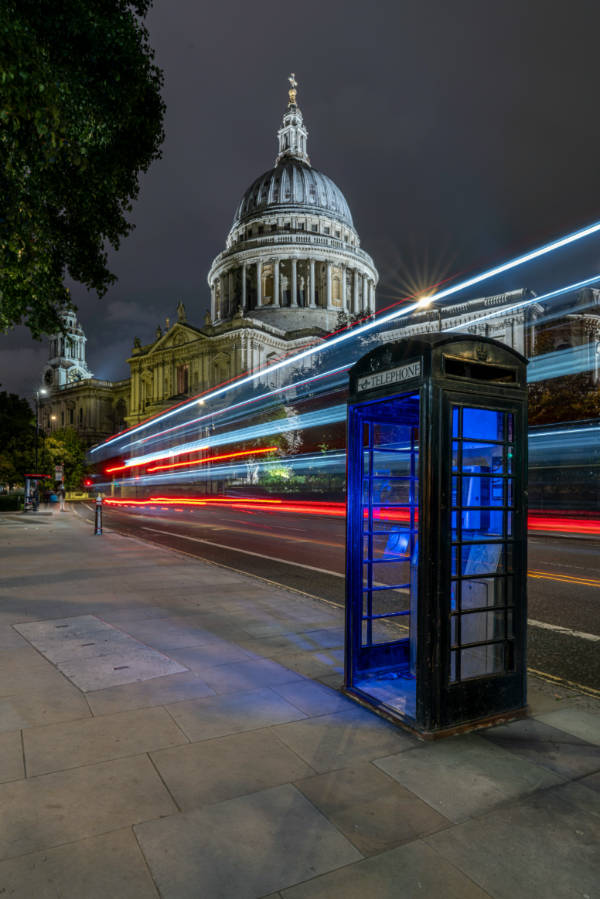
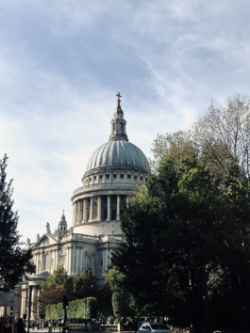
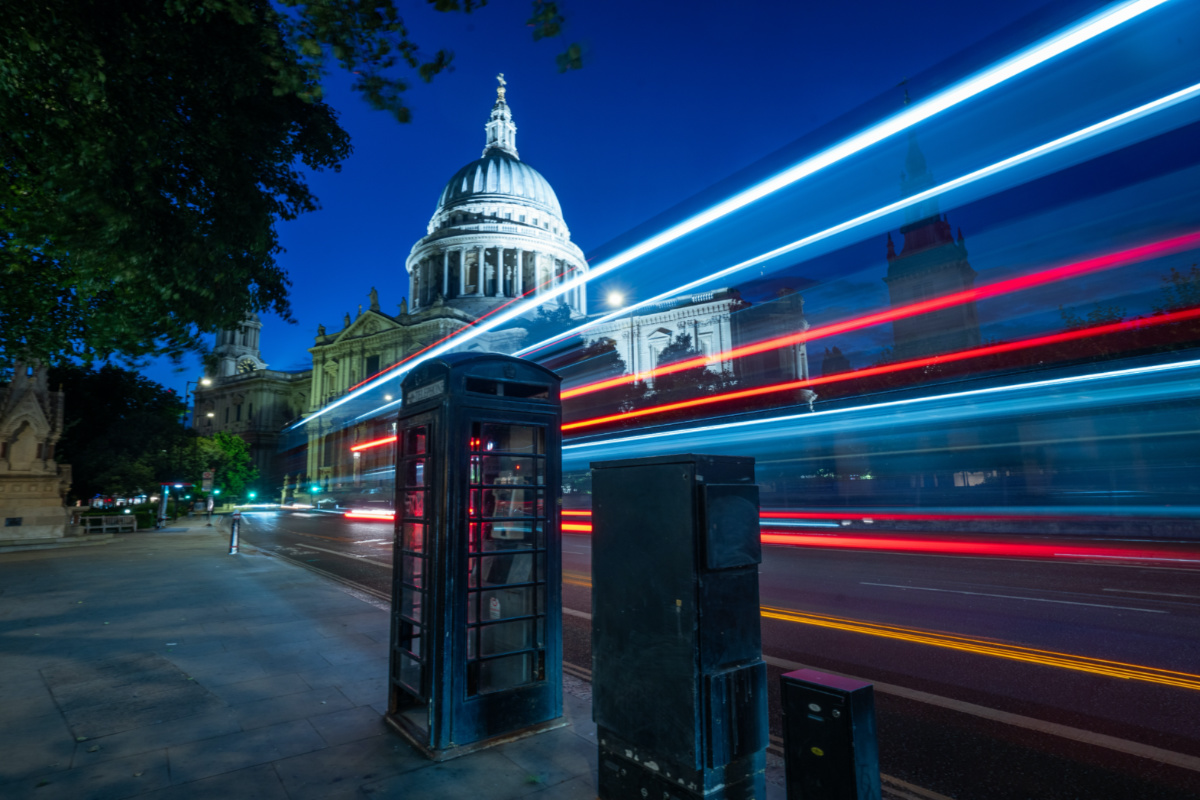
Outside St Paul’s Cathedral.
• More than 70 works of art from the King’s private collection – many of which have never been shown publicly before – go on show from today as part of the summer opening of Buckingham Palace’s State Rooms. The King’s Tour Artists, which can be seen in the ballroom, features works by 43 artists who have travelled with the King and Queen during the past 40 years. They include the earliest work on show – From the Afterdeck of HMY Britannia by John Ward, the inaugural tour artist – as well as Basilica of San Vitale, created by Fraser Scarfe who became the first tour artist to create digital artwork on an iPad when he accompanied the King and Queen on a State Visit to Italy. Other works include a pair of portraits of the King and Queen when Prince of Wales and Duchess of Cornwall which were painted by James Hart Dyke following a tour to the Gulf States in 2007, a drawing by Claudette Johnson made after the first official royal visit to Rwanda in 2022, and a terracotta head by Marcus Cornish, the only sculptor ever to have been chosen as a tour artist, which depicts a war veteran met by the royal party during a visit to Slovakia in 2000. Other highlights of the summer opening include the chance to see the recently installed Coronation State Portraits of the King and Queen in their permanent home. Runs until 28th September. Admission charge applies. To book, head to www.rct.uk.
• Artworks for octopii and an immersive seaweed installation are among artworks in a new exhibition at the Design Museum focusing on a growing movement of ‘more-than-human’ design. More than Human brings together more than 140 works spanning contemporary and traditional practices, fine art, product design, architecture and interactive installations – the work of more than 50 artists, architects and designers. As well as the artworks for octopuses by Japanese artist Shimabuku and the seaweed installation by artist Julia Lohmann, other highlights include a vast new tapestry that explores the perspectives of pollinators by Alexandra Daisy Ginsberg and an eight metre long mural by MOTH (More Than Human Life Project), depicting the growing movement to award legal rights to waterways around the world. Runs until 5th October. Admission charge applies. For more, see https://designmuseum.org/exhibitions/more-than-human.
• On Now: Saving St Paul’s: The Watch and the Second World War. This free outdoor exhibition – part of St Paul’s Cathedral’s commemorations around the 80th anniversary of World War II, honours the volunteers known as the St Paul’s Watch and their efforts to protect the cathedral during the Blitz. That included during the two direct hits to the cathedral – in October, 1940, and April, 1941. A short film accompanies the display which can be seen in the cathedral garden. The exhibition can be seen until October, 2025. For more, see www.stpauls.co.uk.
London paused on. Monday to mark the 20th anniversary of the terror attacks which took place on the 7th July, 2005.
Fifty-two people died in the attacks and hundreds were injured when three suicide bombers struck at 8.50am in the vicinity of Aldgate, Edgware Road and Russell Square Tube stations. A fourth device exploded at 9.47am on a bus that had been diverted via Tavistock Square.
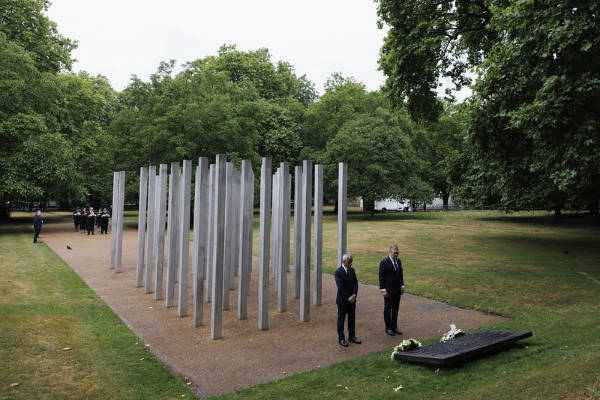
On Monday, the names of all those killed in London’s 7/7 bombings were read out at the National Memorial Service at St Paul’s Cathedral. In Hyde Park, Prime Minister Sir Keir Starmer and Mayor of London Sir Sadiq Khan laid wreaths at the 7/7 Memorial, marking the time when the first bomb exploded.
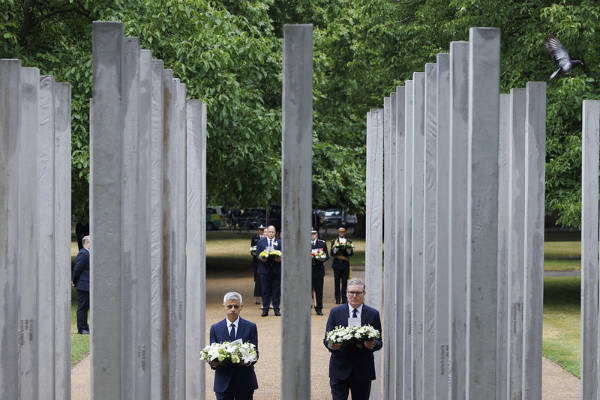
Commemorative events were also held at the sites where the bombings occurred.
In a message to mark the anniversary, King Charles III said his “heartfelt thoughts and special prayers remain with all those whose lives were forever changed on that terrible Summer’s day”.
“We remember with profound sadness the 52 innocent people who were killed in senseless acts of evil – and the enduring grief of their loved ones. We recall, too, the hundreds more who carry physical and psychological scars, and pray that their suffering may ease as the years pass.”
The King also called on people to “remember the countless stories of extraordinary courage and compassion that emerged from the darkness of that day”.
“The selfless bravery of our emergency services, transport workers, and fellow citizens who rushed towards danger to help strangers reminds us of the very best of humanity in the face of the very worst.”
• VE Day commemorations continue in London this week with an Evensong service to be held outside St Paul’s Cathedral this evening. The service to commemorate the 80th anniversary of the end of the war in Europe will be held between 5pm and 6pm. Following the service will be a lamp-lighting ceremony and blessing on the cathedral’s west steps with the cathedral bells being tolled as part of a national bell-ringing at 6:30pm. A replica of a World War II Spitfire can also be seen in front of the West Steps. The service is free and unticketed – entry is via Paternoster Square. For more, see www.stpauls.co.uk/whats-on/special-evensong-to-commemorate-80th-anniversary-of-end-of-second-world-war-in-europe-ve80.
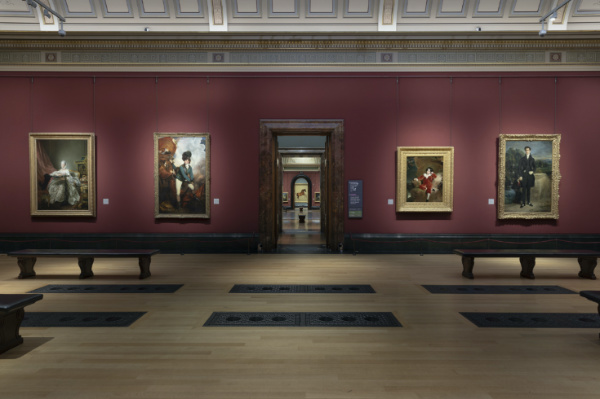
Central Hall, The National Gallery. Image and Identity: Full-Length Portraits 1550-1900. Part of ‘C C Land: The Wonder of Art’. PICTURE: © The National Gallery, London
• A major redisplay of the National Gallery’s collection – created as part of its bicentenary celebrations – can be seen from Saturday. C C Land: The Wonder of Art, which coincides with the opening of the transformed Sainsbury Wing after more than two years of building works, features more than 1,000 works and traces the development of painting in the Western European tradition from the 13th to 20th centuries. Among the works displayed are the Coronation State Portraits, commissioned from the artists Peter Kuhfeld and Paul S Benney and unveiled by King Charles III and Queen Camilla this week, which will be on display until 5th June when they will be moved to the Throne Room at Buckingham Palace. There are also newly restored works including the Pollaiuolo brothers’ The Martyrdom of San Sebastian and Jan van Eyck’s Portrait of a Man (Self Portrait?) and newly acquired works such as Eva Gonzalès’ The Full-length Mirror (about 1869‒70), Sir Lawrence Alma-Tadema’s After the Audience (1879) and Nicolas Poussin’s Eucharist (about 1637‒40) – one of the greatest paintings of the Last Supper. Meanwhile, a series of rooms have been dedicated to the work of individual artists including the likes of Titian (active about 1506‒1576), Rembrandt (1606‒1669) and Monet (1840‒1926) and one part of the new display focuses on King Charles I (1600‒1649) as a collector of art and includes major loans from the Royal Collection. Finally, in a first for the gallery, Segna di Bonaventura’s Crucifix (about 1310‒15) has been suspended from the gallery’s ceiling, enabling today’s audiences to view the work in the way it would have been seen in the 14th century. Entry to the gallery is free. For more, see nationalgallery.org.uk.
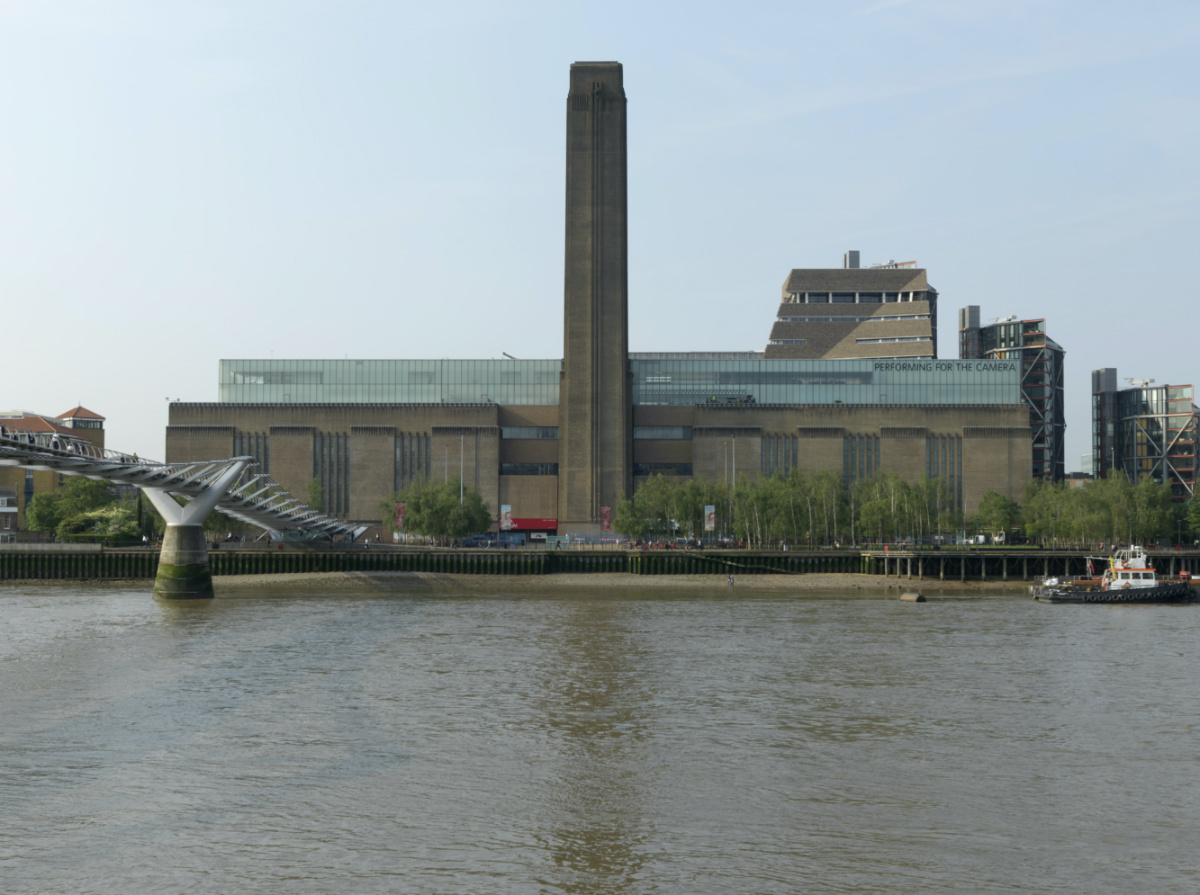
• The Tate Modern is celebrating 25 years this weekend with four days of festivities starting from tomorrow (Friday). A number of recent additions to Tate’s collection will go on display around the building for the anniversary and some of the most iconic works from Tate Modern’s history are coming back including Louise Bourgeois’s 10 metre high bronze spider Maman which was the first work to greet visitors when Tate Modern opened in 2000. Other returning works include Mark Rothko’s Seagram murals and Dorothea Tanning’s Eine Kleine Nachtmusik while among contemporary works being highlighted over the weekend is an immersive multi-screen film installation by Nalini Malani. Two new exhibitions are also open for the anniversary weekend – A Year in Art: 2050 which explores how artists imagine possible futures, and, Gathering Ground which features international contemporary art united by a deep connection to land and community. The weekend also features live music and performances, pop-up talks and tours, and special food and drink offers. For more, see https://www.tate.org.uk/whats-on/tate-modern/birthday-weekender.
Send all items for inclusion to exploringlondon@gmail.com
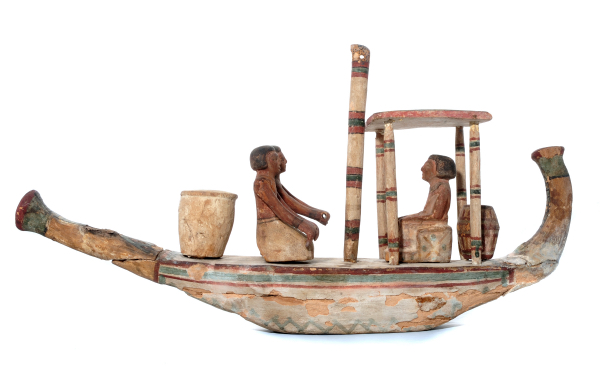
• A new exhibition exploring how stories and images from ancient Egypt continue to influence art, design and popular culture today opens at the Young V&A in Bethnal Green on Saturday. Making Egypt is divided into three sections – Storytelling, Communicating and Making – and features more than 200 objects which, as well as ancient artifacts, include contemporary responses from jewellery and fashion designers, graphic novelists and ceramic artists throughout. Highlights include everything from a 4000-year-old small wooden painted model funerary boat and an amulet of Taweret, goddess of childbirth and fertility, dating from between 664 BC to 332 BC to a rare carved wooden scribe’s palette which was used to hold ink and brushes, and Egyptian faience shabtis dating from between 380 BC to 343 BC which represent just a handful of more than 300 small funerary figures discovered in the tomb of Djedhor. Runs until 2nd November. Admission charge applies. For more, see vam.ac.uk/young.
• A new plaque commemorating humanitarian aid workers has been unveiled in the crypt of St Paul’s Cathedral. Located near the memorial to Florence Nightingale, the plaque “celebrates the bravery of those who dedicate their lives to helping others and remembers those who have been murdered or injured while delivering humanitarian assistance”. Hand-carved by stonemason Martin Gwilliams, the plaque reads: “In celebration of Humanitarian Aid Workers. Helping those in need whoever and wherever they are. And in remembrance of those who have died in the pursuit of their calling.” The plaque is the first in the UK in a public space to honour humanitarian aid workers and their work in conflict zones and disaster-stricken areas around the world. For more, see www.stpauls.co.uk.
• After almost 40 years, the Science Museum’s ‘Exploring Space’ gallery at the South Kensington institution will partially close on 22nd April and fully close in early June as part of preparations for the museum’s new ‘Space’ gallery. Key objects on display include the Soyuz spacecraft that carried astronaut Tim Peake back to Earth, the spacesuit worn by Helen Sharman, the first Briton in space, during a 1991 spaceflight and a three-billion-year-old piece of the Moon. Other items include a British Black Arrow rocket and a United States Scout rocket suspended from the gallery’s ceiling, a RL10 rocket engine and a J-2 rocket engine which powered the Apollo astronauts to the Moon. For more, see www.sciencemuseum.org.uk
Send all items to exploringlondon@gmail.com
We finish our series on Christopher Wren by providing a quick recap…
1. The Old Court House, Hampton Court Palace Green…
9. St James’s Street, Piccadilly…
We’ll start a new series in the New Year!
For the final entry in our Wednesday special series, we go to see Sir Christopher Wren’s greatest work – and also his resting place, St Paul’s Cathedral.
Following his death on 25th February, 1723, Wren was buried in the crypt of St Paul’s Cathedral on 5th March.
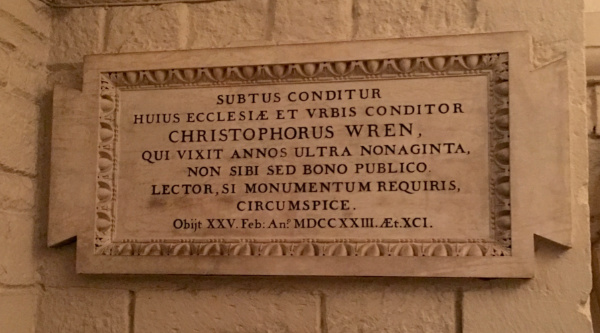
His burial location was in the south-east corner of the crypt and a simple memorial was placed there near that of his daughter Jane and his sister Susan Holder and her husband William.
The plaque which marks the location was written by his eldest son Christopher. Inscribed in Latin, it reads: “Here in its foundations lies the architect of this church and city, Christopher Wren, who lived beyond ninety years, not for his own profit but for the public good. Reader, if you seek his monument – look around you. Died 25 Feb. 1723, age 91.”
It’s a fitting tribute to one responsible for some of London’s most famous landmarks.
Interestingly, a fragment of Wren’s coffin can be seen at the RIBA Library. It was taken from his tomb in 1851 when it was last opened to allow for his last surviving direct descendent to be placed within.
WHERE: St Paul’s Cathedral (nearest Tube stations are St Paul’s, Mansion House and Blackfriars); WHEN: 8.30am to 4.30pm Monday to Saturday; COST: £23 adults/£20.50 concessions/£10 children/£56 family (these are walk-up rates – online advanced and group rates are discounted); WEBSITE: www.stpauls.co.uk.
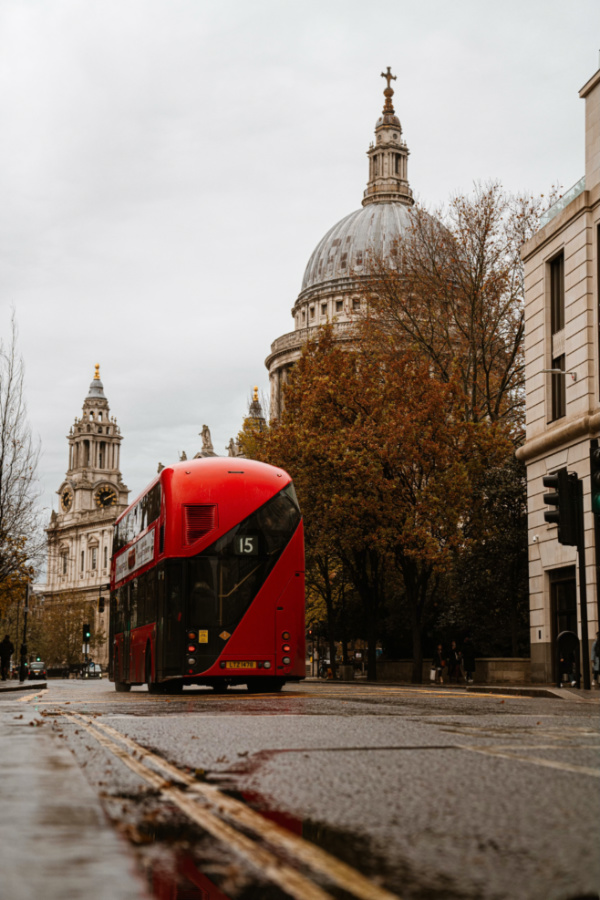
The number 15 runs from Blackwall Station via Poplar High Street through the City, finishing at Charing Cross Station.
• Three of the City of London’s oldest charters go on display at the City of London Heritage Gallery on Saturday as part of a series of events commemorating the coronation of King Charles III. On display will be the William Charter, which, drawn up in 1067 following the coronation of King William the Conqueror, was the earliest known royal document in Europe to guarantee the collective rights of all people in a town and not just a select few. Also to be seen is the Shrievalty Charter, which, issued by King John in 1199, confirms the rights of Londoners to elect their own sheriffs, and the Mayoralty Charter, which, also issued by King John – this time in 1215, confirmed that the Mayor of London could also chosen by Londoners with the proviso that they were publicly presented. Visitors can also see the beautifully illustrated Cartae Antiquae which records charters and statutes covering laws enacted from the reign of Edward III (1327 onwards) to the accession of Henry VII in 1485 and was used as an essential reference tool by City officials, as well as prints of the 19th century coronations of Queen Victoria, King William IV and King George IV. Admission is free but booking is recommended. Runs until 5th October. For more, see www.cityoflondon.gov.uk/events/heritage-gallery-exhibition.
• Other events marking the coronation kick off in the City of London in the coming week. Among the extensive list of activities is a pop-up well-being garden in Seething Lane where you can pose for pictures with a floral crown installation, a guided walking tour of the City entitled ‘1000 Years of Royalty – the Best, the Worst and the Very Horribilus’, and a “Cockney knees-up” with Pearly King and Pearly Prince at Leadenhall Market. For more details and the full list of events, head to www.cityoflondon.gov.uk/events/coronation.
• A new exhibition commemorating the expansive career of Sir Christopher Wren opens today in St Paul’s Cathedral – the extraordinary building designed by Wren to replace the medieval cathedral destroyed in the Great Fire of London in 1666 Part of a series of events marking the 300th anniversary of the death of Sir Christopher in 1723, Sir Christopher Wren: The Quest for Knowledge explores not only his early life and career as an architect but also his lesser-known contributions to the fields of mathematics, astronomy and physiology. The display, located in the north aisle of the crypt, features drawings, photographs and objects from the cathedral’s collections. Entry to the exhibition is included in general admission. For more, see www.stpauls.co.uk/whats-on/exhibition-christopher-wren-quest-for-knowledge.
• The Pre-Raphaelite model and artist, Marie Spartali Stillman, has been honoured with an English Heritage Blue Plaque at what was her family home in Battersea. It was while living at The Shrubbery – a 1770s Grade II-listed property now located on Lavender Gardens – that Stillman first modelled for Pre-Raphaelite artists. Tutored by Ford Madox Brown, she went on to become one of a small number of professional women artists in the late 19th century, creating more than 150 works over a period spanning 50 years. Stillman is the first female Pre-Raphaelite artist and one of only very few female artists to receive a Blue Plaque. For more, see www.english-heritage.org.uk/visit/blue-plaques/.
Send all items for inclusion to exploringlondon@gmail.com
Located off Ave Maria Lane in the City of London is a tiny thoroughfare named Amen Corner.
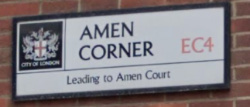
This location of this short laneway – which leads to the U-shaped (and gated) Amen Court – makes the name no great surprise. It lies just to the north-west of St Paul’s Cathedral and is one of a number of religiously named streets in the area (others include Paternoster Lane, Paternoster Square, Paternoster Row and Canon Alley).
The corner apparently became so-named in relation to a prayer chanted by monks. It’s said that on the day of the Feast of Corpus Christi, the monks would process through the streets, chanting prayers as they did so.
The first prayer, the Lord’s Prayer, was started in Paternoster Row – itself named after the first couple of words in the prayer when recited in Latin (“Pater Noster” which translates as “Our Father”). The monks would then process westward and by the time they reached the corner of Paternoster Lane and Ave Maria Lane, they would be at the end of the prayer – “Amen”. Hence Amen Corner.
Amen Corner was, from 1614 until the Great Fire of London in 1666 when it was destroyed, the location of a three storey house which served as the headquarters of the the Royal College of Physicians.
Ave Maria Lane, meanwhile, is named after the next prayer the monks would recite after turning the corner – “Ave Maria” (Hail Mary”).
Amen Court, which isn’t accessible to the public, is home to a short terrace of 17th-century houses where the cathedral’s canons have traditionally lived.
At its western end is a wall which once marked the boundary of Newgate Prison and which itself has an interesting history. The spectral ‘Black Dog of Newgate’ was said to have been sighted crawling along its top just prior to an execution taking place in the prison.
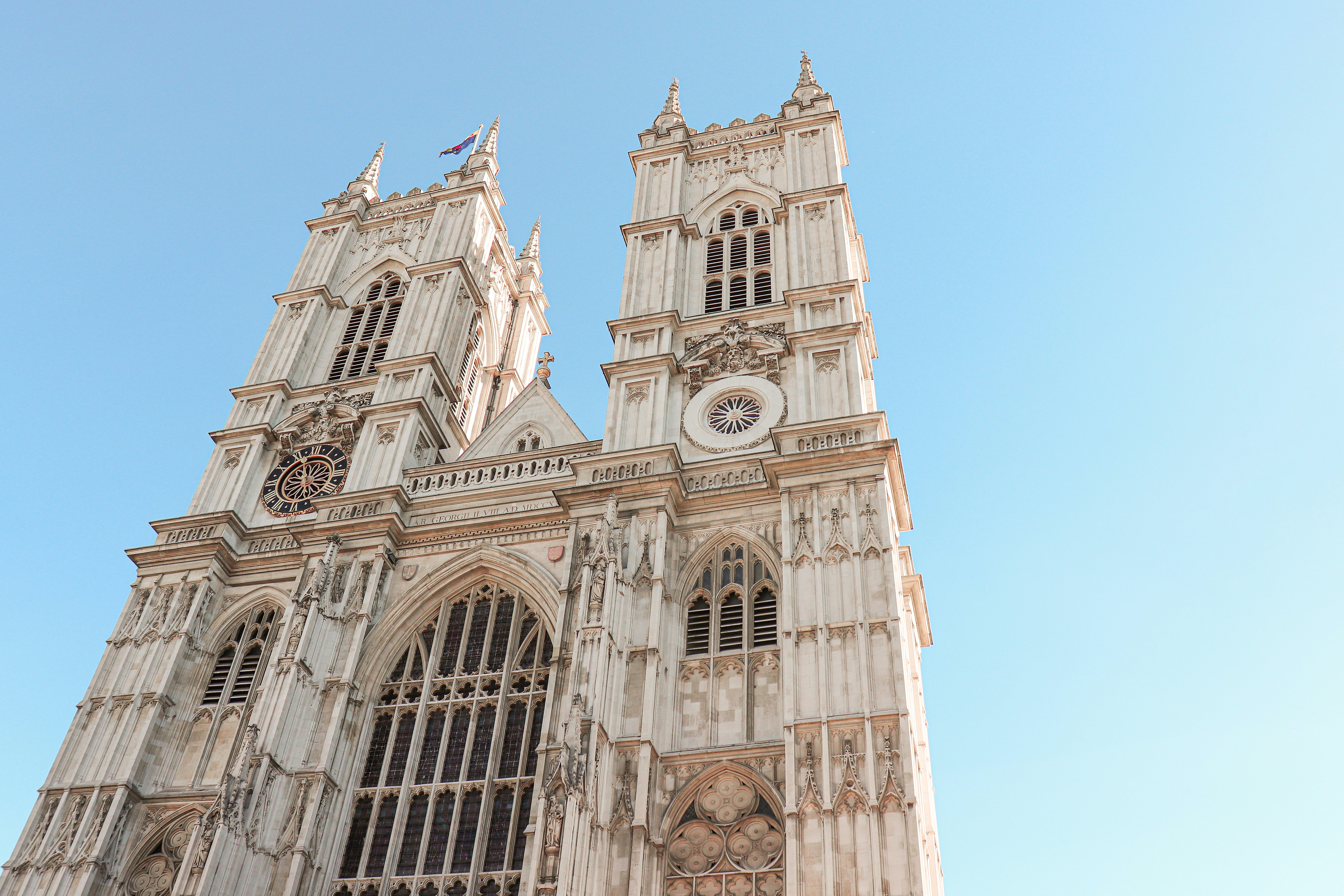
• The Princess of Wales will host a Christmas carol service at Westminster Abbey today. The service, which will be attended by members of the Royal Family, will recognise the selfless efforts of individuals, families and communities across the UK as well as paying tribute to Queen Elizabeth II and the values she demonstrated at Christmas and throughout her life, including empathy, compassion and support for others. The service will be broadcast on ITV One in the UK on Christmas Eve. Meanwhile, a special Christmas episode of Westminster Abbey: Behind Closed Doors will be shown on Channel 5 next Wednesday, 21st December. For more, see My5: Westminster Abbey: Behind Closed Doors.
• An exhibition show-casing the work of photographer Peter Marlow, who has photographed all 42 Church of England cathedrals, can be seen at St Paul’s Cathedral. Commissioned in 2008 by Royal Mail to photograph six cathedrals – images of which were used on commemorative stamps marking the 300th anniversary of the completion of St Paul’s Cathedral, Marlow went on to continue taking pictures of cathedrals using just natural light. The display, which is touring all 42 cathedrals, can be found in the South Nave aisle until 26th January. Included in admission charge. For more, see www.stpauls.co.uk/whats-on/exhibition-peter-marlows-english-cathedral.
• On Now: Making Modernism. The first major UK exhibition devoted to women artists working in Germany in the early 20th century, this exhibition at the Royal Academy’s Gabrielle Jungels-Winkler Galleries includes 67 paintings and works on paper. The artists featured include Paula Modersohn-Becker, Käthe Kollwitz, Gabriele Münter and Marianne Werefkin, with additional works by Erma Bossi, Ottilie Reylaender and Jacoba van Heemskerck. Runs until 12th February. Admission charge applies. For more, see www.royalacademy.org.uk.
Send all items to exploringlondon@gmail.com
Following the laying to rest of Queen Elizabeth II in St George’s Chapel, Windsor, we’re taking a look at where some royal burials have taken place within London.
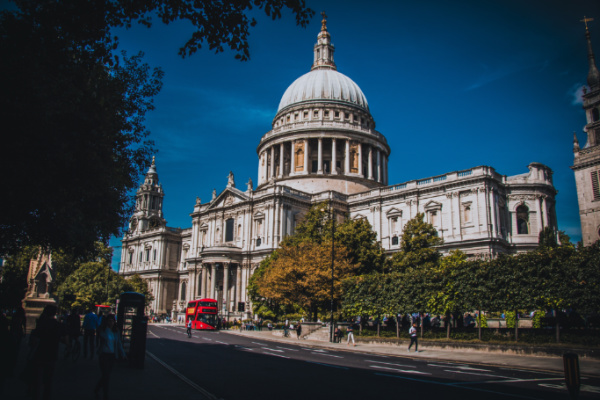
We start our new series with Old St Paul’s Cathedral which believed to have been the burial site of two Anglo-Saxon kings before it was destroyed in the Great Fire of 1666.
Aethelred (Ethelred) the Unready, who ruled from 978 until 1013 (and then again from 1014 until his death on 23rd April, 1016) was known to have been buried in the quire of the old cathedral (it’s marked on Wenceslaus Hollar’s 1658 plan of the cathedral as being on the northern side of the quire, just past the north transept) but his tomb was lost in the fire.
His memorial is among those which were lost in the Great Fire mentioned on a modern plaque in the crypt of the St Paul’s of today.
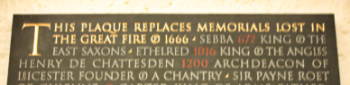
While his was the last royal burial to take place in St Paul’s, Aethelred wasn’t the only Anglo-Saxon king who was interred there.
Sæbbi, a king of the East Saxons who ruled from 664 to 694 (and is also known as Sebba or Sebbi), is also listed as being buried there (Aethelred was apparently buried close to him) and his grave also lost in the great fire.
There’s a story that when Sæbbi was about to be buried in a stone coffin, it was found it was too short for his body to lie at full length. Various solutions were proposed – including burying him with bent legs, but when they put the body back in the stone coffin this time, miraculously, it did fit.
Following an earlier fire in St Paul’s – in 1087 – Sæbbi body was transferred to a black marble sarcophagus in the mid-1100s and it’s that which was lost in the Great Fire.
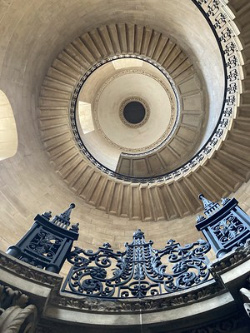
Known more formally as the Dean’s Staircase, this spiral staircase was designed by none other than Sir Christopher Wren and provides access to the triforium in St Paul’s Cathedral.
The staircase – each step of which is embedded into the wall – was built between 1675 and 1710 in the cathedral’s south-west tower by William Kempster. The ironwork is by famed French metal worker Jean Tijou.
Located in the south-west bell tower, the stair’s 88 Portland stone steps rise some 50 feet.
The staircase, which can be seen on the cathedral’s guided tours including triforium tours, has become famous in recent years thanks to its appearance in the 2004 Harry Potter film, The Prisoner of Azkaban, as well as Guy Ritchie’s 2009 film Sherlock Holmes.
The staircase has also been the site of art installations including Antony Gormley’s Flare II – which featured a falling figure within a cloud of wire.
WHERE: St Paul’s Cathedral (nearest Tube stations are St Paul’s, Mansion House and Blackfriars); WHEN: 8.30am to 4.30pm Monday to Saturday; COST: £21 adults/£18.50 concessions/£9 children/£36 family (these are walk-up rates – online advanced and group rates are discounted); WEBSITE: www.stpauls.co.uk (for tours, head to www.stpauls.co.uk/visits/visits/guided-tours)
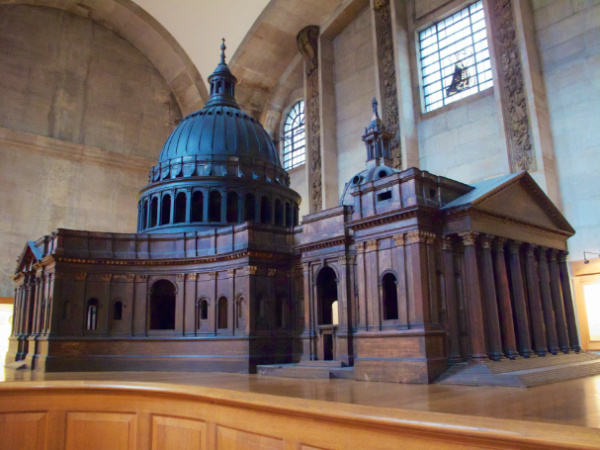
Housed now in the building it depicts, the Great Model of St Paul’s Cathedral was created by architect Sir Christopher Wren to show King Charles II what his proposed grand new English Baroque cathedral would look like (following the destruction of the medieval cathedral in the Great Fire of 1666).
Made of oak, plaster and lime wood, the model was made by William Cleere to Wren’s design in between September, 1673, and October, 1674, at a scale of 1:25. It measures 6.27 metres long, 3.68 metres wide and more than four metres tall, making it one of the largest in the UK.
The model, which cost about £600 to make – an extraordinary sum which could apparently buy a good London house, was designed to be “walked through” at eye level and, as well as being a useful way to show the King what the proposed building would look like, was also something of an insurance policy in case something happened to Wren.
It was based on drawings made by Wren and his assistant Edward Woodroofe on a large table in the cathedral’s convocation or chapter house (later demolished in the early 1690s) and was originally painted white to represent Portland stone with a blue-grey dome and gilded details.
There are some differences between the model and the finished cathedral – among them was a substantial extension of the quire, double-height portico on the west front, and, of course, the bell towers on the west front which were made in place of the cupola which was located halfway down the nave on the model.
Part of an earlier wooden model from 1671 also survives – it was apparently lost for many years and rediscovered in 1935.
The Great Model can be seen on tours of the Triforium.
WHERE: St Paul’s Cathedral (nearest Tube stations are St Paul’s, Mansion House and Blackfriars); WHEN: 8.30am to 4.30pm Monday to Saturday; COST: £21 adults/£18.50 concessions/£9 children/£36 family (these are walk-up rates – online advanced and group rates are discounted); WEBSITE: www.stpauls.co.uk (for tours, head to www.stpauls.co.uk/visits/visits/guided-tours)
 Exploring London